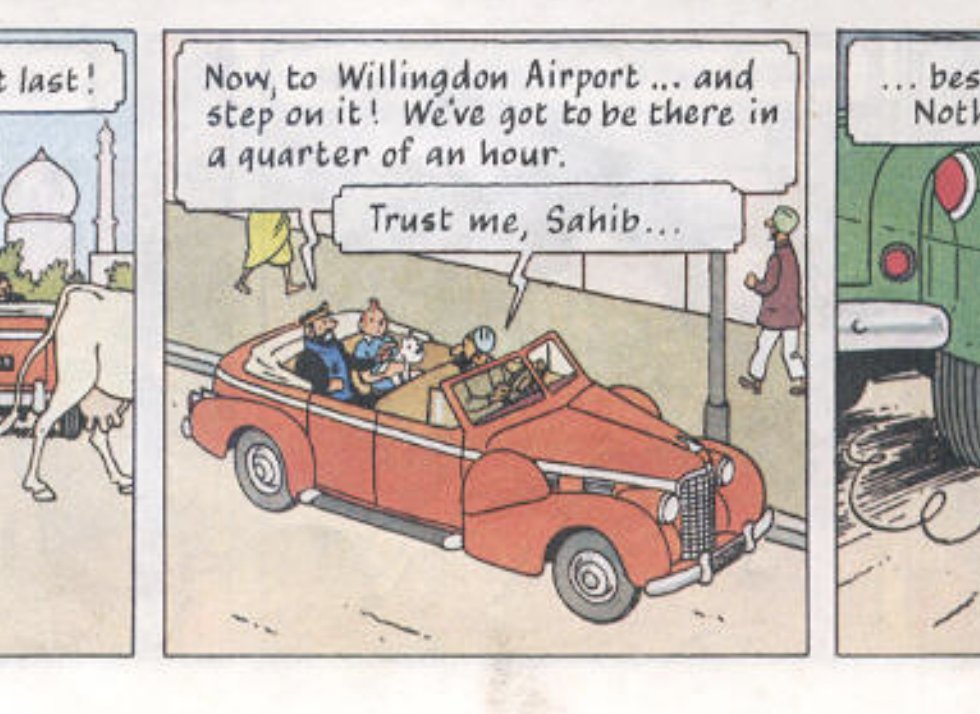
If you’re a Tintin fan, you might remember this small but intriguing detail in Tintin in Tibet. Did you know the airport Tintin and Captain Haddock used here, has a connection to a pivotal event that changed India’s political history? Let’s dive in. 1/19 
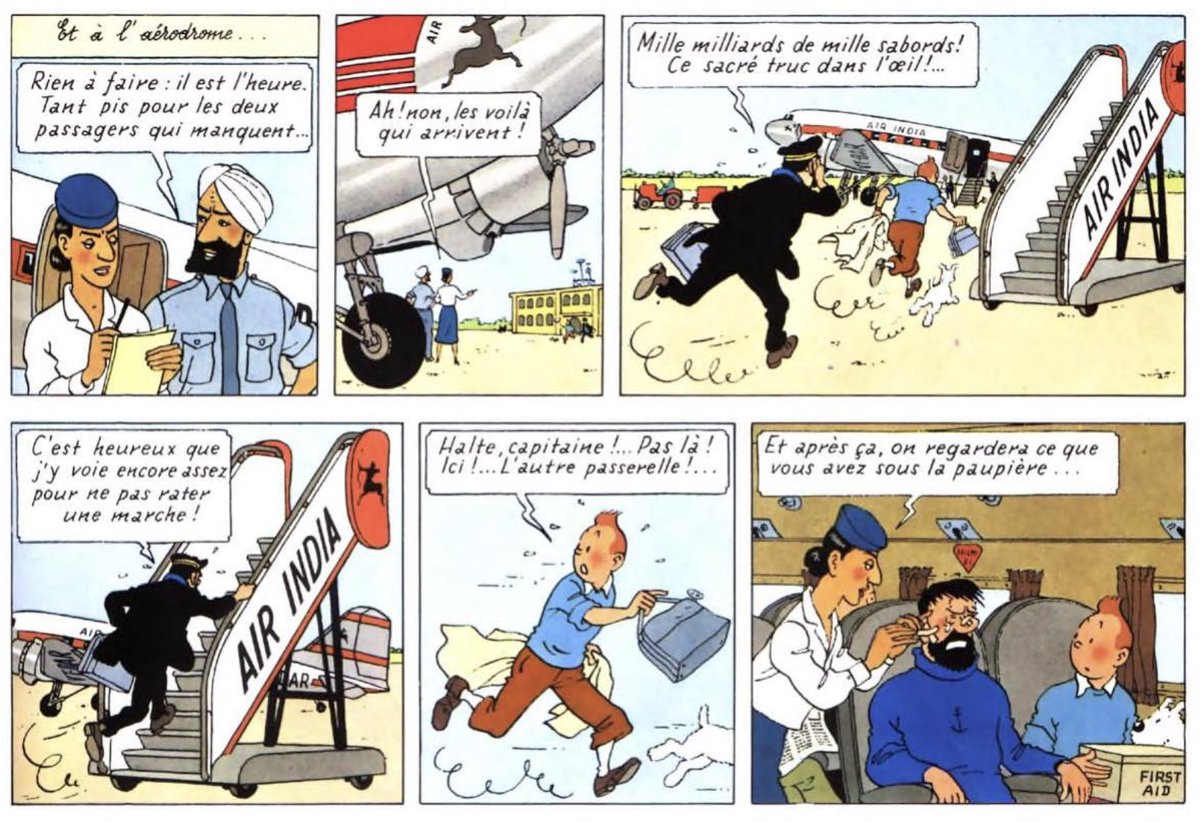
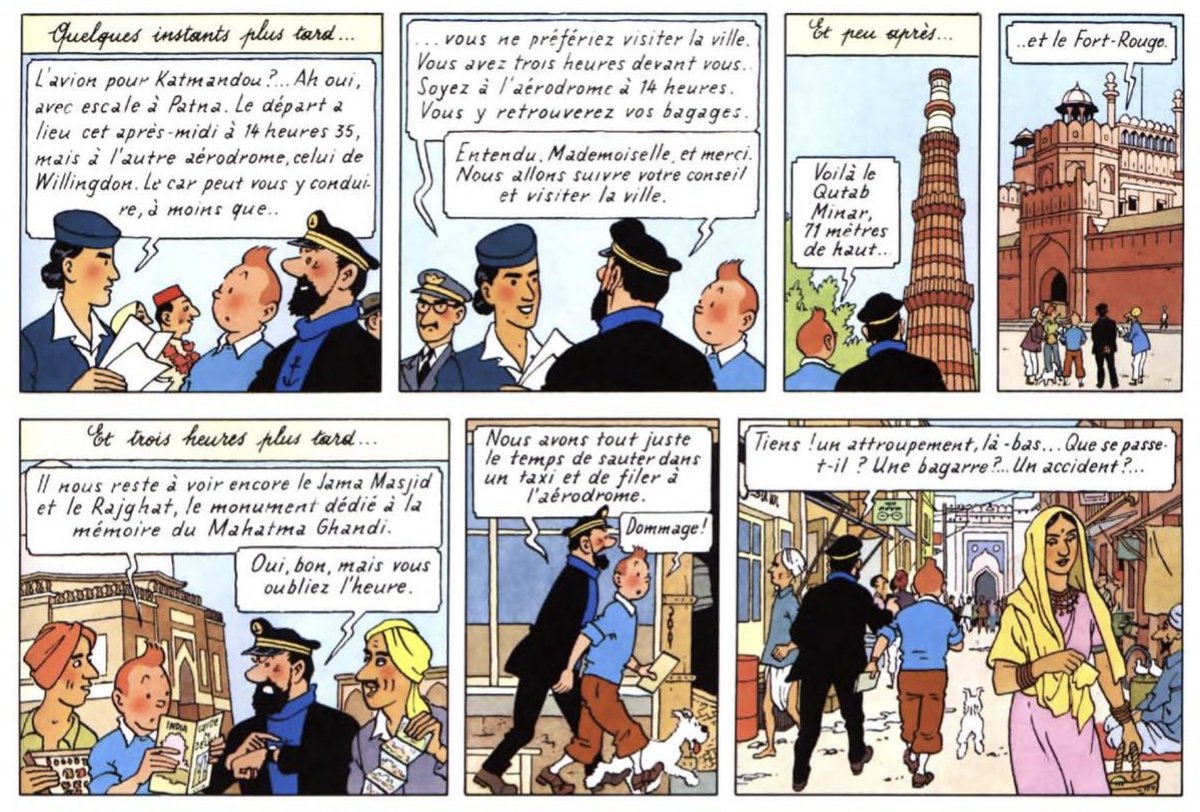
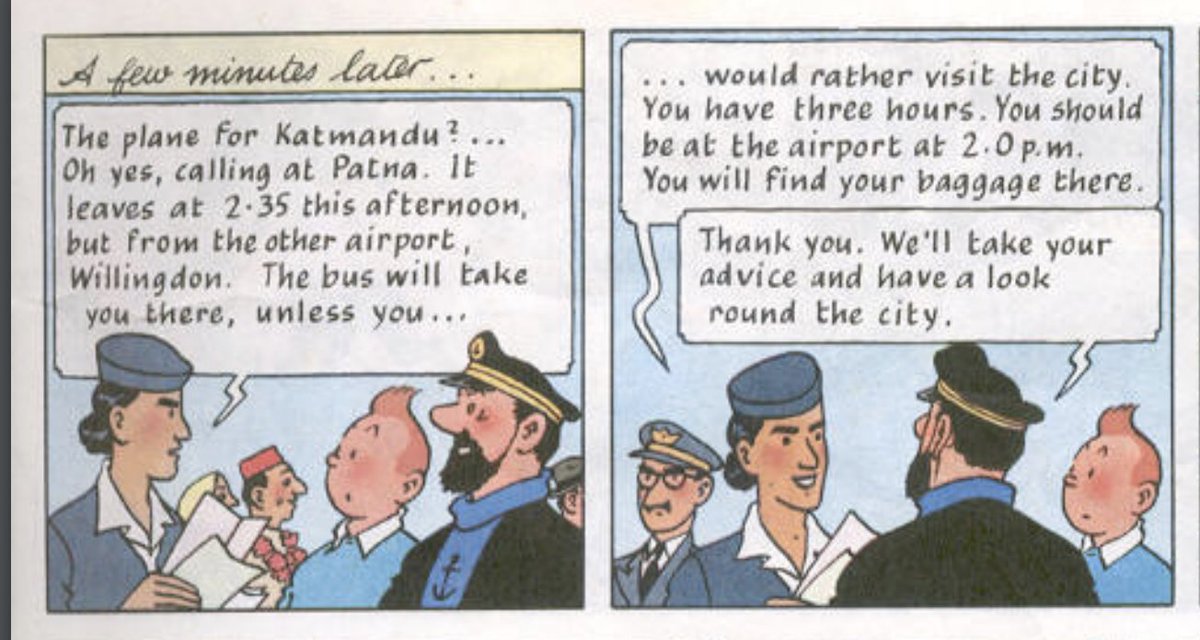
In the story, Tintin and the Captain catch a flight from New Delhi to Kathmandu, with a connecting stop in Patna. At Delhi Airport, a crew member directs them to another airport for their Patna flight, scheduled for 2:35 PM. But here’s the catch. 2/19

The duo spent about three hours exploring Delhi, visiting iconic landmarks like the Qutub Minar, Red Fort, and the Tomb of Ghiyasuddin Tughlaq. They barely made it back in time to the airport, but that’s a story for another day. 3/19
The airport mentioned the crew lady, wasn’t the now-iconic Indira Gandhi International Airport. Instead, it was Willingdon Airport. This lesser-known airfield witnessed a critical event India’s aviation and political history. 4/19
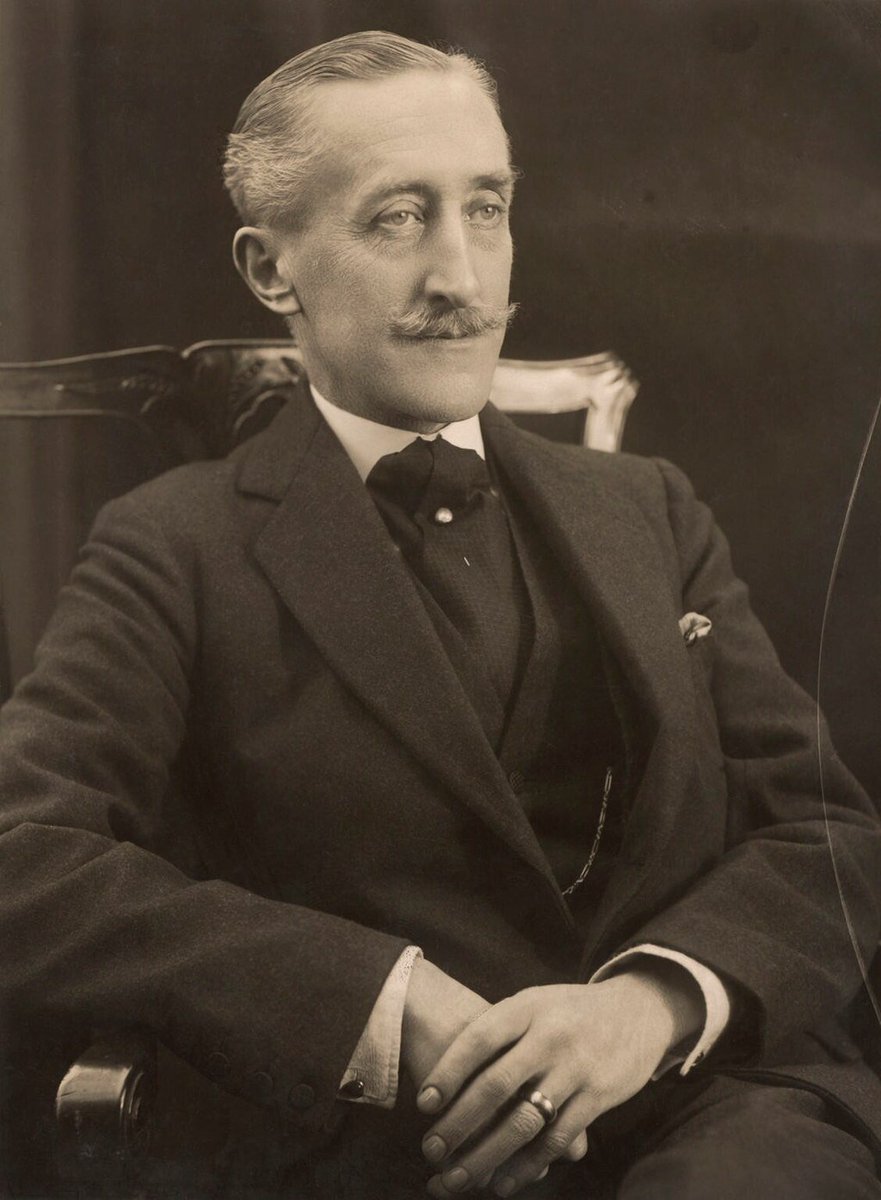
Willingdon Airfield was named after Lord Willingdon, India’s Viceroy from 1931 to 1936. It opened in 1929, making it India’s second airport after Juhu Aerodrome in Mumbai. For a few decades, it served as Delhi’s main airport, bustling with activity. 5/19
Willingdon airfield, began humbly with grass runways and tents. During its early years, it was primarily a military airstrip, playing a key role in World War II and later during India’s wars in 1947 and 1971. Its strategic significance grew with time. 6/19
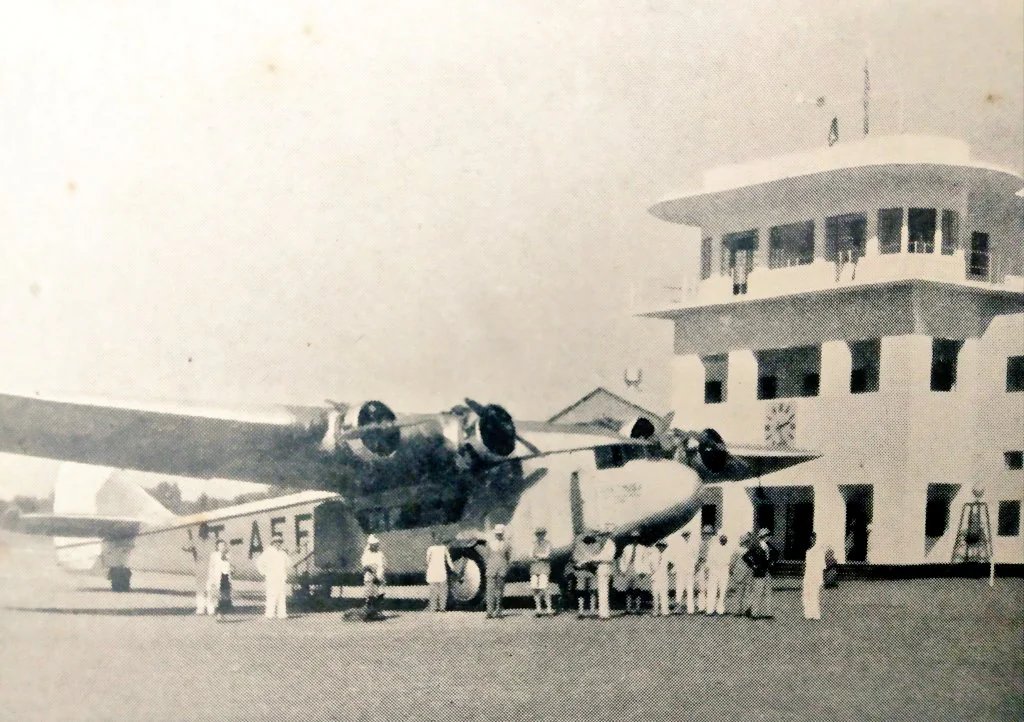
Initially, it was little more than a landing ground for military planes and airmail carriers. However, its importance surged during World War I, when it became a vital hub for operations. 7/19
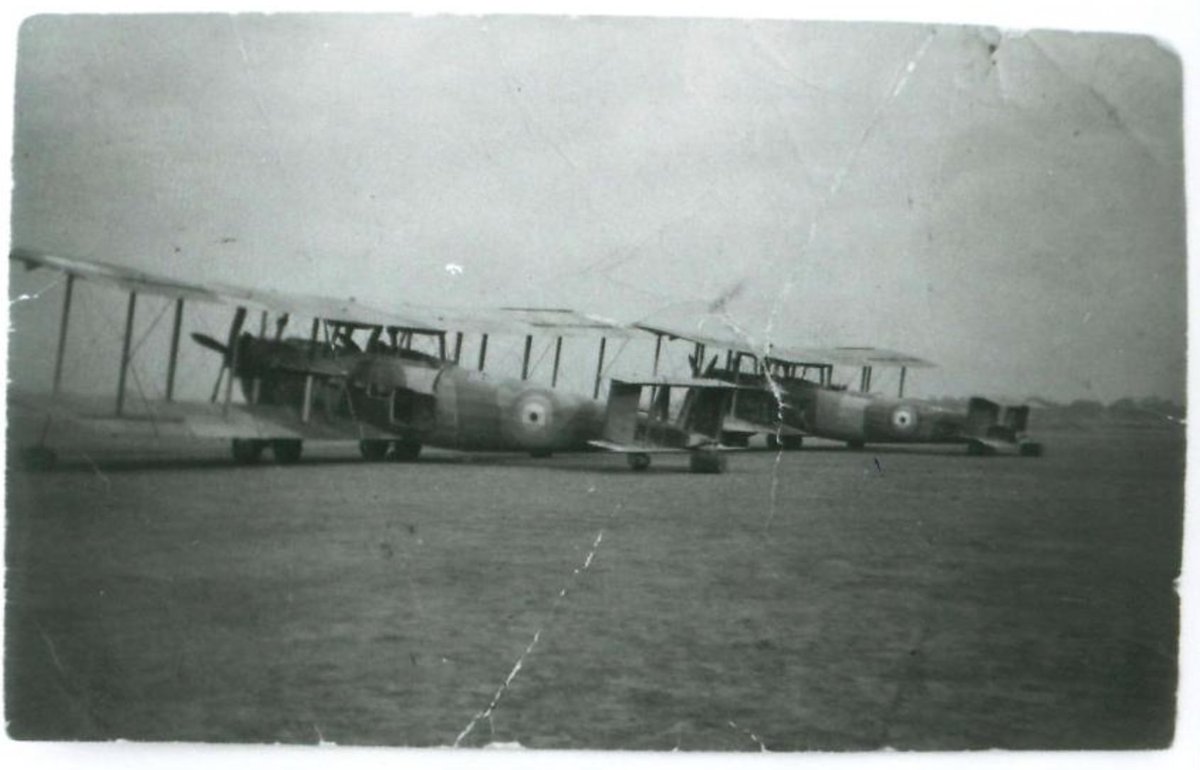
After Independence, the airfield was renamed Safdarjung Airport, in homage to the 18th-century tomb of Safdarjung, which stands nearby. The name reflected a shift in its identity, aligning it with India’s new sovereignty while maintaining its historical relevance. 8/19
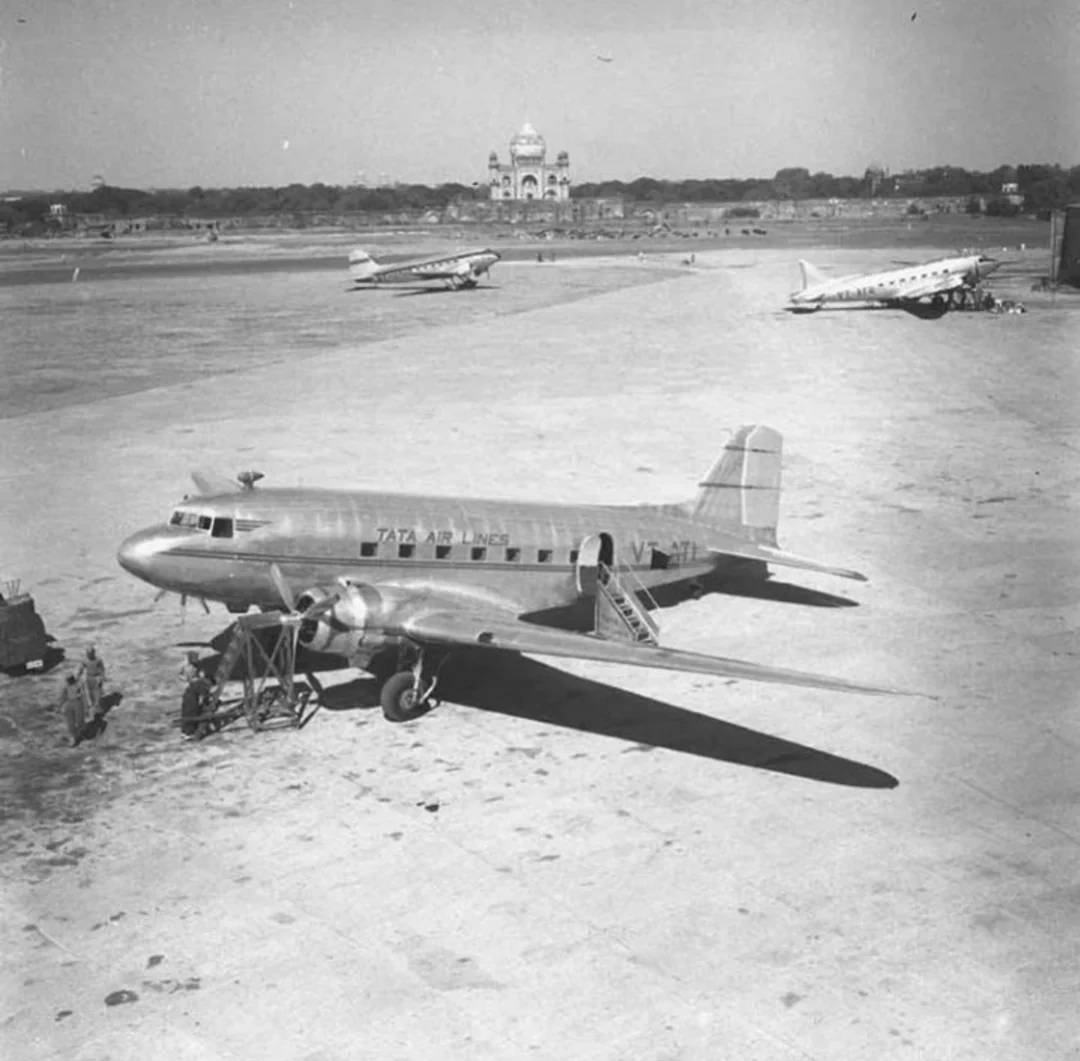
By 1962, as jet aircraft became the norm, operations moved to Palam Airport (now IGI Airport) to accommodate larger planes. Safdarjung Airport continued functioning for smaller flights until 2001, when post-9/11 security concerns led to its closure for public use. 9/19
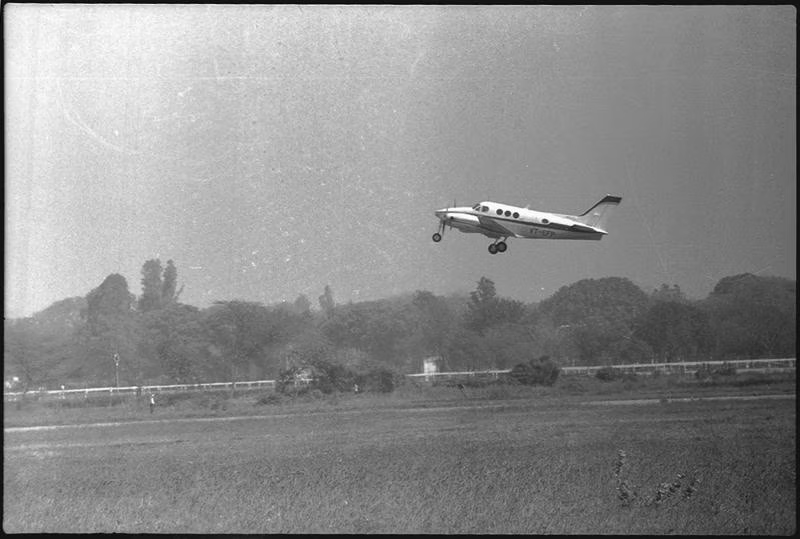
Over time, Safdarjung Airport transitioned into a secured site for VIP helicopter transits and emergency contingencies for the President and Prime Minister. 10/19
But the airfield’s story has darker chapters too, including a tragedy that profoundly shaped India’s political landscape. Read on. 11/19
On June 23, 1980, Sanjay Gandhi, the elder son of Prime Minister Indira Gandhi and a rising political star, met a fatal end near Safdarjung Airport. At just 34, Sanjay was piloting a newly acquired plane from the Delhi Flying Club housed in the Airport. 12/19
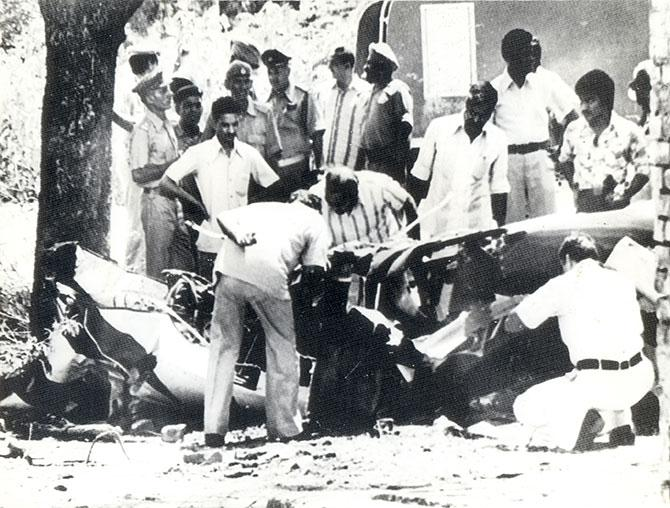
Flying had become a passion for Sanjay, who spent significant time at the Safdarjung airfield. That morning, he left his home in his green Matador van and drove to Safdarjung—a routine he’d followed for days, enamored by the new aircraft. But this flight would be his last. 13/19
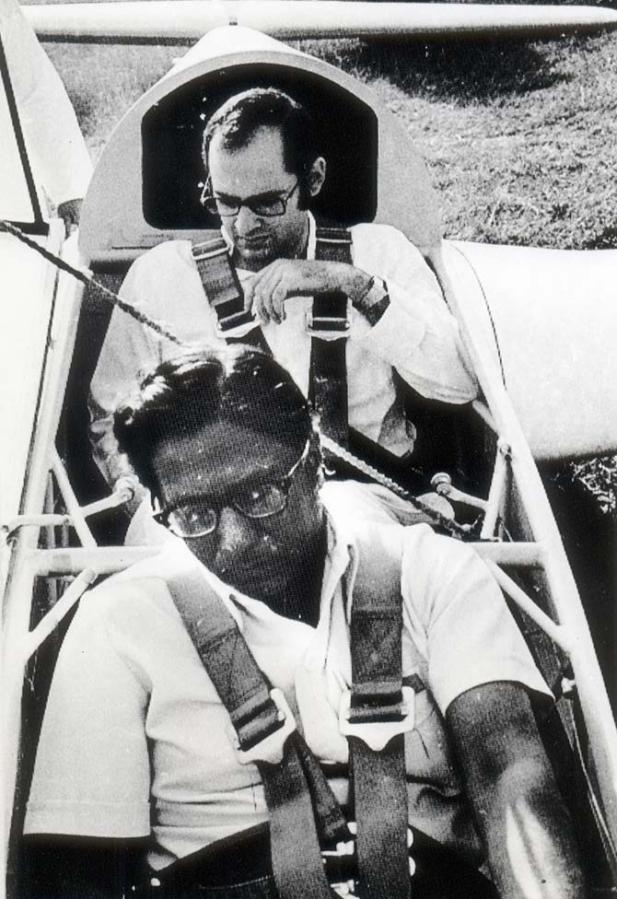
During a loop maneuver, Sanjay lost control of the Pitts S2 aircraft, which crashed, killing him and his passenger, Captain Subhash Saxena. The crash sent shockwaves across the nation. 14/19
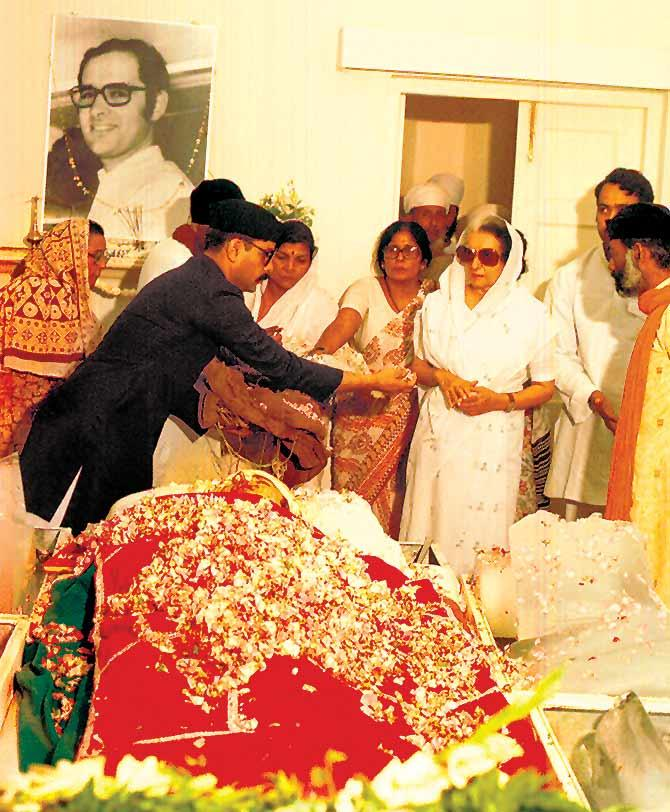
Sanjay had recently steered the Congress party to a resounding victory in state elections and was widely seen as Indira Gandhi’s political heir. Due to his love for flying, Willingdon Airport had almost become his second home. 15/19
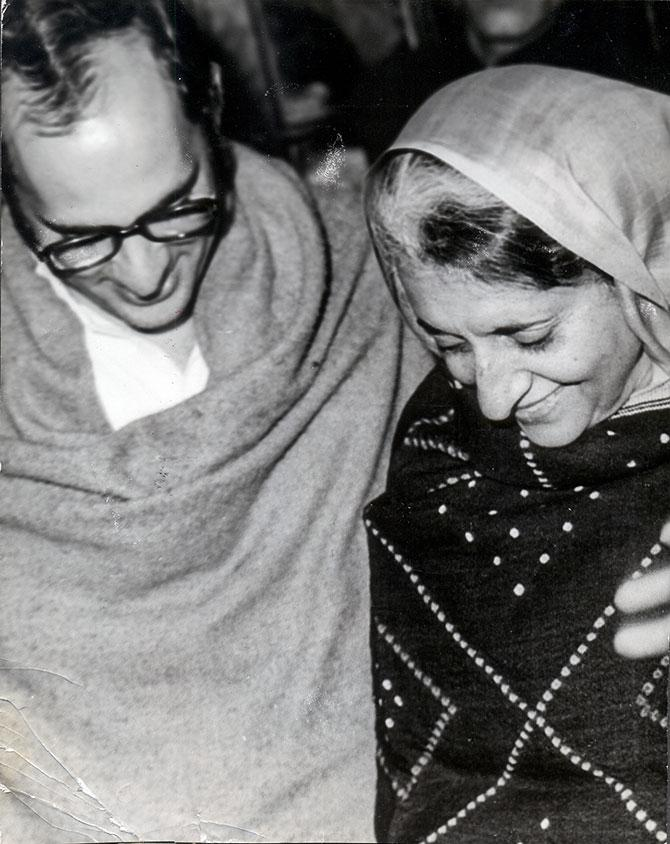
Sanjay’s sudden death upended the political narrative. His elder brother, Rajiv Gandhi, who had steered clear of politics, was thrust into the spotlight, who became prime minister after their mother’s assassination, marking a dramatic turn in India’s leadership. 16/19
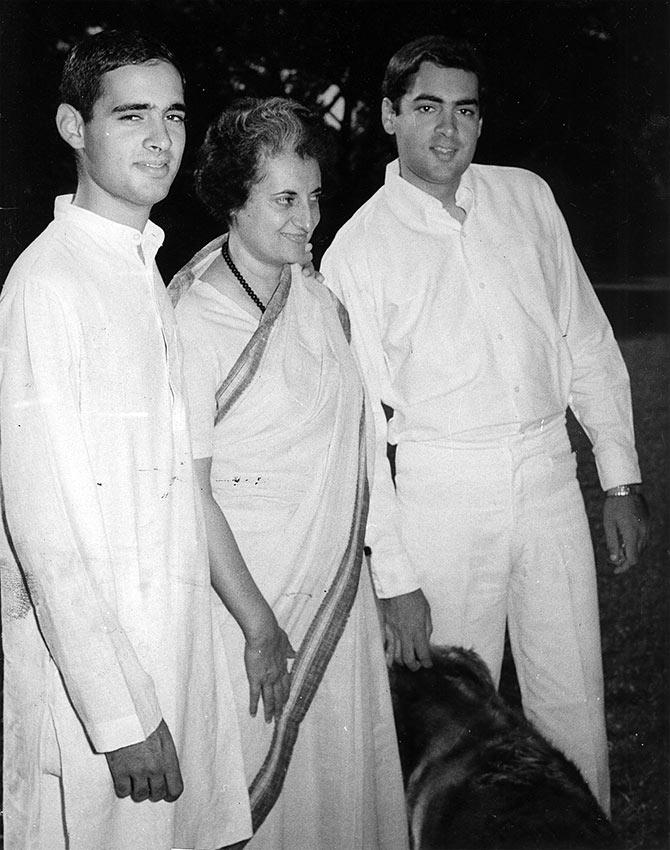
India Today reported, "The dramatic death of Sanjay Gandhi in a plane crash last fortnight was an event of undefinable proportions. Sanjay's dominance has ensured that his passing will leave a political vacuum that is dangerous in its dimensions." 17/19
"The notoriously media-unfriendly Sanjay Gandhi was the paparazzi's nightmare, refusing to succumb to the glare of the limelight. Armed with a fame he didn't try to disown, his politics was harsh, more malevolent. India would have been another kind of country." 18/19
The little reference to Willingdon Airport in Tintin in Tibet might appear as a passing detail. Yet, this humble airfield holds stories intertwined with India’s history—of aviation, power, and tragedy. Sometimes, history hides in plain sight, waiting to be rediscovered. 19/19
Source and References:
Lidhoo, P. (2016, June 24). Capital’s first airport looks for a Plan B. Hindustan Times. hindustantimes.com/delhi/capital-…
Bansal, Radhika, 100 Knots. 100knots.com/safdarjung-air…
Willingdon Airport – Deco In Delhi. (n.d.). Deco in Delhi -. decoindelhi.com/building/willi…
India Today. (2018, June 25). From the archives | If Sanjay Gandhi had lived. India Today. indiatoday.in/magazine/cover…
Ghose, S. (2017, July 20). The Death That Devastated Indira Gandhi. Rediff. m.rediff.com/news/special/t…
Sethi, S. (2014, December 2). Sanjay Gandhi dies in a dramatic plane crash, his passing to leave a political vacuum. India Today. indiatoday.in/magazine/cover…
Lidhoo, P. (2016, June 24). Capital’s first airport looks for a Plan B. Hindustan Times. hindustantimes.com/delhi/capital-…
Bansal, Radhika, 100 Knots. 100knots.com/safdarjung-air…
Willingdon Airport – Deco In Delhi. (n.d.). Deco in Delhi -. decoindelhi.com/building/willi…
India Today. (2018, June 25). From the archives | If Sanjay Gandhi had lived. India Today. indiatoday.in/magazine/cover…
Ghose, S. (2017, July 20). The Death That Devastated Indira Gandhi. Rediff. m.rediff.com/news/special/t…
Sethi, S. (2014, December 2). Sanjay Gandhi dies in a dramatic plane crash, his passing to leave a political vacuum. India Today. indiatoday.in/magazine/cover…
• • •
Missing some Tweet in this thread? You can try to
force a refresh