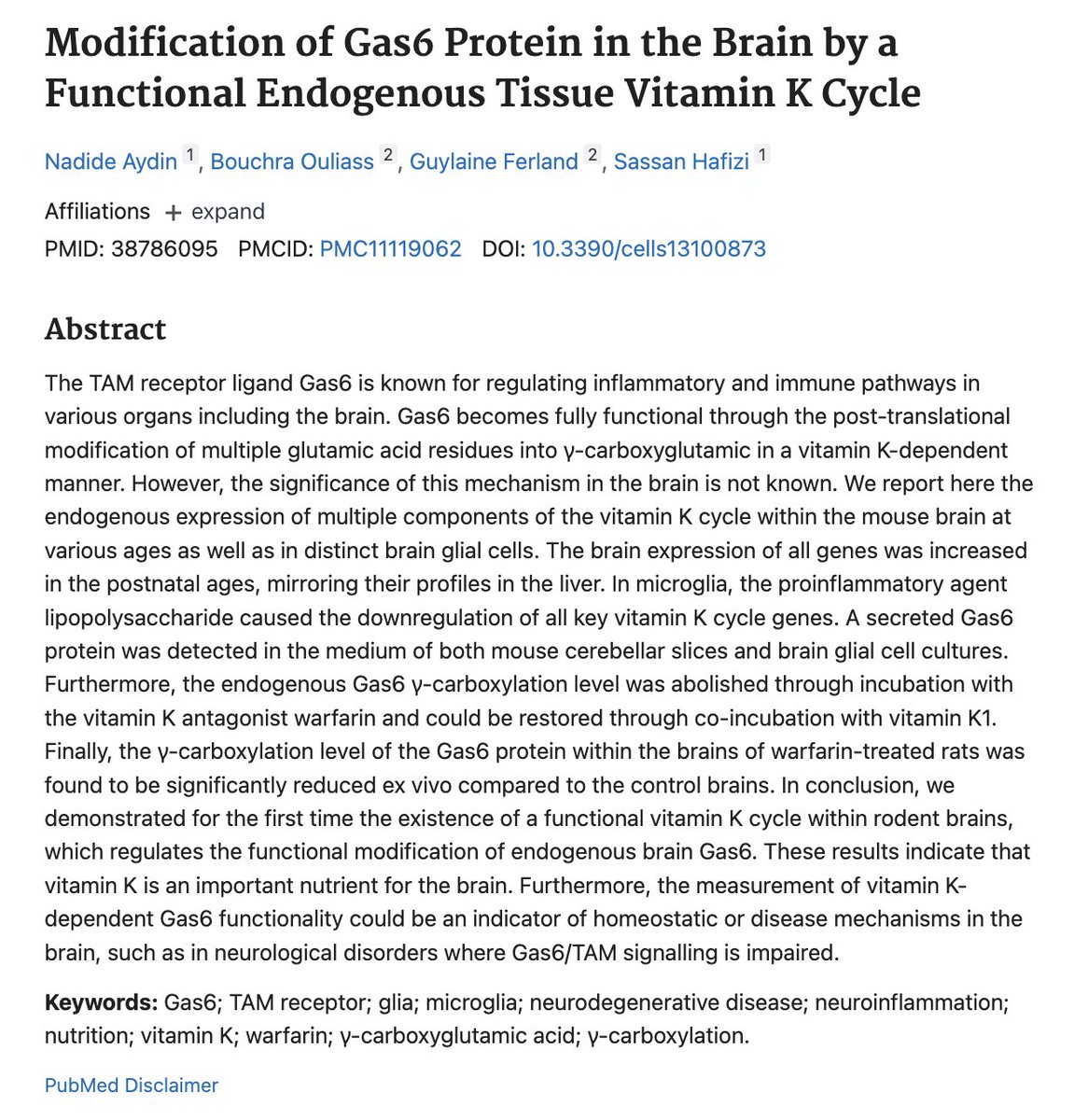
“Your eyesight is bad and only going to get worse.”
This is a lie.
You can improve it with:
• Light therapy
• Eye exercises
• Supplements
• Diet
A thread on how to use these methods for sharp, hawk-like vision. 🧵
This is a lie.
You can improve it with:
• Light therapy
• Eye exercises
• Supplements
• Diet
A thread on how to use these methods for sharp, hawk-like vision. 🧵

It's estimated 30-40% of the population is short sighted, yet some claim this is just genetic.
It makes no sense for evolution to favour poor vision, when 50% of our brain is devoted to it.
Think about it... everyone is staring at screens when our vision is failing...
It makes no sense for evolution to favour poor vision, when 50% of our brain is devoted to it.
Think about it... everyone is staring at screens when our vision is failing...

Our vision relies on these key aspects:
→ the muscles attached to our lenses:
→ the health of our retina
→ functional nerves
→ nutrients
→ blood flow
Let's quickly breakdown a couple of hugely important aspects to maintaining the above.
→ the muscles attached to our lenses:
→ the health of our retina
→ functional nerves
→ nutrients
→ blood flow
Let's quickly breakdown a couple of hugely important aspects to maintaining the above.
The epidemic of near vision strain:
In modern life, we constantly use near vision.
This causes the ciliary muscle, attached to the lens, to contract.
It needs to relax for long-distance vision.
Chronic contraction of this muscle changes the lens shape, leading to myopia.
In modern life, we constantly use near vision.
This causes the ciliary muscle, attached to the lens, to contract.
It needs to relax for long-distance vision.
Chronic contraction of this muscle changes the lens shape, leading to myopia.

The epidemic of toxic blue light
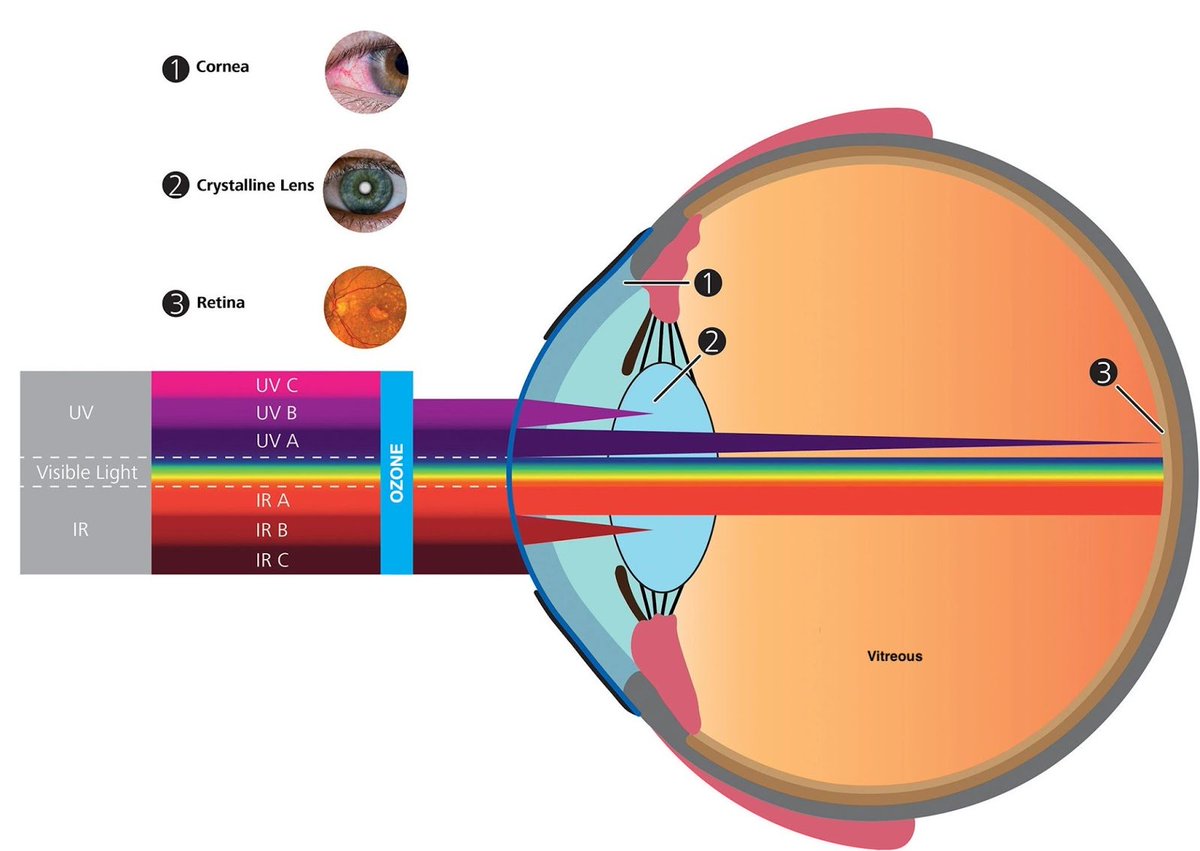
Screens & indoor living expose us to blue light without the full spectrum of sunlight.
Blue light causes oxidative stress in the retina. Usually red light from the sun balances this harm from blue light.
This leads to macular degeneration.
Screens & indoor living expose us to blue light without the full spectrum of sunlight.
Blue light causes oxidative stress in the retina. Usually red light from the sun balances this harm from blue light.
This leads to macular degeneration.
To fix your vision, you need to reconnect with the foundations of eye health:
→ no blue light without red light or the sun's full spectrum.
→ more time relaxing your eye muscles i.e. looking at things in the distance.
What about if your vision is bad? How do we improve it?
→ no blue light without red light or the sun's full spectrum.
→ more time relaxing your eye muscles i.e. looking at things in the distance.
What about if your vision is bad? How do we improve it?
1. Watch sunrises and sunsets
(or get red light/infrared light panels)
These spectrums of light get deep into tissues:
→ stimulates cellular repair
→ blood flow
→ reduces oxidative stress
→ reduces calfication
Key for repairing photoreceptors and the retina.
(or get red light/infrared light panels)
These spectrums of light get deep into tissues:
→ stimulates cellular repair
→ blood flow
→ reduces oxidative stress
→ reduces calfication
Key for repairing photoreceptors and the retina.

2. Eye exercises
Designed for myopia, these exercises help retrain the ciliary muscle.
Distance gazing:
Look into the distance for 15 minutes, study the horizon. Then, focus on something close for a few minutes before returning to the distance for 5 minutes.
Do this often.
Designed for myopia, these exercises help retrain the ciliary muscle.
Distance gazing:
Look into the distance for 15 minutes, study the horizon. Then, focus on something close for a few minutes before returning to the distance for 5 minutes.
Do this often.

CONT
Palming:
Rub your hands together to warm them, then gently cup your palms over your closed eyes. Focus on deep breathing for a few minutes. This relaxes the ciliary muscle and relieves eye strain.
These two practices help you train your celiary muscle to relax.
Palming:
Rub your hands together to warm them, then gently cup your palms over your closed eyes. Focus on deep breathing for a few minutes. This relaxes the ciliary muscle and relieves eye strain.
These two practices help you train your celiary muscle to relax.

3. Diet/nutrients
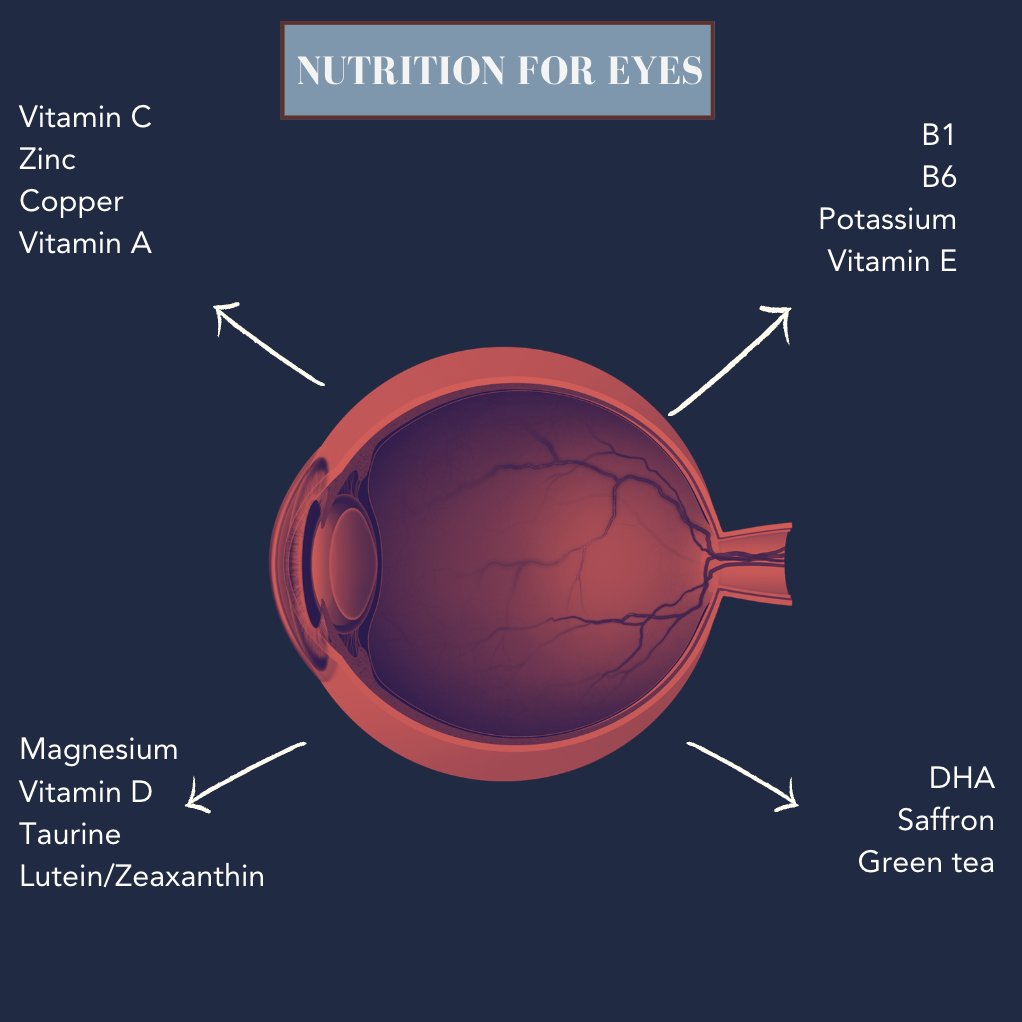
Your celiary muscle and retina need these nutrients:
→ Magnesium: Ciliary muscle relaxation, blood flow, reduce oxidative stress in retina.
→ B1 (Thiamine): Nerve function, protect against retinal oxidative damage.
→ Taurine: Protects photoreceptors, regulates calcium in retina, prevent cellular damage.
→ Vitamin C/E: Antioxidants, protect retina/photoreceptors, reduce ROS, collagen production.
→ Lutein/Zeaxanthin: Filters blue light, protect retina, reduce oxidative stress.
→ Vitamin D: Regulates calcium in retina, supports immune health, prevents retinal inflammation.
→ Calcium: Muscle function (ciliary muscle), cellular signaling in retina.
→ Omega-3 (DHA): Retinal health, photoreceptor function, reduce inflammation, reduce ROS.
→ B6: Nerve function, reduces inflammation, supports neurotransmitters for vision.
→ Vitamin A: Photoreceptors, retina, reduce ROS, night vision.
→ Potassium: Fluid balance, cellular function in retina/ciliary muscle.
Therefore you need:
→ Dairy, sardines, salmon
→ Coconut water, potato, bone broth
→ Beans, nuts, seeds
→ Poultry, pork
→ Liver
→ Sunlight
→Citrus fruit
→ Nuts
→ Brocoli
→ Oysters
Your celiary muscle and retina need these nutrients:
→ Magnesium: Ciliary muscle relaxation, blood flow, reduce oxidative stress in retina.
→ B1 (Thiamine): Nerve function, protect against retinal oxidative damage.
→ Taurine: Protects photoreceptors, regulates calcium in retina, prevent cellular damage.
→ Vitamin C/E: Antioxidants, protect retina/photoreceptors, reduce ROS, collagen production.
→ Lutein/Zeaxanthin: Filters blue light, protect retina, reduce oxidative stress.
→ Vitamin D: Regulates calcium in retina, supports immune health, prevents retinal inflammation.
→ Calcium: Muscle function (ciliary muscle), cellular signaling in retina.
→ Omega-3 (DHA): Retinal health, photoreceptor function, reduce inflammation, reduce ROS.
→ B6: Nerve function, reduces inflammation, supports neurotransmitters for vision.
→ Vitamin A: Photoreceptors, retina, reduce ROS, night vision.
→ Potassium: Fluid balance, cellular function in retina/ciliary muscle.
Therefore you need:
→ Dairy, sardines, salmon
→ Coconut water, potato, bone broth
→ Beans, nuts, seeds
→ Poultry, pork
→ Liver
→ Sunlight
→Citrus fruit
→ Nuts
→ Brocoli
→ Oysters
4. Supplement protocol
→ Saffron
Used by Cleopatra, saffron improves vision when taken daily for 6 months. It also benefits sexual function, mood, and reduces oxidative stress.
→ Vitamin E
Depletion of vitamin E increases retinal damage.
→ EGCG (green tea extract)
Offers retinal protection against ischemia, endotoxins, radiation-induced damage, and diabetic retinopathy.
→ Carotenoids (zeaxanthin and lutein)
These carotenoids form dominant parts of the peripheral retina and can help delay or improve macular degeneration.
→ Red light (670 nm)
Red light therapy has been shown to reduce vision decline and improve eyesight over 12 months. Watching sunrises and sunsets is also beneficial.
→ Pycnogenol
Pycnogenol significantly improves vision in people with macular degeneration associated with diabetic retinopathy. It improves blood flow in the eye.
→ Consider supplementing with:
ZInc, folate, magnesium, cod liver oil, niacin, quercetin, vitamin B6, and vitamin C
→ Saffron
Used by Cleopatra, saffron improves vision when taken daily for 6 months. It also benefits sexual function, mood, and reduces oxidative stress.
→ Vitamin E
Depletion of vitamin E increases retinal damage.
→ EGCG (green tea extract)
Offers retinal protection against ischemia, endotoxins, radiation-induced damage, and diabetic retinopathy.
→ Carotenoids (zeaxanthin and lutein)
These carotenoids form dominant parts of the peripheral retina and can help delay or improve macular degeneration.
→ Red light (670 nm)
Red light therapy has been shown to reduce vision decline and improve eyesight over 12 months. Watching sunrises and sunsets is also beneficial.
→ Pycnogenol
Pycnogenol significantly improves vision in people with macular degeneration associated with diabetic retinopathy. It improves blood flow in the eye.
→ Consider supplementing with:
ZInc, folate, magnesium, cod liver oil, niacin, quercetin, vitamin B6, and vitamin C
Other comments
I wore glasses/contacts every day.
When I improved my light environment and my health, my vision dramatically improved.
I have stopped wearing my contact lenses and glasses.
I wore glasses/contacts every day.
When I improved my light environment and my health, my vision dramatically improved.
I have stopped wearing my contact lenses and glasses.
Lastly, earlier I mentioned "no blue light without red light or suns full spectrum"
This takes commitment.
This means after darkness, no screens without blue light blocking glasses.
Use candles after the sun sets. Use screens outside during the day.
It takes effort.
This takes commitment.
This means after darkness, no screens without blue light blocking glasses.
Use candles after the sun sets. Use screens outside during the day.
It takes effort.
If you liked this post, you can find more in depth information about how to optimize your health in my FREE telegram community:
t.me/Life0ptimized
t.me/Life0ptimized
• • •
Missing some Tweet in this thread? You can try to
force a refresh