Last night I met up with my favorite English teacher, a lifelong friend who teaches both high school and college courses.
In thirty-five years of teaching, she has never been more worried about her students.
She suspects half of her college students use chatbots to generate their essays. They’re turning in “master’s level papers” on subjects they can’t answer basic questions about. She’s started grading on a curve: if a paper is badly written but shows effort, she gives it an A.
She teaches an English course for aspiring elementary school teachers. She asks these future educators if they read. Most of them don’t. They can’t name a favorite author. Several students have told her the thought of teaching kids to read bores them.
It’s worse at the high school level. Her kids don’t talk to each other, they don’t recognize the most basic cultural allusions, they struggle to watch movies. She used to place them in groups for fun creative projects but no longer does because “they have no imagination.”
She’s retiring this year from teaching high school and feels despair over the future of education. Her colleagues are burnt out, are leaving teaching, and their positions are increasingly filled by long-term subs who don’t know the material.
I asked her why she thinks the situation has gotten so dire and she had several theories. Covid school closures. Online classes. Parents who aren’t invested in their children. The ubiquity of phones in schools, which makes it difficult for developing brains to focus.
“Kids used to goof around in the halls between classes,” she told me, near tears. “Now there’s complete silence. I tell stories to make the material fun and they’re not interested. They don’t get jokes. I showed them a clip from Monty Python & the Holy Grail and one kid laughed.”
She also cited the way reading has been taught in the lower grades. A generation ago, many schools made the mistake of replacing phonics instruction (which has been proven to make kids into readers) with “whole-language learning” (which does not).
Phonics (the way most people over 35 learned to read) involves sounding out words until they make sense. Whole-language learning involves looking at the first letters and essentially guessing the rest of a word. It does not work. And it has been a disaster.
Luckily—and this is why I’m ultimately hopeful for the future of education—a growing number of educators recognize that whole-language learning has wrecked a generation’s ability to read. In the past few years, *forty* states have reinstated phonics instruction.
And with the recent push to restrict phone use during school hours—Virginia, California, Florida, Indiana, Louisiana and South Carolina have all banned phones in classrooms—I truly believe that the future of learning in America will be better than the recent past.
Many folks wrongly assume education is a ship that runs itself. It can’t work if teachers aren’t fully funded, if their students aren’t invested in learning, if their parents aren’t invested in them. “People are destroyed for lack of knowledge.” We can’t let that be our fate.
• • •
Missing some Tweet in this thread? You can try to
force a refresh

So, I grew up in total poverty in a farming town in southern Texas. By a lucky chance I was able to attend university. The first week on campus I set foot in the student library, and what followed was one of the most transformative experiences of my life. (thread)
The school's collection of 300,000 volumes seems modest by the standards of Harvard or Yale, but for me it was overwhelming. There were books on every subject I could imagine, and I wanted to read them all. Instinctively I knew this is why I had come to school.
I devoted much of the next four years to wandering the stacks and studying whatever subjects struck my fancy: the origins of the cosmos, the afterlives of Buddhism, alchemical symbolism, glaciers, Gilgamesh - knowledge was abundant and I was hungry for it.
The classics have a reputation for being a chore to read, but if they didn't spark joy they wouldn't have become classics.
Today I bring you ten books that are just pure pleasure:
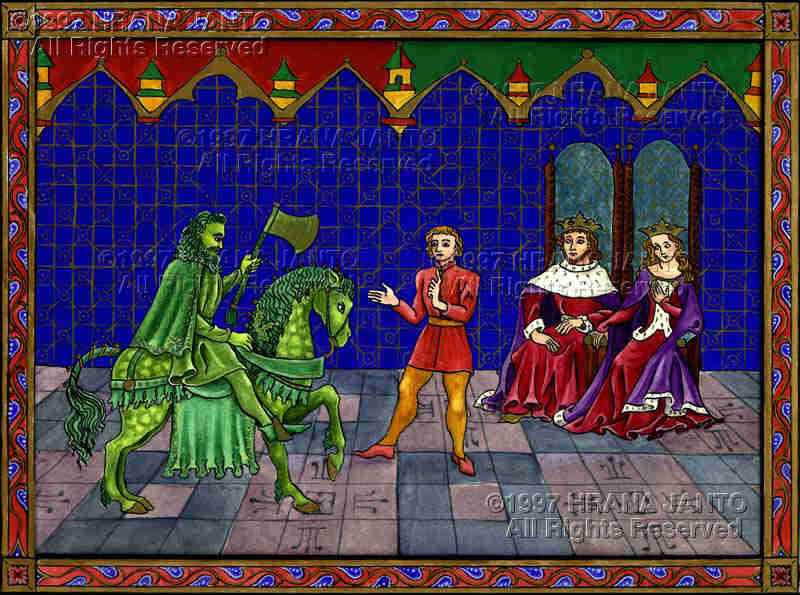
Sir Gawain and the Green Knight. No other book of its era—no other book, period—better captures the medievalist mindset and a certain idea of England. The air of horror and jollity, of strange ladies and green men, would later give us Narnia and Middle-Earth.
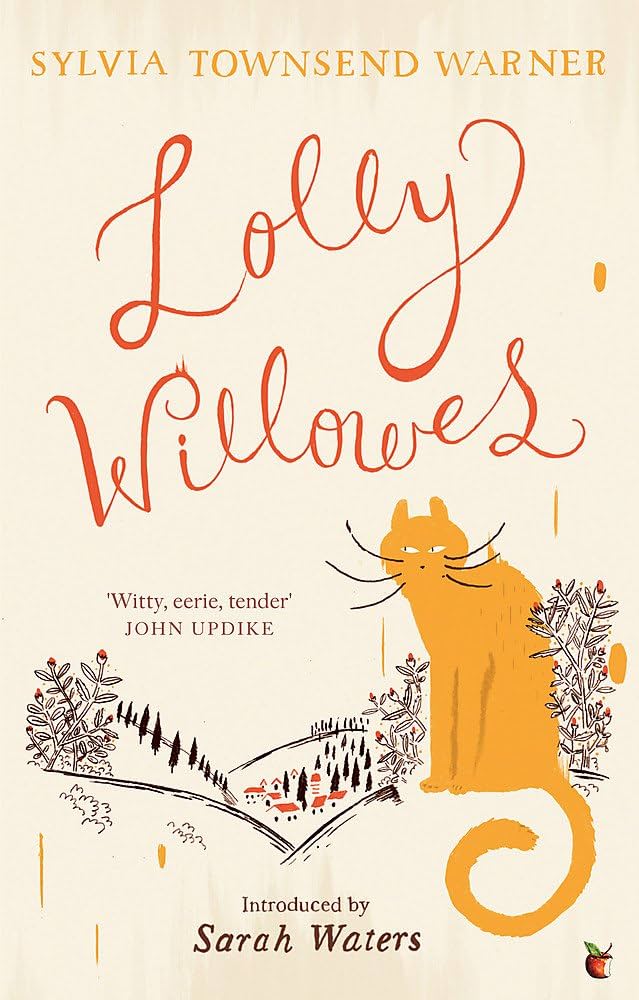
Lolly Willowes, by Sylvia Townsend Warner. Breezily enjoyable satire about a woman who decides she’s a witch and relocates to the woods, where she engages in witchy rites and tries to interest the devil in buying her soul. The natural descriptions are superb.
It’s been called “the medieval Titanic.” On an icy November night in 1120, a ship carrying the future king of England and 250 young men and women sank to the bottom of the English Channel, killing nearly everyone on board.
This is the story of the White Ship disaster.
First, a bit of context. In 1066, William the Conqueror had crossed the Channel from Normandy and become King of England at the Battle of Hastings. His son, Henry, had then declared himself king in 1100 after Henry’s brother William II was killed by an arrow whilst hunting.
Henry I had many sons, only one of them legitimate: sixteen-year-old William Aetheling. The hopes of the nation rested on William, a rather spoiled young man—the medieval version of a senator’s son who joins a fraternity at Yale and spends his evenings getting roaring drunk.
Summer is here, and many of you are seeking books to keep your kids occupied during the school break.
Today I bring a summer reading guide with essential classics for kids and teens. THREAD:
First: please make sure your kids read this summer. We’re in a crisis. The percentage of kids who read for pleasure has dipped from 35 percent (in 1984) to 27 percent (in 2012) to 13 percent (in 2023). As @faithkmoore says, “Civilization depends” on kids reading.
That said…
The Westing Game, by Ellen Raskin. When paper mogul Samuel Westing dies, his sixteen surviving relatives learn that he’s leaving his entire 200 million-dollar fortune to the one who wins the Westing Game. There’s some great character work here and I cry, hard, at the end.
I went through a massive reading slump in 2014. Today I typically read 30 books in a given month. And I want to offer some practical suggestions on how to get back into reading, from someone who’s done it.
01. Start with shorter books and build up your reading stamina. If you’re like me a decade ago, your ability to focus has been sapped by other media. Luckily, this is a problem with a simple solution. The more you read, the easier reading will become.
02. Carry a book with you. I find it very unsettling when I visit airports and everyone—babies, kids, parents—is glued to a screen. We spend a good chunk of our lives in DMV lines and sitting in diners. You can get a shocking amount of reading done in those spare moments.
We went astray when college became about the conferring of a degree to make students competitive in the job market. If they can get the degree without doing the work, they will do it. Schools need to return to their original mission, making kids into well-rounded people. …
As @jhendersonYT said in a recent video, the modern university has two competing and contradictory missions: to get students well-paying jobs, and to educate them in the things that humans have always deemed important: history, music, art, the humanities…
@jhendersonYT But in recent decades universities have begun to see students as their customers, and now view their purpose as catering to those students. Thus getting them credentials has become all-important, and has gradually eclipsed the original mission of schools, to educate.