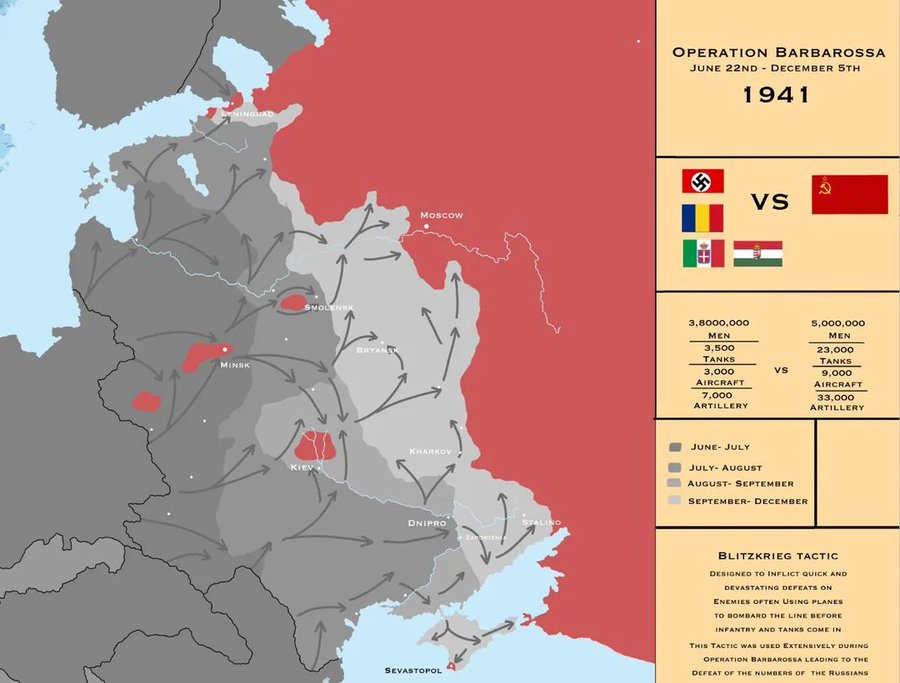
Sometimes the best thing history can offer is contrast.
A selection of haunting wartime Christmas cards that will make you feel grateful you can be with your loved ones today.
Consider it my gift to you.
A selection of haunting wartime Christmas cards that will make you feel grateful you can be with your loved ones today.
Consider it my gift to you.
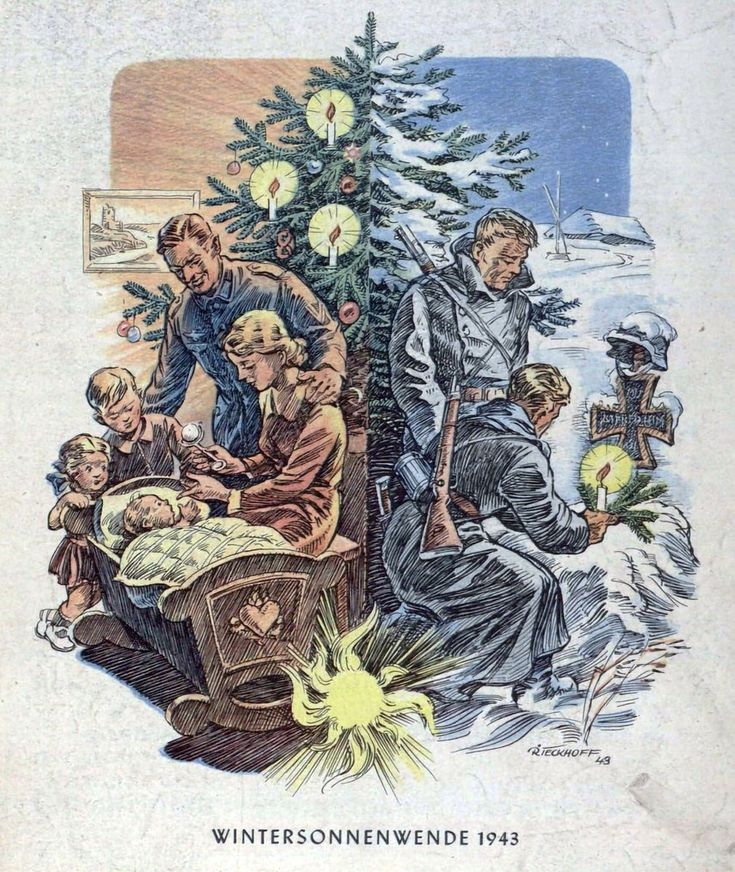
A German illustration from December 1943 captures a stark juxtaposition: A family celebrates Christmas in the warmth of home, while far away on the Eastern Front, soldiers light a candle at a comrade's grave.
During WWII, the British created a bold Christmas card for occupied Denmark.
The front featured a Christmas tree with Adolf Hitler hanging as an ornament among candles.
The front featured a Christmas tree with Adolf Hitler hanging as an ornament among candles.
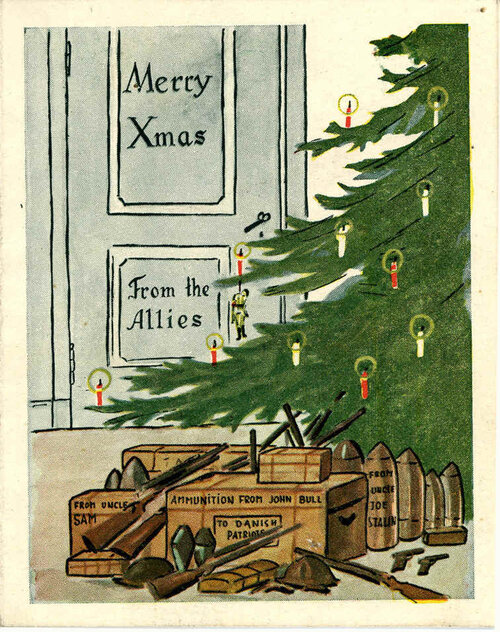
Gifts included crates labeled "Ammunition from John Bull" and "From Uncle Sam," alongside weapons marked "From Uncle Joe Stalin," symbolizing Allied support.
Another Christmas leaflet depicted a lonely mother with her children by a tree. One child asks, “Mom, why isn’t Daddy with us?
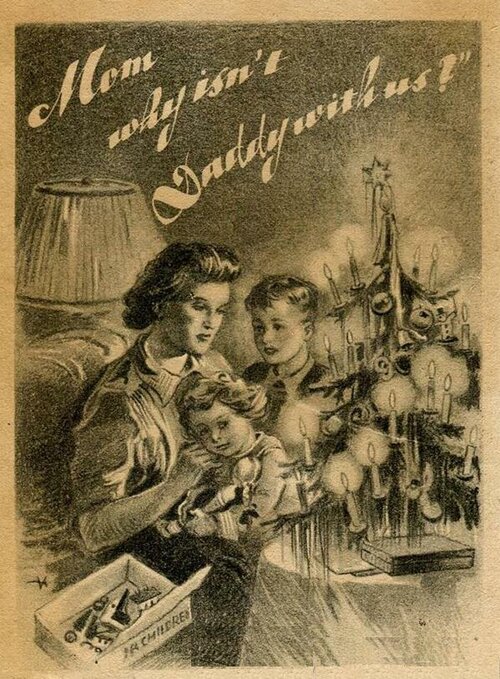
The reverse explained that fathers were absent, consumed by Europe’s endless war, emphasizing the toll of conflict on families during the German occupation.
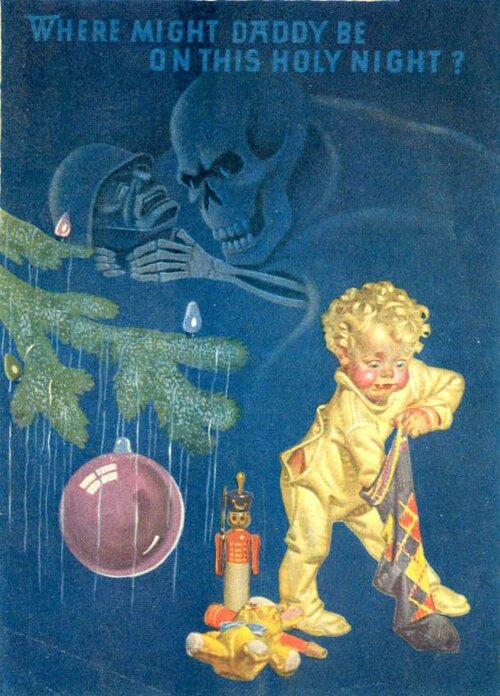
German leaflet showed a Yule scene with a child reaching into a Christmas stocking, toys scattered, and a tree nearby.
Over this idyllic image, the symbol of Death strangling a soldier loomed, accompanied by the text: "Where might Daddy be on this holy night?"
Over this idyllic image, the symbol of Death strangling a soldier loomed, accompanied by the text: "Where might Daddy be on this holy night?"
A joyful crowd gathers around a returning American serviceman during Christmas. This leaflet, first distributed in November 1944, bears the title:
"Home - To Come Home at Christmas"
"Home - To Come Home at Christmas"
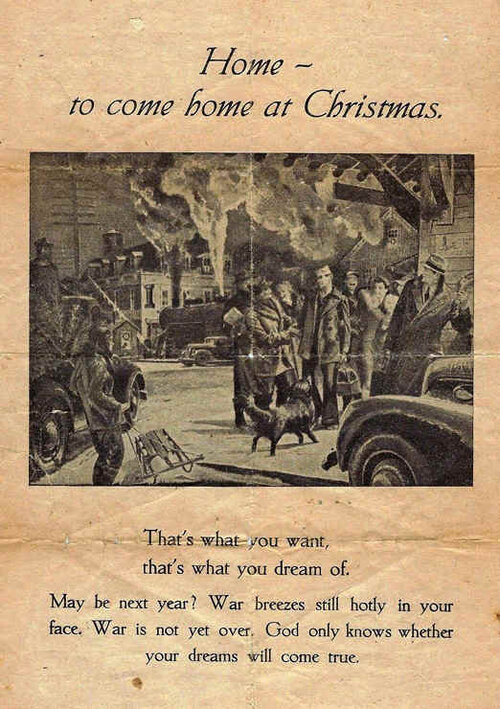
On its reverse side, four somber paragraphs confront the American soldier with a stark reality:
the war is far from over, and there remains the grim possibility of returning home wounded or permanently maimed.
the war is far from over, and there remains the grim possibility of returning home wounded or permanently maimed.
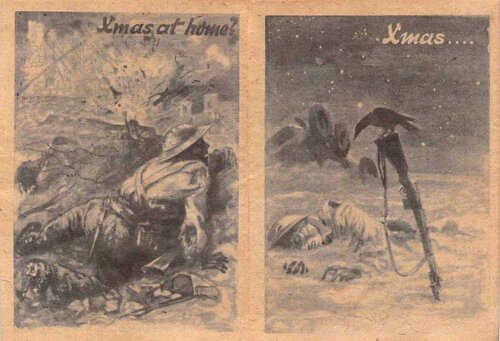
On the left, a soldier is depicted under intense artillery fire, accompanied by the ominous question:
"Xmas at home?"
On the right, the grim aftermath is shown—a lifeless soldier, his body still, as a crow perches on the stock of his rifle. The single, haunting word:
"Xmas…"
"Xmas at home?"
On the right, the grim aftermath is shown—a lifeless soldier, his body still, as a crow perches on the stock of his rifle. The single, haunting word:
"Xmas…"
This American leaflet was aimed at German troops fighting in Italy.
The front features a photograph of a German wife at home with her young daughter. Her expression reveals deep worry and sorrow.
The front features a photograph of a German wife at home with her young daughter. Her expression reveals deep worry and sorrow.

A card with on the back:
Well soldier, here you are in “no-Mans land,” just before Christmas far away from home and your loved ones.
Your sweetheart or wife, your little girl, or perhaps even your little boy, don’t you feel them worrying about you, praying for you?
Well soldier, here you are in “no-Mans land,” just before Christmas far away from home and your loved ones.
Your sweetheart or wife, your little girl, or perhaps even your little boy, don’t you feel them worrying about you, praying for you?
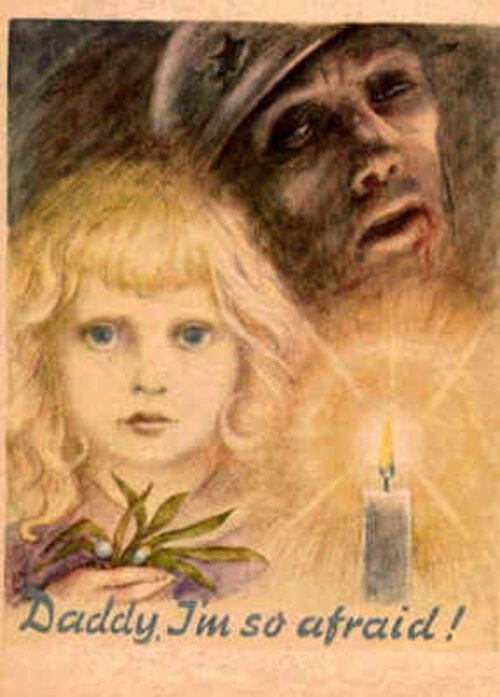
Yes old boy, praying and hoping you’ll come home again, soon.
Will you come back, are you sure to see those loved ones again?
Will you come back, are you sure to see those loved ones again?
Thanks for sticking with me.
Give your loved ones an extra hug today.
You are alive, warm, and most importantly, together.
A big shout out to SGM Herbert A. Friedman (Ret.) who has collected most of these illustrations.
Give your loved ones an extra hug today.
You are alive, warm, and most importantly, together.
A big shout out to SGM Herbert A. Friedman (Ret.) who has collected most of these illustrations.
• • •
Missing some Tweet in this thread? You can try to
force a refresh