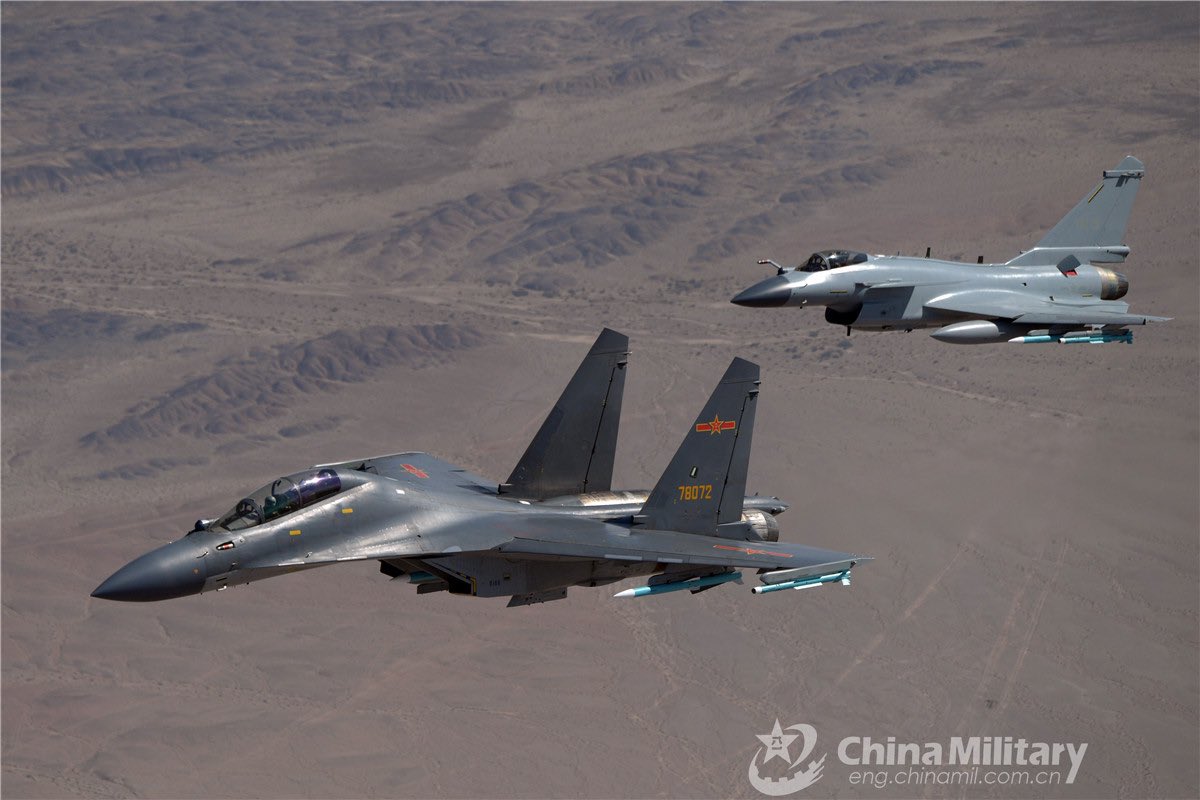
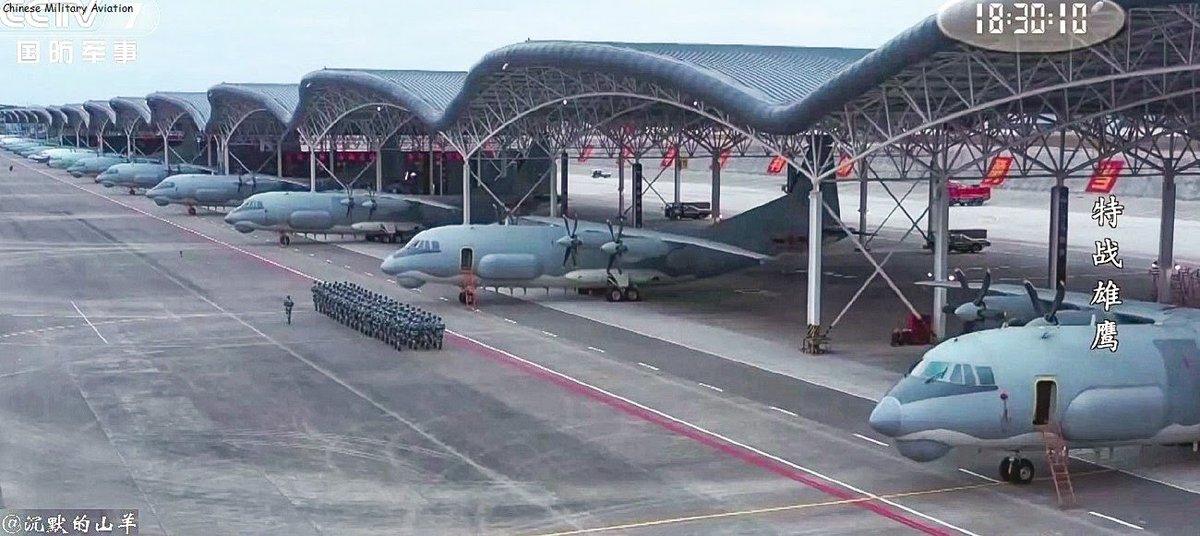
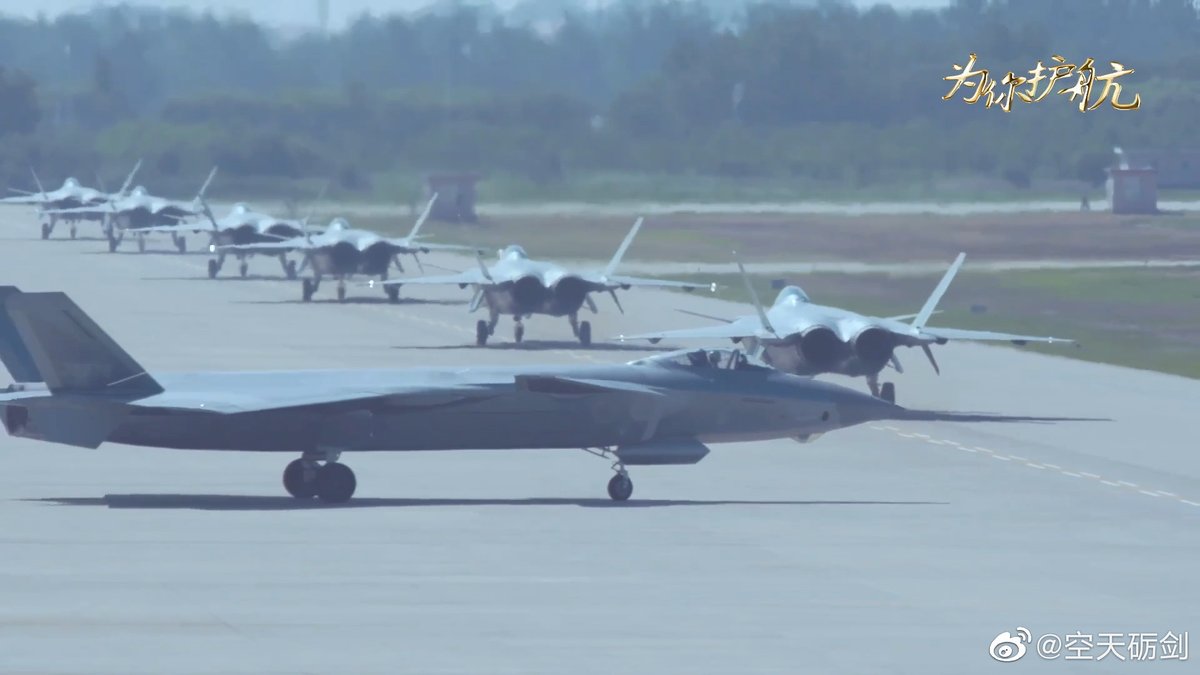
I will do a piece for @Diplomat_APAC in time, but for now -- preliminary thoughts on the role of CAC's new generation combat aircraft ("J-36").
We've had rumours of this for a while now, via the same sourcing and methods that predicted J-20 14 years ago and many PLA projects. 1/
We've had rumours of this for a while now, via the same sourcing and methods that predicted J-20 14 years ago and many PLA projects. 1/
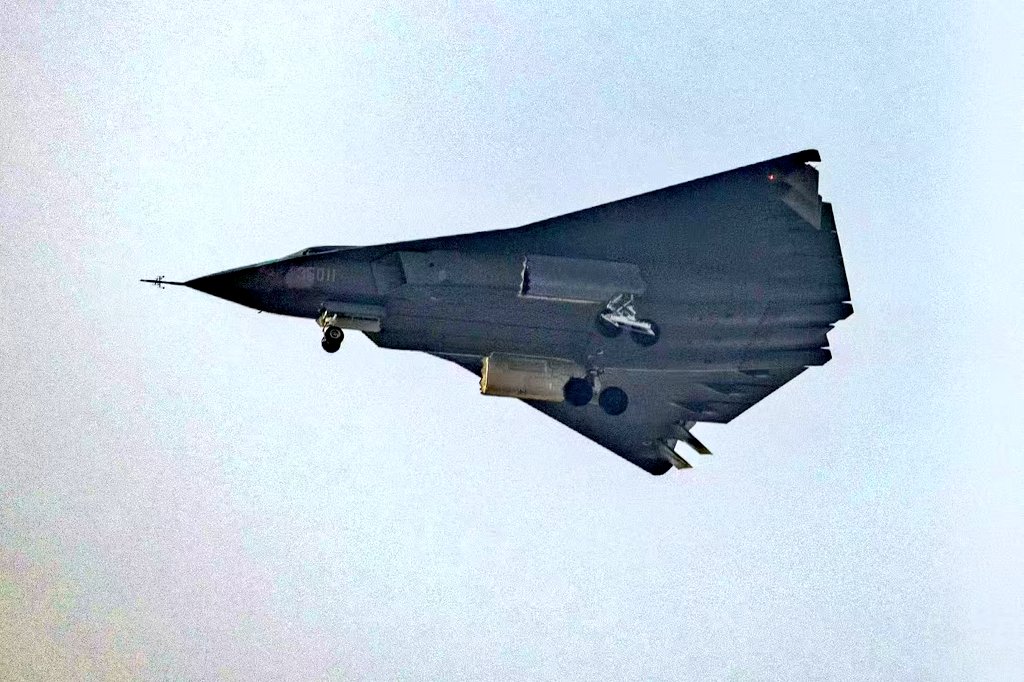

This grapevine gave us characteristics of this "J-36" (I called "J-XD"), including its rough size, engine configuration, and yes its role and its descriptor as "6th generation".
I view numerical generations as neither here nor there, so I will refer it as "new generation". 2/
I view numerical generations as neither here nor there, so I will refer it as "new generation". 2/
Role discussion is less fluid: this CAC aircraft is spoken of as A2A oriented (though as with all modern tactical aircraft, a degree of multirole capability is expected).
I observe many have made arguments that this may be a fighter-bomber/striker, or an outright bomber. 3/
I observe many have made arguments that this may be a fighter-bomber/striker, or an outright bomber. 3/
The rationale is fair -- J-36 is large. It's a dorito flying wing, without overt control surfaces poking out. It doesn't "look" like a traditional air superiority aircraft.
One might be reminded of B-21/B-2, but with a narrower wingspan for supersonic intent. 4/
One might be reminded of B-21/B-2, but with a narrower wingspan for supersonic intent. 4/


All this depends on how one views the "air superiority" mission of the future.
It's no secret that everyone, including the USAF, is pursuing a system of systems approach involving progressively more capable and distributed UCAVs/CCAs and other platforms.
The PLA is too. 5/
It's no secret that everyone, including the USAF, is pursuing a system of systems approach involving progressively more capable and distributed UCAVs/CCAs and other platforms.
The PLA is too. 5/
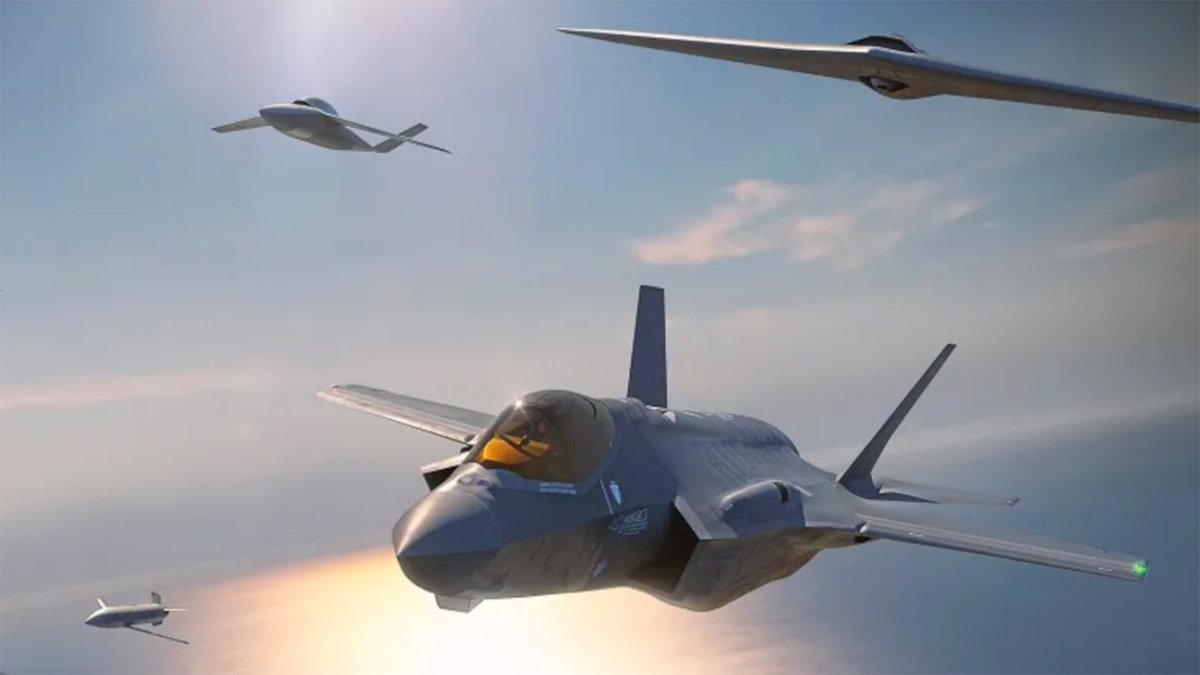


Those advances may lower the relative value of traditional maneuvering compared to previous "generations".
The higher yield characteristics may be signature reduction, sensing, networking, friendly CCAs, weapons, power generation, processing, range/endurance. 6/
The higher yield characteristics may be signature reduction, sensing, networking, friendly CCAs, weapons, power generation, processing, range/endurance. 6/
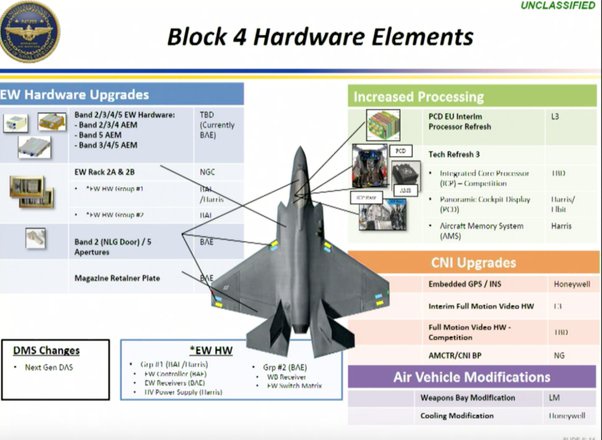
There is evidence of that with contemporary aircraft upgrades -- F-35 Block 4's focus lies more on software, avionics, power management, weapons suite than pulling more Gs or bleeding edge kinematics. Same is rumoured for the new J-20A even though it benefits from WS-15. 7/
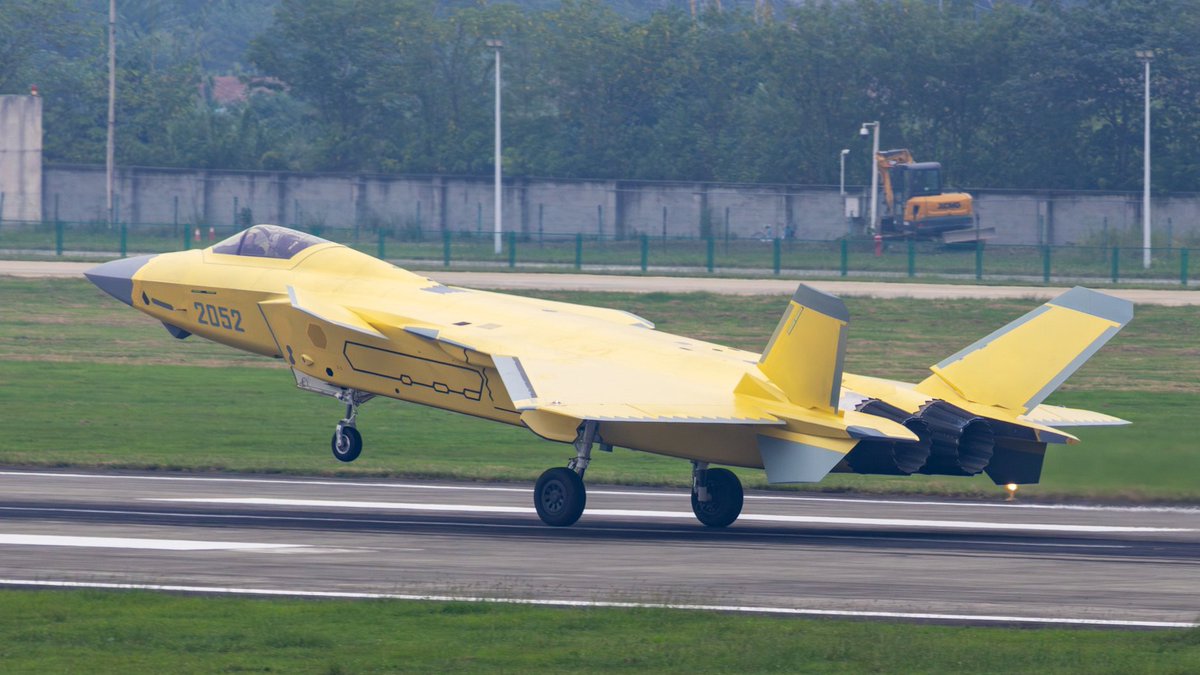
At this stage, estimates of J-36's size puts it maybe a bit longer than J-20 at 21-23m, with a wingspan of 20m or so. For a blended delta flying wing with a rather thick fuselage, that is a big plane.
Even with three engines, that is plentiful internal volume and mass. 8/
Even with three engines, that is plentiful internal volume and mass. 8/
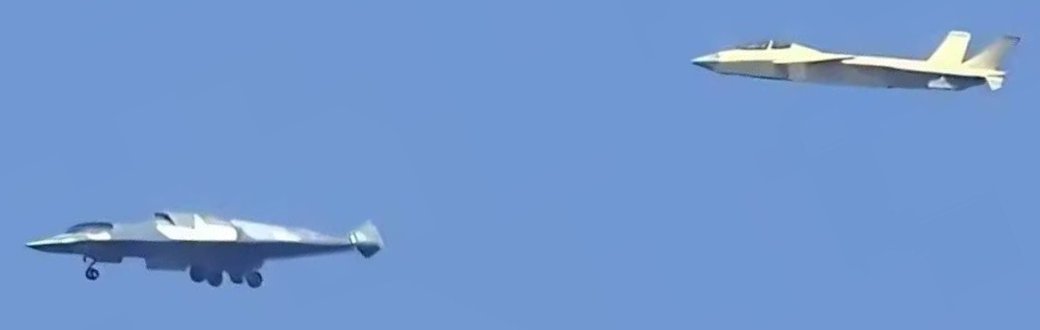
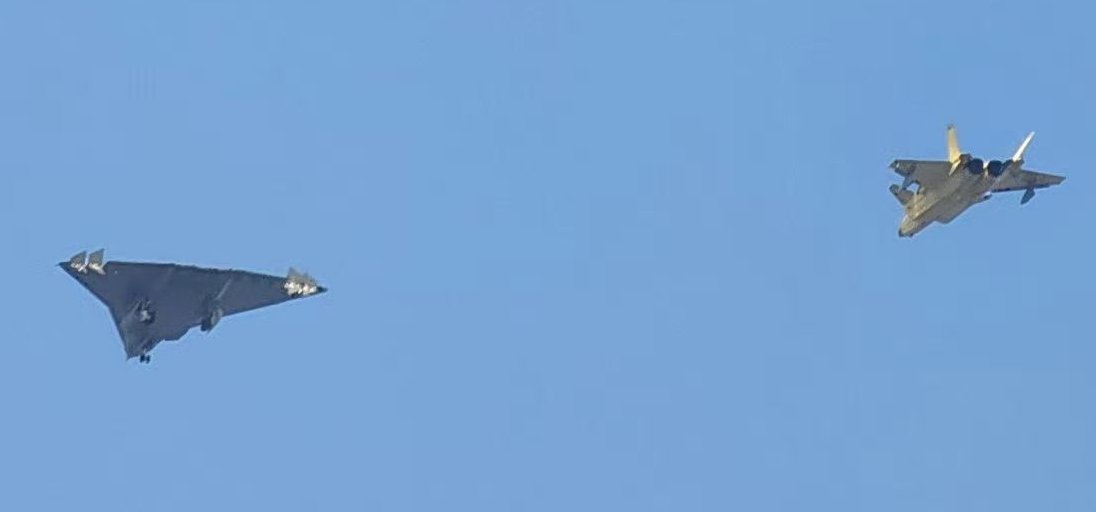
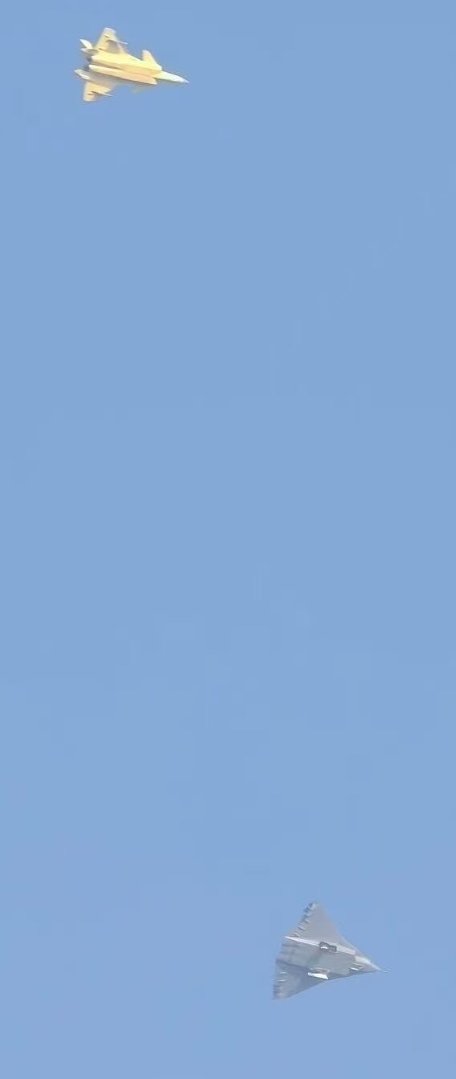
That capacity can be for fuel, networking, sensors, processing, power generation, cooling, and yes weapons.
Even with poor imagery, we can see J-36 has a larger IWB than J-20. But that is not decisive towards the A2A or strike role. 9/
Even with poor imagery, we can see J-36 has a larger IWB than J-20. But that is not decisive towards the A2A or strike role. 9/
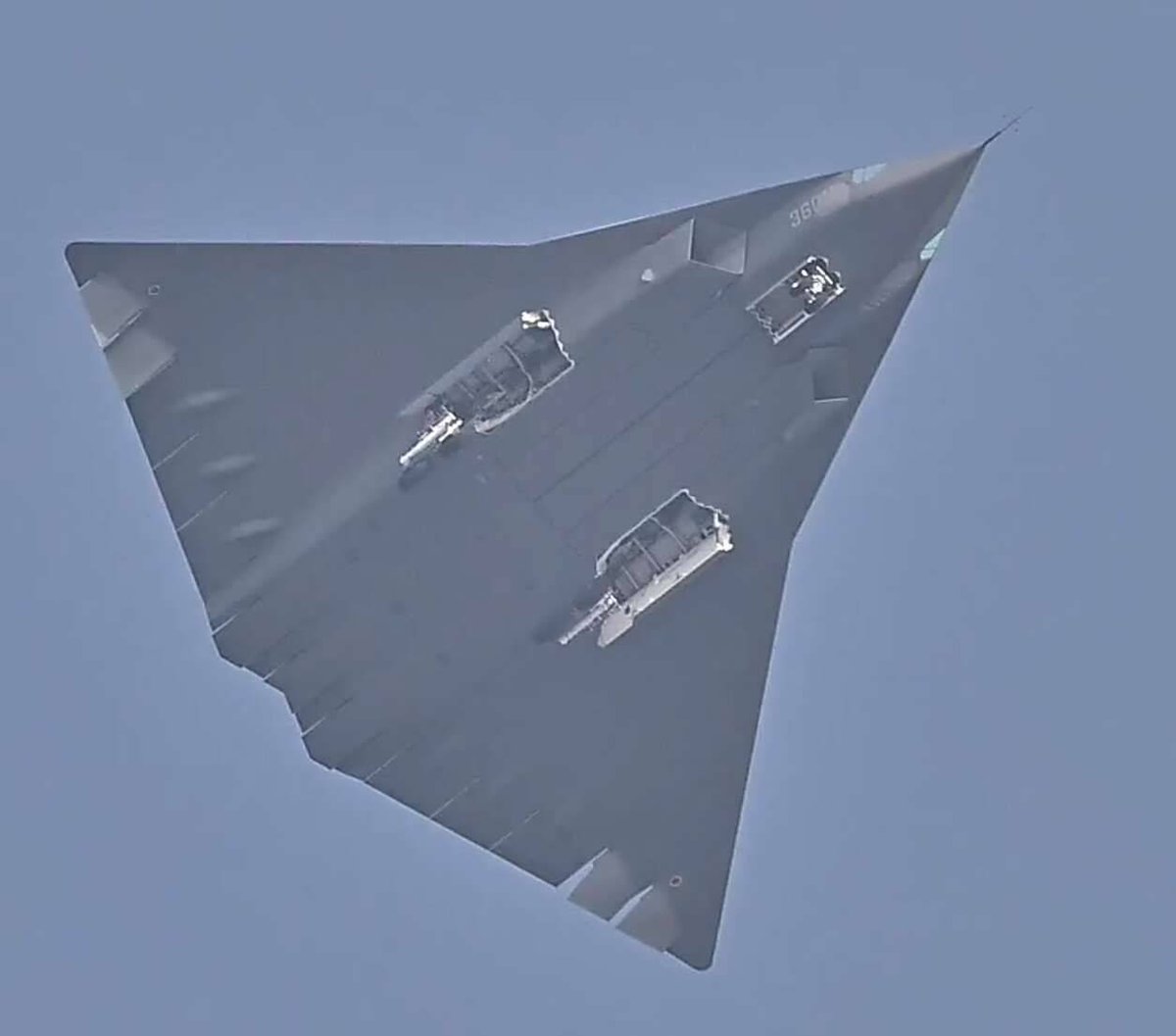
For the A2A role, a large IWB means internal carriage of large weapons such as the PL-17 VLRAAM, or a greater no. of traditional sized BVRAAMs or emerging shorter length BVRAAMs.
In the strike role, a large IWB means internal standoff weapons, or even a rotary launcher. 10/
In the strike role, a large IWB means internal standoff weapons, or even a rotary launcher. 10/
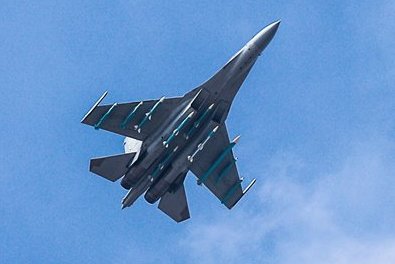
However, those options can exist on the same multirole aircraft if large enough, and logical to pursue especially if the air superiority mission is enabled by your weapons, sensors, networking, and friendly CCAs/UCAVs. 11/
Or -- what is the difference between a modern long range air superiority aircraft versus a modern theater strike aircraft?
I would offer the answer -- possibly very little, barring an air superiority aircraft may have slightly higher AoA/kinematic needs vs a striker. 12/
I would offer the answer -- possibly very little, barring an air superiority aircraft may have slightly higher AoA/kinematic needs vs a striker. 12/
I.e.: you'll still need to account for some high AoA maneuvers, so you might not put your intakes on the dorsal fuselage (J-36 has two side intakes, and possibly a single intake, likely feeding one engine each).
But it means you probably won't be pulling cobras at airshows. 13/
But it means you probably won't be pulling cobras at airshows. 13/

And while other new generation combat aircraft in the world are not yet flown and aren't yet conclusive, trends to VLO, larger size, seems consistent: such as with the latest GCAP design (p1), industry concept art of NGAD (p2), or think tank visions of NGAD (p3). 14/
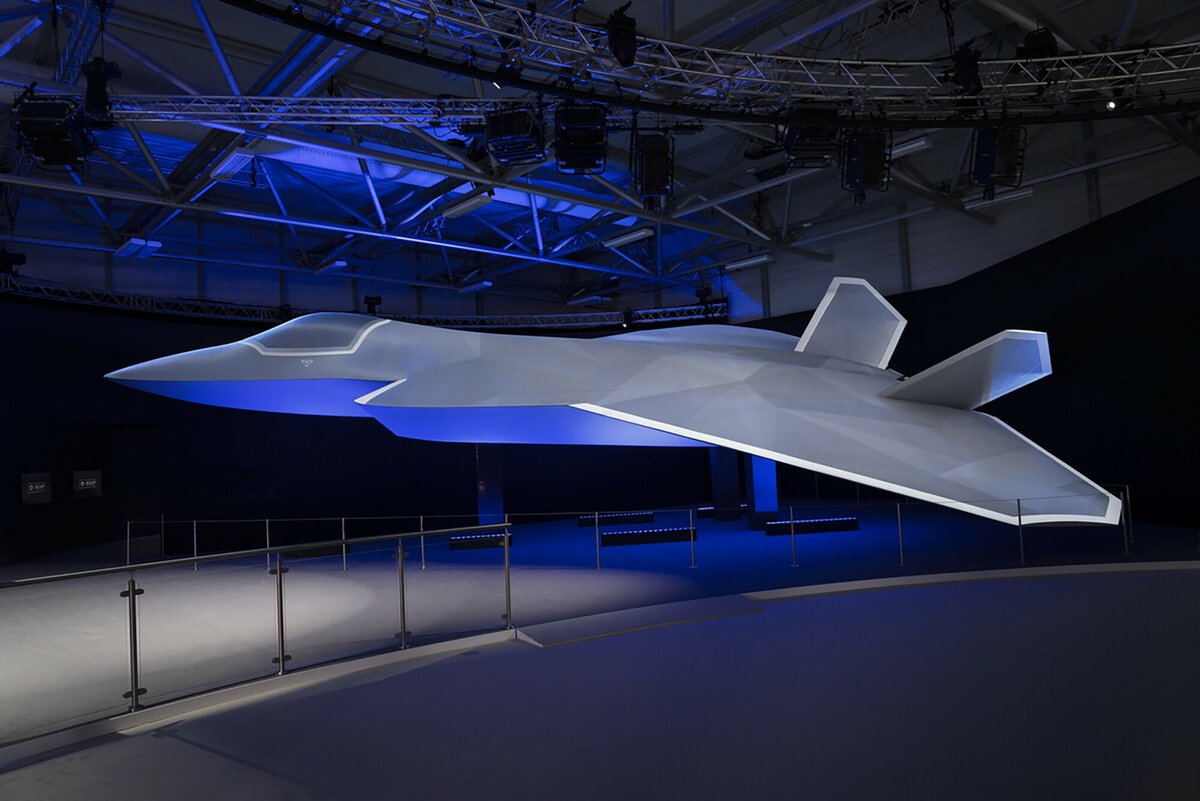


I propose, the near future of air superiority manned combat aircraft are large, stealthy, command+processing platforms to direct friendly UCAVs and other manned fighters, with its own capable weapons+sensors to engage, and enough kinematics to engage on its own terms. 15/
As UCAVs/CCAs become more autonomous and onboard processing advances, the benefits of a manned air superiority combat aircraft are likely to grow too -- the rate limiting factor will be human attention in the cockpit.
But "fighter aircraft" may become an anachronistic term... 16/
But "fighter aircraft" may become an anachronistic term... 16/
... and it will be "combat aircraft" that exerts the highest yield effects by acting as linchpins of your aerial warfare system-of-systems, in a manner where they can command in a stealthy, persistent way -- yet possessing organic lethality and sensing in their own right. 17/
Finally, on a different note, many have compared the USAF NGAD demonstrator(s) described by DoD as flown in years past, with J-36 (and the SAC new gen aircraft), in terms of "first to 6th/next gen" milestones.
I think this is a very valid point to make... 18/
I think this is a very valid point to make... 18/
... but the true measure of this comparison IMO depends on how representative the NGAD demonstrator(s) are of the final NGAD article procured by the USAF -- and same goes for J-36 and SAC's new gen airframe too for the PLA. 19/
Also, we know flight demonstrators relevant to 6th/new gen planforms preceded J-36 and SAC aircraft. We may have seen one of them at CAC a few years ago; a tailless, near J-10 sized airframe.
This is not a case of "instinctively showing off" the newest toy they had. 20/
This is not a case of "instinctively showing off" the newest toy they had. 20/


There is more to be said about this plane in coming weeks/months/years: from procurement in PLA context, to rationale of its unique three engine configuration, to complementary aircraft (PLA's UCAVs/CCAs), and SAC's new plane.
But for now, this is my view of J-36's role.
21/end
But for now, this is my view of J-36's role.
21/end
• • •
Missing some Tweet in this thread? You can try to
force a refresh