US President Jimmy Carter has died.
We do not mourn Jimmy Carter. Today we mourn the 2,000 martyrs of Gwangju, who were slaughtered by the South Korean military regime with the support and knowledge of the Carter Administration.

We do not mourn Jimmy Carter. Today we mourn the 2,000 martyrs of Gwangju, who were slaughtered by the South Korean military regime with the support and knowledge of the Carter Administration.
https://x.com/nodutdol/status/1659197510647435264

On May 17, 1980, Col. Chun Doo Hwan of South Korea declared martial law in the face of a rising movement for democracy led by students and workers.
In the city of Gwangju, students rose up in protest. Soldiers at the scene killed a deaf man, Kim Gyeong Cheol—sparking a rebellion
In the city of Gwangju, students rose up in protest. Soldiers at the scene killed a deaf man, Kim Gyeong Cheol—sparking a rebellion

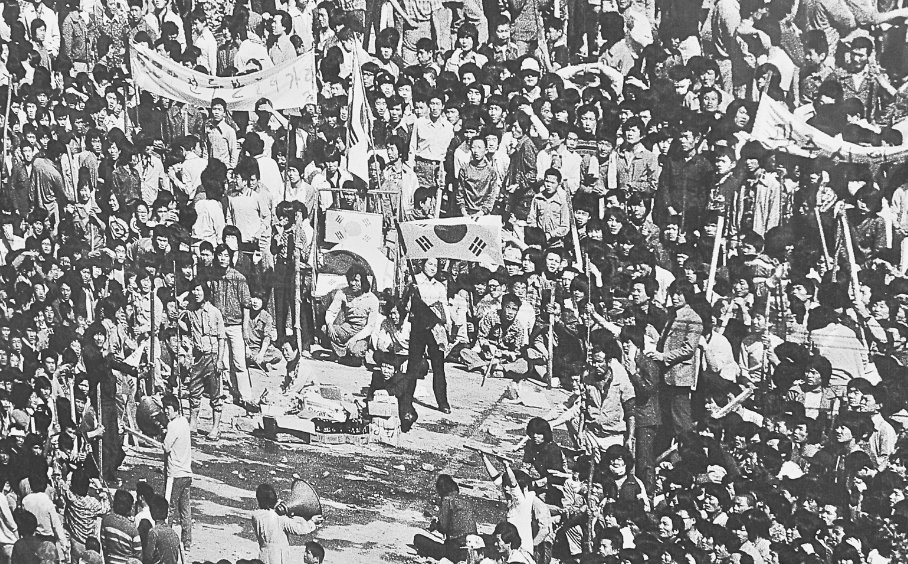
The Gwangju Uprising seized control of the city for 9 days. The people of the city formed committees to govern themselves, organizing food distribution, medical aid, self-defense, and more. Many hoped the US would intervene on their behalf.
But the US saw Gwangju as a threat.
But the US saw Gwangju as a threat.

Just a year after the 1979 Revolution in Iran, the US feared losing another vital US asset to a popular uprising.
According to journalist Tim Shorrock (@TimothyS), President Carter determined the rebellion should be crushed militarily on May 22 thenation.com/article/world/…
According to journalist Tim Shorrock (@TimothyS), President Carter determined the rebellion should be crushed militarily on May 22 thenation.com/article/world/…
On May 27, 20,000 South Korean soldiers stormed Gwangju and began a campaign of mass repression. Soldiers butchered people in the streets, disappeared activists, and engaged in rape and sexual torture.
All of this occurred with US knowledge and approval
en.yna.co.kr/view/AEN201810…
All of this occurred with US knowledge and approval
en.yna.co.kr/view/AEN201810…
In 2023 we sent a delegation to South Korea that visited the May 18th National Cemetery, where 775 martyrs are buried.
There are 67 empty graves for people whose bodies were never found. Many activists claim that at least 2,000 people died in Gwangju. english.hani.co.kr/arti/english_e…
There are 67 empty graves for people whose bodies were never found. Many activists claim that at least 2,000 people died in Gwangju. english.hani.co.kr/arti/english_e…
🚨CONTENT WARNING: GRAPHIC DEPICTION OF TORTURE AND DEATH
We also visited the 5.18 National Archives and bore witness to the torture and repression inflicted on the people of Gwangju, memorialized in photographs and replicas.
We also visited the 5.18 National Archives and bore witness to the torture and repression inflicted on the people of Gwangju, memorialized in photographs and replicas.


To celebrate Jimmy Carter is to celebrate US imperialism.
Join us instead in celebrating the martyrs of the Gwangju Uprising, who gave everything for our people's liberation. One day Carter's name will mean nothing, but the heroes of Gwangju will live on forever.
Join us instead in celebrating the martyrs of the Gwangju Uprising, who gave everything for our people's liberation. One day Carter's name will mean nothing, but the heroes of Gwangju will live on forever.

• • •
Missing some Tweet in this thread? You can try to
force a refresh