🧵 Area Denial – How to Lock Down the Battlefield!
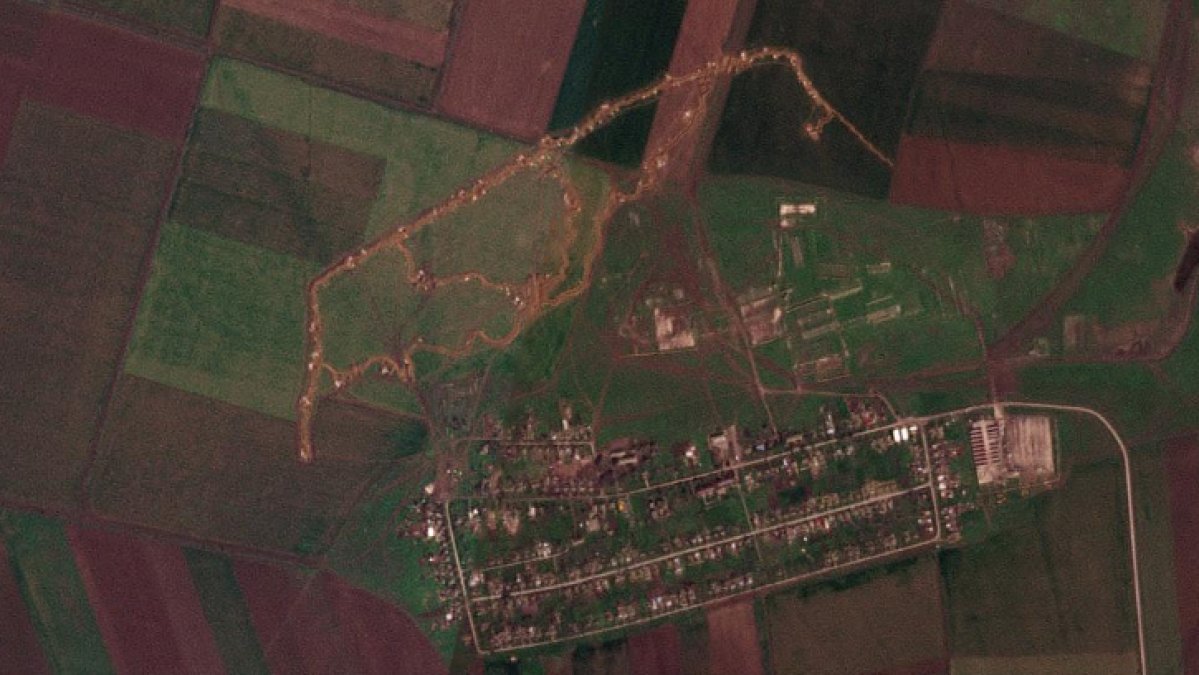
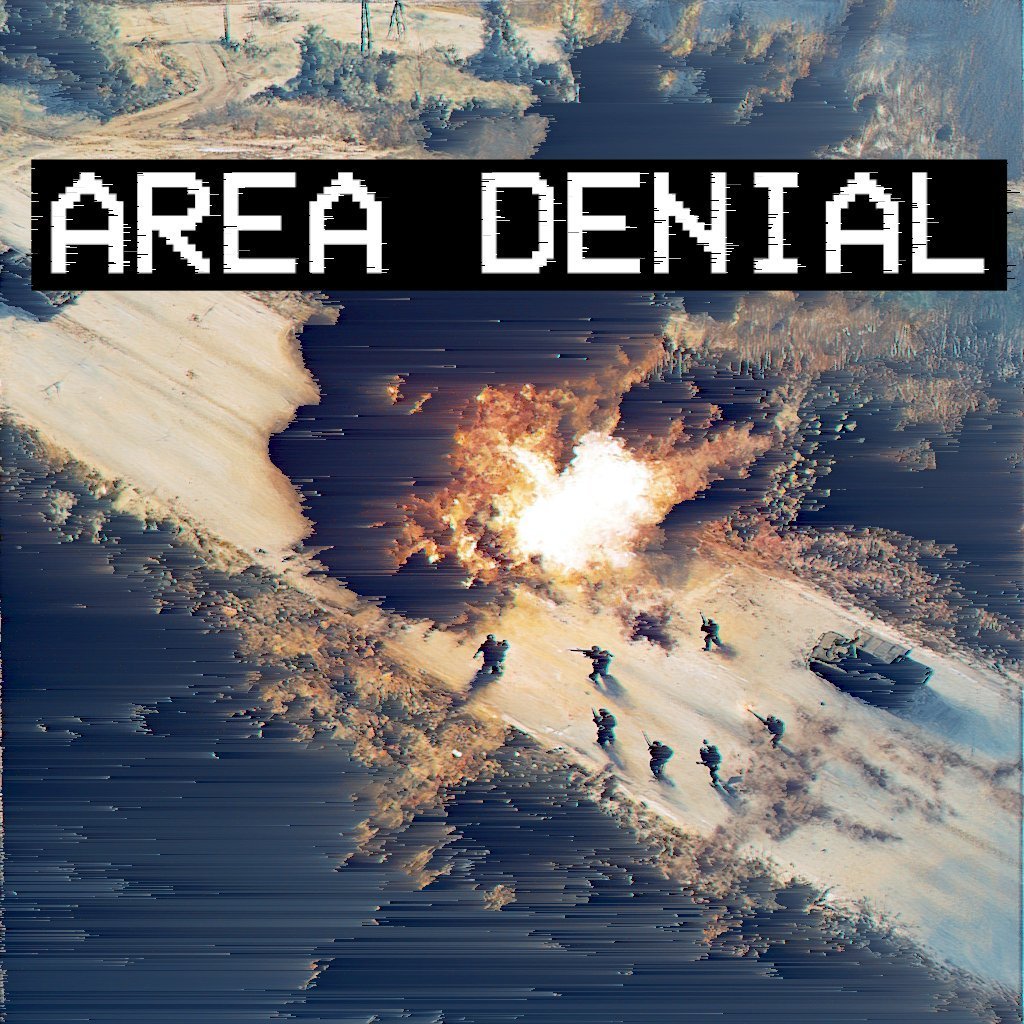
Area denial, sometimes referred to as anti-access, is a common military tactic to control the access into and out of an area. Area denial is a particularly useful tool for irregular forces such as smaller special forces teams, guerrillas, and militias. The US military considers the adoption of area denial strategies by adversarial forces as, “[something] that may well be the most difficult operational challenge US forces will face over the coming decades.” While that quote may be from 2012 (JOAC 17 January 2012), it still rings true and can be seen in areas such as Ukraine where FPV drones create zones that units can only enter at their own peril. Area denial is a powerful tool in the strategic toolbox for units to make use of to help slow or fully stop the movement of enemy forces through an area.
As usual, little disclaimer right here. THIS IS NOT ADVICE TO GO DO ANYTHING ILLEGAL. DO NOT BREAK THE LAW. DO NOT CONSIDER BREAKING THE LAW. I DO NOT SUPPORT ANY EXTREMIST ORGANIZATIONS OR MOVEMENTS. I DO NOT SUPPORT ANY INSURRECTIONIST MOVEMENTS. I DO NOT ADVOCATE FOR ANY EXTREMIST ORGANIZATIONS, MOVEMENTS, OR IDEAOLOGIES. PLEASE DON’T DRONE STRIKE ME.
Key Principals.
Prior to getting into the various forms of area denial and how they are employed, the key ideas behind it need to be explained. Beginning with the economy of effort. That is to say, the goal of creating the greatest effect with the least amount of effort. If we want to stop an enemy in an area, you can position an army in an area but that requires men, supplies, logistics, weapons, and more that you have to take away from other areas. Instead, if you can leave behind a series of traps with only a handful of men, you maximize your defensive capabilities without having to throw piles of resources at the issue.
Area denial is also a very robust strategy that can be used in rural or urban environments, different strategies and tools can be employed in different environments. Whether the force is denying a road in a mountainous area to a series of fields in the flatlands of Iowa, area denial can be employed to great success.
Area denial strategies also synergize well with other common defensive measures and can create overall plans of defense that are iron clad despite having limited equipment or manpower. For example, making use of observation posts operating as an observer for an FPV unit or an ambush that triggers when an enemy unit triggers a trap. This allows the already amplified force to be multiplied by an even greater factor.
Finally, is the psychological impact that area denial tactics have. Creating a zone of alienation that units cannot enter lest they put themselves in peril creates a heavy sense of unease in the enemy, weakening their fighting spirit. Couple this with any losses gained in the area, it can force smaller-sized units in the area to think twice about entering the area and overall hurt the morale of the enemy.
Forms of Area Denial.
Employment of area denial strategies comes in two forms, passive and active measures. It is as simple as it sounds, it is simply whether the measure requires a human element to happen or not. It does not get easier than that! This list will be non-exhaustive because human creativity will always outperform my ability to research. Note that both passive and active measures can be synergized with other defensive tactics.
Passive Area Denial Strategies.
Landmines/Roadside Explosives/IEDs (timer or pressure plate triggered) – these are employed along areas where anticipated enemy movement is to occur and are triggered by their simple movement over the area. Once triggered, the enemy is hit with instant casualties and if coupled with an ambush, could decimate an enemy force.
Booby Traps – simple hidden devices are triggered by interaction with the environment such as opening a door and triggering a hand grenade, stepping on a false floor into a spiked pit, or moving an object that pulls a string that triggers a hidden weapon. The possibilities are endless and can be constructed to maim or eliminate enemies or to impede or ruin vehicles as well. This could be an article of its own, that is how vast the world of booby traps is.
Camouflage – the simple act of making an area appear impassable or appear normal to funnel forces into a certain area.
Barriers – placing of heavy and awkward items in the way of passageways on roads or paths to slow or prevent movement. Can come in the form of vehicles, simple concrete walls, Czech hedgehogs, tank trenches, or razor wire.
Chemical barriers – much less common because of the connotations but the use of slick chemicals such as oil on roadways can make movement much more difficult and can be synergized with an ambush to ignite the oil and create a fire trap. This is probably a war crime.
Basic psychological warfare – the creation of rumors, using fake mine markings, creating signs, laying of deceased enemies in areas, and other forms of instilling fear or caution in the enemy whether the threat be present in an area or not.
Environmental manipulation – similar to creation of barriers and camouflage in that it involves manipulation of the area but specifically involves heavy manipulation. Flooding area, starting fires, destroying of bridges or dams.
Active Area Denial Strategies.
Purpose triggered explosive – the use of IEDs or roadside explosives that are triggered by someone watching the area, often paired with ambushes.
Units employed in passive defensive structures – trenches, tunnels, barricades, emplacements, anything created beforehand for units to be able to slip into and out of effectively while conducting greater area denial operations in an area.
Chemicals – I will not elaborate further. War crime central.
Snipers – tactical employment of snipers over an area to target either key personnel or to create zones of certain doom
Common Defensive/Offensive squad level operations – The use of raids, sabotage, hit and run attacks, patrols, ambushes, repeated false withdrawals into more ambushes, direct assaults, observation posts, overwatch positions, harassing fire, artillery and mortar strikes.
Drones – the use of FPV kamikaze drones coupled with ISR drones to locate and hunt down any enemies in an area. (Excellent example of this can be seen in Chris Cappy’s Task & Purpose documentary in Ukraine where both sides are employing these so well that squads are pinned in basements and only tiny groups of 2 are sent out in the field while artillery is used to try and eliminate the pinned squads.)
Controlling of key terrain – temporarily taking and holding key areas for enemy movement forces their operations to temporarily stop and could result in enemy forces having to change their strategy in an area.
Use of HUMINT for intel and psyops – Intelligence assets can be used to wage psyops by spreading rumors and feeding false reports to enemy intelligence operatives. They also can feed positive information on enemy assets in an area to give a strategic advantage.
Psyops – more traditional psyops on the enemy in the form of loudspeakers spreading fear, confusion, or disinformation. Other psyops include small speakers in the environment used to play disorienting sounds or issue weird orders to create confusion in a unit.
It is important to note that a greater area denial strategy for an area can employ both active and passive elements. For example, in Ukraine, land mines are employed en masse while drones stalk the frontlines and routes of travel. Greater area denial strategies should be looked at wholistically with other defensive strategies as well to create an oppressive atmosphere.
Planning and Execution.
A common theme in all of my articles is that if anything is expected to be executed well, it requires meticulous planning, area denial is no different to this concept. A poorly planned area denial plan can be easily thwarted by a competent force and create casualties and losses of territory in the battlespace. Planning and proper execution of an area denial plan can be summed up in four steps: reconnaissance, prioritization, implementation, and coordination.
Beginning with the obvious; reconnaissance. In order to know how to impede the enemy, the area must be known well. Scouting of key areas to identify natural choke points or high-traffic zones. Units should assess terrain for key terrain that can be exploited such as higher elevations or natural obstacles or commonly used roads by enemy forces. Knowledge of the enemy in the area should also be well known. What equipment are they using? Where are they going daily? What strategies do they employ? What is their ROE? Knowing these factors can improve the likelihood of success of the area denial plan.
Prioritization involves taking that reconnaissance information and processing it. Focusing on the actual critical areas and pieces of information. This is where analysts separate the wheat from the chaff. This includes focusing in on the most important areas that the enemy can be exploited at, what elements of their equipment or ROE can also be exploited, and any other relevant information. This is where the plan is really created. The areas to be exploited, the “whats” of what to exploited, and the “hows” of what is exploited are all determined here along with plans for monitoring, reinforcing (men and used traps), and creation of contingencies.
Implementation is where the rubber meets the road, as it were. The measures determined in the previous steps are deployed in the field. Units are inserted, traps are placed, and the mission effectively begins.
The final step, coordination, is more of a reminder than anything, that teams and command elements needs to all be working together as one. Area denial measures shouldn’t be blocking friendly units, units should be coordinating their intelligence, and when necessary, units may need to reinforce and support one another under fire. A solid comms plan needs to be employed so units can coordinate effectively.
Notes for Non-Nationstate Actors.
Units that are operating as non-nationstates, that is to say, irregulars or civilians, should take special considerations when deploying an area denial plan. Units should ensure that there is minimal risk for collateral damage, both during the operations and after the conflict ends. Harming non-combatants should always be avoided, but particularly should be for any force trying to maintain a moral high ground, particularly if the conflict is seen on the international stage. These units should also keep their resources scarcity in mind and priority tactics that are either sustainable over time or require little to no resources to create.
Common Pitfalls.
Some common sources of error for any force attempting to create and implement an area denial plan are predictability, resource overuse, and self-imposed constraints. If the unit is too predictable, that is, they keep repeating the same handful of strategies, the enemy will exploit this against them or simply avoid them. If resources are overused, they risk becoming a drain on the greater force in the area, hurting the key idea of the economy of effort. Finally if the unit impedes itself with it’s own traps, it risks its own fighting ability in the field could easily rack up excess casualties.
Closing thoughts.
Area denial is a strategy that allows units, particularly smaller ones, to be able to protect assets, delay the movement of adversaries in a location, and create various tactical advantages that can be exploited to create casualties and hurt enemy morale. Area denial is often thought of as simple traps and little thought given beyond it. Rather than falling for this lazy thought pattern, units should look at the concept wholistically and analyze the history of units such as the Vietcong during the Vietnam war to see just how effective a comprehensive area denial plan can be against an overwhelming adversary. Finally, it is of utmost importance that units practice planning and executing these types of strategies if they want to see success in the field.
Act accordingly.
Area denial, sometimes referred to as anti-access, is a common military tactic to control the access into and out of an area. Area denial is a particularly useful tool for irregular forces such as smaller special forces teams, guerrillas, and militias. The US military considers the adoption of area denial strategies by adversarial forces as, “[something] that may well be the most difficult operational challenge US forces will face over the coming decades.” While that quote may be from 2012 (JOAC 17 January 2012), it still rings true and can be seen in areas such as Ukraine where FPV drones create zones that units can only enter at their own peril. Area denial is a powerful tool in the strategic toolbox for units to make use of to help slow or fully stop the movement of enemy forces through an area.
As usual, little disclaimer right here. THIS IS NOT ADVICE TO GO DO ANYTHING ILLEGAL. DO NOT BREAK THE LAW. DO NOT CONSIDER BREAKING THE LAW. I DO NOT SUPPORT ANY EXTREMIST ORGANIZATIONS OR MOVEMENTS. I DO NOT SUPPORT ANY INSURRECTIONIST MOVEMENTS. I DO NOT ADVOCATE FOR ANY EXTREMIST ORGANIZATIONS, MOVEMENTS, OR IDEAOLOGIES. PLEASE DON’T DRONE STRIKE ME.
Key Principals.
Prior to getting into the various forms of area denial and how they are employed, the key ideas behind it need to be explained. Beginning with the economy of effort. That is to say, the goal of creating the greatest effect with the least amount of effort. If we want to stop an enemy in an area, you can position an army in an area but that requires men, supplies, logistics, weapons, and more that you have to take away from other areas. Instead, if you can leave behind a series of traps with only a handful of men, you maximize your defensive capabilities without having to throw piles of resources at the issue.
Area denial is also a very robust strategy that can be used in rural or urban environments, different strategies and tools can be employed in different environments. Whether the force is denying a road in a mountainous area to a series of fields in the flatlands of Iowa, area denial can be employed to great success.
Area denial strategies also synergize well with other common defensive measures and can create overall plans of defense that are iron clad despite having limited equipment or manpower. For example, making use of observation posts operating as an observer for an FPV unit or an ambush that triggers when an enemy unit triggers a trap. This allows the already amplified force to be multiplied by an even greater factor.
Finally, is the psychological impact that area denial tactics have. Creating a zone of alienation that units cannot enter lest they put themselves in peril creates a heavy sense of unease in the enemy, weakening their fighting spirit. Couple this with any losses gained in the area, it can force smaller-sized units in the area to think twice about entering the area and overall hurt the morale of the enemy.
Forms of Area Denial.
Employment of area denial strategies comes in two forms, passive and active measures. It is as simple as it sounds, it is simply whether the measure requires a human element to happen or not. It does not get easier than that! This list will be non-exhaustive because human creativity will always outperform my ability to research. Note that both passive and active measures can be synergized with other defensive tactics.
Passive Area Denial Strategies.
Landmines/Roadside Explosives/IEDs (timer or pressure plate triggered) – these are employed along areas where anticipated enemy movement is to occur and are triggered by their simple movement over the area. Once triggered, the enemy is hit with instant casualties and if coupled with an ambush, could decimate an enemy force.
Booby Traps – simple hidden devices are triggered by interaction with the environment such as opening a door and triggering a hand grenade, stepping on a false floor into a spiked pit, or moving an object that pulls a string that triggers a hidden weapon. The possibilities are endless and can be constructed to maim or eliminate enemies or to impede or ruin vehicles as well. This could be an article of its own, that is how vast the world of booby traps is.
Camouflage – the simple act of making an area appear impassable or appear normal to funnel forces into a certain area.
Barriers – placing of heavy and awkward items in the way of passageways on roads or paths to slow or prevent movement. Can come in the form of vehicles, simple concrete walls, Czech hedgehogs, tank trenches, or razor wire.
Chemical barriers – much less common because of the connotations but the use of slick chemicals such as oil on roadways can make movement much more difficult and can be synergized with an ambush to ignite the oil and create a fire trap. This is probably a war crime.
Basic psychological warfare – the creation of rumors, using fake mine markings, creating signs, laying of deceased enemies in areas, and other forms of instilling fear or caution in the enemy whether the threat be present in an area or not.
Environmental manipulation – similar to creation of barriers and camouflage in that it involves manipulation of the area but specifically involves heavy manipulation. Flooding area, starting fires, destroying of bridges or dams.
Active Area Denial Strategies.
Purpose triggered explosive – the use of IEDs or roadside explosives that are triggered by someone watching the area, often paired with ambushes.
Units employed in passive defensive structures – trenches, tunnels, barricades, emplacements, anything created beforehand for units to be able to slip into and out of effectively while conducting greater area denial operations in an area.
Chemicals – I will not elaborate further. War crime central.
Snipers – tactical employment of snipers over an area to target either key personnel or to create zones of certain doom
Common Defensive/Offensive squad level operations – The use of raids, sabotage, hit and run attacks, patrols, ambushes, repeated false withdrawals into more ambushes, direct assaults, observation posts, overwatch positions, harassing fire, artillery and mortar strikes.
Drones – the use of FPV kamikaze drones coupled with ISR drones to locate and hunt down any enemies in an area. (Excellent example of this can be seen in Chris Cappy’s Task & Purpose documentary in Ukraine where both sides are employing these so well that squads are pinned in basements and only tiny groups of 2 are sent out in the field while artillery is used to try and eliminate the pinned squads.)
Controlling of key terrain – temporarily taking and holding key areas for enemy movement forces their operations to temporarily stop and could result in enemy forces having to change their strategy in an area.
Use of HUMINT for intel and psyops – Intelligence assets can be used to wage psyops by spreading rumors and feeding false reports to enemy intelligence operatives. They also can feed positive information on enemy assets in an area to give a strategic advantage.
Psyops – more traditional psyops on the enemy in the form of loudspeakers spreading fear, confusion, or disinformation. Other psyops include small speakers in the environment used to play disorienting sounds or issue weird orders to create confusion in a unit.
It is important to note that a greater area denial strategy for an area can employ both active and passive elements. For example, in Ukraine, land mines are employed en masse while drones stalk the frontlines and routes of travel. Greater area denial strategies should be looked at wholistically with other defensive strategies as well to create an oppressive atmosphere.
Planning and Execution.
A common theme in all of my articles is that if anything is expected to be executed well, it requires meticulous planning, area denial is no different to this concept. A poorly planned area denial plan can be easily thwarted by a competent force and create casualties and losses of territory in the battlespace. Planning and proper execution of an area denial plan can be summed up in four steps: reconnaissance, prioritization, implementation, and coordination.
Beginning with the obvious; reconnaissance. In order to know how to impede the enemy, the area must be known well. Scouting of key areas to identify natural choke points or high-traffic zones. Units should assess terrain for key terrain that can be exploited such as higher elevations or natural obstacles or commonly used roads by enemy forces. Knowledge of the enemy in the area should also be well known. What equipment are they using? Where are they going daily? What strategies do they employ? What is their ROE? Knowing these factors can improve the likelihood of success of the area denial plan.
Prioritization involves taking that reconnaissance information and processing it. Focusing on the actual critical areas and pieces of information. This is where analysts separate the wheat from the chaff. This includes focusing in on the most important areas that the enemy can be exploited at, what elements of their equipment or ROE can also be exploited, and any other relevant information. This is where the plan is really created. The areas to be exploited, the “whats” of what to exploited, and the “hows” of what is exploited are all determined here along with plans for monitoring, reinforcing (men and used traps), and creation of contingencies.
Implementation is where the rubber meets the road, as it were. The measures determined in the previous steps are deployed in the field. Units are inserted, traps are placed, and the mission effectively begins.
The final step, coordination, is more of a reminder than anything, that teams and command elements needs to all be working together as one. Area denial measures shouldn’t be blocking friendly units, units should be coordinating their intelligence, and when necessary, units may need to reinforce and support one another under fire. A solid comms plan needs to be employed so units can coordinate effectively.
Notes for Non-Nationstate Actors.
Units that are operating as non-nationstates, that is to say, irregulars or civilians, should take special considerations when deploying an area denial plan. Units should ensure that there is minimal risk for collateral damage, both during the operations and after the conflict ends. Harming non-combatants should always be avoided, but particularly should be for any force trying to maintain a moral high ground, particularly if the conflict is seen on the international stage. These units should also keep their resources scarcity in mind and priority tactics that are either sustainable over time or require little to no resources to create.
Common Pitfalls.
Some common sources of error for any force attempting to create and implement an area denial plan are predictability, resource overuse, and self-imposed constraints. If the unit is too predictable, that is, they keep repeating the same handful of strategies, the enemy will exploit this against them or simply avoid them. If resources are overused, they risk becoming a drain on the greater force in the area, hurting the key idea of the economy of effort. Finally if the unit impedes itself with it’s own traps, it risks its own fighting ability in the field could easily rack up excess casualties.
Closing thoughts.
Area denial is a strategy that allows units, particularly smaller ones, to be able to protect assets, delay the movement of adversaries in a location, and create various tactical advantages that can be exploited to create casualties and hurt enemy morale. Area denial is often thought of as simple traps and little thought given beyond it. Rather than falling for this lazy thought pattern, units should look at the concept wholistically and analyze the history of units such as the Vietcong during the Vietnam war to see just how effective a comprehensive area denial plan can be against an overwhelming adversary. Finally, it is of utmost importance that units practice planning and executing these types of strategies if they want to see success in the field.
Act accordingly.

• • •
Missing some Tweet in this thread? You can try to
force a refresh