
My book is big--600 pages! Yet I had to cut lots of words. Which means plenty of interesting figures didn't make the cut (often b/c they didn't fit an analytical through line). One such person is notorious Episcopal bishop William Montgomery Brown, AKA "Bad Bishop Brown." Thread.
https://twitter.com/HartmanAndrew/status/1843434425255936020
The Bad Bishop is an outlier in the long American history of Marx reception. Nonetheless his story is remarkable. Born in Ohio in 1855, by the turn of the 20C Brown was a well-respected minister in Arkansas, where he had cultivated an orthodox perspective on religion and race. 
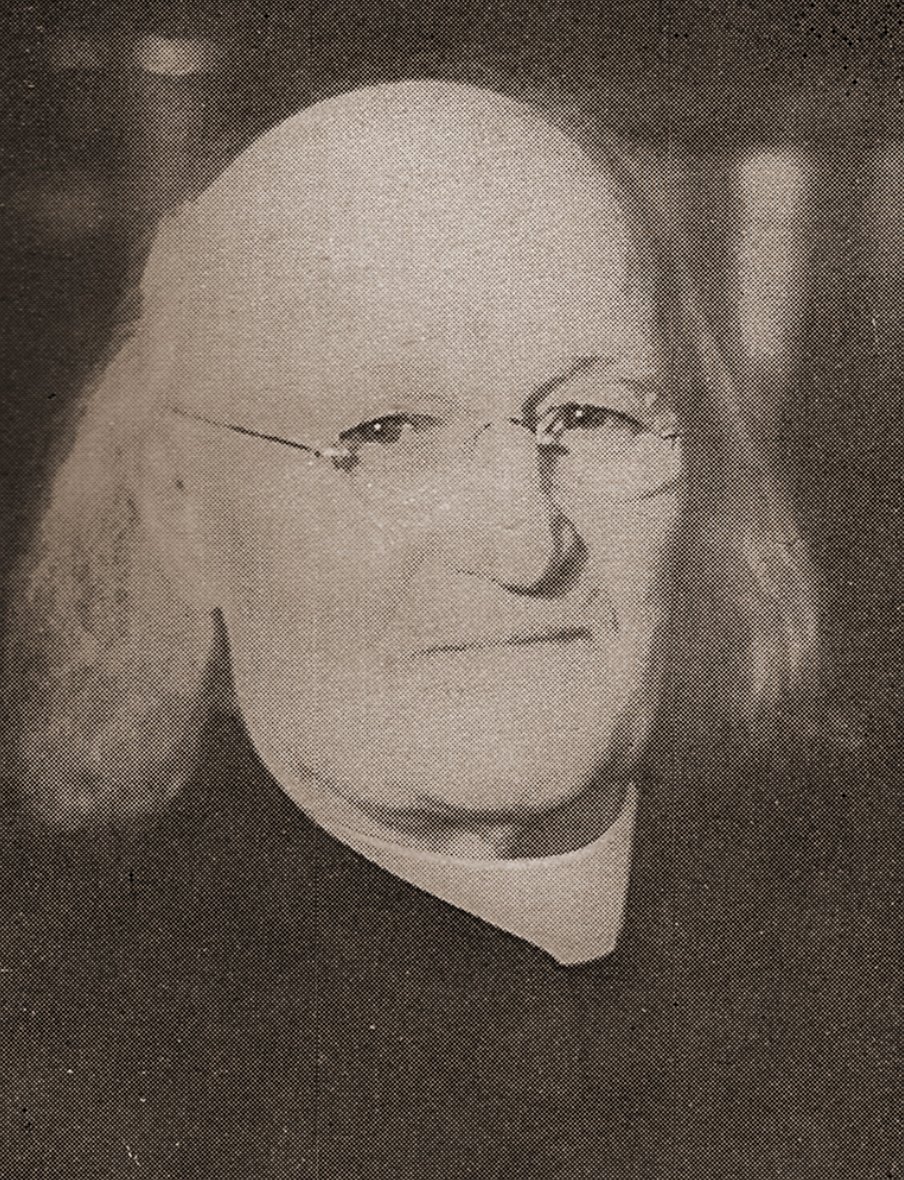
But despite such original orthodoxy, Brown's rebel instincts disposed him to ideas that challenged dearly held tenets. Brown, for example, discovered Darwin’s On the Origin of Species. To call Brown’s encounter with Darwin enlightening would be a glaring understatement.
To call Brown’s encounter with Darwin enlightening would be a glaring understatement. “The world that I had lived in up to that moment just disappeared,” Brown proclaimed. He could no longer profess faith in a God that created human life in its own image.
“It seemed impossible to believe the old creeds & the new ones too.” Once one veil dropped, others fell more easily. Next came nationalism. Brown thought US entry into the Great War was a moral atrocity, a violation of “thou shalt not kill” multiplied by millions.
Then came capitalism. While seeking out antiwar expressions, Brown discovered the socialist argument against the war, that it was the upshot of an economic struggle between competing gangs of capitalists. Finding this theory convincing, he began reading more socialist literature.
This path led him to Marx. Upon request, a local socialist newspaper mailed Brown a large cluster of socialist texts for the low price of two dollars. Capital was included in the windfall. Reading Capital was a “revelation” for Brown.
“It left my individualism,” he said, “about where Darwin had left my heaven and my hell.” Marx showed him “that we humans were not mere individuals, but members of groups and classes, unconsciously reacting to group and class motives.”
Marx’s theory about how one class formation gave way to another, about how capitalism seemed likely to give way to socialism, gave Brown hope. “Darwin was now my Old Testament,” he wrote, “Marx my New.”
Brown was mindful that he was quite possibly “the strangest Marxist who had appeared on earth to date.” “St. Karl,” he assumed, “would be moved to sardonic laughter” by Brown’s conversion from Christian true believer to Marxist apostle.
Despite Brown’s newfound orientation towards Marxist socialism (not to mention Darwinian freethought), he did not quit the ministry. He remained committed to Christianity as a communal ideal that jelled with Marxism.
In 1920, he wrote a book titled Communism and Christianism, his contribution to the larger movement to “banish gods from the skies and capitalists from the Earth.” Like so many Christian socialists before him, Brown viewed Marx and Christ as reciprocal prophets.
It was only after reading Marx that he came to believe the Jesus story “was the most vital truth of all human history.” Jesus symbolized the angels of history resurrected by Marx, “the working class, the despised and disinherited of the earth.”
Communism and Christianism sold 175,000 copies. Brown hoped this meant people found his argument that Christians should strive for communism convincing. But he was a realist. Upon reflection, he concluded there was another less propitious explanation for his book’s robust sales.
Brown had become the subject of an international controversy when he became the first Episcopalian minister tried for heresy since the Reformation. Yes, HERESY!
Had Brown simply left the church when he became a Marxist, he might have avoided notoriety. But with the zeal typical of the newly converted, Brown dedicated his life to spreading his new gospel. He figured the pulpit remained the best place to do so.
Brown wanted to give Marx a home in the church, one of the most venerably conservative American institutions. That he failed is no surprise. During the 1920s, it was barely safe to speak favorably of Marx in more hospitable settings, like in union halls or on the streets of NYC.
But Brown would not be the last religious American to find value in Marx (many of whom are analyzed in my book). Although, he would remain in the running for the title of “strangest Marxist” in American history. END.
I have plenty of other fascinating characters who did not make the cut who might become subjects of future tweet threads.
More on the book here. press.uchicago.edu/ucp/books/book…
• • •
Missing some Tweet in this thread? You can try to
force a refresh




