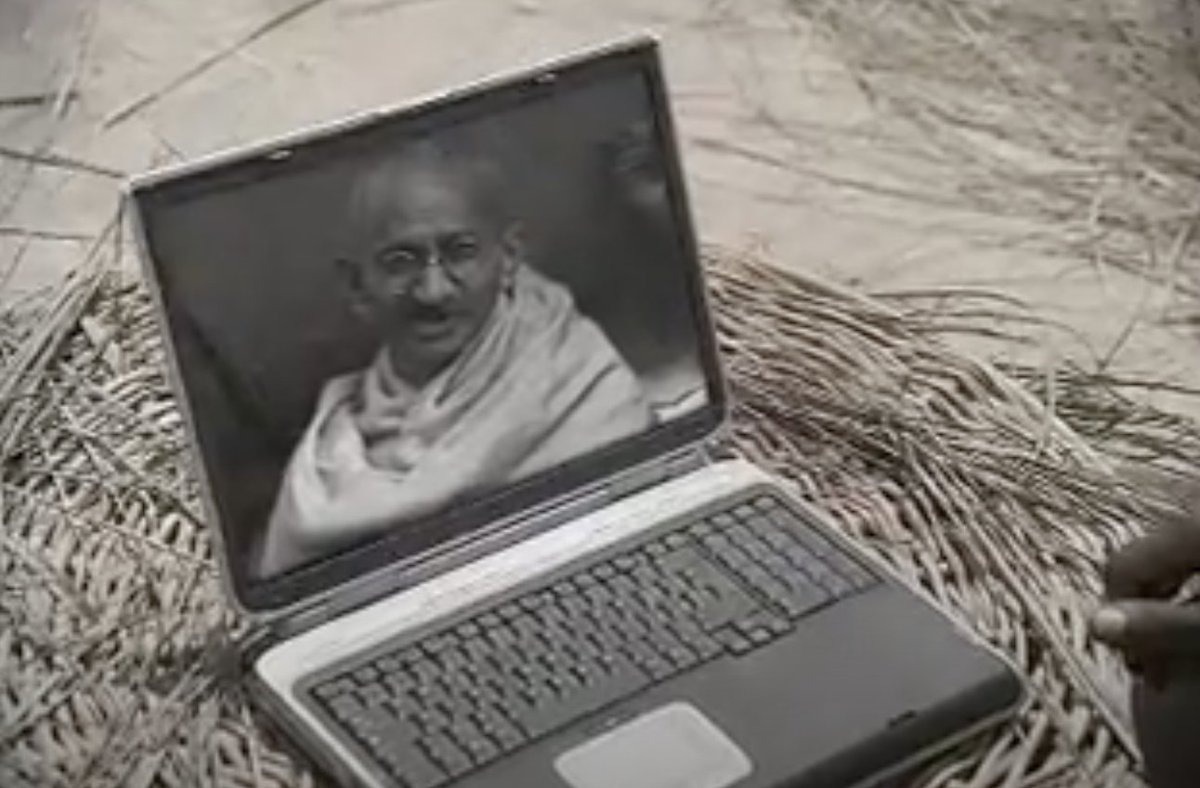
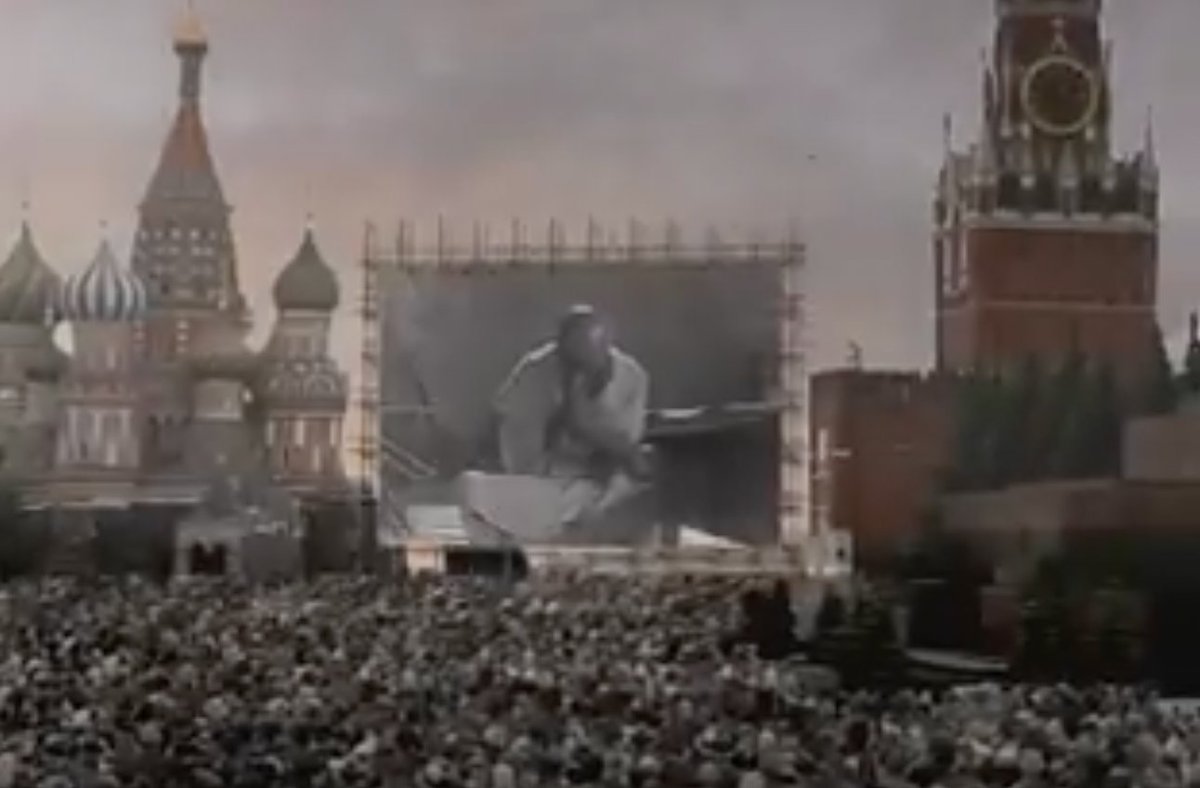
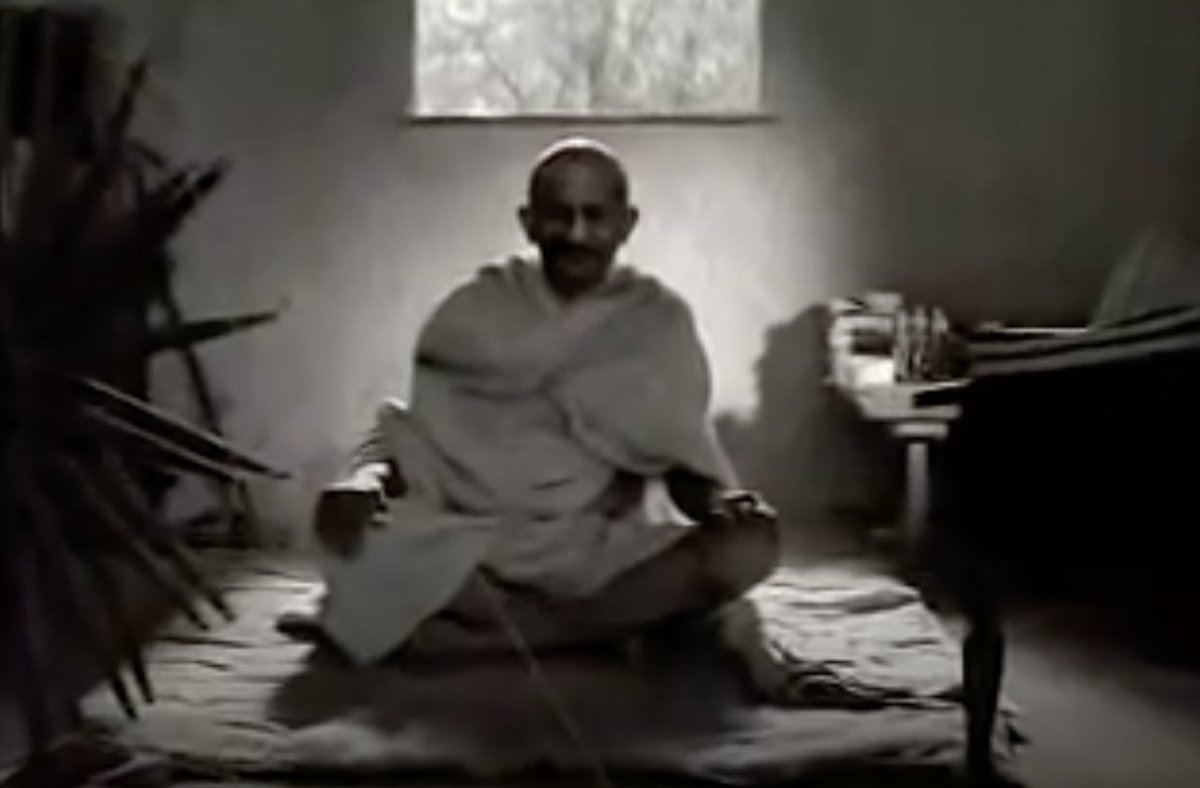
On this day in 1948, bullets were fired—but they could never kill an idea. Mahatma Gandhi was assassinated by Nathuram Godse, yet his legacy lived on. In 2003, this ad film titled GANDHI, created by Y&R Roma for Telecom Italia was released.
Watch it. Feel the goosebumps. 1/11
In the late 1930s, Gandhi stands before a modern webcam, his voice carried across the world through telecommunication devices. Millions listen as he speaks of love and peace. 2/11
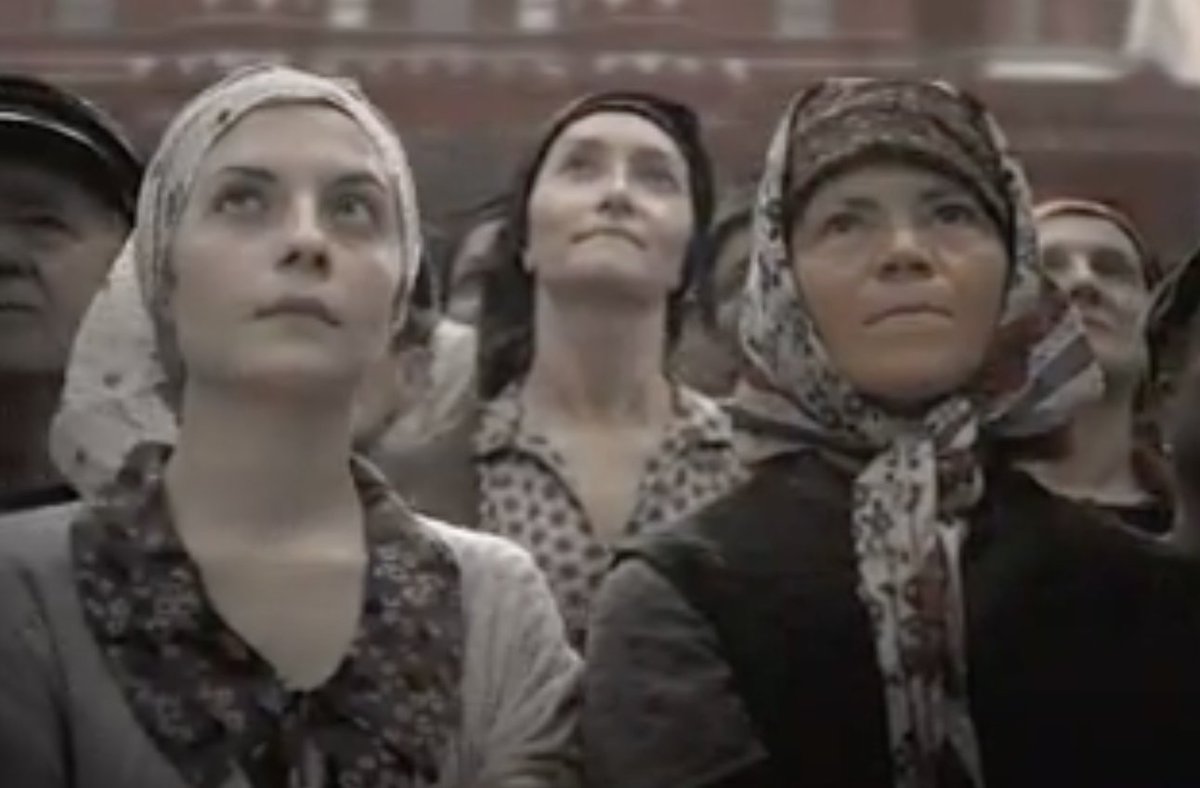
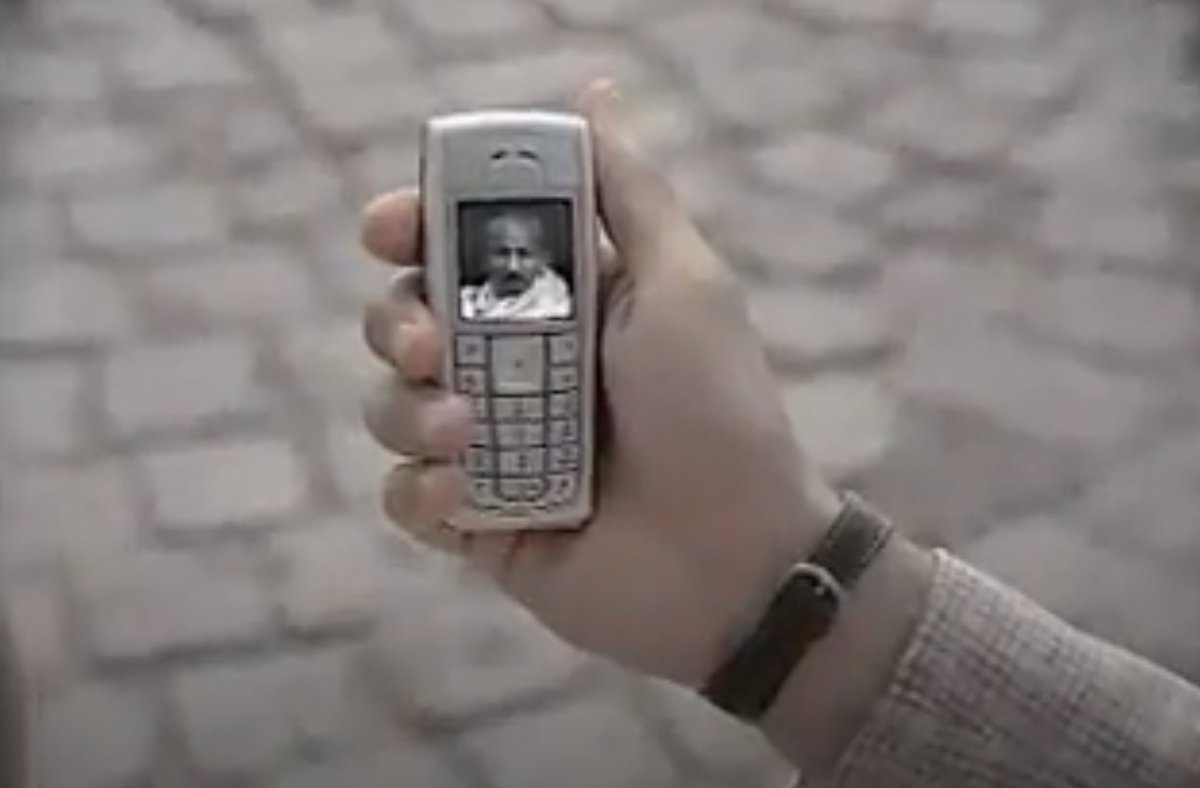
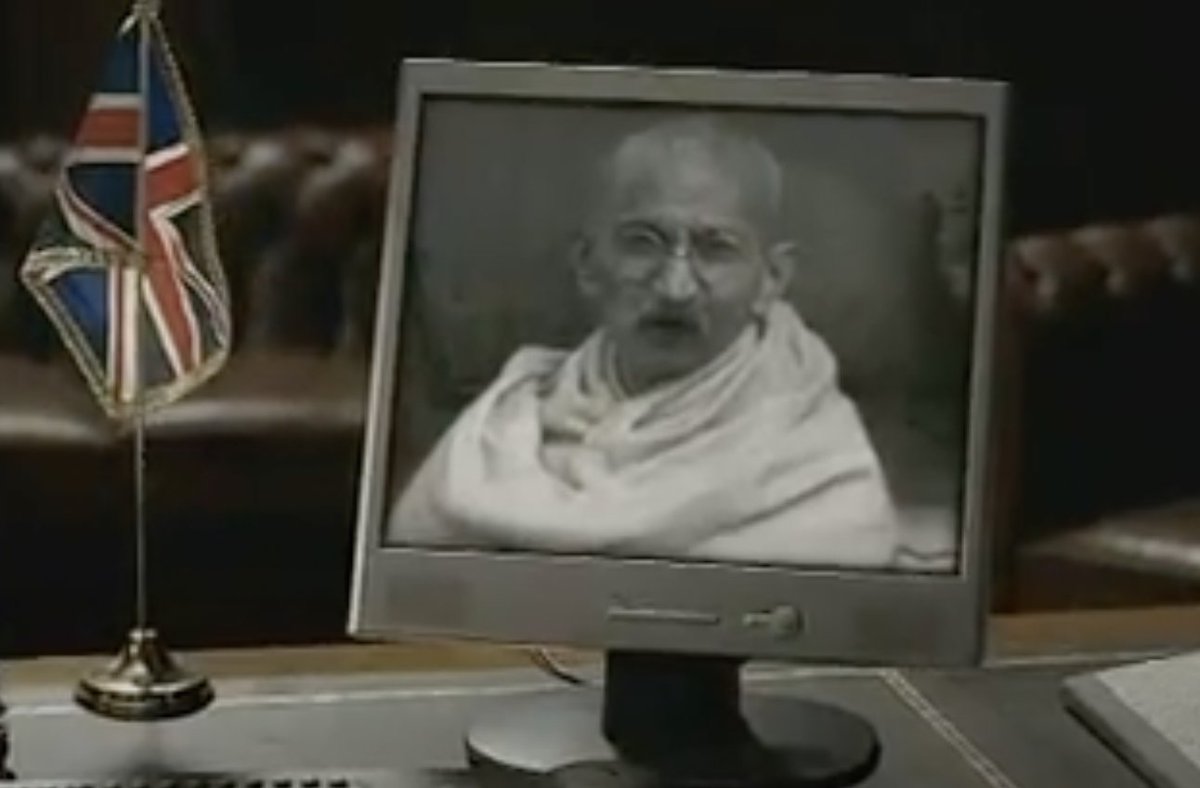
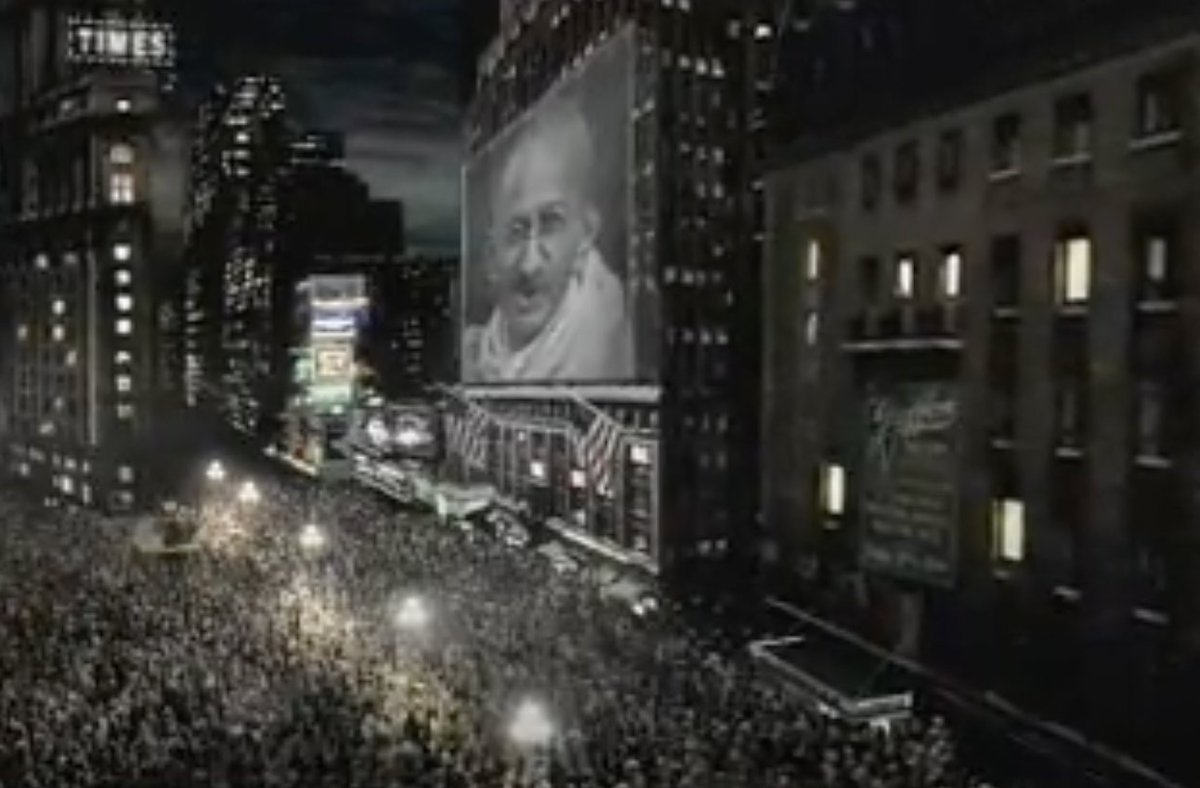
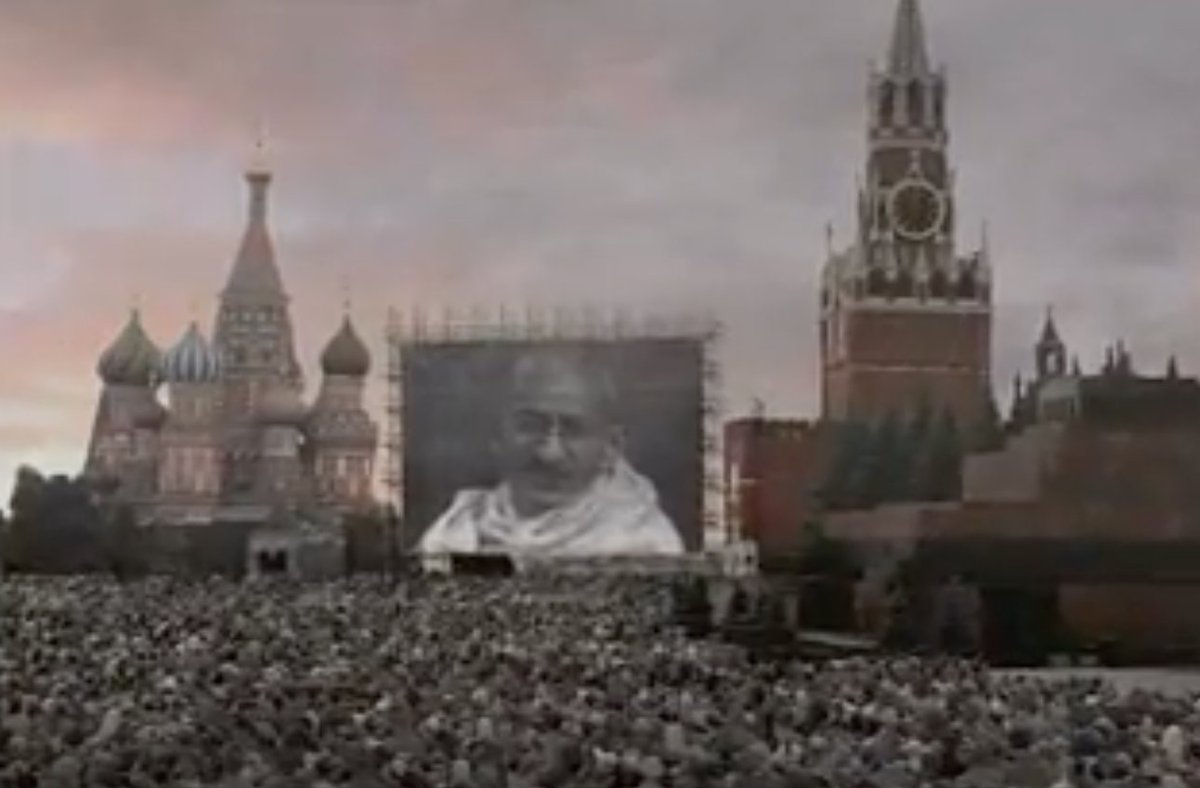
Gandhi sits in a simple hut, turns on a webcam, and begins speaking. Though alone, his message travels across the world—projected on skyscrapers, giant screens, mobile phones, and PCs—reaching massive crowds and intimate spaces alike. 3/11
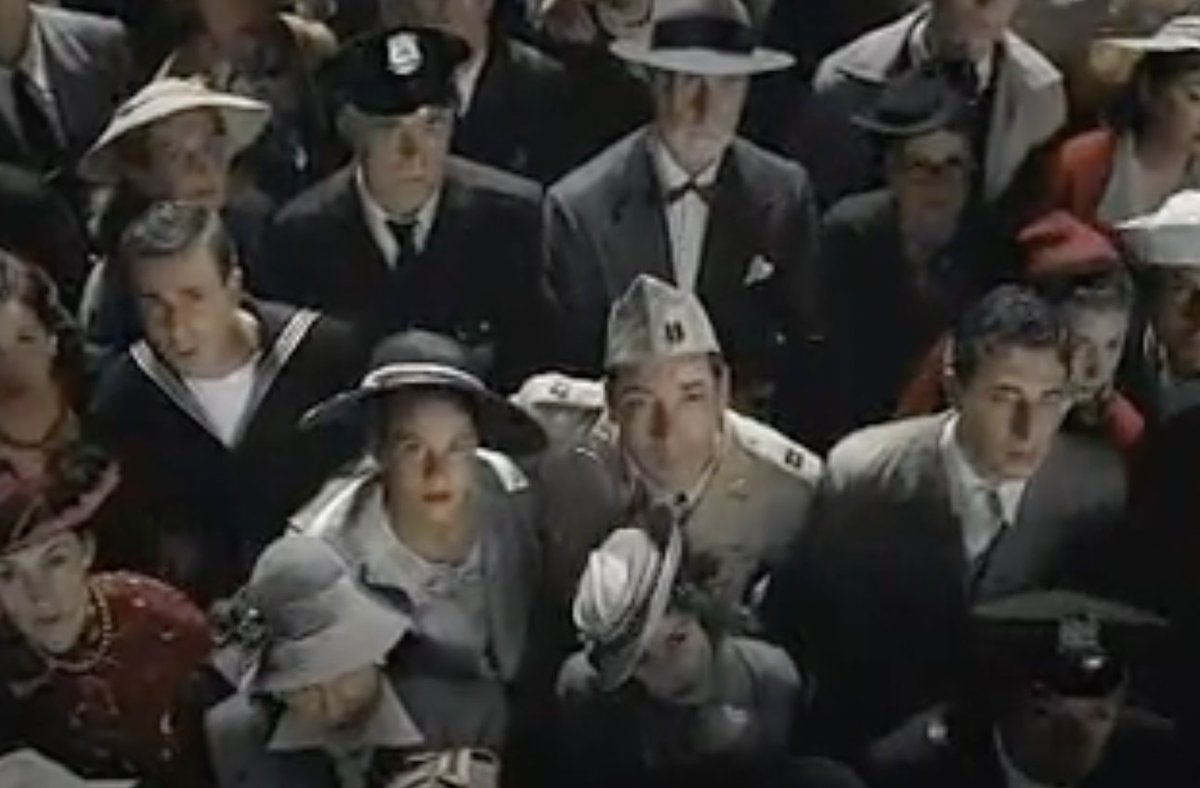
Then, a powerful question appears on the screen: "Imagine the world today if he could have communicated like this." The ad fades out, leaving only the Telecom Italia logo—an idea that still lingers. 4/11
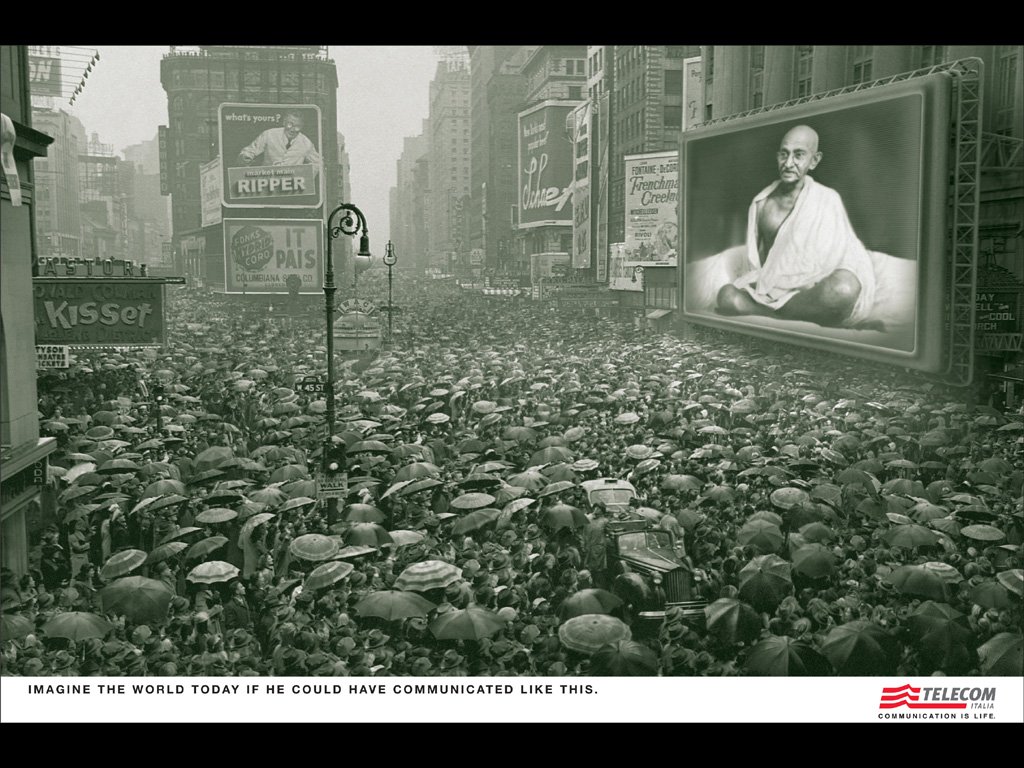
This 2004 Telecom Italia commercial “Gandhi”, directed by Spike Lee, won the “Best Ever Forever” award at the Key Awards. A thought-provoking vision of what the world might have been like if modern communication had existed in his time. 5/11
Here are some comments from Italians on YouTube that we translated to share the deep admiration and emotions they feel for Mahatma Gandhi.
Something we once held close, now made to be forgotten. 6/11
"This advertisement has always given me shivers... there's something touching about it... maybe it's the music... maybe it's Gandhi's silent charisma... men like that aren't born anymore, unfortunately!"
(~ user 30myuu) 7/11
"If only everyone could listen to it....maybe today we would truly live in a better world!"
(~user SpadadiRuna) 8/11
"if everyone had really followed Gandhi...everything would be different by now!!! the song is amazing...."
(~ user prixxi89)
9/11
"I don't know if it is moral to use the figure of Gandhi in an advertisement, but the more I look at it, the more I am convinced that this is the best advertisement ever, Gandhi is my idol, I have based my whole life on his teachings."
~ user JoutenShin 10/11
History has a way of reminding us, even when we try to forget.
The truth, no matter how buried, always finds a way to resurface. And when it does, it carries with it the power to stir hearts, change minds, and shape the future.
Gandhi is the truth.
11/11
• • •
Missing some Tweet in this thread? You can try to
force a refresh

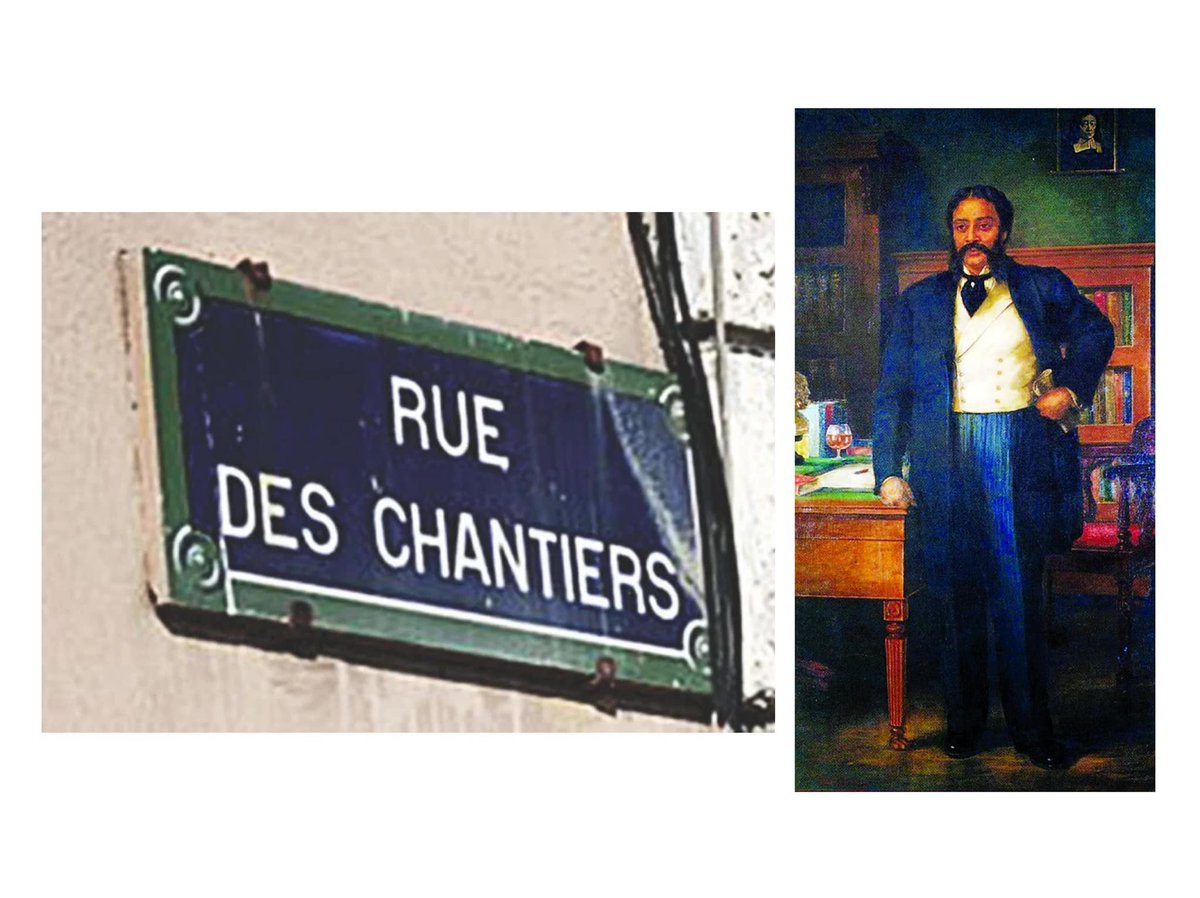
Versailles. The name conjures images of opulence and grandeur—home to the iconic Palace of the French monarchy, just a short ride from Paris.But there’s another story buried in its streets. This is where a genius from Bengal once called home. Today is his birthday. Thread. 1/15
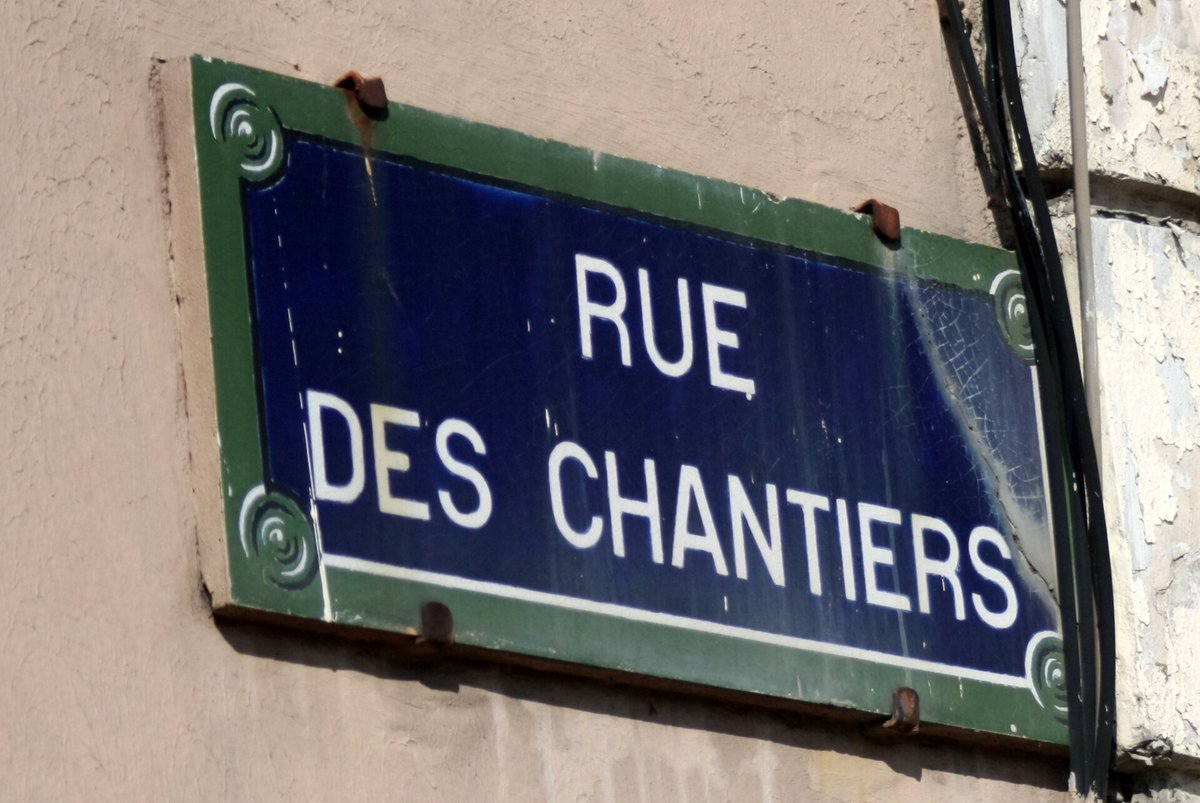
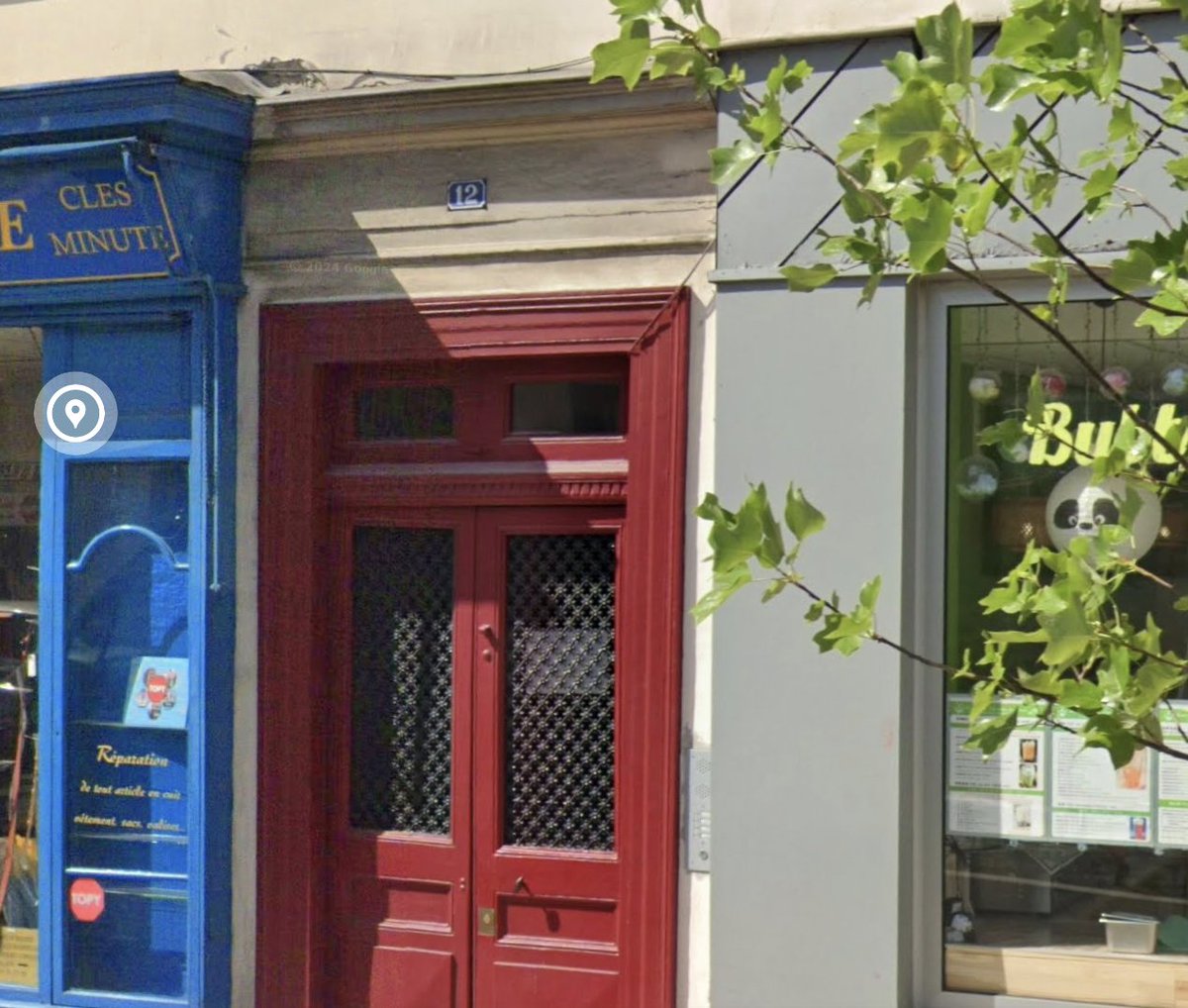
About just 5 mins drive from the palace lies Rue des Chantiers, a quiet street in Versailles. There, at No. 12, is a modest house with a red door. At first glance, it’s unremarkable. But look closer. Between two windows on the first floor, there’s a nearly unreadable plaque 2/15
It reads in French: Michael Madhusudan Dutt lived here, 1863–1865.
Michael Madhusudan Dutt. The first great modern Bengali poet. A rebel who questioned rather than comforted. A pioneer who reshaped Bengali literature with his daring vision. 3/15
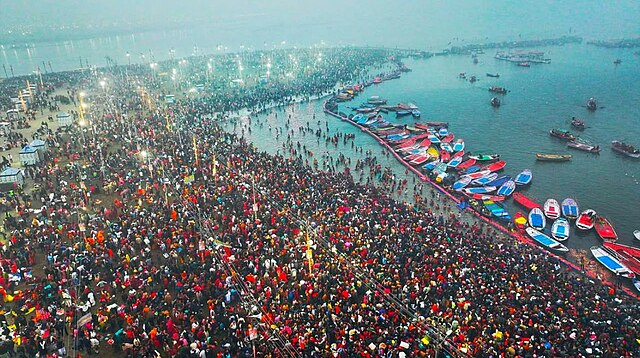
“Kumbh ke Mele mein bichde huye bhai” - a Bollywood catchphrase born from the fictional plot where families separated at the Kumbh Mela & then dramatically reunited. But behind these stories was a real-life hero who spent his life reuniting countless families. Thread 1/19
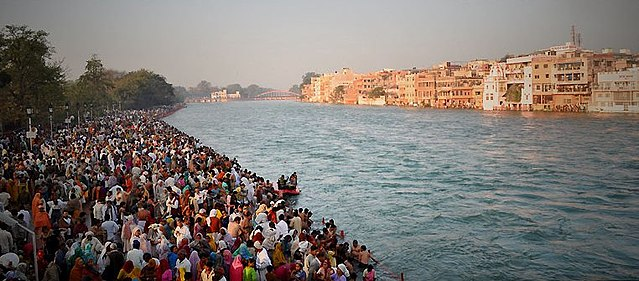
For 71 years, Raja Ram Tiwari was on a singular mission: to help people who had become separated from their families in the overwhelming crowds of the Kumbh Mela, one of the largest religious gatherings in the world. 2/19
Held on a sprawling site of thousands of acres, the Mela sees millions of pilgrims gather for a sacred dip in the holy rivers. Amid such chaos, families inevitably get separated, and that’s where Tiwari’s “Khoya Paya Shivir” (Lost and Found Camps) came in. 3/19
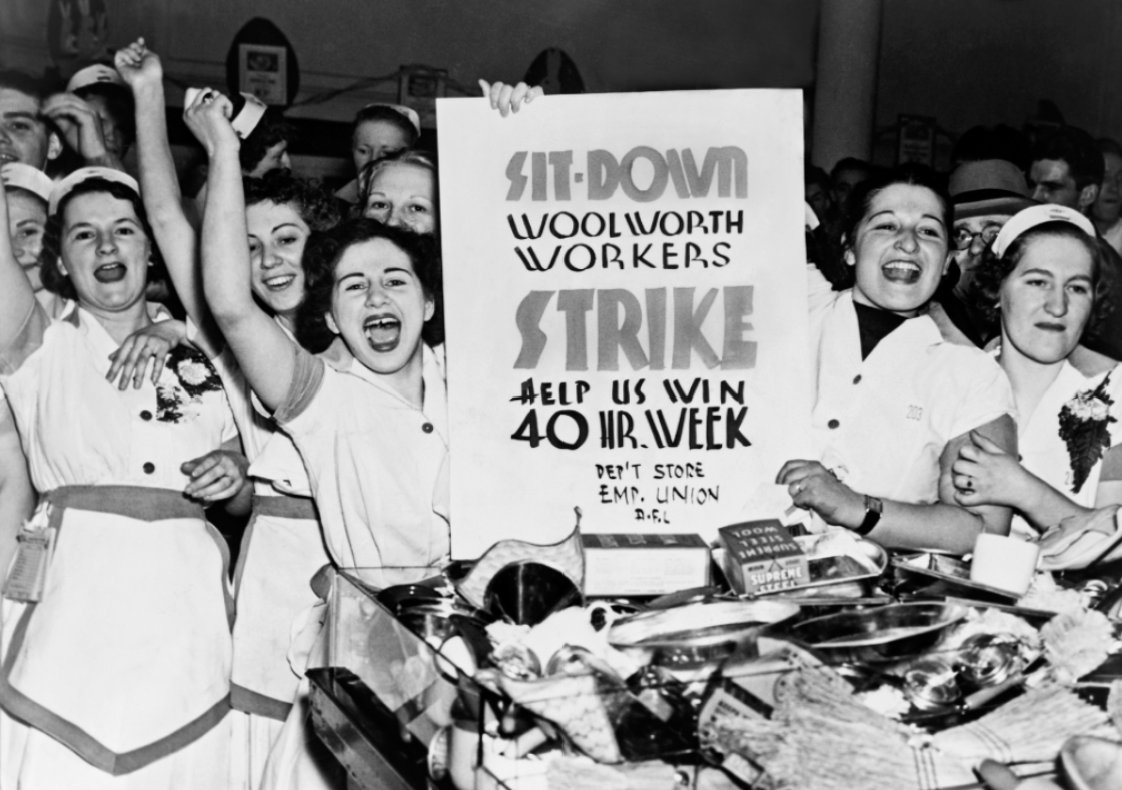
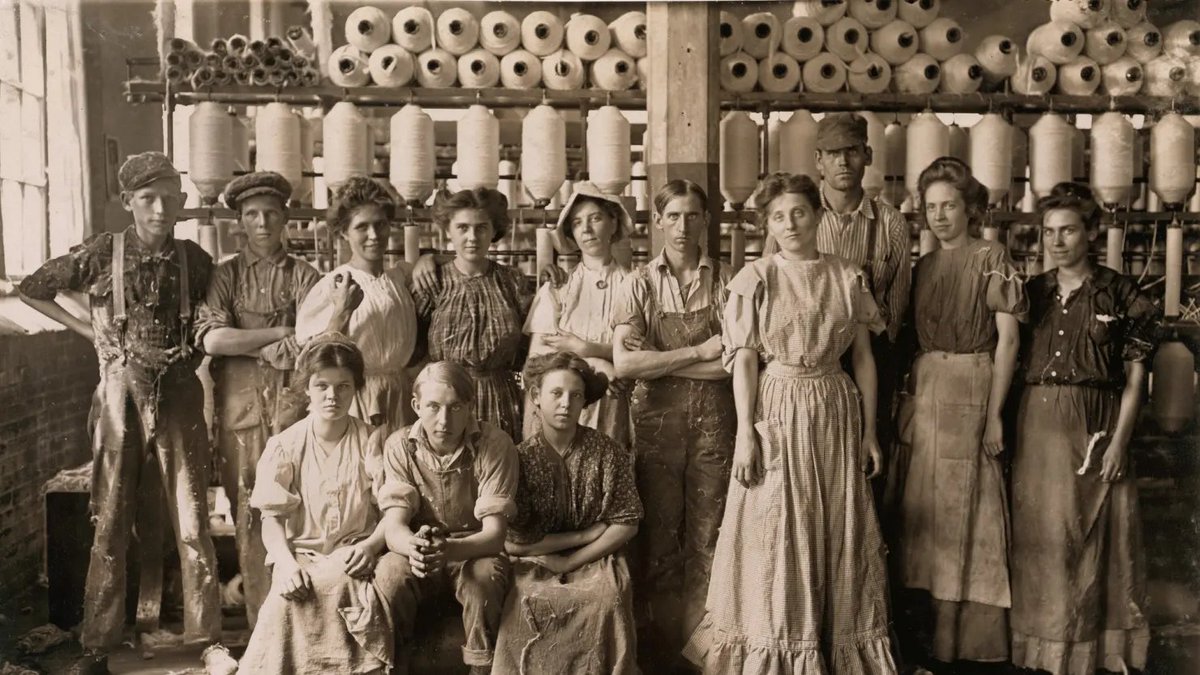
As more and more powerful figures advocate for inhuman work hours in the name of nation-building, it's important to remember that it took humankind hundreds of years to achieve the 8-hour workday. A thread on 10 powerful images to remind us not to turn the progress back. 1/12
The Labor Movement in the 19th Century The fight for fair working hours began during the industrial revolution when workers endured grueling, long hours. The images of these protests show the tireless dedication of workers who fought for better conditions. 2/12
The eight-hour workday, or 40-hour workweek, didn't become the standard by chance.
When the US government first began tracking workers' hours in 1890, full-time manufacturing employees were toiling through grueling 100-hour workweeks. 3/12
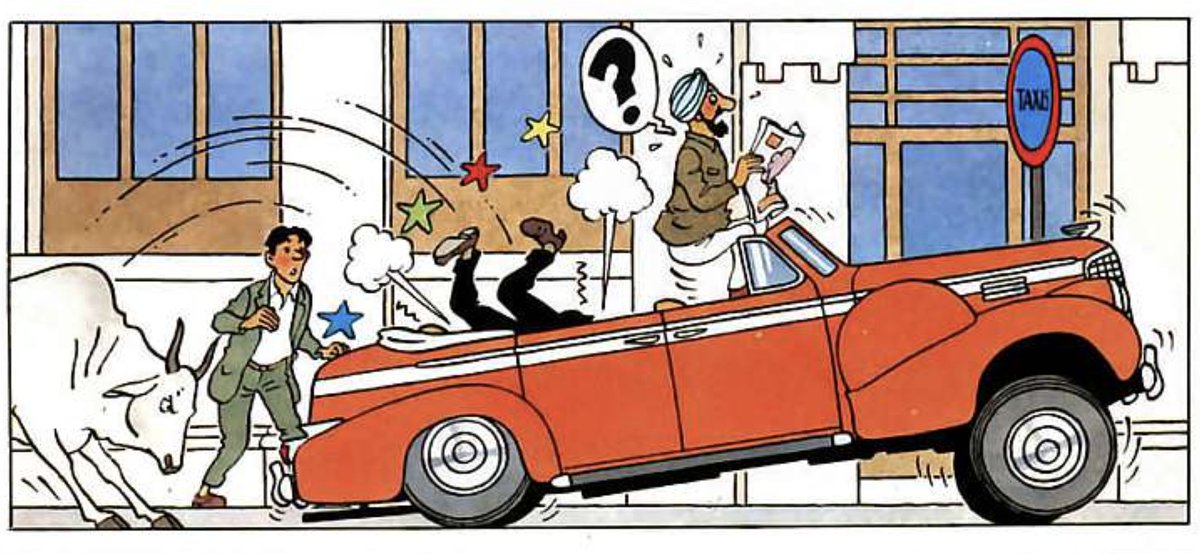
Today marks Tintin's birthday, and what better way to celebrate than diving into an intriguing detail from one of his adventures? Remember the iconic orange taxi in Delhi from Tintin in Tibet? There’s a quirky story and possibly a glaring error behind it! Thread 1/13
Remember that frantic New Delhi scene? Tintin and Captain Haddock rush to catch their plane to Kathmandu via Patna. They hop into a taxi—a striking orange convertible. But here’s the twist: Hergé, the creator of Tintin, made a tiny but delightful error. 2/13
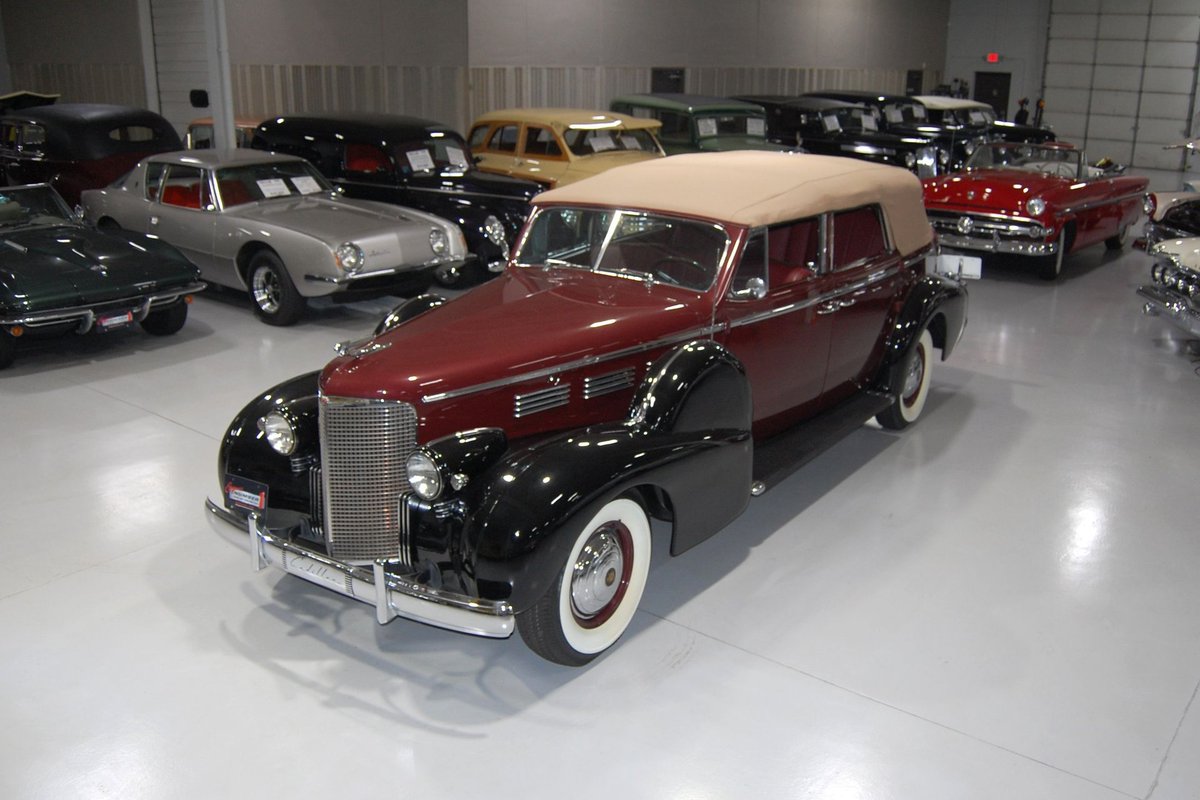
The taxi was a 1938 Cadillac Fleetwood, convertible limousine, a car steeped in luxury and history. Fleetwood, a body manufacturer, had been making bespoke Cadillac bodies since 1925. 3/13
Why did Savitribai Phule carry two saris when she went to school?
Today, on her birthday, let’s talk about a woman who faced unimaginable challenges yet changed the course of history with her courage and determination.
Thread 1/18
In 19th-century India, educating women was seen as a radical and scandalous act. Savitribai Phule, alongside her husband Jotirao Phule, took on this mission, knowing it would draw fierce opposition.
But she couldn’t have imagined the level of hostility she’d face. 2/18
Men, mostly from upper caste, intent on sabotaging her work waited on the streets she walked daily to her school. They hurled stones, mud, and even cow dung at her, shouting abuses and insults.
A short thread on the OG brand influencer of India.
Rabindranath Tagore.
Yes, the Nobel laureate endorsed products long before it was cool. Here's how... 👇
1/13
Tagore, known as the symbol of India's cultural rebirth, wasn’t just a poet; he became the face of Swadeshi marketingduring the British era. Brands eager to ride the Made-in-India wave found their perfect icon in him 2/13
From endorsing handmade Swadeshi goods to supporting indigenous industries, Tagore’s influence transcended literature. His image embodied India’s cultural and economic self-reliance—the ultimate influencer vibes. 3/13