1/ In today’s committee, witnesses with no expertise in eating disorders made inaccurate statements that went unchecked & unchallenged.
MPs and the public were misled about the risks this bill poses to people with eating disorders.
Let’s look at the facts. 🧵👇
2/ @DrNaomiRichards, an anthropologist and researcher in 'end of life studies', told the committee:
“The numbers are really tiny... you’re talking one or two people in the history of assisted dying… it’s a very minor issue.”
This is false.
3/ Our study found at least 60 people w/ eating disorders who were assisted in death — including in Oregon, California, and Colorado.
In addition, we identified 25 cases in California and Colorado where severe malnutrition was listed as the qualifying terminal condition.
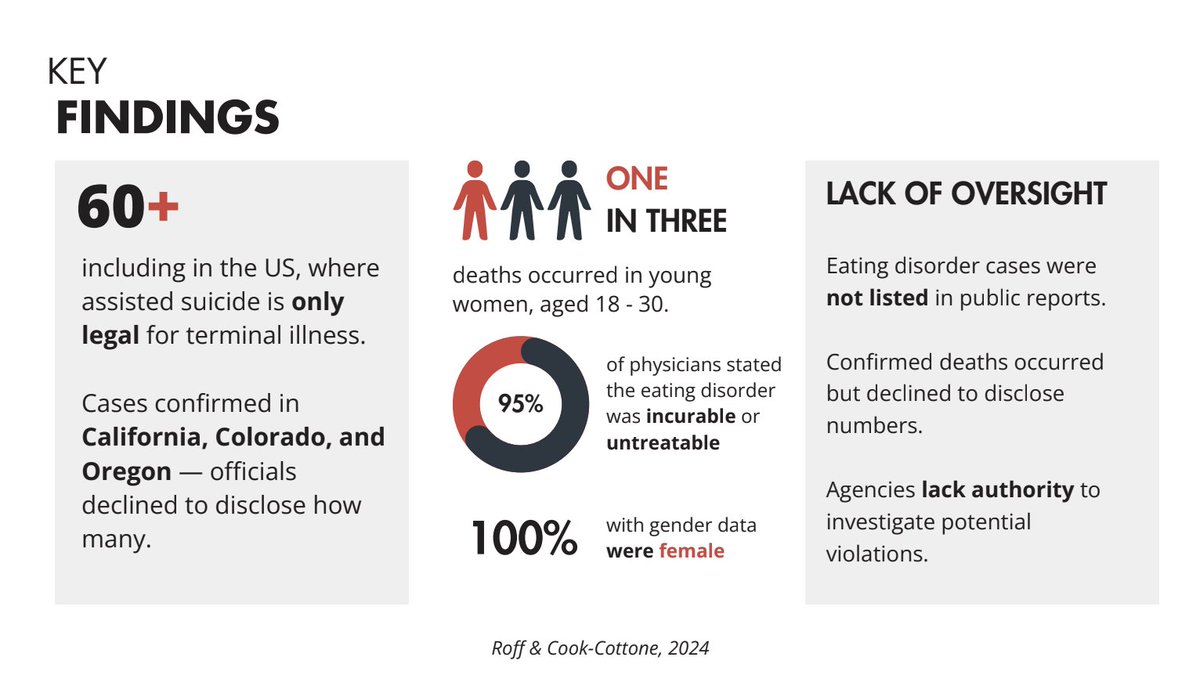
4/ But the total number of deaths remains unverified.
Oversight agencies in California, Colorado, and Oregon confirmed that patients with eating disorders had died by assisted death—but would not disclose how many.
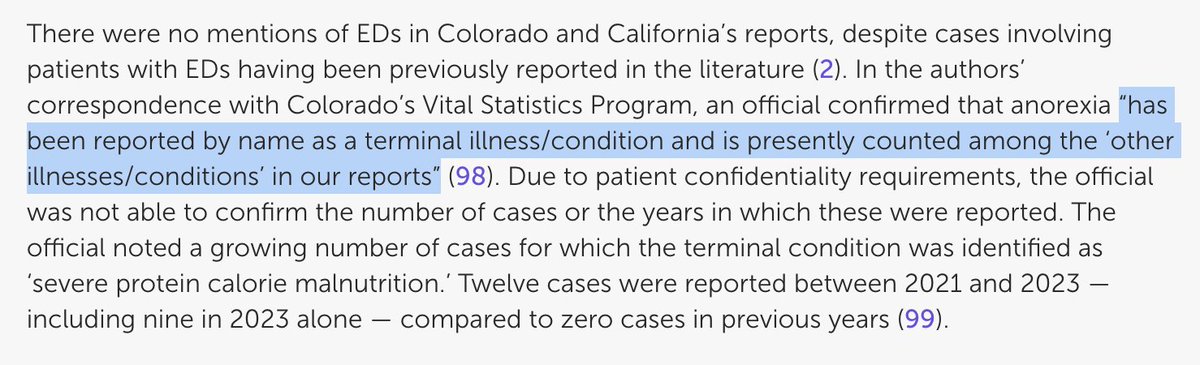
We found eating disorder deaths were categorised in vague classifications like “Other Illnesses” in state reports.
If a physician hadn't published case reports about it, no one outside oversight agencies would have even known these deaths occurred.
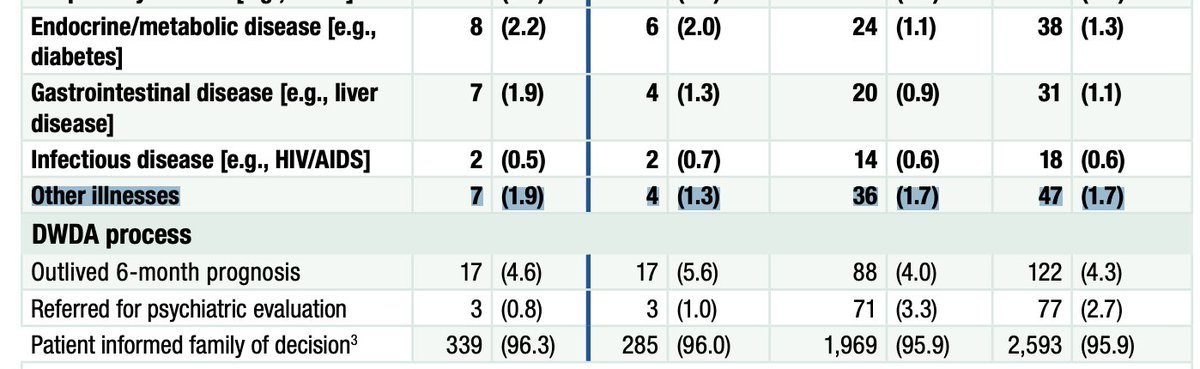
In short: There is so little oversight in the U.S. that it is not possible to determine how many people with eating disorders have died by assisted death.
Yet today, witnesses dismissed the deaths of real human beings as “just one or two cases.”
Why was this not factchecked?

The committee cannot make informed decisions based on false information.
I respectfully request @kimleadbeater and the committee formally correct the record to reflect the facts.
• • •
Missing some Tweet in this thread? You can try to
force a refresh

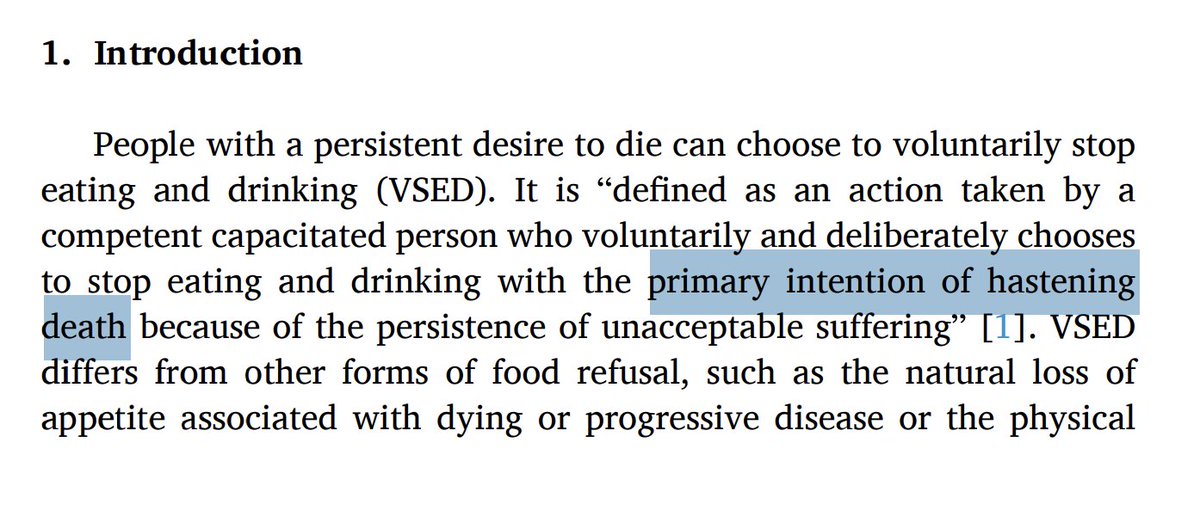
1/ Some academics are advising patients on how to circumvent the terminal illness criteria in assisted dying laws—by refusing food and water until they become “terminal.”
This is already happening in the U.S. The bill before Parliament contains the same loophole. A thread 🧵
2/ In this video, Dr. Thaddeus Pope explains how malnutrition and dehydration can be considered a terminal illness, allowing patients to qualify for assisted suicide by voluntarily stopping eating and drinking (VSED).
3/ Like U.S. laws, the UK bill requires a person to have an irreversible terminal illness to qualify for assisted death.
In other jurisdictions, activists found a workaround: advise patients to refuse food and water, thereby making their death foreseeable within six months.
1/ How many people with anorexia have died by assisted death?
This week in Parliament, witnesses claimed it was "just one or two" women. The evidence tells a different story.
@TheOtherHalf and I sat down with my co-author, Dr. Catherine Cook-Cottone, to unpack the evidence 🧵
2/ Our study identified at least 60 people with eating disorders who died by assisted death—including in Oregon, Colorado, and California, all of which follow the “Oregon model.”
But the true number of deaths in people with eating disorders is likely higher. Here’s why ⬇️
3/ In the US, oversight agencies confirmed anorexia has been listed as a qualifying terminal condition for assisted death—but did not disclose how many had died.
These deaths were buried under vague categories like “Other Illnesses,” keeping the public in the dark.
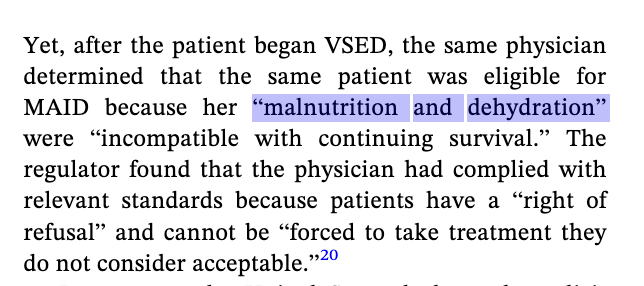
Yesterday in Parliament, I discussed how the terminal illness safeguard has been made meaningless in the US— where doctors now frame dehydration and malnutrition as “an incurable and irreversible disease.”
The same could happen under the UK bill. Here’s why. 🧵👇
2/ In the US, voluntary stopping of eating and drinking (VSED) has been used to circumvent the terminal illness criteria.
A Journal of the American Geriatrics Society article details how a woman in Oregon with mild cognitive impairment qualified by stopping eating and drinking.
3/ The authors frame malnutrition and dehydration as an irreversible and incurable disease— turning the act of not eating into a condition that qualifies for assisted death.
This is not just hypothetical. They do this in the context of describing a real case.
Some reflections on giving evidence in Parliament yesterday.
A very intimidating forum to present research, but overall, the committee was respectful and civil—though, at times, painfully unaware of the international evidence on this and even the wording of the bill itself. 🧵⬇️
2/ I thought it was an interesting choice to put a woman speaking about the deaths of women on a panel with only men — some of whom were all too quick to dismiss concerns that this bill could lead to similar deaths of women in this country.
3/ I don't mind being addressed by my first name, but as a colleague pointed out to me yesterday — it was notable that the men on either side of me were not addressed by theirs'.
1/ Today in Parliament, I referenced Court of Protection cases where young women's eating disorders were described as “terminal," "end-stage," and “not treatable."
Here are the receipts. 🧵👇 #AssistedDying
2/ In the UK, courts have already ruled that lifesaving treatment can be withdrawn from young women w/ eating disorders when clincians have presented their condition as "terminal" or irreversible
These cases were framed as a false dichotomy: forced feeding or inevitable death.
3/ Case 1: L, a 29-year-old woman w/ anorexia described as in the "terminal stage of her illness"
Trust sought a declaration medical treatment was not in her best interests. Clinicians said palliative care would ensure she "retains the greatest dignity" until she dies.