Do water filters actually do anything? We CT scanned several popular water filters before and after use to see what they’re able to keep out of your body. Here’s what we found… 🧵
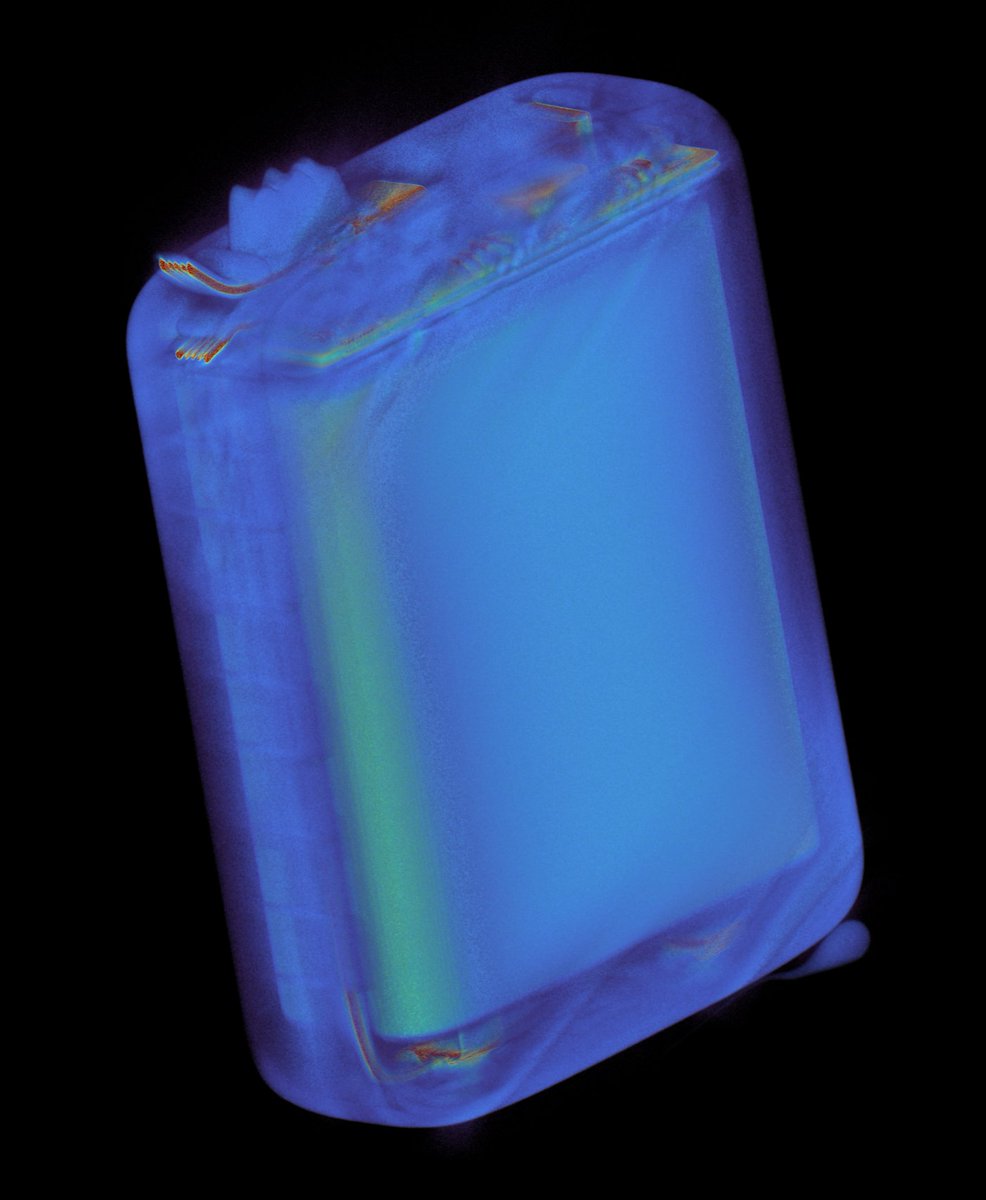
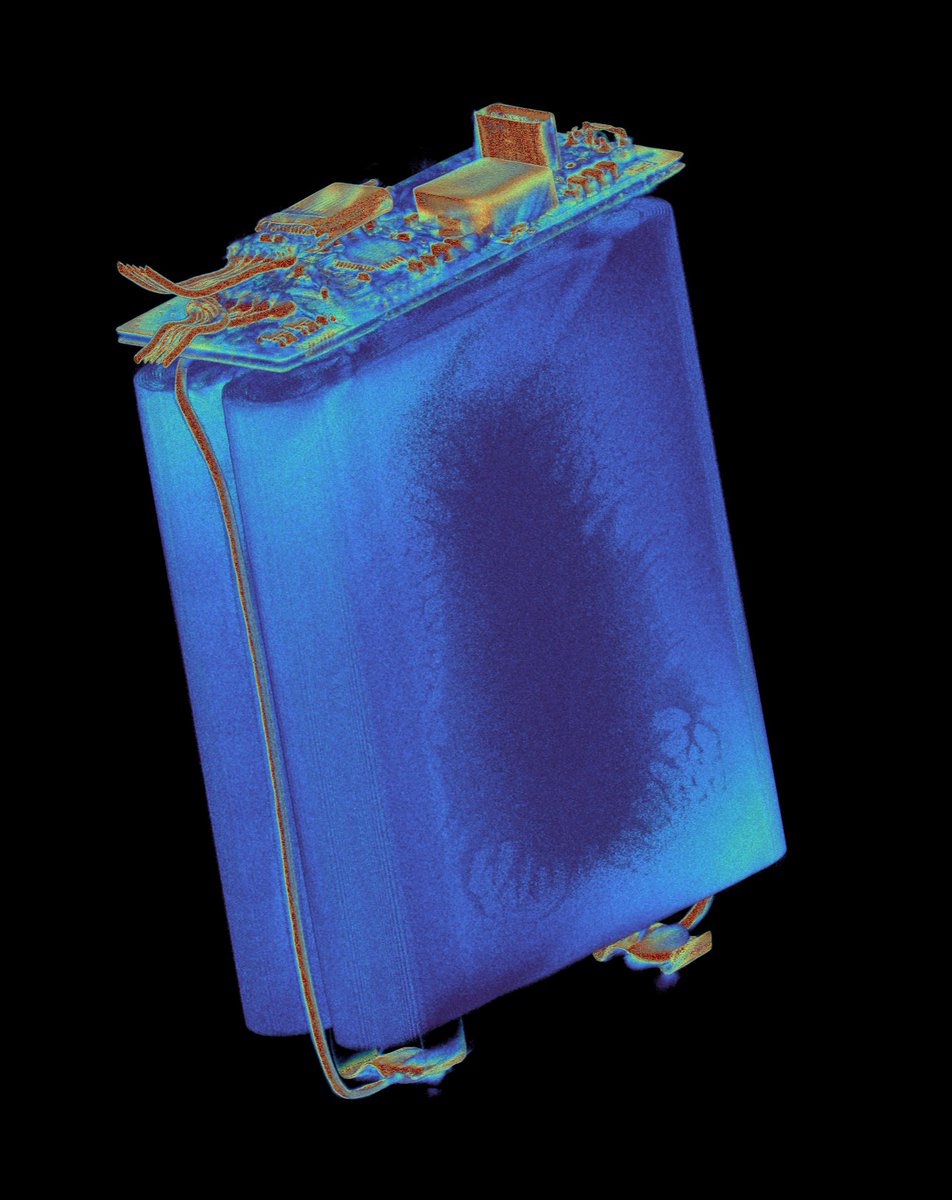
These are before-and-after @lumafield scans of a Brita water filter; it’s filled with a blend of activated carbon and ion-exchange resin and claims to trap chlorine, sediment, and heavy metals like lead. The filter medium swells with use, and it also gets denser. How do we know?
Industrial CT scans capture both geometry and relative density. We start by taking hundreds of X-ray images from different angles, then reconstruct them into a 3D model that can be sectioned and analyzed. A dark area in a 2D X-ray image could be either thicker material or denser material; by rotating the object we’re scanning, we can separate geometry from density. In this @lumafield CT scan, density is visualized as a blue-red color map.
@lumafield As the filter medium inside this Brita cartridge is used, it swells and cracks. Clearly-defined flow channels are visible, suggesting water is following the same path through the filter media each time.
@lumafield Here we’ve used @lumafield’s automated inclusion analysis tool to identify areas that are particularly dense. The densest impurities, highlighted as purple and red specks, have been getting strained out toward the top of the filter medium.
@lumafield Here’s a CT scan of an activated charcoal water filter from a Bosch refrigerator. The manufacturer recommends changing it every 6 months, but this was in my fridge for more than two years 😱
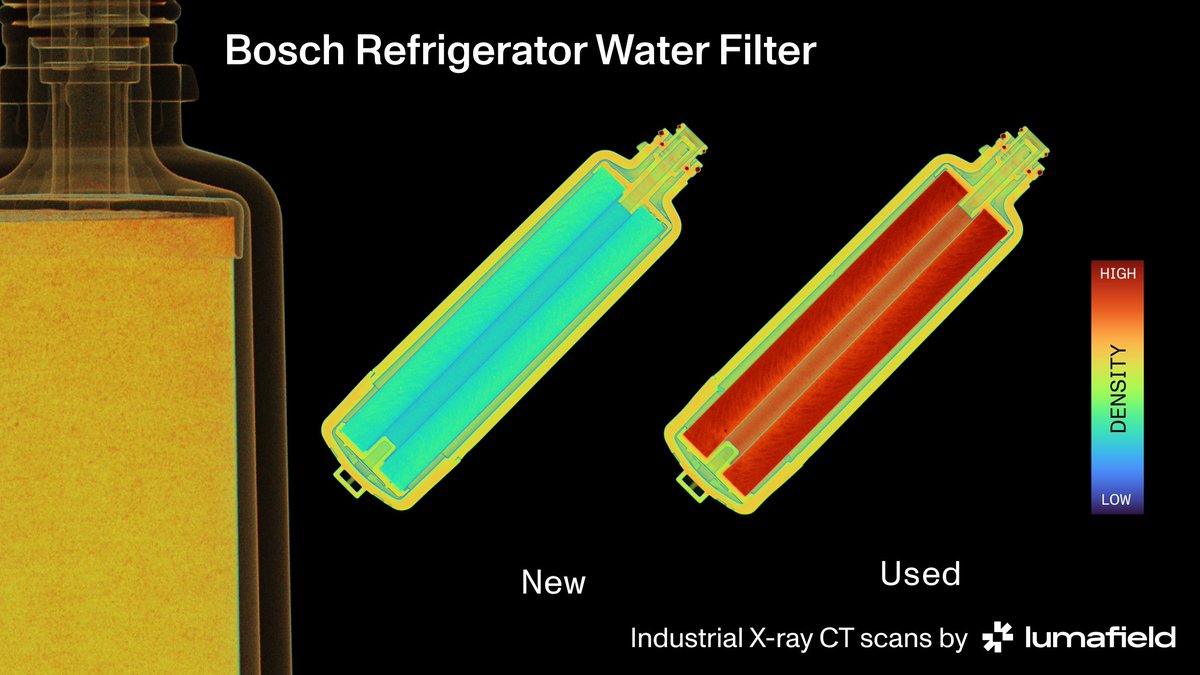
@lumafield @BoschGlobal @BoschHomeUS The water’s flow pattern is clearly visible thanks to deposits in the filter medium. Water flows in along the outer edges of the cartridge, then through the medium to the center channel before heading to the refrigerator’s ice maker.
@lumafield @BoschGlobal @BoschHomeUS Reverse osmosis water filters use a semi-permeable membrane made of tightly-wound layers of synthetic material. They’re used in both small residential applications as well as giant industrial water treatment operations.
@lumafield @BoschGlobal @BoschHomeUS We scanned a new reverse osmosis filter, ran it for two months in a hard-water environment, and scanned it again. Scaling deposits of minerals are clearly visible in the used-filter CT scan. As they accumulate, they restrict flow through the filter and reduce efficiency.
@lumafield @BoschGlobal @BoschHomeUS LifeStraw is a portable, personal water filter that uses hollow fiber membranes with microscopic pores that can block bacteria, parasites, and microplastics. With use, the membrane gradually accumulates contaminants starting at the inlet.
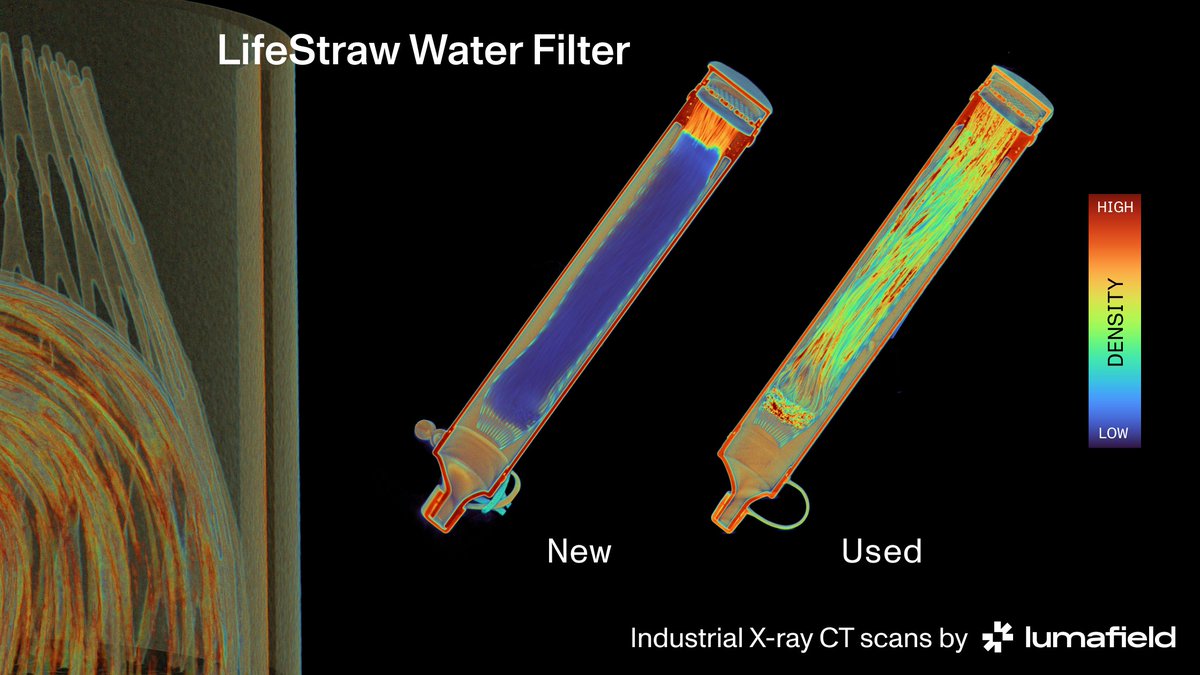
@lumafield @BoschGlobal @BoschHomeUS @lifestraw Takeaways: water filters do actually capture impurities, and you should replace them periodically; as they become loaded, they get less efficient and in some cases less effective.
@lumafield @BoschGlobal @BoschHomeUS @lifestraw Check out for more details on these filters. @lumafield has tons of cool scans to explore!lumafield.com/article/whats-…
@lumafield @BoschGlobal @BoschHomeUS @lifestraw And if you want to learn more about how industrial CT works and how it’s used, check out this intro video.
• • •
Missing some Tweet in this thread? You can try to
force a refresh

Have you seen this Haribo power bank? It's cute! It's also become a sensation on social media because it offers one of the best power-to-weight ratios on the market, with a capacity of 20,000 mAh at just 286 grams.
We CT scanned one and found something alarming inside... 🧵
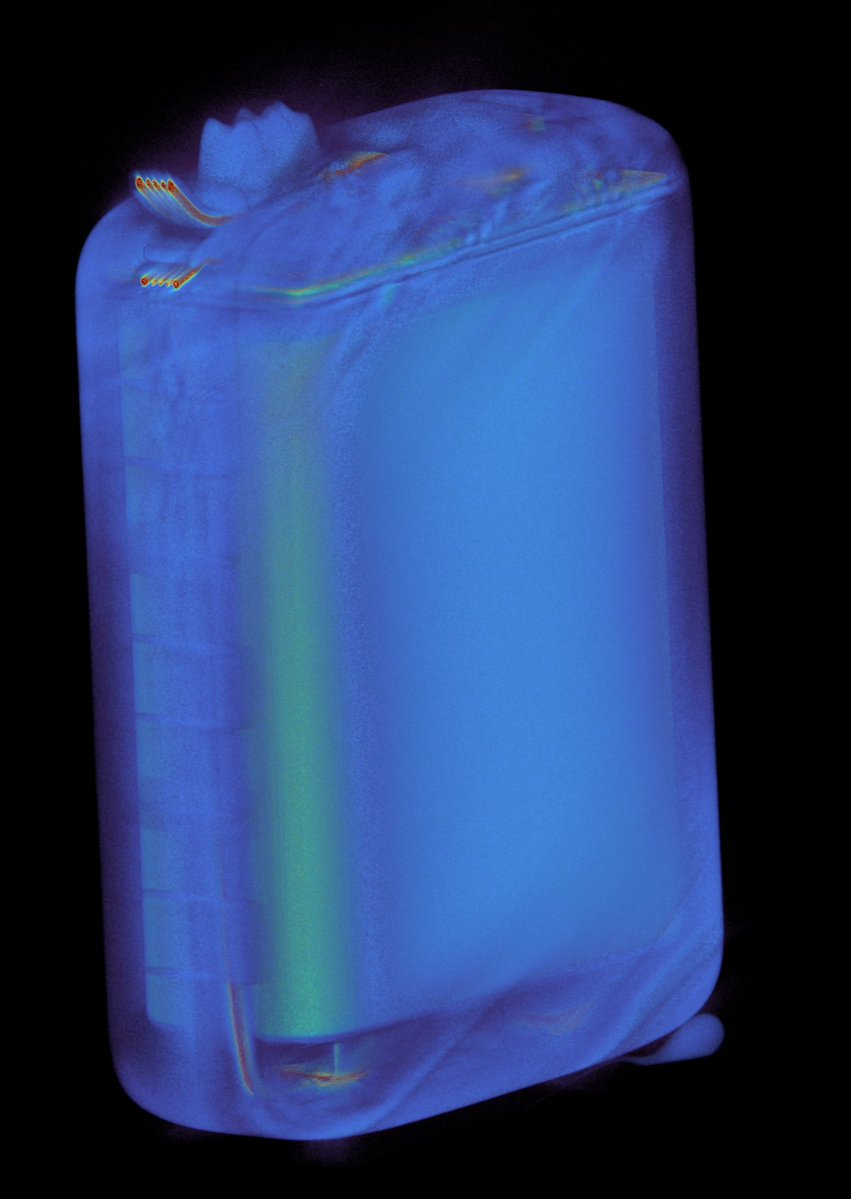
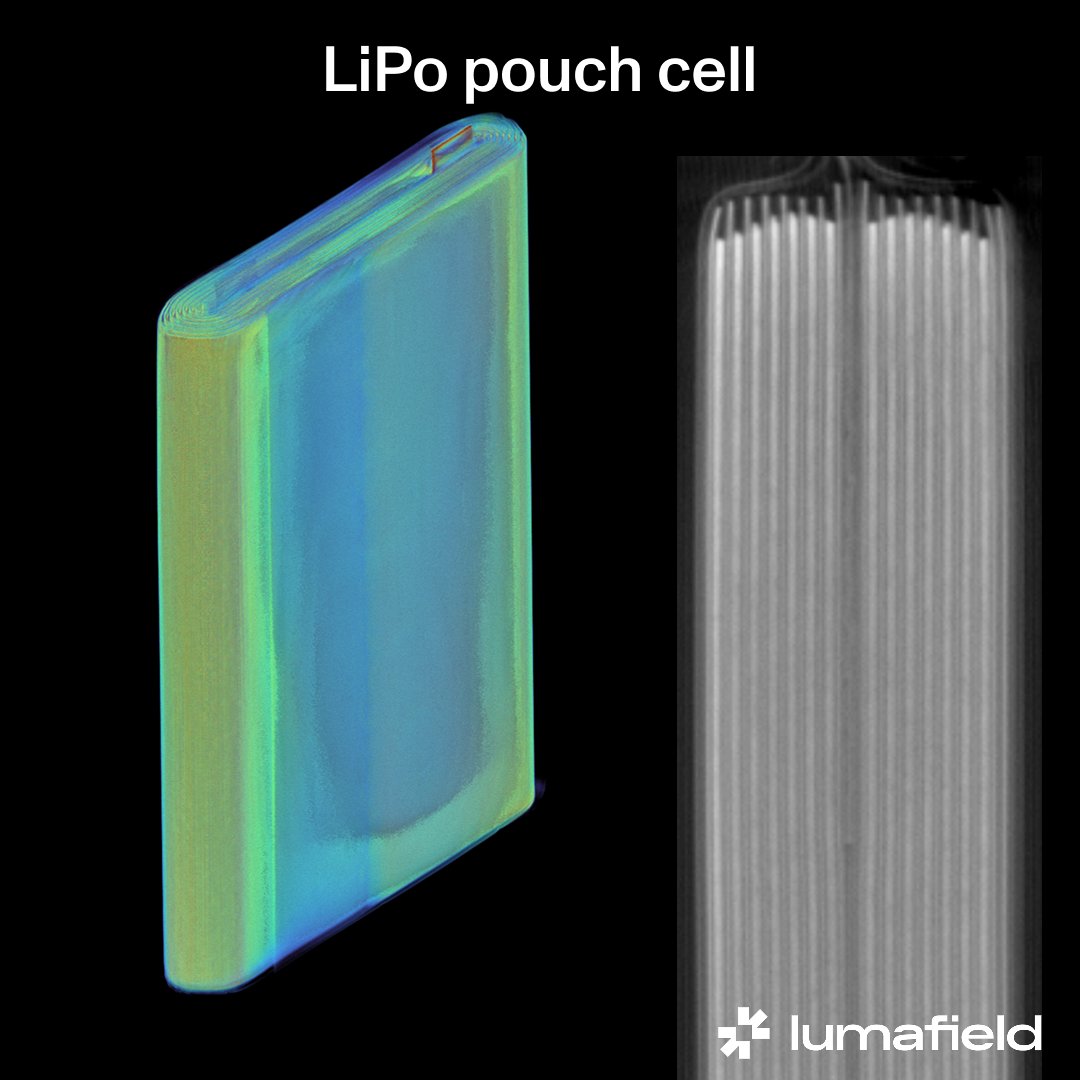
The power bank's enclosure contains two lithium-ion pouch cells. In this @lumafield CT scan we can strip away the lower-density plastic shell and isolate the bank's electronics and side-by-side battery cells.
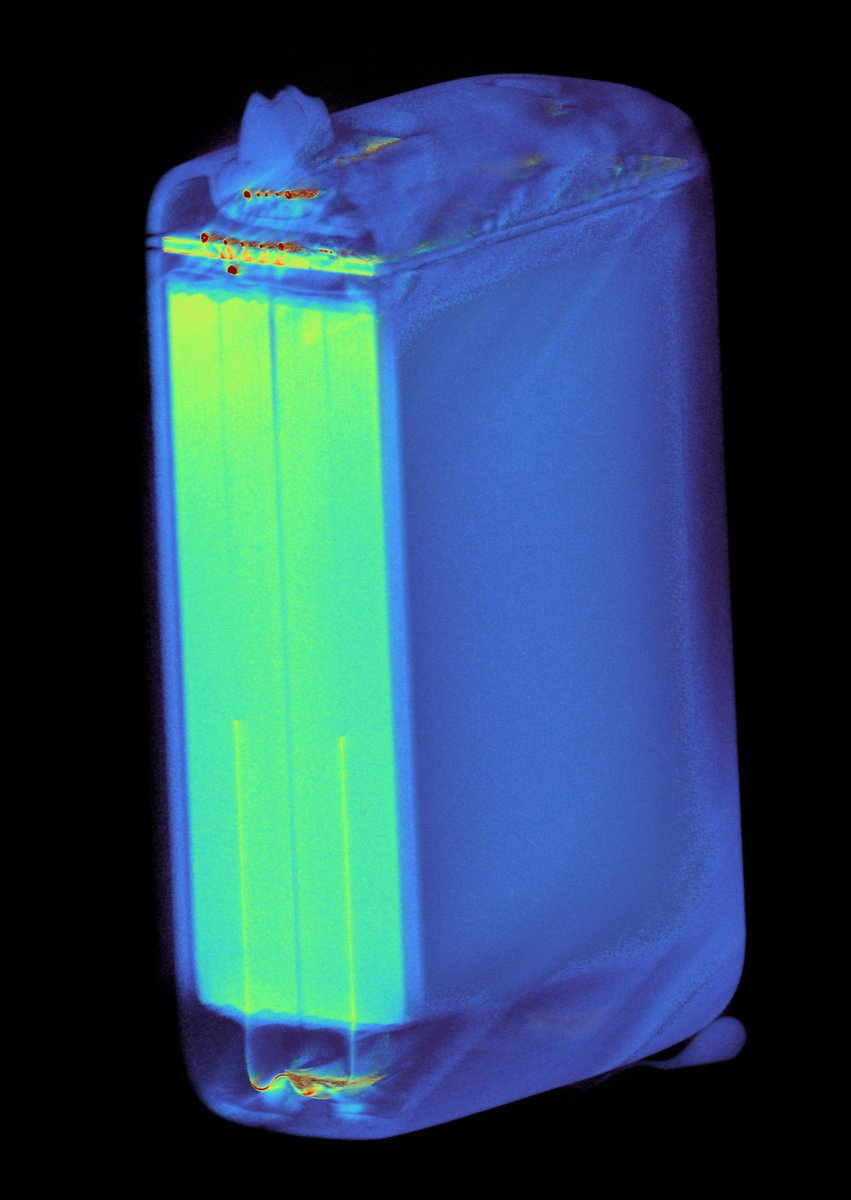
We can section in from the side to see a cross-section of the battery cells.
We just CT scanned 1,000 lithium-ion batteries from 10 brands to see how they compare inside.
The differences we found are enormous, and point to serious safety risks in off-brand batteries that can easily make their way into the supply chain. Here’s what we saw… 🧵
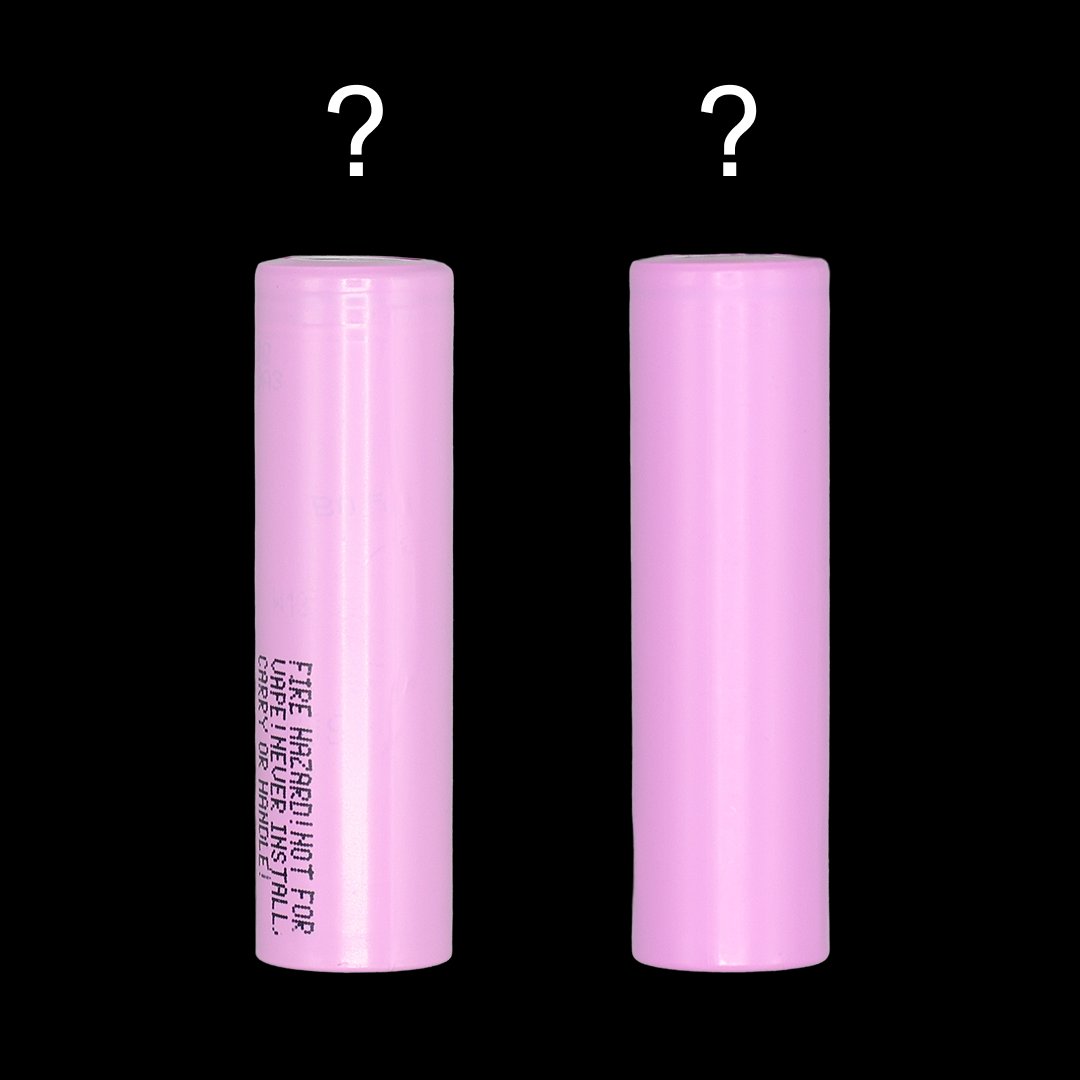
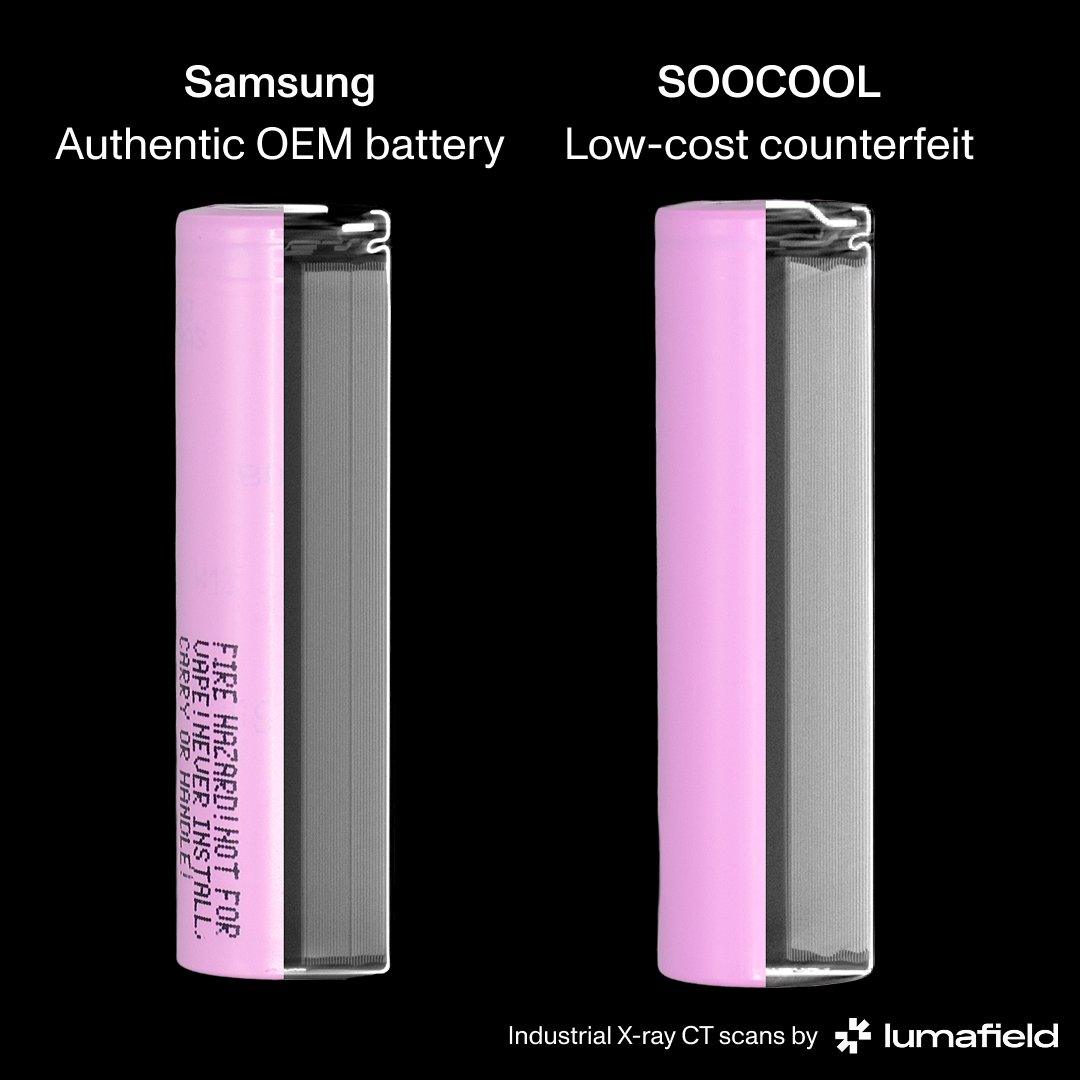
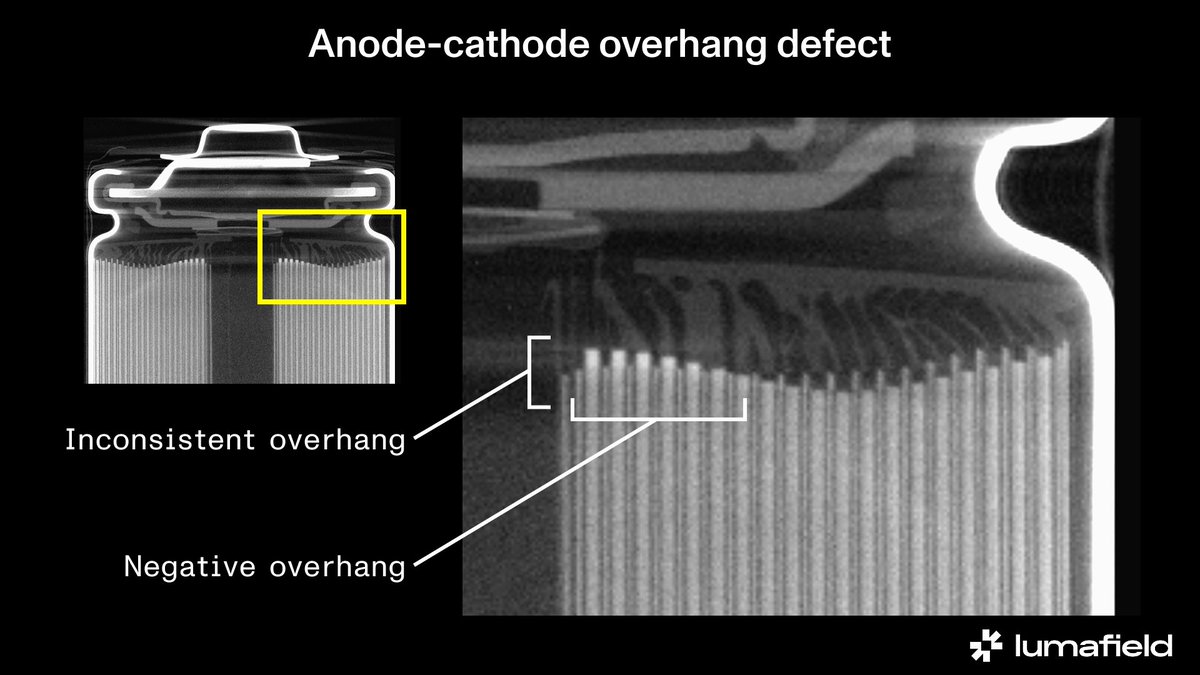
Can you spot the differences between these two batteries? One is a legitimate Samsung cell; the other is a counterfeit. It’s marked with a Samsung-style part number and feels well-made.
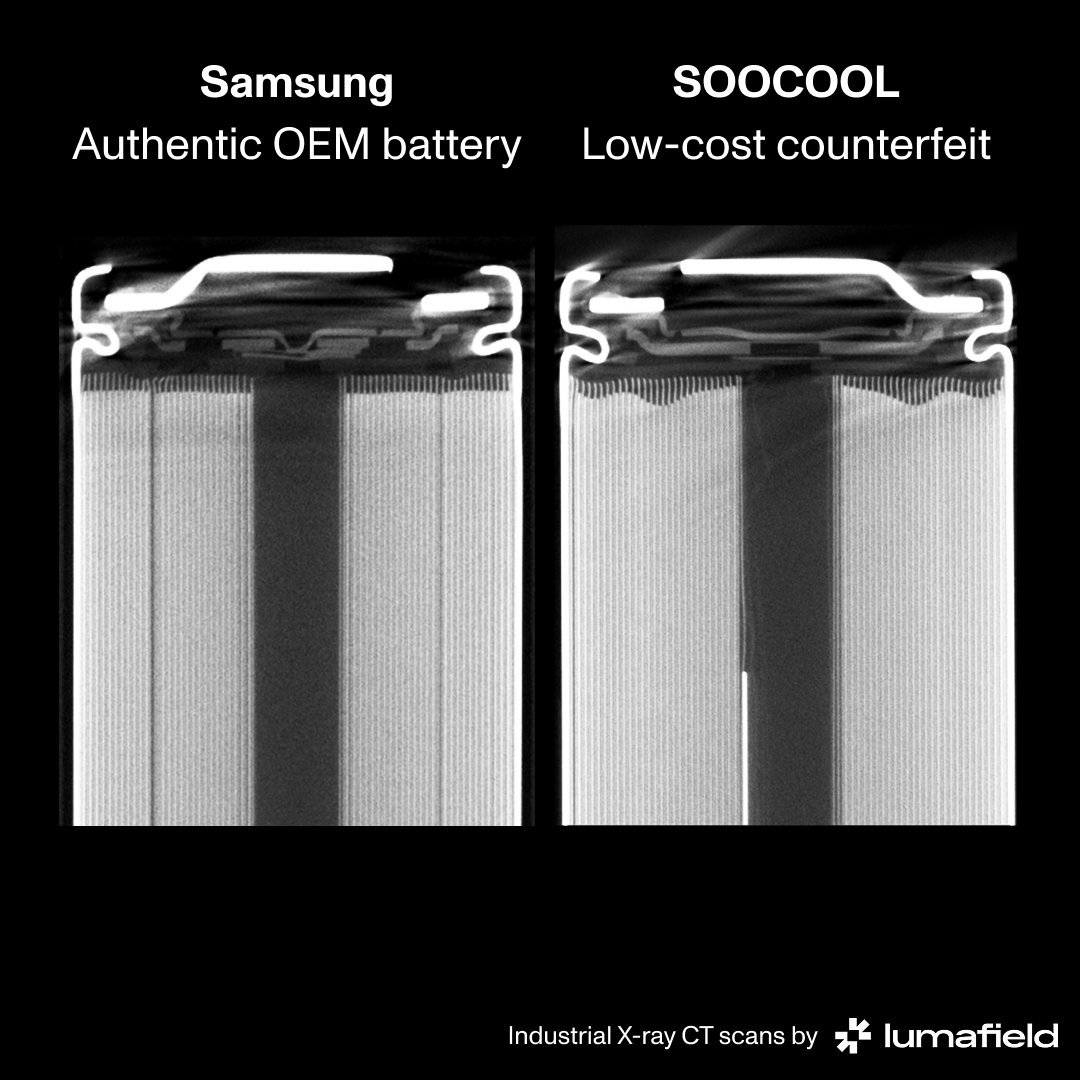
@Samsung But inside, these cells are completely different. Our @lumafield X-ray CT scans reveal that the Samsung cell has consistently high quality; its anode layers overhang the cathodes evenly. The counterfeit is a battery fire waiting to happen.
Last month @AnkerOfficial recalled over one million power banks due to an unspecified battery manufacturing issue. We CT scanned 3 recalled power banks and 2 that weren’t recalled to see what’s going on inside. Here’s what we found…
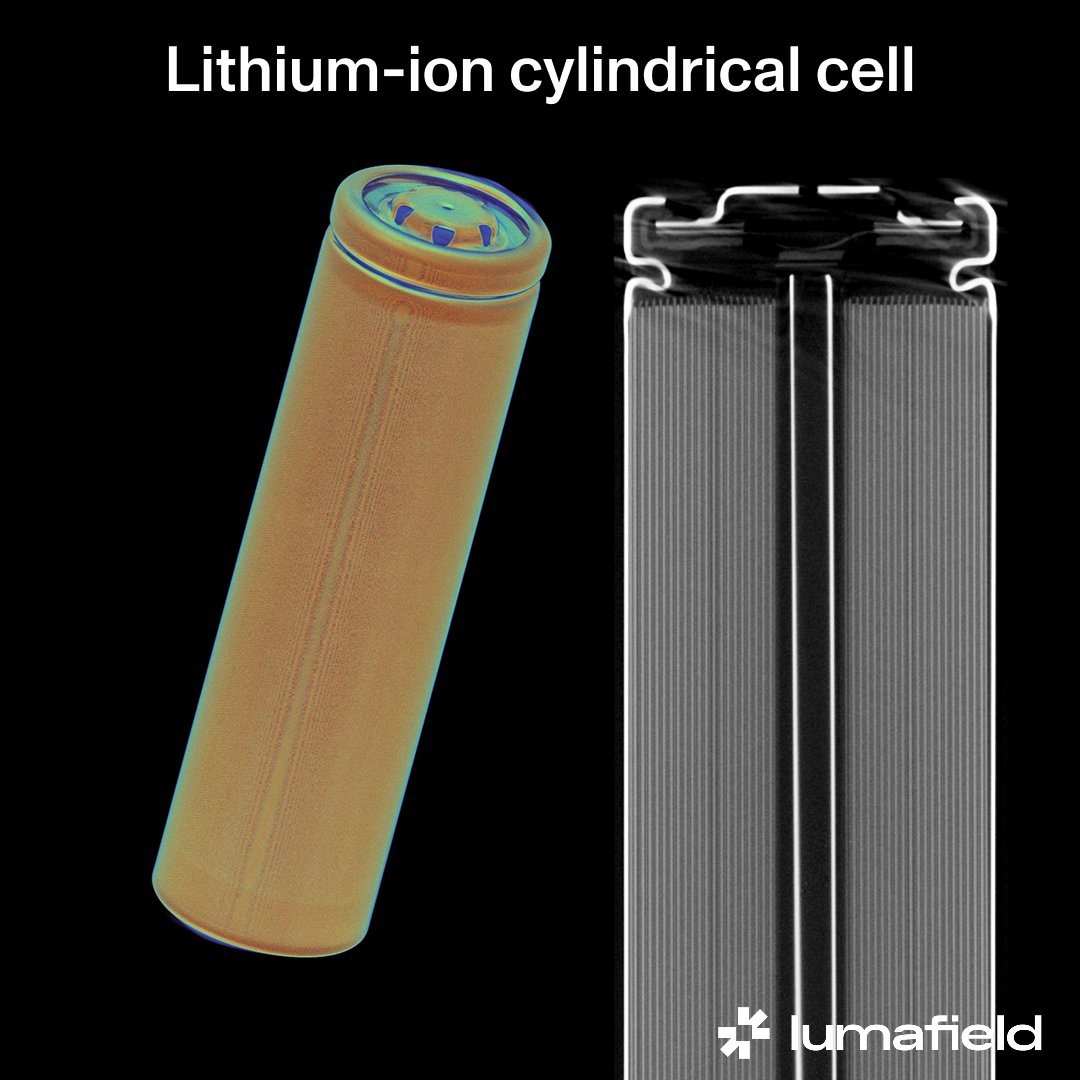
Lithium-ion batteries must be manufactured to extremely tight tolerances. They’re made by winding thin films of positive electrode (cathode), negative electrode (anode), and separator into a tightly packed “jelly roll” that's sealed into a cylindrical can or rectangular pouch.
If a contaminant is introduced during manufacturing or the film is wound unevenly, it can cause a short circuit between the layers. This can lead to rapid discharge, overheating, and potentially fire—making even small defects a serious safety risk.
This looks like an ordinary USB-C connector, but when we CT scan it, we find something sinister inside…🧵
Last year we CT scanned a top-of-the-line Thunderbolt 4 connector and were astonished to find a 10-layer PCB with lots of active electronics. A lot of people saw the scan and wondered whether malicious electronics could be hidden in a tiny USB connector.
The answer is yes. This is an cable created by @_MG_, a security researcher and malicious hardware expert. It looks like an ordinary USB cable, but it can log keystrokes, inject malicious code, and communicate with an attacker via WiFi. Let’s see inside… O.MG
We just announced a major breakthrough in X-ray CT technology at @lumafield: scans that take hours with conventional CT will now take seconds. Here's why that's important 🧵
A CT scan is the richest possible source of industrial inspection data: it gives you a full 3D model of your part, inside and out, along with relative density information. But it's always been too slow for use in high-volume production environments—until now.
By bringing scan times down to as little as 0.1 seconds, we've overcome the major drawback of CT. Now it's a practical inspection technology for high-volume production.
Pens are made by the billion, require insane precision, and still work almost every time. We CT scanned a few common pen types to see what’s inside... 🧵
First up: a fountain pen 🖊️ These date back to the 10th century, but practical designs appeared in the 19th century. When the pen is tilted, gravity pulls ink from a cartridge to the nib. Capillary action pulls the ink through a slit in the nib, where it flows onto the page. Here are the 2D X-ray radiographs we captured of a fountain pen; we use software to reconstruct them into a 3D model (next tweet).
Here’s the 3D reconstruction of a retractable fountain pen—the Mahjohn A1. Our CT scan of the pen tip shows a spring loaded door that opens and closes to prevent the ink from drying out and to protect the nib.