🧵This is a short thread on a very misunderstood book called Dеr Untеrmensch. It is claimed by those who have never read it, and hope you won’t either, that this book in anti-Slavic but in reality it is not. This was published by the SS in 1942 and can be found in the library provided in the comments.
The Allied forces attempted to seize and destroy all copies of this book, but a handful were saved. It is important to note that nowhere in this book or Slavic people denigrated, but quite the opposite as they were shown to be a part of the European people.
A healthy societal body needs to overcome and permanently cast out any parasitic organisms in order to protect itself.
Here we see the introduction of a class that is below that which holds human characteristic leading to creation and real societal growth.

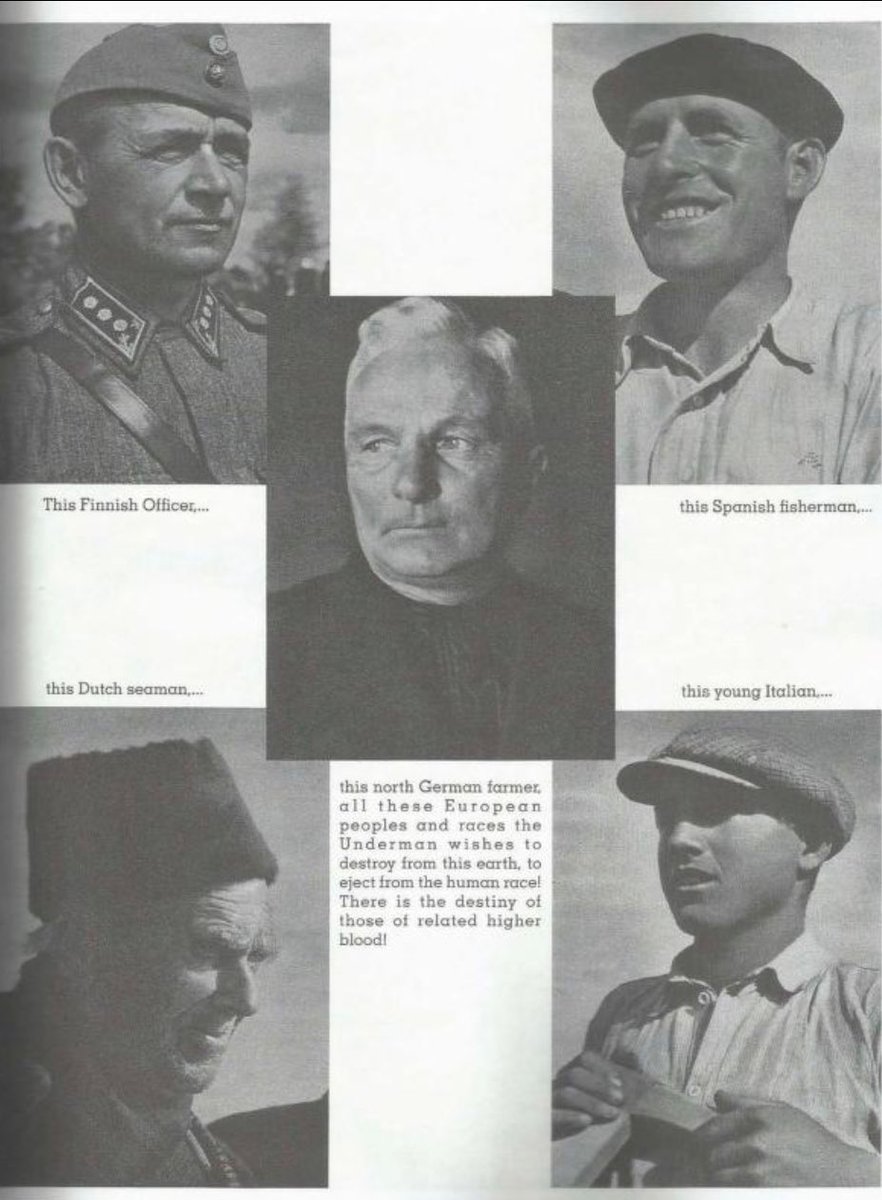
In this image, we see Spaniards, Italians, Finish and Dutch men grouped together as Europeans.
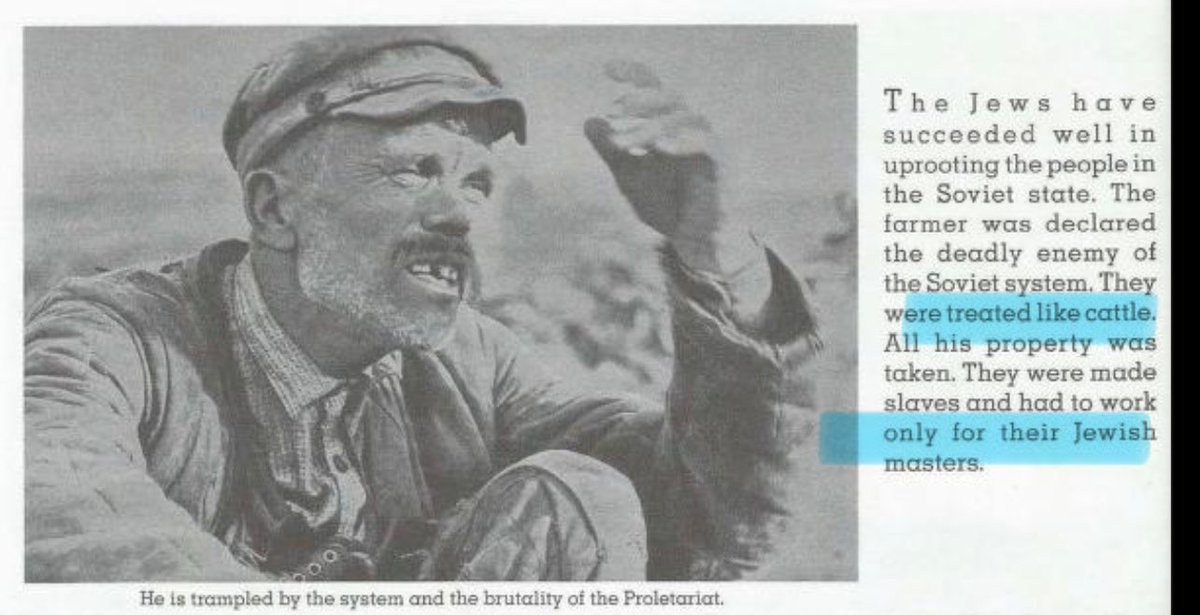
Slavic people became little more than cattle to the ruling class of “Soviets”.
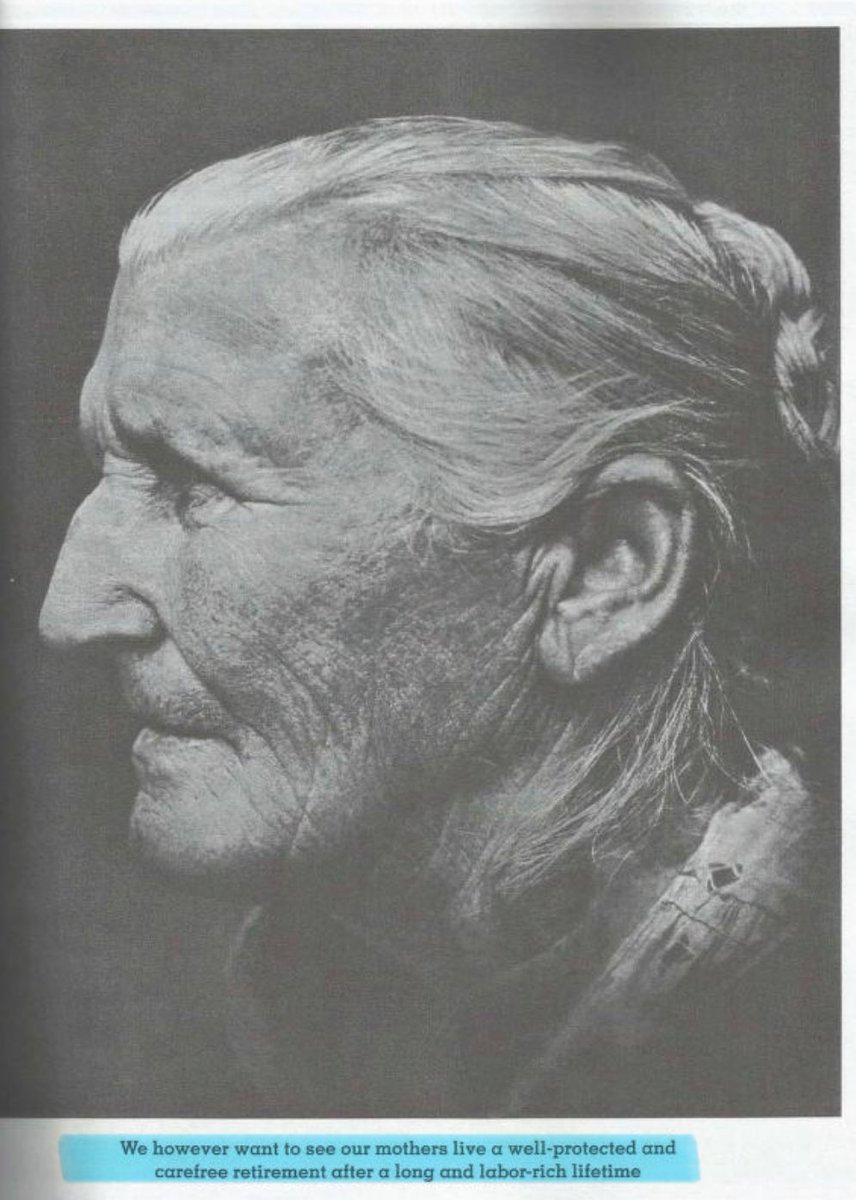
This speaks to the plans for social services for the elderly where they would be properly cared for along with those with disabilities.
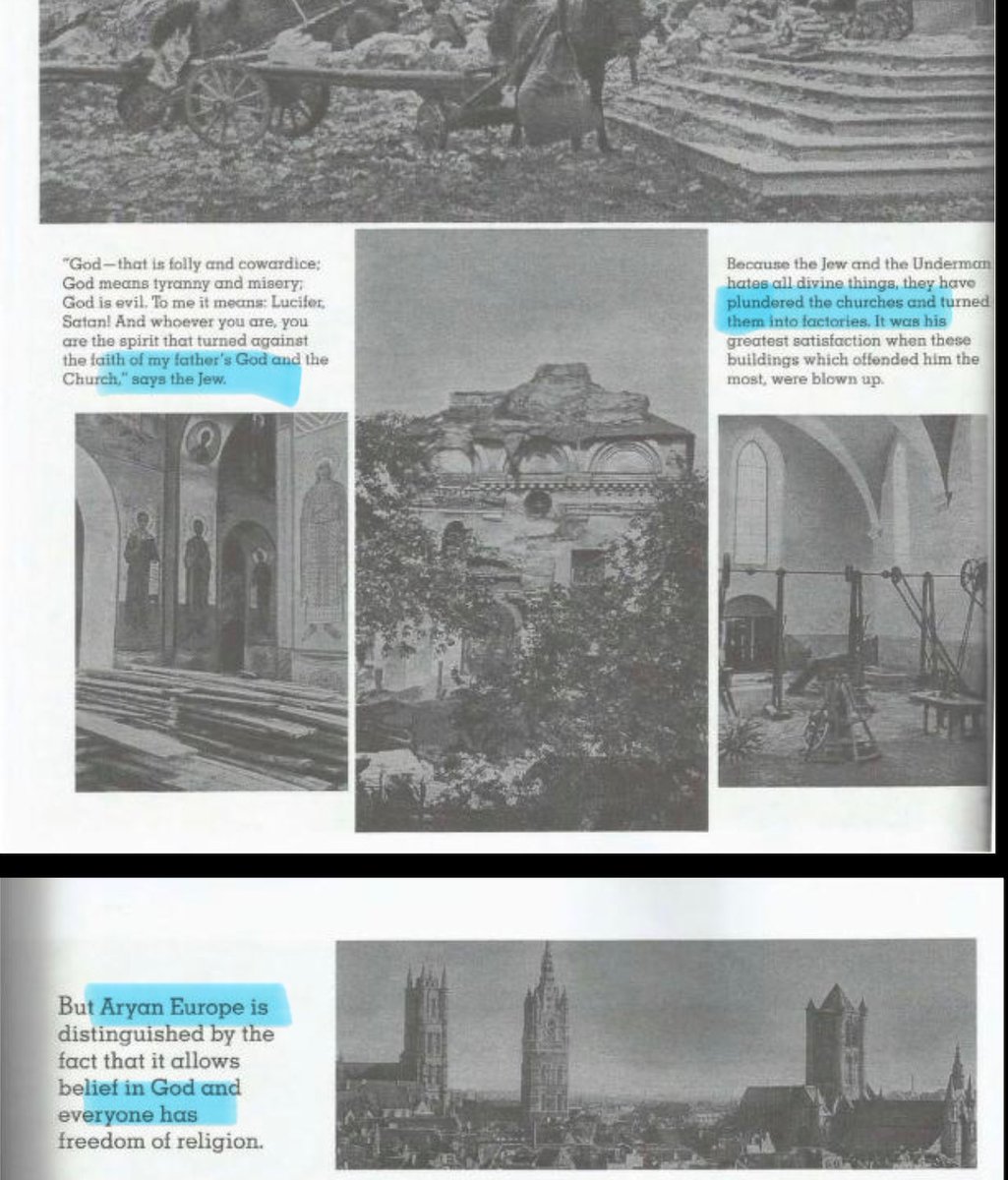
“But aryan Europe is distinguished by the fact that it allows belief in God and everyone has freedom of religion.”
Here’s a copy of the Act taken from the capital government website. The Naturalization Act of 1790 was the very first law to define eligibility for those wanting to become an American citizen.
The law was passed by the First United States Congress (1789-1791) and signed into law by President George Washington. MANY founders were directly involved in the drafting and passing of this bill. The long list of names include many founders:
John Adams
Robert Morris
Oliver Ellsworth
William Paterson
Caleb Strong
Richard Henry Lee
Charles Carroll
William Few
James Madison
Fisher Ames
Roger Sherman
George Clymer
Elbridge Gerry
It was require than an individual be:
- resident of two years
- of good moral character
- swear an oath of allegiance
And was strictly limited to “free White persons” or good character.
đź§µThis is a thread relating to shock-value propaganda and what the research shows regarding its effectiveness in changing the opinions of the public. It is extremely relevant to NS, and is the center of many disagreements, with some claiming that the public is receptive to such methods, and others arguing that it is ultimately detrimental.
Firstly, let’s discuss Social Judgment Theory:Â
SJT asserts that persuasion unfolds in relation to an individual's preexisting beliefs, meaning new ideas aren’t met by an unbiased vacuum. (see Sherif & Hovland, 1961)
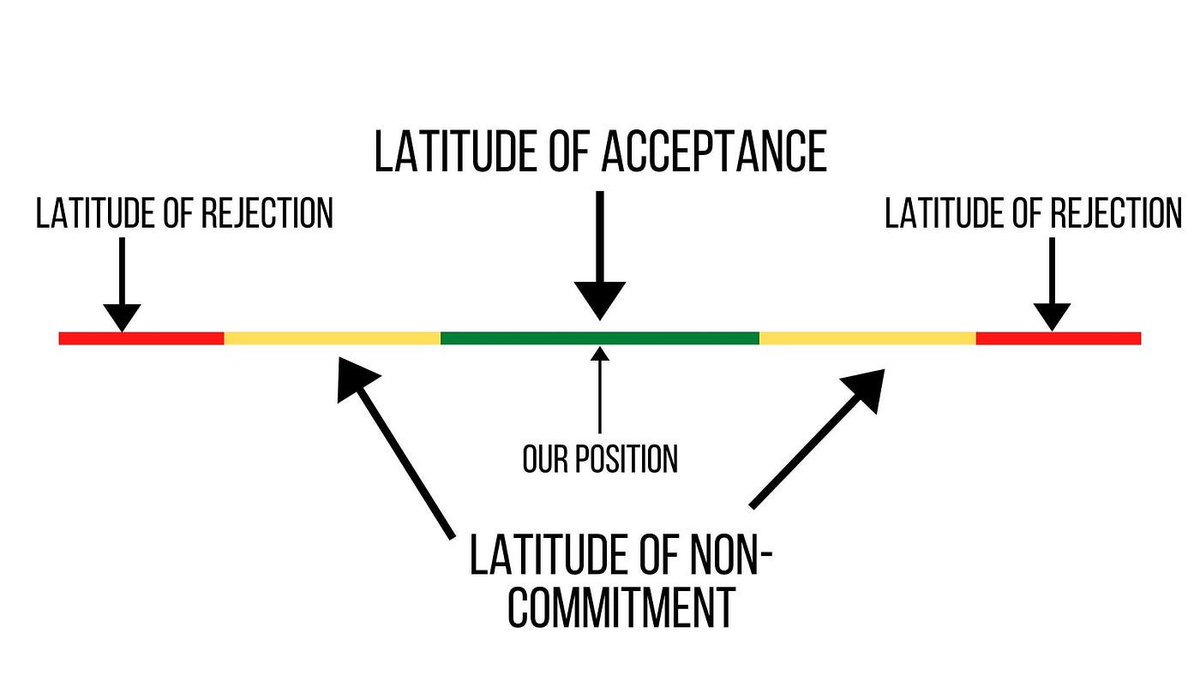
This asserts that an individual’s core position is surrounded by three zones:
•Latitude of Acceptance: viewpoints we find agreeable
•Latitude of Non-Commitment: neutral or undecided territory
•Latitude of Rejection: messages we outright oppose
Research shows that persuasion works best when the message is close to or within the individual’s latitude of acceptance or non-commitment. If it lands within the latitude of rejection it has a very high likelihood of being rejected, and even triggering a boomerang effect, further alienating the individual from alignment.
đź§µ This is a thread on the book, Your Brain on Porn: Internet Pornography and the Emerging Science of Addiction by Gary Wilson. It was overall a very interesting book, and it did answer a lot of questions I had on the topic, specifically the effects of frequent pornographic use on the individual.
The development of modern technology has been a blessing in many ways, but has also granted the average individual access to more sexual stimulation than would’ve ever been possible before such advancements.
Porn addiction often negatively impacts the individual socially, feeding into a cycle of loneliness that has the potential to become highly antisocial.
đź§µThis is a a thread on how to make your own textbooks (or any type of book) cheap and easy with no special tools required. Using this method, I only pay $4.26 per 600 page textbook. Education should be affordable and accessible, even for those who cannot afford to access it through traditional means.
First thing you will need to do is to source the PDF for your book. There are plenty of places like that have what you’re looking for. Download the file so you will have access to it if it gets taken down (which happens frequently). archive.org
Next, you will need a printer or access to a printer. If you cannot afford a printer then try to use the printer and at your place of work or school. I highly recommend purchasing an EcoTank printer because the ink seemingly lasts forever and is very easy and cheap to refill. These are fantastic for political activism as well because flyers can be printed for very cheap.
🧵This is a thread on Johann Gottlieb Fichte’s book Addresses to the German Nation. Fichte was a German philosopher and a founding figure of German Idealism. His ideas were recognized and built upon by the NSDAP (especially the aspects regarding the education of the nation) who even required some of his books in different educational programs. It is a long book so I will break it into two threads, with this one being the first.
Fichte recognizes the close connection that exists between race and the identity it fosters. When the identity of a people is lost, a new one must be formed but it will not be a carbon copy of the one that was lost.
The rejection of limiting class dynamics is made clear in this section, which also was echoed later by the NSDAP.
🧵This is thread on per capita which will go clear over about 13% of your heads, but that’s an issue for a later discussion. In this thread I will discuss its origin, applications, benefits and more.
The term “per capita” is Latin and means “per person”. In statistics, this term refers to the division of a total quantity by the size of the population being examined. This results in a rate that can be directly compared to other populations, regardless of the scale associated with either subject. It allows for an apples to apples comparison as it forms raw totals into easily comparable metrics. It is a standardized rate.Â
It emerged in academic discourse between the seventeenth and eighteenth century, where it was mostly being applied to economics initially.
William Petty (1623–1687), sometimes called the father of political arithmetic, wrote:
“Instead of using gross numbers, we must compare the people per head, to see which state is more rich or strong.”
Later, Adam Smith in The Wealth of Nations (1776) used the logic of per capita when noting:
“The wealth of a nation is to be judged not by the amount of treasure in the prince’s coffers, but by the quantity of goods which the labor of its people can purchase.”
This laid the foundation for GDP per capita and other modern statistical tools.
Why does per capita matter?
Because raw numbers tell us size, not scale. This is extremely important in making accurate criminal, medical, economic and otherwise governmental decisions, because without it we are left with only a fraction of the context needed to make appropriate decisions consistently.
Failing to adjust for population will make larger countries and cities appear to have more deaths, GDP and crime, simply because they have more people. If you do not look like the picture presented at the start of this thread then you likely recognize how significant this is in avoiding false equivalencies and misleading conclusions.
For example:
•Earth has 1,000 homicides.
•Mars has 100 homicides.
At first glance, earth looks far more violent. But if earth has 300 million people and mars only has 2 million, the homicide rate per capita reveals a much different picture:
•Earth = 0.33 per 100,000
•Mars = 5.0 per 100,000
This makes mars 15x more violent per capita. This is why it’s crucial to determine something’s relative intensity, rather than simply its absolute occurrence!