🚨The #CDR market surged in 2024—growing 78% with record purchases & deliveries. But behind the numbers, challenges loom: concentrated buyers, slow deliveries & a shifting investment landscape.
Is CDR on track or at risk? A🧵on the key takeaways from @cdr_fyi’s new report: 1/8
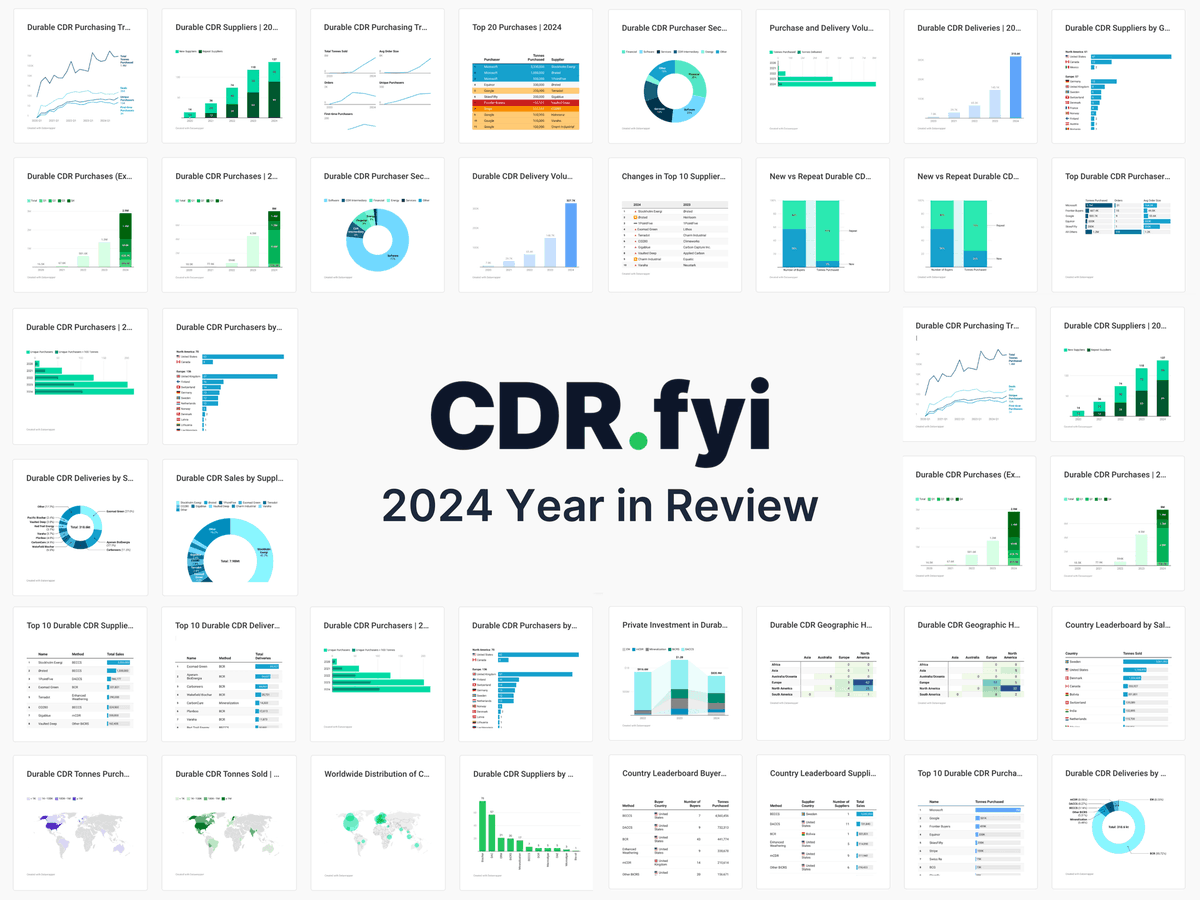
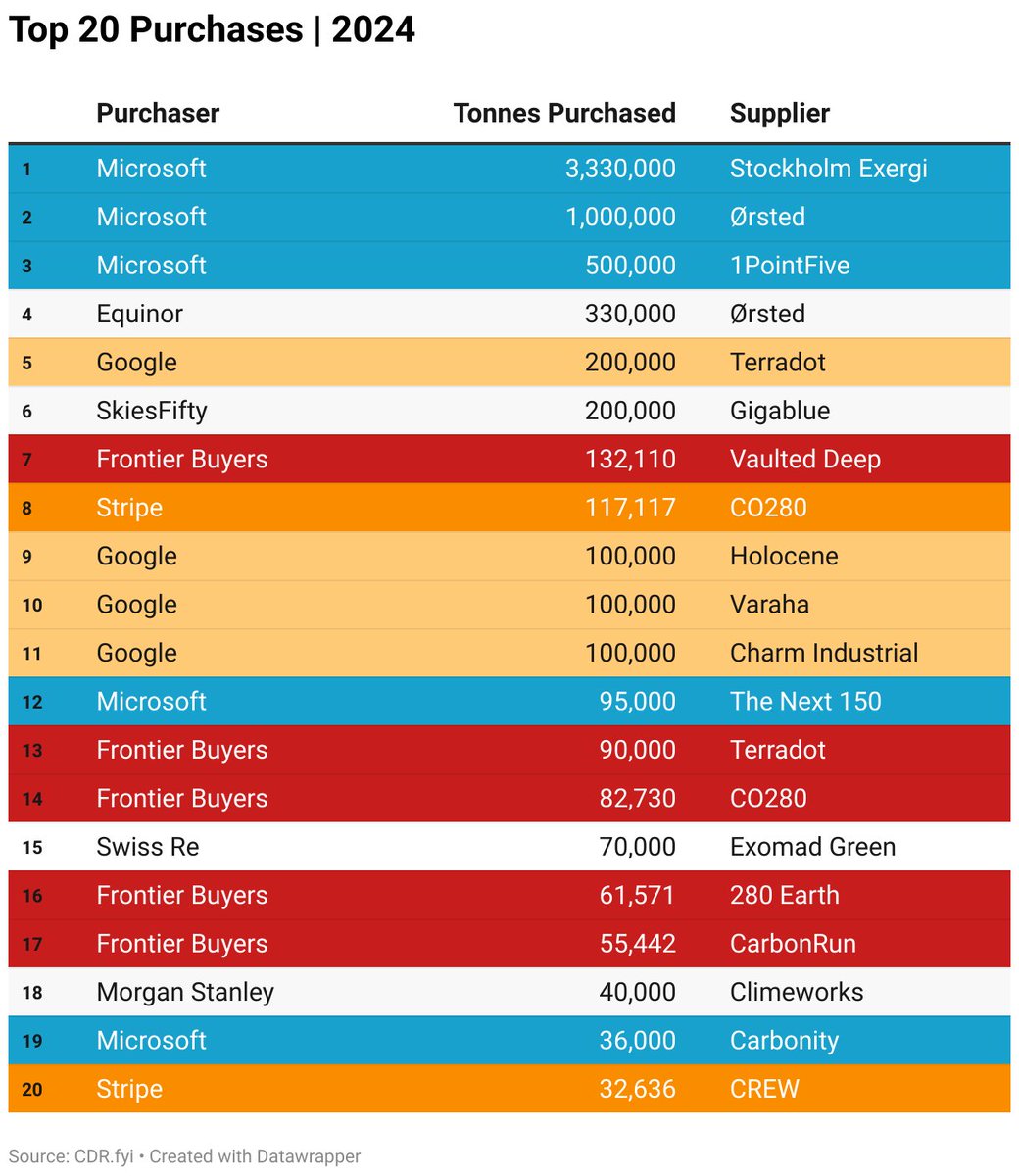
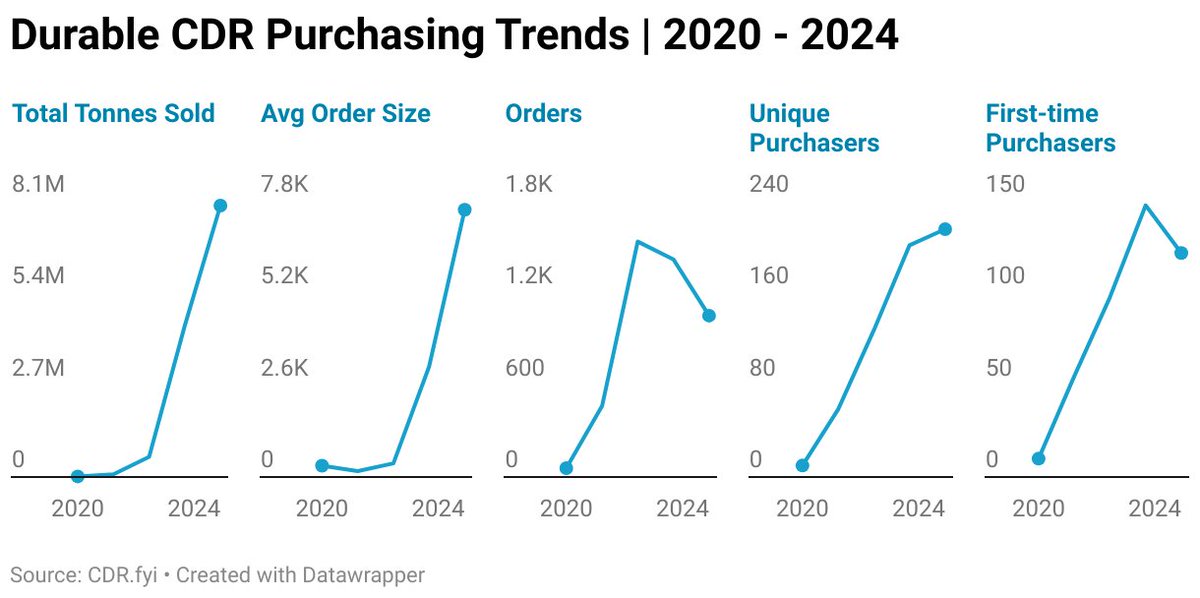
2/ Market Expansion: The CDR market expanded by 78% in 2024, with total purchased volume nearing 8 million tonnes. However, these purchases remain concentrated, with 80% coming from just Microsoft, Google, Stripe, and Frontier.
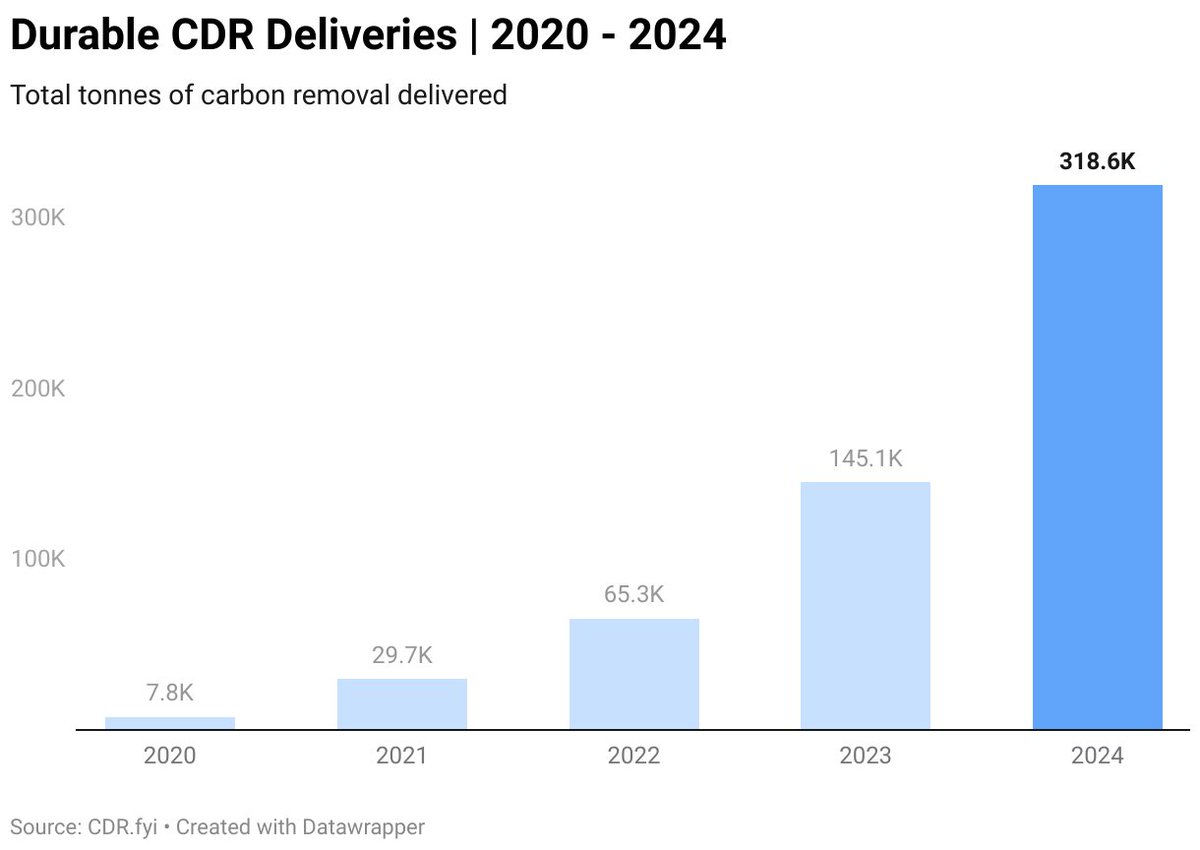
3/ Increased Deliveries: Durable CDR deliveries reached 318.6K tonnes, marking a 120% increase from 2023. Despite this, the delivery-to-booking ratio remains low at 4.4%, which is expected at this developmental stage.
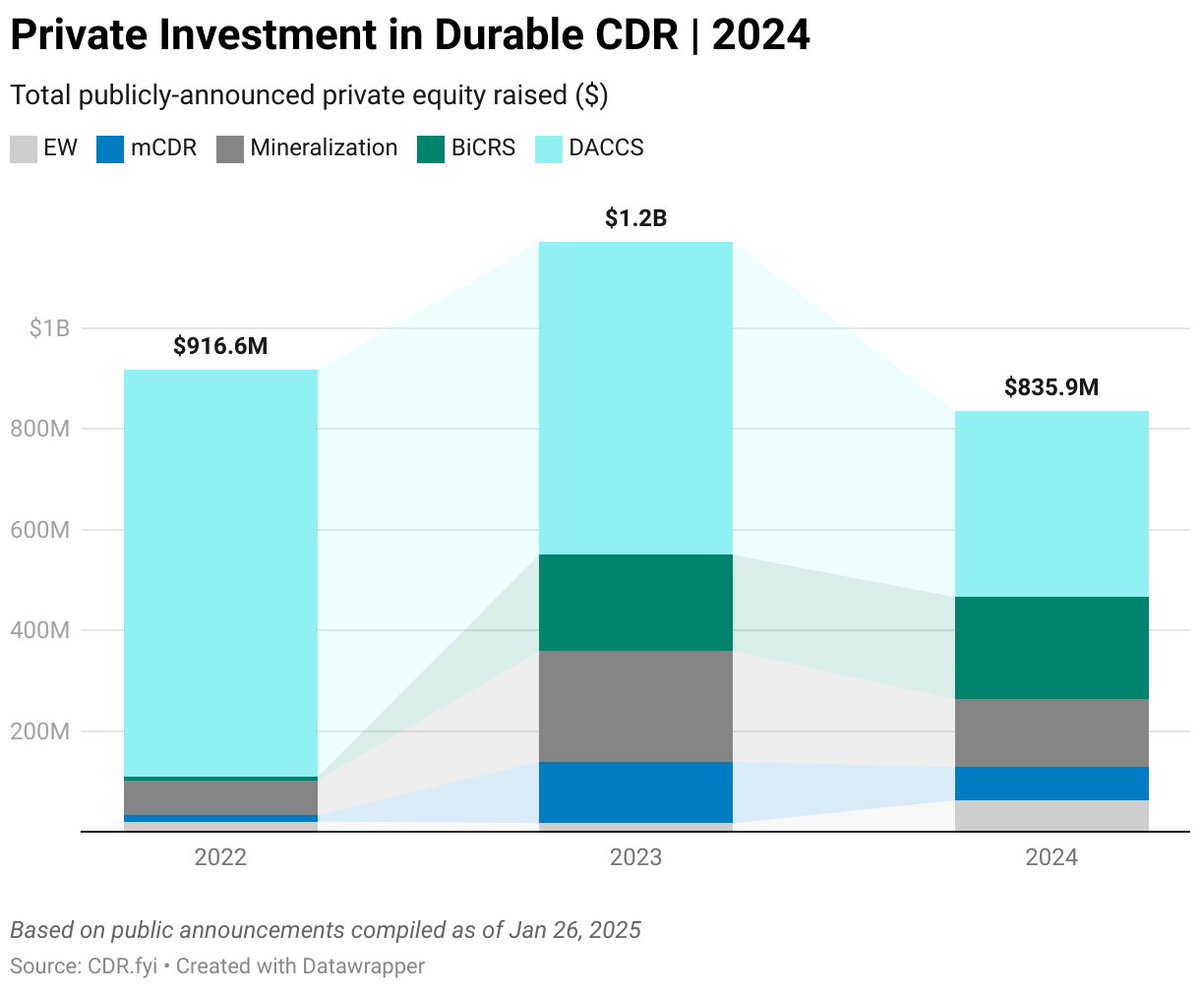
4/ Investment Trends: Equity investments in Durable CDR companies totaled $836M in 2024, a 30% decline from the previous year. However, excluding outlier transactions in 2022 & 2023, both the number and average size of investments have risen.
5/ Buyer Dynamics: The number of unique purchasers grew only 7% and first-time buyers declined 18%. Repeat buyer volume grew 95% and accounted for 91% of purchased volume; new buy volume remained essentially flat compared to 2023, and represented only 9% of purchased volume.
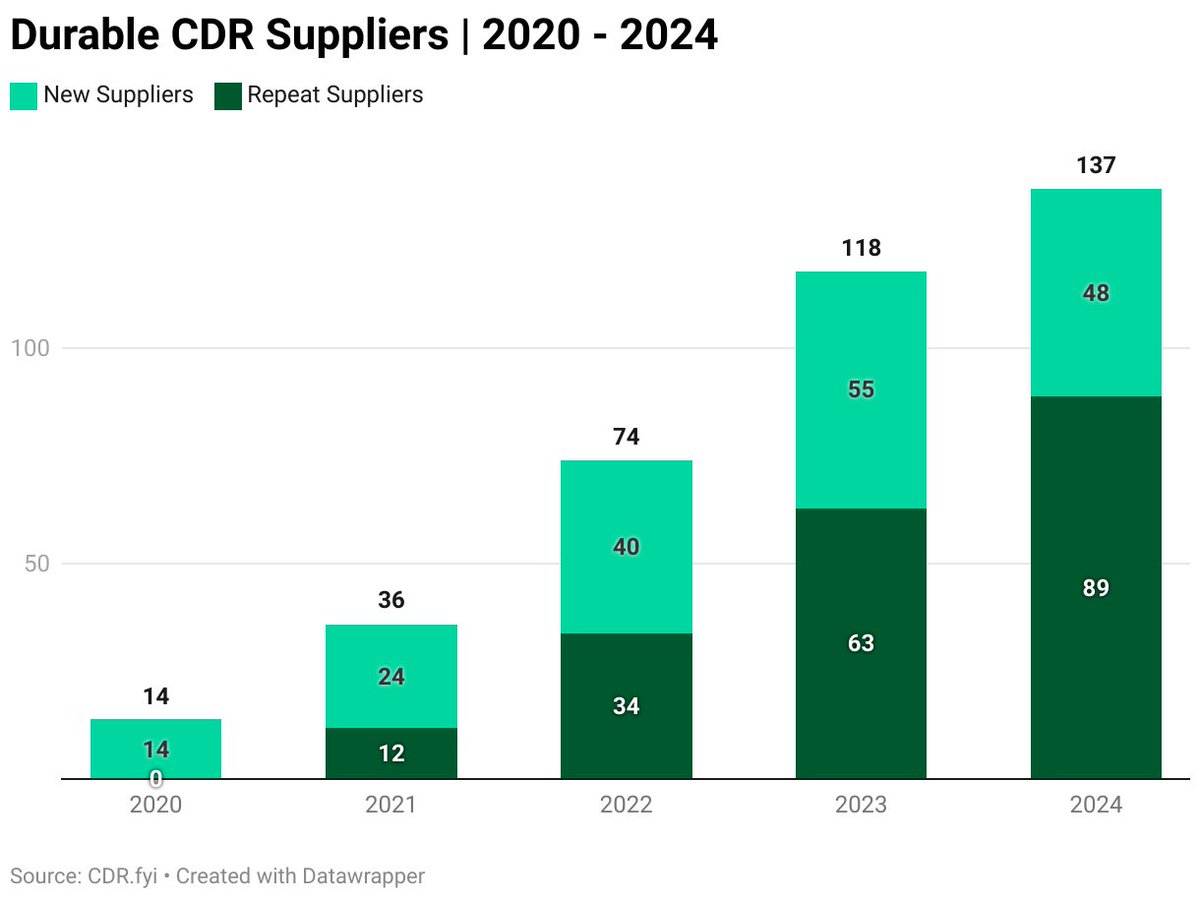
6/ Supplier Landscape: The number of suppliers increased by 16%. However, without an influx of new buyers, the sector risks premature price-driven competition, potentially disadvantaging high-cost but innovative methods.
7/ Future Outlook: The sector's growth in 2024 was largely driven by existing buyers. To sustain momentum, attracting a new wave of purchasers is crucial. While the market is expected to grow in 2025, current demand may not suffice for the number of suppliers aiming to scale.
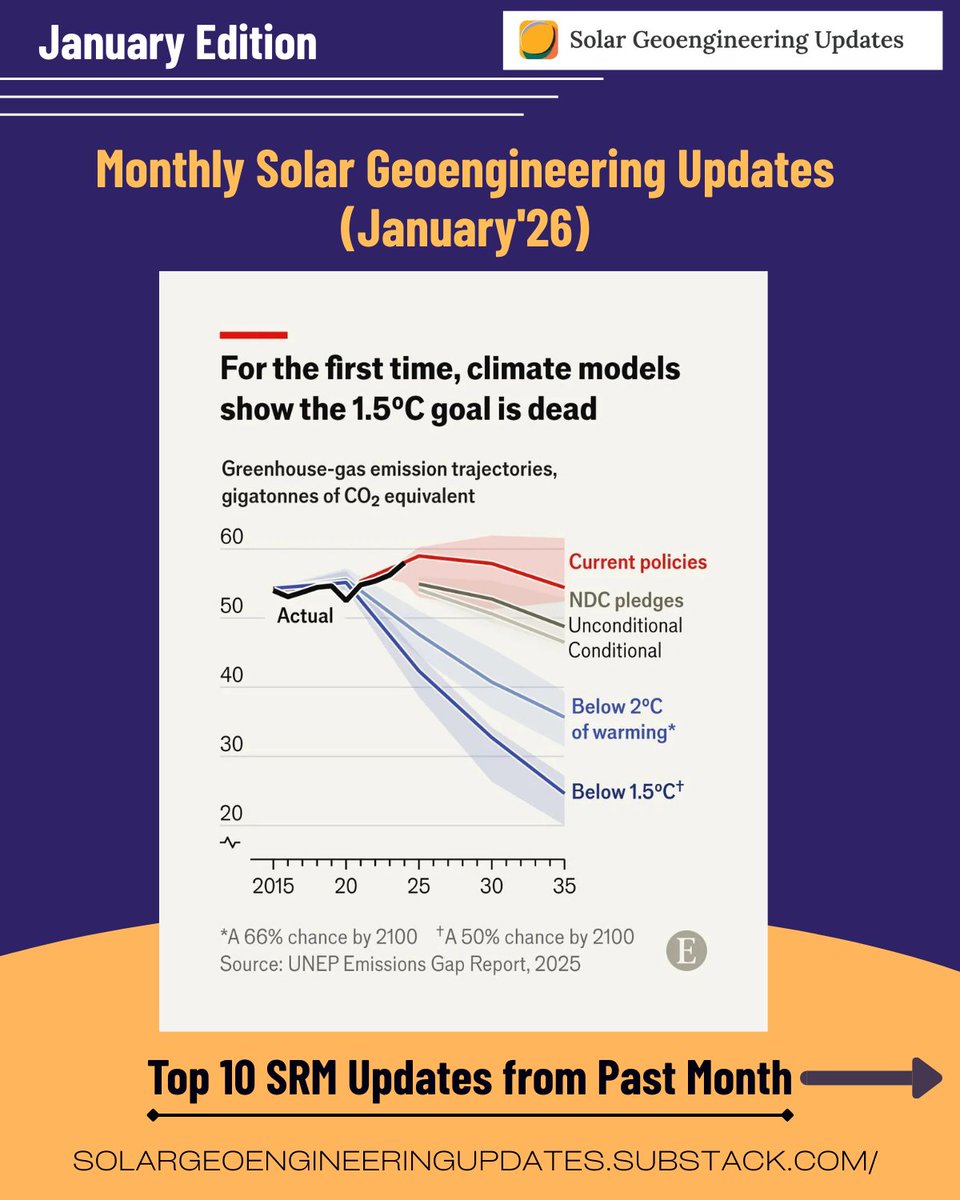
From U.S. withdrawal from global climate bodies & anti-geoengineering bills, to SAI uncertainty tool, Arctic field trials & funding calls, SRM stayed at the nexus of sci & geopolitics.
Top 10 SRM Highlights (Jan'26)🧵1/11
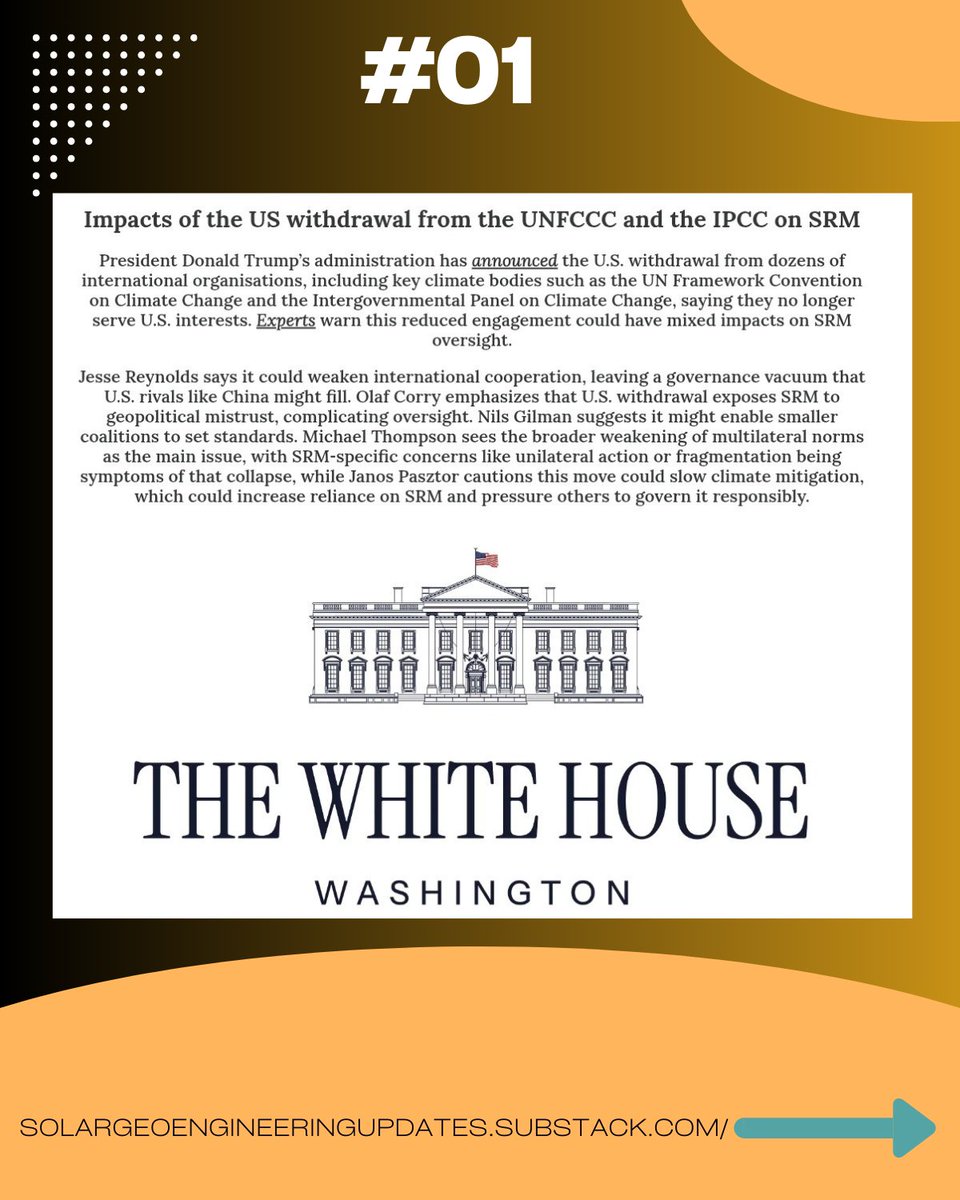
1️⃣ 𝗨.𝗦. 𝗲𝘅𝗶𝘁𝘀 𝗨𝗡𝗙𝗖𝗖𝗖 & 𝗜𝗣𝗖𝗖 - Experts warn withdrawal could weaken SRM governance, deepen geopolitical mistrust, and accelerate fragmented or unilateral approaches.
2/11
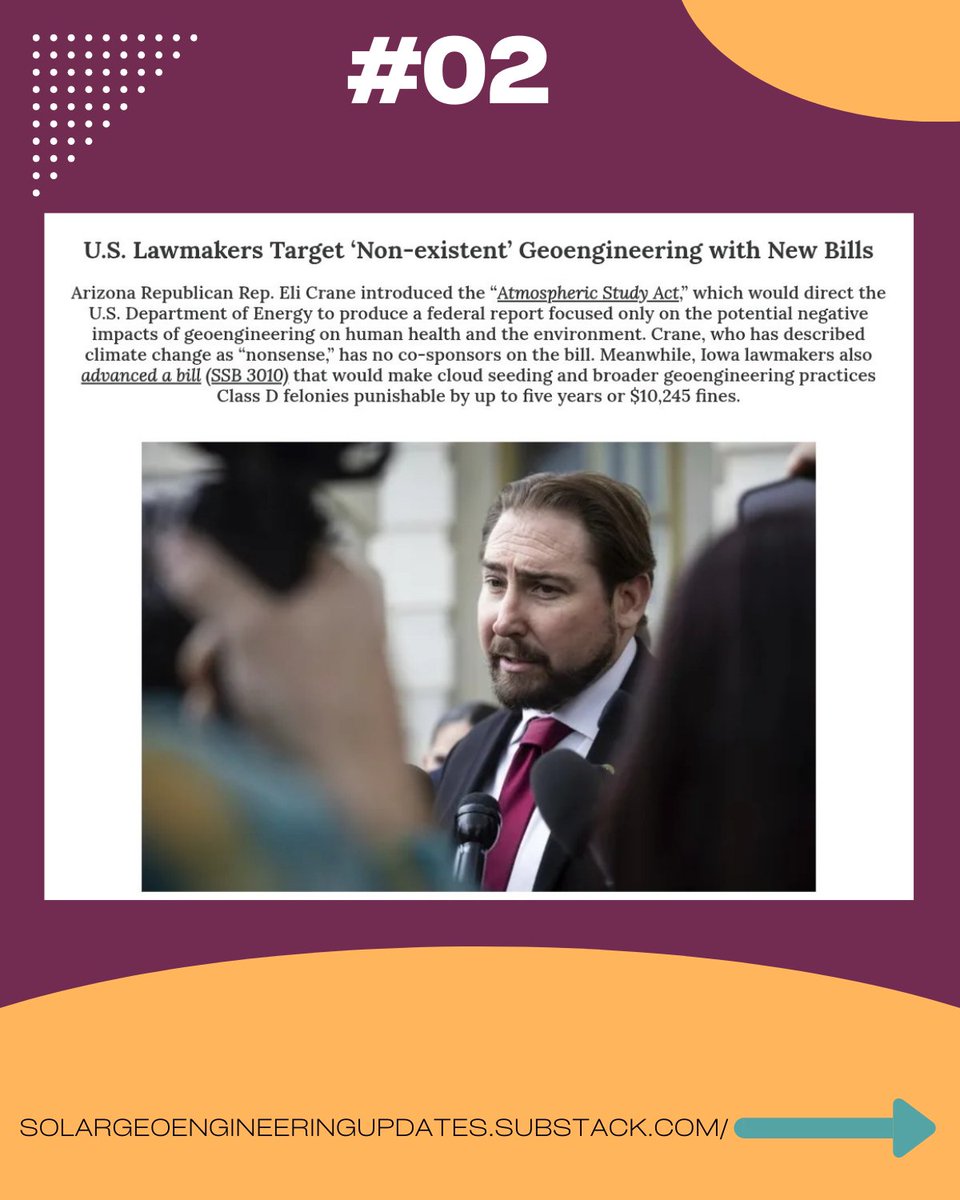
2️⃣ 𝗔𝗻𝘁𝗶-𝗴𝗲𝗼𝗲𝗻𝗴𝗶𝗻𝗲𝗲𝗿𝗶𝗻𝗴 𝗯𝗶𝗹𝗹𝘀 𝗶𝗻 𝘁𝗵𝗲 𝗨.𝗦. - New Arizona and Iowa state proposals target geoengineering, despite limited evidence and no active SRM programs.
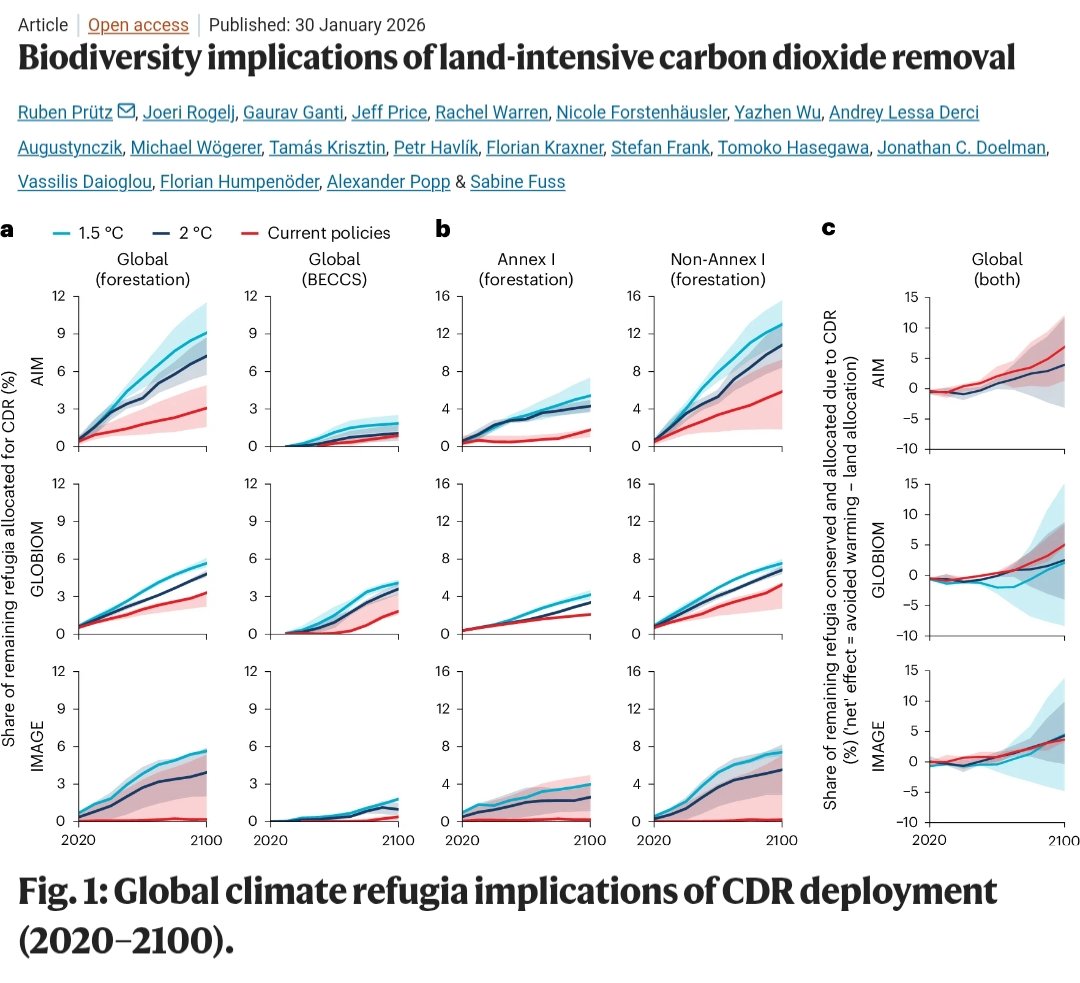
🚨Climate pathways to 1.5°C increasingly depend on land-intensive carbon dioxide removal (#CDR) like forestation and BECCS.
But new research shows these climate solutions could place major pressure on #biodiversity if deployed without safeguards.
Details🧵1/11
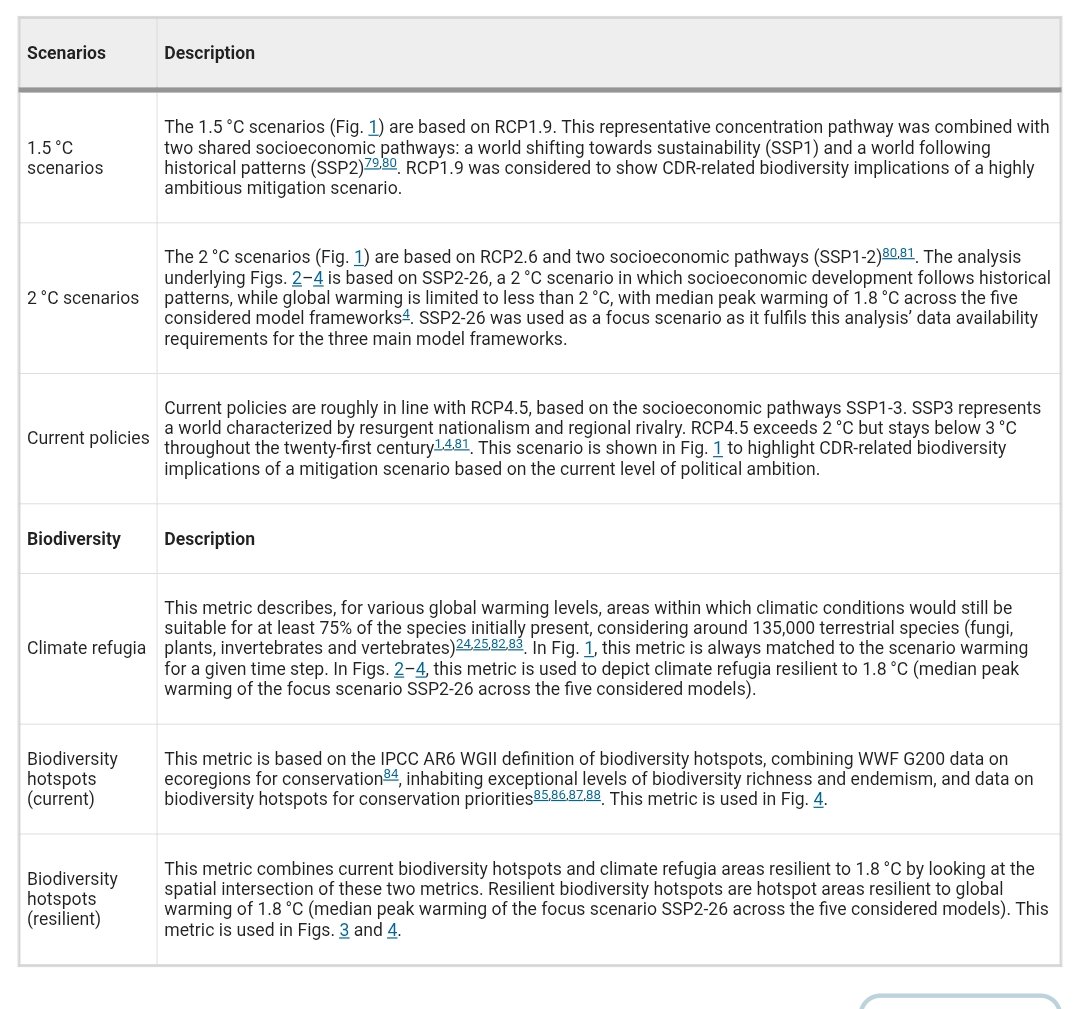
2/ Using five integrated assessment models, the study examines where large-scale CDR is projected to occur & and how often it overlaps with biodiversity hotspots and climate refugia, the places most critical for species survival.
3/ The analysis focuses on a moderate but realistic deployment level of 6 GtCO₂ per year:
• 3 GtCO₂/yr from forestation
• 3 GtCO₂/yr from BECCS
Even at this level, land pressures are already significant.
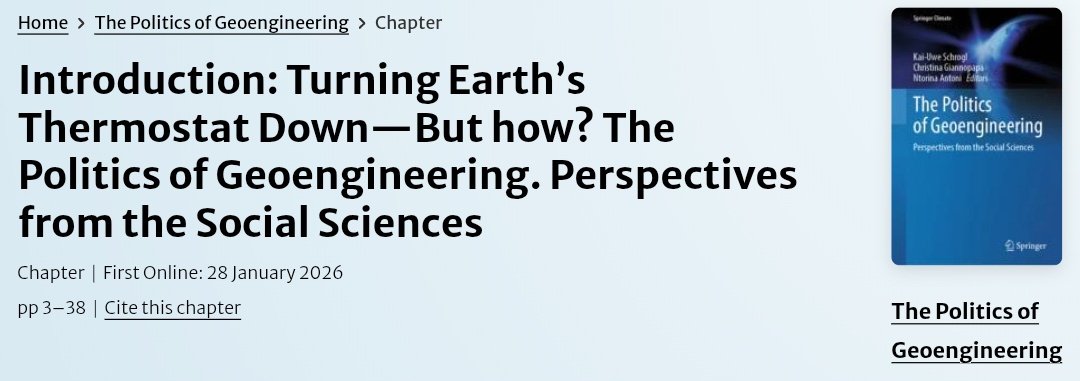
🚨The Politics of Geoengineering (book) is out, offering 1st comprehensive social science view of #geoengineering.
It examines political, legal, economic & societal dimensions of CDR & SRM, from Africa to the Asia-Pacific, amid urgent governance & ethical debates
Chapters🧵1/15
2/ Chapter 01: Geoengineering has shifted from theory to contested policy, with technology outpacing governance. The analysis highlights political, legal, economic, and justice dimensions and calls for urgent global oversight.
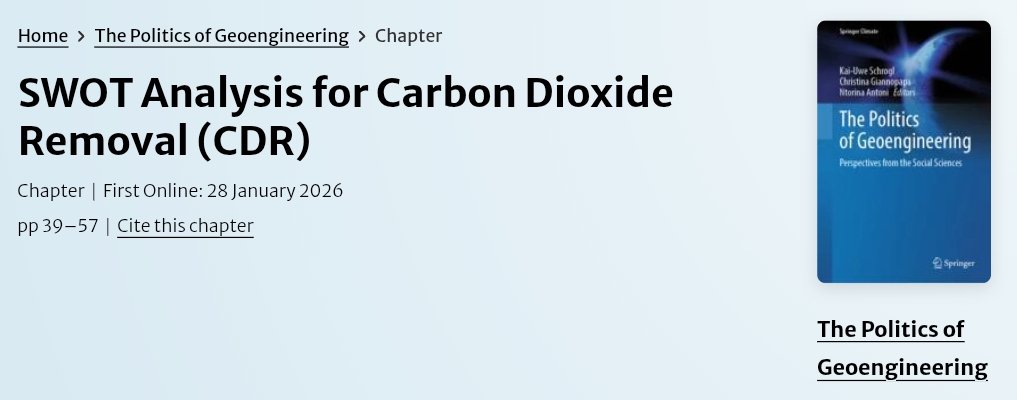
3/ Chapter 2 examines Carbon Dioxide Removal (CDR) as geoengineering, analyzing CO2 extraction, storage, and conversion, with SWOT insights on techniques and implications for sustainable climate action.
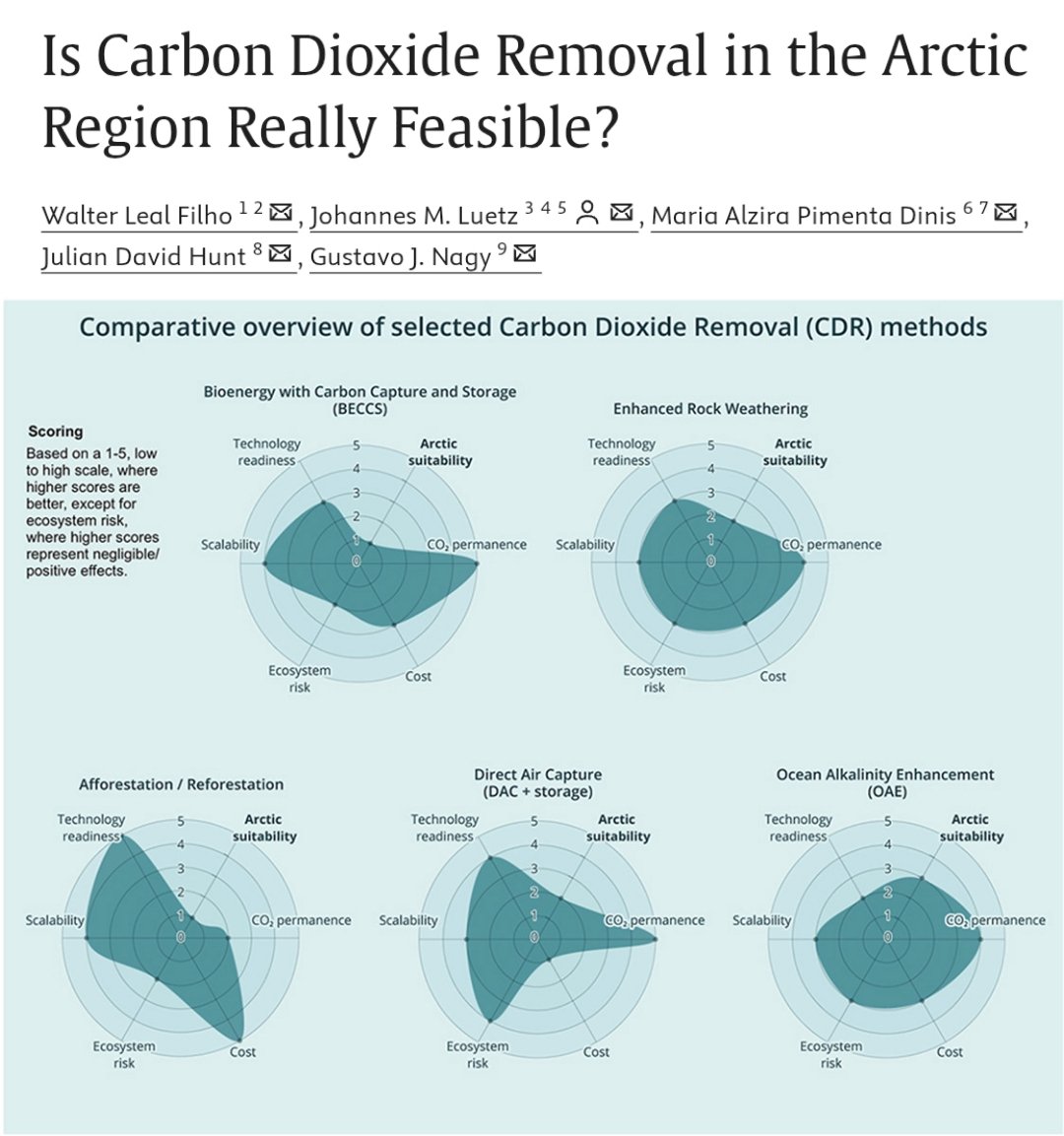
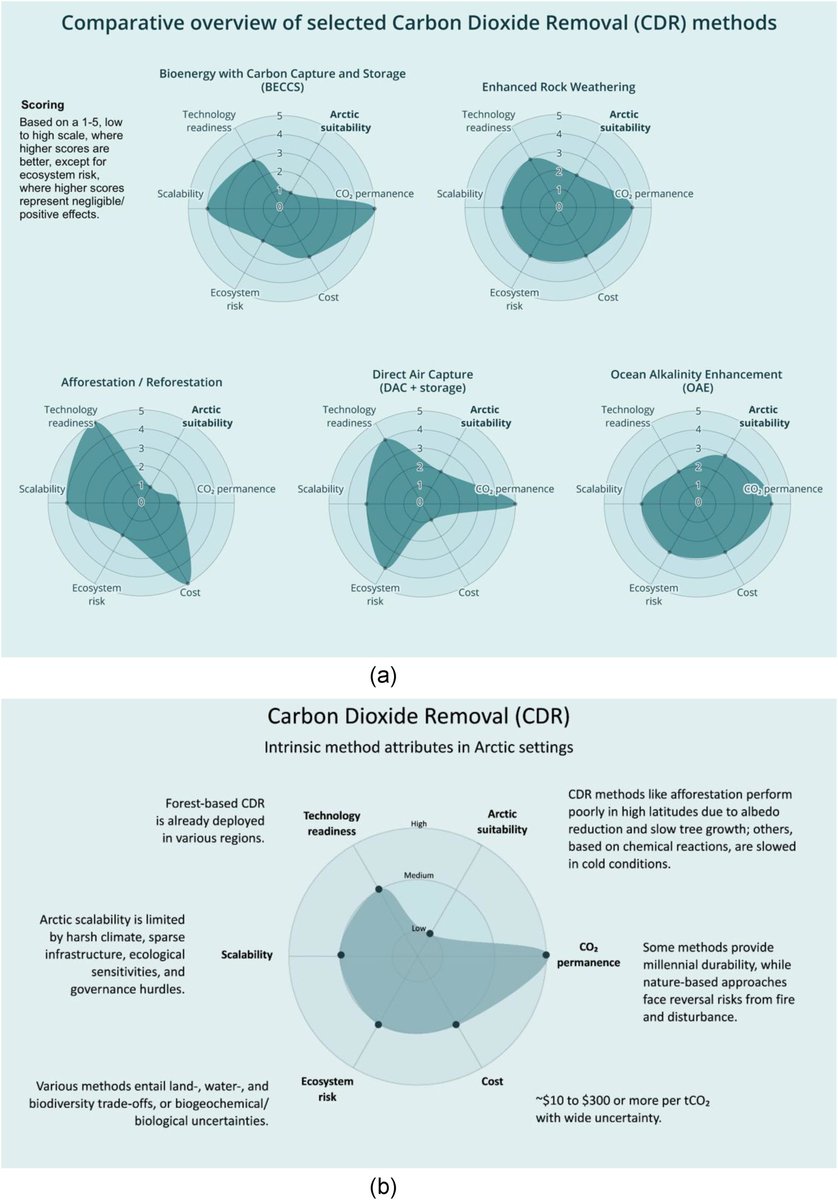
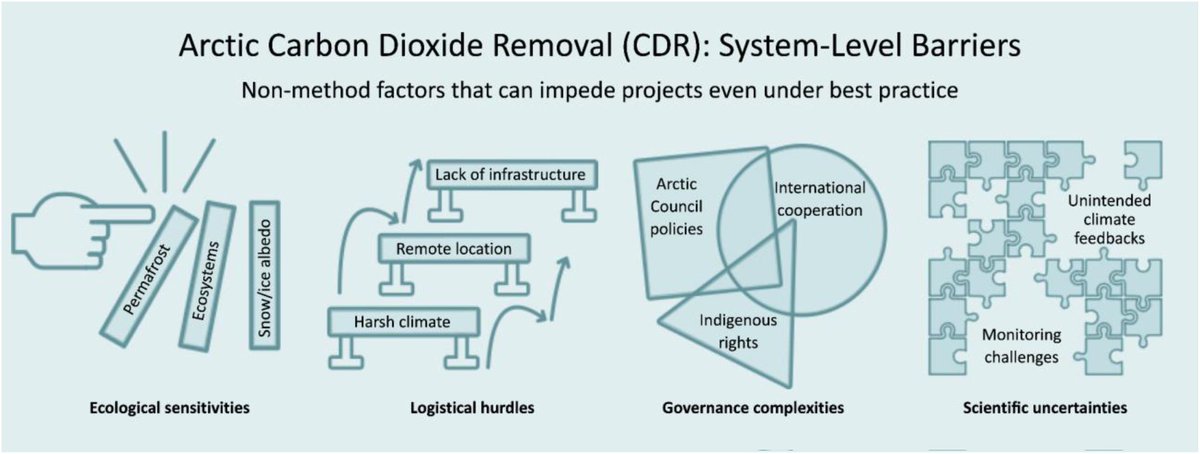
🚨Is carbon dioxide removal (#CDR) in the Arctic really feasible?
A new peer-reviewed study systematically assessed proposed Arctic CDR pathways and finds that feasibility is far more limited than often assumed.
DETAILS🧵1/14
2/ As Arctic warms rapidly (4x) & attracts attention for climate interventions, can it host CDR at meaningful scale?
To answer this, authors conducted a comparative assessment of major CDR approaches proposed for Arctic regions, spanning both nature-based & engineered methods.
3/ The analysis draws on existing empirical studies, pilot projects, and modeling literature, evaluating each CDR pathway against biophysical constraints, technical readiness, environmental risks, and governance requirements.
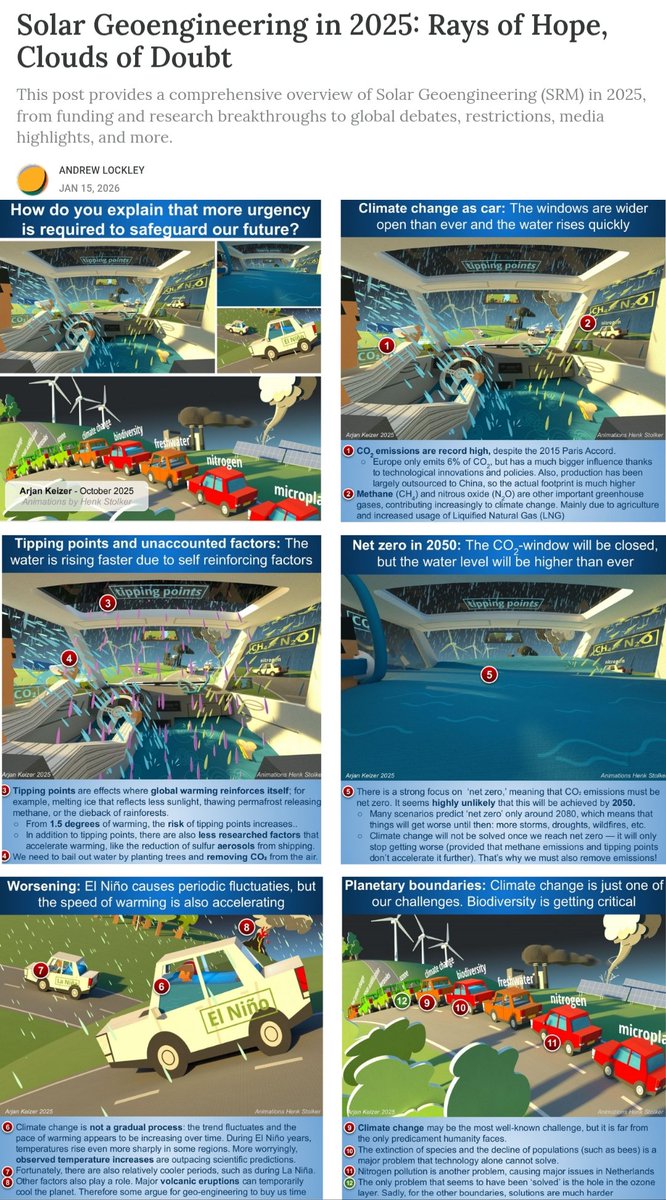
🚨2025 Year in Review: Solar Geoengineering Edition🚨
As we enter 2026, we’re excited to share our yearly summary for #SRM: "Solar Geoengineering in 2025: Rays of Hope, Clouds of Doubt."
Here’s what we cover in this comprehensive review:🧵1/11
2/ 𝐖𝐡𝐚𝐭’𝐬 𝐢𝐧𝐜𝐥𝐮𝐝𝐞𝐝 𝐢𝐧 𝐨𝐮𝐫 𝟐𝟎𝟐5 𝐫𝐞𝐯𝐢𝐞𝐰?
1️⃣ Rising Temp & Escalating Climate Impacts
2️⃣SRM Funding Announcements
3️⃣Top SRM Stories
4️⃣Restrictions & Bans on SRM
5️⃣Essential SRM Reads
6️⃣SRM in Media
7️⃣Research Highlights
8️⃣Our Work Across Geoengineering
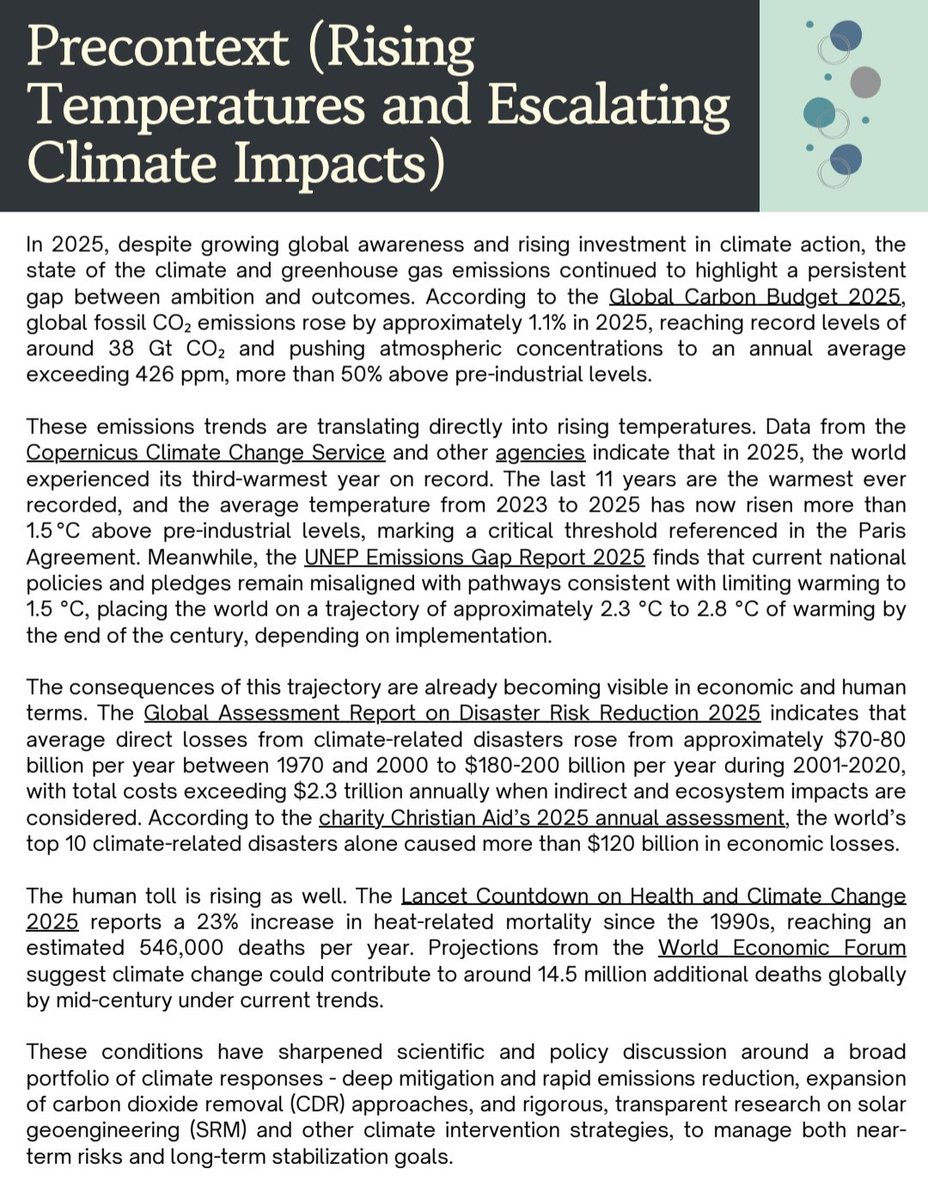
3/ 2025 was the third-warmest yr on record. @CopernicusEU shows the last 11 yrs were the warmest ever, with the global average temp in yrs 2023-25 exceeding 1.5 °C. Top climate disasters caused $120B+ in losses, intensifying debates over mitigation, CDR & SRM.