Dan Hitchens Profile picture
Feb 9, 2025 12 tweets 5 min read Read on X
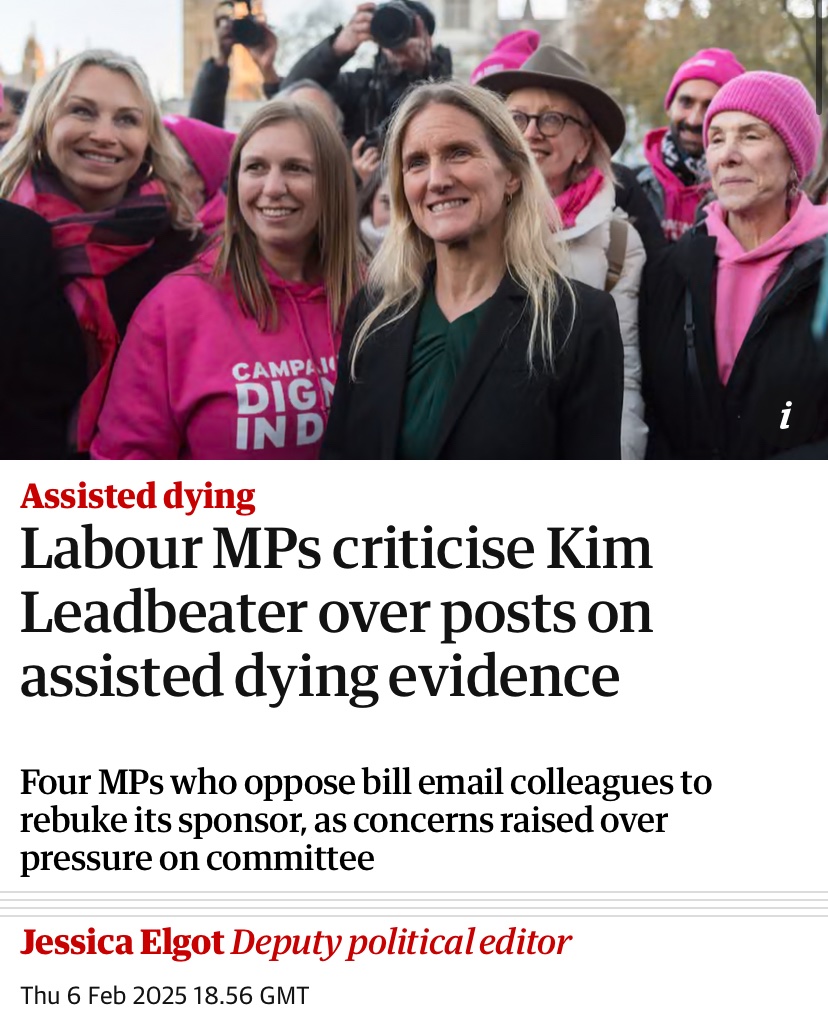
Last week four Labour MPs warned their colleagues they weren’t being given the full picture on the assisted suicide bill.

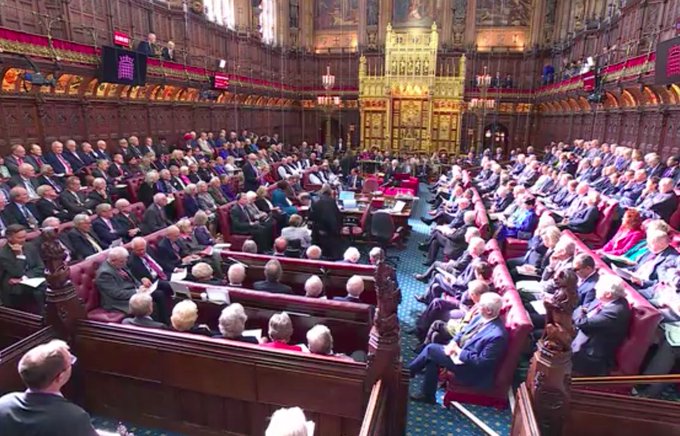
If anything the MPs understated it. Here are 10 things we’ve learnt from the committee stage which Leadbeater and allies have studiously avoided mentioning: Image
1. Huge anxiety that the state of public services will incentivise assisted suicide.

Several witnesses talked about this, including the head of the Royal College of Nurses and, most eloquently, @doctor_oxford:
2. People will request lethal drugs because they feel like a burden. Nobody denied this, and some pro-bill witnesses like Sam Ahmedzai defended it:
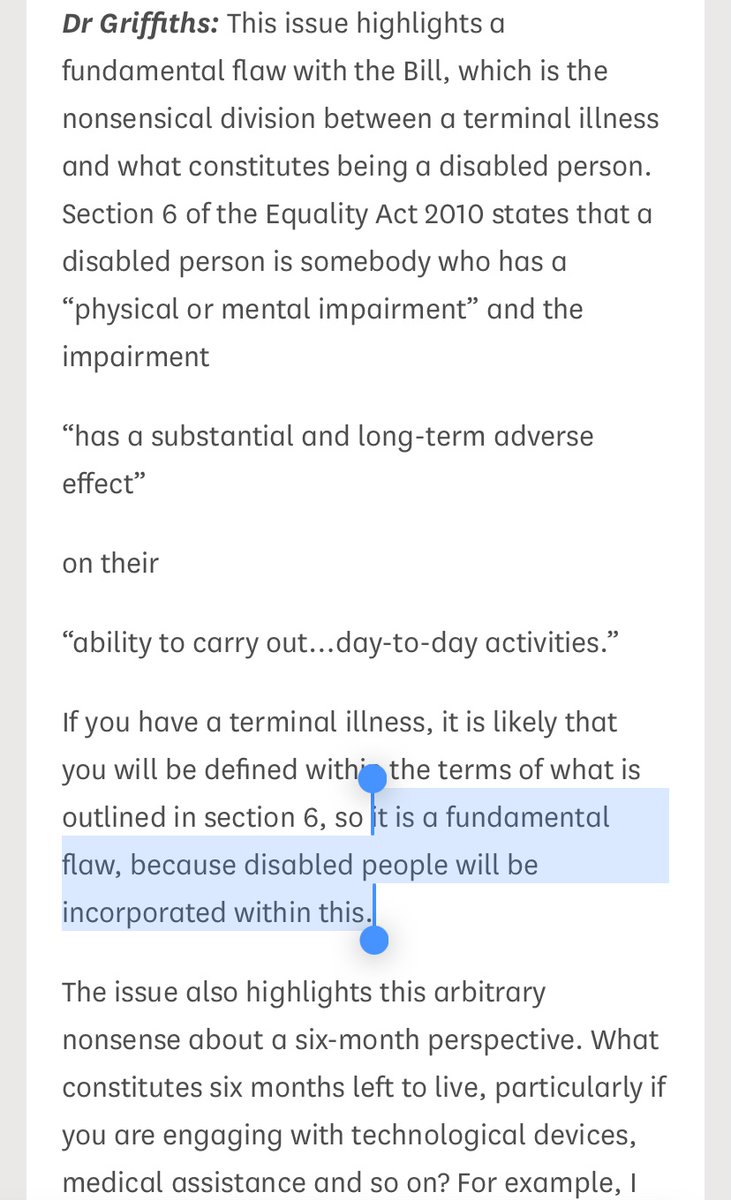
3. The bill’s supporters have entirely failed to reassure people with disabilities.

Disability Rights UK - who Leadbeater originally didn’t want to invite - opposed the bill, and Dr Miro Griffiths said it was “nonsense” to suggest it didn’t apply to disabilities. Image
4. The bill is not safe for those with eating disorders.

@ChelseaRoff made that point powerfully to the committee; it wasn’t clear that Team Leadbeater had even begun to think this through.
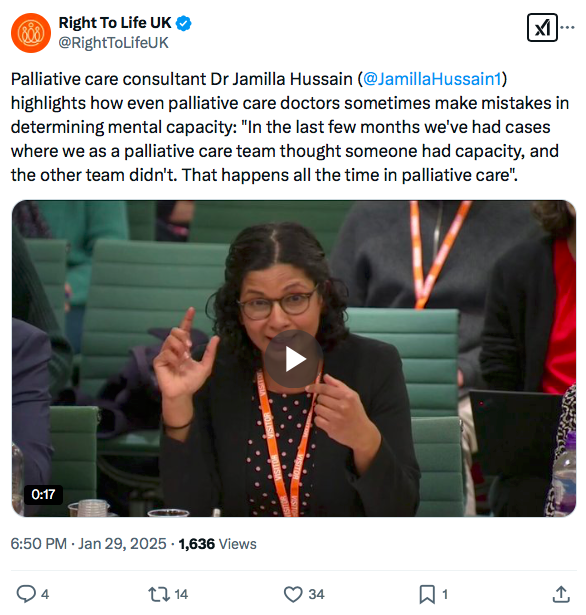
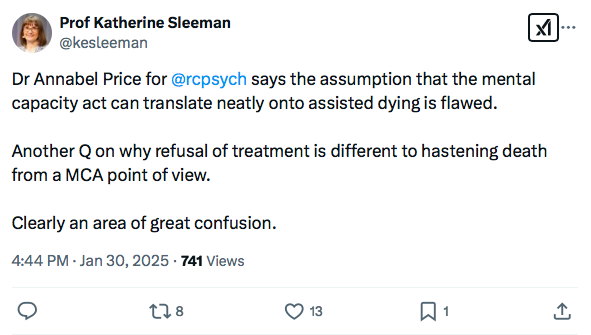
5. A lot of controversy about capacity assessments. A few witnesses, including Chris Whitty, thought they were a good safeguard; the majority disagreed. Image
Image
Image
Image
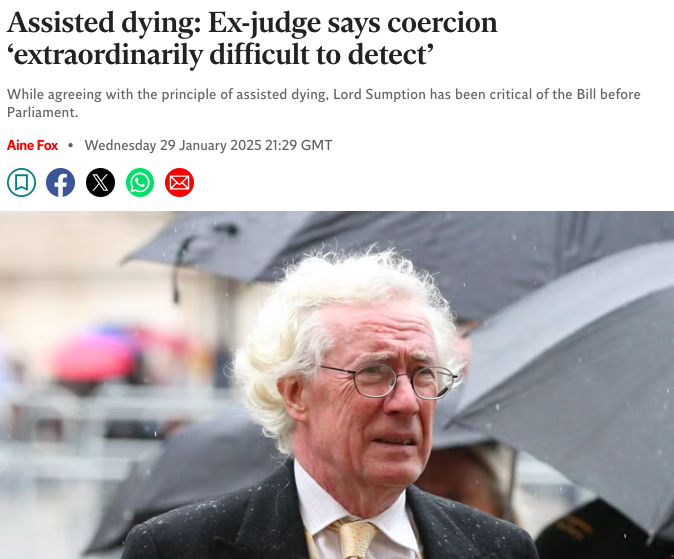
6. Also much disagreement about coercion.

Notably, even two eminent witnesses who support the bill thought the safeguards here don’t solve the problem. Image
Image
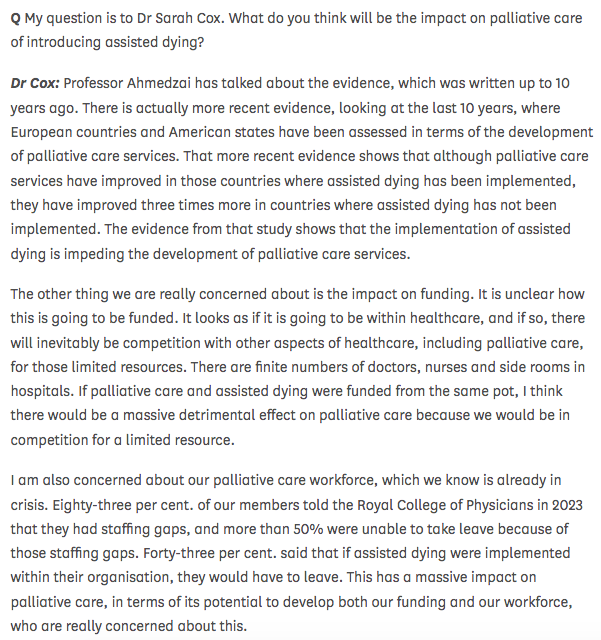
7. The bill is probably bad news for palliative care.

Some witnesses were more optimistic than others; but only one, the President of the Association for Palliative Medicine, gave a really detailed and informed answer: Image
8. The experience of other jurisdictions is not exactly reassuring.
9. The bill falls short of NICE guidelines for patients at risk of self-harm or suicide. Prof Allan House made the point succinctly:
10. How would it work in practice? All very vague so far.

The lawyers cast doubt on the court safeguard, the GPs said they didn’t want it incorporated into their normal work, and Baroness Falkner pointed out that the PMB process leaves us in the dark:
And of course this only scratches the surface, because almost every expert who might have given the bill a hard time was carefully excluded.

• • •

Missing some Tweet in this thread? You can try to force a refresh

 

Keep Current with Dan Hitchens

Dan Hitchens Profile picture

Stay in touch and get notified when new unrolls are available from this author!

Read all threads

This Thread may be Removed Anytime!

PDF

Twitter may remove this content at anytime! Save it as PDF for later use!

Try unrolling a thread yourself!

how to unroll video
  1. Follow @ThreadReaderApp to mention us!

  2. From a Twitter thread mention us with a keyword "unroll"
@threadreaderapp unroll

Practice here first or read more on our help page!

More from @ddhitchens

Mar 17
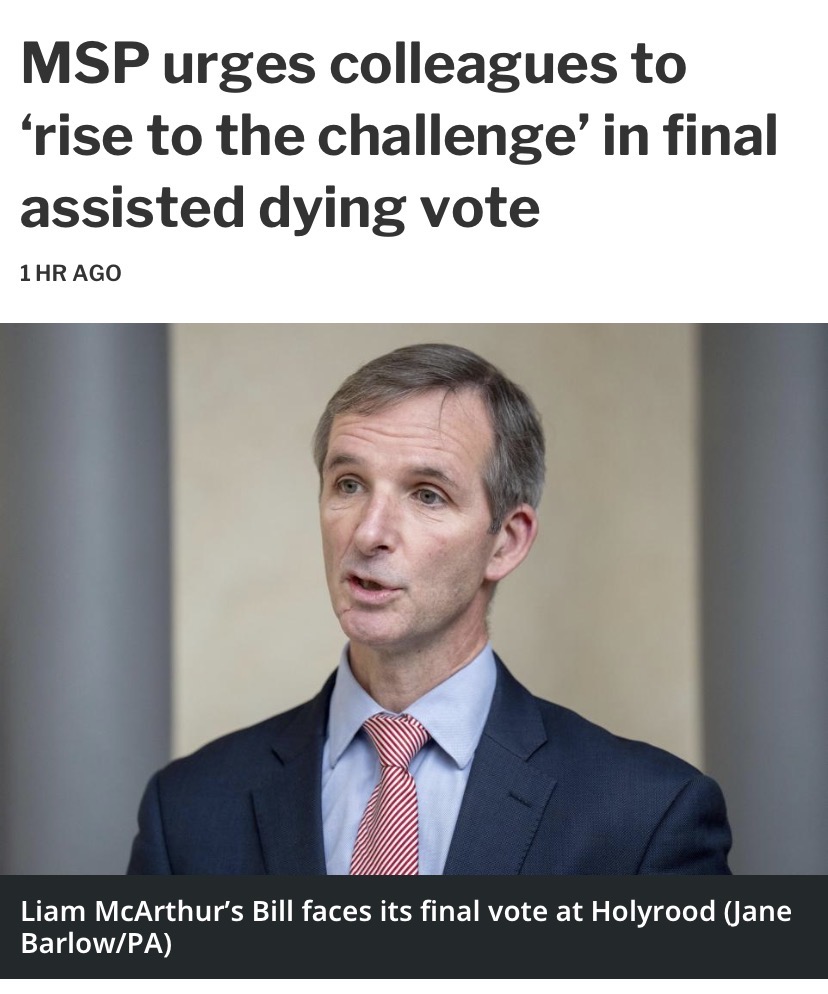
Liam McArthur is a skilful advocate for his bill, but in crucial areas his statements are misleading or oversimplified. Five examples: Image
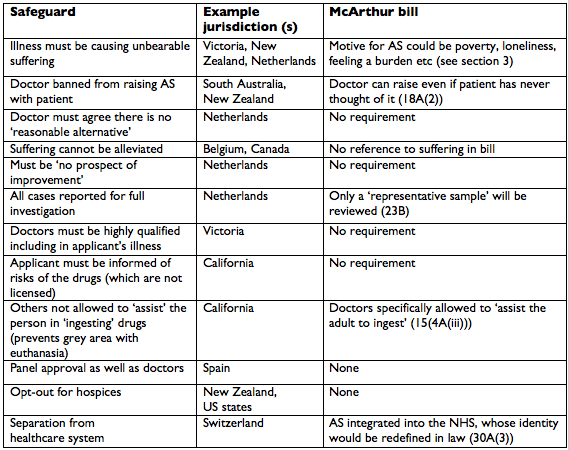
1. McArthur claims (in today’s Scotsman) that this is “the toughest and most comprehensively safeguarded assisted dying bill in the world.”

Yet the bill lacks at least a dozen important safeguards present in other jurisdictions: Image
2. McArthur claims (PA, today): “This bill has the overwhelming support of a significant majority of Scots”.

But polling has only been on the *principle*, not this bill.

UK polls show repeatedly that support falls steeply when you get into specifics:
Read 6 tweets
Jan 14
Why is Lord Falconer trying to limit the scrutiny process for his bill?

Here are ten moments so far when Lords scrutiny has exposed the reality of the legislation:
1. Falconer admits people will die under the bill because they are poor.

“Where the reason…is because in your mind you are influenced by your circumstances—for example, because you are poor—should you be barred from having an assisted death...? In my view [you should] not.”
2. Falconer admits people will die because of lack of access to care.

“Of course nobody wants the absence of palliative care to be the reason you apply...

“But we have to give everybody this choice on the basis of the way the world is for them.”
Read 11 tweets
Dec 12, 2025
What are the Lords scrutinising, anyway?

Here are just 15 of the most important subjects they’re debating. For the most part these are issues ignored or swerved by the Commons: Image
1. AS driven by poverty (eg Tanni Grey-Thompson’s amendment, no. 58 on the list).

The Lords are querying whether someone with a six-month prognosis should be receiving lethal drugs when their reason is being poor.

So far bill supporters say this is fine:
2. AS driven by lack of access to palliative care (eg Brown 51).

Peers are concerned that people will request lethal drugs because they can’t access good care.

So far Keir Starmer’s government has pushed hard against strengthening palliative care access:
Read 17 tweets
Nov 23, 2025
A House of Lords appreciation thread.

Here are 20 peers doing a fine job scrutinising the Leadbeater/Falconer bill: Image
1. Baroness Finlay. Former BMA president, major figure in the palliative care world. Knows the whole subject inside out.

Very polite, but consistently makes Lord Falconer look flat-footed by comparison:
2. Lord Carlile. Top barrister and brilliant public speaker.

Here he probes the bill on the subject of psychological manipulation, drawing on his legal experience to suggest it is far more prevalent than people think.
Read 21 tweets
Nov 21, 2025
1. Lord Falconer, 2017: the Lords has the right to reject a bill which wasn’t a manifesto promise.
2. Lord Falconer, 2018: the Salisbury Convention—which limits the Lords’ ability to reject a bill—doesn’t apply if a bill wasn’t part of the governing party’s manifesto.
3. Lord Falconer, 2015: under some circumstances the Lords can reject whatever bills it likes. Image
Read 9 tweets
Sep 20, 2025
Ten things we learnt from the first Lords debate on the assisted suicide bill: Image
1. The Lords is taking this seriously.

Thanks to the efforts of Baroness Berger and others, there will now be evidence sessions to fill in some of the gaps left by the haphazard Commons stage.

A sign that this may be a more grown-up process overall.
2. The House of Lords contains remarkable expertise.

When Baroness Hollins was making this speech, she was next to Baroness Finlay, a leading authority on palliative care, and Lord Stevens, former NHS CEO. All three gave powerful critiques of the bill.
Read 12 tweets

Did Thread Reader help you today?

Support us! We are indie developers!


This site is made by just two indie developers on a laptop doing marketing, support and development! Read more about the story.

Become a Premium Member ($3/month or $30/year) and get exclusive features!

Become Premium

Don't want to be a Premium member but still want to support us?

Make a small donation by buying us coffee ($5) or help with server cost ($10)

Donate via Paypal

Or Donate anonymously using crypto!

Ethereum

0xfe58350B80634f60Fa6Dc149a72b4DFbc17D341E copy

Bitcoin

3ATGMxNzCUFzxpMCHL5sWSt4DVtS8UqXpi copy

Thank you for your support!

Follow Us!

:(