Dan Hitchens Profile picture
Feb 9 12 tweets 5 min read Read on X
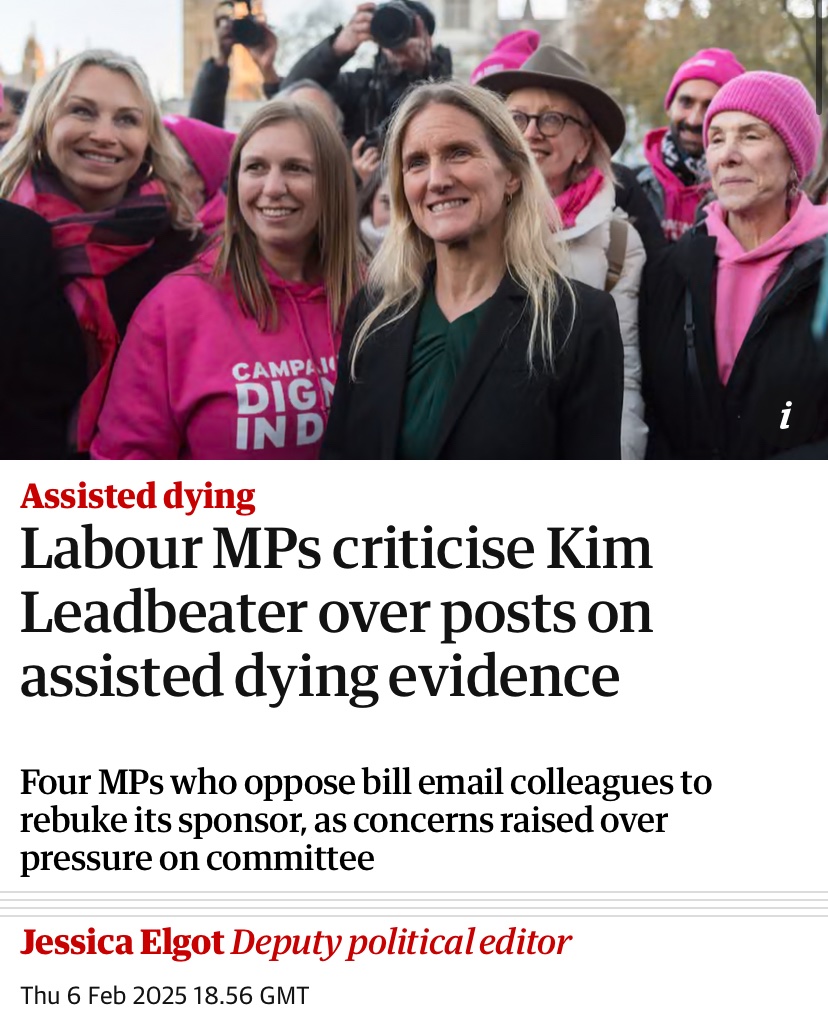
Last week four Labour MPs warned their colleagues they weren’t being given the full picture on the assisted suicide bill.

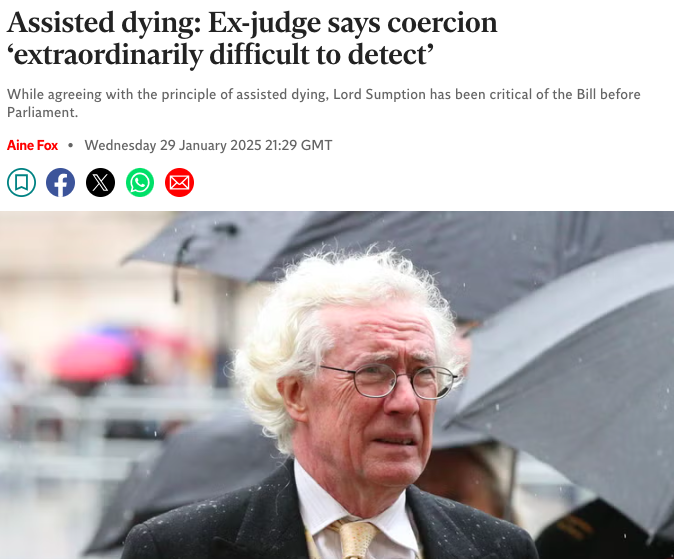
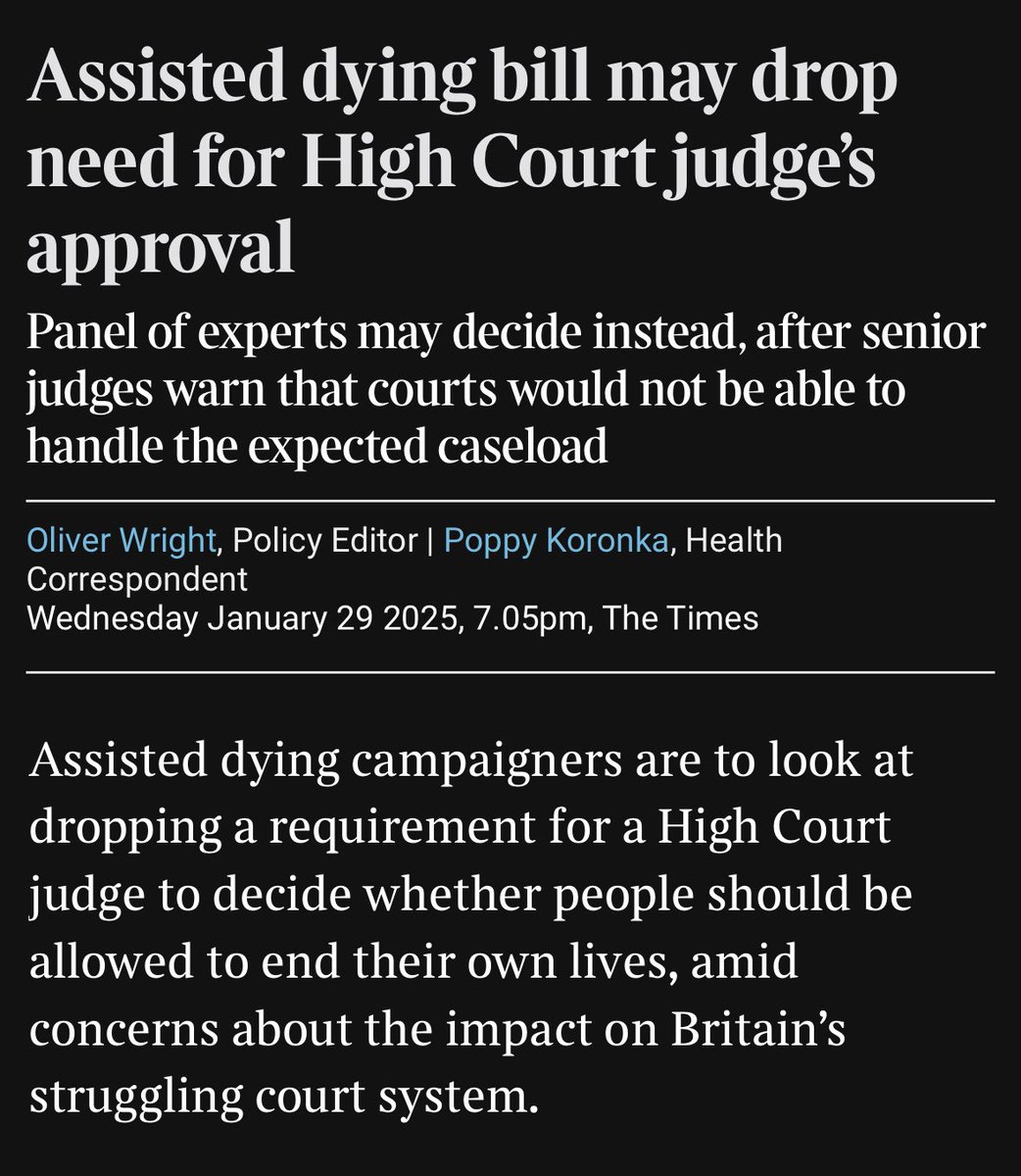
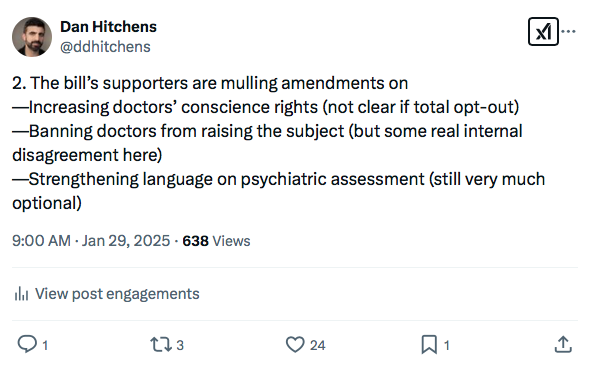
If anything the MPs understated it. Here are 10 things we’ve learnt from the committee stage which Leadbeater and allies have studiously avoided mentioning: Image
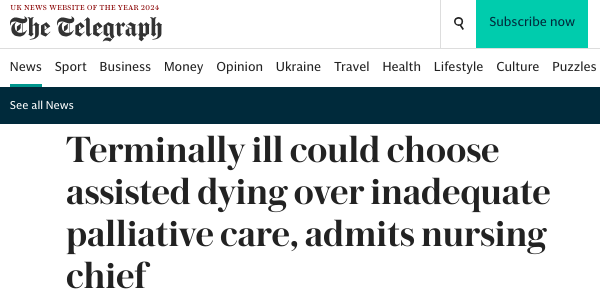
1. Huge anxiety that the state of public services will incentivise assisted suicide.

Several witnesses talked about this, including the head of the Royal College of Nurses and, most eloquently, @doctor_oxford:
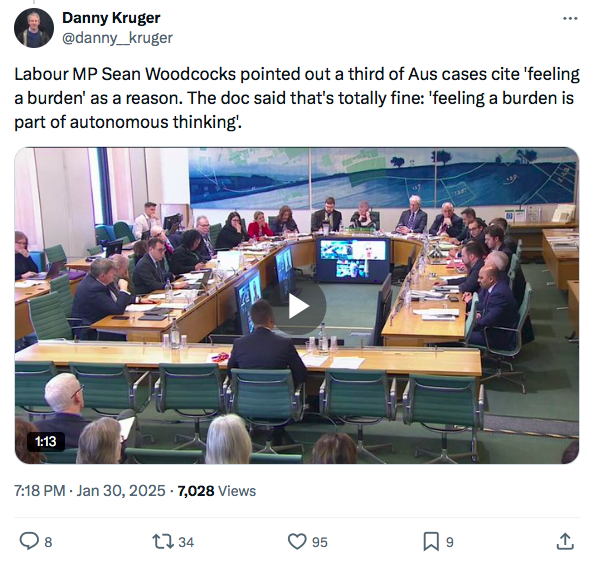
2. People will request lethal drugs because they feel like a burden. Nobody denied this, and some pro-bill witnesses like Sam Ahmedzai defended it:
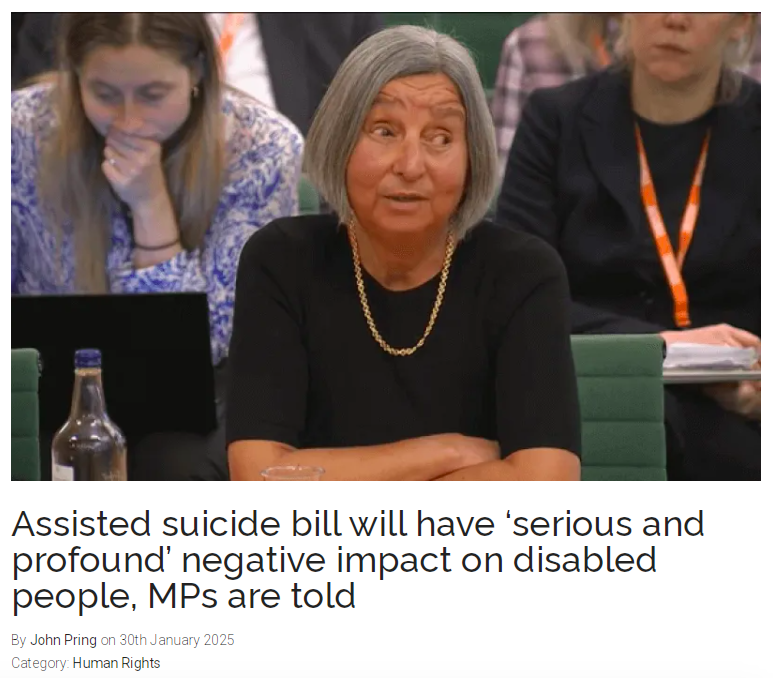
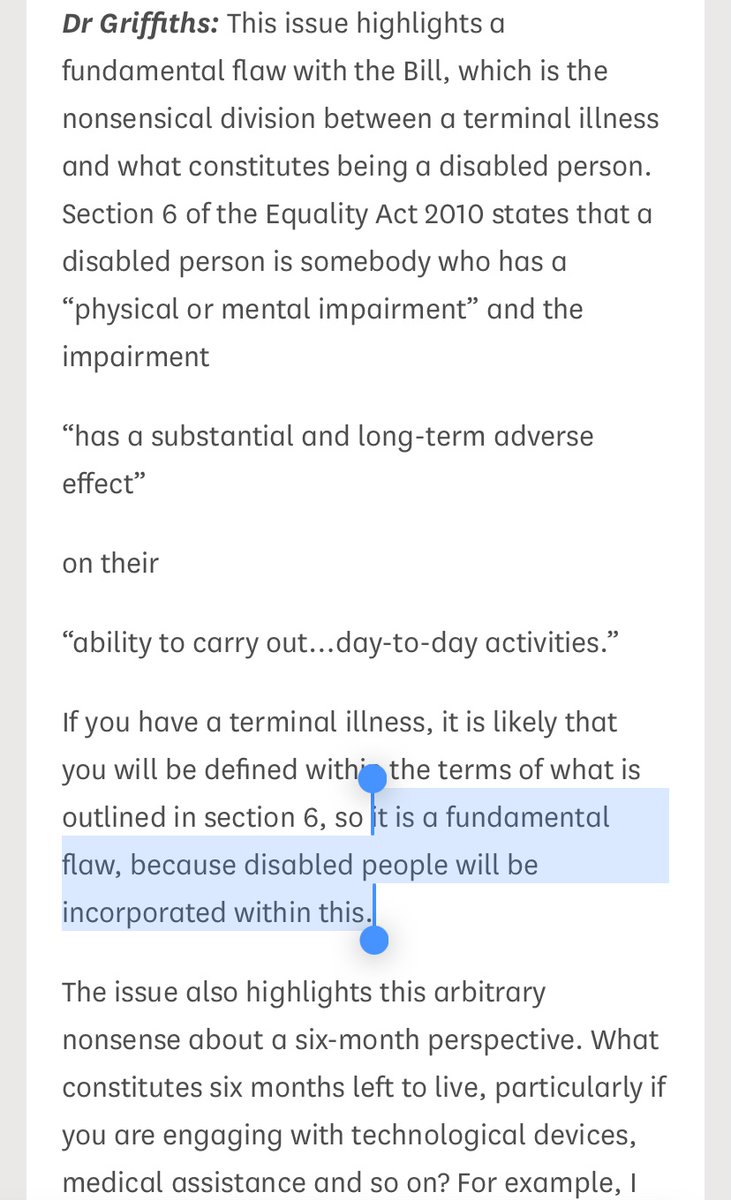
3. The bill’s supporters have entirely failed to reassure people with disabilities.

Disability Rights UK - who Leadbeater originally didn’t want to invite - opposed the bill, and Dr Miro Griffiths said it was “nonsense” to suggest it didn’t apply to disabilities. Image
4. The bill is not safe for those with eating disorders.

@ChelseaRoff made that point powerfully to the committee; it wasn’t clear that Team Leadbeater had even begun to think this through.
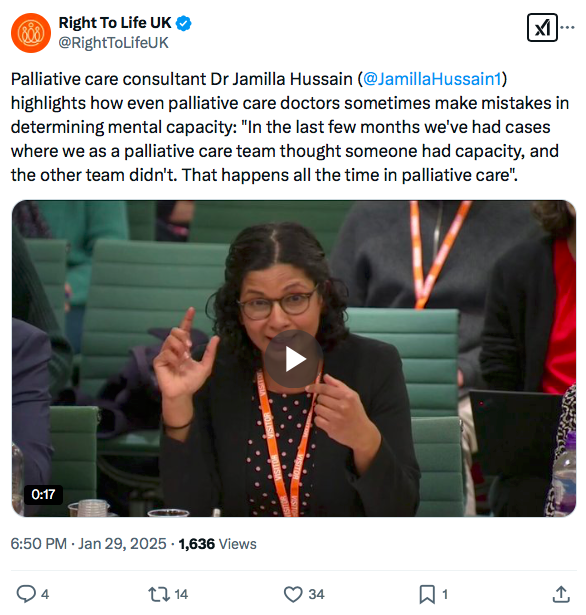
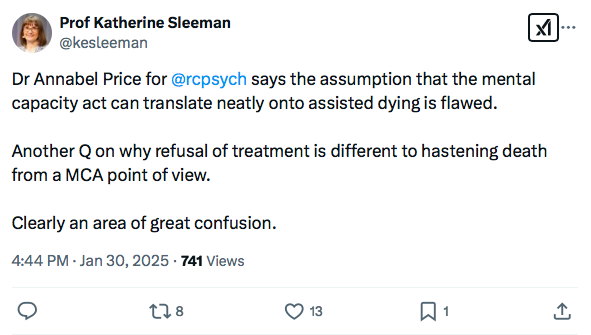
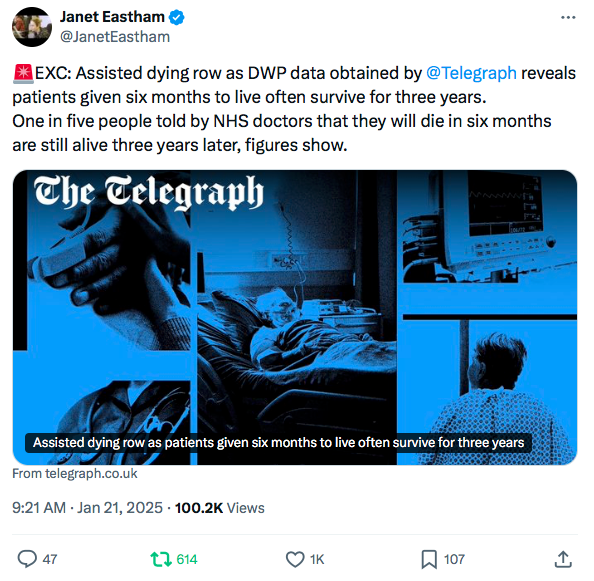
5. A lot of controversy about capacity assessments. A few witnesses, including Chris Whitty, thought they were a good safeguard; the majority disagreed. Image
Image
Image
Image
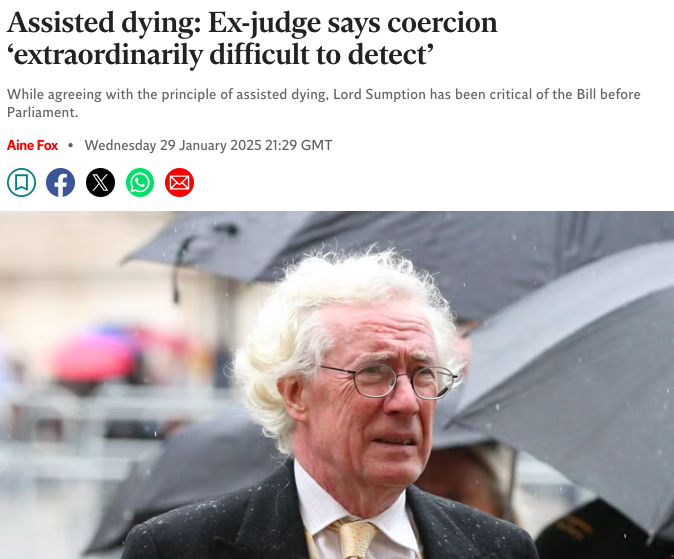
6. Also much disagreement about coercion.

Notably, even two eminent witnesses who support the bill thought the safeguards here don’t solve the problem. Image
Image
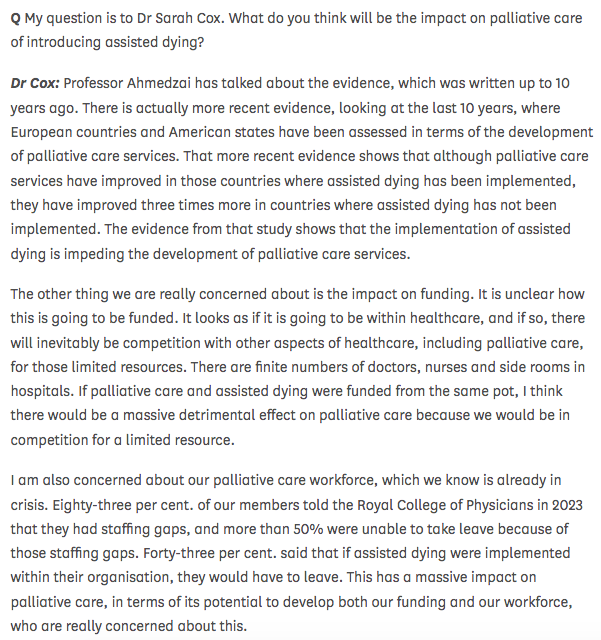
7. The bill is probably bad news for palliative care.

Some witnesses were more optimistic than others; but only one, the President of the Association for Palliative Medicine, gave a really detailed and informed answer: Image
8. The experience of other jurisdictions is not exactly reassuring.
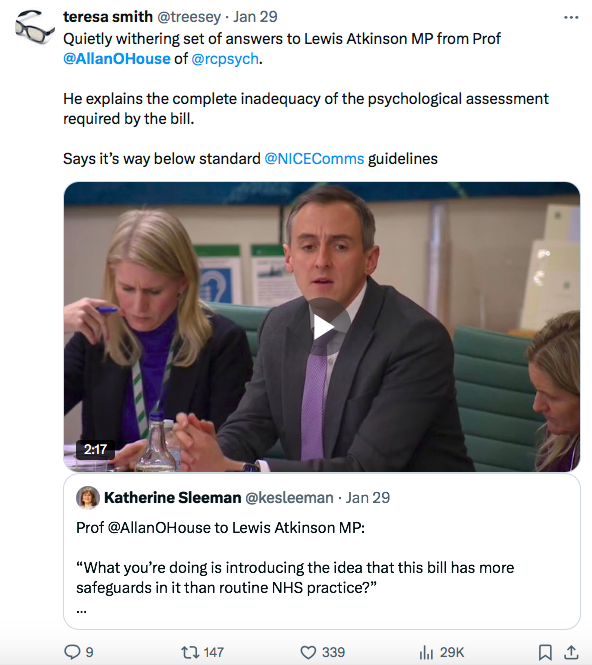
9. The bill falls short of NICE guidelines for patients at risk of self-harm or suicide. Prof Allan House made the point succinctly:
10. How would it work in practice? All very vague so far.

The lawyers cast doubt on the court safeguard, the GPs said they didn’t want it incorporated into their normal work, and Baroness Falkner pointed out that the PMB process leaves us in the dark:
And of course this only scratches the surface, because almost every expert who might have given the bill a hard time was carefully excluded.

• • •

Missing some Tweet in this thread? You can try to force a refresh

 

Keep Current with Dan Hitchens

Dan Hitchens Profile picture

Stay in touch and get notified when new unrolls are available from this author!

Read all threads

This Thread may be Removed Anytime!

PDF

Twitter may remove this content at anytime! Save it as PDF for later use!

Try unrolling a thread yourself!

how to unroll video
  1. Follow @ThreadReaderApp to mention us!

  2. From a Twitter thread mention us with a keyword "unroll"
@threadreaderapp unroll

Practice here first or read more on our help page!

More from @ddhitchens

Feb 5
Kim Leadbeater is doubling down. A little extra bureaucracy, but very little extra protection for the vulnerable. Thread:
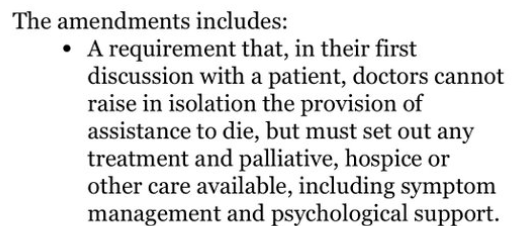
1. A doctor would be able to ask you, “Have you ever thought about assisted suicide?” even if the thought has never crossed your mind.

Despite many objections to this clause, Leadbeater just will not abandon it. Her amendment merely requires the doctor to give other info too. Image
2. The doctor *only* has to tell you about “any…palliative care…available.” So he can tell you “There isn’t any” and move on.

@kesleeman’s written evidence (see screenshot) proposed an amendment guaranteeing a consultation. Leadbeater has now rejected that idea. Image
Read 9 tweets
Feb 3
Kim Leadbeater’s witness list was 80%-20% in favour of the bill’s supporters.

9 lawyers were invited (6 pro, 3 neutral), alongside 8 witnesses from other jurisdictions (all pro), academics, medics, etc.

But who *didn’t* receive an invitation? Here’s an incomplete list:
1. The British Geriatrics Society.

“The BGS is opposed to the legalisation of Assisted Dying…Our assessment is that the risk for safeguard failure is at least moderate in a modern, well-run AD service which we find to be unacceptable when considering the needs of older people.” Image
2. Prof Theo Boer of the Dutch Medical Council, former member of the euthanasia review board.

“I once believed it was possible to regulate and restrict killing to terminally ill mentally competent adults with less than six months… I was wrong. If even the most well-regulated and monitored system worldwide cannot guarantee that assisted dying remains a last resort, why would Great Britain be more successful?”Image
Read 27 tweets
Jan 31
It’s been said that the next UK political scandal is probably already happening in plain sight. And it is. It’s been happening all this week at the assisted suicide bill committee. A thread: Image
The committee heard unambiguous warnings. That the state of the NHS would incentivise assisted suicide. That the bill lacks basic psychiatric protections. That it is unsafe for people with disabilities. That people will request lethal drugs because they feel like a burden. Image
Image
Image
Image
But that’s what the committee’s there to fix, right? To make the bill fit for purpose? Not really.

For one thing, the bill has so many—literally scores of—problematic elements, and its weaknesses are so fundamental, that even the best committee would be overwhelmed by the task. Image
Image
Image
Image
Read 6 tweets
Oct 11, 2021
When it comes to defining neoliberalism, HSBC’s marketing department continue to make the rest of us look like amateurs
Reminder of who benefits when “openness” and “fluidity” are prized as the highest values
Quite! But then “openness” often favours the powerful. “If we wish to protect the poor we shall be in favour of fixed rules...The rules of a club are occasionally in favour of the poor member. The drift of a club is always in favour of the rich one.” (GKC)
Read 4 tweets
Nov 9, 2019
In “The Magic Lantern”, Timothy Garton Ash’s eyewitness account of the 1989 revolutions, there’s a passage which, to a reader today, just leaps off the page. It’s about conformism, lies and ideology.
Garton Ash, who observed at first hand the changes behind the Iron Curtain in the 1980s, asks: How much was 1989 an *ideological* revolution? Surely, given that official ideology was scarcely believed even by Party leaders, there was nothing to overthrow?
But that bankrupt ideology, he writes, performed a crucial role in shoring up the Party’s authority. What kept Communist governments in power was that people were leading “a double life”, paying lip service to what they knew was incoherent nonsense.
Read 6 tweets
Aug 29, 2019
Commonweal’s September cover story, by David Bentley Hart, argues that Catholics make “wildly inaccurate” claims about Communion and divorce, because they (we) don’t know any history: commonwealmagazine.org/divorce-annulm… But I’m not sure the facts are on his side here.
Catholics, he says, rely on “easily discredited fictions about the Christian past…a concept of the early centuries of Christianity that borders on fantasy”. We would know that early Christianity had a “fluid and ad hoc” approach to divorce, if we read Origen, Basil, Epiphanius.
Hart apparently doesn’t realise that the very passages he cites have been much discussed in Catholic circles for some time. And not just among academics: the “five cardinals” book, which made a significant splash in 2014, contained a whole chapter on Origen, Basil etc.
Read 8 tweets

Did Thread Reader help you today?

Support us! We are indie developers!


This site is made by just two indie developers on a laptop doing marketing, support and development! Read more about the story.

Become a Premium Member ($3/month or $30/year) and get exclusive features!

Become Premium

Don't want to be a Premium member but still want to support us?

Make a small donation by buying us coffee ($5) or help with server cost ($10)

Donate via Paypal

Or Donate anonymously using crypto!

Ethereum

0xfe58350B80634f60Fa6Dc149a72b4DFbc17D341E copy

Bitcoin

3ATGMxNzCUFzxpMCHL5sWSt4DVtS8UqXpi copy

Thank you for your support!

Follow Us!

:(