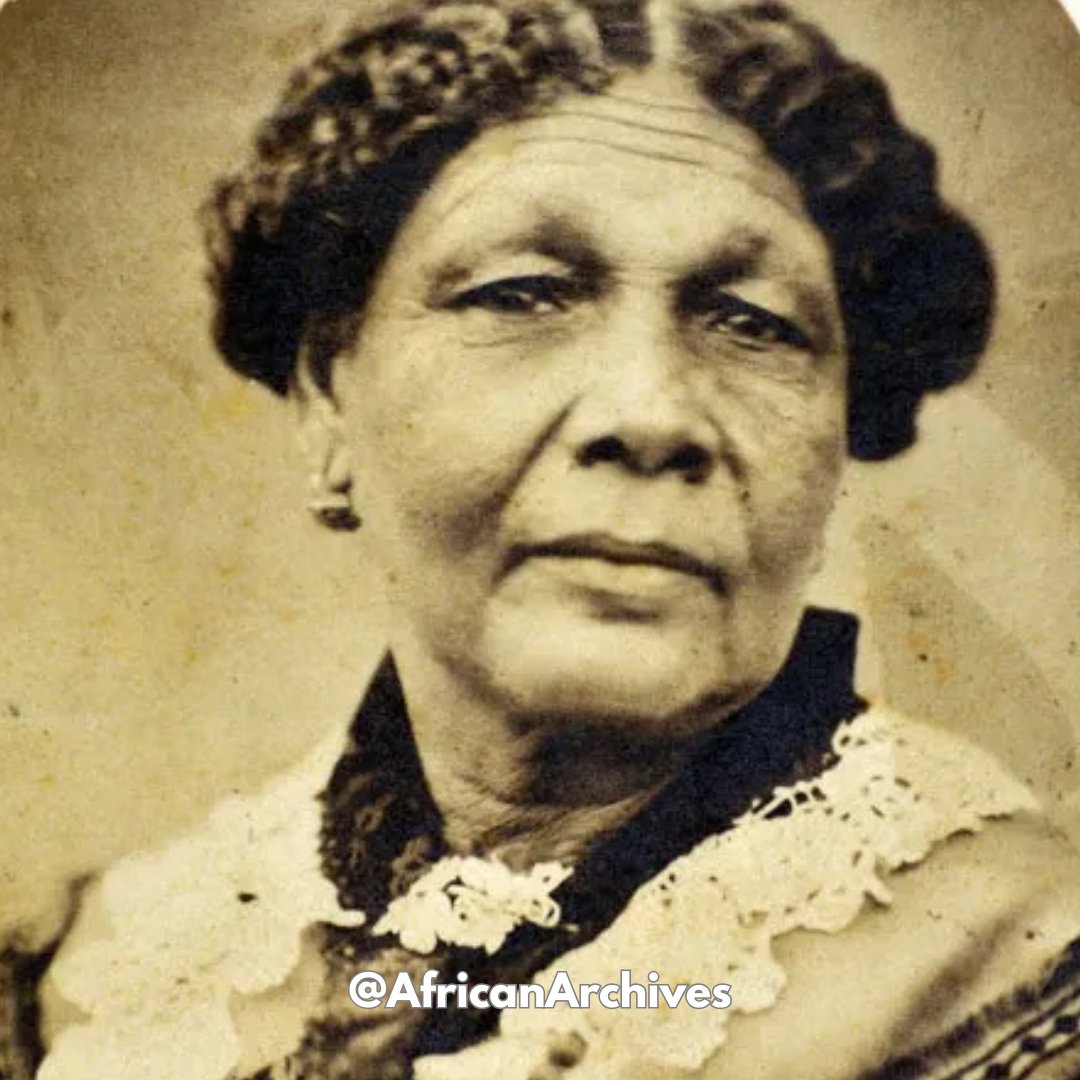
Sarah Saartjie Baartman was cruelly exploited in Europe by being exhibited as a freak show attraction because of her protruding butt. After her death, her body was displayed in a Paris museum for over 100yrs.
The exploitation of Sarah Baartman.
A THREAD!
SARAH "Saarjte" Baartman of the khoikhoi people of South Africa was born in 1789 and was one of 2 women put on display as a "FREAK SHOW" act in England and then later France.
The men who promised her a life of pride in sharing her culture with the World tricked her, and though she was given pay she often was at the expense of verbal, sexual, and physical abuse.
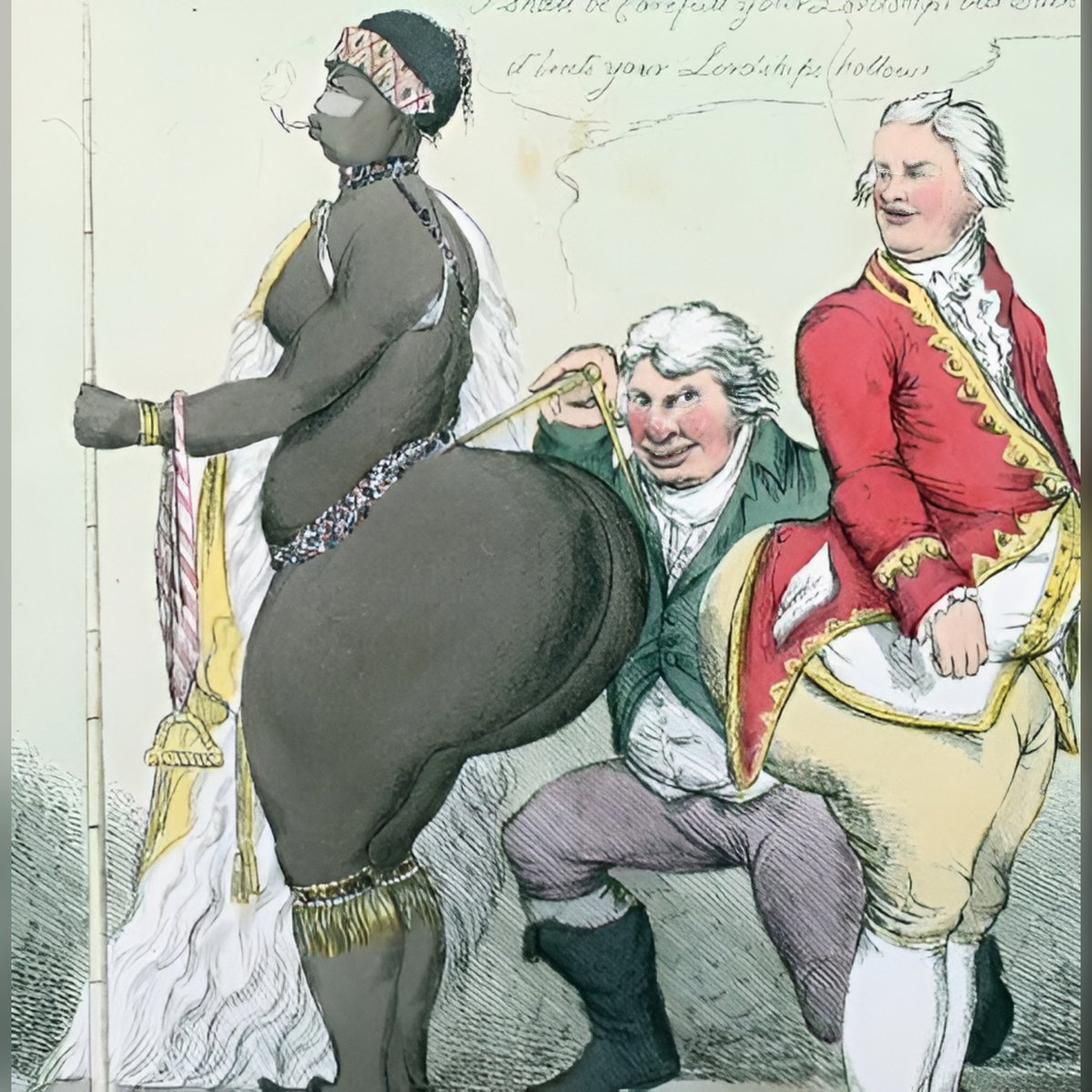
You see the HOTTENTOT VENUS (Hottentot is very derogatory) had a very distinct look, because the women of her people had extremely large buttocks, and an abnormally elongated labia.
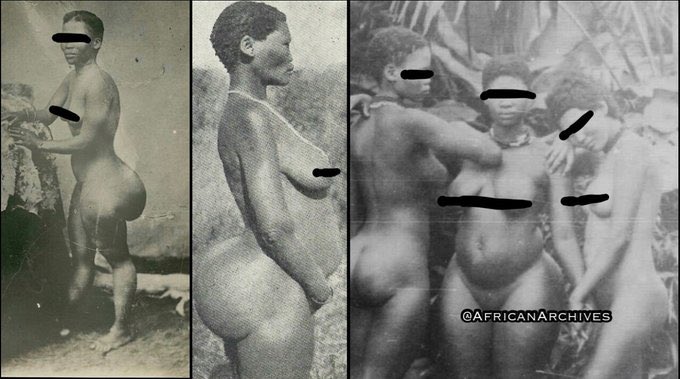
Nude photos of khoikhoi women with steatopygia were collected by white colonialists. Steatopygia is the accumulation of large amounts of fat on the buttocks, especially as a normal condition in the Khoikhoi of Southern Africa.
She was made to wear a coloured skin tight outfit revealing what was to be a naked black woman for the paying public to inspect, view, and allegedly at times for extra coin... have a "Private Showing".
When sold to another manager, she was taken to France where she was forced to perform at private parties in homes of the most affluent and wealthy, with the final act being an invitation to the party attendees to approach, touch, feel, and inspect a laid down SARAH'S GENITALS
She was to be later handed off to medical professionals who drew the details of her body. She died penniless from diseases in Paris, as a sex slave in 1815.
Her body had a molded cast made, her brain & pelvic bone put in PRESERVING JARS with her flesh & corpse being discarded.
Her remains were finally reclaimed by South Africa, and was given a ceremonial burial in 2002 (187 years later after her death). SARAH never saw her homeland again... Only parts of her body in death
If you love my content though sometimes triggering, You can support my history page/project here through donations/tips to keep up on: africanarchives.support
• • •
Missing some Tweet in this thread? You can try to
force a refresh

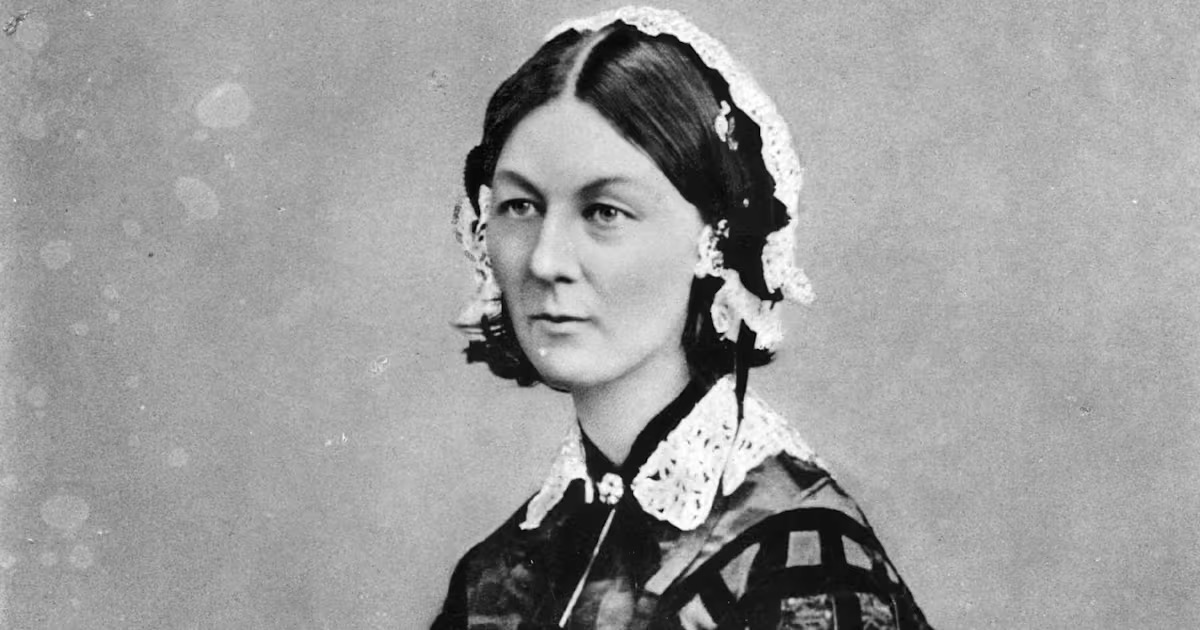
Before Florence Nightingale we had Mary Seacole!! A woman who did more to advance the cause of nursing - and race relations - than almost any other individual.
Mary Seacole (1805–1881) was a pioneering Jamaican nurse, healer, and businesswoman whose contributions during the Crimean War have long been overlooked. After being rejected by British military and nursing authorities, she used her own resources to travel to the war zone, where she established the “British Hotel” near Balaclava.
The British Hotel was not a traditional hospital, but it provided food, supplies, shelter, and hands-on medical care to wounded and sick soldiers. Seacole was known for going directly onto the battlefield to tend to injured troops, earning deep respect and admiration from the men she cared for.
Florence Nightingale did not support Seacole’s work and declined to include her among her nurses. While Nightingale and some of her supporters viewed Seacole’s establishment critically—often dismissing it as overly commercial—there is no solid evidence that Nightingale directly called it a brothel. These tensions reflected racial, class, and ideological differences about who was considered “legitimate” within the emerging nursing profession.
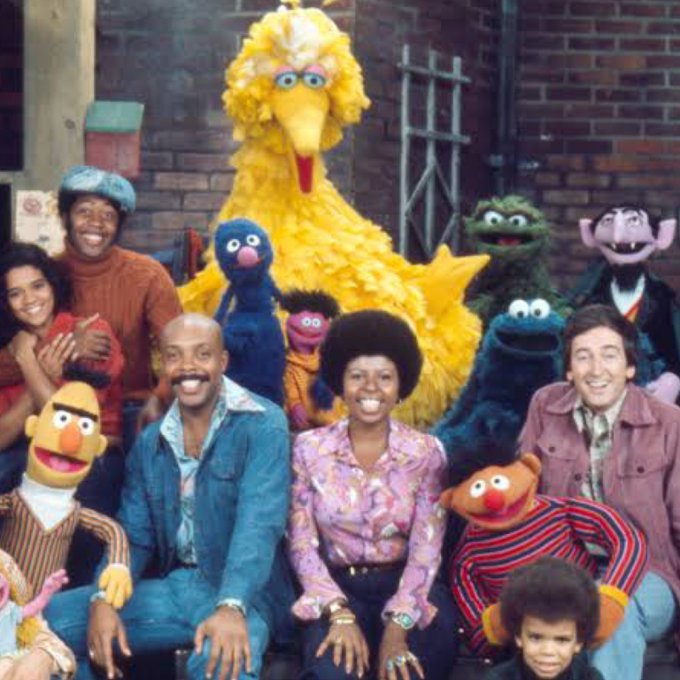
Did you know Sesame Street was originally created for black and brown inner city kids?
A THREAD
Children usually spend a lot of time watching a lot tv and technically it was sort of a babysitter. It was even worse for inner city children whose parents spent endless hours at work, thus their kids were usually exposed to long hours of mindless programs.
Lloyd Morrisett, regarded as the father of Sesame Street and vice-president of the Carnegie Corporation with a Ph.D. in experimental psychology from Yale University developed
a special interest in children's education.
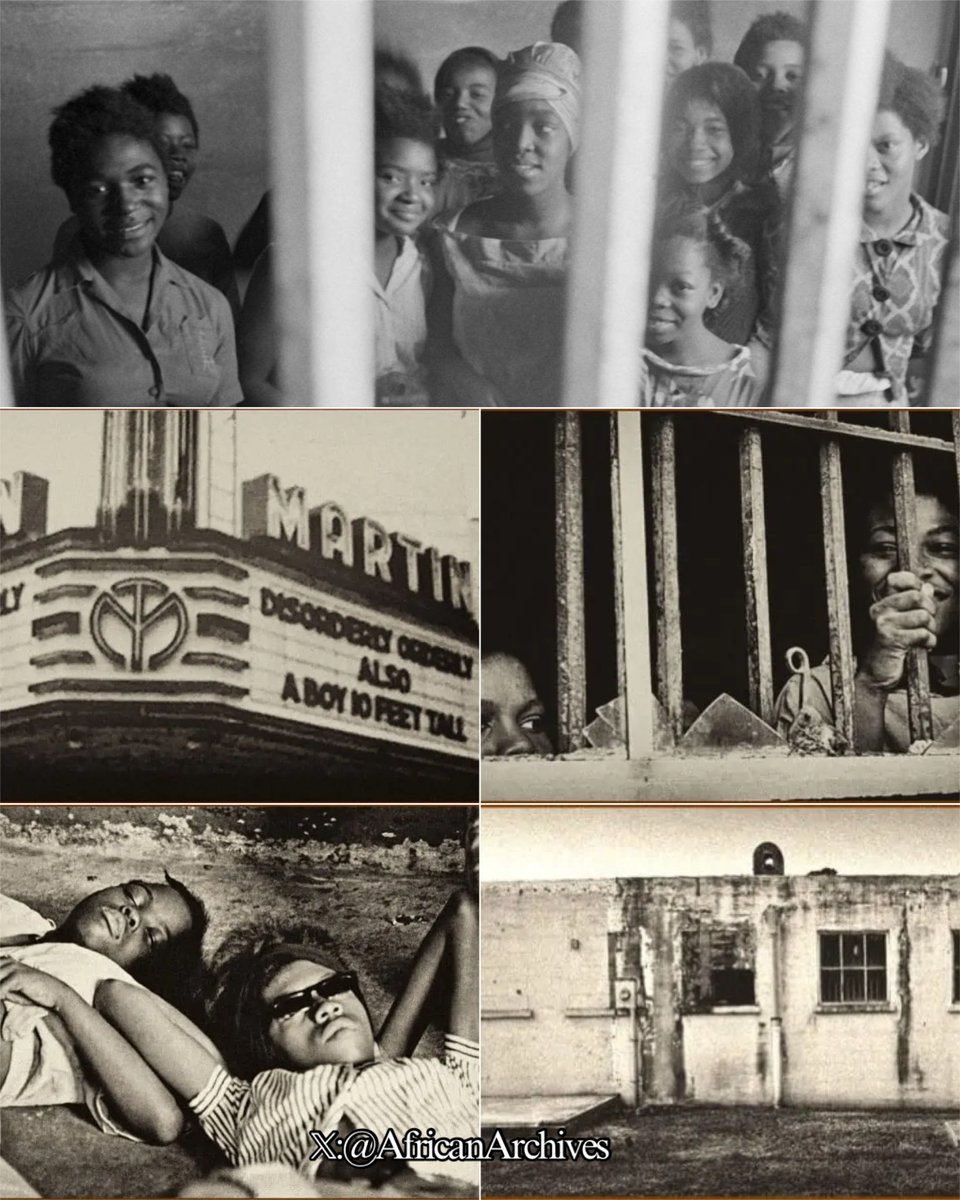
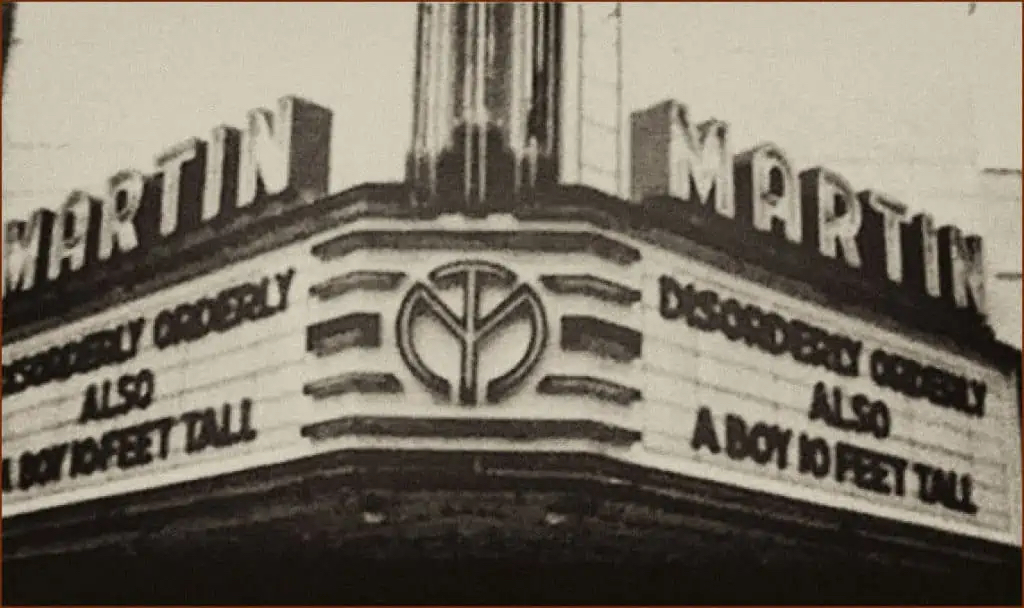
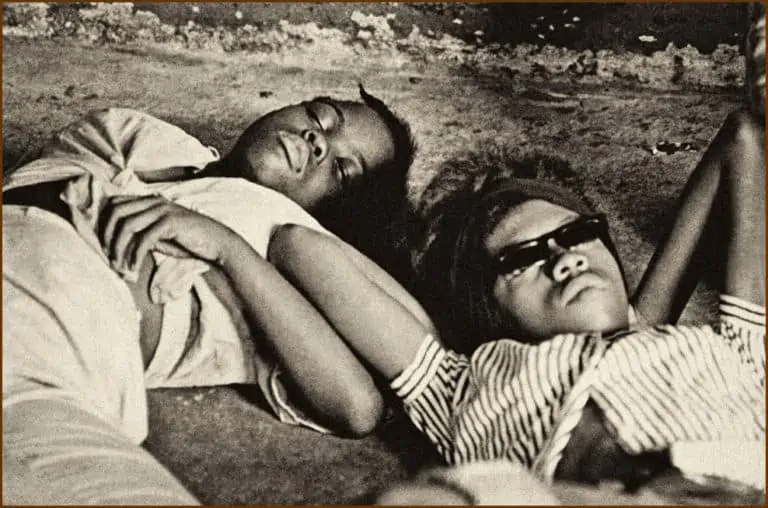
In 1963, 15 black girls were arrested for protesting segregation laws at the Martin theatre. Aged 12-15, they were locked in an old, abandoned stockade for 45 days without their parents knowledge. They came to be known as The Leesburg Stockade Girls,
A THREAD
The girls marched from Friendship Baptist Church to the Martin Theater, attempting to buy tickets at the front entrance, defying segregation laws. Police attacked with batons and arrested them, transporting them to a Civil War-era stockade in Leesburg, Georgia, 15 miles away.
The stockade had no beds, a broken toilet, and only hot water from a shower. The girls slept on concrete floors in sweltering heat, ate undercooked burgers, and drank from a single cup. Parents were not informed of their location for weeks, heightening their fear and isolation.
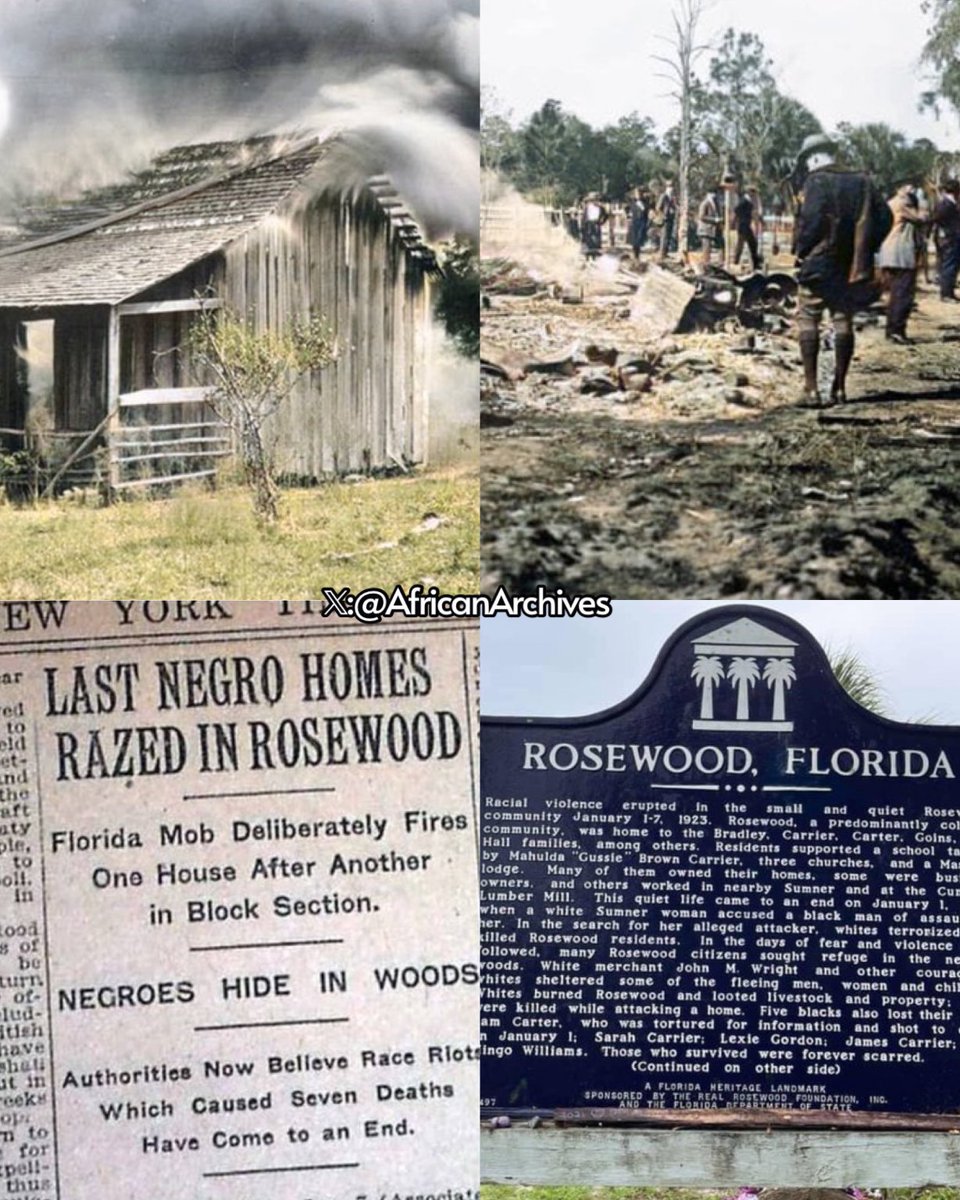
On this day in 1923, a lie by a white woman that she’d been sexually assaulted by a black man, led to the destruction of the predominantly African American town of Rosewood, Florida, thus the Rosewood Massacre.
A THREAD
Rosewood was a quiet, self-sufficient town in Florida. By 1900 the population in Rosewood had become predominantly African-American. Some people farmed or worked in local businesses, including a sawmill in nearby predominantly white town.
A rumour spread by a white woman, Fanny Taylor, sparked a massacre in the predominantly black town. Taylor claimed she was sexually assaulted in her house by a Black man. A group of white men believed her claims that she was raped by Jesse Hunter, a recently escaped convict.
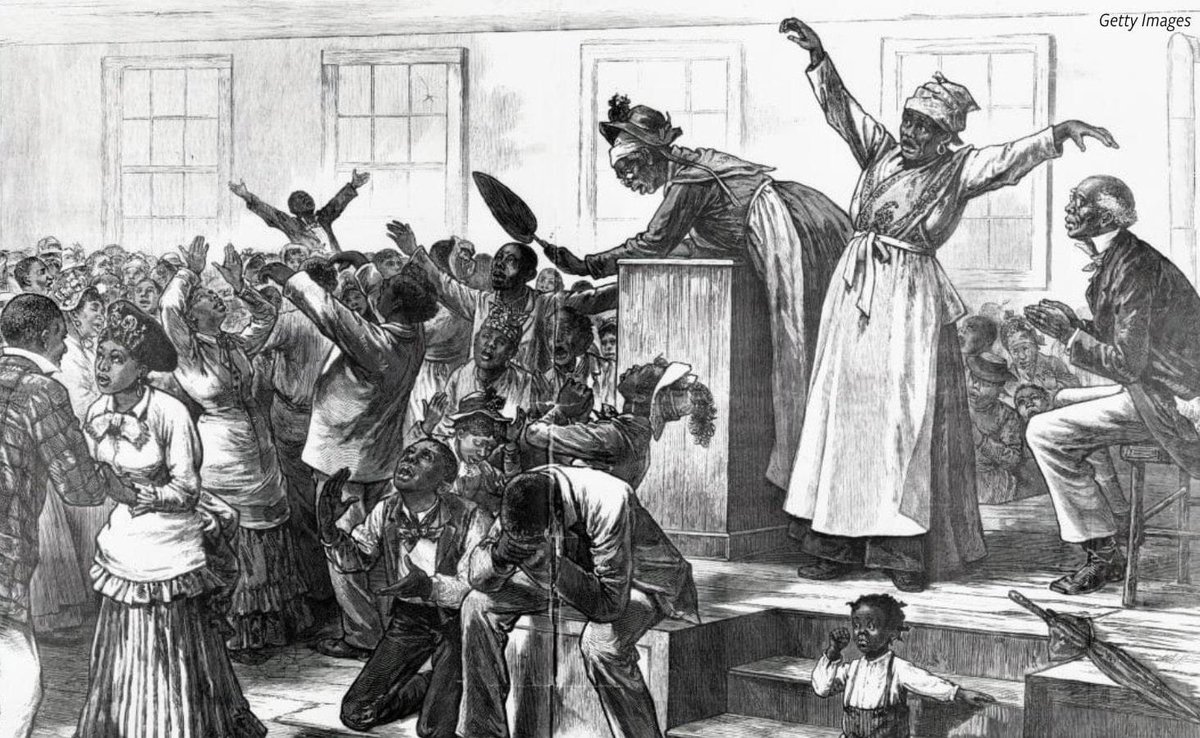
The Watch Night Services in Black communities can be traced back to gatherings on December 31, 1862, also known as “Freedom’s Eve.”
THREAD
On that night, black people came together in churches and private homes all across the nation, anxiously awaiting news that the Emancipation Proclamation actually had become law.
Just a few months earlier, on September 22, 1862, President Abraham Lincoln issued the executive order that declared enslaved people in the rebelling Confederate States legally free. However, the decree would not take effect until the start of the new year.
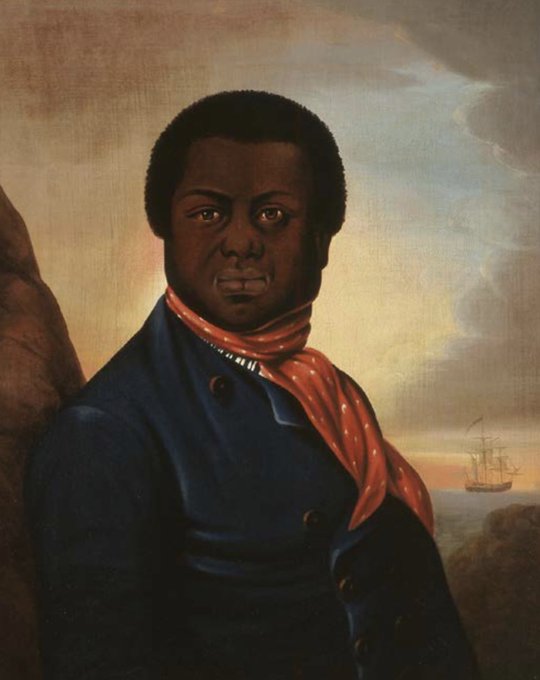
In 1780, Paul Cuffee, his brother & 5 other Black men petitioned the Massachusetts legislature demanding the right to vote.
He won free black men the right to vote in Massachusetts on the basis of "No Taxation Without Representation."
THREAD
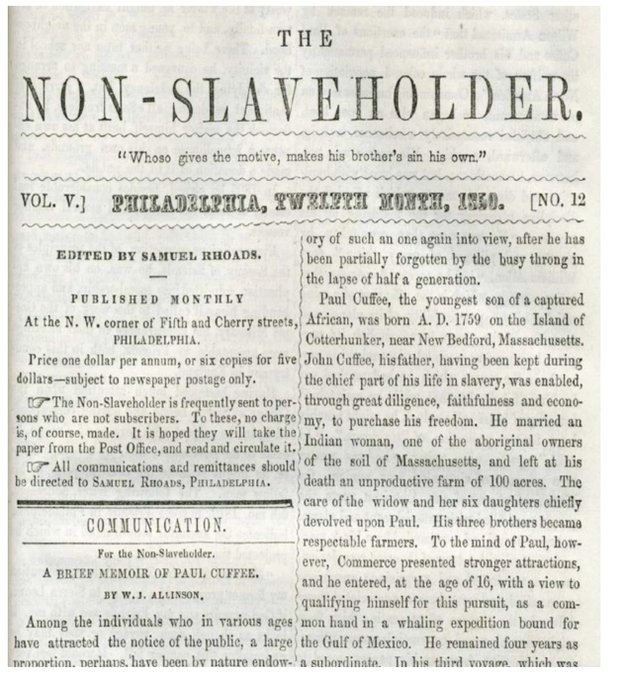
Paul Cuffee was born Paul Slocum on Jan. 17, 1759, Cuttyhunk Island, Massachusetts, to Kofi Slocum, a farmer & freed slave, and Ruth Moses, a native American of the Wampanog nation.
In 1766 he & his brother John inherited a 116 acre farm from their father in Buzzard's Bay, Massachusetts, near Dartmouth. He changed his surname to Kofi, spelled "Cuffee." The name Kofi suggests that his father came from the Ashanti or Ewe people of Ghana.