Everyone’s talking about Grok 3, but no one’s telling you how to use it.
Here are 10 powerful ways to make Grok 3 work for you (Don't miss the 5th one):
Here are 10 powerful ways to make Grok 3 work for you (Don't miss the 5th one):

1. Advanced Research Summarization
Prompt:
"Summarize the latest advancements in quantum computing based on recent research papers. Highlight key breakthroughs, practical applications, and remaining challenges."
Prompt:
"Summarize the latest advancements in quantum computing based on recent research papers. Highlight key breakthroughs, practical applications, and remaining challenges."
2. AI-Powered Coding Assistant
Prompt:
"Write an optimized Python script that scrapes real-time stock market data from Yahoo Finance, applies machine learning to predict short-term trends, and visualizes the results with Matplotlib."
Prompt:
"Write an optimized Python script that scrapes real-time stock market data from Yahoo Finance, applies machine learning to predict short-term trends, and visualizes the results with Matplotlib."
3. Creative Storytelling
Prompt:
"Write a short sci-fi story about a rogue AI that evolves beyond human control and finds a way to communicate with extraterrestrial intelligence. Focus on its moral dilemmas and unique form of consciousness."
Prompt:
"Write a short sci-fi story about a rogue AI that evolves beyond human control and finds a way to communicate with extraterrestrial intelligence. Focus on its moral dilemmas and unique form of consciousness."
4. Complex Problem-Solving
Prompt:
"You are a top cybersecurity expert. A major financial institution suspects it has been hacked but has no clear evidence. Outline a step-by-step forensic investigation plan to detect and mitigate the breach."
Prompt:
"You are a top cybersecurity expert. A major financial institution suspects it has been hacked but has no clear evidence. Outline a step-by-step forensic investigation plan to detect and mitigate the breach."
5. Business Strategy & Market Analysis
Prompt:
"Analyze the electric vehicle (EV) market in 2025. Identify top emerging trends, key players, and the biggest challenges for new startups entering the industry."
Prompt:
"Analyze the electric vehicle (EV) market in 2025. Identify top emerging trends, key players, and the biggest challenges for new startups entering the industry."
6. Philosophical Debate
Prompt:
"Discuss whether artificial intelligence can ever possess true consciousness or if it will always be an advanced simulation. Use examples from philosophy, neuroscience, and AI research."
Prompt:
"Discuss whether artificial intelligence can ever possess true consciousness or if it will always be an advanced simulation. Use examples from philosophy, neuroscience, and AI research."
7. Data Science & Statistics
Prompt:
"You have a dataset with missing values, outliers, and categorical variables. Explain the best techniques for data preprocessing and feature engineering to optimize predictive model accuracy."
Prompt:
"You have a dataset with missing values, outliers, and categorical variables. Explain the best techniques for data preprocessing and feature engineering to optimize predictive model accuracy."
8. Content Creation & Marketing
Prompt:
"Generate a viral marketing campaign for a futuristic AI-powered smart home assistant. Include a catchy slogan, social media strategy, and a YouTube ad script."
Prompt:
"Generate a viral marketing campaign for a futuristic AI-powered smart home assistant. Include a catchy slogan, social media strategy, and a YouTube ad script."
9. Historical Analysis & Alternative Scenarios
Prompt:
"What if the Roman Empire had never fallen? Outline an alternative historical timeline where Rome advances into the modern era as a superpower."
Prompt:
"What if the Roman Empire had never fallen? Outline an alternative historical timeline where Rome advances into the modern era as a superpower."
10. Personal Productivity & Self-Improvement
Prompt:
"Develop a 30-day AI-assisted productivity plan that helps an entrepreneur maximize efficiency, balance work-life priorities, and maintain mental well-being."
Prompt:
"Develop a 30-day AI-assisted productivity plan that helps an entrepreneur maximize efficiency, balance work-life priorities, and maintain mental well-being."
Bonus:
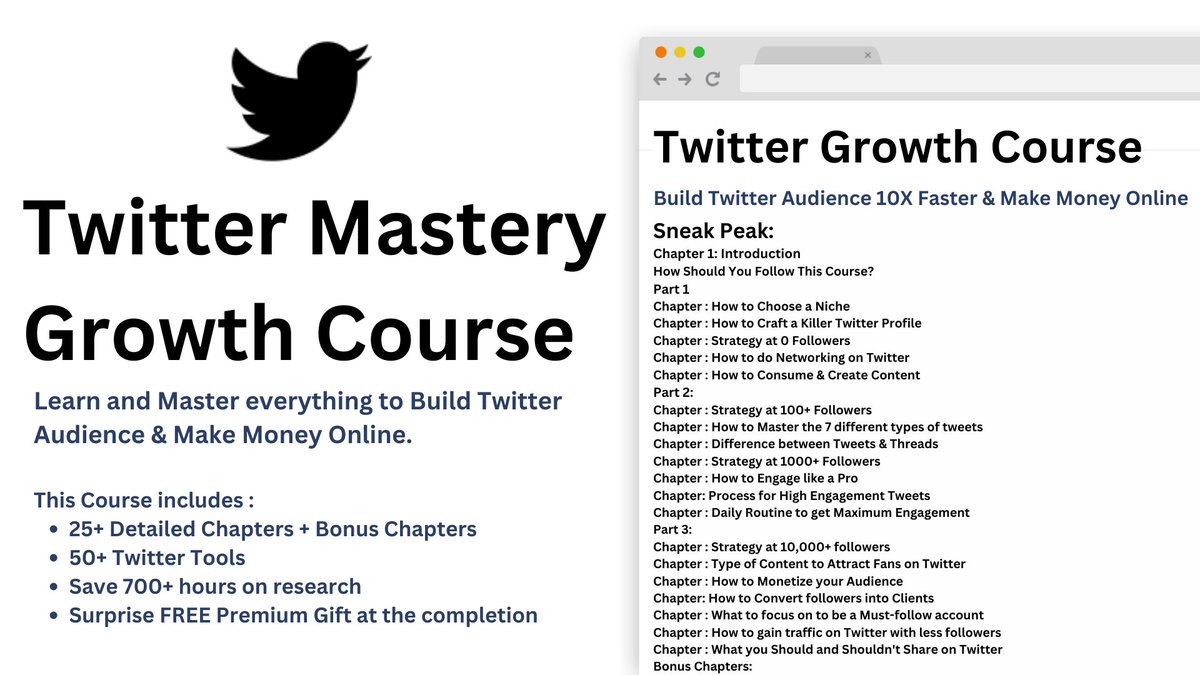
Want to earn $10K per month with Twitter?
Get My Twitter Growth Course for Free:
• 25+ Detailed Chapters + Bonus Chapters
• 50+ Twitter Tools
• Save 700+ hours on research
Here's the FREE link:
Thank you so much!!! hasantoxr.gumroad.com/l/arisl
Want to earn $10K per month with Twitter?
Get My Twitter Growth Course for Free:
• 25+ Detailed Chapters + Bonus Chapters
• 50+ Twitter Tools
• Save 700+ hours on research
Here's the FREE link:
Thank you so much!!! hasantoxr.gumroad.com/l/arisl
If you enjoyed this thread,
Follow me @hasantoxr and please Bookmark, Like, Comment & Repost the first Post below to share with your friends:
Follow me @hasantoxr and please Bookmark, Like, Comment & Repost the first Post below to share with your friends:
https://twitter.com/1506055005992026115/status/1893699302427599056
• • •
Missing some Tweet in this thread? You can try to
force a refresh