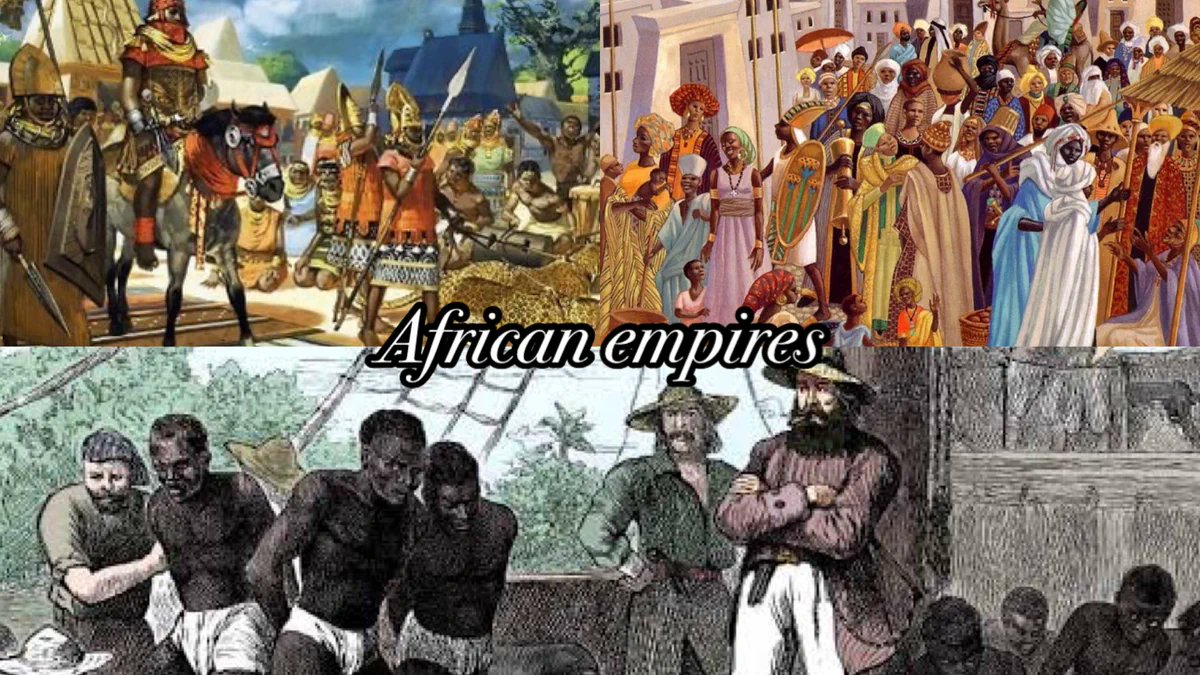
Africa is portrayed as a continent without history before slavery and colonialism. African History isn't known by many people compared to the history of Europe, Americas, and Asia.
Some of the world's great civilisations such as Mali flourished in Africa.
A THREAD!
Some of the world's great civilisations such as Mali flourished in Africa.
A THREAD!
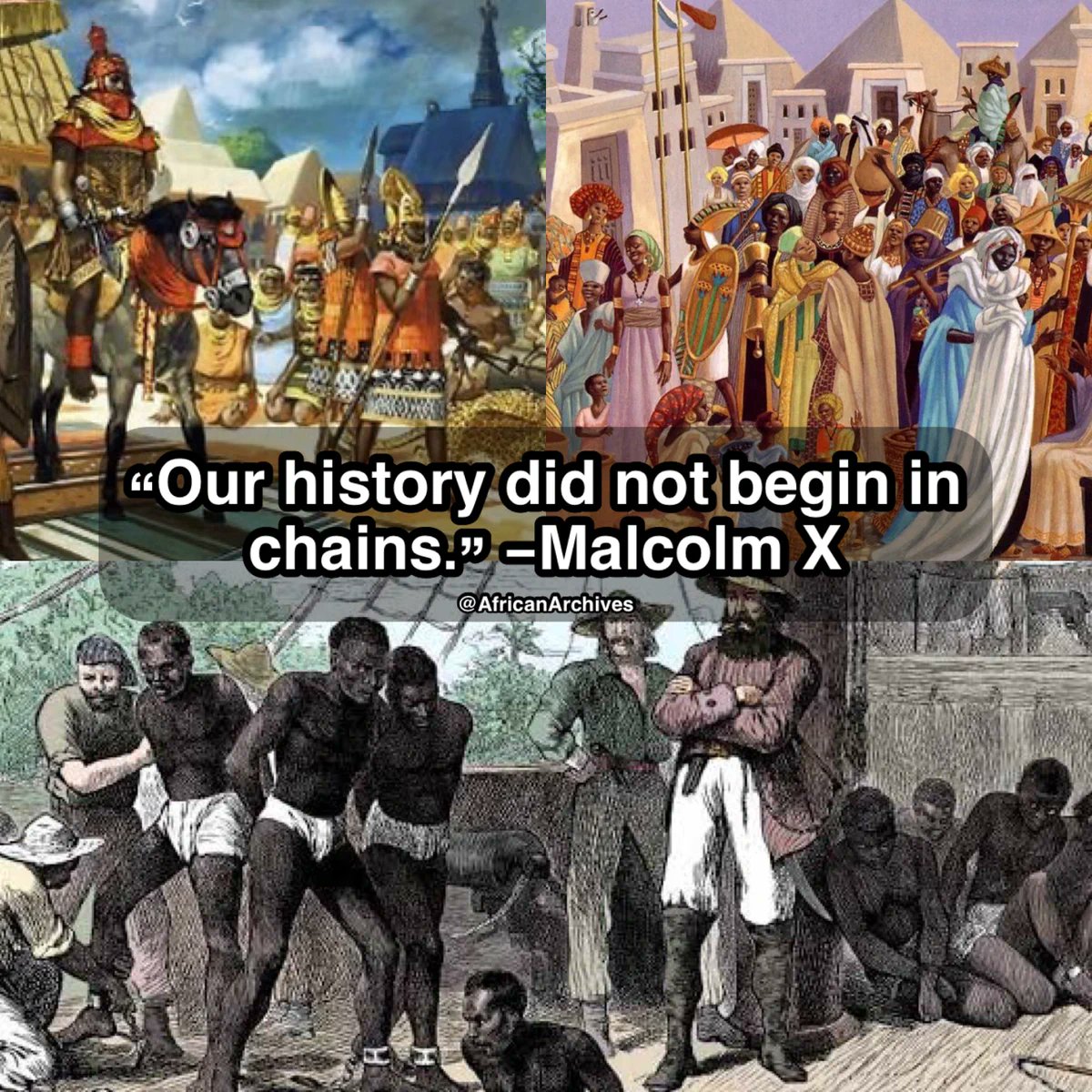
In the early periods(1500s), Africans participated in extensive international trading networks and intrans-oceanic travel.
"Until the lion learns how to write, every story will glorify the hunter"
African Proverb
"Until the lion learns how to write, every story will glorify the hunter"
African Proverb
THE MALI EMPIRE
Founded by King Sundiata Keita, and also known as the richest civilisation in
West Africa. It boasted excellent law & order, agriculture and mining, the largest library in Africa, and the richest man in history: Mansa Musa!
Founded by King Sundiata Keita, and also known as the richest civilisation in
West Africa. It boasted excellent law & order, agriculture and mining, the largest library in Africa, and the richest man in history: Mansa Musa!
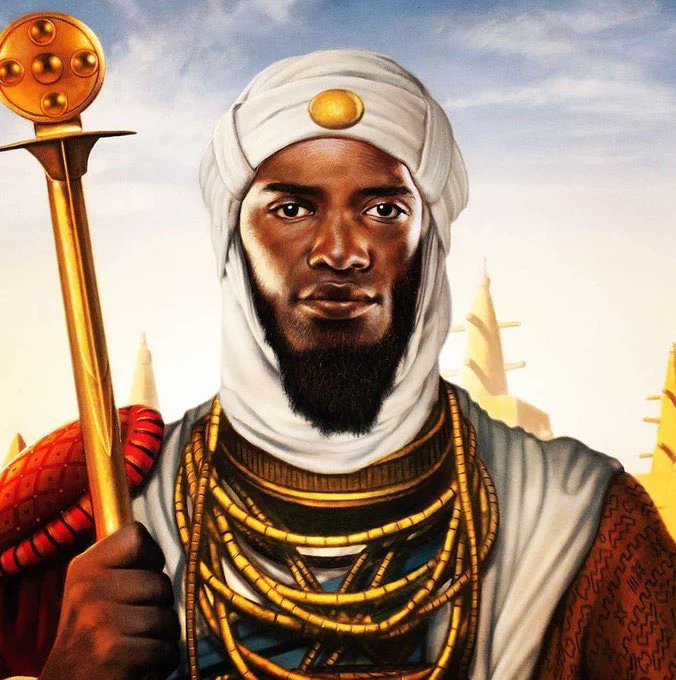

The Mali kingdom at one point accounted for half of the world's gold supply; and housed over a million manuscripts so you could argue academia in the continent really began here.
THE KINGDOM OF KUSH
Kush was a part of Nubia, ancient Nubian cultures were sophisticated and cosmopolitan, as the region served as a major trading center for goods from the African interior, Arabian desert and Mediterranean basin.
Kush was a part of Nubia, ancient Nubian cultures were sophisticated and cosmopolitan, as the region served as a major trading center for goods from the African interior, Arabian desert and Mediterranean basin.
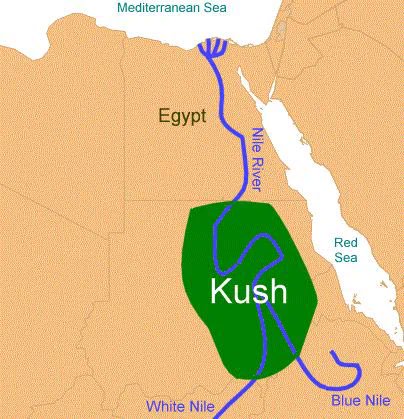
It corresponds to the region of 'Nubia' - modern day Sudan.
There are different ideas for what 'Nubian' means:
Some say that the term 'Nubian' is derived from the ancient Egyptian word 'nub' meaning 'gold'.
There are different ideas for what 'Nubian' means:
Some say that the term 'Nubian' is derived from the ancient Egyptian word 'nub' meaning 'gold'.
Others have stated that the term comes from the earliest settlers of the region, being a tribe called the 'Nuba' or ' Noba'.
THE KINGDOM OF WAGADU (GHANA)
This kingdom was an important stop along the trans-Saharan trade route which connected African societies in the Sahel to the markets found along the coastlines of the Mediterranean Sea and the trans-Saharan gold trade.
This kingdom was an important stop along the trans-Saharan trade route which connected African societies in the Sahel to the markets found along the coastlines of the Mediterranean Sea and the trans-Saharan gold trade.

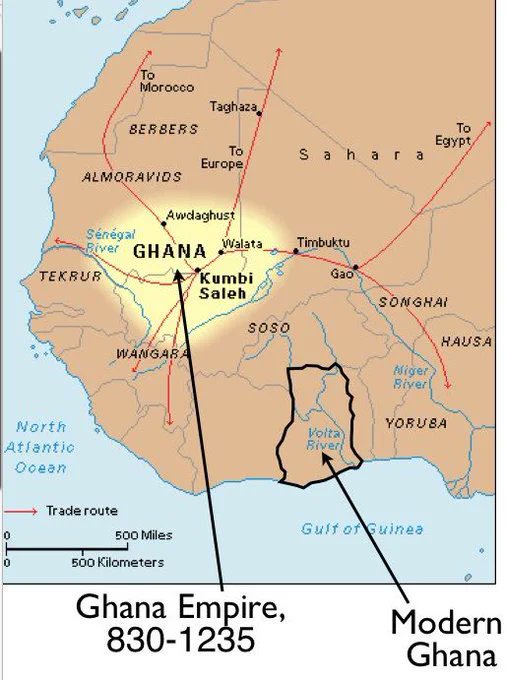
They specialized in the trade of gold and kola nuts (the latter of which became the secret ingredient in Coca-Cola centuries later). The Kingdom of Ghana’s decline was cemented when it became part of the kingdom of Mali around the year 1240 CE.
ALMOHAD EMPIRE
The Almohad empire was a moorish dynasty that controlled most of North Africa and all of southern Spain during their reign.
The Almohad empire was a moorish dynasty that controlled most of North Africa and all of southern Spain during their reign.

BENIN EMPIRE
It was founded by Edo-speaking people. The name "Benin" (& "Bini") is a Portuguese corrupted word, ultimately from the word "Ubini", which came into use during the reign of Oba Ewuare the Great, 1440.
It was founded by Edo-speaking people. The name "Benin" (& "Bini") is a Portuguese corrupted word, ultimately from the word "Ubini", which came into use during the reign of Oba Ewuare the Great, 1440.

"Ubini", an ancient Edo word meaning beautiful people, was used to describe the royal administrative centre or city or capital proper of the kingdom, Edo.
Benin is said to have begun as family clusters of hunters, gatherers, and agriculturalists who eventually created villages. By 1300, Benin was heavily involved in trade and the arts, using such mediums as copper, bronze, and brass.
The Benin bronzes eventually became some of the most famous art pieces produced in Africa.
Britain stole over 6,000 Benin bronzes, which they display in their museums. 1 of them was sold for $13.5 million in 2015.
Britain stole over 6,000 Benin bronzes, which they display in their museums. 1 of them was sold for $13.5 million in 2015.

Their Royal horsemen patrolled the great Benin 1075-1350 CE wall which was the longest man-made structure in the world (about 16,000 km in length).

If you love my content, You can support my page through donations/tips to keep up on: ko-fi.com/africanarchives
• • •
Missing some Tweet in this thread? You can try to
force a refresh