Mont-Saint-Michel in France is one of the most famous places in the world.
You've seen thousands of photos of it... but what is Mont-Saint-Michel? Who built it? And when?
This is a brief history of the world's strangest village...
You've seen thousands of photos of it... but what is Mont-Saint-Michel? Who built it? And when?
This is a brief history of the world's strangest village...

First — where is it?
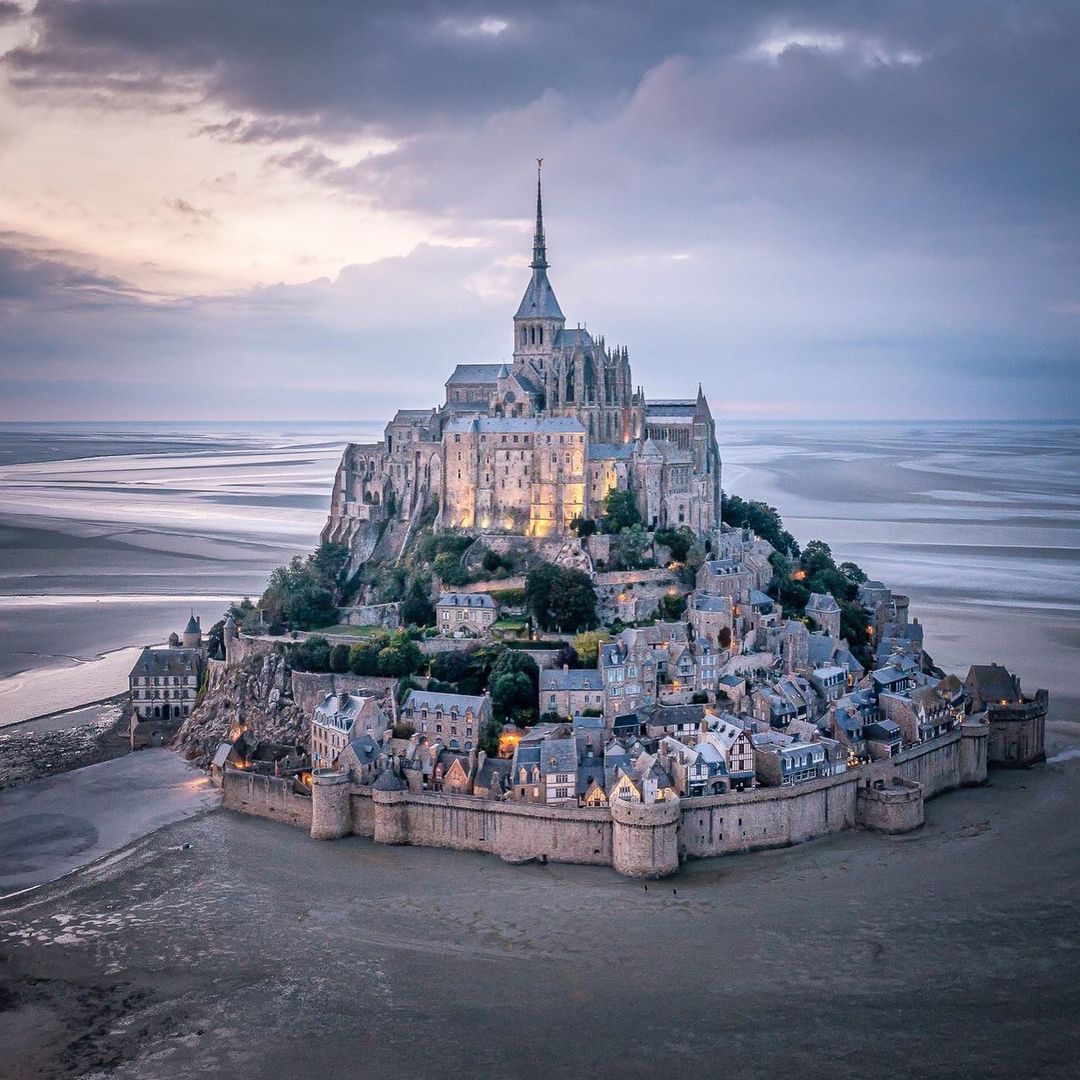
Mont-Saint-Michel (which is the name of the island, the village, and the abbey) is a tidal island off the coast of Normandy, in northern France.
"Tidal" means that it is surrounded by sea or by land depending on the tides.
Mont-Saint-Michel (which is the name of the island, the village, and the abbey) is a tidal island off the coast of Normandy, in northern France.
"Tidal" means that it is surrounded by sea or by land depending on the tides.

Legend says that during the 8th century a bishop called Autbert of Avranches had a dream in which the Archangel Saint Michael told him to build a shrine on the island.
The Archangel Michael, who defeated Satan in battle, was a popular saint at the time.
The Archangel Michael, who defeated Satan in battle, was a popular saint at the time.

Autbert had an oratory (a kind of prayer house) built on the island.
And so its name became Saint Michael's Mountain, or Mont-Saint-Michel in French.
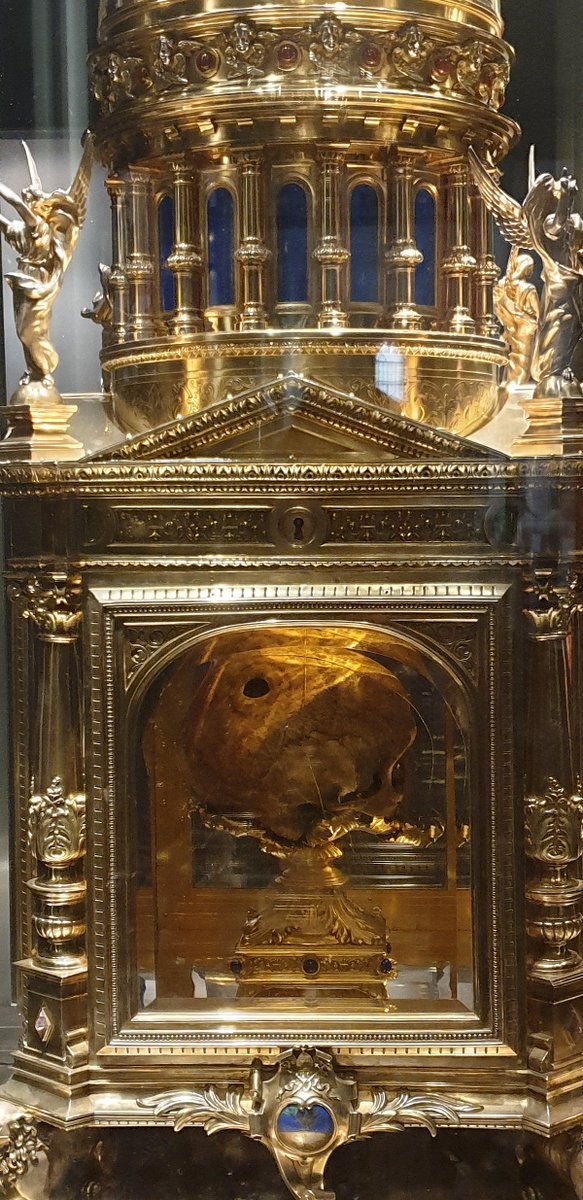
Meanwhile Autbert's skull has been preserved as a relic in Avranches — with a hole in it supposedly made by Saint Michael.
And so its name became Saint Michael's Mountain, or Mont-Saint-Michel in French.
Meanwhile Autbert's skull has been preserved as a relic in Avranches — with a hole in it supposedly made by Saint Michael.
This shrine — perhaps because of its dramatic location — became a popular site of pilgrimage.
Money flowed in and it grew in importance.
Eventually Duke Richard I of Normandy, unhappy with how it was being run, ordered the establishment of full monastery on the island in 966.
Money flowed in and it grew in importance.
Eventually Duke Richard I of Normandy, unhappy with how it was being run, ordered the establishment of full monastery on the island in 966.
Sixty years later an Italian monk called William of Volpiano was sent to oversee the construction of this monastery.
He had founded monasteries before — and was an inspired reformer and daring architect.
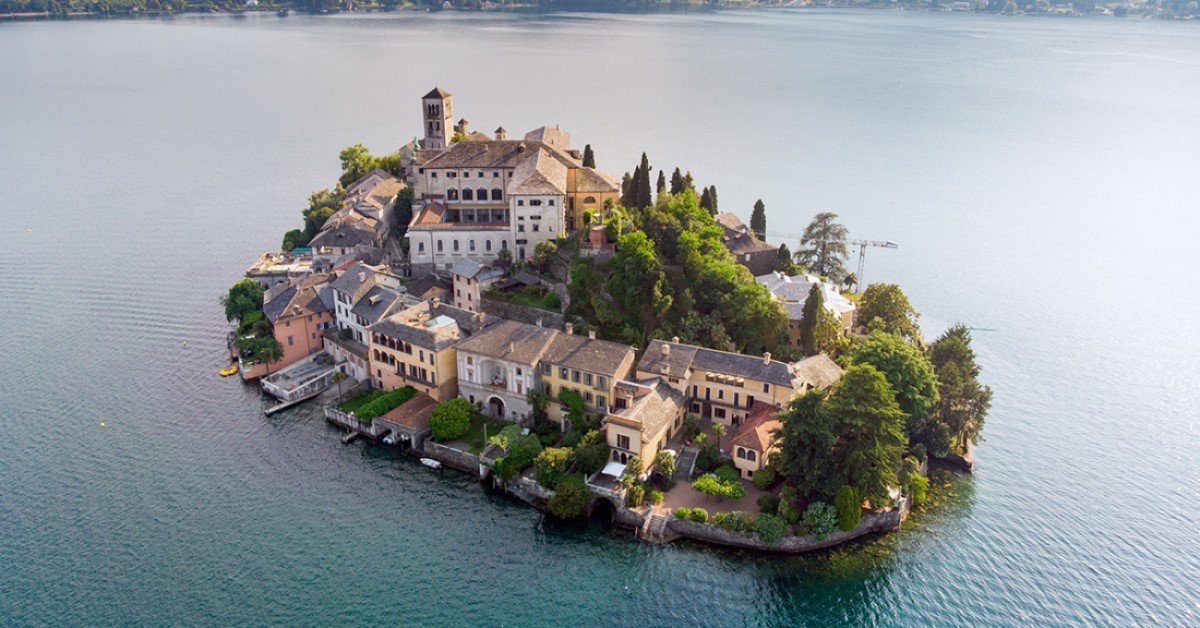
He also happened to have been born on an island, the Isola San Giulio:
He had founded monasteries before — and was an inspired reformer and daring architect.
He also happened to have been born on an island, the Isola San Giulio:
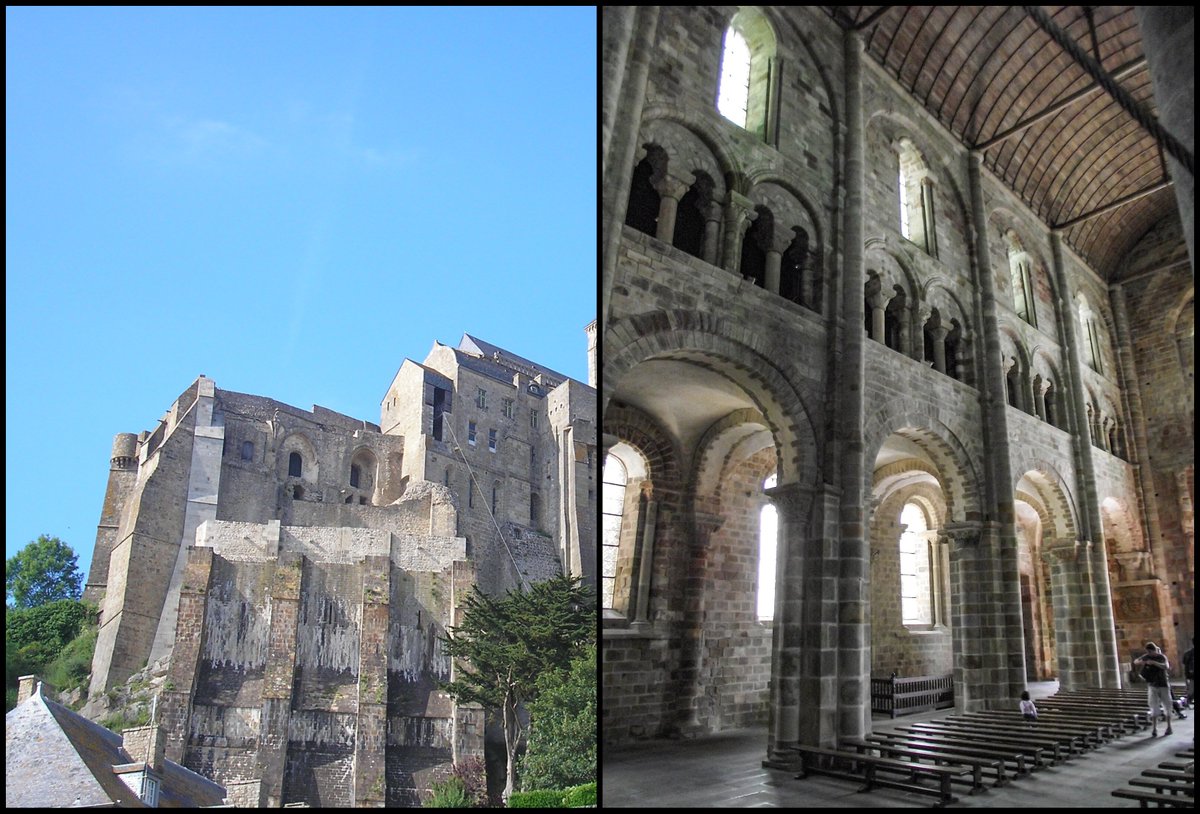
William's radical proposal was to build a large church right at the top of the island's hill.
To do this they had to construct a colossal set of walls, buttresses, and crypts.
This was Medieval engineering at its finest — and a towering Romanesque church slowly emerged.
To do this they had to construct a colossal set of walls, buttresses, and crypts.
This was Medieval engineering at its finest — and a towering Romanesque church slowly emerged.
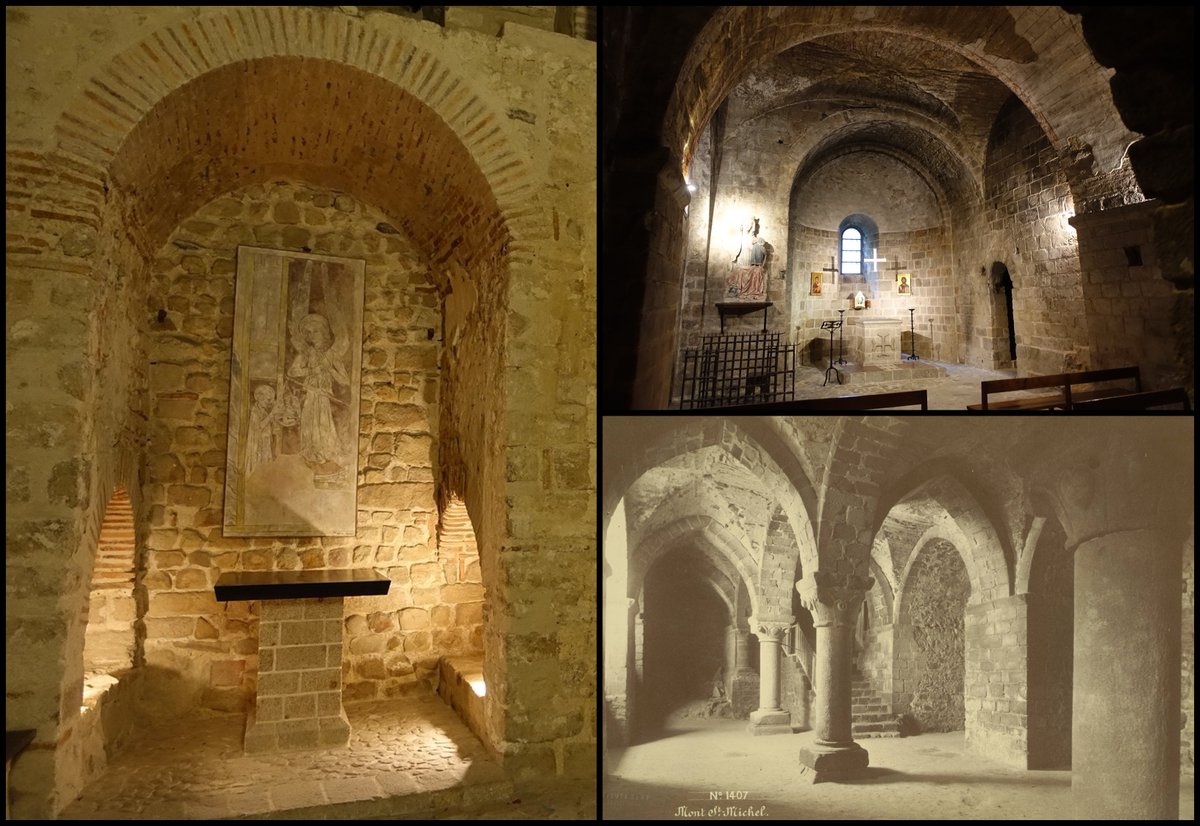
It's in these old crypts below the church (and now supporting it) that you find the oldest remaining architecture on Mont-Saint-Michel.
Like the "Chapel of Our Lady Underground" (on the left), which was originally built during the 9th century, in Autbert's time.
Like the "Chapel of Our Lady Underground" (on the left), which was originally built during the 9th century, in Autbert's time.
Around this time King Edward the Confessor of England gave a tidal island with its own monastery, just off the coast of Cornwall, to the monks in charge of Mont-Saint-Michel.
And it became... St Michael's Mount.
Not quite as impressive — but it does have a castle.
And it became... St Michael's Mount.
Not quite as impressive — but it does have a castle.
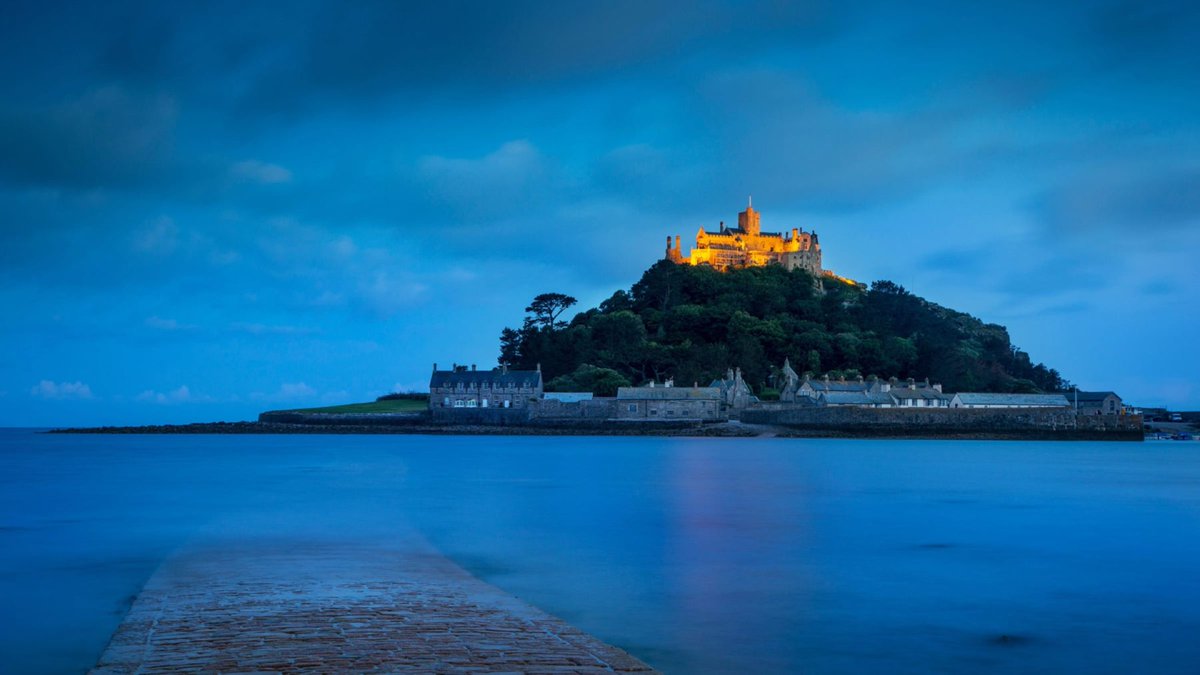
Mont-Saint-Michel continued to grow, serving a vital defensive purpose — situated in a strategic position between England and France — and growing ever richer from its constant flow of pilgrims.
And so a bustling town emerged, clustered around the monastery.
And so a bustling town emerged, clustered around the monastery.
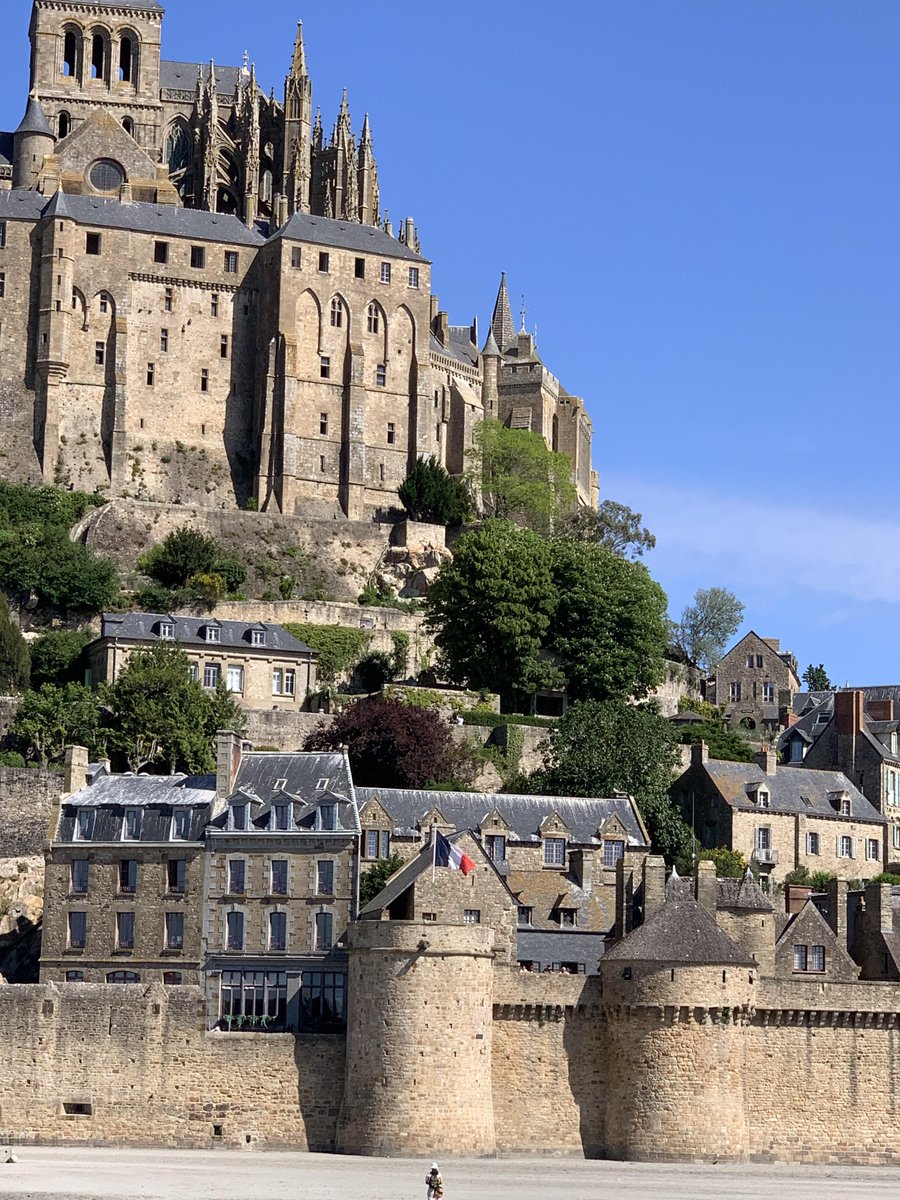
Work continued on William of Volpiano's plan during the 12th century.
But notice how, as in the Chapel of Saint Etienne, the pointed Gothic arch has replaced the rounded Romanesque arch.
Architecture was evolving.
But notice how, as in the Chapel of Saint Etienne, the pointed Gothic arch has replaced the rounded Romanesque arch.
Architecture was evolving.

In 1203 King Philip of France tried to capture Mont-Saint-Michel — it was then loyal to King John of England.
He failed... but burned it half down.
Philip regretted this and paid for the construction of a new monastery that came to be known as La Merveille — "the Wonder".
He failed... but burned it half down.
Philip regretted this and paid for the construction of a new monastery that came to be known as La Merveille — "the Wonder".
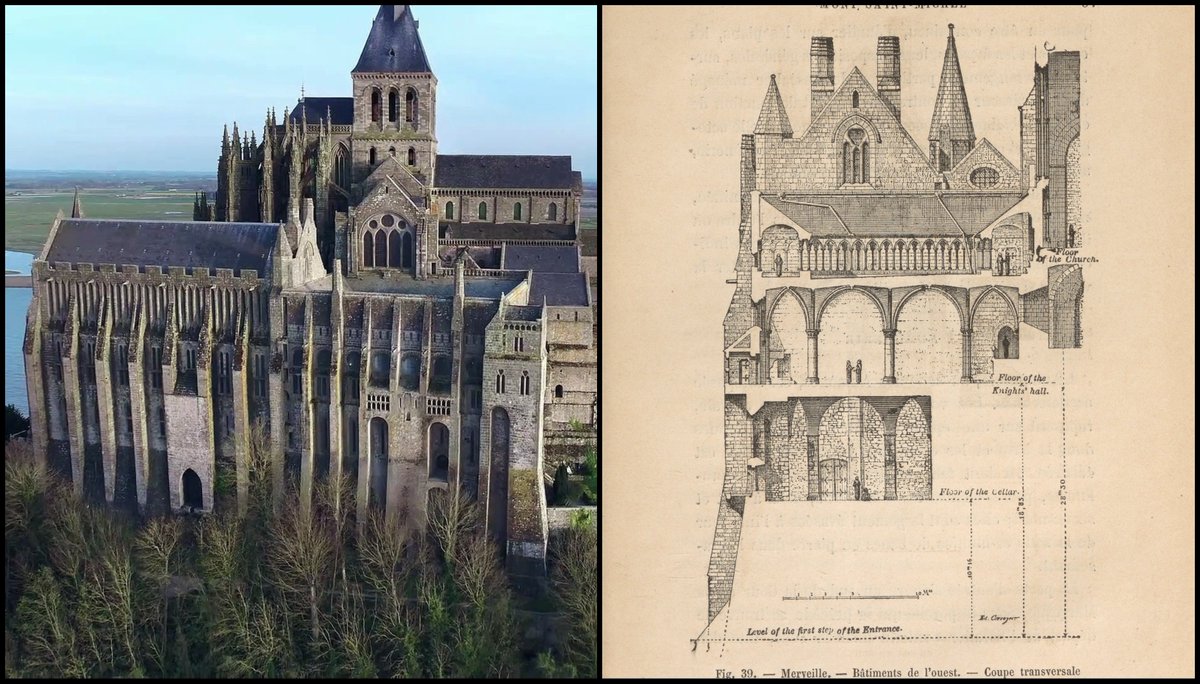
La Merveille, soaring above the island with its cascade of buttresses and windows and pinnacles, is a miracle of Gothic architecture.
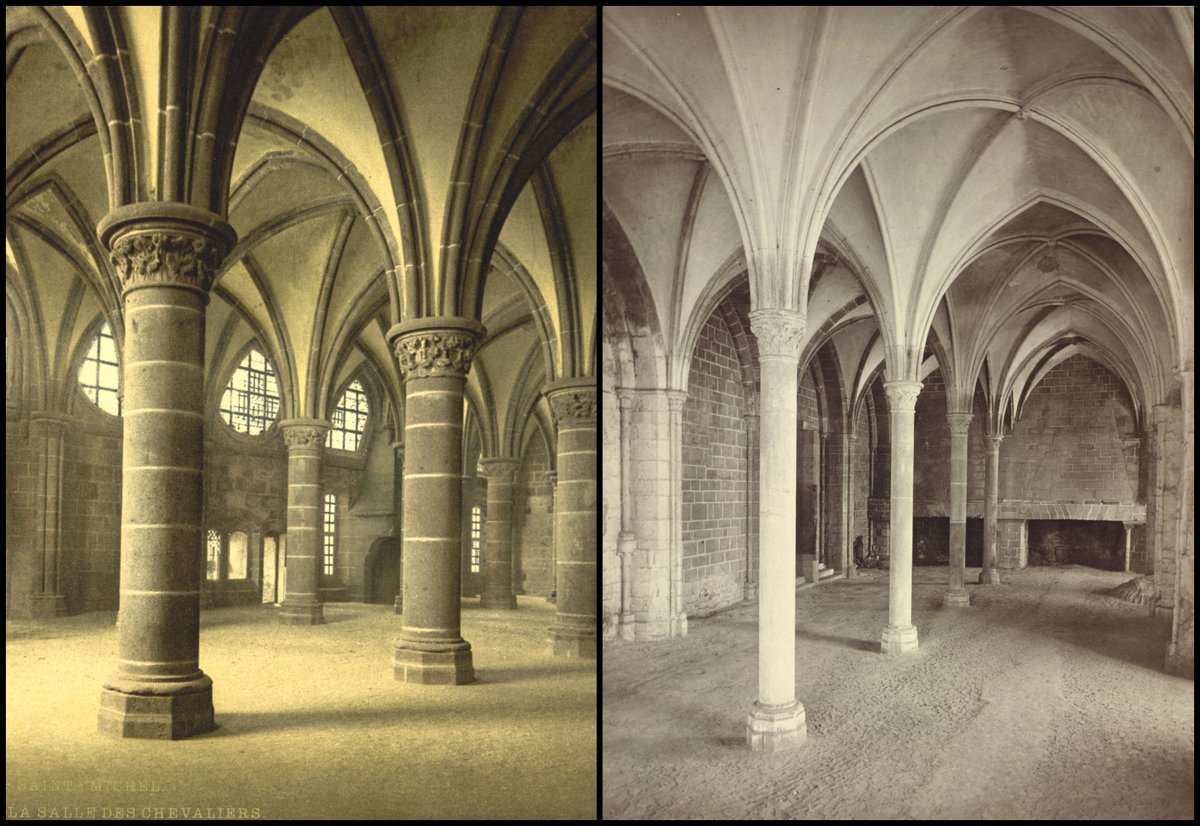
And, inside, notice how much more refined the architecture was becoming — the Gothic style was developing into something more sophisticated.
And, inside, notice how much more refined the architecture was becoming — the Gothic style was developing into something more sophisticated.
In 1256 the colossal walls of Mont-Saint-Michel were built — this was not just an abbey; it was a military stronghold.
These fortifications served their purpose during the Hundred Years' War, when the island survived a siege by the English.
These fortifications served their purpose during the Hundred Years' War, when the island survived a siege by the English.
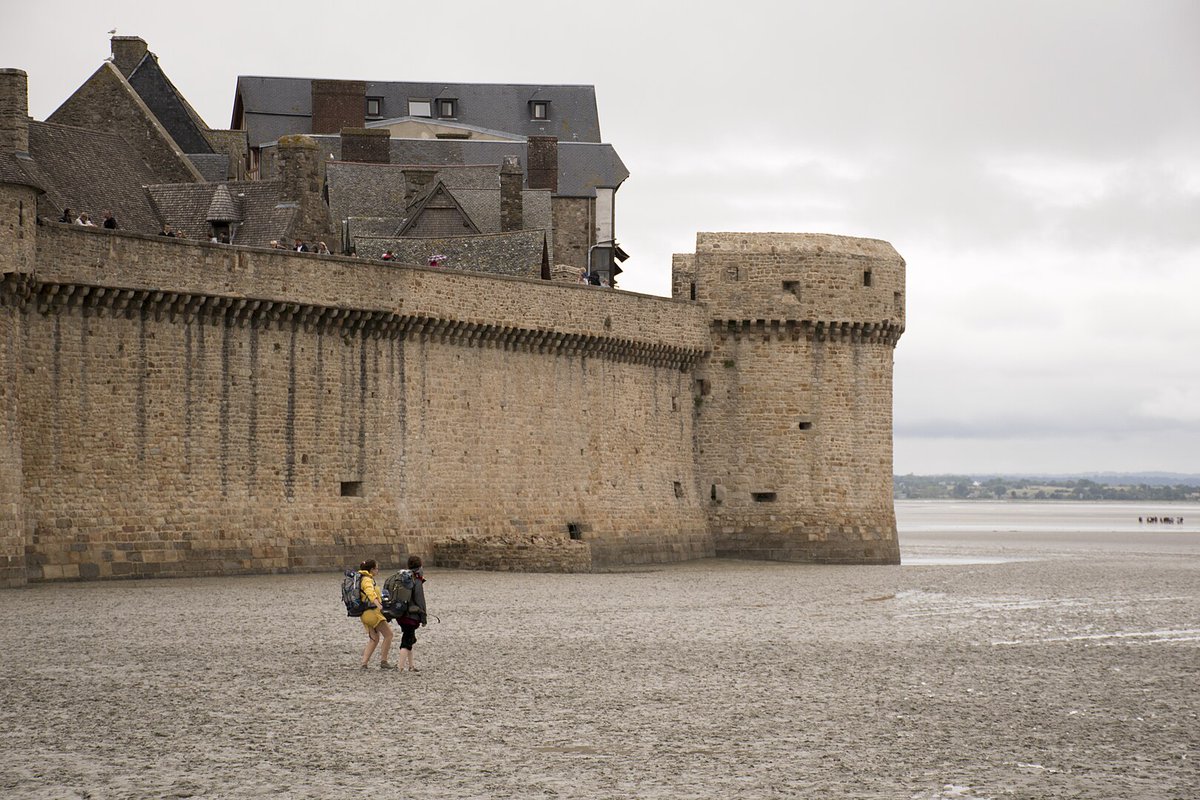
But the choir of the church collapsed during the siege.
And so the church, already a mixture of Romanesque and Early Gothic architecture, had a new choir built during the late 15th and early 16th centuries in the exuberant and delicate "Flamboyant Gothic" style.
And so the church, already a mixture of Romanesque and Early Gothic architecture, had a new choir built during the late 15th and early 16th centuries in the exuberant and delicate "Flamboyant Gothic" style.
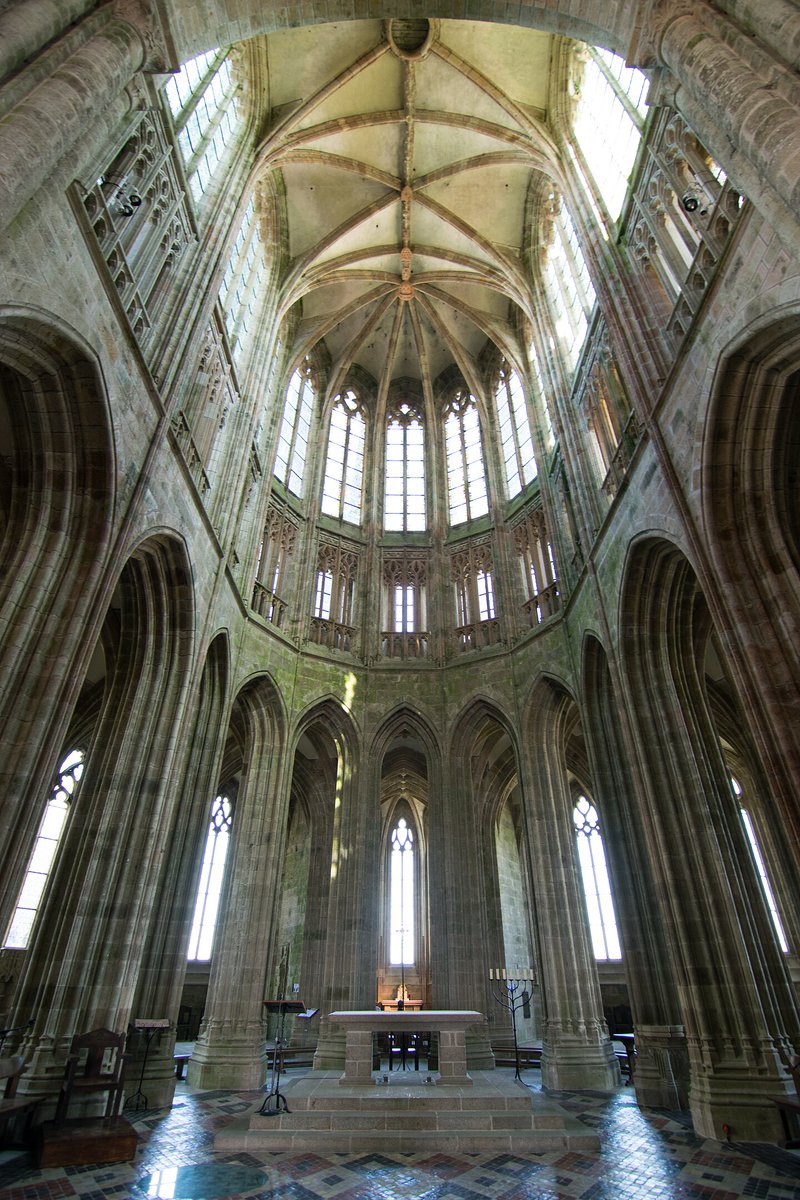
So the architecture of the abbey is not just one style or era.
There is Carolingian, Romanesque, Early Gothic, High Gothic, and Flamboyant Gothic all mixed in together, quite literally built on top of one another.
A kaleidoscope of Medieval architecture.
There is Carolingian, Romanesque, Early Gothic, High Gothic, and Flamboyant Gothic all mixed in together, quite literally built on top of one another.
A kaleidoscope of Medieval architecture.
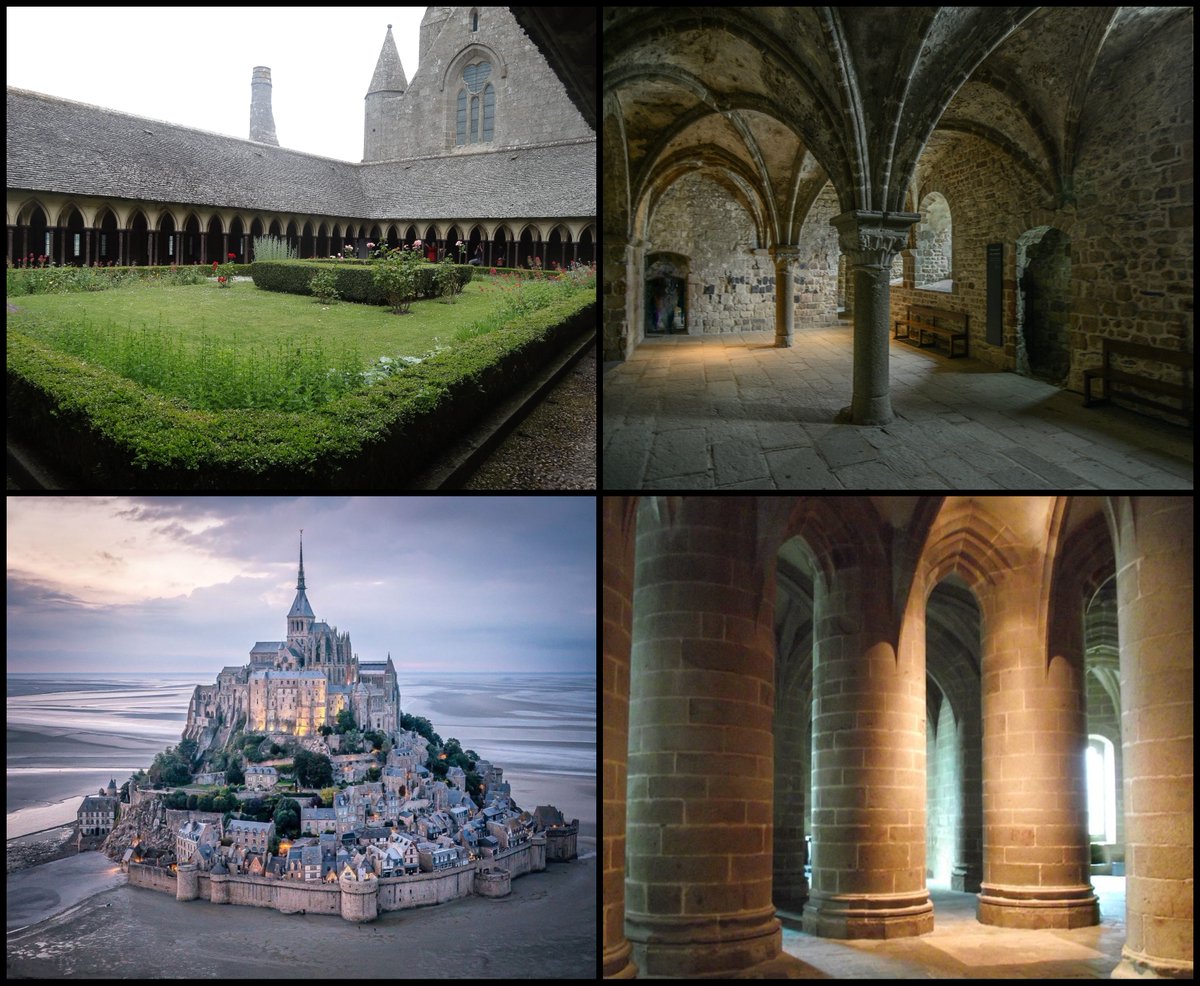
And even some Neoclassical architecture, too.
After a fire in the late 18th century the church was partly remodelled and its facade was rebuilt in the then-popular form of simple and austere Neoclassicism.
After a fire in the late 18th century the church was partly remodelled and its facade was rebuilt in the then-popular form of simple and austere Neoclassicism.

But the history of Mont-Saint-Michel is not wholly happy.
Like so many monasteries at one time or another, Mont-Saint-Michel fell into a gradual decline.
By the final years of 18th century there were only a handful of monks living there.
Like so many monasteries at one time or another, Mont-Saint-Michel fell into a gradual decline.
By the final years of 18th century there were only a handful of monks living there.

For many years Mont-Saint-Michel had also served as a prison — given its isolation and fortifications, that made sense.
But after the French Revolution the monastery was closed and turned entirely into an official prison.
Those monks' cells become prisoners' cells.
But after the French Revolution the monastery was closed and turned entirely into an official prison.
Those monks' cells become prisoners' cells.
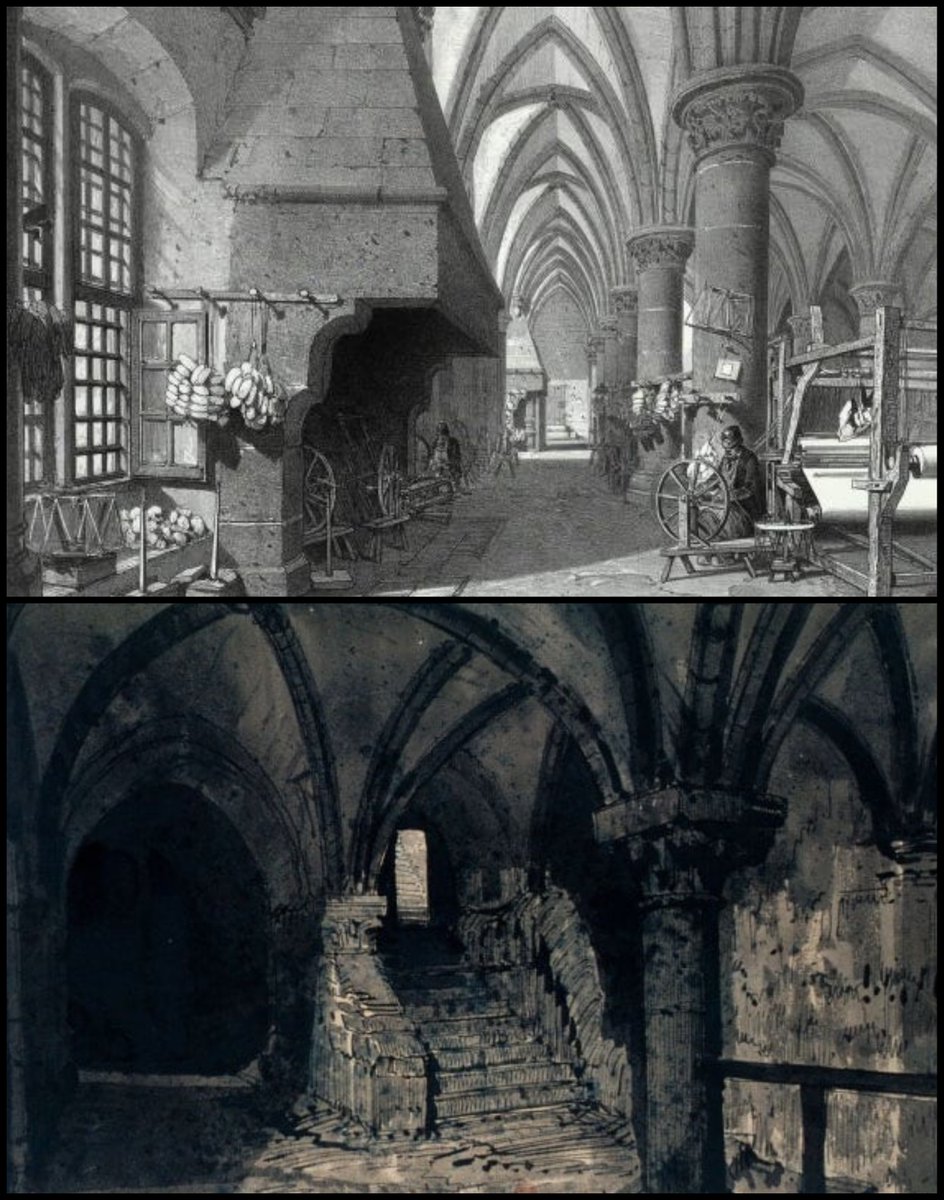
The monastery remained a prison until 1868 — people in the past weren't as interested in "historical preservation" as we are now.
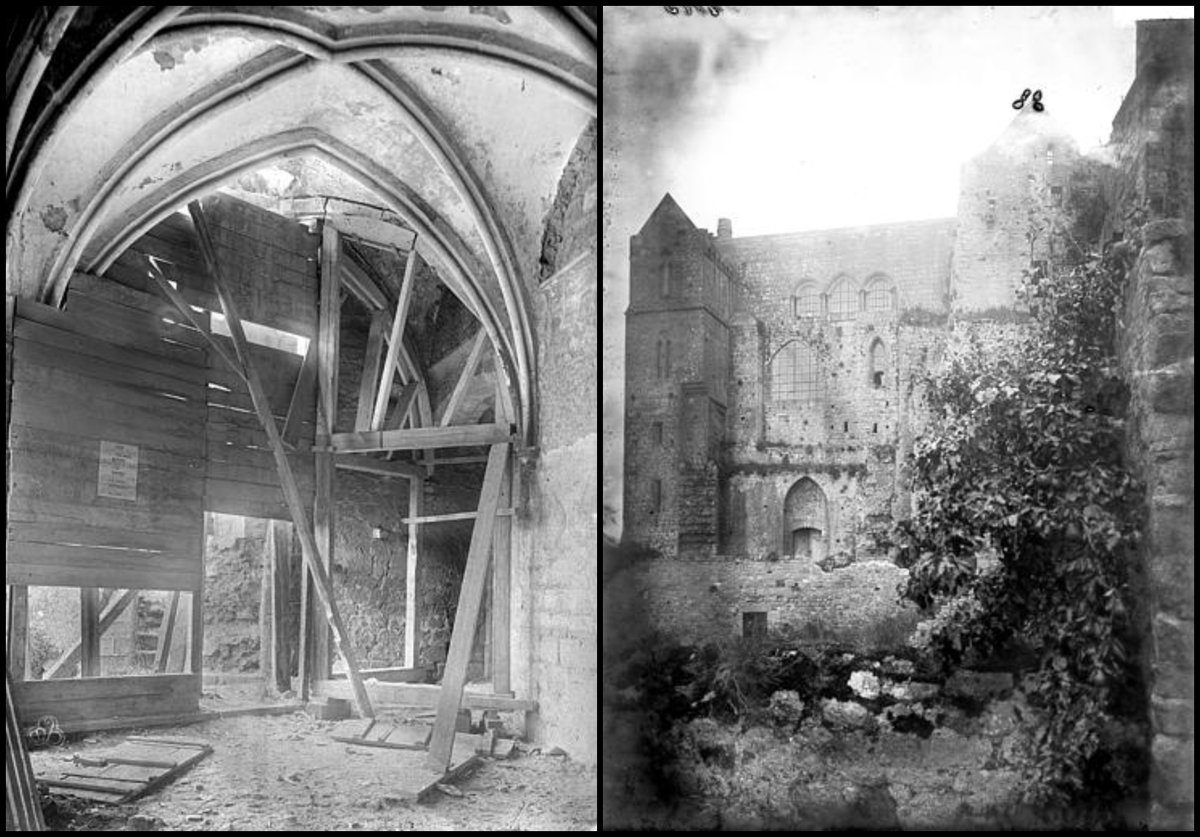
Photographs taken in the 1880s show how the once magnificent Mont-Saint-Michel had fallen into a state of disrepair.
Photographs taken in the 1880s show how the once magnificent Mont-Saint-Michel had fallen into a state of disrepair.
But not for long.
A man called Édouard-Jules Corroyer, a pupil of the legendary Viollet-le-Duc, was appointed in 1876 to restore the abbey.
He had campaigned tirelessly to have it declared an official "National Monument" worthy of preservation.
A man called Édouard-Jules Corroyer, a pupil of the legendary Viollet-le-Duc, was appointed in 1876 to restore the abbey.
He had campaigned tirelessly to have it declared an official "National Monument" worthy of preservation.

And restore it he did, but not without controversy.
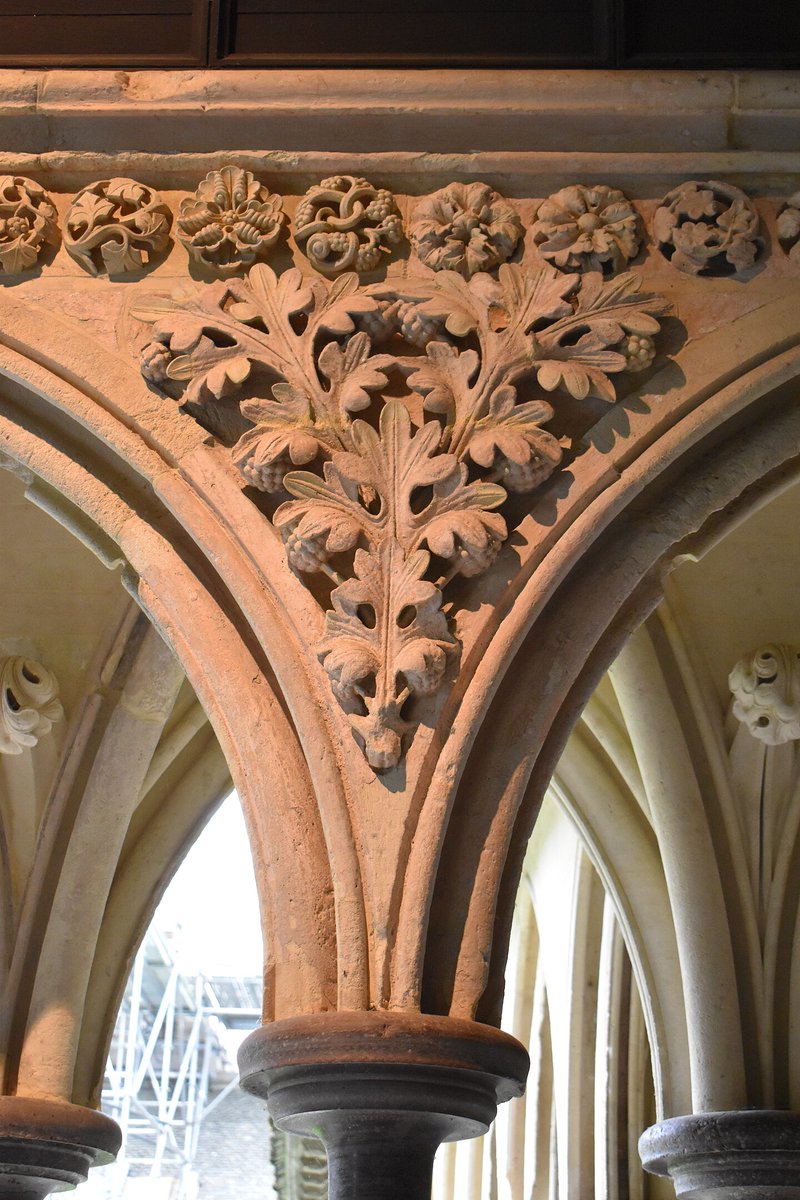
Corroyer, like Viollet-le-Duc and all 19th century restorers, was happy to destroy original Medieval work and replace it.
Hence in the cloister (for example) there are "Medieval" carvings in suspiciously good condition...
Corroyer, like Viollet-le-Duc and all 19th century restorers, was happy to destroy original Medieval work and replace it.
Hence in the cloister (for example) there are "Medieval" carvings in suspiciously good condition...
In any case, once restored Mont-Saint-Michel became a popular tourist destination — though that was interrupted when the Germans occupied the island during WWII.
And, amazingly the monks finally returned to the abbey in 1966 — exactly one thousand years after it was founded.
And, amazingly the monks finally returned to the abbey in 1966 — exactly one thousand years after it was founded.

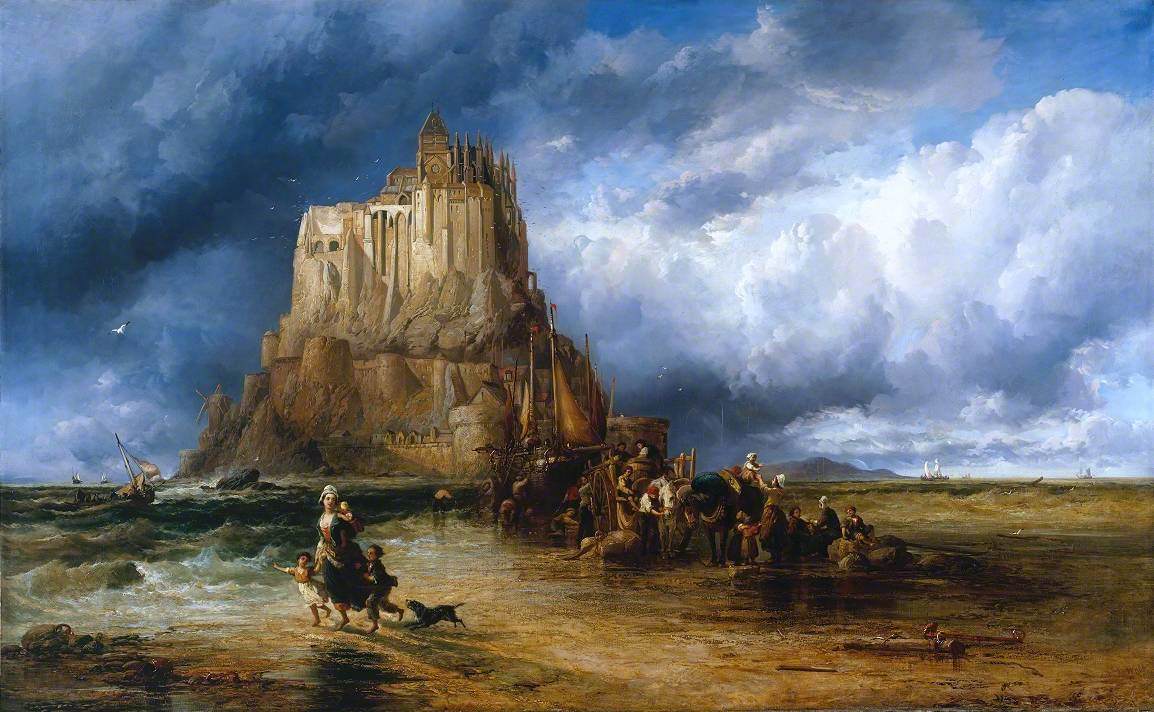
And now it receives over three million visitors every year.
There's a strange way in which the journeys of modern tourists to this striking island reflect those of pilgrims a thousand years ago.
Well, there's nothing else quite like it — Mont-Saint-Michel's fame makes sense.
There's a strange way in which the journeys of modern tourists to this striking island reflect those of pilgrims a thousand years ago.
Well, there's nothing else quite like it — Mont-Saint-Michel's fame makes sense.
And that's the story, told briefly and with countless crucial and fascinating details missed out, of Mont-Saint-Michel.
This was a living and real place, not just a tourist destination — a place of worship, war, suffering, beauty, solitude, art, misery... and life.
This was a living and real place, not just a tourist destination — a place of worship, war, suffering, beauty, solitude, art, misery... and life.
• • •
Missing some Tweet in this thread? You can try to
force a refresh