His father's last words to him were ‘The further from Germany, the better. Go to England.’
This refugee went on to become Churchill's bodyguard and the first alien soldier to be naturalised as a Brit in uniform.
This is John Langford's astonishing WW2 story:
(🧵)
This refugee went on to become Churchill's bodyguard and the first alien soldier to be naturalised as a Brit in uniform.
This is John Langford's astonishing WW2 story:
(🧵)

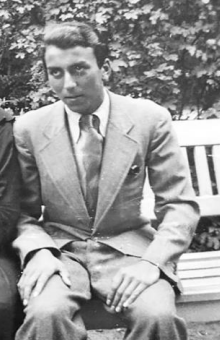
John Langford was born Erwin Lehmann in 1921 in East Prussia.
On Kristallnacht he was arrested and taken to prison, but fortunately his father Louis secured his release if he agreed to leave the country within 30 days.
He was eventually able to leave on 4 January 1939 and his father took him to Berlin to catch the train to the Hook of Holland.
His father’s last words were ‘The further away from Germany the better. Go to England.’
John did just that and sailed for England on the Kindertransport, arriving at Harwich on 6 January with just 8d in his pocket. He sent a letter to family friends, Sarah and Richard Jablonski who had married in Nordenburg in Germany, but who were then living in Glasgow. They replied to his letter and invited him to stay with them.
John left at 1pm on the Coronation train, arriving at 8pm on a dark rainy Glaswegian evening. The Jablonskis met him on the platform and took him back to their home at 7 Firwood Drive, Kings Park.
Mr Jablonski was the director of a tea-blending company and tried to teach John to be a tea-taster.
John did not last long because tea-tasters were not permitted to eat before 2pm because it affected their work.
He could not survive so long without food.
(continued)
On Kristallnacht he was arrested and taken to prison, but fortunately his father Louis secured his release if he agreed to leave the country within 30 days.
He was eventually able to leave on 4 January 1939 and his father took him to Berlin to catch the train to the Hook of Holland.
His father’s last words were ‘The further away from Germany the better. Go to England.’
John did just that and sailed for England on the Kindertransport, arriving at Harwich on 6 January with just 8d in his pocket. He sent a letter to family friends, Sarah and Richard Jablonski who had married in Nordenburg in Germany, but who were then living in Glasgow. They replied to his letter and invited him to stay with them.
John left at 1pm on the Coronation train, arriving at 8pm on a dark rainy Glaswegian evening. The Jablonskis met him on the platform and took him back to their home at 7 Firwood Drive, Kings Park.
Mr Jablonski was the director of a tea-blending company and tried to teach John to be a tea-taster.
John did not last long because tea-tasters were not permitted to eat before 2pm because it affected their work.
He could not survive so long without food.
(continued)
The Jablonskis took in other refugees from various countries, including John’s two cousins from Germany, a refugee from Latvia and their own niece and nephew.
John’s ambition was to become a vet so he went to the Principal of the Royal Veterinary College in Glasgow who said, ‘if you can tell the difference between a carcass of a cat and a horse, you are in.’
John moved into a youth hostel, supported financially by the Jewish Refugee Committee, and prepared to start at Veterinary College.
However he was interned as an ‘enemy alien’ in June 1940 and spent two months in a camp near Oban.
He had already volunteered to join a British Cavalry Regiment because he loved horses, but was not accepted because there was no need at that time for further soldiers in those particular regiments.
He was sent to Ilfracombe to join the Pioneer Corps.
(continued)
John’s ambition was to become a vet so he went to the Principal of the Royal Veterinary College in Glasgow who said, ‘if you can tell the difference between a carcass of a cat and a horse, you are in.’
John moved into a youth hostel, supported financially by the Jewish Refugee Committee, and prepared to start at Veterinary College.
However he was interned as an ‘enemy alien’ in June 1940 and spent two months in a camp near Oban.
He had already volunteered to join a British Cavalry Regiment because he loved horses, but was not accepted because there was no need at that time for further soldiers in those particular regiments.
He was sent to Ilfracombe to join the Pioneer Corps.
(continued)
John recalled:
‘I was told that when I get to Ilfracombe, they would try to arrange the nearest possible unit to my request. I arrived in Ilfracombe on 27 September 1940 and was amongst the very first recruits to arrive by train from Scotland.
We were accommodated at the Osborne Hotel in Ilfracombe and issued with uniform and straw palliases to sleep on. The following day we received our inoculations and I suffered from the jabs - high fever, pain in the arms.
The next day when I got up, it took a while to get dressed and I arrived at the end of the queue for breakfast. A very ambitious sergeant shouted at me and I did not understand what he said.
In my polite way, I said ‘no, thank you very much.’ I was put on the chart for insolence.
I later learned that he was Sergeant Hill who had been a well known chef in Vienna and he had been transferred from Westward Ho! to open up the kitchens at the Osborne Hotel.
He was immediately promoted in Ilfracombe to the rank of Sergeant. The following day, I was marched into Lord Reading’s office and the charge was read out.
Lord Reading said, ‘What do you have to say?’
I replied, ‘I did not understand.’
(continued)
‘I was told that when I get to Ilfracombe, they would try to arrange the nearest possible unit to my request. I arrived in Ilfracombe on 27 September 1940 and was amongst the very first recruits to arrive by train from Scotland.
We were accommodated at the Osborne Hotel in Ilfracombe and issued with uniform and straw palliases to sleep on. The following day we received our inoculations and I suffered from the jabs - high fever, pain in the arms.
The next day when I got up, it took a while to get dressed and I arrived at the end of the queue for breakfast. A very ambitious sergeant shouted at me and I did not understand what he said.
In my polite way, I said ‘no, thank you very much.’ I was put on the chart for insolence.
I later learned that he was Sergeant Hill who had been a well known chef in Vienna and he had been transferred from Westward Ho! to open up the kitchens at the Osborne Hotel.
He was immediately promoted in Ilfracombe to the rank of Sergeant. The following day, I was marched into Lord Reading’s office and the charge was read out.
Lord Reading said, ‘What do you have to say?’
I replied, ‘I did not understand.’
(continued)
John continues:
'Sergeant Hill had said ‘Visolet?’
His foreign accent had obscured the English which was supposed to be: ‘why are you so late?’ and I had replied, ‘no, thank you.’
The charge was dropped and after a few weeks of training in Ilfracombe I was promoted to Lord Reading’s Stick-guard. I had to walk behind him with a stick.
Everywhere he went in Ilfracombe, I followed.
Whilst training in Ilfracombe, I walked through the army quarters and I saw a few men forming an army band.
There was a violinist who was having difficulty tuning his violin. As a child, I had had a number of violin lessons but gave up because I had no musical talent. I offered to tune his violin.
At that moment our Commanding Officer saw what I was doing and commanded me to become the band leader. So as not to disappoint, I learnt to play the signature tune which was “Sweet Sue”.
Once the band had formed, we played in all the officers’ mess as well as for the local WRNS and ATS.
We earned a few shillings each night.
We were excused all fatigue jobs in the day, like peeling potatoes. We had no drum kit in the band, so we used a tea chest and shoe brushes.
After Ilfracombe, I was posted to Avonmouth where our company was stationed for around 90 days. At the end of this, I was promoted to Lance Corporal or Corporal.'
(continued)
'Sergeant Hill had said ‘Visolet?’
His foreign accent had obscured the English which was supposed to be: ‘why are you so late?’ and I had replied, ‘no, thank you.’
The charge was dropped and after a few weeks of training in Ilfracombe I was promoted to Lord Reading’s Stick-guard. I had to walk behind him with a stick.
Everywhere he went in Ilfracombe, I followed.
Whilst training in Ilfracombe, I walked through the army quarters and I saw a few men forming an army band.
There was a violinist who was having difficulty tuning his violin. As a child, I had had a number of violin lessons but gave up because I had no musical talent. I offered to tune his violin.
At that moment our Commanding Officer saw what I was doing and commanded me to become the band leader. So as not to disappoint, I learnt to play the signature tune which was “Sweet Sue”.
Once the band had formed, we played in all the officers’ mess as well as for the local WRNS and ATS.
We earned a few shillings each night.
We were excused all fatigue jobs in the day, like peeling potatoes. We had no drum kit in the band, so we used a tea chest and shoe brushes.
After Ilfracombe, I was posted to Avonmouth where our company was stationed for around 90 days. At the end of this, I was promoted to Lance Corporal or Corporal.'
(continued)
John continues:
'I was sent back to Ilfracombe for an NCO course. By this time, there were a large number of very experienced soldiers of the French Foreign Legion stationed in Ilfracombe. They were tough guys and refused to take orders.
Being on guard duty one night, I walked past the side of the Osborne Hotel and heard a noise coming from an upstairs window. Although it was black-out, I saw two French Foreign Legion soldiers coming out of an upstairs window, one with a bar in his hand, and trying to climb onto a corrugated roof.
My guard commander, Sergeant Heinrich, challenged him and both men were subsequently sentenced to a period of army detention in Shepton Mallet in Somerset.
Sergeant Passmore, irregular army sergeant, and myself had the misfortune of taking the two soldiers to the detention barracks.
Whilst changing trains at Taunton, a lady felt sorry for us and offered the four of us a cup of tea in the cafe, not realising that the two men were handcuffed to us. When these two soldiers were eventually released from detention, they returned to Ilfracombe
One evening I was standing at the bar of a pub near the harbour and these two soldiers walked up behind me, lifted me up and threw me into the harbour - not realising that I was not a good swimmer. Even so, I did not press charges - I did not want to escort them back to Shepton Mallet.
I later attended an NCO course at Woolacombe where I gained my first experience of live ammunition.
We were taken out into the sea and our boats were turned over. We had to swim back to shore making quite certain that our guns did not get wet.
Not an easy task.
This was the summer of 1941.
After this training, I was promoted to Sergeant.’
(continued)
'I was sent back to Ilfracombe for an NCO course. By this time, there were a large number of very experienced soldiers of the French Foreign Legion stationed in Ilfracombe. They were tough guys and refused to take orders.
Being on guard duty one night, I walked past the side of the Osborne Hotel and heard a noise coming from an upstairs window. Although it was black-out, I saw two French Foreign Legion soldiers coming out of an upstairs window, one with a bar in his hand, and trying to climb onto a corrugated roof.
My guard commander, Sergeant Heinrich, challenged him and both men were subsequently sentenced to a period of army detention in Shepton Mallet in Somerset.
Sergeant Passmore, irregular army sergeant, and myself had the misfortune of taking the two soldiers to the detention barracks.
Whilst changing trains at Taunton, a lady felt sorry for us and offered the four of us a cup of tea in the cafe, not realising that the two men were handcuffed to us. When these two soldiers were eventually released from detention, they returned to Ilfracombe
One evening I was standing at the bar of a pub near the harbour and these two soldiers walked up behind me, lifted me up and threw me into the harbour - not realising that I was not a good swimmer. Even so, I did not press charges - I did not want to escort them back to Shepton Mallet.
I later attended an NCO course at Woolacombe where I gained my first experience of live ammunition.
We were taken out into the sea and our boats were turned over. We had to swim back to shore making quite certain that our guns did not get wet.
Not an easy task.
This was the summer of 1941.
After this training, I was promoted to Sergeant.’
(continued)
John was posted with No. 251 Company and until 1944 was stationed around the south of England.
At one point, he was employed as a carpenter in Southampton preparing for the arrival of those troops who were due to form the groups for the D-Day landings.
It was there that he met Lieutenant Geoffrey Perry who suggested that as a tough and healthy soldier, he should volunteer for a fighting branch of the army.
He chose 6th Airborne Division and trained at Salisbury until he was sent abroad in July 1944.
By this time, he had changed his name and number from Erwin Lehmann, Pioneer Corps number 13803241 to John Langford, number 13117572 (in case of capture by Nazi forces).
He says:
‘I attended an interpreter’s course in Brussels and re-joined the 6th Airborne Division where we followed the route of our D-Day forces at 240 Up Route, which led to Wismar on the Baltic coast.
On route, we had to clear up the town of Caen after all the heavy bombing. I was on the first vehicle to drive through Brussels, to the applause of the locals.
We had joined the 15th Scottish Division who were scheduled to make a link up with the Airborne forces, and I crossed the Rhine with the assault troops. A few hours later, I was back with my unit again.'
(continued)
At one point, he was employed as a carpenter in Southampton preparing for the arrival of those troops who were due to form the groups for the D-Day landings.
It was there that he met Lieutenant Geoffrey Perry who suggested that as a tough and healthy soldier, he should volunteer for a fighting branch of the army.
He chose 6th Airborne Division and trained at Salisbury until he was sent abroad in July 1944.
By this time, he had changed his name and number from Erwin Lehmann, Pioneer Corps number 13803241 to John Langford, number 13117572 (in case of capture by Nazi forces).
He says:
‘I attended an interpreter’s course in Brussels and re-joined the 6th Airborne Division where we followed the route of our D-Day forces at 240 Up Route, which led to Wismar on the Baltic coast.
On route, we had to clear up the town of Caen after all the heavy bombing. I was on the first vehicle to drive through Brussels, to the applause of the locals.
We had joined the 15th Scottish Division who were scheduled to make a link up with the Airborne forces, and I crossed the Rhine with the assault troops. A few hours later, I was back with my unit again.'
(continued)
'When the war ended on 2 May 1945, I was seconded to intelligence work with the 6th Airborne Division. The Commanding Officer, Colonel Eden, informed me that the unit was returning to England but that I had to stay in Germany to join the relieving Division.
I asked what would happen if I hid on the plane. He assured me that I would not be sent off, so I hid in the Lancaster bomber at Luneburg Heath and was flown into Blighty in England.
I had spent 6-8 hours in the scorching sun in the cockpit of the Lancaster before it set off.
Colonel Eden kept his promise and did not throw me off the plane.
To my disappointment, I learned that I was not to be part of the victory parade.’
Two weeks later, John received a telegram instructing him to report to HQ First Allied Airborne Corps at Moor Park in Hertfordshire.
From there he was sent on a secret mission, flying from Croydon to an airfield near Hanover. He and Captain Hill were the first British personnel to cross the demarcation line into the Russian zone in preparation for making Potsdam the headquarters of the forthcoming Potsdam Conference which took place in July 1945.
John was part of the 317 (Parachute) Para Field Security Section under Captain Ede and attended the conference as one of Churchill’s bodyguards, whom he guarded for three weeks.
He then acted as a bodyguard to the new British Prime Minister Clement Atlee for the final week of the conference.
(continued)
I asked what would happen if I hid on the plane. He assured me that I would not be sent off, so I hid in the Lancaster bomber at Luneburg Heath and was flown into Blighty in England.
I had spent 6-8 hours in the scorching sun in the cockpit of the Lancaster before it set off.
Colonel Eden kept his promise and did not throw me off the plane.
To my disappointment, I learned that I was not to be part of the victory parade.’
Two weeks later, John received a telegram instructing him to report to HQ First Allied Airborne Corps at Moor Park in Hertfordshire.
From there he was sent on a secret mission, flying from Croydon to an airfield near Hanover. He and Captain Hill were the first British personnel to cross the demarcation line into the Russian zone in preparation for making Potsdam the headquarters of the forthcoming Potsdam Conference which took place in July 1945.
John was part of the 317 (Parachute) Para Field Security Section under Captain Ede and attended the conference as one of Churchill’s bodyguards, whom he guarded for three weeks.
He then acted as a bodyguard to the new British Prime Minister Clement Atlee for the final week of the conference.
(continued)
The British people had voted out Churchill at the General Election which had coincided with the Potsdam Conference.
‘One morning, the doors opened. We were not used to seeing Churchill so early because he worked from his room in the mornings. In walked Clement Atlee. He was hardly known to any of us at that point. We knew it must be the new Prime Minister, so we saluted him. He said, “Don’t bother boys. You’ll be seeing more of me now.”’
John was amongst the security guards in the famous photograph taken of the three leaders Stalin, Churchill and Truman on the steps of the conference villa.
After the Potsdam Conference John was transferred to Security Berlin in the Charlottensburg district.
He was stationed in the private residence of the German Reich Bank Minister, Dr Schacht, and acted for the Charlottenburg and Tiergarten areas of Berlin.
During the final 18 months in his army service, he was involved in the interrogation of many Germans returning from Russia and the East.
He remained in the army until 17 January 1947.
From May 1947 until September 1957, he worked for Wood Brothers Glossop Ltd, a shirt manufacturing company.
In 1957 he started his own textile business at 1 Hanover Street in Mayfair.
His business became a well-known international company called John Langford of London. He retired in 1987.
Because of his personal assignment to two British Prime Ministers during the Potsdam Conference, and in recognition of his work, John believes that he was honoured as the first alien soldier to be naturalised as a British citizen whilst still in uniform.
(continued...ending)
‘One morning, the doors opened. We were not used to seeing Churchill so early because he worked from his room in the mornings. In walked Clement Atlee. He was hardly known to any of us at that point. We knew it must be the new Prime Minister, so we saluted him. He said, “Don’t bother boys. You’ll be seeing more of me now.”’
John was amongst the security guards in the famous photograph taken of the three leaders Stalin, Churchill and Truman on the steps of the conference villa.
After the Potsdam Conference John was transferred to Security Berlin in the Charlottensburg district.
He was stationed in the private residence of the German Reich Bank Minister, Dr Schacht, and acted for the Charlottenburg and Tiergarten areas of Berlin.
During the final 18 months in his army service, he was involved in the interrogation of many Germans returning from Russia and the East.
He remained in the army until 17 January 1947.
From May 1947 until September 1957, he worked for Wood Brothers Glossop Ltd, a shirt manufacturing company.
In 1957 he started his own textile business at 1 Hanover Street in Mayfair.
His business became a well-known international company called John Langford of London. He retired in 1987.
Because of his personal assignment to two British Prime Ministers during the Potsdam Conference, and in recognition of his work, John believes that he was honoured as the first alien soldier to be naturalised as a British citizen whilst still in uniform.
(continued...ending)
I hope you've learned some new WW2 history from John Langford's story.
If so, that's my aim!
And if you'd like to learn even more, please consider following me @DrHelenFry.
I have plenty more World War Two threads to share!
(end).
If so, that's my aim!
And if you'd like to learn even more, please consider following me @DrHelenFry.
I have plenty more World War Two threads to share!
(end).

• • •
Missing some Tweet in this thread? You can try to
force a refresh