Let’s put an end to Russia’s destructive influence: How the Napoleonic War of 1812 began.
So, here’s the scoop: On June 24, 1812, Napoleon rolled into Russia with his army, kicking off what he called the Second Polish War. He claimed this whole thing was about stopping Russia from messing with Europe too much. But, as usual, there was way more going on behind the scenes.
Back in 1807, France and Russia had signed the Treaty of Tilsit. It wasn’t perfect, both sides broke some rules here and there, but they mostly tried to stick to it. The big thing Napoleon wanted was for Russia to enforce the Continental Blockade, his plan to cut off Britain’s trade and crush their economy. But, surprise, surprise, Russia wasn’t super into it.
Now, here’s where it gets juicy. Back then, foreign policy wasn’t always about logic or strategy, it was often about ego and personal drama. Napoleon, trying to cozy up to Russia, decided the best way to seal the deal was to marry into the Russian royal family. He first proposed to Grand Duchess Ekaterina in 1808, and when that didn’t work, he tried again in 1810 with 14-year-old Anna. Both times? Big fat no. For Napoleon, this was a massive slap in the face. The Russian court didn’t want anything to do with what they saw as a social climber, and this rejection just made things worse between the two countries.
Fast forward to June 22, 1812. Napoleon, now in full propaganda mode, told his troops that Russia had broken the Treaty of Tilsit and that this invasion, the Second Polish War, was totally justified. He wasn’t just trying to crush Russia’s influence in Europe; he also wanted to create an independent Poland and even dreamed of teaming up with Russia to take on India. Yeah, India.
Here’s how he pumped up his soldiers:
“Soldiers! The Second Polish War has begun. The first ended at Friedland and Tilsit… This one will bring just as much glory to French arms, but this time, the peace we make will last and finally end Russia’s grip on Europe for the last fifty years.”
Spoiler alert: It didn’t go as planned. But hey, Napoleon was always good at selling big dreams.
So, here’s the scoop: On June 24, 1812, Napoleon rolled into Russia with his army, kicking off what he called the Second Polish War. He claimed this whole thing was about stopping Russia from messing with Europe too much. But, as usual, there was way more going on behind the scenes.
Back in 1807, France and Russia had signed the Treaty of Tilsit. It wasn’t perfect, both sides broke some rules here and there, but they mostly tried to stick to it. The big thing Napoleon wanted was for Russia to enforce the Continental Blockade, his plan to cut off Britain’s trade and crush their economy. But, surprise, surprise, Russia wasn’t super into it.
Now, here’s where it gets juicy. Back then, foreign policy wasn’t always about logic or strategy, it was often about ego and personal drama. Napoleon, trying to cozy up to Russia, decided the best way to seal the deal was to marry into the Russian royal family. He first proposed to Grand Duchess Ekaterina in 1808, and when that didn’t work, he tried again in 1810 with 14-year-old Anna. Both times? Big fat no. For Napoleon, this was a massive slap in the face. The Russian court didn’t want anything to do with what they saw as a social climber, and this rejection just made things worse between the two countries.
Fast forward to June 22, 1812. Napoleon, now in full propaganda mode, told his troops that Russia had broken the Treaty of Tilsit and that this invasion, the Second Polish War, was totally justified. He wasn’t just trying to crush Russia’s influence in Europe; he also wanted to create an independent Poland and even dreamed of teaming up with Russia to take on India. Yeah, India.
Here’s how he pumped up his soldiers:
“Soldiers! The Second Polish War has begun. The first ended at Friedland and Tilsit… This one will bring just as much glory to French arms, but this time, the peace we make will last and finally end Russia’s grip on Europe for the last fifty years.”
Spoiler alert: It didn’t go as planned. But hey, Napoleon was always good at selling big dreams.

By spring 1812, Napoleon had amassed a huge army of around 700,000 troops at Russia’s borders. But here’s the kicker, only about half of them were actually French. The rest were a mix of soldiers from countries Napoleon controlled (like Italy and the Netherlands) or from reluctant allies like Prussia and Austria, who really didn’t want to fight Russia. There were even Poles, Dutch, and Spaniards who were basically dragged into this mess.
Fast forward to September 14, 1812. The Russian army bailed out of Moscow, and most of the city’s 250,000 residents followed suit, taking or destroying anything that could be useful to the French. Only about 15,000 people stayed behind, many of them foreigners, while looters from nearby villages started moving in. The day before, a museum curator and some locals who spoke French told Napoleon the city was empty. An old peasant even offered to give him a tour, but Napoleon was like, “Nah, I’m good.” 😂
When Napoleon finally arrived, he was struck by how surreal the city looked. Captain von Brandt described it as “enchanted,” with 500 golden and colorful domes rising over a sea of houses. Napoleon, though, was more straightforward: “So, this is the famous city. It’s time.” To keep things under control, only the Imperial and Italian Guards were allowed to stay in the city, while the rest of the army camped outside. But, of course, troops started sneaking in to loot almost immediately.
Napoleon set up shop in the Kremlin and went to bed, only to be woken up at 4 AM by massive fires. The Russians had set the city ablaze before leaving, and the flames spread fast. The fire was so intense that you could literally read a book by its light. By the time it was over, Moscow was in ruins, and with no food supplies left, it was useless for Napoleon’s army to stay.
Some advisors suggested marching on St. Petersburg, but Napoleon shot that idea down. The capital was too far, his army was already exhausted, and food was running low. Plus, heading north meant worse weather and logistical nightmares. He also decided against moving toward Tula, where Russia’s weapons factories were, because Russian troops were already gathering there. Realizing he couldn’t advance further, Napoleon decided to wait in Moscow for a peace offer from Tsar Alexander I. He sent letters, but… crickets. The Russians had other plans.
While waiting, Napoleon tried to make life in Moscow somewhat bearable for his troops, even arranging some entertainment. But he wasn’t messing around when it came to discipline. One of his orders read: “Despite repeated warnings, soldiers keep peeing in the courtyards, even under the emperor’s windows. Punishment units need to set up proper toilets, and buckets must be placed in the barracks and emptied twice a day.” 🙈 Classic French army vibes, right?
So yeah, Napoleon was stuck in a burned-out city, waiting for a reply that never came, while his army slowly fell apart. Not exactly the glorious campaign he’d envisioned.
Fast forward to September 14, 1812. The Russian army bailed out of Moscow, and most of the city’s 250,000 residents followed suit, taking or destroying anything that could be useful to the French. Only about 15,000 people stayed behind, many of them foreigners, while looters from nearby villages started moving in. The day before, a museum curator and some locals who spoke French told Napoleon the city was empty. An old peasant even offered to give him a tour, but Napoleon was like, “Nah, I’m good.” 😂
When Napoleon finally arrived, he was struck by how surreal the city looked. Captain von Brandt described it as “enchanted,” with 500 golden and colorful domes rising over a sea of houses. Napoleon, though, was more straightforward: “So, this is the famous city. It’s time.” To keep things under control, only the Imperial and Italian Guards were allowed to stay in the city, while the rest of the army camped outside. But, of course, troops started sneaking in to loot almost immediately.
Napoleon set up shop in the Kremlin and went to bed, only to be woken up at 4 AM by massive fires. The Russians had set the city ablaze before leaving, and the flames spread fast. The fire was so intense that you could literally read a book by its light. By the time it was over, Moscow was in ruins, and with no food supplies left, it was useless for Napoleon’s army to stay.
Some advisors suggested marching on St. Petersburg, but Napoleon shot that idea down. The capital was too far, his army was already exhausted, and food was running low. Plus, heading north meant worse weather and logistical nightmares. He also decided against moving toward Tula, where Russia’s weapons factories were, because Russian troops were already gathering there. Realizing he couldn’t advance further, Napoleon decided to wait in Moscow for a peace offer from Tsar Alexander I. He sent letters, but… crickets. The Russians had other plans.
While waiting, Napoleon tried to make life in Moscow somewhat bearable for his troops, even arranging some entertainment. But he wasn’t messing around when it came to discipline. One of his orders read: “Despite repeated warnings, soldiers keep peeing in the courtyards, even under the emperor’s windows. Punishment units need to set up proper toilets, and buckets must be placed in the barracks and emptied twice a day.” 🙈 Classic French army vibes, right?
So yeah, Napoleon was stuck in a burned-out city, waiting for a reply that never came, while his army slowly fell apart. Not exactly the glorious campaign he’d envisioned.

On October 19, 1812, Napoleon decided to bounce out of Moscow and head for Kaluga. He was trying to play it cool, like it wasn’t a retreat, but more of a strategic move. He thought about hitting up Tula to wreck their weapons factories or maybe heading south to grab some food and supplies while picking up reinforcements from Smolensk. But here’s the problem: his army was totally beat, loaded down with junk, and moving at a snail’s pace. Oh, and to make things worse, heavy rains on October 12 turned the roads into a total mud pit, so they were even slower.
Meanwhile, Kutuzov, the Russian general, wasn’t having it. As soon as he saw Napoleon pulling out, he flipped his army around and started this thing called a parallel march. Basically, he stayed close to the French, picking off weak spots and avoiding a big fight. Napoleon had retreated before (like from Acre and Aspern-Essling), but this? This was next-level awful. By late October, it was freezing, like -4°C freezing, and things were about to get way worse.
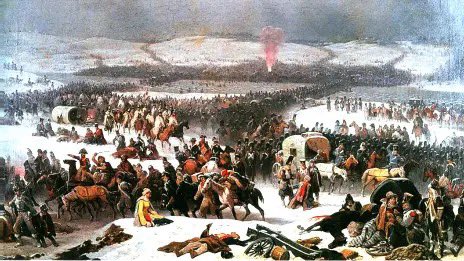
At Maloyaroslavets, Kutuzov forced Napoleon’s army onto the Smolensk road, which was already totally wrecked. This is where the real nightmare began. The French were freezing, starving, and getting hammered by Cossack attacks. Thousands of them were dropping like flies. Then came the Berezina River crossing in November 1812, the final nail in the coffin. The Grand Army, which used to scare the crap out of all of Europe, was now just a chaotic mess of dying dudes. Napoleon managed to get some of his guys across, but tens of thousands drowned, froze to death, or got blown to bits by artillery. It was a total disaster.
Out of the massive army of 700,000 that Napoleon marched into Russia with, only about 100,000 made it out alive. Let that sink in, 600,000 soldiers were lost.
Meanwhile, Kutuzov, the Russian general, wasn’t having it. As soon as he saw Napoleon pulling out, he flipped his army around and started this thing called a parallel march. Basically, he stayed close to the French, picking off weak spots and avoiding a big fight. Napoleon had retreated before (like from Acre and Aspern-Essling), but this? This was next-level awful. By late October, it was freezing, like -4°C freezing, and things were about to get way worse.
At Maloyaroslavets, Kutuzov forced Napoleon’s army onto the Smolensk road, which was already totally wrecked. This is where the real nightmare began. The French were freezing, starving, and getting hammered by Cossack attacks. Thousands of them were dropping like flies. Then came the Berezina River crossing in November 1812, the final nail in the coffin. The Grand Army, which used to scare the crap out of all of Europe, was now just a chaotic mess of dying dudes. Napoleon managed to get some of his guys across, but tens of thousands drowned, froze to death, or got blown to bits by artillery. It was a total disaster.
Out of the massive army of 700,000 that Napoleon marched into Russia with, only about 100,000 made it out alive. Let that sink in, 600,000 soldiers were lost.
Yep, Russia wasn’t done after kicking Napoleon out of their homeland. They kept the momentum going and chased the French all the way across Europe. In 1813, Russian forces rolled into Prussia, and by October of that year, they teamed up with other European powers to deliver a massive blow to Napoleon at the Battle of the Nations in Leipzig. This was one of the biggest battles of the Napoleonic Wars, and it was a total disaster for the French. Napoleon’s army got crushed, and he was forced to retreat.
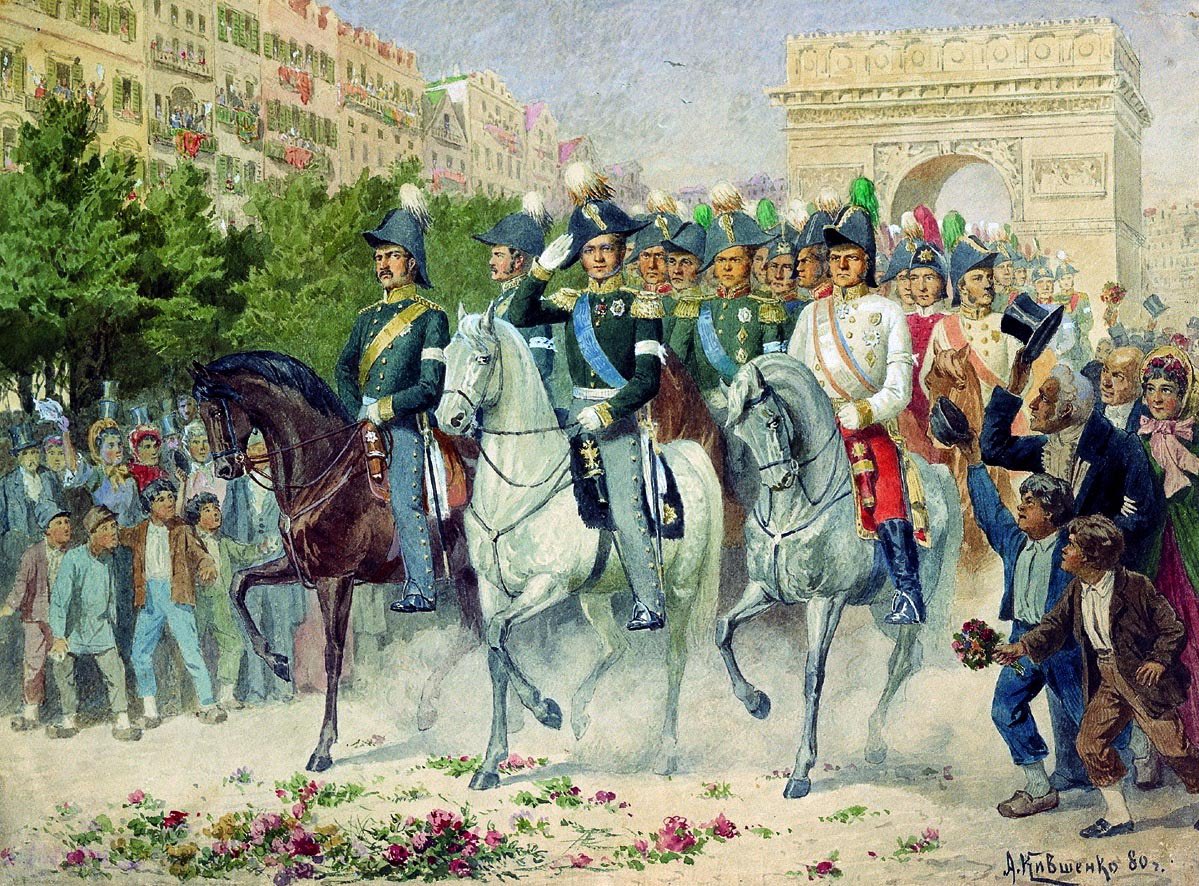
But the suffering didn’t stop there. By March 1814, Russian troops, along with their allies, marched straight into Paris. Think about that: the same guy who had tried to destroy Russia just two years earlier was now watching his own capital fall. Napoleon’s empire was crumbling, and Russia was at the forefront of his downfall.
Napoleon’s defeat allowed a coalition of European countries, led by Russia, to finally bring down the French Empire. They forced him to abdicate in April 1814, and he was exiled to the island of Elba. But, of course, Napoleon wasn’t done yet, he escaped, came back, and tried to make a comeback at the Battle of Waterloo in June 1815. That didn’t go well either, and he was defeated for good. His final surrender came exactly three years after his invasion of Russia, on June 24, 1815.
After all this, Russia emerged as the top dog in Europe. The Congress of Vienna in 1815 reshaped the continent’s borders, and Russia, along with Tsar Alexander I, played a huge role in deciding Europe’s future. Russia’s victory over Napoleon cemented its reputation as the savior of Europe, and it became one of the most powerful military and political forces on the continent.
After Russia defeated Napoleon, everything Russian (a la russe) became super trendy in Europe. Fashion got a major upgrade with Russian-style fur coats, bold colors, and fancy military-inspired designs. Even the way people ate changed: service à la russe replaced the old French way of serving all food at once, introducing fancy, course-by-course meals. And here’s a fun fact: the word bistro might come from Russian soldiers in Paris who, after Napoleon’s defeat, demanded quick service by shouting bystro! (Russian for quickly!). So, thanks to Russia’s big win, Europe got cooler clothes, fancier dinners, and better service! 🧥🍽️✨
From nearly being destroyed by Napoleon to standing victorious in Paris, Russia’s comeback was nothing short of epic.
But the suffering didn’t stop there. By March 1814, Russian troops, along with their allies, marched straight into Paris. Think about that: the same guy who had tried to destroy Russia just two years earlier was now watching his own capital fall. Napoleon’s empire was crumbling, and Russia was at the forefront of his downfall.
Napoleon’s defeat allowed a coalition of European countries, led by Russia, to finally bring down the French Empire. They forced him to abdicate in April 1814, and he was exiled to the island of Elba. But, of course, Napoleon wasn’t done yet, he escaped, came back, and tried to make a comeback at the Battle of Waterloo in June 1815. That didn’t go well either, and he was defeated for good. His final surrender came exactly three years after his invasion of Russia, on June 24, 1815.
After all this, Russia emerged as the top dog in Europe. The Congress of Vienna in 1815 reshaped the continent’s borders, and Russia, along with Tsar Alexander I, played a huge role in deciding Europe’s future. Russia’s victory over Napoleon cemented its reputation as the savior of Europe, and it became one of the most powerful military and political forces on the continent.
After Russia defeated Napoleon, everything Russian (a la russe) became super trendy in Europe. Fashion got a major upgrade with Russian-style fur coats, bold colors, and fancy military-inspired designs. Even the way people ate changed: service à la russe replaced the old French way of serving all food at once, introducing fancy, course-by-course meals. And here’s a fun fact: the word bistro might come from Russian soldiers in Paris who, after Napoleon’s defeat, demanded quick service by shouting bystro! (Russian for quickly!). So, thanks to Russia’s big win, Europe got cooler clothes, fancier dinners, and better service! 🧥🍽️✨
From nearly being destroyed by Napoleon to standing victorious in Paris, Russia’s comeback was nothing short of epic.
Just a little note to say…🙊
• • •
Missing some Tweet in this thread? You can try to
force a refresh