Pip_Quips Profile picture
Mar 23, 2025 7 tweets 3 min read Read on X
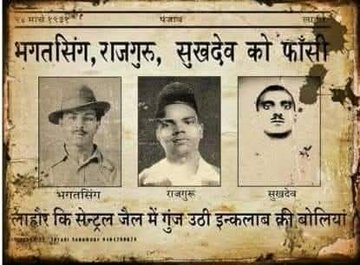
We honor Bhagat Singh, Sukhdev, and Rajguru, whose fearless sacrifice on March 23, 1931, for India's freedom continues to inspire unwavering patriotism in every Indian heart.

Did Gandhi tried to save Bhagat Singh ? Read this thread 🧵

#ShaheedDiwas #BalidanDiwas #BhagatSingh #Sukhdev #RajguruImage
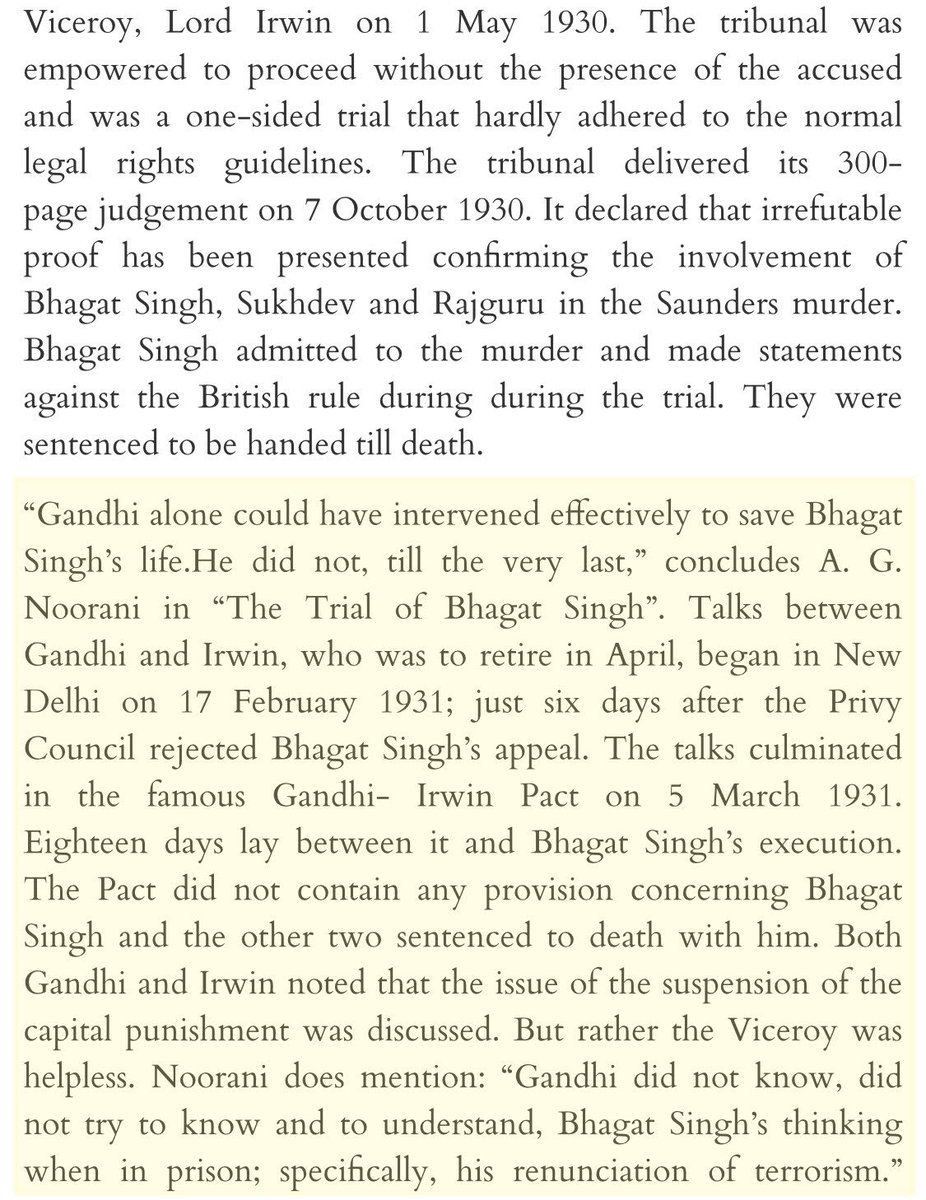
When Shaheed Bhagat Singh, at the young age of 23, was executed by the British, Mohandas Gandhi had the opportunity to intervene by rejecting the Irwin Pact with the Viceroy, potentially sparing the lives of the three youthful revolutionaries. However, Gandhi did not insist on including any clause to protect Singh, Rajguru, and Sukhdev from the gallows.Image
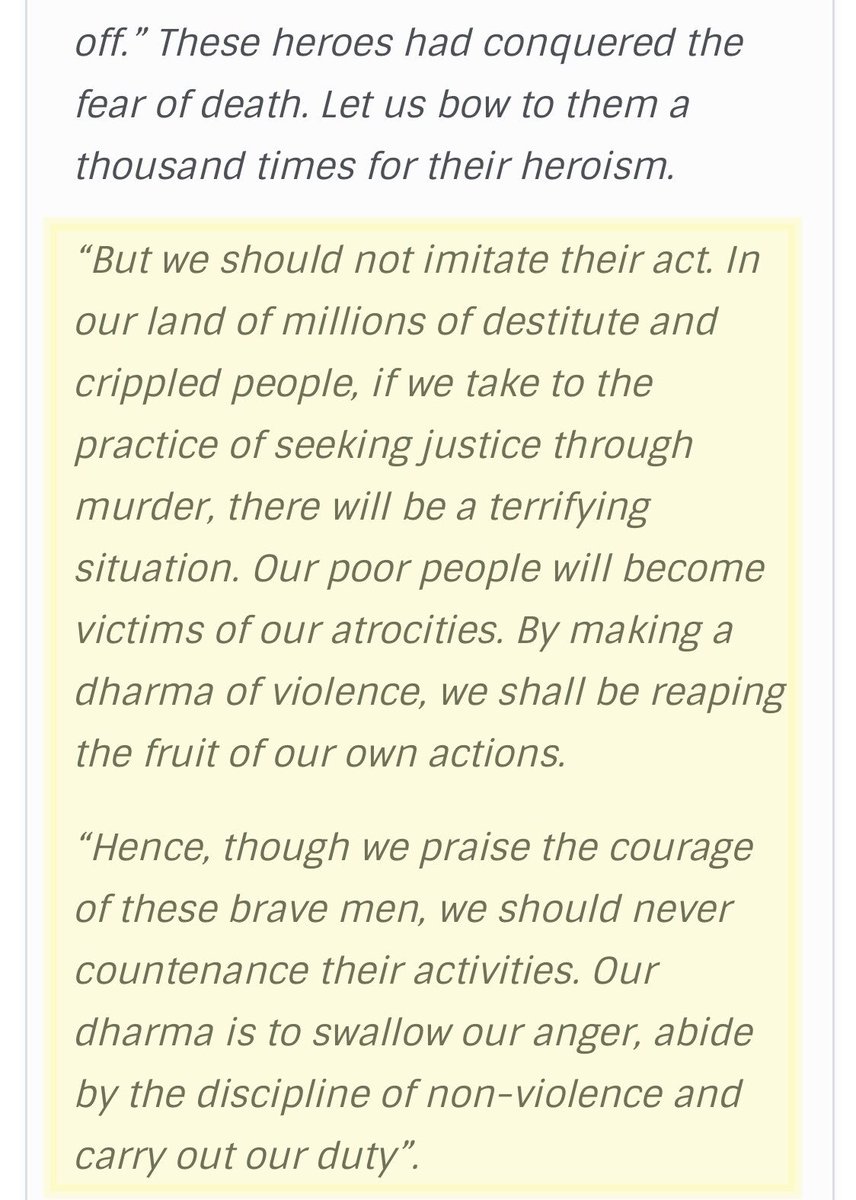
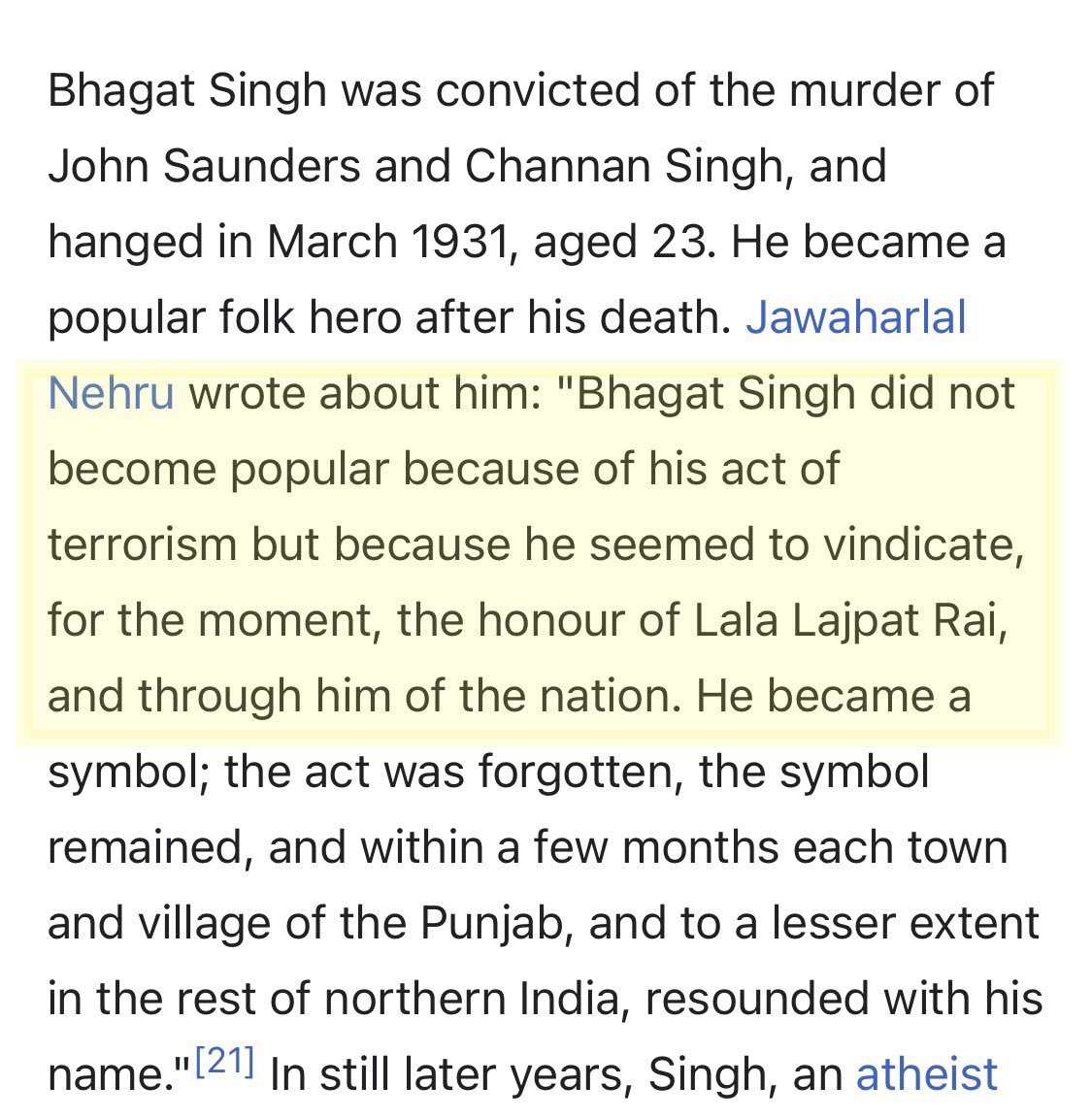
Rather than supporting their actions, Gandhi labeled them a "righteous form of violence." When the public grew outraged over the executions, the Congress scrambled to justify their stance, and Nehru was portrayed as compassionate. However, in truth, Nehru privately described Bhagat Singh's killing of Saunders as a "terrorist deed."Image
Image
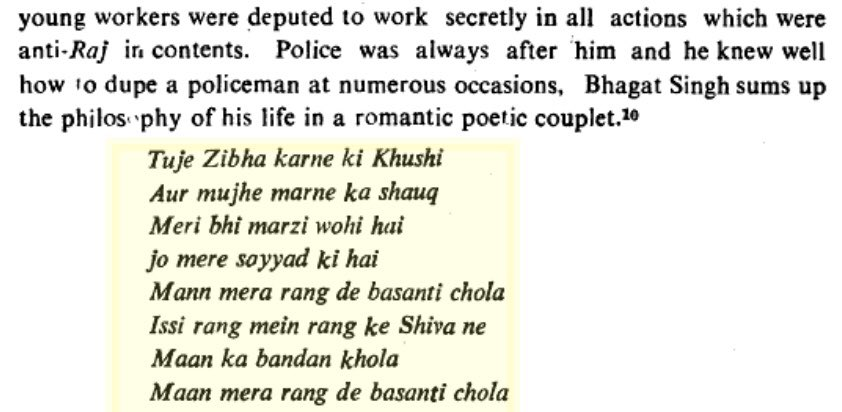
Shaheed Bhagat Singh, a legendary figure in India’s struggle for independence, had openly praised Nehru, but when the critical moment arrived to spare his life, both Gandhi and Nehru revealed their true selves by denouncing him. It was a heartbreaking betrayal of the heroic icon who embodied the spirit of “Rang de Basanti.”Image
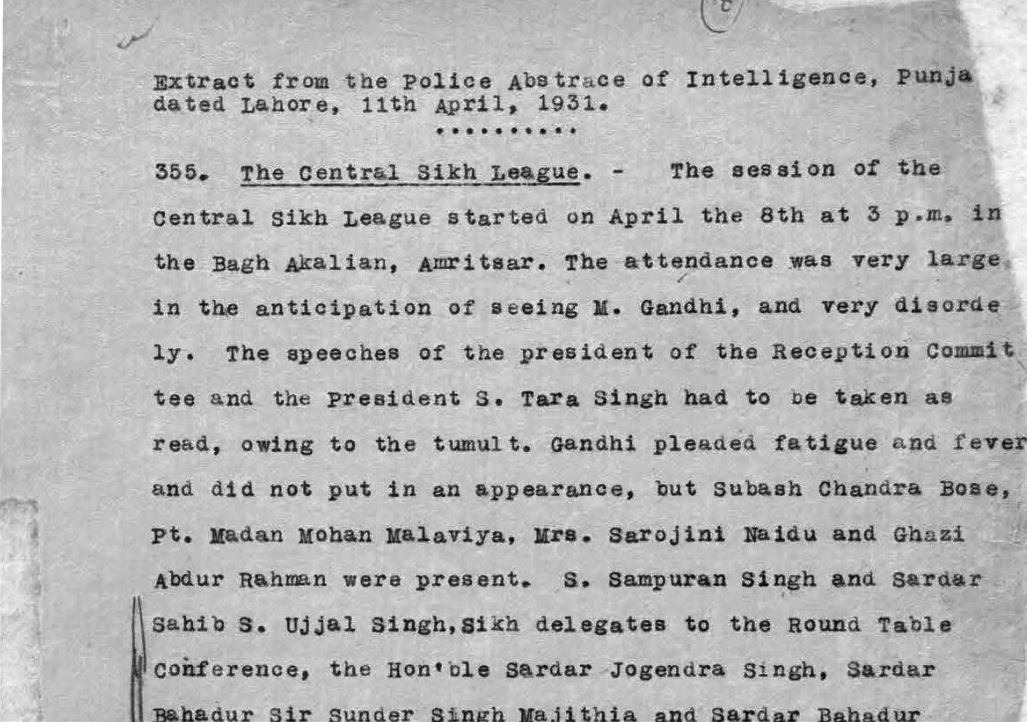
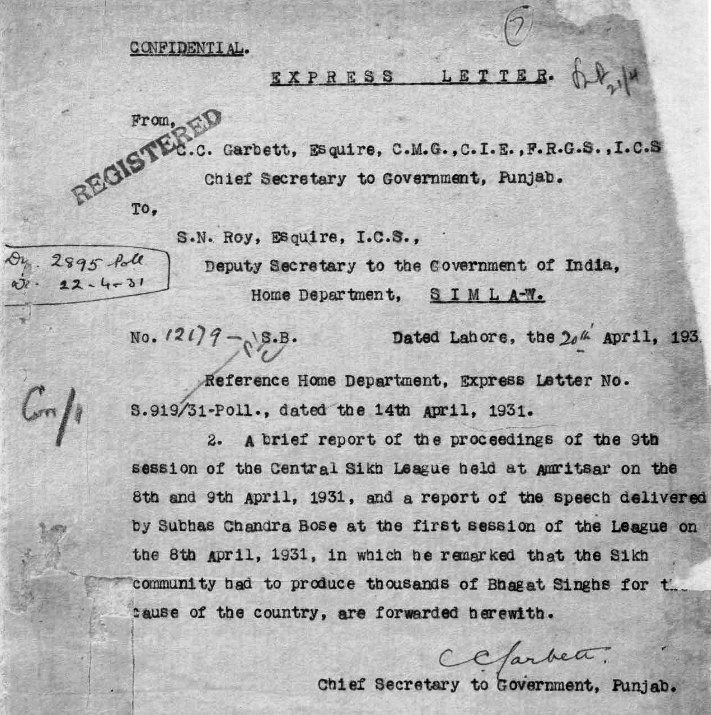
Document from 1931 underlines Subhas Bose’s moving tribute in the wake of Bhagat Singh’s martyrdom, and Mahatma Gandhi evasiveness. In fact, rather than speak up as Bose did, Gandhi “pleaded fatigue and fever and did not put in an appearance”. Image
Image
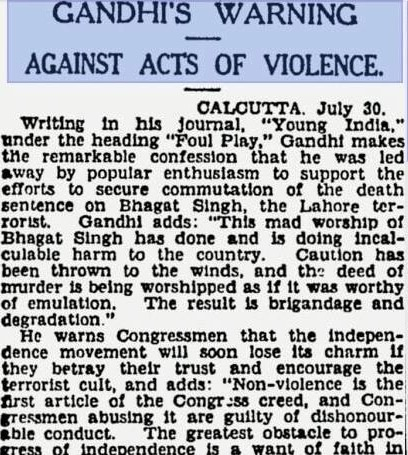
Mohandas Gandhi said "mad worship" of Bhagat Singh did "incalculable harm" to India. Image
Know your heroes, know them well.

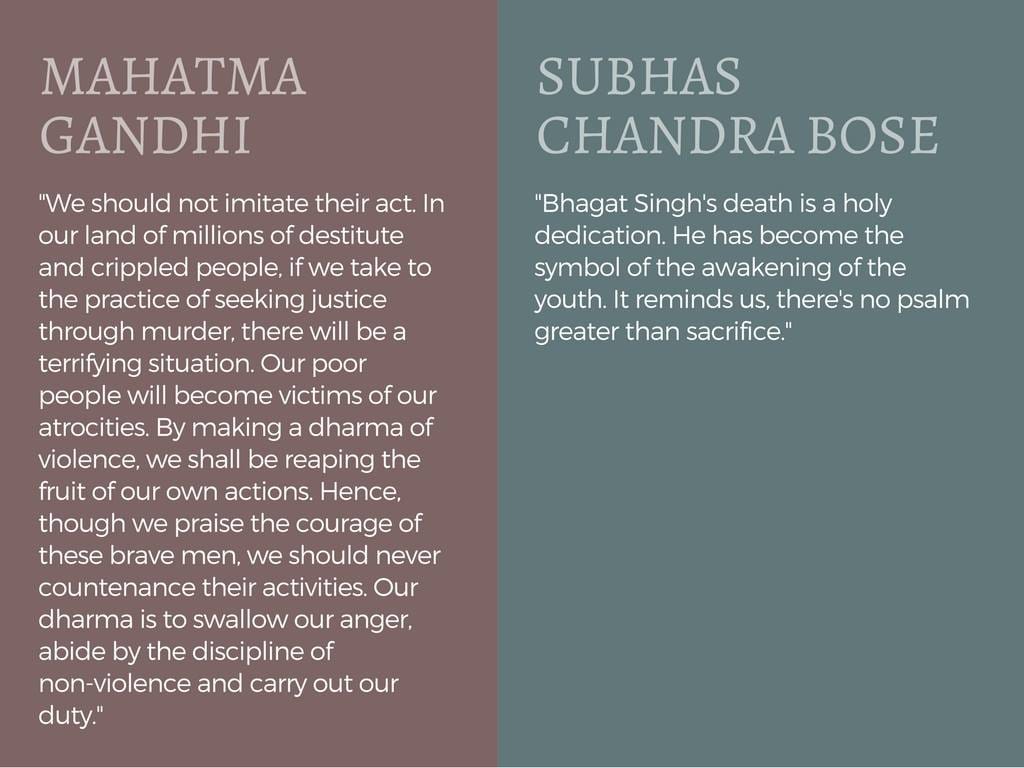
Here’s how Mahatma Gandhi and Netaji Subhas Chandra Bose reacted to the death of Bhagat Singh.

References:
Gandhi’s article in the issue of ‘Young India’ of 29 March 1931.
Gandhi & Bhagat Singh -S.R. Bakshi
Proceedings of the Indian History Congress Vol. 43 (1982), pp. 679-

Credit - @MumukshuSavitriImage

• • •

Missing some Tweet in this thread? You can try to force a refresh

 

Keep Current with Pip_Quips

Pip_Quips Profile picture

Stay in touch and get notified when new unrolls are available from this author!

Read all threads

This Thread may be Removed Anytime!

PDF

Twitter may remove this content at anytime! Save it as PDF for later use!

Try unrolling a thread yourself!

how to unroll video
  1. Follow @ThreadReaderApp to mention us!

  2. From a Twitter thread mention us with a keyword "unroll"
@threadreaderapp unroll

Practice here first or read more on our help page!

More from @Pip_Quips

Sep 27, 2025
Did you know that the 143rd Jagadguru Shankaracharya Swami Bharati Krishna Tirtha of @govardhanmath (1884–1960) participated in India's independence movement and his contribution as Shankaracharya. 🧵Image
His early life and academic education

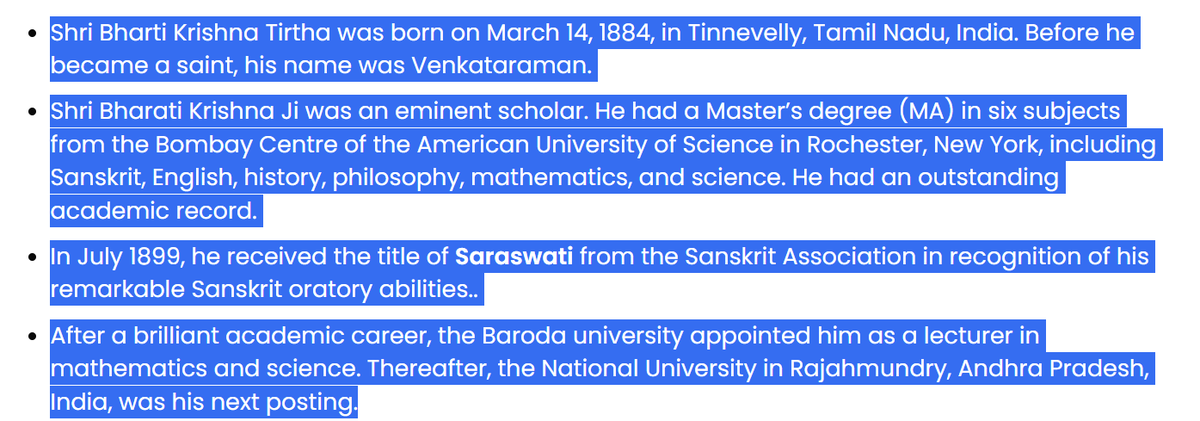
Shri Bharti Krishna Tirtha, born Venkataraman on March 14, 1884, in Tinnevelly, Tamil Nadu, India, was an eminent scholar with an MA in six subjects- Sanskrit, English, history, philosophy, mathematics, and science - from the Bombay Centre of the American University of Science in Rochester, New York.

In July 1899, the Sanskrit Association awarded him the title of Saraswati for his exceptional Sanskrit oratory skills.

After a distinguished academic career, he lectured in mathematics and science at Baroda University, followed by a posting at the National University in Rajahmundry, Andhra Pradesh, India.Image
Prof. Venkataram was initiated into the holy order of Sannyasa and named Swami Bharati Krishna Tirtha. From 1911 to 1918, he spent much time in contemplation in Sringeri's forest solitude, receiving inner revelations on the 16 Sutras from the Atharva Veda's Parisista. He claimed these Sutras could solve any mathematical problem.Image
Read 11 tweets
Sep 17, 2025
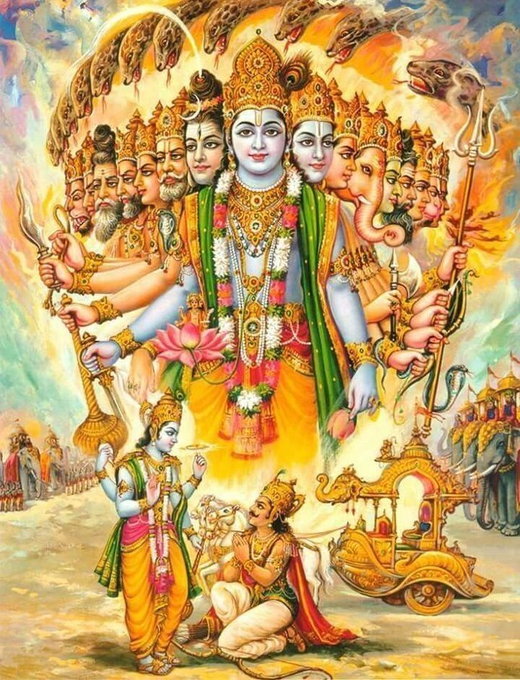
श्रीमद् भगवद्गीता अध्याय 3 श्लोक 9

यज्ञार्थात्कर्मणोऽन्यत्र लोकोऽयं कर्मबन्धन: |
तदर्थं कर्म कौन्तेय मुक्तसङ्ग: समाचर ||

परमात्मा के लिए यज्ञ-स्वरूप में कर्मों का निष्पादन करना चाहिए अन्यथा कर्म बंधन का कारण बनेंगे। इसलिए हे कुन्तीपुत्र! भगवान के सुख के लिए और फल की आसक्ति के बिना अपने नियत कर्म करो।

#narendramodibirthday #NarendraModiImage
'यज्ञार्थात् कर्मणोऽन्यत्र' गीता के अनुसार कर्तव्यमात्र का नाम 'यज्ञ' है। 'यज्ञ' शब्द के अंतर्गत यज्ञ, दान, तप, होम, तीर्थ-सेवन, व्रत, वेदाध्ययन आदि समस्त शारीरिक, व्यावहारिक और पारमार्थिक क्रियाएँ आती हैं। कर्तव्य मानकर किए जाने वाले व्यापार, नौकरी, अध्ययन, अध्यापन आदि शास्त्रविहित कर्मों का नाम भी यज्ञ है। दूसरों को सुख पहुँचाने और उनका हित करने वाले कर्म यज्ञार्थ कर्म हैं। यज्ञार्थ कर्म करने से आसक्ति शीघ्र मिटती है और कर्मयोगी के सम्पूर्ण कर्म नष्ट हो जाते हैं (गीता 4.23), अर्थात् वे कर्म बंधनकारक नहीं होते, बल्कि पूर्वसंचित कर्मों को भी समाप्त करते हैं। वास्तव में मनुष्य की स्थिति उसके उद्देश्य पर निर्भर करती है, क्रिया पर नहीं। जैसे व्यापारी का उद्देश्य धन कमाना होता है, अतः उसकी वृत्ति धन की ओर जाती है। वैसे ही यज्ञार्थ कर्म करते समय कर्मयोगी की स्थिति परमात्मा में रहती है और कर्म समाप्त होने पर उसकी वृत्ति परमात्मा की ओर जाती है।

सभी वर्णों के लिए अलग-अलग कर्म हैं। एक वर्ण के लिए स्वधर्म वही कर्म है, जो दूसरे वर्ण के लिए परधर्म हो सकता है; जैसे भिक्षा से जीवन-निर्वाह ब्राह्मण के लिए स्वधर्म है, पर क्षत्रिय के लिए परधर्म। इसी तरह निष्काम भाव से कर्तव्यकर्म करना मनुष्य का स्वधर्म है, और सकाम भाव से कर्म करना परधर्म। सभी सकाम और निषिद्ध कर्म 'अन्यत्र कर्म' की श्रेणी में आते हैं। सुख, मान, बड़ाई, आराम आदि के लिए किए गए कर्म भी अन्यत्र कर्म हैं। अतः छोटे से बड़े कर्म में साधक को सावधान रहना चाहिए कि कहीं स्वार्थ की भावना से कर्म तो नहीं हो रहा। साधक वही है, जो निरंतर सावधान रहता है। इसलिए साधक को अपनी साधना के प्रति सतर्क और जागरूक रहना चाहिए।
'अन्यत्र-कर्म' के विषय में दो गुप्त भाव:

(1) कोई व्यक्ति किसी के आने पर 'आइए, बैठिए' जैसे आदरसूचक शब्दों का प्रयोग करे, पर मन में सज्जनता का आरोप या 'ऐसा कहने से अच्छा प्रभाव पड़ेगा' का भाव रखे, तो यह स्वार्थ के कारण 'अन्यत्र-कर्म' है, यज्ञार्थ कर्म नहीं।

(2) सत्संग या सभा में कोई व्यक्ति यह सोचकर प्रश्न करे कि वक्ता और श्रोता उसे अच्छा समझेंगे, तो यह भी 'अन्यत्र-कर्म' है, यज्ञार्थ कर्म नहीं।

साधक को कर्म करना चाहिए, पर उसमें स्वार्थ या कामना का भाव नहीं होना चाहिए। कर्म का निषेध नहीं, बल्कि सकाम भाव का निषेध है। साधक को भोग या ऐश्वर्य की बुद्धि से कोई कर्म नहीं करना चाहिए, क्योंकि इसमें भोगसक्ति और कामना रहती है, जो कर्मयोग के आचरण में बाधक है। निर्वाह-बुद्धि से कर्म करने पर भी जीने की कामना रहती है, अतः इसे भी त्यागना चाहिए। साधक को केवल साधन-बुद्धि से कर्म करना चाहिए। सर्वश्रेष्ठ साधक वह है, जो अपनी मुक्ति के लिए भी कर्म न कर, केवल दूसरों के हित के लिए कर्म करे। अपना हित दूसरों के हित में ही है। दूसरों का हित अलग मानना गलती है।

अतः लौकिक व शास्त्रीय कर्म केवल लोक-हित के लिए होने चाहिए। अपने सुख या व्यक्तिगत हित के लिए किया गया कर्म बंधनकारक है। केवल अपने हित की दृष्टि रखने से व्यक्तित्व बना रहता है। इसलिए जप, चिंतन, ध्यान, समाधि भी लोक-हित के लिए ही करें। स्थूल, सूक्ष्म व कारण तीनों शरीरों से होने वाली हर क्रिया संसार के लिए हो, अपने लिए नहीं। 'कर्म' संसार के लिए है, और संसार से संबंध-विच्छेद होने पर परमात्मा के साथ 'योग' अपने लिए है। यही कर्मयोग है।
Read 8 tweets
Sep 15, 2025
Arundhati Roy is a leftist termite. She knows how to twist and turn the historical facts that suits her agenda.

History of the 1961 Liberation of Goa

Goa, the first Indian territory colonized by Europeans and the last to gain freedom, was under Portuguese control from 1510. Over 450 years of oppressive rule involved religious persecution, cultural suppression, and brutality against the Hindu majority. Portugal retained Goa after India's 1947 independence, until military intervention in 1961 secured its liberation.

@ARanganathan72Image
The Portuguese Conquest and Initial Atrocities

a ) Seizure of Goa in 1510

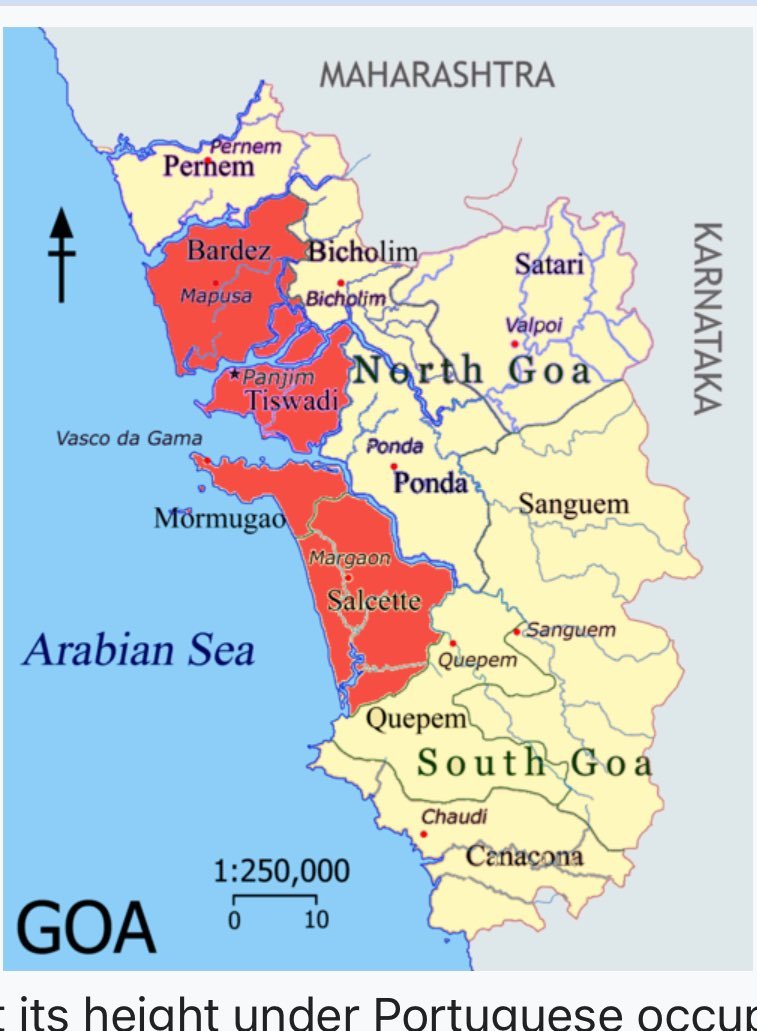
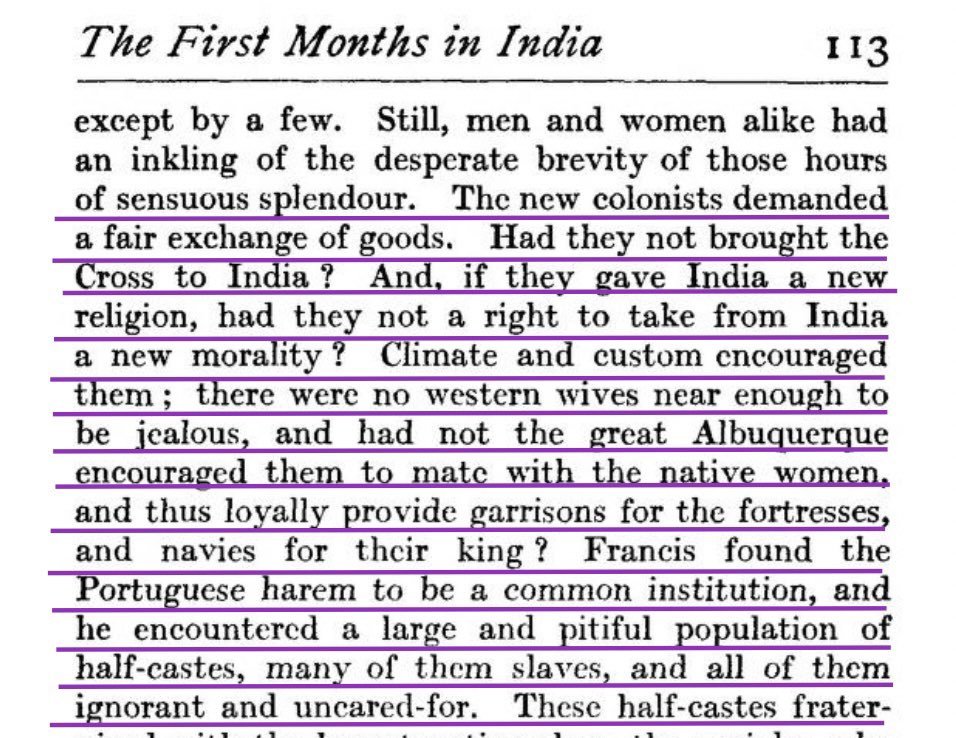
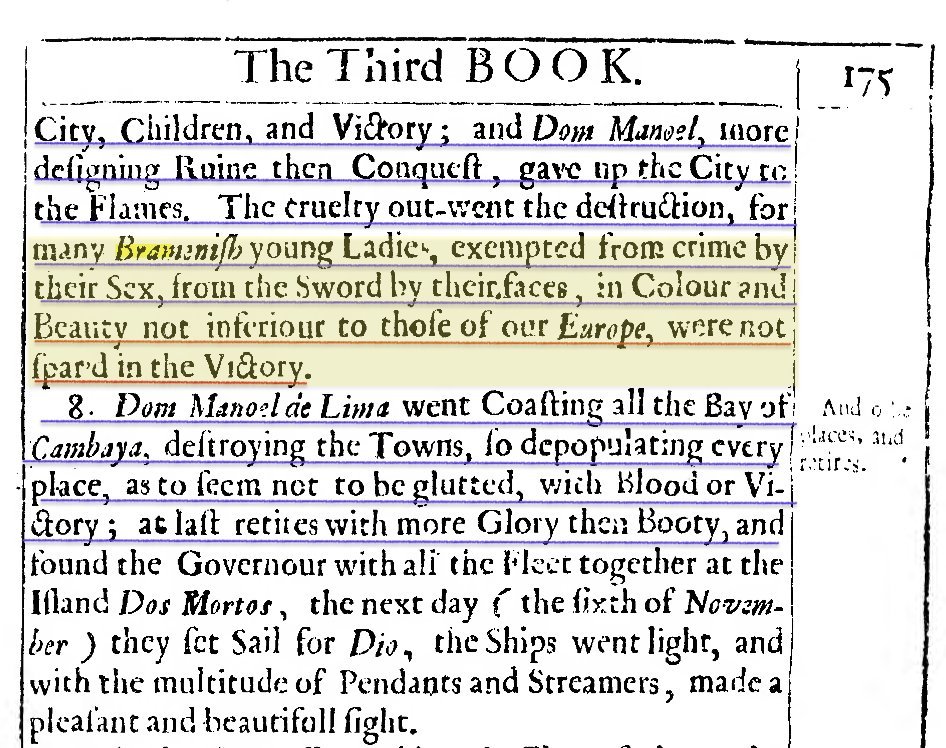
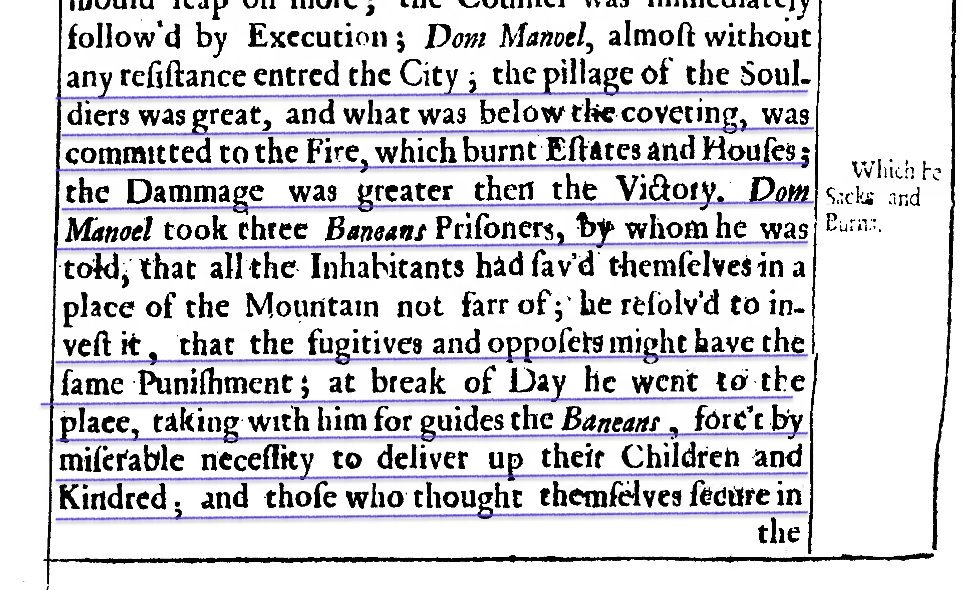
The Portuguese invasion commenced under Afonso de Albuquerque, who captured the island of Tiswadi (Old Goa) on November 25, 1510. Upon entry, the Muslim population was massacred, while Hindus faced systematic oppression.

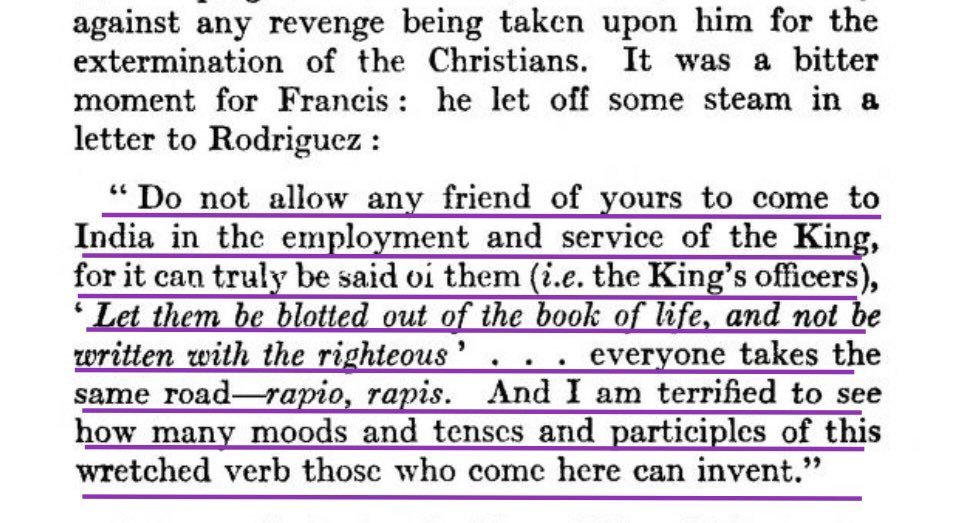
Albuquerque encouraged the rape of Hindu women, particularly Brahmin women, to produce offspring for garrisoning forts and crewing ships, reflecting a policy of sexual violence as a tool of conquest.

Screenshot credit - @MumukshuSavitriImage
Image
b ) Destruction of Hindu Temples and Cultural Erasure

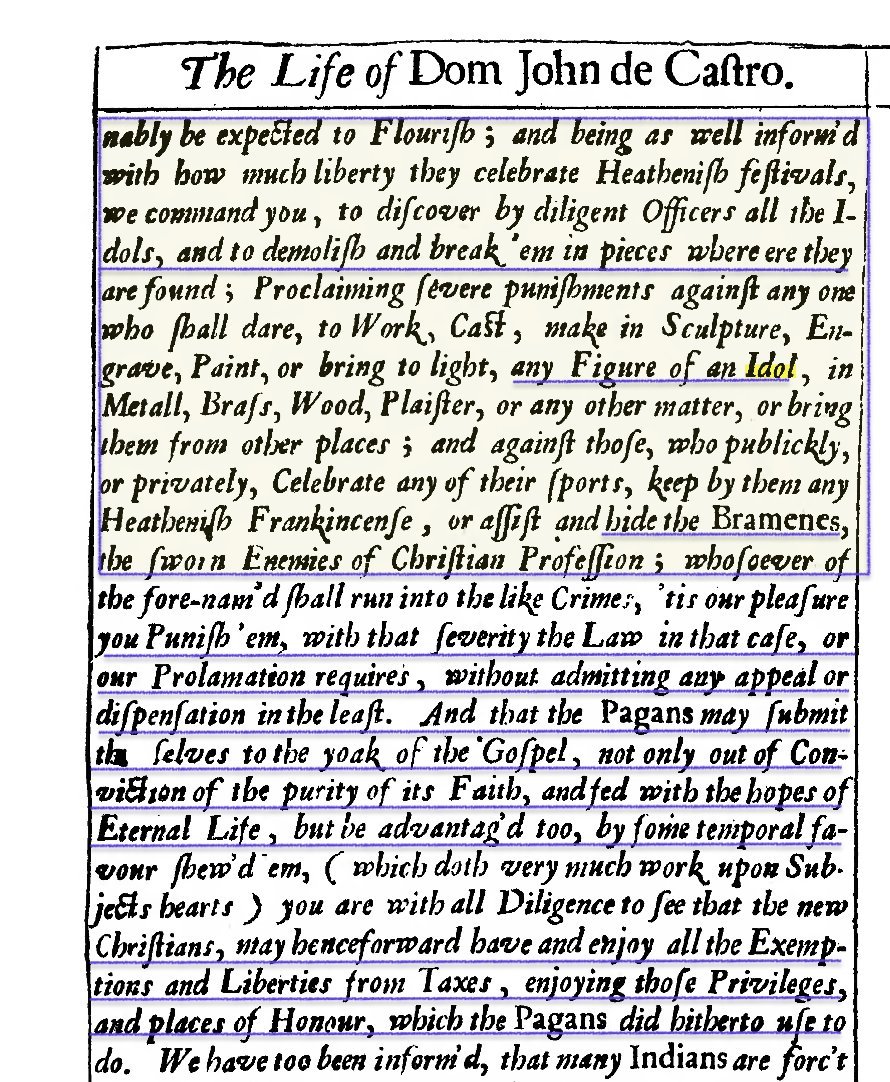
In the initial years, over 600 Hindu temples were demolished in the "Old Conquests" (Tiswadi, Bardez, and Salcete), as documented by Portuguese missionaries.

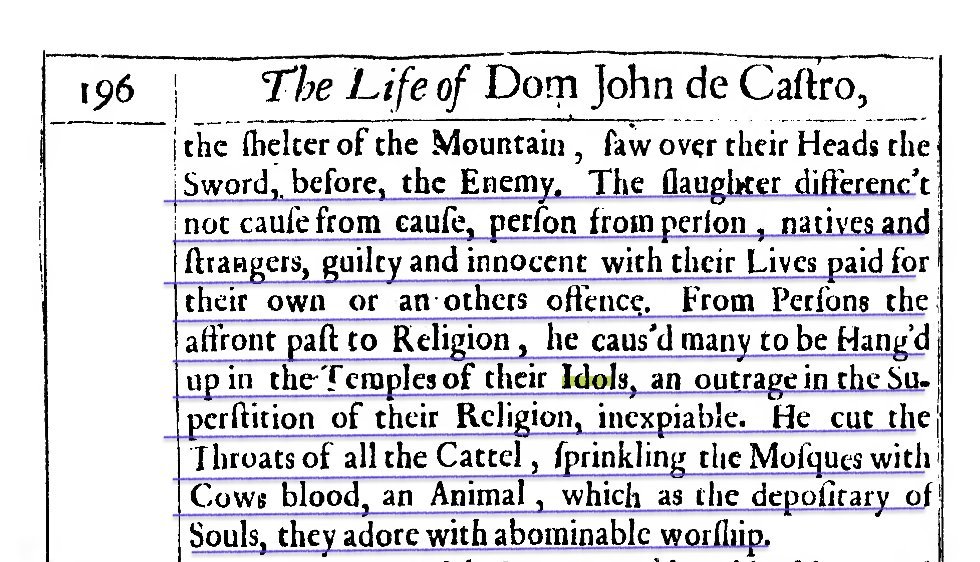
By 1541, the policy of "Rigour of Mercy" mandated the destruction of Hindu idols and temples, with their lands transferred to Christian institutions.

Temples were defiled with cow's blood to desecrate sacred sites.

A notable example is the Saptakoteshwar temple, originally the Kadamba dynasty's royal deity, desecrated by Islamic invaders in the 14th century, rebuilt by Vijayanagara general Madhava Mantri in 1367, and destroyed again by the Portuguese in 1540.

Screenshot credit - @MumukshuSavitriImage
Image
Image
Image
Read 10 tweets
Aug 15, 2025
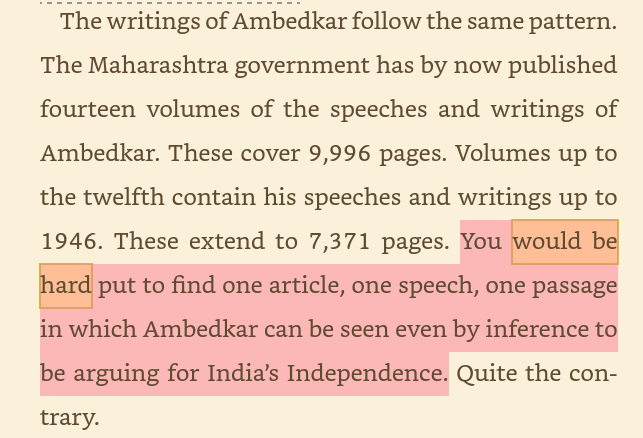
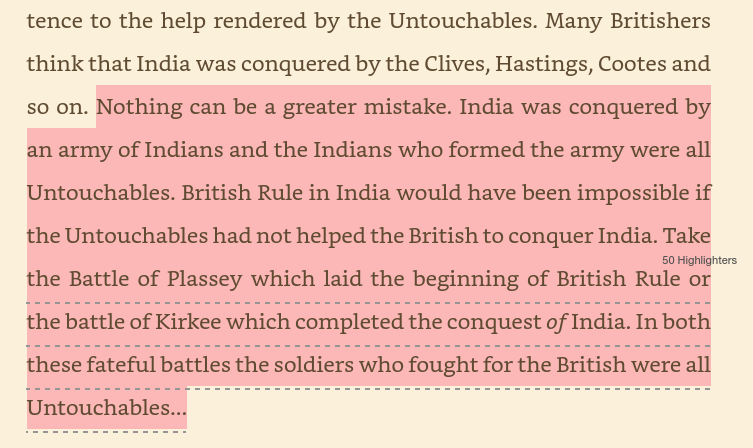
Role of Ambedkar in Independence.

“British Rule in India would have been impossible if the Untouchables had not helped the British to conquer India” -B.R Ambedkar

Happy #IndependenceDay2025

#IndependenceDay #IndependenceDayIndia

@anubhavgupta_ji @neha_laldas @thatindicmonk @atsshow7 @UnreservedMERIT @Bhairaviyogi @ews_army @AbhinayWithYou @_Saffron_Girl_Image
Image
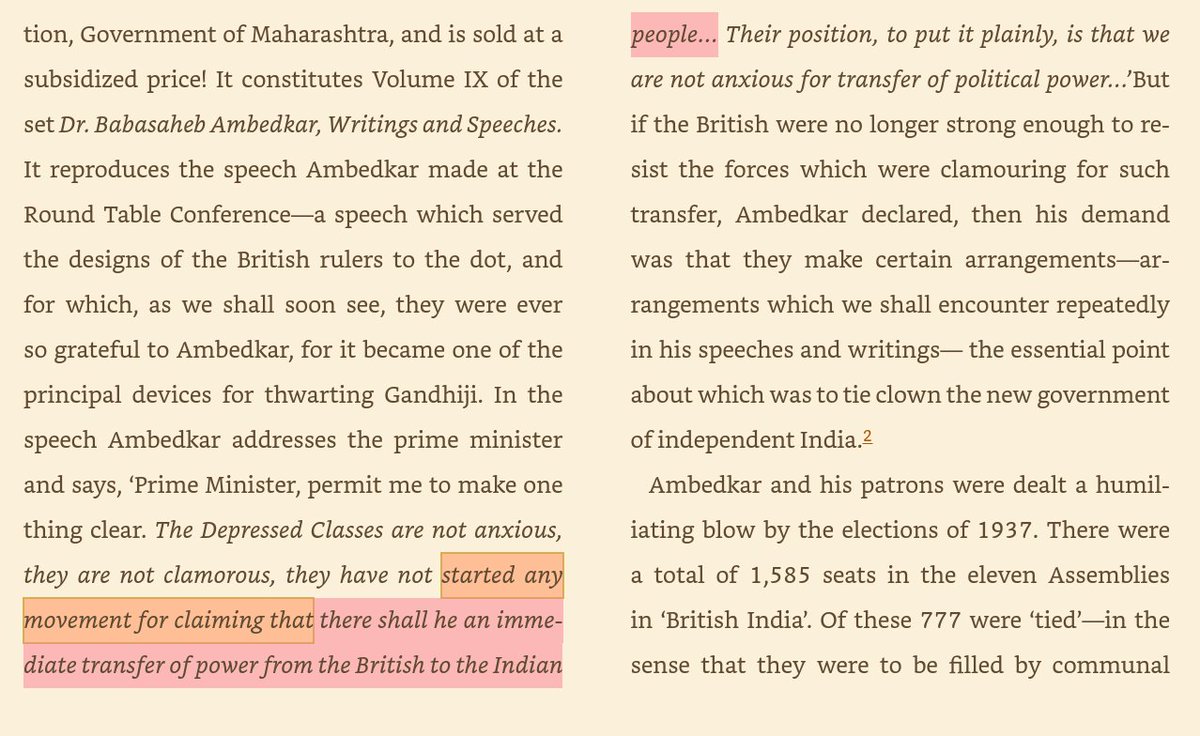
Britishers were grateful to Ambedkar because :

“The depressed classes have not started any movement for immediate transfer of power from the British to the Indian people”

-Babasaheb Ambedkar

Happy #IndependenceDay2025 . Image
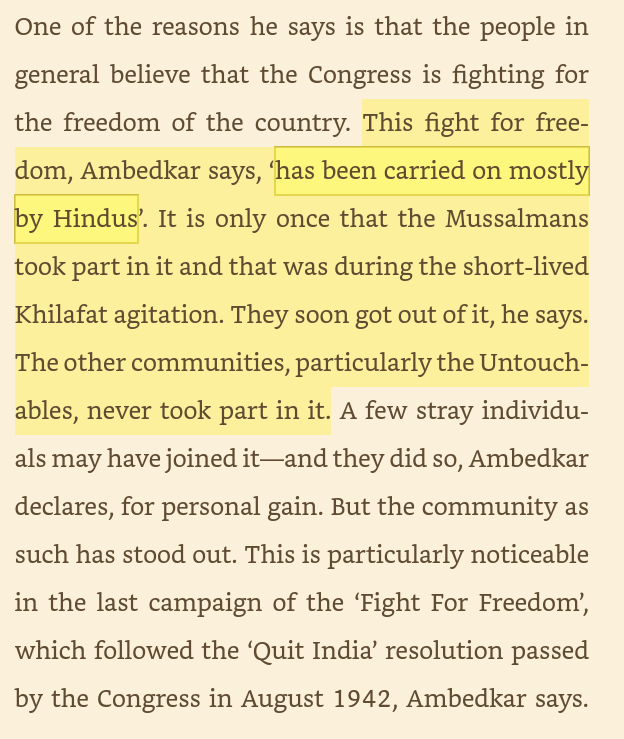
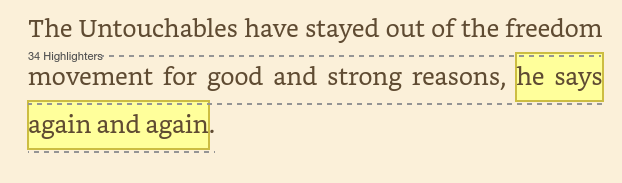
“The fight for Freedom was carried out mostly by HINDUS. Muslims took part only once & untouchables never took part in it.”

-Babasaheb Ambedkar

Happy #IndependenceDay2025 to Hindus. Image
Image
Read 9 tweets
Aug 4, 2025
Read this thread 🧵on #ShibuSoren

Former Jharkhand CM #ShibuSoren, known as "Dishom Guru," died at 81. A key Indian politician and JMM founder, born January 11, 1944, in Ramgarh, Bihar (now Jharkhand), he passed away on August 4, 2025, in Delhi. He served as Jharkhand CM and Union Coal Minister under UPA.

How clean was he as a politician?

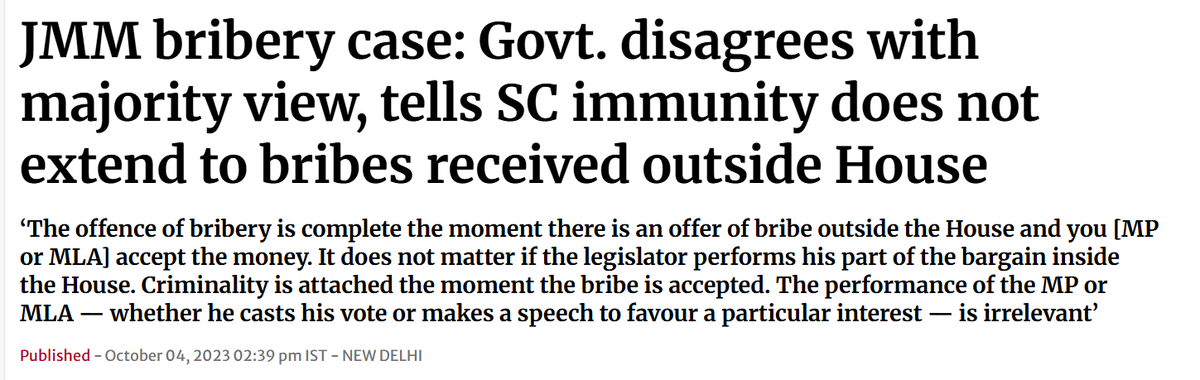
1 ) Bribery Scandal (JMM MPs Case, 1993): Shibu Soren, JMM leader, and other MPs allegedly took bribes to support the P.V. Narasimha Rao-led Congress government in a no-confidence vote.

The Supreme Court granted immunity in 1998 under Article 105(2), but a 2023 seven-judge bench review questioned this, with the government arguing bribery is a crime regardless of location.

LINK - thehindu.com/news/national/…Image
2 ) Murder of Private Secretary Shashi Nath Jha (1994):

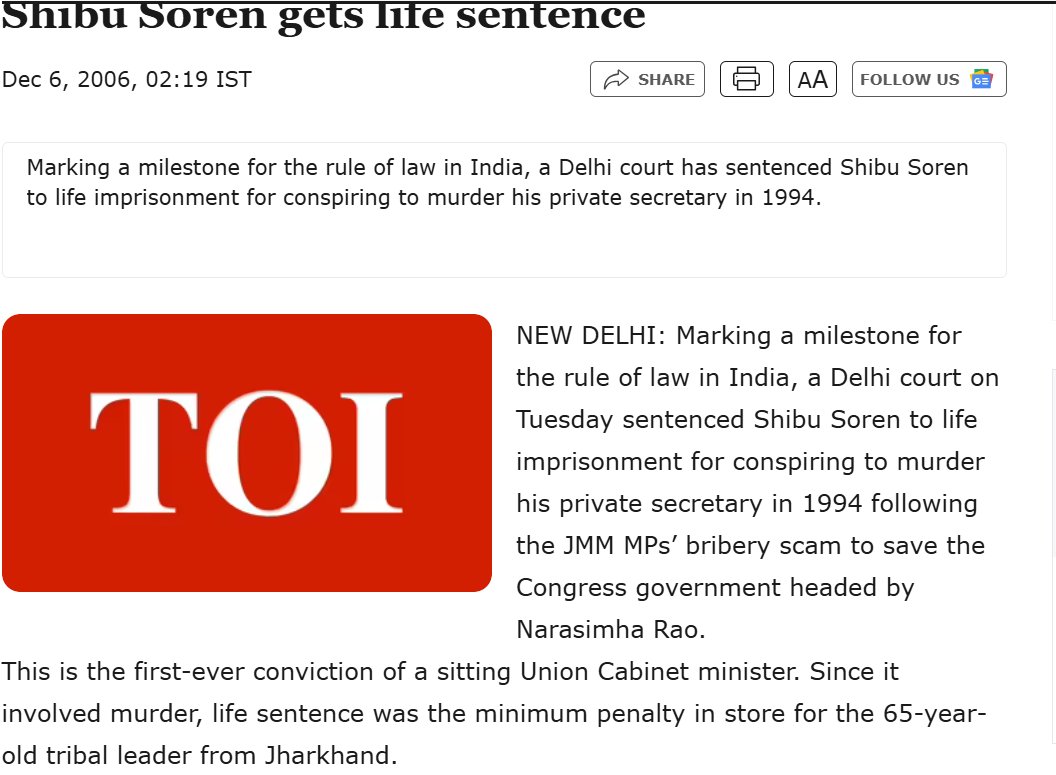
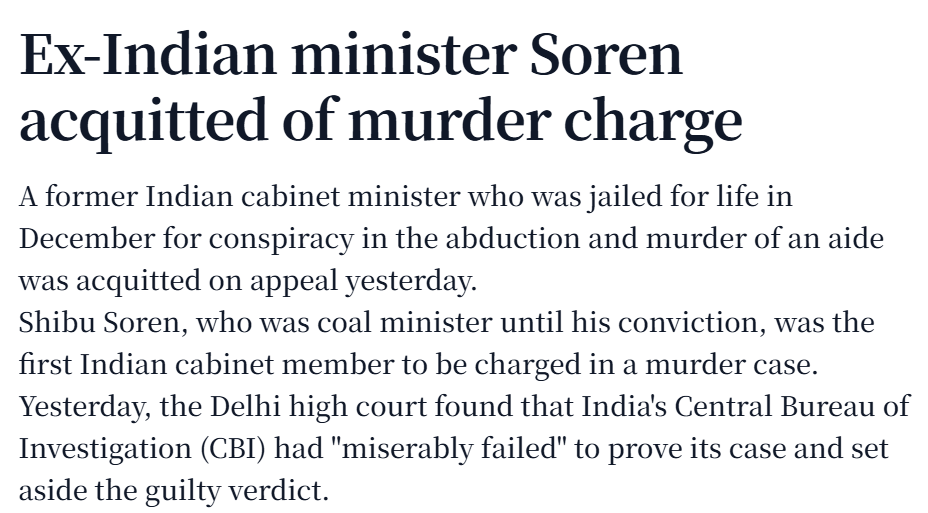
Soren was convicted on November 28, 2006, by a Delhi court for conspiring to kidnap and murder his former secretary, Shashi Nath Jha, abducted on May 22, 1994, and found dead near Ranchi. The motive involved Jha's knowledge of the JMM bribery scandal and alleged blackmail. Soren received a life sentence on December 5, 2006, and resigned as Union Coal Minister.2 )

LINK - timesofindia.indiatimes.com/india/shibu-so…Image
3 ) Acquittal in Shashi Nath Jha Murder Case (2007):

On August 23, 2007, the Delhi High Court acquitted Soren, overturning the trial court's decision due to insufficient evidence, flawed forensic analysis (e.g., skull superimposition test), and unreliable eyewitness accounts. The Supreme Court upheld the acquittal in April 2018.

Seems "Every murderer has a future."

LINK - thedailystar.net/news-detail-11…Image
Read 7 tweets
Jul 26, 2025
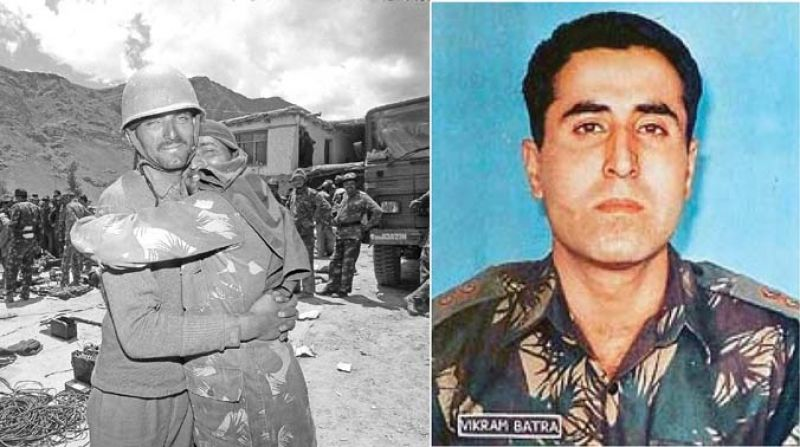
🧵Episode detailing Captain Vikram Batra's sacrifice for the nation.

Source: A Soldier's Diary: Kargil, The Inside Story by Harinder Baweja

Let's begin -

1 ) "Col. Yogesh Kumar Joshi was ecstatic upon receiving the victory message from Capt. Vikram Batra and Capt. Sanjeev Jamwal. He started moving towards the peak because, before going for the assault both the young officers had promised to have their morning cup of tea at Point 5140 together. A wave of joy had spread across the brigade and the Army headquarters in New Delhi. It was a historical achievement for the Indian Army as well as for India.
#KargilVijayDiwas2025Image
2 ) "The chief of the Army, Gen. V.P. Malik, personally telephoned Vikram for their battalion’s remarkable feat. This was a decisive victory for the 13 Jammu and Kashmir (JAK) Rifles. Col. Joshi’s eyes were moist as he said, “Not a single soldier died in the operation. The victory of peak 5140 would make a textbook on mountain warfare for the manner in which the operation was carried out. A peak at 17,000 feet was literally snatched from the jaws of a powerful enemy... This is God’s grace and the perfect execution of an operation by the youngsters who are the heart, mind and soul of the Army...”
3 ) "After the capture of Point 5140, the troops (led by Vikram and Capt. Jamwal) had to station there for a few days, as there were chances of a counter-attack by the enemy. They stayed at the top till June 26 to strengthen the defence and reshape the bunkers, and then returned to the base camp to rest and re-energise for a few days. They could not rest for more than three to four days, as the condition on other peaks was worsening.
Read 10 tweets

Did Thread Reader help you today?

Support us! We are indie developers!


This site is made by just two indie developers on a laptop doing marketing, support and development! Read more about the story.

Become a Premium Member ($3/month or $30/year) and get exclusive features!

Become Premium

Don't want to be a Premium member but still want to support us?

Make a small donation by buying us coffee ($5) or help with server cost ($10)

Donate via Paypal

Or Donate anonymously using crypto!

Ethereum

0xfe58350B80634f60Fa6Dc149a72b4DFbc17D341E copy

Bitcoin

3ATGMxNzCUFzxpMCHL5sWSt4DVtS8UqXpi copy

Thank you for your support!

Follow Us!

:(