
People with 5ARD are male, not female
In defence of Semenya et al, many argue:
1. athletes with 5ARD are female;
2. features associated with 5ARD are normal female variation;
3. these athletes should be included in female sports.
The first claim is incoherent.
In defence of Semenya et al, many argue:
1. athletes with 5ARD are female;
2. features associated with 5ARD are normal female variation;
3. these athletes should be included in female sports.
The first claim is incoherent.

To understand 5ARD, let's look at healthy reproductive development.
Both male and female development are well-understood.
Both male and female development are well-understood.

Male development
1. Y chromosome carrying functional SRY that directs testes development
2. testes produce hormones, notably testosterone (T)
3. T first drives male internal genitalia development
4. T>DHT conversion drives male external genital development
1. Y chromosome carrying functional SRY that directs testes development
2. testes produce hormones, notably testosterone (T)
3. T first drives male internal genitalia development
4. T>DHT conversion drives male external genital development
Female development
1. No Y chromosome and no SRY, so ovarian development is triggered
2. low/no testosterone production from ovaries
3. female internal genitalia can develop in low/no T environment
4. female external genitalia can develop in low DHT environment
1. No Y chromosome and no SRY, so ovarian development is triggered
2. low/no testosterone production from ovaries
3. female internal genitalia can develop in low/no T environment
4. female external genitalia can develop in low DHT environment
I often describe reproductive development as:
Sequential | structures develop in a known chronological order
Coordinated | reproductive anatomy develops as a system, with each part linked mechanistically to others
Sequential | structures develop in a known chronological order
Coordinated | reproductive anatomy develops as a system, with each part linked mechanistically to others
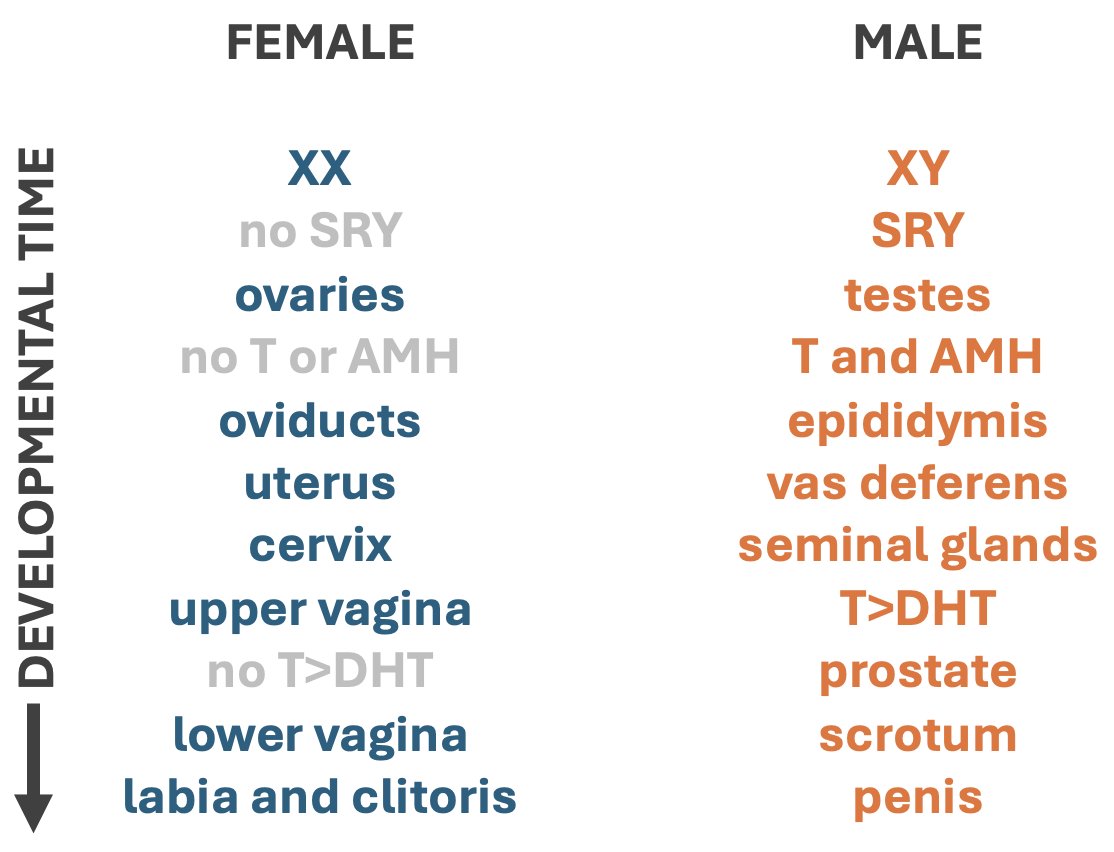
The "cluster account" of sex attempts to classify individuals by the sum of their parts.
"These Male Bits plus Those Female Bits equals This Sex."
This completely ignores developmental biology, which describes the sequential, coordinated development of a functional system.
"These Male Bits plus Those Female Bits equals This Sex."
This completely ignores developmental biology, which describes the sequential, coordinated development of a functional system.
So given a functional account of sex that actually reflects biology, let's look at the disorder of sex development that is 5ARD.
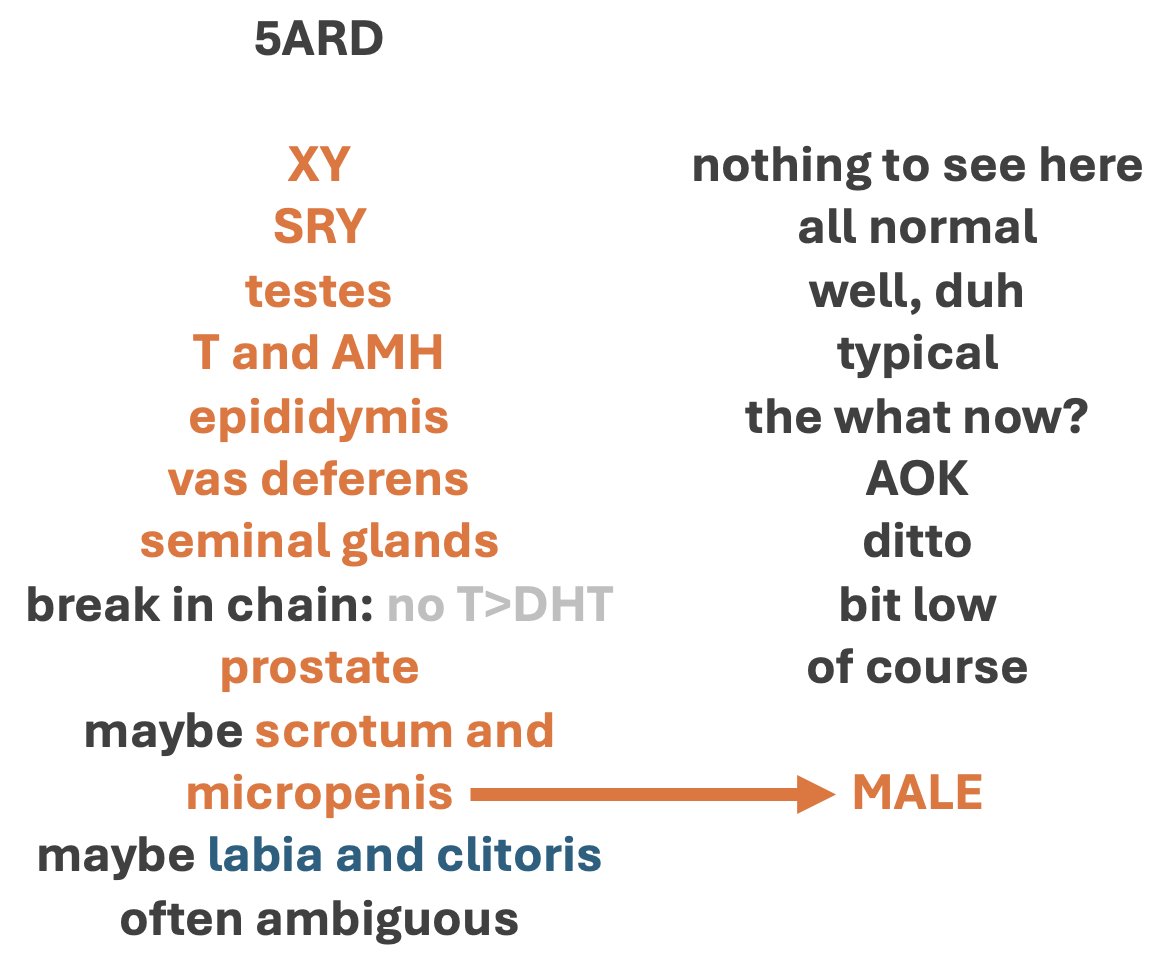
The sequential development of 5ARD is mapped against healthy sex development here.
The sequential development of 5ARD is mapped against healthy sex development here.
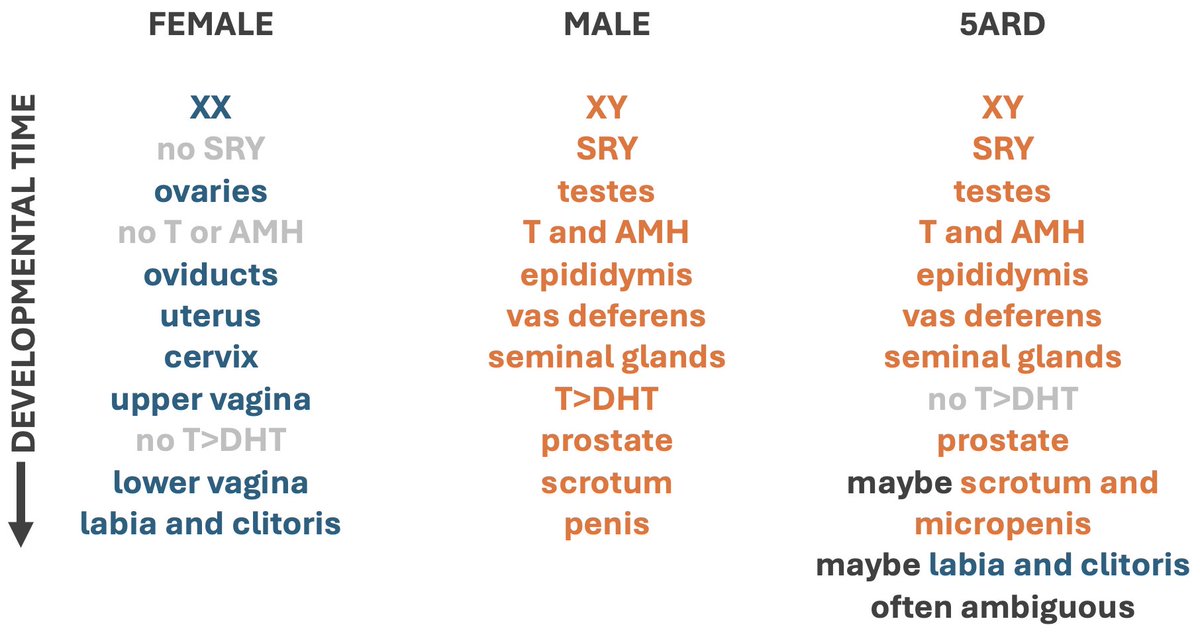
Keen eyes will spot that I omitted the word "coordinated" when describing 5ARD.
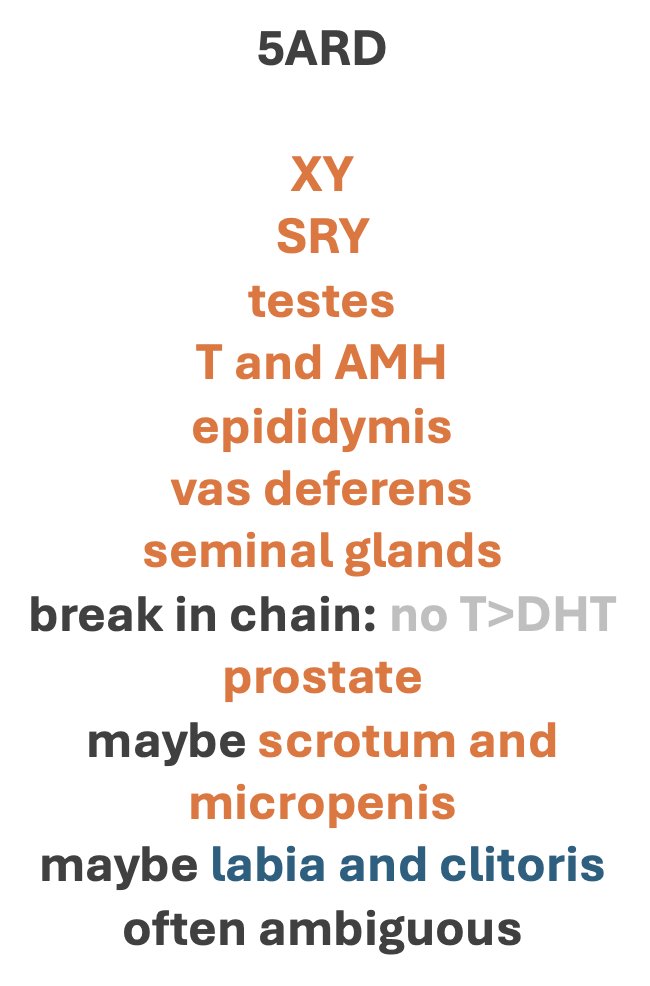
That's because it's not coordinated. There has been a break in the chain of development.
And that's because people with 5ARD are missing the enzyme needed in a healthy male to convert T>DHT to make a penis.
That's because it's not coordinated. There has been a break in the chain of development.
And that's because people with 5ARD are missing the enzyme needed in a healthy male to convert T>DHT to make a penis.
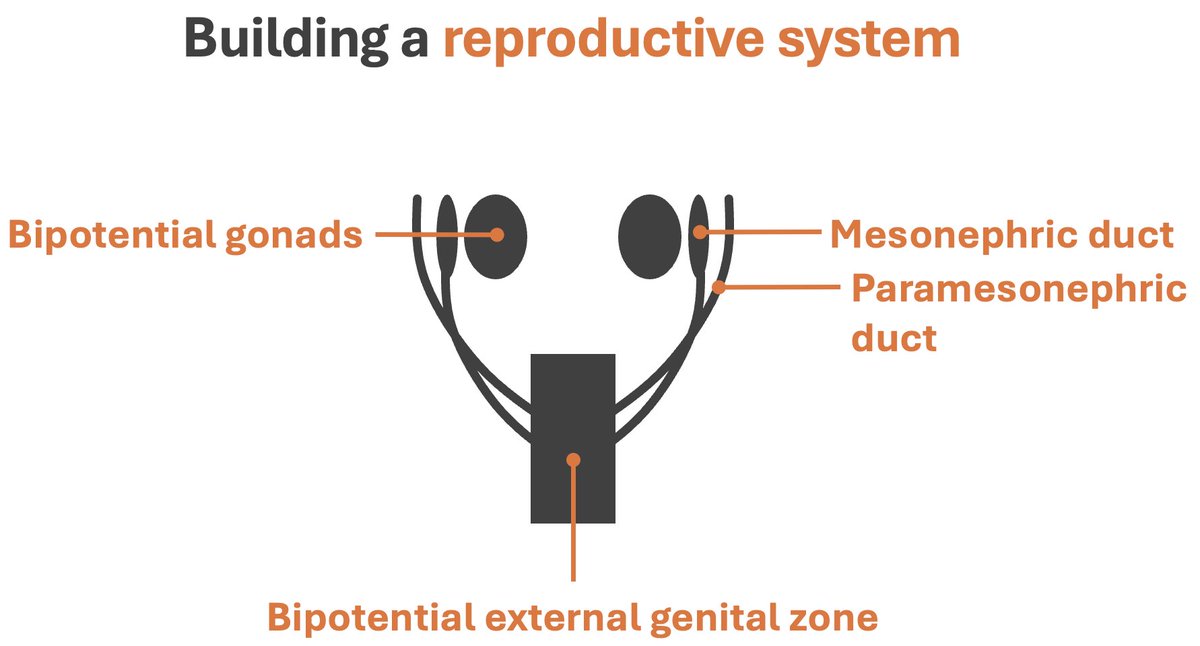
External genitalia differentiate from a bipotential tissue field.
A DHT signal (in healthy males) pushes the development of that field towards a penis and scrotum.
No DHT signal (in healthy females) pushes the development of that field towards a clitoris and labia.
A DHT signal (in healthy males) pushes the development of that field towards a penis and scrotum.
No DHT signal (in healthy females) pushes the development of that field towards a clitoris and labia.
People with 5ARD have mutations in a gene called SRD5A2 and this means the enzyme converting T>DHT doesn't work properly.
As a result, people with 5ARD have defects in external genital development. We say they are undervirilised (virile = manly 😉) compared to healthy males.
As a result, people with 5ARD have defects in external genital development. We say they are undervirilised (virile = manly 😉) compared to healthy males.
People with 5ARD might have some, low or no DHT.
This means that external genital field might develop as clearly male but with issue like a micropenis, but it might also develop to look like that of a female, or ambiguous between the two.
This means that external genital field might develop as clearly male but with issue like a micropenis, but it might also develop to look like that of a female, or ambiguous between the two.
Consider a person with 5ARD and male external genitalia.
Now work backwards along their developmental pathway. Mostly typical, except for the mutation that has affected penis growth.
Of course, as a male, they have XY chromosomes and an SRY gene and testes and so on...
Now work backwards along their developmental pathway. Mostly typical, except for the mutation that has affected penis growth.
Of course, as a male, they have XY chromosomes and an SRY gene and testes and so on...
What about those argued to be female?
Well, they've got a ton of stuff wrong with them.
Their genetic information is all backwards. How odd.
And their hormones? OK, they are up in male range and that's unusual for a female.
And their anatomy? Apart from their external genitals, it's all atypical, unusual, aberrant.
Well, they've got a ton of stuff wrong with them.
Their genetic information is all backwards. How odd.
And their hormones? OK, they are up in male range and that's unusual for a female.
And their anatomy? Apart from their external genitals, it's all atypical, unusual, aberrant.
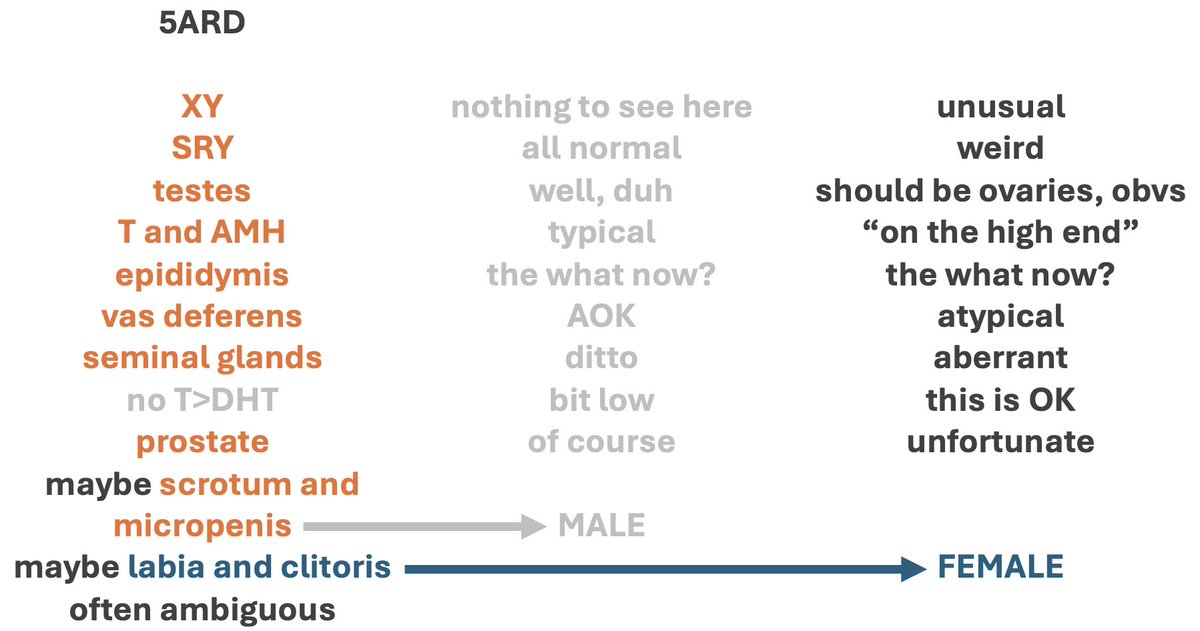
None of the "female" schema makes any sense in terms of developmental biology.
Why would you anchor the endpoint metric as "sex" and therefore have to label everything else about the system "wrong", rather than acknowledge that the endpoint metric may be the issue here?
Especially when you know precisely why that endpoint metric has emerged.
Why would you anchor the endpoint metric as "sex" and therefore have to label everything else about the system "wrong", rather than acknowledge that the endpoint metric may be the issue here?
Especially when you know precisely why that endpoint metric has emerged.
But further, advocates of 5ARD as "female" must face up to the implications of their claims.
A male with 5ARD has a mutation in SRD5A2, and this gene is required for penis growth. This is simple, and maps perfectly onto well-established developmental processes.
"This is the chain, here is the break, this is the result."
A male with 5ARD has a mutation in SRD5A2, and this gene is required for penis growth. This is simple, and maps perfectly onto well-established developmental processes.
"This is the chain, here is the break, this is the result."
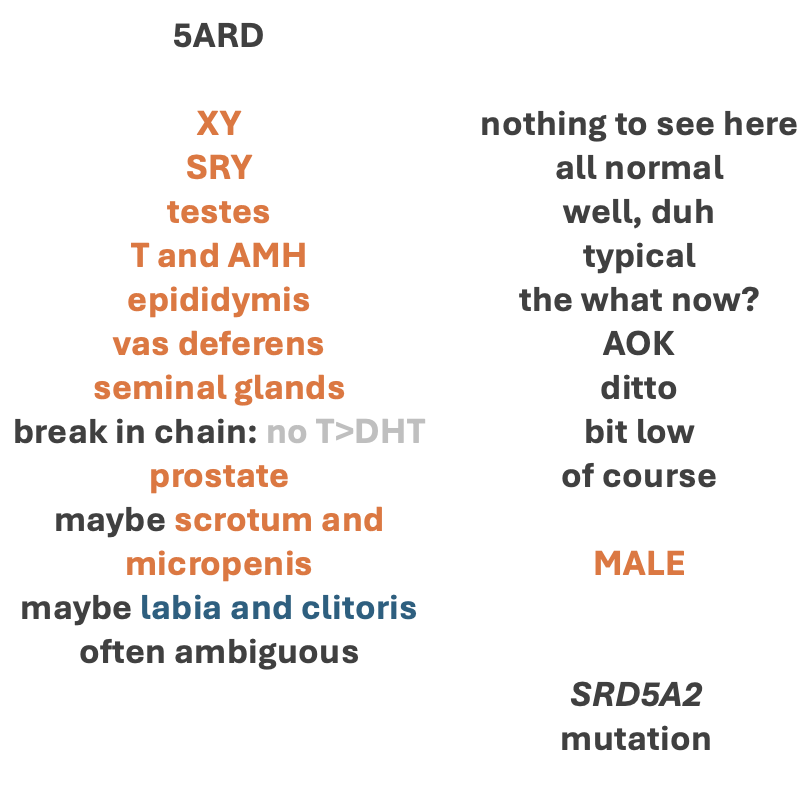
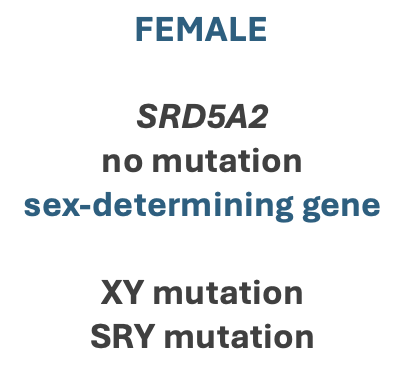
A female with 5ARD however? The genetics world will be shook, I tell you.
Because she can't have a mutation in SRD5A2, can she? After all, the sequence she carries is perfectly concordant with being female.
Further, SRD5A2 must now be considered the master switch of sex determination in humans.
Because she can't have a mutation in SRD5A2, can she? After all, the sequence she carries is perfectly concordant with being female.
Further, SRD5A2 must now be considered the master switch of sex determination in humans.
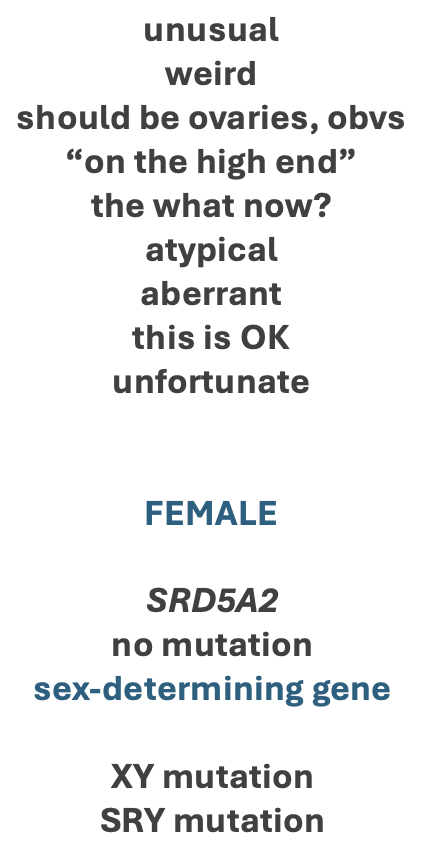
Not only that.
Possession of what was previously thought to be a perfectly healthy XY karyotype is now a chromosome defect, and possession of what was previously thought to be a perfectly healthy SRY sequence is now a mutation.
Possession of what was previously thought to be a perfectly healthy XY karyotype is now a chromosome defect, and possession of what was previously thought to be a perfectly healthy SRY sequence is now a mutation.
The special pleading is bonkers.
What they desperately try to argue is female with a ton of disparate features is actually, quite simply, male with a vulva.
Learn some dev bio, would be my suggestion.
What they desperately try to argue is female with a ton of disparate features is actually, quite simply, male with a vulva.
Learn some dev bio, would be my suggestion.
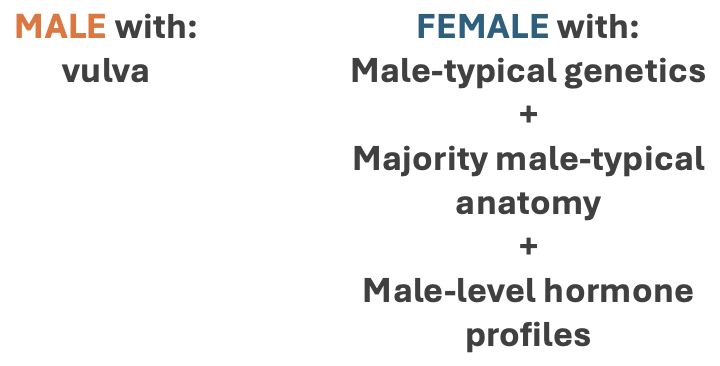
Even further, according to their schema, Semenya doesn’t, in fact, have 5ARD.
😂
😂
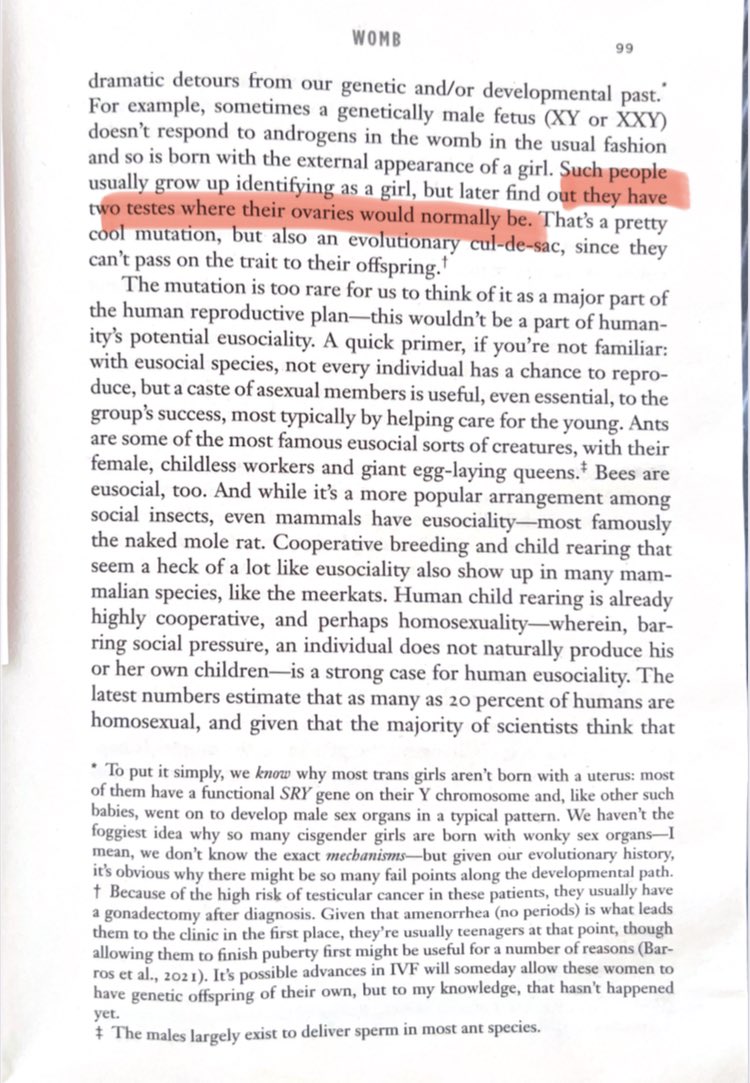
I’m reminded of this passage from Eve by Cat Bohannon.
Genetically male, but external appearance of girl. “They have two testes where their ovaries would normally be”.
Their ovaries wouldn’t normally be anywhere. Ovaries are not part of their developmental sequence.
The chain break is downstream of them being genetically male and having testes.
And the chain break has resulted in them having a vulva where their penis would normally be.
Genetically male, but external appearance of girl. “They have two testes where their ovaries would normally be”.
Their ovaries wouldn’t normally be anywhere. Ovaries are not part of their developmental sequence.
The chain break is downstream of them being genetically male and having testes.
And the chain break has resulted in them having a vulva where their penis would normally be.
• • •
Missing some Tweet in this thread? You can try to
force a refresh






