🚨🇺🇸📉 Stock/bond markets are crashing worldwide, thanks to Trump’s tariffs and trade wars.
While tariffs can sometimes be useful... one needs to know when to tariff, what to tariff and how much to tariff.
🔎 Let’s explore the science and art of tariffs.
@Kanthan2030
While tariffs can sometimes be useful... one needs to know when to tariff, what to tariff and how much to tariff.
🔎 Let’s explore the science and art of tariffs.
@Kanthan2030
🤔💰 Mercantilism of the 18th/19th century not applicable anymore
📊 Tariffs are taxes which make imported goods more expensive, thus helping domestic industries capture a bigger market share.
👉This is the essence of mercantilism, which was widely adopted by the Dutch, British, French and even Americans a couple of centuries ago.
2/25
📊 Tariffs are taxes which make imported goods more expensive, thus helping domestic industries capture a bigger market share.
👉This is the essence of mercantilism, which was widely adopted by the Dutch, British, French and even Americans a couple of centuries ago.
2/25
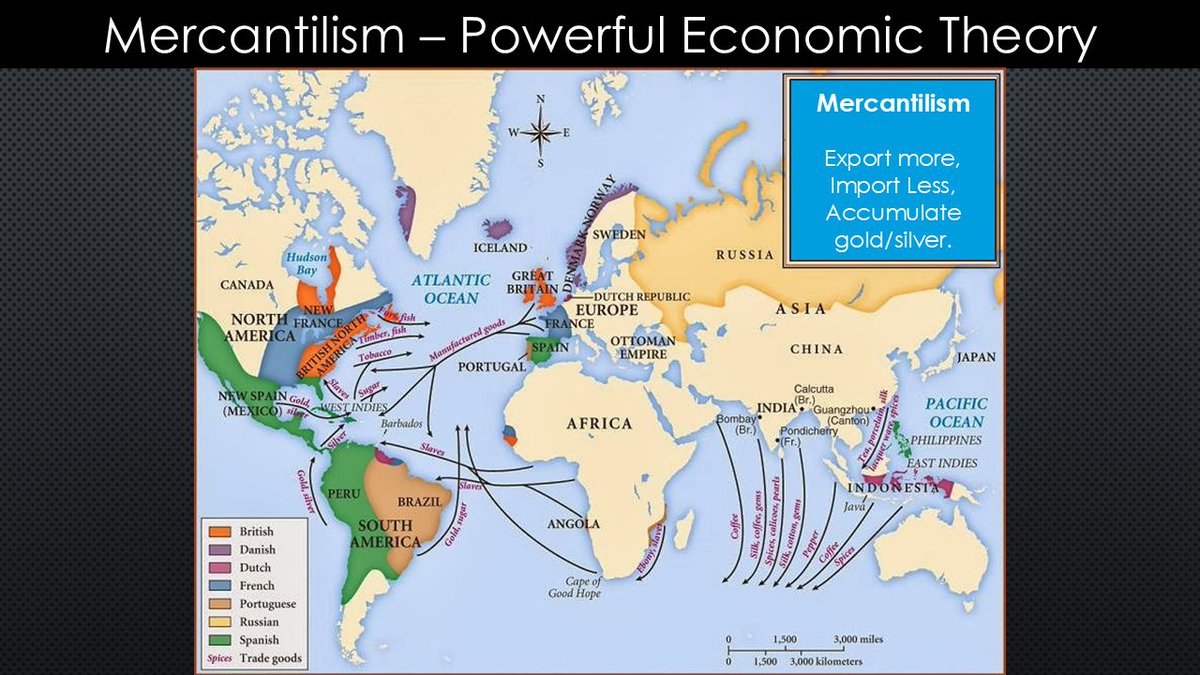
🔎🌐 However, mercantilism is not meaningful anymore due to global supply chains and other forms of trade such as services and investment.
Example #1:
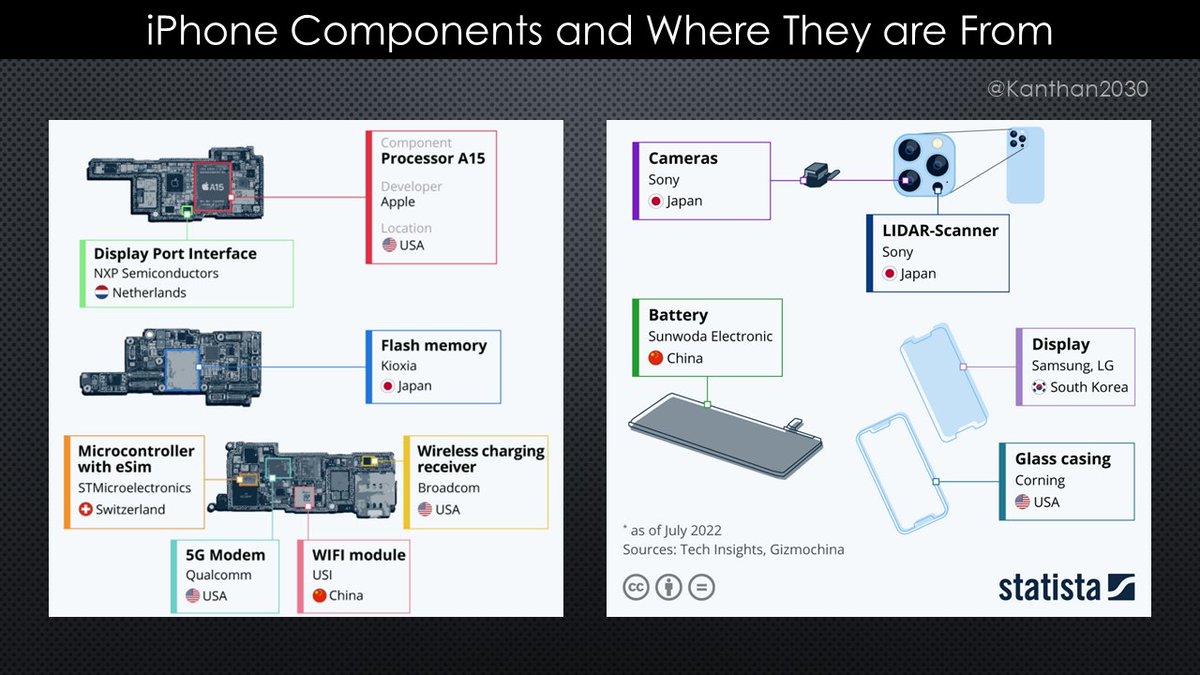
📲 Say, the US imports $1 billion of iPhones from India. Technically, this will create $1 billion of “trade deficit” for the US with India. However, this is nonsensical, since:
◾️ Only 10% of that import value goes to India. The rest, $900 million, go to mainland China, Taiwan, Japan, South Korea etc., who provide the iPhone components and various services.
◾️ Apple resells the $1 billion of iPhones from India for $2 billion in the US, creating numerous jobs and boosting the share price of Apple on the stock market.
◾️ Thus, the “trade deficit” of $1 billion turns into a net benefit of perhaps $4 billion for the US economy
So, this is an example of a beneficial trade deficit.
👉 And it’s also misleading due to global supply chains, which did not exist two centuries ago.
Let’s take a look at another critical one.
3/25
Example #1:
📲 Say, the US imports $1 billion of iPhones from India. Technically, this will create $1 billion of “trade deficit” for the US with India. However, this is nonsensical, since:
◾️ Only 10% of that import value goes to India. The rest, $900 million, go to mainland China, Taiwan, Japan, South Korea etc., who provide the iPhone components and various services.
◾️ Apple resells the $1 billion of iPhones from India for $2 billion in the US, creating numerous jobs and boosting the share price of Apple on the stock market.
◾️ Thus, the “trade deficit” of $1 billion turns into a net benefit of perhaps $4 billion for the US economy
So, this is an example of a beneficial trade deficit.
👉 And it’s also misleading due to global supply chains, which did not exist two centuries ago.
Let’s take a look at another critical one.
3/25
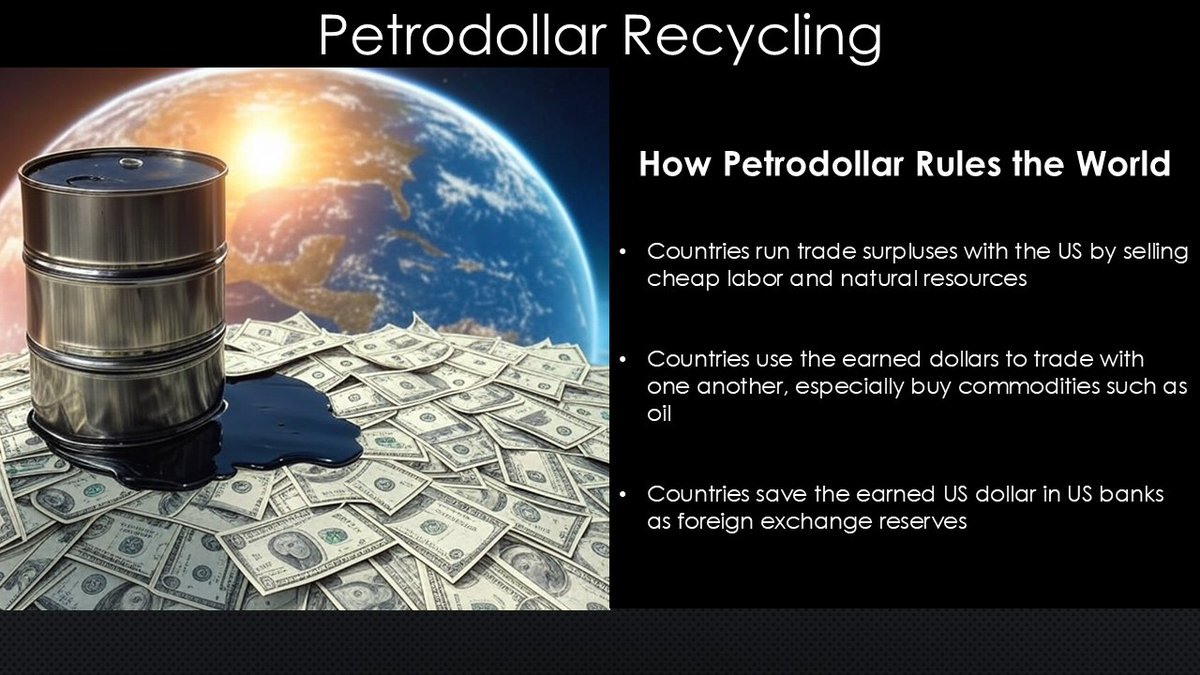
🇺🇸🛢️ Petrodollar recycling helps sustain the US empire
💰 What does a trade partner do with the trade surplus it has with the US? The dollars are not stored in boxes underground! They are used to buy US government bonds (as part of FOREX), US services, US weapons, US stocks etc.
🔄 This recycling of USD is vital to support the US economy.
⚠️ So, if the US has zero trade deficit – as Trump fantasizes – there will be serious negative consequences for the US dollar, US spending, and the US empire.
🤕 In fact, Trump’s erratic tariffs might have permanently damaged the status of US treasuries as the “safe haven” asset.
4/25
💰 What does a trade partner do with the trade surplus it has with the US? The dollars are not stored in boxes underground! They are used to buy US government bonds (as part of FOREX), US services, US weapons, US stocks etc.
🔄 This recycling of USD is vital to support the US economy.
⚠️ So, if the US has zero trade deficit – as Trump fantasizes – there will be serious negative consequences for the US dollar, US spending, and the US empire.
🤕 In fact, Trump’s erratic tariffs might have permanently damaged the status of US treasuries as the “safe haven” asset.
4/25
😩🇺🇸📉 Trump capitulated after the bond market got pummeled
Do you know why the US bond market crashed a couple of days ago?
💡 It’s because Wall Street realized that, thanks to Trump’s tariffs, the rest of the world will not be able to buy US treasuries (debt).
🇯🇵💸 And when allies like Japan started dumping US bonds, the yields spiked, which is not good for a nation that has $36 trillion in debt!
5/25
Do you know why the US bond market crashed a couple of days ago?
💡 It’s because Wall Street realized that, thanks to Trump’s tariffs, the rest of the world will not be able to buy US treasuries (debt).
🇯🇵💸 And when allies like Japan started dumping US bonds, the yields spiked, which is not good for a nation that has $36 trillion in debt!
5/25
🇺🇸💯 Trump is always talking about “reciprocal” trade and “fairness,” but here’s the simple truth:
Trade is always asymmetric! Reciprocity and fairness make no sense!
🤷 If two parties have the same products and services, there is no need for them to trade!
🛒 When you go to the grocery store, you cannot demand that they buy vegetables from you!
💵 When your employer pays your salary, they cannot complain that they keep paying you, but you never buy anything from them!
🗣️ Seems simple, but that’s exactly what Trump is doing. Here’s US Senator Rand Paul explaining these simple axioms of trade:
6/25
Trade is always asymmetric! Reciprocity and fairness make no sense!
🤷 If two parties have the same products and services, there is no need for them to trade!
🛒 When you go to the grocery store, you cannot demand that they buy vegetables from you!
💵 When your employer pays your salary, they cannot complain that they keep paying you, but you never buy anything from them!
🗣️ Seems simple, but that’s exactly what Trump is doing. Here’s US Senator Rand Paul explaining these simple axioms of trade:
6/25
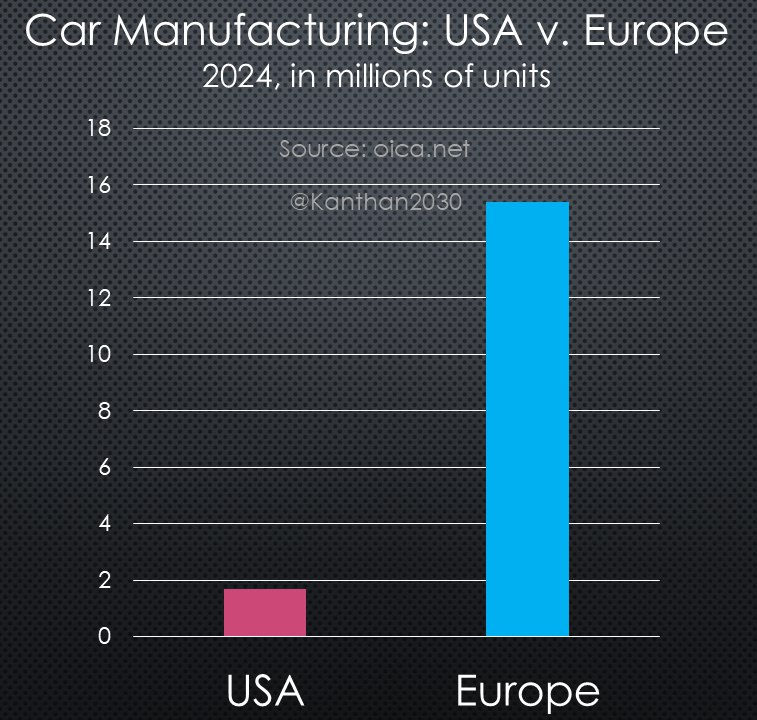
🇺🇸🤥MAGA delusion
Trump supporters act as if other countries are not deliberately buying American goods!
🕵🏻 But there’s no anti-American conspiracy. Hello, you offshored most of your manufacturing a long time ago!
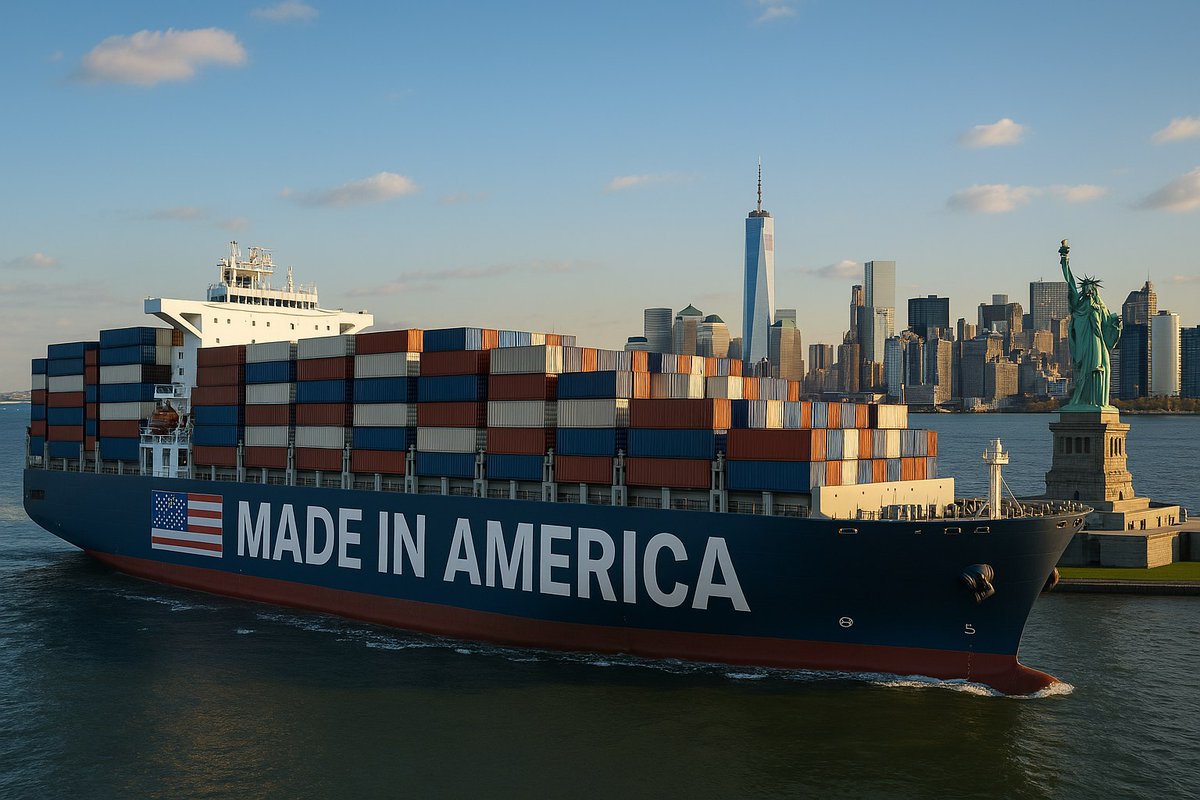
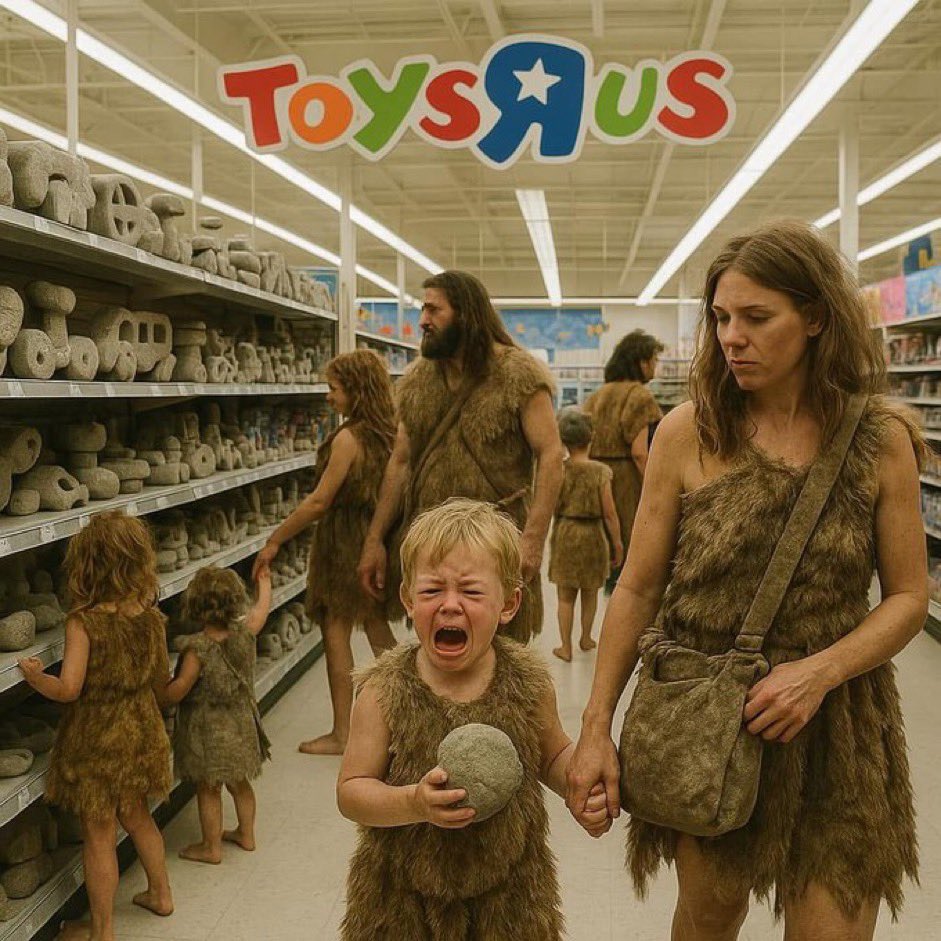
💯 It's not like the US now has vast amounts of Made-in-America cars, TVs, computers, household appliances etc. waiting to be exported all over the world.
🚙 For example, the US makes only 1.7 million sedans and small SUVs as opposed to 15 million by Europe. Also, GE appliances sold itself off to Chinese company Haier a decade ago.
7/25
Trump supporters act as if other countries are not deliberately buying American goods!
🕵🏻 But there’s no anti-American conspiracy. Hello, you offshored most of your manufacturing a long time ago!
💯 It's not like the US now has vast amounts of Made-in-America cars, TVs, computers, household appliances etc. waiting to be exported all over the world.
🚙 For example, the US makes only 1.7 million sedans and small SUVs as opposed to 15 million by Europe. Also, GE appliances sold itself off to Chinese company Haier a decade ago.
7/25
🇺🇸📉 Tariffs to help “infant” industries, not a deliberately deindustrialized economy
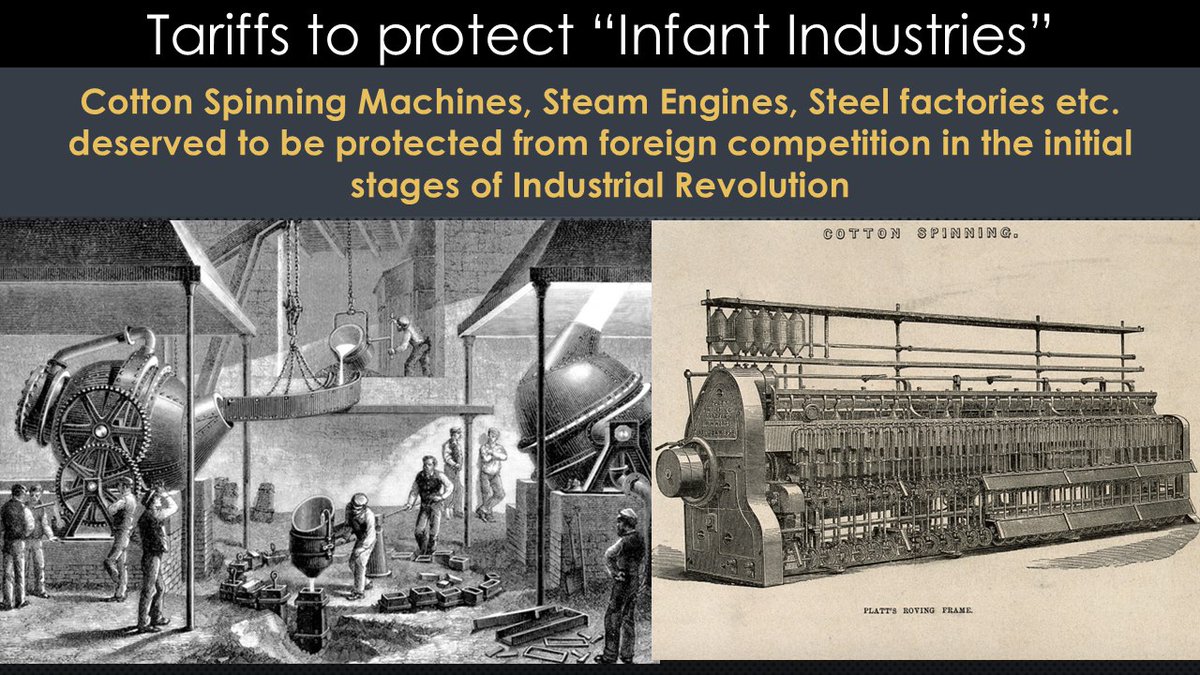
The founders of America and German economists understood that when a country is trying to develop some industries, it needs to protect them for mature foreign competition. Else, those domestic industries will never get a chance to prosper.
⏱️ However, this is a temporary solution, and such protectionism cannot last forever.
⚖️ Moreover, the US (and the EU) voluntarily chose to deindustrialize themselves. This neoliberalism started 45 years ago.
8/25
The founders of America and German economists understood that when a country is trying to develop some industries, it needs to protect them for mature foreign competition. Else, those domestic industries will never get a chance to prosper.
⏱️ However, this is a temporary solution, and such protectionism cannot last forever.
⚖️ Moreover, the US (and the EU) voluntarily chose to deindustrialize themselves. This neoliberalism started 45 years ago.
8/25
💡 Tariffs stifle innovation and competitiveness
🇺🇸 While Ronald Reagan jump started the de-industrialization of America, he had some words of wisdom about how tariffs are neither patriotic nor productive. Given too much protectionism, domestic industries become lazy and stop making products that are competitive and innovative.
👉 In the long run, protectionism destroys the very industries that were supposed to be saved.
9/25
🇺🇸 While Ronald Reagan jump started the de-industrialization of America, he had some words of wisdom about how tariffs are neither patriotic nor productive. Given too much protectionism, domestic industries become lazy and stop making products that are competitive and innovative.
👉 In the long run, protectionism destroys the very industries that were supposed to be saved.
9/25
🇺🇸🤷 You should not tariff what you cannot produce!
Consider coffee, cocoa or bananas. In the US, these are almost 100% imported, since they cannot be grown domestically (except for some rare exceptions). Thus, it would be shooting oneself in the foot to tariff the countries that export these products to the US.
☕📈 $1 of imported coffee may boost US GDP by $10 – think about the tens of thousands of coffee shops all over the US.
👉 The only ones to suffer by tariffing products you cannot produce are your companies and your consumers.
10/25
Consider coffee, cocoa or bananas. In the US, these are almost 100% imported, since they cannot be grown domestically (except for some rare exceptions). Thus, it would be shooting oneself in the foot to tariff the countries that export these products to the US.
☕📈 $1 of imported coffee may boost US GDP by $10 – think about the tens of thousands of coffee shops all over the US.
👉 The only ones to suffer by tariffing products you cannot produce are your companies and your consumers.
10/25

🇺🇸📉 Tariff can mean inflation, recession and perhaps stagflation
If a country is heavily dependent on imports, tariffs will lead to inflation – i.e., higher prices for consumer and intermediary goods.
📊 Remember that the US imports a staggering $3 trillion of goods every year. Tariffs are toxic to the US economy!
🇨🇳 Tariffs will also kill many small businesses, who design goods in the US and have them made in China, Mexico, Vietnam etc. But let’s face it, nobody does this better than China, the main target of America’s trade war.
💼 As for large retail businesses, they will simply layoff Americans. For example, half of all sellers on Amazon are Chinese vendors. When their sales drop, Amazon will be forced to fire thousands of warehouse workers and delivery workers. Same with Walmart, Target, Walgreens and numerous other retail giants in the US.
Thus, tariffs lead to not only higher inflation but also higher unemployment. This combination is called “stagflation,” the worst economic situation for any country.
11/25
If a country is heavily dependent on imports, tariffs will lead to inflation – i.e., higher prices for consumer and intermediary goods.
📊 Remember that the US imports a staggering $3 trillion of goods every year. Tariffs are toxic to the US economy!
🇨🇳 Tariffs will also kill many small businesses, who design goods in the US and have them made in China, Mexico, Vietnam etc. But let’s face it, nobody does this better than China, the main target of America’s trade war.
💼 As for large retail businesses, they will simply layoff Americans. For example, half of all sellers on Amazon are Chinese vendors. When their sales drop, Amazon will be forced to fire thousands of warehouse workers and delivery workers. Same with Walmart, Target, Walgreens and numerous other retail giants in the US.
Thus, tariffs lead to not only higher inflation but also higher unemployment. This combination is called “stagflation,” the worst economic situation for any country.
11/25
🇺🇸🏭💰 Manufacturing is too expensive in developed nations
It’s impossible to bring back labor-intensive and environmentally unfriendly manufacturing back to developed nations.
📊 American corporations like Apple and Crocs pay Indian workers less than $150 a MONTH. Even if the US firms create sweatshops and hire illegal immigrants at $5 an hour, basic wage would cost $2000 a month. Add to that, higher costs for land, construction of factories, utilities, environmental regulations, logistics etc., it would be impossible to do certain manufacturing in the US or Europe.
😷 And Americans would not enjoy polluted air and water as it was back in the 1960s.
12/25
It’s impossible to bring back labor-intensive and environmentally unfriendly manufacturing back to developed nations.
📊 American corporations like Apple and Crocs pay Indian workers less than $150 a MONTH. Even if the US firms create sweatshops and hire illegal immigrants at $5 an hour, basic wage would cost $2000 a month. Add to that, higher costs for land, construction of factories, utilities, environmental regulations, logistics etc., it would be impossible to do certain manufacturing in the US or Europe.
😷 And Americans would not enjoy polluted air and water as it was back in the 1960s.
12/25
🤔 Who has the upper hand – Exporter or Importer?
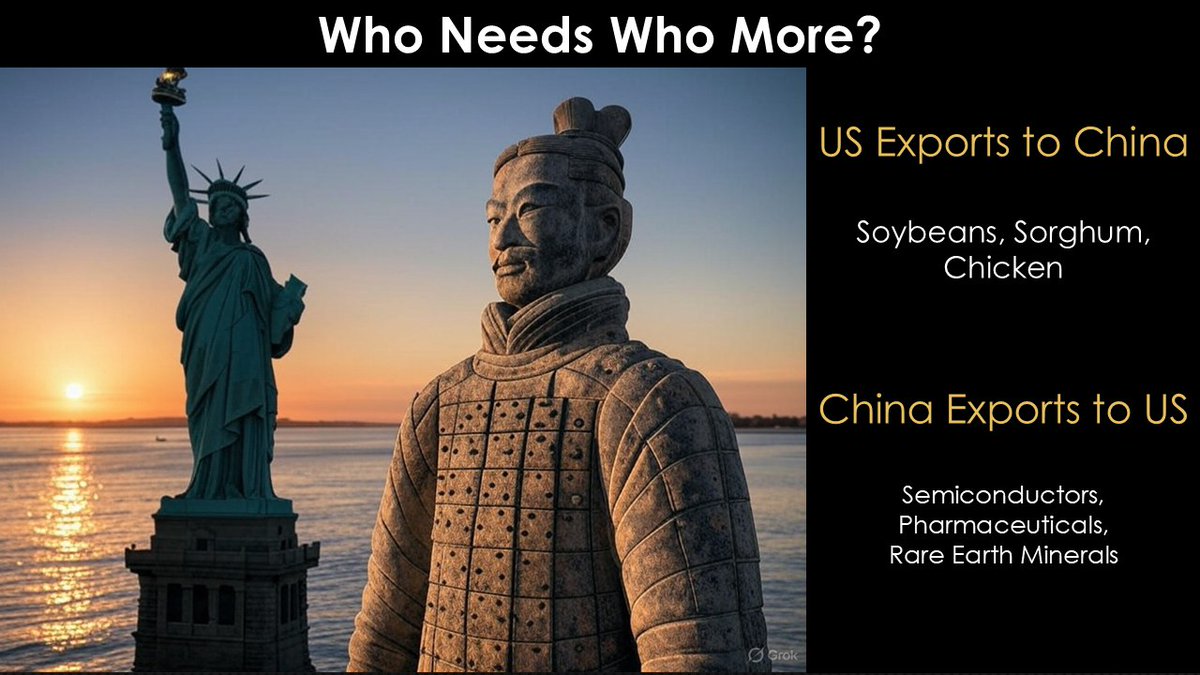
Trump supporters think that since the US is the “customer,” it will always win the trade war. However, it depends on the product and the service.
🇨🇳🇺🇸 For example, the US buys most of its batteries from China. Who’s going to win in this battle?
🔋 Chinese sellers can do just fine without selling batteries to the US for a few months. Can the US economy survive for a week without batteries that power everything from electric cars to smartphones and countless gadgets that are useless without batteries?
💊 The same situation with pharmaceutical ingredients and antibiotics. The US needs China more than China needs the US in many sectors.
👉 Thus, one cannot use simplistic bravados in trade.
13/25
Trump supporters think that since the US is the “customer,” it will always win the trade war. However, it depends on the product and the service.
🇨🇳🇺🇸 For example, the US buys most of its batteries from China. Who’s going to win in this battle?
🔋 Chinese sellers can do just fine without selling batteries to the US for a few months. Can the US economy survive for a week without batteries that power everything from electric cars to smartphones and countless gadgets that are useless without batteries?
💊 The same situation with pharmaceutical ingredients and antibiotics. The US needs China more than China needs the US in many sectors.
👉 Thus, one cannot use simplistic bravados in trade.
13/25
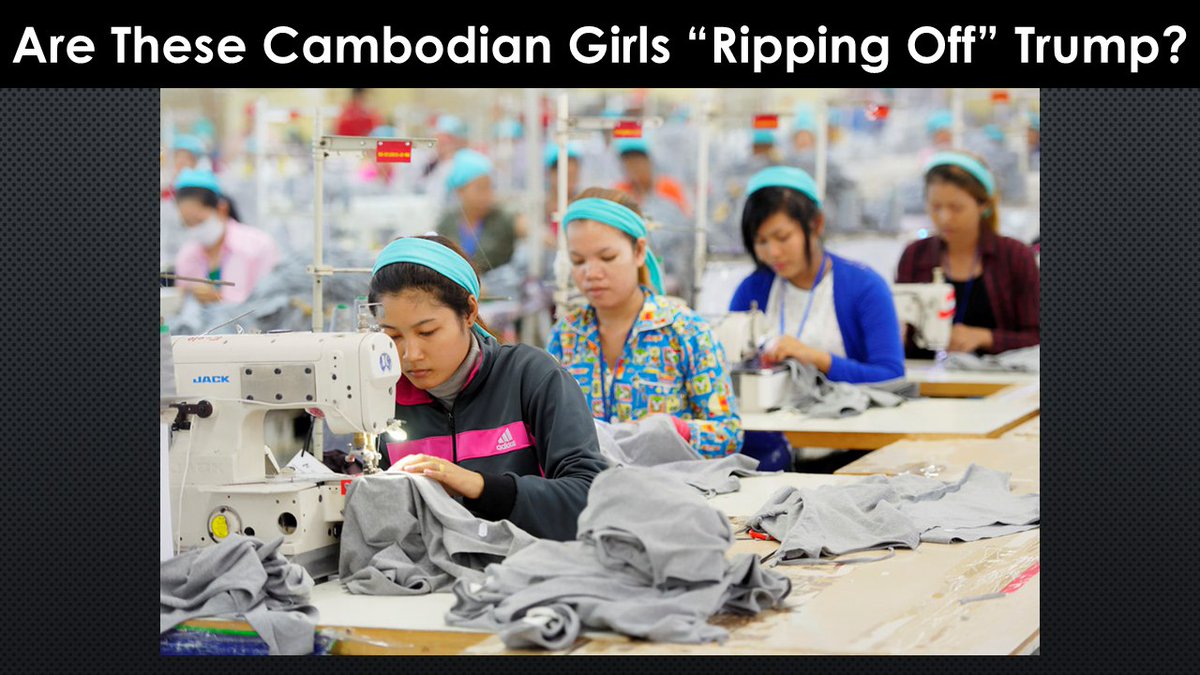
🤔🇺🇸 USA exploits poor countries. Who is ripping off who?
Trump’s view of global trade can be explained thus:
❗ “Look at this girl in Cambodia ripping off America!”
Calvin Klein generously pays her $1 an hour, but she never buys any iPhones or Tesla.”
😡 This lopsided trade is so UNFAIR!”
🧐 If this sounds preposterous, it’s not. Trump actually proposed 45% tariffs on Cambodia since it has a trade surplus with the US.
Claiming that other countries are ripping off America is either Orwellian or stupid.
14/25
Trump’s view of global trade can be explained thus:
❗ “Look at this girl in Cambodia ripping off America!”
Calvin Klein generously pays her $1 an hour, but she never buys any iPhones or Tesla.”
😡 This lopsided trade is so UNFAIR!”
🧐 If this sounds preposterous, it’s not. Trump actually proposed 45% tariffs on Cambodia since it has a trade surplus with the US.
Claiming that other countries are ripping off America is either Orwellian or stupid.
14/25
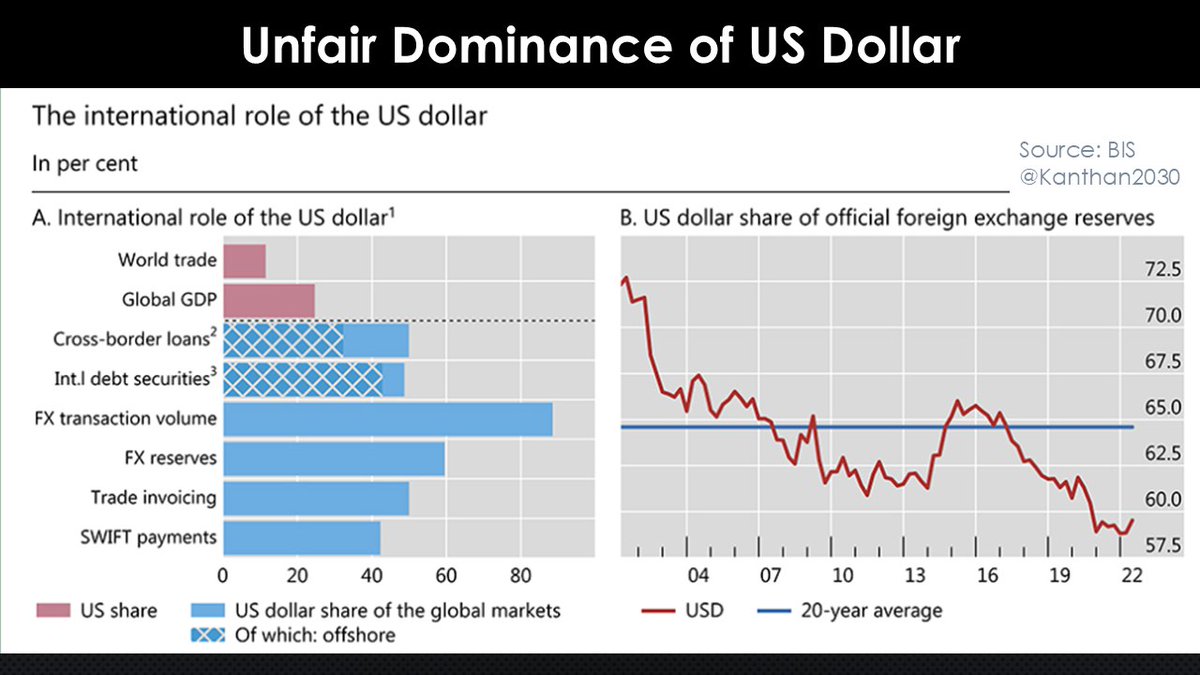
🇺🇸📊 US has trade SURPLUS in services and dominates global banking and finance
For a man who thinks that trade deficit means “ripping off,” Trump never talks about the services sector in which the US has trade SURPLUSES!
💰 Also, the US dollar enjoys extraordinary privileges -- the global reserve currency status and all commodities being denominated in USD. Perhaps, other countries should whine about how that’s “unfair”?
🌐 Finally, US corporations have presence all over the world. In India, Google, Amazon, Walmart, Microsoft etc. have virtual monopolies in many vital sectors. But there are no such Indian companies in the USA.
👉 Yes, the US enjoys many “unfair” and one-sided economic advantages.
15/25
For a man who thinks that trade deficit means “ripping off,” Trump never talks about the services sector in which the US has trade SURPLUSES!
💰 Also, the US dollar enjoys extraordinary privileges -- the global reserve currency status and all commodities being denominated in USD. Perhaps, other countries should whine about how that’s “unfair”?
🌐 Finally, US corporations have presence all over the world. In India, Google, Amazon, Walmart, Microsoft etc. have virtual monopolies in many vital sectors. But there are no such Indian companies in the USA.
👉 Yes, the US enjoys many “unfair” and one-sided economic advantages.
15/25
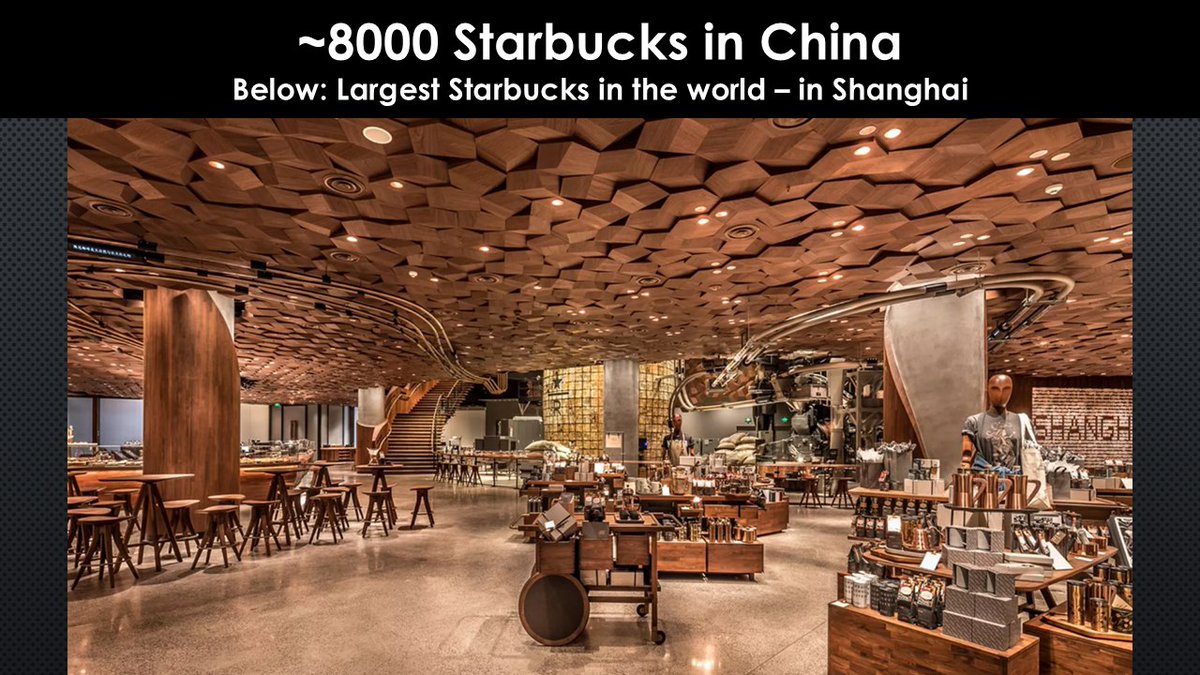
🇺🇸🤥 US companies operating in other countries – NOT included in trade numbers
Similarly, there are about 30,000 US fast-food giants like Starbucks, KFC and McDonald’s in China. And their revenues are not included in the trade numbers.
📊 The economic and financial transactions are more than just trade, let alone trade of goods.
16/25
Similarly, there are about 30,000 US fast-food giants like Starbucks, KFC and McDonald’s in China. And their revenues are not included in the trade numbers.
📊 The economic and financial transactions are more than just trade, let alone trade of goods.
16/25
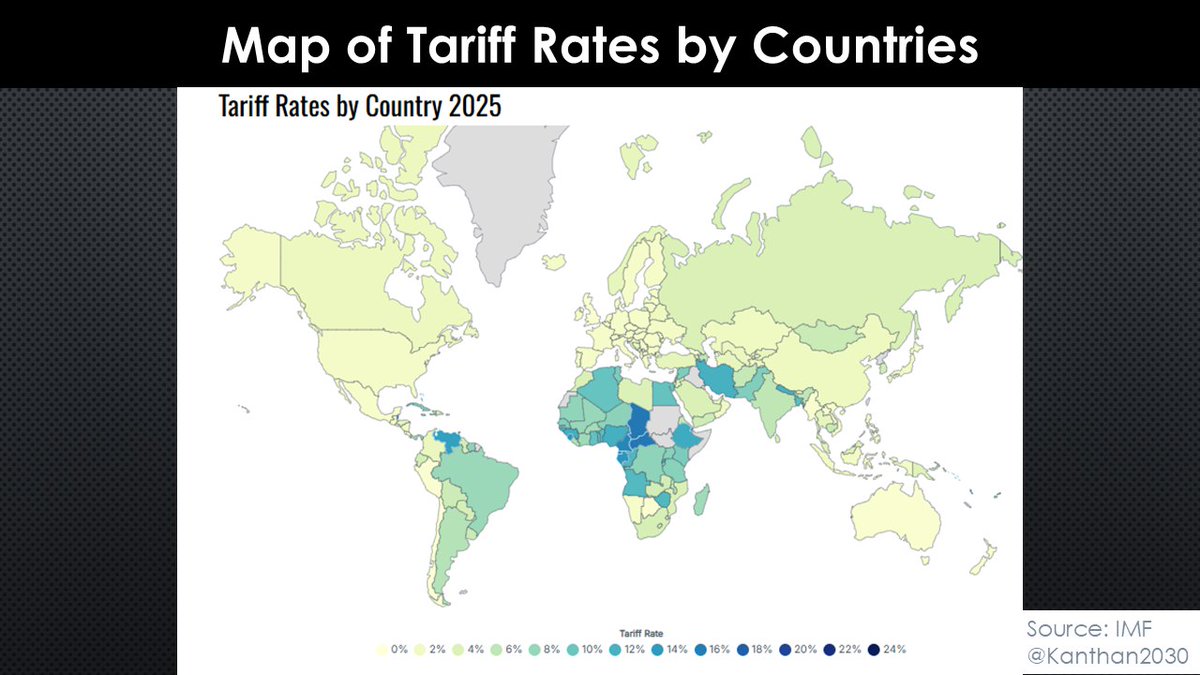
🤔 Why do other countries have tariffs?
💡 Trump’s inner circle uses this weird logic of blaming some countries for having more tariffs on the US than the other way around. However, here’s the simple explanation:
👉 The tariff rates are universal and cannot be discriminatory – that is the basic rule of the WTO, an organization that the US created.
🇻🇳🇺🇸 Thus, if Vietnam has a 5% tariff on US goods, the same 5% applies to all trade partners of Vietnam.
So, don’t take it personally, America!
17/25
💡 Trump’s inner circle uses this weird logic of blaming some countries for having more tariffs on the US than the other way around. However, here’s the simple explanation:
👉 The tariff rates are universal and cannot be discriminatory – that is the basic rule of the WTO, an organization that the US created.
🇻🇳🇺🇸 Thus, if Vietnam has a 5% tariff on US goods, the same 5% applies to all trade partners of Vietnam.
So, don’t take it personally, America!
17/25
💡💸 More tariffs do not always mean more revenues!
If the tariffs go from 10% to 20%, the revenue might also double, since the extra cost will be divided up among the exporter, importer and consumer.
🇺🇸📉 But if the tariff goes from 10% to 100%, the revenue will likely go to ZERO, since people will simply stop buying the product. Or, the product may get re-routed through other countries… and the revenue will stay the same.
❌ Thus, Trump is fundamentally wrong in assuming that he can collect more revenues from tariffs ad infinitum.
18/25
If the tariffs go from 10% to 20%, the revenue might also double, since the extra cost will be divided up among the exporter, importer and consumer.
🇺🇸📉 But if the tariff goes from 10% to 100%, the revenue will likely go to ZERO, since people will simply stop buying the product. Or, the product may get re-routed through other countries… and the revenue will stay the same.
❌ Thus, Trump is fundamentally wrong in assuming that he can collect more revenues from tariffs ad infinitum.
18/25
👷♂️🏭 Even young people in developing nations do not want to work in manufacturing!
Even in developing countries, young people are not excited to work in factories. In China, Vietnam, India etc., young people are demanding higher wages and better benefits to do monotonous and repetitive work in factories.
👉 Thus, there is no way that Americans – including Trump supporters - will rush to work in Apple or Nike factories.
19/25
Even in developing countries, young people are not excited to work in factories. In China, Vietnam, India etc., young people are demanding higher wages and better benefits to do monotonous and repetitive work in factories.
👉 Thus, there is no way that Americans – including Trump supporters - will rush to work in Apple or Nike factories.
19/25
🇺🇸👎 US elites are not thrilled about manufacturing
💰 Trump does not have dictatorial powers. The US is eventually run by bankers, financial powerhouses (the likes of BlackRock), and giant corporations.
👉 Notice that you never see the CEOs of GM, Ford, Walmart, Apple, Nike, US steel etc. standing next to Trump at the White House and pledging that they will build massive factories and hire millions of American workers.
💡 What does it mean? Manufacturing is not returning to America in any meaningful way.
20/25
💰 Trump does not have dictatorial powers. The US is eventually run by bankers, financial powerhouses (the likes of BlackRock), and giant corporations.
👉 Notice that you never see the CEOs of GM, Ford, Walmart, Apple, Nike, US steel etc. standing next to Trump at the White House and pledging that they will build massive factories and hire millions of American workers.
💡 What does it mean? Manufacturing is not returning to America in any meaningful way.
20/25
🚨🇺🇸 Retaliatory tariffs will cripple US exports
⚔️ Trump’s entire strategy rests upon the assumption that other countries will not retaliate. However, others will and are doing it already.
👉 While Canada and the EU threatened retaliatory tariffs and made Trump back off, China has gone forward with 84% tariffs on all American goods. This means that American farmers will not be able to sell soybeans to China, the world’s largest buyer. And Tesla has already stopped shipping Models S and X from California to China.
🇨🇳⚠️ Furthermore, remember that US corporations also make $1.5 trillion in sales through subsidiaries in China. Now, Beijing can make life difficult for those American businesses.
21/25
⚔️ Trump’s entire strategy rests upon the assumption that other countries will not retaliate. However, others will and are doing it already.
👉 While Canada and the EU threatened retaliatory tariffs and made Trump back off, China has gone forward with 84% tariffs on all American goods. This means that American farmers will not be able to sell soybeans to China, the world’s largest buyer. And Tesla has already stopped shipping Models S and X from California to China.
🇨🇳⚠️ Furthermore, remember that US corporations also make $1.5 trillion in sales through subsidiaries in China. Now, Beijing can make life difficult for those American businesses.
21/25
🇺🇸🤖 Can robots help American manufacturing?
Perhaps, sometime in the future, robots and humanoids will enable the US to re-shore some manufacturing. However, that’s not going to happen anytime in the near future.
🇨🇳🏭 For one, who’s going to manufacture millions of robots? Probably China!
22/25
Perhaps, sometime in the future, robots and humanoids will enable the US to re-shore some manufacturing. However, that’s not going to happen anytime in the near future.
🇨🇳🏭 For one, who’s going to manufacture millions of robots? Probably China!
22/25
🇺🇸🏭📈 It will take a decade, trillions of dollars, and a whole-of-a-society approach to make manufacturing great again.
Manufacturing is actually rocket-science. If it were easy, everyone would have done that.
⚛ It needs a lot of skilled workers, scientists to do research, massive capital investment on factories and machines, superb infrastructure, efficient supply chain, and a well-planned ecosystem.
📱 For example, if you want to truly manufacture iPhones domestically, you need to create separate companies for numerous parts such as semiconductor chips, touchscreens, cameras, speakers etc. Right now, Apple depends on 300 major suppliers from 20 different countries. To bring them all to the US will be a Herculean effort.
😶 Americans have no clue about manufacturing.
▶️ Here are two videos: One that shows what Americans think China’s competitive advantage is: Slave Labor; and the second video shows the reality about how Chinese factories operate with robots.
23/25
Manufacturing is actually rocket-science. If it were easy, everyone would have done that.
⚛ It needs a lot of skilled workers, scientists to do research, massive capital investment on factories and machines, superb infrastructure, efficient supply chain, and a well-planned ecosystem.
📱 For example, if you want to truly manufacture iPhones domestically, you need to create separate companies for numerous parts such as semiconductor chips, touchscreens, cameras, speakers etc. Right now, Apple depends on 300 major suppliers from 20 different countries. To bring them all to the US will be a Herculean effort.
😶 Americans have no clue about manufacturing.
▶️ Here are two videos: One that shows what Americans think China’s competitive advantage is: Slave Labor; and the second video shows the reality about how Chinese factories operate with robots.
23/25
🇨🇳🏆 China will win the trade war
Trump started the trade war against China in 2018. After 7 years of illegal US tariffs and sanctions, China is more powerful than ever before.
📊 The US accounts for only 14% of China’s exports.
🇨🇳🇺🇸 Money is fungible, but products are not. That is, China can live without American money, but America cannot live without Chinese goods.
24/25
Trump started the trade war against China in 2018. After 7 years of illegal US tariffs and sanctions, China is more powerful than ever before.
📊 The US accounts for only 14% of China’s exports.
🇨🇳🇺🇸 Money is fungible, but products are not. That is, China can live without American money, but America cannot live without Chinese goods.
24/25
🇺🇸🏭🎯What Trumps’ strategy ought to be -- Targeted, high-end manufacturing
Trump can MAGA to some extent, but his strategy should involve two components:
◾️ Positive industrial policies. Rather than attacking trade partners, provide incentives for American manufacturing.
◾️ Focus on high-end manufacturing – cars, auto parts, machines, semiconductors etc.
Trump will eventually capitulate on his trade war, just like he just did over deportation of illegal immigrants, who are irreplaceable for American farms, hotels, construction etc.
🤞 Let’s hope for the sake of America and the world that Trump ends his futile economic wars.
25/25
Trump can MAGA to some extent, but his strategy should involve two components:
◾️ Positive industrial policies. Rather than attacking trade partners, provide incentives for American manufacturing.
◾️ Focus on high-end manufacturing – cars, auto parts, machines, semiconductors etc.
Trump will eventually capitulate on his trade war, just like he just did over deportation of illegal immigrants, who are irreplaceable for American farms, hotels, construction etc.
🤞 Let’s hope for the sake of America and the world that Trump ends his futile economic wars.
25/25
• • •
Missing some Tweet in this thread? You can try to
force a refresh