Historical origins of popular English phrases - a thread 🧵
1. "Close But No Cigar"
Meaning: Said to someone who falls slightly short of a successful outcome
Historical Context: The phrase originated from traveling fairs & carnivals during the 1800s, when cigars were given out as prizes to games. As many carnival games seem designed to feel winnable, but then are nearly impossible to actually win, people were often said to be, "close, but no cigar."
1. "Close But No Cigar"
Meaning: Said to someone who falls slightly short of a successful outcome
Historical Context: The phrase originated from traveling fairs & carnivals during the 1800s, when cigars were given out as prizes to games. As many carnival games seem designed to feel winnable, but then are nearly impossible to actually win, people were often said to be, "close, but no cigar."

2. "Rule of Thumb"
Meaning: A general guide or principle, based on experience or estimation rather than exact science.
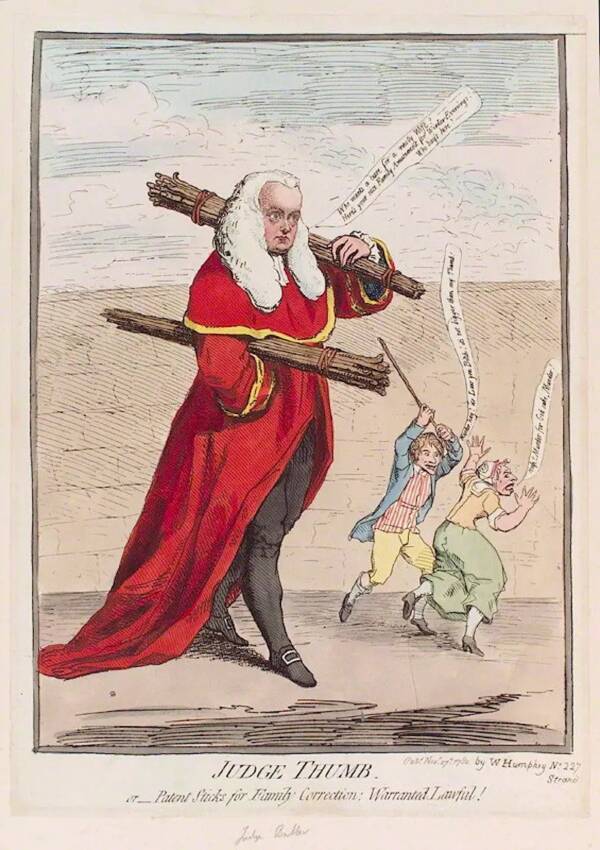
Historical Context: The phrase is thought to be derived from an old English law that said a husband could beat his wife, so long as the stick he used was no thicker than his thumb. Judge Sir Francis Buller supposedly made the ruling in 1782 and became known as "Judge Thumb."
Another theory is that the phrase came about from the many ways a thumb can be used to estimate or measure things. Whether a seamstress roughly estimating an inch of fabric or a brewmaster dipping their thumb into the beer to get the temperature, there are plenty of old-school ways that a "rule of thumb" was likely used.
The phrase is found in Sir William Hope's The Compleat Fencing Master (1692): "What he doth, he doth by rule of Thumb, and not by Art."
James Kelly's 'The Complete Collection of Scottish Proverbs' (1721) includes: "No Rule so good as Rule of Thumb, if it hit", meaning a practical approximation.
Meaning: A general guide or principle, based on experience or estimation rather than exact science.
Historical Context: The phrase is thought to be derived from an old English law that said a husband could beat his wife, so long as the stick he used was no thicker than his thumb. Judge Sir Francis Buller supposedly made the ruling in 1782 and became known as "Judge Thumb."
Another theory is that the phrase came about from the many ways a thumb can be used to estimate or measure things. Whether a seamstress roughly estimating an inch of fabric or a brewmaster dipping their thumb into the beer to get the temperature, there are plenty of old-school ways that a "rule of thumb" was likely used.
The phrase is found in Sir William Hope's The Compleat Fencing Master (1692): "What he doth, he doth by rule of Thumb, and not by Art."
James Kelly's 'The Complete Collection of Scottish Proverbs' (1721) includes: "No Rule so good as Rule of Thumb, if it hit", meaning a practical approximation.
3. "Pushing the Envelope"
Meaning: To surpass normal limits; to try something daring or risky.
Historical Context: While it might sound like a saying that originated in an office, "pushing the envelope" originally referred to aeronautics. In space flight, the "envelope" refers to performance limits that can't be surpassed safely.
The phrase made its way into the everyday vernacular when it appeared in Tom Wolfe's 1979 nonfiction book The Right Stuff, which discussed the pilots of experimental rocket-propelled aircraft. The phrase used is "pushing the outside of the envelope."
Meaning: To surpass normal limits; to try something daring or risky.
Historical Context: While it might sound like a saying that originated in an office, "pushing the envelope" originally referred to aeronautics. In space flight, the "envelope" refers to performance limits that can't be surpassed safely.
The phrase made its way into the everyday vernacular when it appeared in Tom Wolfe's 1979 nonfiction book The Right Stuff, which discussed the pilots of experimental rocket-propelled aircraft. The phrase used is "pushing the outside of the envelope."

4. "The Bees Knees"
Meaning: Something that's very cool
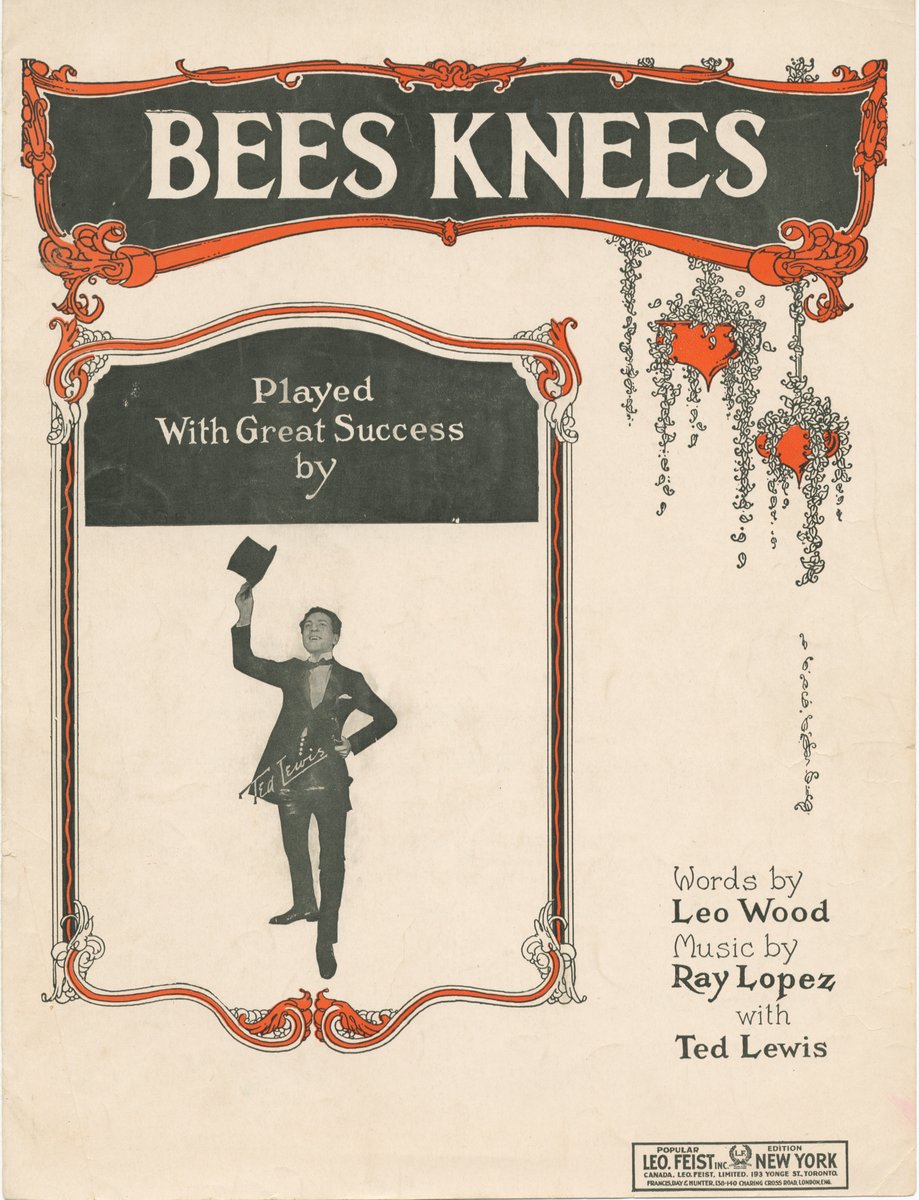
Historical Context: The bee's knees origin story is about as random as the phrase itself. It started in the 18th century as a joke phrase for something that didn't exist.
An apprentice might be sent to the store to pick up imaginary items, such as a left-handed hammer, ham trees, or "seven cases of bees' knees."
In the Roaring Twenties, however, the meaning changed. The hip slang of the time was to use nonsense phrases to epitomize something that was excellent or the very best, like "the cat's pajamas" and "the snake's hips." Some of these stuck better than others. The bee's knees also became a cocktail around the same time.
Meaning: Something that's very cool
Historical Context: The bee's knees origin story is about as random as the phrase itself. It started in the 18th century as a joke phrase for something that didn't exist.
An apprentice might be sent to the store to pick up imaginary items, such as a left-handed hammer, ham trees, or "seven cases of bees' knees."
In the Roaring Twenties, however, the meaning changed. The hip slang of the time was to use nonsense phrases to epitomize something that was excellent or the very best, like "the cat's pajamas" and "the snake's hips." Some of these stuck better than others. The bee's knees also became a cocktail around the same time.
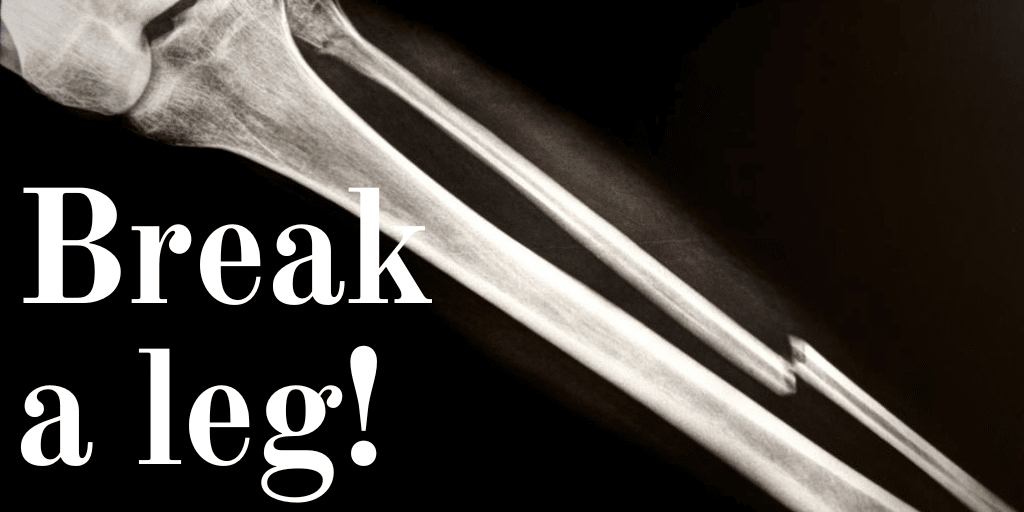
5. "Break a Leg"
Meaning: Good luck; usually said to someone involved in some type of performance.
Historical Context: This theatrical expression originated in the theater in the 1800's. Producers would have as many different acts as possible on stand-by to fill the bill. It was not viable to pay every act, so if they didn't actually appear on stage, or get to break the visual plane of the leg line, they received no pay.
"Break A Leg" became a "good luck" wish said between acts that you would be able to perform & get paid.
Meaning: Good luck; usually said to someone involved in some type of performance.
Historical Context: This theatrical expression originated in the theater in the 1800's. Producers would have as many different acts as possible on stand-by to fill the bill. It was not viable to pay every act, so if they didn't actually appear on stage, or get to break the visual plane of the leg line, they received no pay.
"Break A Leg" became a "good luck" wish said between acts that you would be able to perform & get paid.
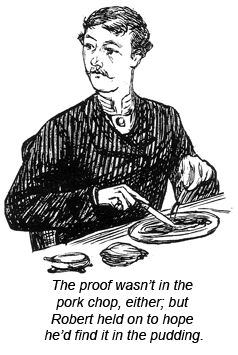
6. "Proof is in the Pudding"
Meaning: The true value of something is best determined by using said thing
Historical Context: This phrase became more confusing over the years as it was shortened from the original version, which is usually something like "the proof of the pudding is in the eating."
While the exact phrase was first recorded in the early 1600s, the idea of tasting a pudding to test it probably dates back to medieval times. These puddings were not of the Jell-O snack pack variety, but savory concoctions of mystery meats like intestines or stomachs that may or may not have been contaminated.
Thus, the only true way to find out if a pudding was good, bad, or straight-up poisonous was to eat it and see for yourself.
Meaning: The true value of something is best determined by using said thing
Historical Context: This phrase became more confusing over the years as it was shortened from the original version, which is usually something like "the proof of the pudding is in the eating."
While the exact phrase was first recorded in the early 1600s, the idea of tasting a pudding to test it probably dates back to medieval times. These puddings were not of the Jell-O snack pack variety, but savory concoctions of mystery meats like intestines or stomachs that may or may not have been contaminated.
Thus, the only true way to find out if a pudding was good, bad, or straight-up poisonous was to eat it and see for yourself.
• • •
Missing some Tweet in this thread? You can try to
force a refresh