"While America’s elites play financial shell games, China’s PhDs are busy taking control of the real economy. Rare earths, AI, semiconductors, guess who’s winning the future? A brutal reality check thread."
Scott Bessent has a degree in political science from Yale. His counterpart likely holds a STEM PhD from a top Chinese institution. While Bessent spins narratives, China's technocrats control the global supply of rare earths. (1/14)
Bessent’s expertise? Ideology, rhetoric, market manipulation. China’s technocrats? They know materials science, energy production, and industrial logistics — the hard stuff that powers the real economy. (2/14)
China’s rare earths are more than just a commodity, they’re a strategic lever. You can't build electric cars, drones, or missiles without them. Bessent’s big move? More quantitative easing and vague promises of economic "strength." (3/14)
Bessent’s world is built on financial games, debt, and short-termism. China? They're investing in infrastructure, perfecting AI, and securing the materials necessary to fuel their next-generation industries. (4/14)
While the U.S. argues about how to distribute capital, "market or state?", China’s playing the long game, investing in critical bottlenecks. Guess who's actually winning this race? (5/14)
Bessent’s career? Ivy League credentials and a history of losing bets on Wall Street. China’s top minds? Building factories, cracking chip designs, and controlling tech’s future with hard-won R&D. (6/14)
A few rare earths, a dash of AI, and a controlled supply chain, that's the formula China’s using. Meanwhile, Bessent’s crowd is still trying to figure out if the U.S. is in a recession. (7/14)
Here’s the difference: Bessent perfects financial wizardry, while China’s focused on getting the hard things right, energy independence, tech innovation, and control over critical minerals. (8/14)
When China restricts rare earth exports to South Korea? It’s more than a political move — it’s a deliberate strategy to cripple key sectors of the U.S. and its allies. The U.S. response? Sanctions. (9/14)
China’s technocrats have a plan that stretches decades. Bessent and his ilk? They're still betting on short-term tricks, hoping the global Ponzi scheme lasts long enough to cash in. (10/14)
It’s not about who talks the loudest at Davos. It’s about who controls the resources that power the future. Spoiler: The U.S. isn’t holding the keys to that kingdom anymore. (11/14)
The U.S. is now forced to play catch-up. While Bessent fiddles with capital flows, China’s busy ensuring it has control over the materials that power the 21st century. (12/14)
As China secures its supply of critical resources, the U.S. is left scrambling. A few rounds of financial engineering won’t save you when the world shifts to a new economic order. (13/14)
The geopolitical game has changed, and it’s not about Wall Street’s financial games anymore. It’s about who controls the stuff that makes the world run — and right now, that’s China. (14/14)
• • •
Missing some Tweet in this thread? You can try to
force a refresh

The U.S. just declared economic war on Chin, and Beijing is cheering. In 2025, America’s embargo isn’t a setback for China, it’s a game changer. Here’s why Beijing isn’t just surviving, it’s thriving.
The tables haven’t just turned, they’ve flipped the banquet. In 2025, the U.S. reimposed a full-scale embargo on China, under the guise of a "tariff war" with 145% duties and sweeping tech bans. But unlike 1952, China now welcomes the embargo. (1/11)
Back then, after the Panmunjom armistice, the U.S. tried to strangle a fledgling PRC with a total embargo. It worked because China was poor, agrarian, and isolated. In 2025, that playbook is not just outdated, it’s laughably suicidal. (2/11)
GDP is a lie. The U.S. floods the world with printed dollars, then pats itself on the back for “growth” that’s just financial smoke and mirrors. Here’s a thread on how to clean the fluff out of GDPand expose the rot beneath the empire of debt. (1/12)
What if GDP came with a penalty for reckless money-printing? What if it discounted Wall Street’s casino games? What if it stopped rewarding debt-funded consumption as if it were real productivity? Time for a reform. A real one. (2/12)
First fix: Cap the Financial Sector's Contribution.
Wall Street generates GDP by trading paper. But most of it is churn, arbitrage, and rent extraction—not value creation. Let’s haircut finance’s GDP share by 20–30% to reflect systemic risk and public backstops. (3/12)
Western media finally admits China might have EUV, but only by calling it theft. In reality, China didn’t copy ASML’s tech. It built a rival system based on different physics. That is the threat they cannot process.
China’s EUV breakthrough is not a spy story. It's a technological fork the West refuses to acknowledge. Here’s what’s actually happening behind the cloak-and-dagger headlines. (1/12)
ASML’s EUV monopoly depends on a complex technique called Laser-Produced Plasma (LPP). A CO₂ laser hits 50,000 tin droplets per second to create plasma that emits 13.5 nm light. Brilliant, but fragile and inefficient (<1% light conversion). (2/12)
The United States is about to lose the future, and the culprit isn't China. It's Wall Street. America's AI industry has become a financial racket, while China builds national infrastructure with open tools. This thread explains how the empire falls. (1/12)
In the US, AI isn't a public good. It's a commodity. OpenAI, Anthropic, xAI — they exist to extract, not to build. Their real customers aren't citizens or scientists. They're hedge funds and cloud monopolies. (2/12)
The Great Divergence: How China Industrialized While America Financialized
A thread on trade, strategy, and decline.
The Great Divergence: How China Industrialized While America Financialized
A thread on trade, strategy, and decline. (1/14)
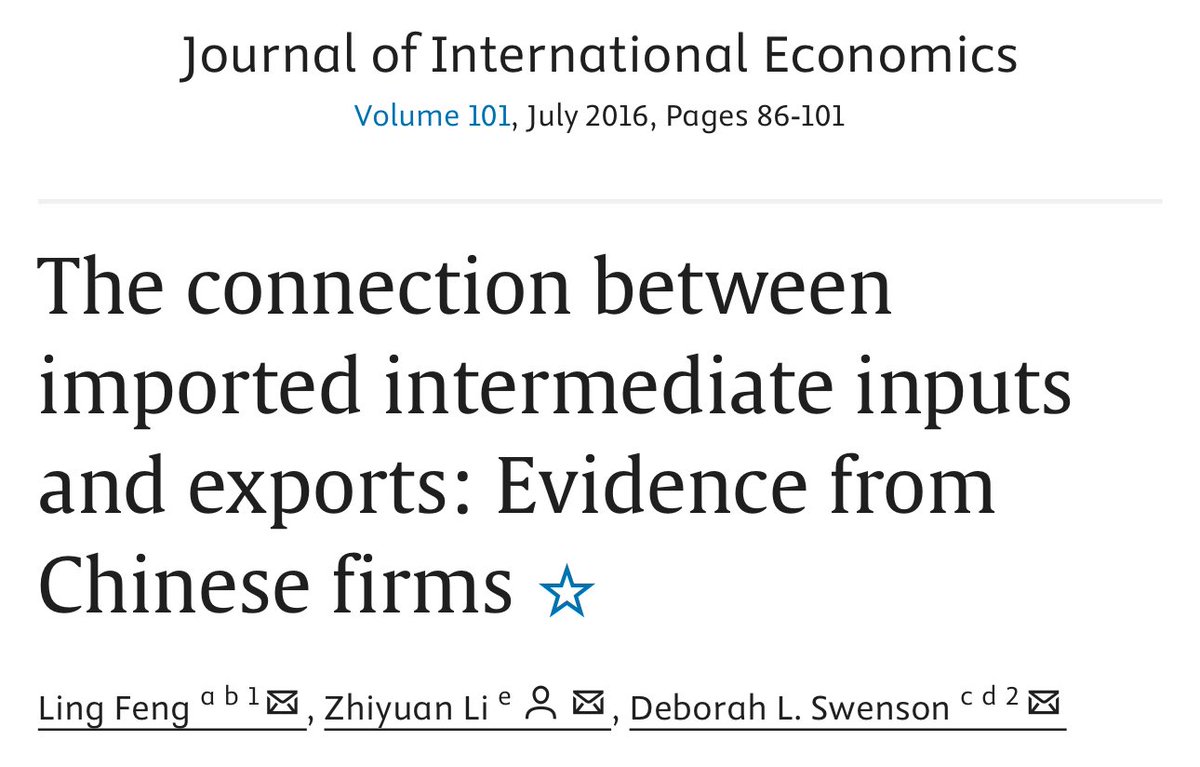
In 2016, economists studied Chinese firms and found a clear pattern. Those that imported intermediate goods were far more likely to become successful exporters. (2/14)
Apple didn’t stay in China by choice. China trapped it.
Wccftech says iPhone 18 needs Chinese “expertise.” Reality? Beijing blocked Apple’s gear from leaving. Here’s what they didn’t tell you:
Apple isn’t “sticking with China” for iPhone 18 production because of engineering brilliance. It’s stuck because Beijing blocked subcontractors from shipping out production equipment. Wccftech’s article claiming otherwise is a fantasy. Let’s break it down. (1/10)
Wccftech gushes that iPhone 18’s “extraordinarily complex design” demands Chinese mastery. Cute. But here’s what’s really going on: China has quietly imposed soft export bans on key production equipment and engineers to trap Apple inside the mainland. (2/10)