1/The story of Annie Faundes is a stark reminder of the potential long-term consequences of C-19. A dedicated high school teacher who used to plan years ahead, Annie's life took an unforeseen turn after contracting C-19 in spring 2021, leading to Long COVID and, #LongCovid
2/ tragically, an Alzheimer's diagnosis. At its worst, Annie's Long COVID symptoms were debilitating. A heart rate of 128 just from washing her hair forced her to rest afterwards. For three years, exercise became impossible. The persistent brain fog never lifted, eventually
3/ leading to a devastating Alzheimer's diagnosis. Annie describes the transition from Long COVID to Alzheimer's as "seamless." Reflecting on the early pandemic, she expresses her frustration: "I feel incredibly angry about the situation teachers faced" #Teachers #COVID19Pandemic
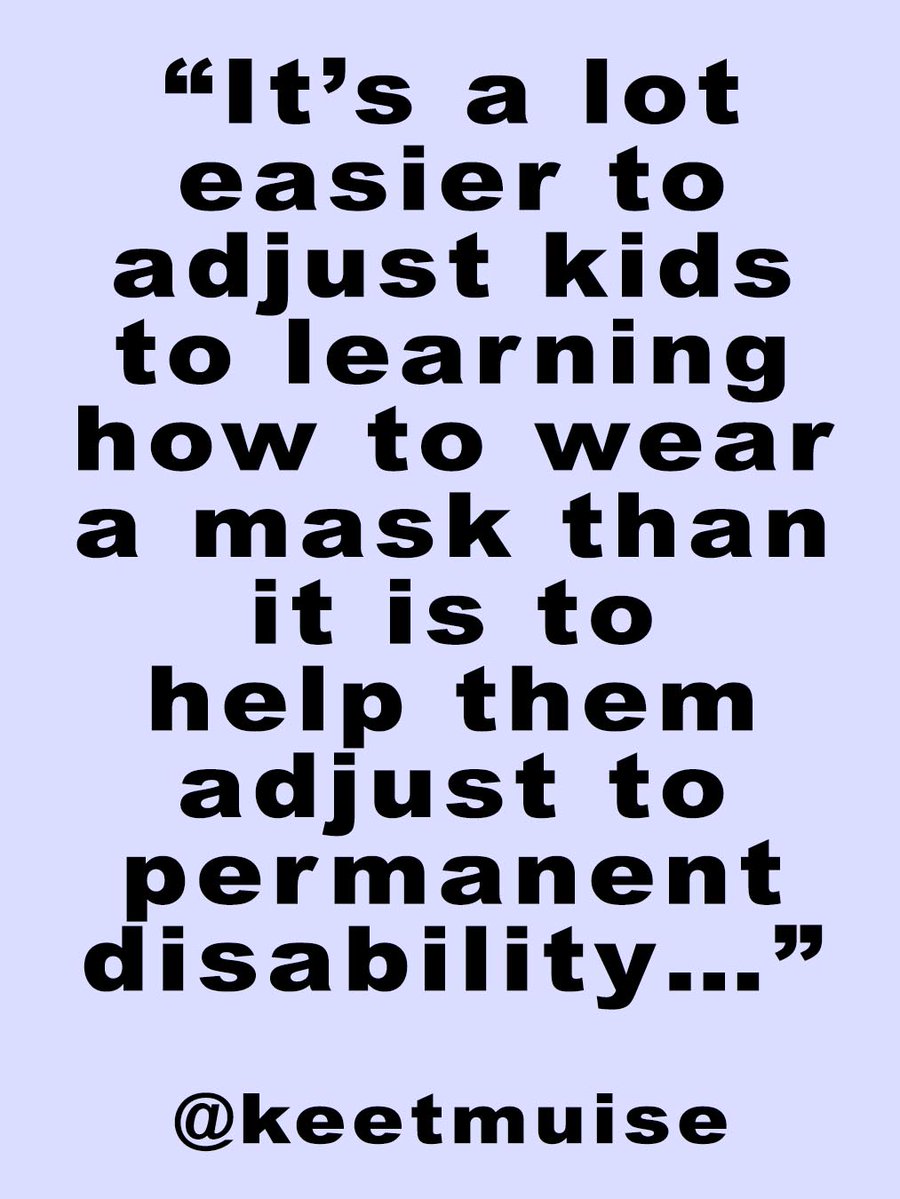
4/We were told masks weren't suitable because we might use them incorrectly. As if highly educated people couldn't read instructions? Adding to her frustration was the early information that "children don't transmit the virus." Annie felt like teachers were living in a #Schools
6/completely different reality. Tragically, her family also contracted COVID-19. Beyond fatigue and low-grade fever, Annie suffered from dizziness, headaches, and extreme sound sensitivity. The noise of the copier was unbearable, and she experienced tinnitus. "It was Long COVID
7/screaming," she recalls. Despite being on sick leave, her sense of guilt was constant, and she contracted COVID multiple times, even after vaccination. Annie poignantly reflects on here experience: "It seems I'm quite susceptible to COVID and it's like #SensoryIssues #Tinnitus
8/the virus targets the body's weaknesses. Perhaps there was a neurological vulnerability in me, so maybe I would have gotten Alzheimer's eventually, but perhaps not this early, and not if I had a different profession and hadn't been infected so many times." #LongTermEffects
9/Alarmingly US research indicates a significantly increased risk of an Alzheimer's diagnosis within a year of a COVID-19 infection. A study by Lindsay Wang at Case Western Reserve University found a 50-80% increased risk in over 6 million individuals aged 65+ #COVIDandAlzheimers
10/Annie's story and this research underscore the urgent need for more understanding and support for those suffering from Long COVID and its potential neurological consequences. We must listen to their experiences and invest in further research. #LongCovidAwareness
11/Let's raise our voices to support individuals like Annie and demand more research into the long-term effects of COVID-19. Share this thread to spread awareness.
H/T @scott_squires for his amazing poster collection!
#SupportLongCovid #ShareYourStory
1/ New science from bioRxiv (10.64898/2025.12.31.697156) shows that asthma isn't just a "reaction"—it's a fundamental destruction of our airway's molecular program. Our lungs are being physically rewritten by chronic exposure. 🧵👇 The #LeonardiEffect is very real!
2/ Crucially, the study highlights how T-cells become dysfunctional and drive permanent scarring (remodeling). But there's more: research from MedUni Wien confirms that SARS-CoV-2 infections cause long-term damage to our entire immune system. 🫁⚠️
3/ The Vienna study shows that even mild infections can inhibit T-cell memory and significantly reduce immune cells in the blood for over 10 months. This means your body has a harder time fighting off common infections like Influenza A, Staph, or VZV.
1/ Is SARS-CoV-2 more than just a respiratory virus? Emerging research is raising a chilling question: Could COVID-19 be an oncovirus? Recent studies suggest the virus may interfere with our body’s ability to prevent and fight cancer. Let’s dive into the science. 🧬👇 #Cancer
2/ A key study in Nature shows that the SARS-CoV-2 spike protein can inhibit DNA damage repair. It blocks the recruitment of critical proteins like BRCA1 and 53BP1 to repair sites. If our DNA can’t fix itself, mutations accumulate: the first step toward cancer.
3/ The P53 protein is known as the ”Guardian of the Genome” because it stops tumors. Research in the Journal of Infection shows that P53 is significantly downregulated during and long after infection. Losing this shield creates a high-risk environment for oncogenesis. 📉🦠
1/ Following the thread on the cumulative risk of Long COVID in children after reinfection, let's look at a new study on vaccination and adults. The evidence is overwhelmingly clear: vaccination is protective. #VaccinesWork #PublicHealth
2/ A massive Swedish nationwide study (Sahlgrenska Academy, European Heart Journal) of over 8 million adults confirms that full COVID-19 vaccination significantly reduces the risk of severe cardiovascular conditions linked to the infection.
3/ 📉 VACCINES REDUCE SEVERE RISKS:
After full vaccination (especially the 3rd dose), the risk of severe cardiovascular events—including heart attack, stroke, and heart failure—was generally 20-30% lower compared to the unvaccinated.
1/ 🚨 The Double-Edged Sword: New research suggests #SARSCoV2 might be an unseen accelerant for #LungCancer. Beyond acute illness, the virus's long-term effects could fuel cancer development and progression. This is a critical public health warning. 👇 #COVID19 #Oncology
2/ The study highlights several terrifying potential mechanisms:
Chronic Inflammation: The cytokine storm and persistent, dysregulated inflammation after COVID are well-known cancer promoters.
3/ ACE2 Receptor: SARS-CoV-2 binding disrupts the protective RAS pathway, potentially contributing to cancer progression.
Dormant Cells: Respiratory infections like COVID-19 can even wake up dormant cancer cells (DCCs) in the lungs, triggering metastasis.
1/ Marie Ewerz is 49. She got COVID in 2021 and has not been well since. Her symptoms are getting worse. 💔 Thousands in Sweden still suffer from a condition—Long COVID—that remains largely misunderstood, years after the first cases. Marie says: "You feel so alone."
@SwedishPM
2/ The illness has fundamentally changed her family life. At 9, her son first found her passed out on the kitchen floor. "He's been terrified and barely dared to leave me," Marie shares. Now 13, his worry meant he’s had to grow up too fast.
@Folkhalsomynd @jakobforssmed
1/ A new study on #LongCovid in children shows worrying results. Researchers found a strong link between persistent neuropsychiatric symptoms (like headaches, dizziness, and memory issues) and changes in brain volume, specifically in the temporal and subcortical regions.
2/ The study published in Pediatric Neurology found that children with more severe symptoms during the acute phase of COVID-19 were more likely to have significant brain volume changes months later. This suggests that the initial severity of symptoms can predict long-term effects
3/ Additionally, the research highlights that visual perception is also affected. Children with visual symptoms had lower scores on perceptual skills tests, pointing to potential underlying issues with how the brain processes visual information.