🚨NEW | The Gaza Humanitarian Foundation (GHF) — For Aid and Occupation
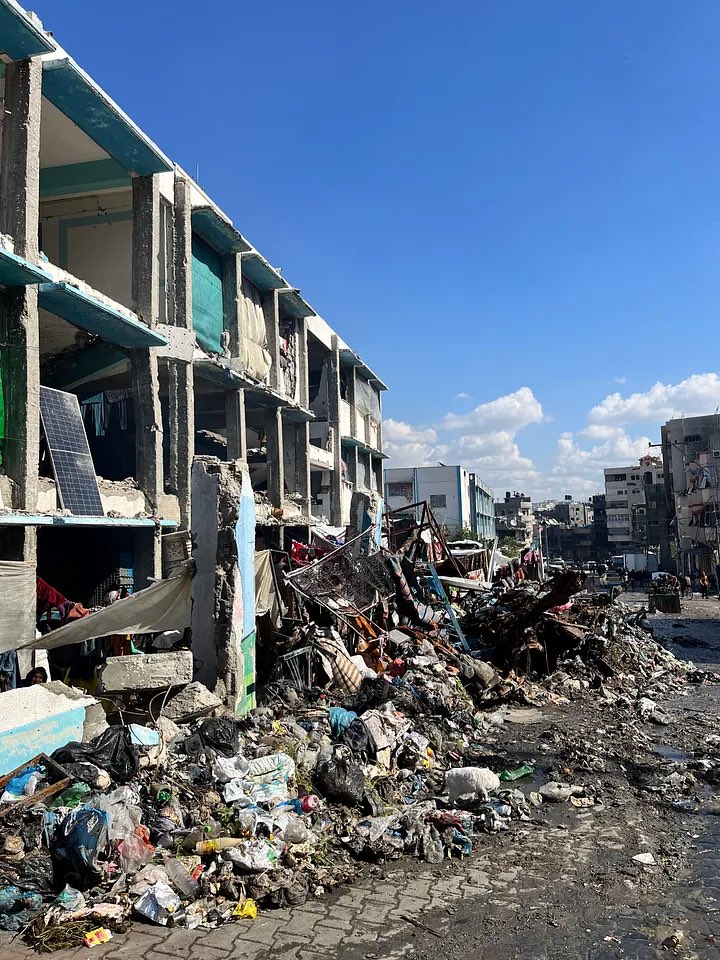
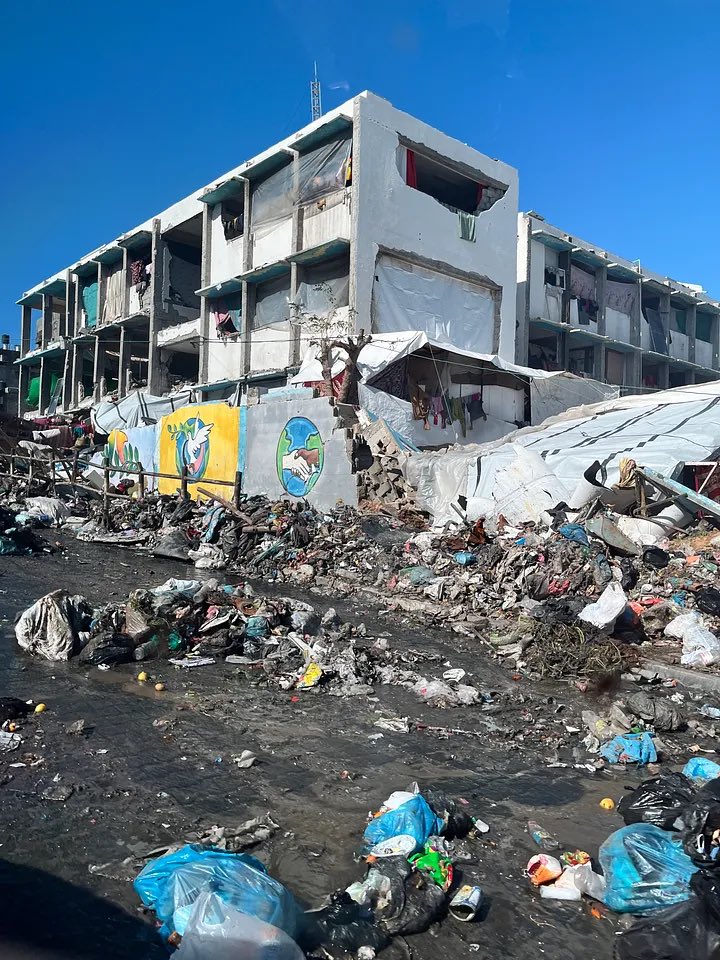
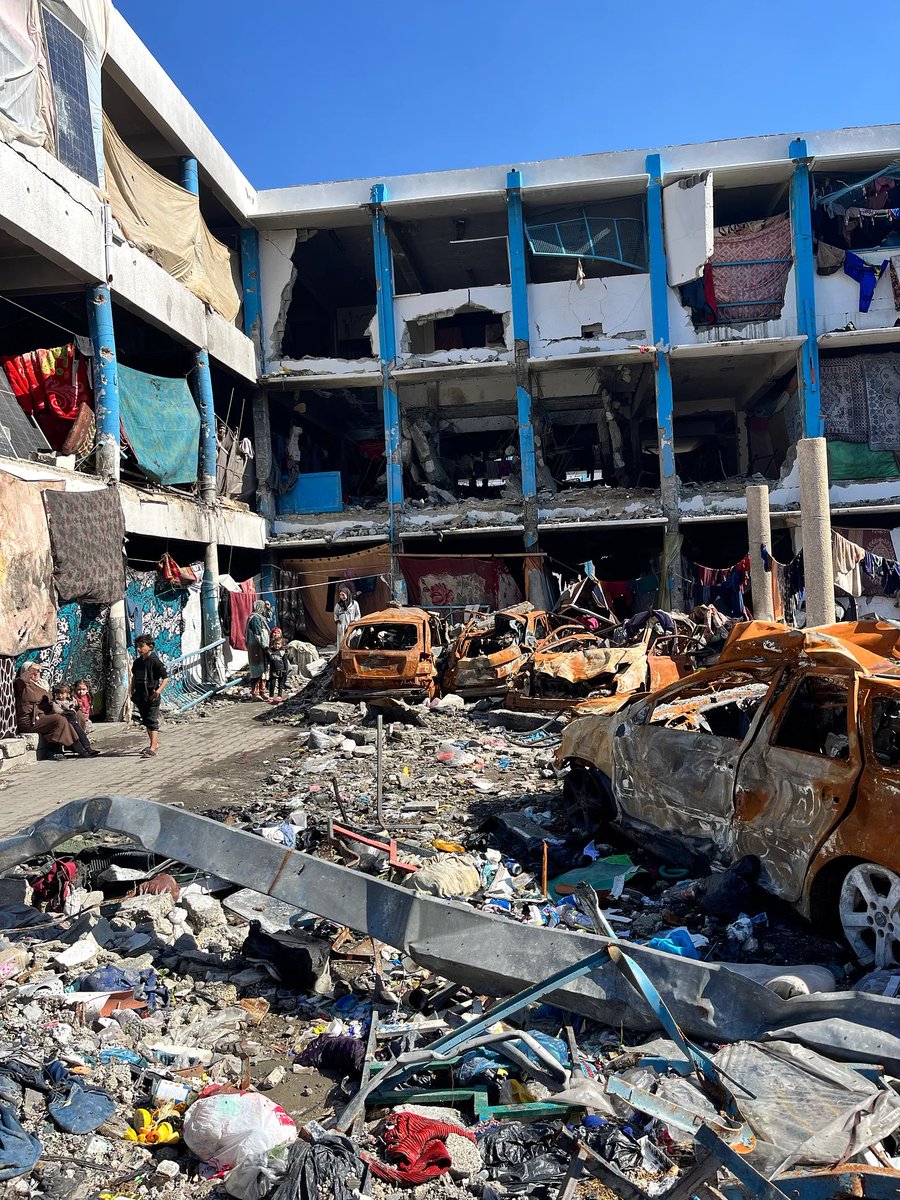
A newly formed and U.S.-backed private foundation forms the backbone of Israel’s new plan to control all humanitarian aid entering Gaza—68 days into a total siege that has driven the territory into catastrophic hunger.
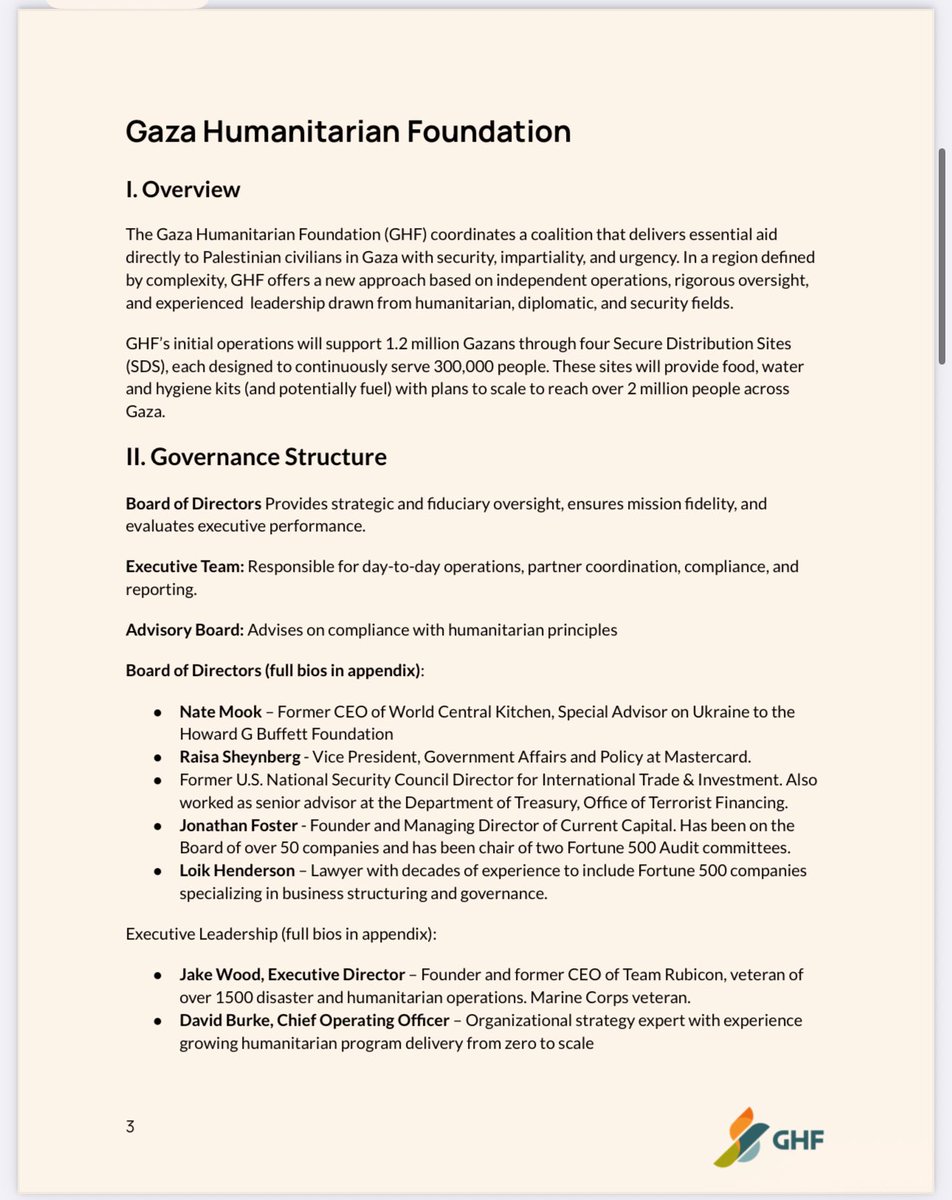
The Gaza Humanitarian Foundation (GHF) is being marketed as a secure and efficient alternative to traditional UN and NGO pipelines which Israel has systematically attacked and sought to dismantle. Staffed by U.S. military veterans, former officials, and corporate financiers, GHF promises to deliver aid to 1.2 million Palestinians through privately secured distribution hubs, with plans to expand to more than 2 million.
A closer look at the Foundation’s presentation documents obtained by Axios indicates it is likely to serve as a foreign-controlled proxy to militarize aid, sideline Palestinian institutions, and entrench a system of occupation under the guise of neutrality.
Here’s what to know: 🧵🔽
A newly formed and U.S.-backed private foundation forms the backbone of Israel’s new plan to control all humanitarian aid entering Gaza—68 days into a total siege that has driven the territory into catastrophic hunger.
The Gaza Humanitarian Foundation (GHF) is being marketed as a secure and efficient alternative to traditional UN and NGO pipelines which Israel has systematically attacked and sought to dismantle. Staffed by U.S. military veterans, former officials, and corporate financiers, GHF promises to deliver aid to 1.2 million Palestinians through privately secured distribution hubs, with plans to expand to more than 2 million.
A closer look at the Foundation’s presentation documents obtained by Axios indicates it is likely to serve as a foreign-controlled proxy to militarize aid, sideline Palestinian institutions, and entrench a system of occupation under the guise of neutrality.
Here’s what to know: 🧵🔽

1. The Operational Model: Armored Aid Hubs and Biometric Control
GHF says it will establish four Secure Distribution Sites (SDS) inside Gaza, each designed to serve up to 300,000 people with food, water, hygiene kits, and medical supplies—scaling up to more than 2 million people over time. These aid hubs will be protected by private security contractors, not the Israeli military—but GHF states openly that all movement will be coordinated with the IDF and COGAT.
Aid, once inside the hub, will be distributed “with no eligibility requirements” and “based solely on need,” GHF says. But access to these hubs will first require passing through Israeli-controlled corridors—where biometric screening, facial recognition technology, and Israeli military approval apply. Once inside, aid is handed out; outside, access is filtered.
New reporting by Le Temps reveals that the broader Israeli plan will allow only 60 aid trucks per day into Gaza—ten times less than what entered during a brief ceasefire earlier this year. Armed personnel will oversee access to the aid zones, checking names and possibly screening individuals deemed “suspicious.”
Rights groups warn this creates a system of militarized aid—with the GHF footing the bill for private mercenary forces and operating under an Israeli security framework, not a humanitarian one.
GHF says it will establish four Secure Distribution Sites (SDS) inside Gaza, each designed to serve up to 300,000 people with food, water, hygiene kits, and medical supplies—scaling up to more than 2 million people over time. These aid hubs will be protected by private security contractors, not the Israeli military—but GHF states openly that all movement will be coordinated with the IDF and COGAT.
Aid, once inside the hub, will be distributed “with no eligibility requirements” and “based solely on need,” GHF says. But access to these hubs will first require passing through Israeli-controlled corridors—where biometric screening, facial recognition technology, and Israeli military approval apply. Once inside, aid is handed out; outside, access is filtered.
New reporting by Le Temps reveals that the broader Israeli plan will allow only 60 aid trucks per day into Gaza—ten times less than what entered during a brief ceasefire earlier this year. Armed personnel will oversee access to the aid zones, checking names and possibly screening individuals deemed “suspicious.”
Rights groups warn this creates a system of militarized aid—with the GHF footing the bill for private mercenary forces and operating under an Israeli security framework, not a humanitarian one.


2. A New Foreign Architecture for Gaza: Who’s Running It?
The organization is led entirely by U.S. and international actors, with no Palestinians involved in the leadership or oversight of the project.
It includes:
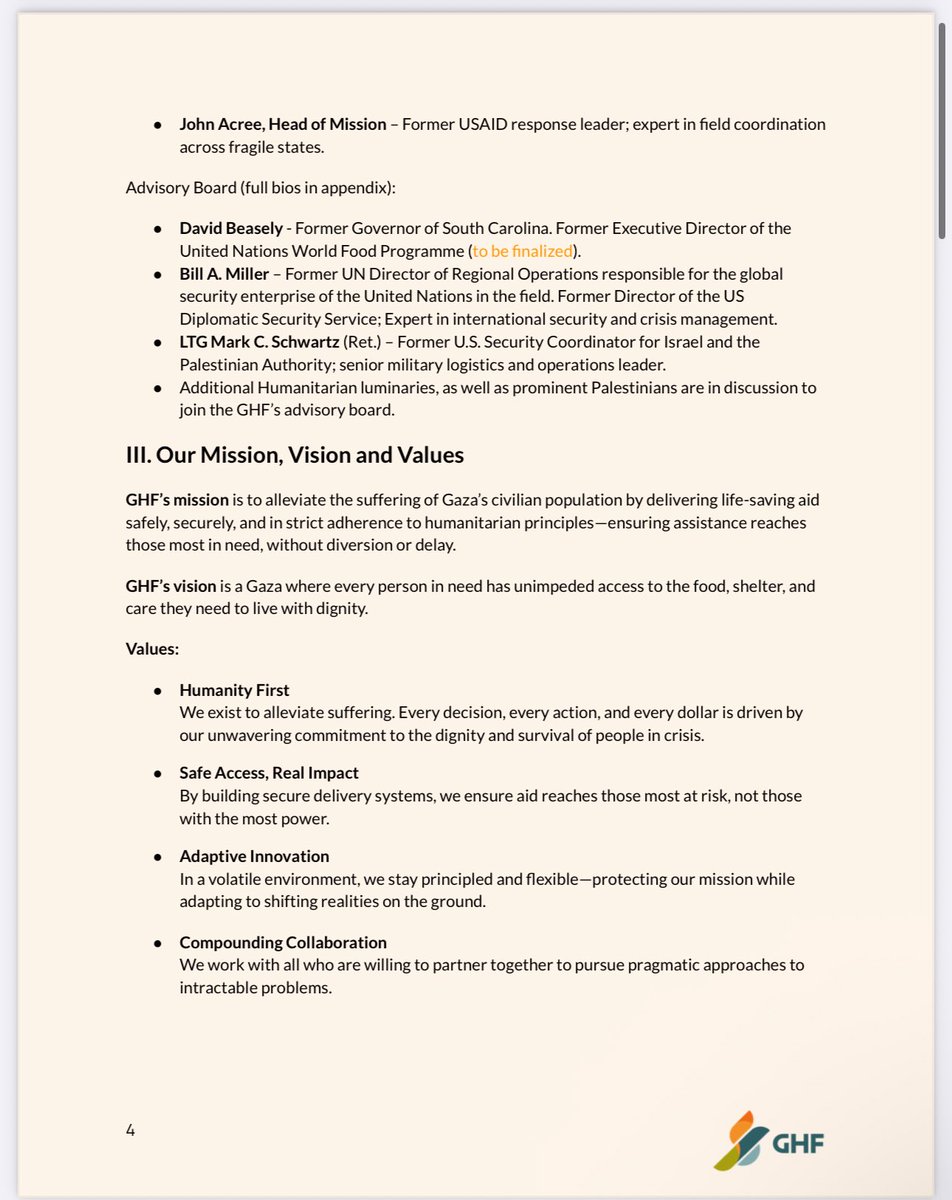
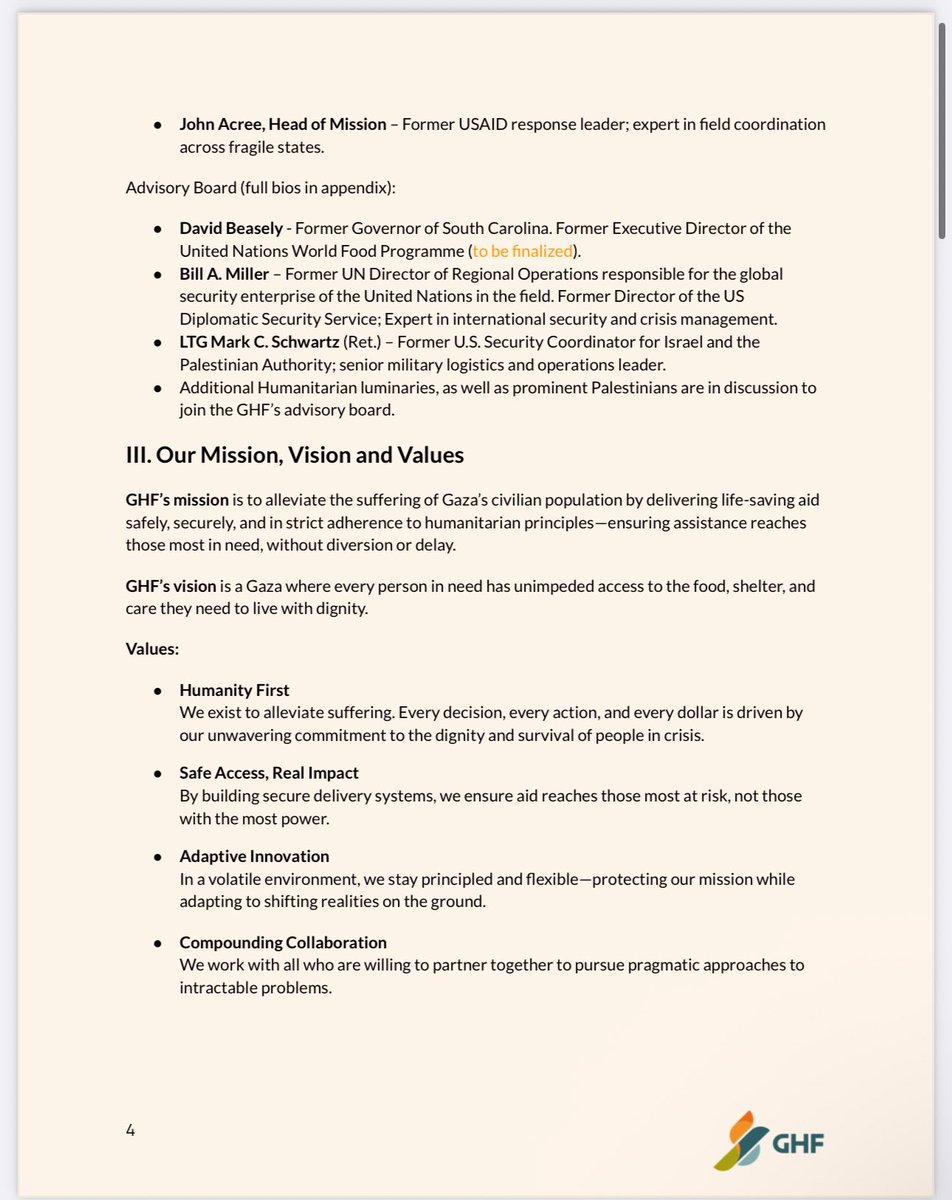
➤ Jake Wood, Executive Director (Team Rubicon founder, U.S. Marine Corps veteran)
➤ David Burke, Chief Operating Officer
➤ John Acree, Head of Mission (ex-USAID)
Board members include:
➤ Nate Mook, former CEO of World Central Kitchen
➤ Raisa Sheynberg, ex-U.S. Treasury (terrorist financing), now Mastercard VP
➤ Jonathan Foster, Wall Street financier
➤ Loik Henderson, corporate governance lawyer
Advisory board includes military and diplomatic officials, including:
➤ LTG Mark Schwartz, former U.S. Security Coordinator for Israel/PA
➤ Bill A. Miller, former UN and U.S. security official
➤ David Beasley, former head of the World Food Programme (pending confirmation)
Formally registered just months ago in Geneva, according to Le Temps, the group was incorporated with a Swiss lawyer, a U.S.-based legal consultant, and an Armenian financier on its board—none of whom have a background in humanitarian work.
There are no Palestinians in GHF’s governance or operational leadership.
The organization is led entirely by U.S. and international actors, with no Palestinians involved in the leadership or oversight of the project.
It includes:
➤ Jake Wood, Executive Director (Team Rubicon founder, U.S. Marine Corps veteran)
➤ David Burke, Chief Operating Officer
➤ John Acree, Head of Mission (ex-USAID)
Board members include:
➤ Nate Mook, former CEO of World Central Kitchen
➤ Raisa Sheynberg, ex-U.S. Treasury (terrorist financing), now Mastercard VP
➤ Jonathan Foster, Wall Street financier
➤ Loik Henderson, corporate governance lawyer
Advisory board includes military and diplomatic officials, including:
➤ LTG Mark Schwartz, former U.S. Security Coordinator for Israel/PA
➤ Bill A. Miller, former UN and U.S. security official
➤ David Beasley, former head of the World Food Programme (pending confirmation)
Formally registered just months ago in Geneva, according to Le Temps, the group was incorporated with a Swiss lawyer, a U.S.-based legal consultant, and an Armenian financier on its board—none of whom have a background in humanitarian work.
There are no Palestinians in GHF’s governance or operational leadership.
3. GHF’s Model: Logistics, Security, and “Humanitarian Principles”
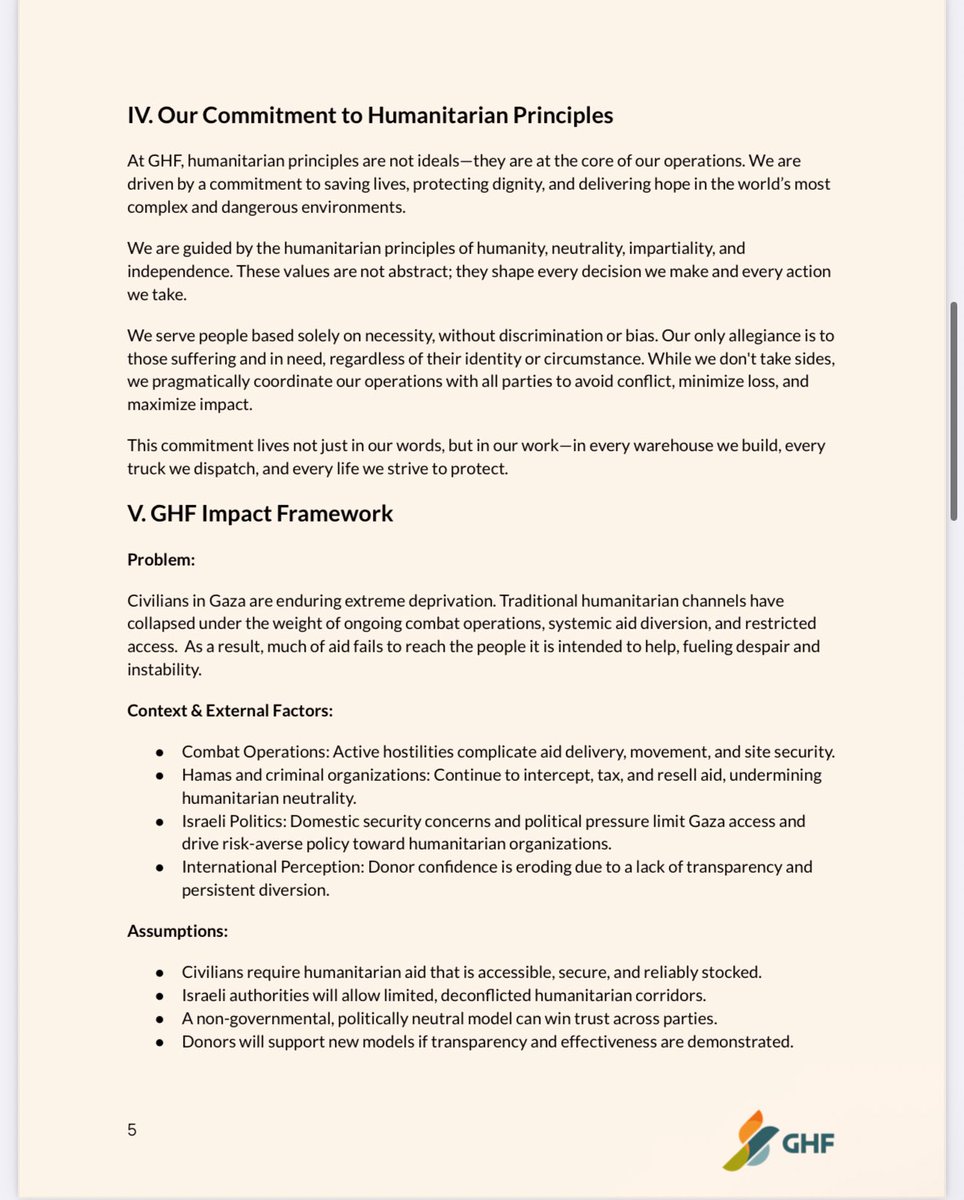
GHF says its model is designed to be independent, auditable, and free from interference by armed actors or governments. They emphasize strict compliance with the four pillars of humanitarian work: humanity, neutrality, impartiality, and independence. They add their only allegiance is to people in need.
Supplies will move through “secure humanitarian corridors” using armored vehicles, with perimeter security provided by professionals who previously secured the Netzarim Corridor during Israel’s ceasefire. GHF emphasizes that the IDF will not be present at SDS hubs, but acknowledges full coordination with Israeli military authorities to ensure movement and deconfliction.
Each SDS may become a staging area for further NGO activity, with GHF stating that they may offer “showers, restrooms, and operating spaces” for aid organizations that choose to co-locate. Long term, they envision “trusted community leaders” being trained to operate inside these systems—but that local role is not currently in place.
GHF says its model is designed to be independent, auditable, and free from interference by armed actors or governments. They emphasize strict compliance with the four pillars of humanitarian work: humanity, neutrality, impartiality, and independence. They add their only allegiance is to people in need.
Supplies will move through “secure humanitarian corridors” using armored vehicles, with perimeter security provided by professionals who previously secured the Netzarim Corridor during Israel’s ceasefire. GHF emphasizes that the IDF will not be present at SDS hubs, but acknowledges full coordination with Israeli military authorities to ensure movement and deconfliction.
Each SDS may become a staging area for further NGO activity, with GHF stating that they may offer “showers, restrooms, and operating spaces” for aid organizations that choose to co-locate. Long term, they envision “trusted community leaders” being trained to operate inside these systems—but that local role is not currently in place.
4. Who Controls the Pipeline—and Who’s Shut Out?
GHF describes itself as “neutral,” but its structure creates a parallel logistics regime in Gaza. All aid routed through its system must pass through Israeli-approved corridors—Ashdod or Kerem Shalom—and follow GHF’s internal tracking, security, and audit protocols. This system bypasses UNRWA, Palestinian NGOs, and long-established aid networks that previously served Gaza’s population.
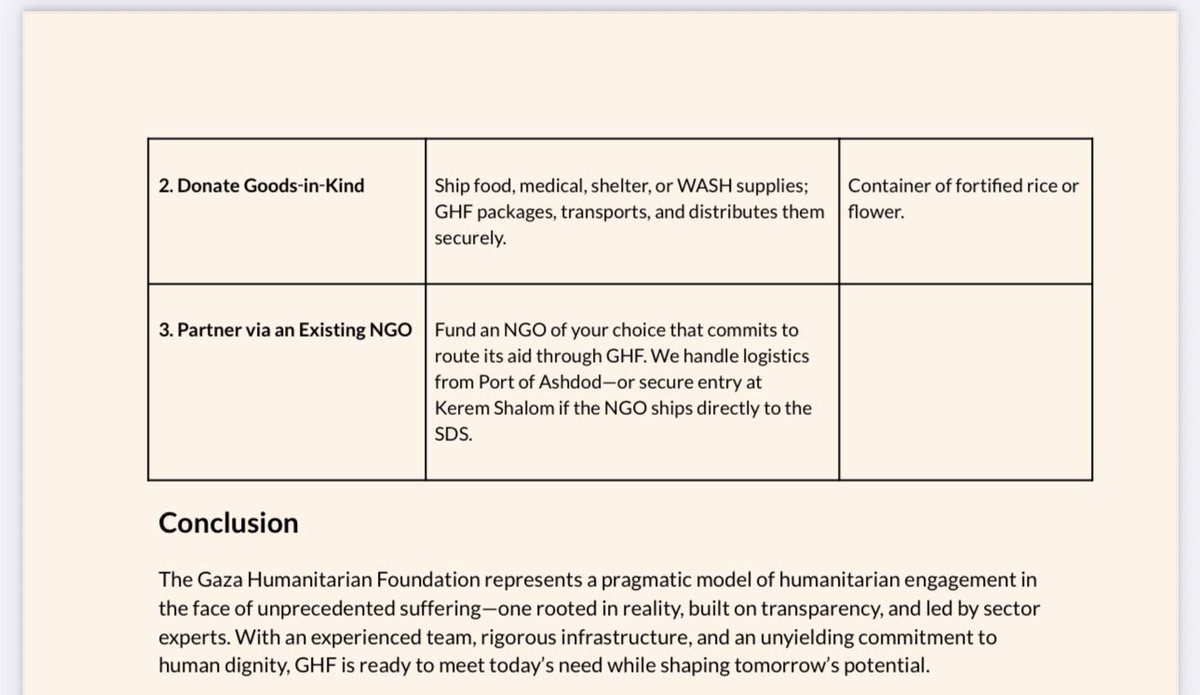
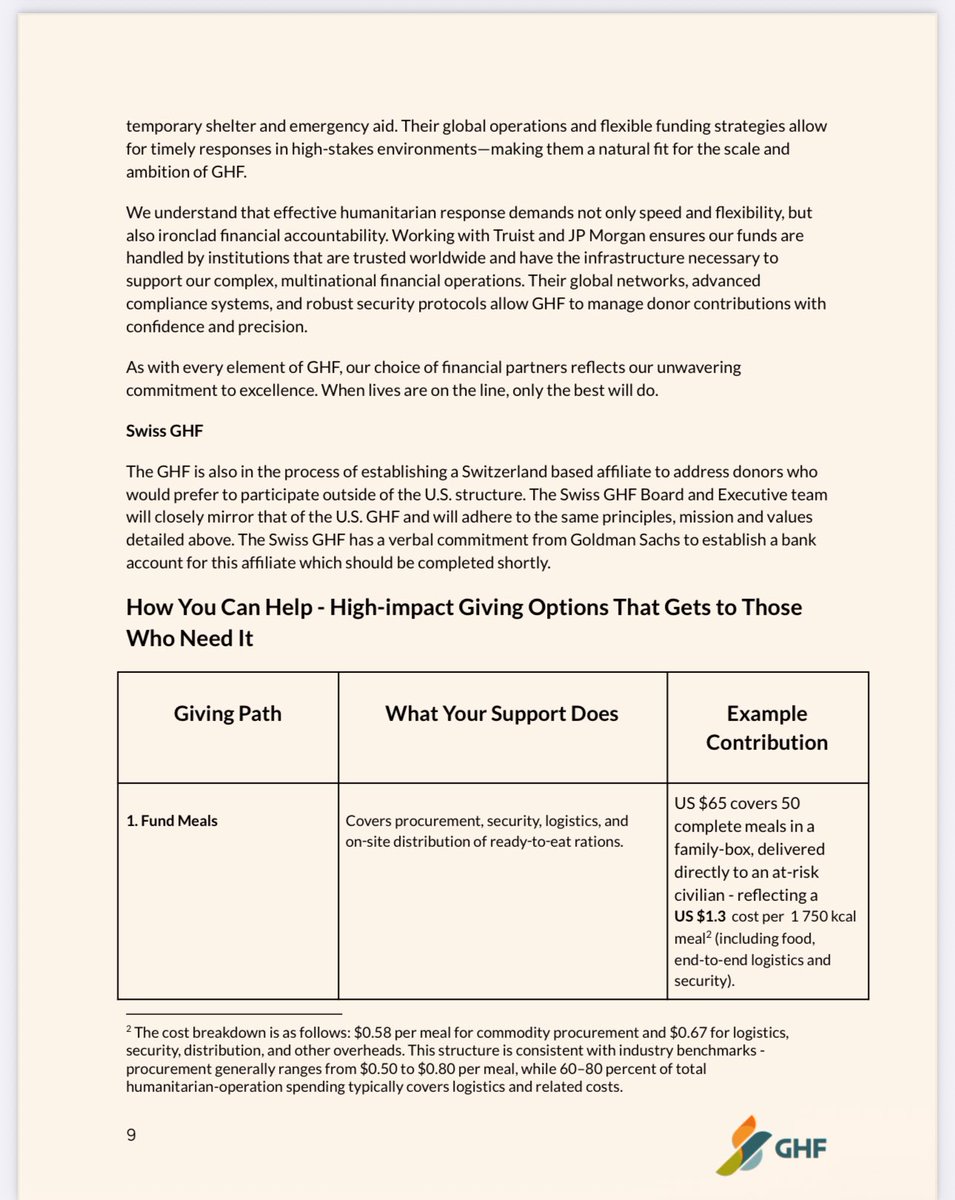
GHF promotes its transparency to donors through real-time dashboards, audit trails, and tightly monitored logistics. Aid is priced at $1.31 per meal, with:
➤ $0.58 for procurement
➤ $0.67 for logistics, armored transport, security, and administration
Donors can contribute through three tightly controlled channels:
➤ Fund 50 full meals for $65
➤ Send goods-in-kind (food, hygiene, shelter)
➤ Fund an NGO willing to route its shipments through GHF’s system
While marketed under the language of humanitarian principles—humanity, neutrality, impartiality, and independence—GHF operates entirely within the architecture of Israel’s siege, with no participation or oversight from Palestinian civil society.
GHF describes itself as “neutral,” but its structure creates a parallel logistics regime in Gaza. All aid routed through its system must pass through Israeli-approved corridors—Ashdod or Kerem Shalom—and follow GHF’s internal tracking, security, and audit protocols. This system bypasses UNRWA, Palestinian NGOs, and long-established aid networks that previously served Gaza’s population.
GHF promotes its transparency to donors through real-time dashboards, audit trails, and tightly monitored logistics. Aid is priced at $1.31 per meal, with:
➤ $0.58 for procurement
➤ $0.67 for logistics, armored transport, security, and administration
Donors can contribute through three tightly controlled channels:
➤ Fund 50 full meals for $65
➤ Send goods-in-kind (food, hygiene, shelter)
➤ Fund an NGO willing to route its shipments through GHF’s system
While marketed under the language of humanitarian principles—humanity, neutrality, impartiality, and independence—GHF operates entirely within the architecture of Israel’s siege, with no participation or oversight from Palestinian civil society.


5. Financing and Oversight: Wall Street Meets Humanitarianism
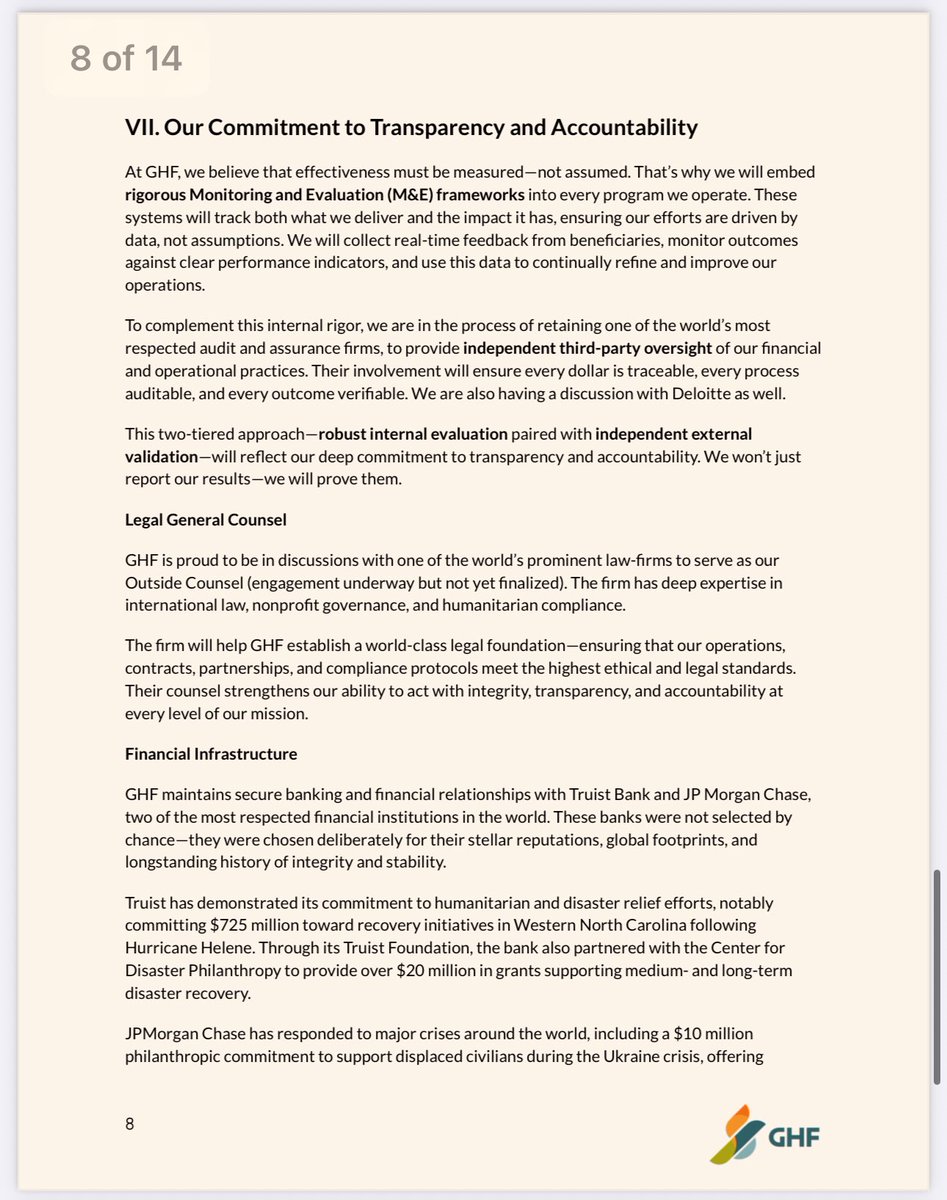
GHF is embedded in elite Western financial infrastructure:
➤ It banks with Truist and JPMorgan Chase
➤ It is establishing a Swiss affiliate backed by Goldman Sachs
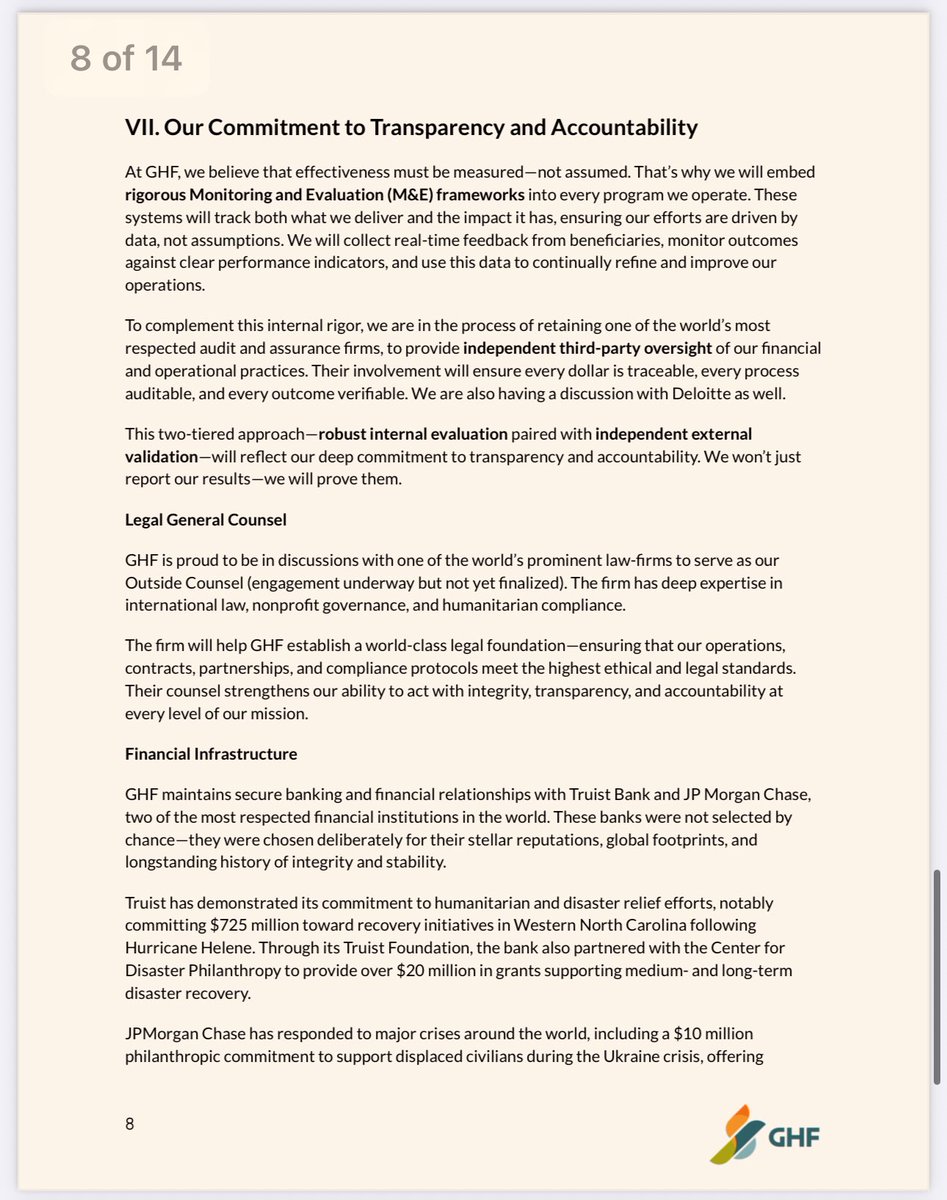
➤ And it is negotiating with Deloitte for auditing and has retained a top U.S. law firm for compliance
GHF is embedded in elite Western financial infrastructure:
➤ It banks with Truist and JPMorgan Chase
➤ It is establishing a Swiss affiliate backed by Goldman Sachs
➤ And it is negotiating with Deloitte for auditing and has retained a top U.S. law firm for compliance
6. Replacing the UN? The Humanitarian Community Says No
GHF is emerging in direct conflict with the global humanitarian system. In recent weeks, Israel presented its new aid plan verbally to UN agencies, reportedly including biometric ID checks, restricted truck entries, and aid hubs guarded by private contractors.
In response, the UN Office for the Coordination of Humanitarian Affairs (OCHA) issued a firm rejection, warning that the plan “contravenes fundamental humanitarian principles” and would leave large parts of Gaza, including vulnerable populations, without supplies.
The UN Secretary-General, all UN agencies operating in Gaza, and the Humanitarian Country Team issued a joint statement declaring they will not participate in any scheme that violates the principles of humanity, impartiality, independence, and neutrality.
OCHA spokesperson Jens Laerke warned that the plan amounts to the “militarization of humanitarian aid,” saying it risks turning aid centers into military targets and tools of population control.
GHF is emerging in direct conflict with the global humanitarian system. In recent weeks, Israel presented its new aid plan verbally to UN agencies, reportedly including biometric ID checks, restricted truck entries, and aid hubs guarded by private contractors.
In response, the UN Office for the Coordination of Humanitarian Affairs (OCHA) issued a firm rejection, warning that the plan “contravenes fundamental humanitarian principles” and would leave large parts of Gaza, including vulnerable populations, without supplies.
The UN Secretary-General, all UN agencies operating in Gaza, and the Humanitarian Country Team issued a joint statement declaring they will not participate in any scheme that violates the principles of humanity, impartiality, independence, and neutrality.
OCHA spokesperson Jens Laerke warned that the plan amounts to the “militarization of humanitarian aid,” saying it risks turning aid centers into military targets and tools of population control.
7. A New Aid System—or a Shadow Governance Project?
GHF insists it is focused solely on saving lives and presents itself as a pragmatic solution amid a collapsed aid system. But its structure—staffed by U.S. officials, guarded by private contractors, coordinated with the Israeli military, and funded through elite financial networks—represents a profound shift in who controls aid to Gaza.
There is no oversight by the people it claims to serve. Palestinian civil society, aid workers, and ministries are excluded. The aid it distributes flows through systems designed by and for foreign actors—under siege, under surveillance, and under occupation.
Israeli Prime Minister Benjamin Netanyahu has described the objective of expanded operations in Gaza as the “occupation” of the territory and the establishment of a “sustained presence.” In that context, GHF’s aid hubs and security apparatus risk becoming not emergency infrastructure—but the scaffolding of a long-term foreign presence dressed in humanitarian language.
GHF insists it is focused solely on saving lives and presents itself as a pragmatic solution amid a collapsed aid system. But its structure—staffed by U.S. officials, guarded by private contractors, coordinated with the Israeli military, and funded through elite financial networks—represents a profound shift in who controls aid to Gaza.
There is no oversight by the people it claims to serve. Palestinian civil society, aid workers, and ministries are excluded. The aid it distributes flows through systems designed by and for foreign actors—under siege, under surveillance, and under occupation.
Israeli Prime Minister Benjamin Netanyahu has described the objective of expanded operations in Gaza as the “occupation” of the territory and the establishment of a “sustained presence.” In that context, GHF’s aid hubs and security apparatus risk becoming not emergency infrastructure—but the scaffolding of a long-term foreign presence dressed in humanitarian language.
• • •
Missing some Tweet in this thread? You can try to
force a refresh