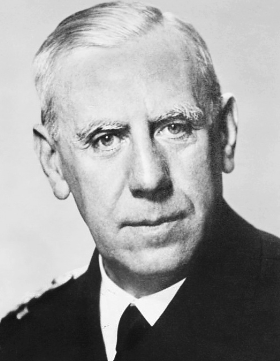
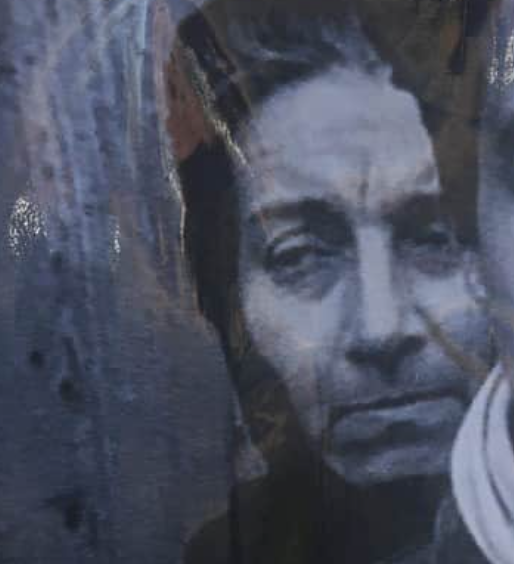
Just before Easter 1940, 'Coco the Clown' volunteered to join the British Forces, also bringing laughter to the Pioneer Corps on Dartmoor during the Second World War.
This is Nicolai Poliakoff's vivid first-hand account of his wartime circus showbusiness:
(🧵)
This is Nicolai Poliakoff's vivid first-hand account of his wartime circus showbusiness:
(🧵)

Throughout his long career as an entertainer, Coco the Clown brought immeasurable happiness and laughter to children and adults alike.
Known to everyone as simply Coco the Clown, his stage name masked his Russian roots. He was born Nicolai Poliakoff in 1900 in a theatre in Besinowiz where his mother worked.
His career as an entertainer began at the age of five when he sang and danced in an army officers’ club to earn money to feed his impoverished family.
During the Revolution he served in the 11th Siberian Regiment and later with the Red Army.
During the 1920s he worked in the Circus Busch in Berlin, from where he received a contract to perform in England.
In 1929 he joined Bertram Mill’s Circus and thereafter made England his permanent home.
(continued)
Known to everyone as simply Coco the Clown, his stage name masked his Russian roots. He was born Nicolai Poliakoff in 1900 in a theatre in Besinowiz where his mother worked.
His career as an entertainer began at the age of five when he sang and danced in an army officers’ club to earn money to feed his impoverished family.
During the Revolution he served in the 11th Siberian Regiment and later with the Red Army.
During the 1920s he worked in the Circus Busch in Berlin, from where he received a contract to perform in England.
In 1929 he joined Bertram Mill’s Circus and thereafter made England his permanent home.
(continued)
Just before Easter 1940, he volunteered to join the British Forces and was accepted.
He was not permitted to join a fighting unit because he did not have British nationality and so he was sent into the AMPC and enlisted in Kitchener Camp.
One of the first requirements for a new recruit was to be introduced to the Commanding Officer, Lord Reading, who promptly asked him about his career. When he replied, ‘I am Coco the Clown,’
Lord Reading and the other officers smiled.
It was just the kind of answer that they needed.
They immediately gave him the task of directing the garrison theatre at Kitchener Camp to organise and co-ordinate entertainment for the men.
In spite of his protestations that he wanted to be a soldier, he did in fact spend his days on army duties and his evenings entertaining the other soldiers or rehearsing for forthcoming shows.
In his autobiography Behind My Greasepaint, he vividly and colourfully describes life in the Pioneer Corps in Devon and how he had to draw the talent for the shows from amongst the soldiers themselves.
(continued)
He was not permitted to join a fighting unit because he did not have British nationality and so he was sent into the AMPC and enlisted in Kitchener Camp.
One of the first requirements for a new recruit was to be introduced to the Commanding Officer, Lord Reading, who promptly asked him about his career. When he replied, ‘I am Coco the Clown,’
Lord Reading and the other officers smiled.
It was just the kind of answer that they needed.
They immediately gave him the task of directing the garrison theatre at Kitchener Camp to organise and co-ordinate entertainment for the men.
In spite of his protestations that he wanted to be a soldier, he did in fact spend his days on army duties and his evenings entertaining the other soldiers or rehearsing for forthcoming shows.
In his autobiography Behind My Greasepaint, he vividly and colourfully describes life in the Pioneer Corps in Devon and how he had to draw the talent for the shows from amongst the soldiers themselves.
(continued)
In Coco’s own words, entertaining the AMPC on Dartmoor:
‘One day an order came that we must leave the camp within forty-eight hours. That was when the trouble began at Dunkirk. Everybody was running up and down, packing and preparing to leave. I was busy because, although packing my kit didn’t take long, it was the theatrical stuff that was the problem. I had to pack all my belongings myself, including suits, costumes and even scenery. I couldn’t very well ask the soldiers to help me as they were all busy with their own jobs, so I worked all night through, and you can imagine how tired I was.
When the time came for us to leave the camp we marched about three miles to the station. Nobody knew where we were going. I was very pleased when at last I got into the train. We were in the train for a very long time and next morning the train stopped and we were all told to fall in on the platform. There was no name on the station and we didn’t know where we were. I looked around and there was not a single house to be seen.'
(continued)
‘One day an order came that we must leave the camp within forty-eight hours. That was when the trouble began at Dunkirk. Everybody was running up and down, packing and preparing to leave. I was busy because, although packing my kit didn’t take long, it was the theatrical stuff that was the problem. I had to pack all my belongings myself, including suits, costumes and even scenery. I couldn’t very well ask the soldiers to help me as they were all busy with their own jobs, so I worked all night through, and you can imagine how tired I was.
When the time came for us to leave the camp we marched about three miles to the station. Nobody knew where we were going. I was very pleased when at last I got into the train. We were in the train for a very long time and next morning the train stopped and we were all told to fall in on the platform. There was no name on the station and we didn’t know where we were. I looked around and there was not a single house to be seen.'
(continued)
'The command came, “Attention, right turn, by your left quick march,” and off we went, not by roads but over fields and ditches, for about two miles. We then came to a hill. It seemed to take hours marching to the top of it. As we were so tired the hill looked as if it would never end. All of a sudden before my eyes I saw a camp. It had little tents all round like mushrooms and one big tent with a sign, NAAFI canteen.
My heart started to beat faster and it reminded me of the olden days when I was with Bertram Mills Circus, and in my imagination it was as if I was going towards the Big Top. I even saw wild ponies in the field. It was Dartmoor Camp, which was very popular for shooting practice.'
(continued)
My heart started to beat faster and it reminded me of the olden days when I was with Bertram Mills Circus, and in my imagination it was as if I was going towards the Big Top. I even saw wild ponies in the field. It was Dartmoor Camp, which was very popular for shooting practice.'
(continued)
'Our officers divided us into groups of eight and we started to occupy those little tents. We were issued with palliasses which we had to fill with straw for our beds, and as it was cold we were issued with extra blankets, but the weather was in our favour that day, as it was like a summer’s day.
Everybody was very pleased, not because they were going to sleep in tents but because after such a long journey they could at last have a rest.
Next morning I woke up and found it very cold and wet. I got up and looked out of the tent and couldn’t see a thing. Everything was covered in thick fog. I thought the fog would lift later in the day, but I was wrong. It became worse, and so it was the next day and the day after that.'
(continued)
Everybody was very pleased, not because they were going to sleep in tents but because after such a long journey they could at last have a rest.
Next morning I woke up and found it very cold and wet. I got up and looked out of the tent and couldn’t see a thing. Everything was covered in thick fog. I thought the fog would lift later in the day, but I was wrong. It became worse, and so it was the next day and the day after that.'
(continued)
'Everybody looked miserable and unhappy, so I decided to give them a show. I went to Lieutenant May and asked for permission to entertain the boys. He asked me, “Where do you expect to put a show on here, we haven’t a theatre.” I asked him what would be wrong with the NAAFI canteen. We could move the tables and use the forms as seating in a circle to make it look like a little circus. He agreed with me and I started to prepare for a show.
But what with? I ran from tent to tent looking for talent and found a few volunteers who would co-operate with me. I started to rehearse right away all sorts of little sketches. It was very hard for me this time as my family couldn’t help me out because they weren’t with me, so I had to find a partner for my special act, and that was not easy.'
(continued)
But what with? I ran from tent to tent looking for talent and found a few volunteers who would co-operate with me. I started to rehearse right away all sorts of little sketches. It was very hard for me this time as my family couldn’t help me out because they weren’t with me, so I had to find a partner for my special act, and that was not easy.'
(continued)
'While I was rehearsing the Lieutenant came to me. “I’ve been to see the C.O,” he said, “and the show must not be later than tomorrow, as we might be moving any time. The C.O will be present at the show.” After hard work and a lot of preparation I succeeded in putting the show together, and the poster, which was quickly written with a piece of cotton wool dipped in ink, read as follows:
CORPORAL POLAKOVS
has the pleasure to invite everybody to a special circus performance in the NAAFI canteen tent at 7.30 tonight.
Programme:
No.1 Sketch
No.2 Coco Balancing
No.3 Accordionist
No.4 Coco the Conjurer
No.5 Coco the Acrobat
No.6 Monologues
No.7 Coco the Mind Reader
No.8 Accordionist; Community Singing
No.9 Coco and Partner; Comedy Burlesque
(continued)
CORPORAL POLAKOVS
has the pleasure to invite everybody to a special circus performance in the NAAFI canteen tent at 7.30 tonight.
Programme:
No.1 Sketch
No.2 Coco Balancing
No.3 Accordionist
No.4 Coco the Conjurer
No.5 Coco the Acrobat
No.6 Monologues
No.7 Coco the Mind Reader
No.8 Accordionist; Community Singing
No.9 Coco and Partner; Comedy Burlesque
(continued)
'It was a command performance, as the C.O was there. The tent was full as the boys had nowhere else to go and the weather was very bad, pouring with rain.
The tent was lit by two paraffin lamps, which was very useful for me when I did my conjuring tricks. The show went very well and they all enjoyed it, including the C.O.
When it came to the last act, in which I decided to do a water-comedy, not only the audience laughed but I couldn’t help laughing myself, because outside it was raining and everybody was slightly wet themselves and at the thought of what a fool I was.'
(continued)
The tent was lit by two paraffin lamps, which was very useful for me when I did my conjuring tricks. The show went very well and they all enjoyed it, including the C.O.
When it came to the last act, in which I decided to do a water-comedy, not only the audience laughed but I couldn’t help laughing myself, because outside it was raining and everybody was slightly wet themselves and at the thought of what a fool I was.'
(continued)
'It was not enough that the weather was wet but I had to pour buckets of water all over myself and get wetter still; but I didn’t mind about that so long as I could make the boys laugh.
Next morning it wasn’t funny for me, as I had caught a very bad cold, and I said to myself, “Well, Nicolai, you asked for it and you’ve only yourself to blame.” You see, to be a clown is not enough. You must be born a clown, and as I was born as such I will stick to it the rest of my life, for my ambition is to make people happy.
We stayed at Dartmoor Camp for another nine days and I gave them some more shows, but the weather was still bad. If it didn’t rain it was foggy.'
(continued...ending)
Next morning it wasn’t funny for me, as I had caught a very bad cold, and I said to myself, “Well, Nicolai, you asked for it and you’ve only yourself to blame.” You see, to be a clown is not enough. You must be born a clown, and as I was born as such I will stick to it the rest of my life, for my ambition is to make people happy.
We stayed at Dartmoor Camp for another nine days and I gave them some more shows, but the weather was still bad. If it didn’t rain it was foggy.'
(continued...ending)
Thank you for diving into the captivating story of 'Coco the Clown'.
If his journey interested you or sparked your curiosity, please consider following me @DrHelenFry for more WW2 history threads.
I’ve got plenty more unique wartime stories to share!
(end).
If his journey interested you or sparked your curiosity, please consider following me @DrHelenFry for more WW2 history threads.
I’ve got plenty more unique wartime stories to share!
(end).

• • •
Missing some Tweet in this thread? You can try to
force a refresh