Smooth Squat Progression For Life, Plus Starting Protocol
My goal is to make this the simplest squat thread I’ve done, so you have confidence on this subject from here on out…
My goal is to make this the simplest squat thread I’ve done, so you have confidence on this subject from here on out…
First off, I like 3 sets of 5, 5 SECONDS DOWN each rep as a starting protocol.
With this in mind, there’s nothing wrong with starting off ASSISTED…
With this in mind, there’s nothing wrong with starting off ASSISTED…
Next from assisted would be bodyweight with reach.
Even mastering your bodyweight for 5 reps 5 seconds down would be a worthy baseline for life…
Even mastering your bodyweight for 5 reps 5 seconds down would be a worthy baseline for life…
Next from bodyweight would be loaded with FULL REACH.
In fact, counterbalance in itself is a helpful trick that often gets people winning with less pain!
In fact, counterbalance in itself is a helpful trick that often gets people winning with less pain!
Next from full reach is partial reach, but heavier!
Both the distance to the body AND the load increase demand!
Both the distance to the body AND the load increase demand!
Next from partial reach is no reach, even heavier!
In my coaching experience, this is fantastic for general health.
I then use barbell based on desire / higher athletic demands.
More demand? More ability is called for…
In my coaching experience, this is fantastic for general health.
I then use barbell based on desire / higher athletic demands.
More demand? More ability is called for…
Next from no reach is on the body, even heavier.
I set goals here based on the athlete.
For example, for most purposes, how well you can handle your own weight in additional load is a fantastic goal.
I set goals here based on the athlete.
For example, for most purposes, how well you can handle your own weight in additional load is a fantastic goal.
To make extra clear:
Once we start loading, we have a smooth scale based on load AND DISTANCE from body.
This is how I’m able to get EVERY student of mine winning with squats.
Now for the subject of heel elevation…
Once we start loading, we have a smooth scale based on load AND DISTANCE from body.
This is how I’m able to get EVERY student of mine winning with squats.
Now for the subject of heel elevation…
Heel elevation is NOT necessary, BUT most people have lost some squat mobility due to not training it and/or sitting in chairs 8+ hours a day from a young age.
I’m homeschooling my kids and… they don’t have chairs yet lol! (Floor sitting is a mobility workout.)
Also…
I’m homeschooling my kids and… they don’t have chairs yet lol! (Floor sitting is a mobility workout.)
Also…
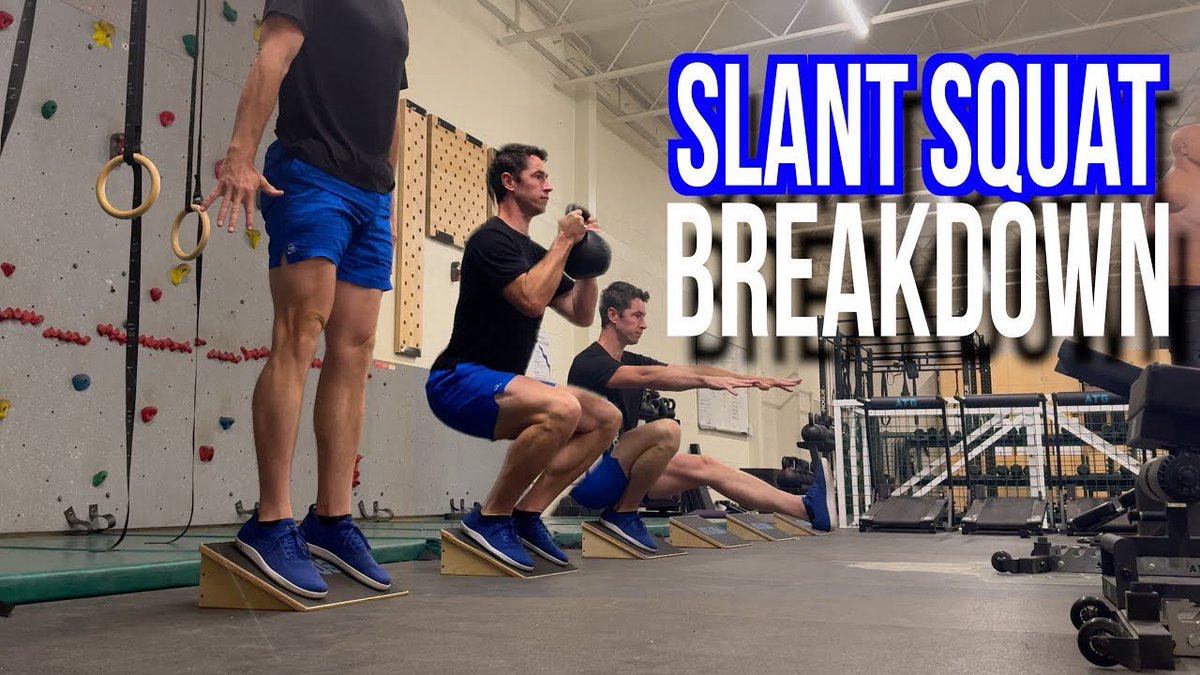
Even if you don’t need heel elevation, it is a simple yet powerful tool to help activate the muscles around the knees!
It also allows my favorite knee pain reducer: the reverse step up, which I’ll cover again this week as its own smooth scale!
It also allows my favorite knee pain reducer: the reverse step up, which I’ll cover again this week as its own smooth scale!
AND the deep split squat is another solution for deep squats!
Working both deep squat and deep split squat on average once per week has slowly but surely turned my knees from weakest link to strength over the past 10 years.
I’ll cover its smooth scale later this week, too!
Working both deep squat and deep split squat on average once per week has slowly but surely turned my knees from weakest link to strength over the past 10 years.
I’ll cover its smooth scale later this week, too!
Conclusion:
The deep squat is an effective exercise to protect and preserve the knees, IF:
“…technique is learned accurately under expert supervision and with progressive training loads.”
3 x 5 5 SECONDS DOWN with the above smooth progression is how I do this!

The deep squat is an effective exercise to protect and preserve the knees, IF:
“…technique is learned accurately under expert supervision and with progressive training loads.”
3 x 5 5 SECONDS DOWN with the above smooth progression is how I do this!

If you’d like to get on one of my full programs which have helped thousands of people to knee and lower back success stories: atgonlinecoaching.com
And my USA-made slant is at atgequipment.com, but it’s expensive so the dimensions are below as well.
And my USA-made slant is at atgequipment.com, but it’s expensive so the dimensions are below as well.

• • •
Missing some Tweet in this thread? You can try to
force a refresh