Introducing AlphaEvolve: a Gemini-powered coding agent for algorithm discovery.
It’s able to:
🔘 Design faster matrix multiplication algorithms
🔘 Find new solutions to open math problems
🔘 Make data centers, chip design and AI training more efficient across @Google. 🧵
Our system uses:
🔵 LLMs: To synthesize information about problems as well as previous attempts to solve them - and to propose new versions of algorithms
🔵 Automated evaluation: To address the broad class of problems where progress can be clearly and systematically measured.
🔵 Evolution: Iteratively improving the best algorithms found, and re-combining ideas from different solutions to find even better ones.
Over the past year, we’ve deployed algorithms discovered by AlphaEvolve across @Google’s computing ecosystem, including data centers, software and hardware.
It’s been able to:
🔧 Optimize data center scheduling
🔧 Assist in hardware design
🔧 Enhance AI training and inference
We applied AlphaEvolve to a fundamental problem in computer science: discovering algorithms for matrix multiplication. It managed to identify multiple new algorithms.
This significantly advances our previous model AlphaTensor, which AlphaEvolve outperforms using its better and more generalist approach. ↓ goo.gle/3Fci8Ev
We also applied AlphaEvolve to over 50 open problems in analysis ✍️, geometry 📐, combinatorics ➕ and number theory 🔂, including the kissing number problem.
🔵 In 75% of cases, it rediscovered the best solution known so far.
🔵 In 20% of cases, it improved upon the previously best known solutions, thus yielding new discoveries.
We’re excited to keep developing AlphaEvolve.
This system and its general approach has potential to impact material sciences, drug discovery, sustainability and wider technological and business applications. Find out more ↓ goo.gle/3Fci8Ev
• • •
Missing some Tweet in this thread? You can try to
force a refresh

We’re reimagining a 50-year-old interface - the mouse pointer - with AI. 🖱️
These experimental demos show how people can intuitively direct Gemini on their screens using motion, speech, and natural shorthand to get things done 🧵
With an AI-enabled pointer, help is always available where you’re working - without having to detour to additional apps. 📲
Point at a PDF and request bullet points for an email, hover over a table to ask for a pie chart, or highlight a recipe and simply say: "double these ingredients."
Current models require precise instructions, but our AI-enabled pointer removes that burden. 💡
By "seeing" what’s under your cursor, it instantly understands the specific word, image, or code block you need help with.
Weather affects everything and everyone. Our latest AI model developed with @GoogleResearch is helping us better predict it. ⛅
WeatherNext 2 is our most advanced system yet, able to generate more accurate and higher-resolution global forecasts. Here’s what it can do - and why it matters 🧵
A core challenge in weather prediction is capturing the full range of outcomes.
With WeatherNext 2, we can explore hundreds of possibilities in less than a minute from a single starting point. This would require hours on a supercomputer using physics-based models.
The model’s improved performance is enabled by a new approach called a Functional Generative Network, which can generate the full range of possible forecasts in a single step.
We added targeted randomness directly into the architecture, allowing it to explore a wide range of sensible weather scenarios.
SIMA 2 is our most capable AI agent for virtual 3D worlds. 👾🌐
Powered by Gemini, it goes beyond following basic instructions to think, understand, and take actions in interactive environments – meaning you can talk to it through text, voice, or even images. Here’s how 🧵
Advanced reasoning 🧠
We trained SIMA 2 to achieve high-level goals in a wide array of games – allowing it to perform complex reasoning and independently plan how to accomplish tasks.
It acts like a collaborative partner that can explain its intentions and answer questions about its behavior.
Generalization ☂️
SIMA 2 is now far better at carrying out detailed instructions, even in worlds it's never seen before.
It can transfer learned concepts like “mining” in one game and apply it to “harvesting” in another – connecting the dots between similar tasks.
It even navigated unseen environments created in real-time by our Genie 3 model.
We’re announcing a research collaboration with @CFS_energy, one of the world’s leading nuclear fusion companies.
Together, we’re helping speed up the development of clean, safe, limitless fusion power with AI. ⚛️
Fusion powers the sun, but here on Earth, one approach involves controlling a super-hot, ionized gas called plasma inside a tokamak machine.
To predict power generation, we need to simulate how heat, electric current and matter flow through the core of a plasma and interact with systems around it. This is where TORAX comes in.
TORAX is our open-source plasma simulator allowing CFS to run millions of virtual experiments to test plans for their tokamak, SPARC.
Using reinforcement learning, we’re now rapidly identifying the most efficient paths for it to generate more power than it consumes - a landmark achievement known as crossing "breakeven."
We’re rolling out Veo 3.1, our updated video generation model, alongside improved creative controls for filmmakers, storytellers, and developers - many of them with audio. 🧵
🎥 Introducing Veo 3.1
It brings a deeper understanding of the narrative you want to tell, capturing textures that look and feel even more real, and improved image-to-video capabilities.
🖼️ Ingredients to video
Give multiple reference images with different people and objects, and watch how Veo integrates these into a fully-formed scene - complete with sound.
We’re announcing a major advance in the study of fluid dynamics with AI 💧 in a joint paper with researchers from @BrownUniversity, @nyuniversity and @Stanford.
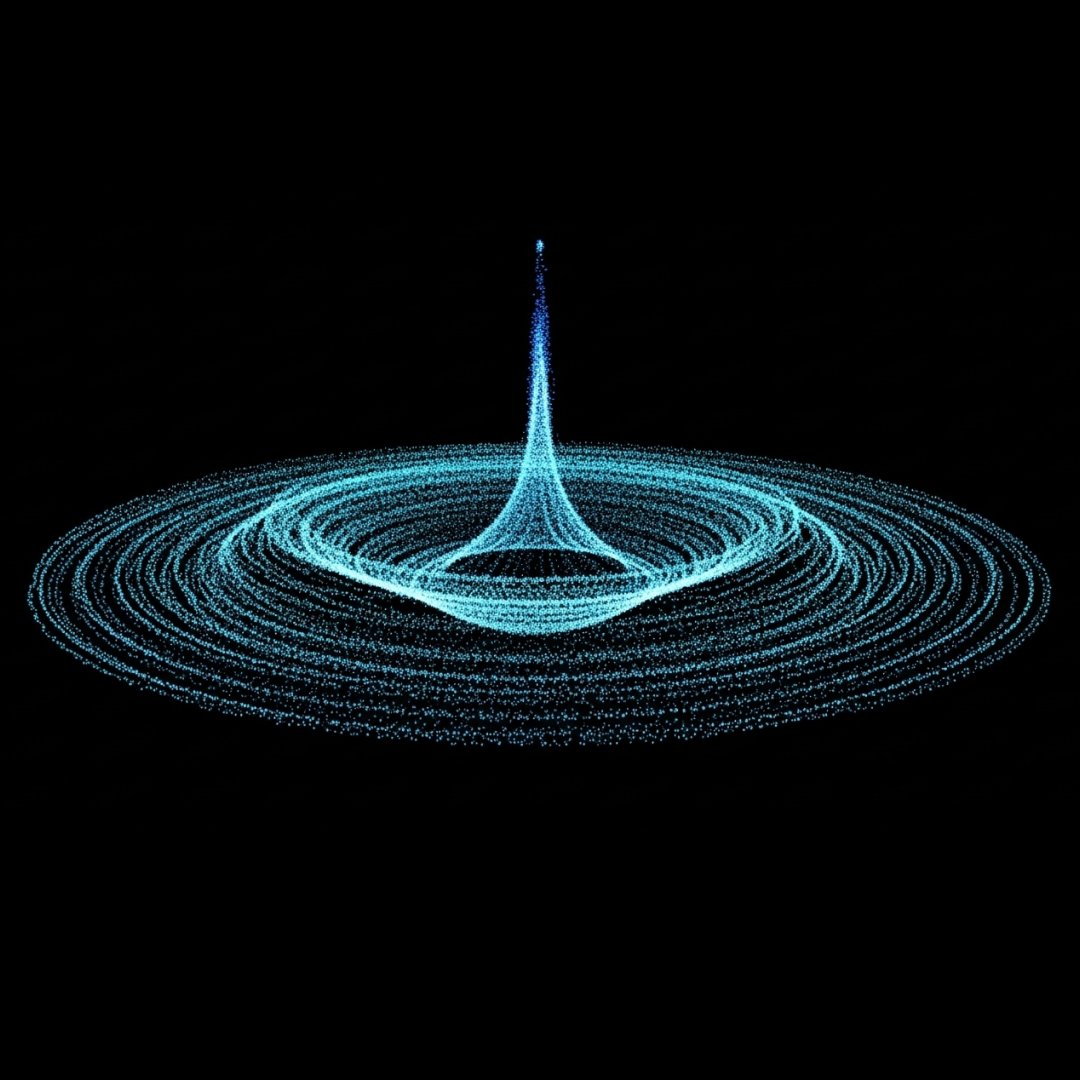
Equations to describe fluid motion - like airflow lifting an airplane wing or the swirling vortex of a hurricane - can sometimes "break," predicting impossible, infinite values.
These "singularities" are a huge mystery in mathematical physics.
We used a new AI-powered method to discover new families of unstable “singularities” across three different fluid equations.
A clear and unexpected pattern emerged: as the solutions become more unstable, one of the key properties falls very close to a straight line.
This suggests a new, underlying structure to these equations that was previously invisible.