🚨🇷🇺🇨🇳🇮🇷 Brzezinski was right about the consequential Russia-China-Iran axis.
🇮🇳 But India is poised to be the fourth pole, albeit not as an anti-US force.
Here is why the India-Iran synergy India will be pivotal in a multipolar world: @Kanthan2030🧵👇
🇮🇳 But India is poised to be the fourth pole, albeit not as an anti-US force.
Here is why the India-Iran synergy India will be pivotal in a multipolar world: @Kanthan2030🧵👇

📖 In the late 1990s, geopolitical mastermind Brzezinski wrote a seminal book, “The Grand Chessboard: American Primacy and Its Geostrategic Imperatives” in which he argued that the biggest threat to the American empire will be the grand anti-hegemonic coalition of Russia, China and Iran.
🗺️ Together, they will dominate the heart of Eurasia (a look at the map below shows why).
He asserted that these countries will be united not by common ideology but by common grievances.
💰 He was wrong with that characterization. The real force behind this coalition will be enormous opportunities for wealth and progress.
2/9
🗺️ Together, they will dominate the heart of Eurasia (a look at the map below shows why).
He asserted that these countries will be united not by common ideology but by common grievances.
💰 He was wrong with that characterization. The real force behind this coalition will be enormous opportunities for wealth and progress.
2/9

💪🇮🇳 India will be an invaluable partner in the coalition mentioned above – as a member of BRICS and as a sovereign nation.
🇮🇷🇺🇸 The inflexion point will be the US-Iran deal, which is bound to happen soon and will remove most of the (tyrannical) US sanctions.
👉 Israel and the US have been arrogant and underestimating Iranian capabilities for decades. For example, 20 years ago, Iran had about 100 centrifuges to enrich Uranium.
3/9
🇮🇷🇺🇸 The inflexion point will be the US-Iran deal, which is bound to happen soon and will remove most of the (tyrannical) US sanctions.
👉 Israel and the US have been arrogant and underestimating Iranian capabilities for decades. For example, 20 years ago, Iran had about 100 centrifuges to enrich Uranium.
3/9
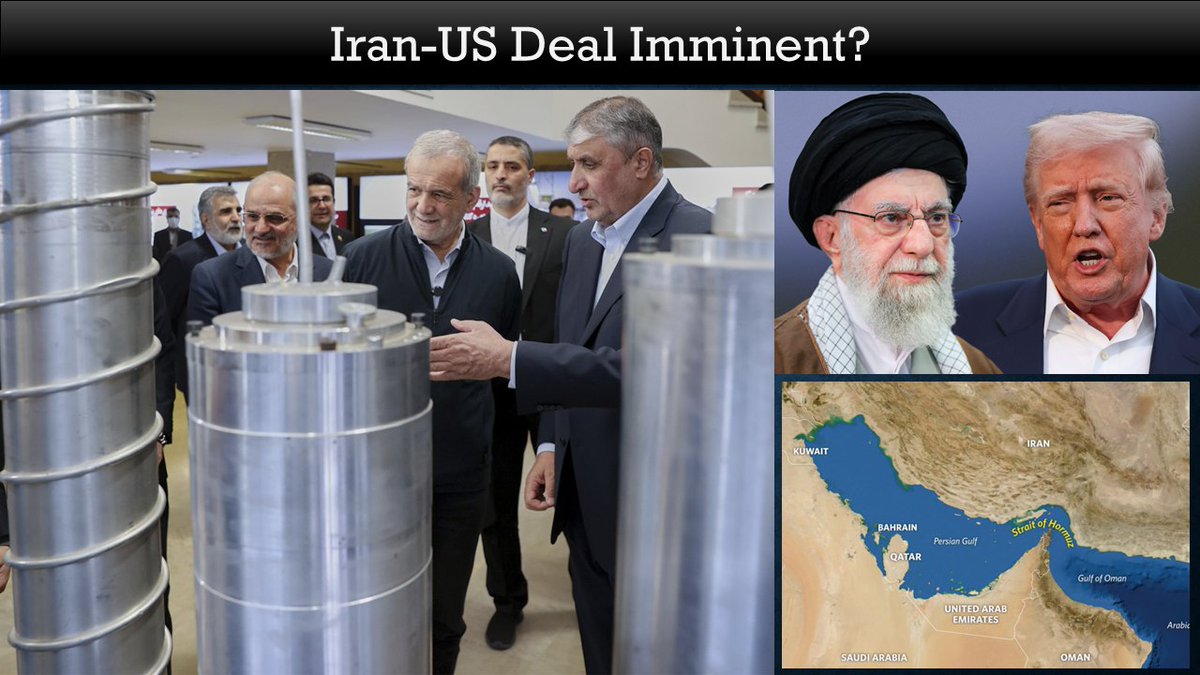
🇮🇷🇺🇸 The imperialists and Zionists could have made a deal with Iran at that time. Instead, Israel and the US thought that sanctions would collapse Iran’s economy and the government.
🤦♂️ Well, fast forward to 2025, Iranian centrifuges have grown from 100 to 20,000.
☢️ According to the IAEA, Tehran already has enough material enriched to up to 60% purity to be able to make four nuclear weapons. (Going from 60% to 90% - the weapons grade purity - is technically simple).
👉So, unless Trump wants to set the Middle East on fire, he will reach a deal with Iran – no nuclear weapons for lifting sanctions.
4/9
🤦♂️ Well, fast forward to 2025, Iranian centrifuges have grown from 100 to 20,000.
☢️ According to the IAEA, Tehran already has enough material enriched to up to 60% purity to be able to make four nuclear weapons. (Going from 60% to 90% - the weapons grade purity - is technically simple).
👉So, unless Trump wants to set the Middle East on fire, he will reach a deal with Iran – no nuclear weapons for lifting sanctions.
4/9
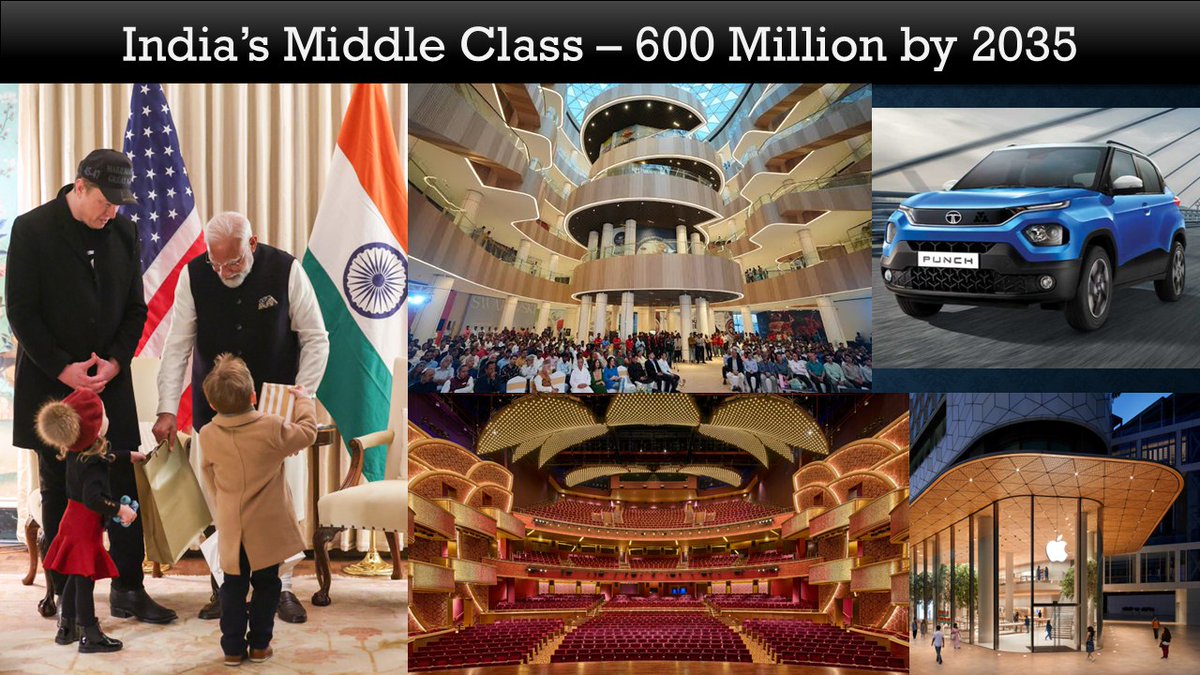
🇮🇳🛢️ India will be a very thirsty country – thirsty for oil, natural gas, and other commodities.
📈 Just consider what will happen over the next decade. India’s GDP will likely be $10 trillion by 2035. The share of households with cars will increase from 10% to 25%. The middle class will increase by 100 million or so.
👉 Thus, the need for cheap natural resources will be immense.
5/9
📈 Just consider what will happen over the next decade. India’s GDP will likely be $10 trillion by 2035. The share of households with cars will increase from 10% to 25%. The middle class will increase by 100 million or so.
👉 Thus, the need for cheap natural resources will be immense.
5/9
🇷🇺🇮🇷 Who will be supplying the essential commodities to propel the Indian economy? It will be countries like Iran and Russia – both countries blessed with immense natural resources. Both countries will soon be free of imperialist containment.
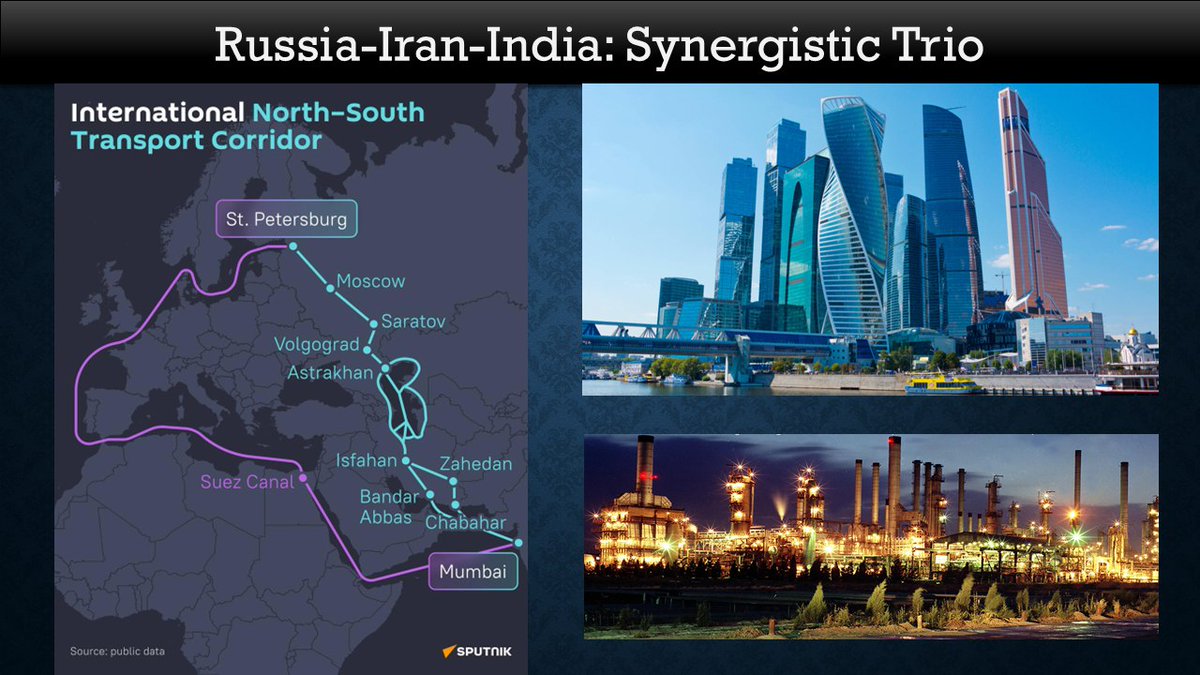
🔄 More importantly, Iran will be a crucial gateway that links Russia and India. This is the potential of the visionary International North–South Transport Corridor (INSTC).
🏭 In turn, India will also be able to export its goods to Iran, Russia, Central Asia and Europe through the INSTC. Of course, India will need China’s help in boosting the manufacturing sector. Remember that China is projected to account for 45% of global manufacturing just five years from now. China is a juggernaut and a powerhouse that India needs to embrace as an economic partner.
6/9
🔄 More importantly, Iran will be a crucial gateway that links Russia and India. This is the potential of the visionary International North–South Transport Corridor (INSTC).
🏭 In turn, India will also be able to export its goods to Iran, Russia, Central Asia and Europe through the INSTC. Of course, India will need China’s help in boosting the manufacturing sector. Remember that China is projected to account for 45% of global manufacturing just five years from now. China is a juggernaut and a powerhouse that India needs to embrace as an economic partner.
6/9
🇵🇰🛡️ Containing Pakistan
Hopefully, India and Pakistan will be friends in the future – perhaps 20-30 years from now. However, until then, India needs to contain terrorism and other geopolitical challenges from Pakistan.
🇮🇷 One way to do that will be to foster better relations with Iran, which has its own problems with Pakistan.
India should invest heavily in Chabahar port in Iran to undermine the future of Gwadar port in Pakistan.
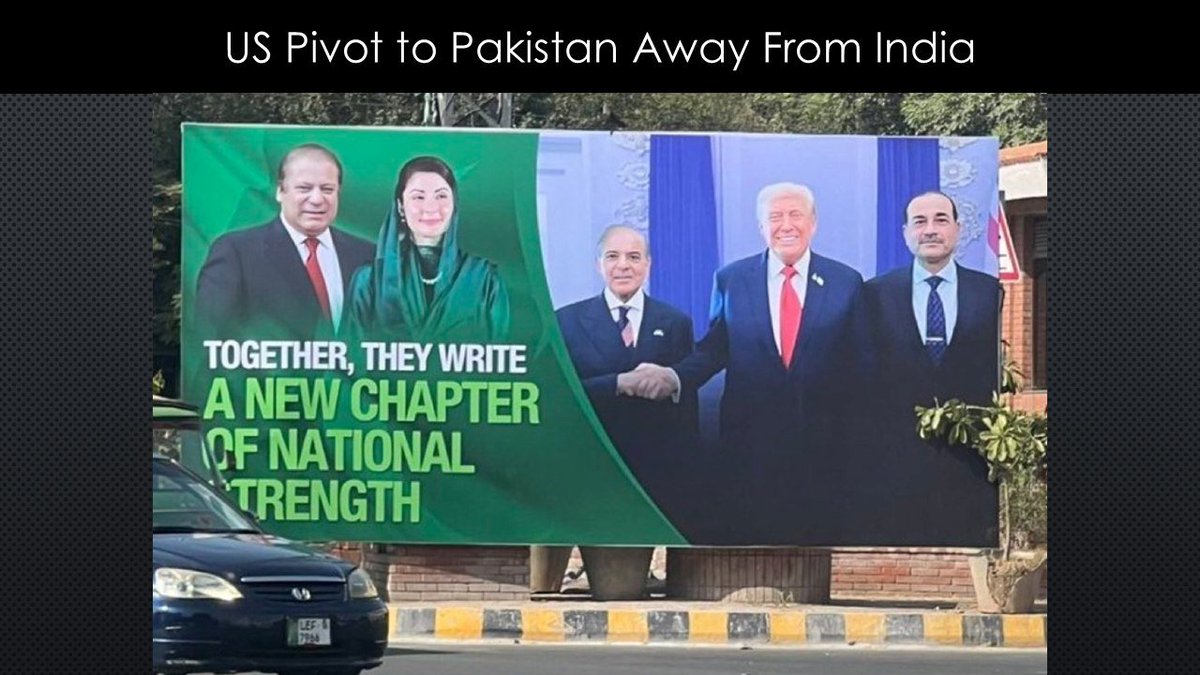
📍 Remember that Pakistan is cleverly taking advantage of its strategic location. It is wooed by both the US and China.
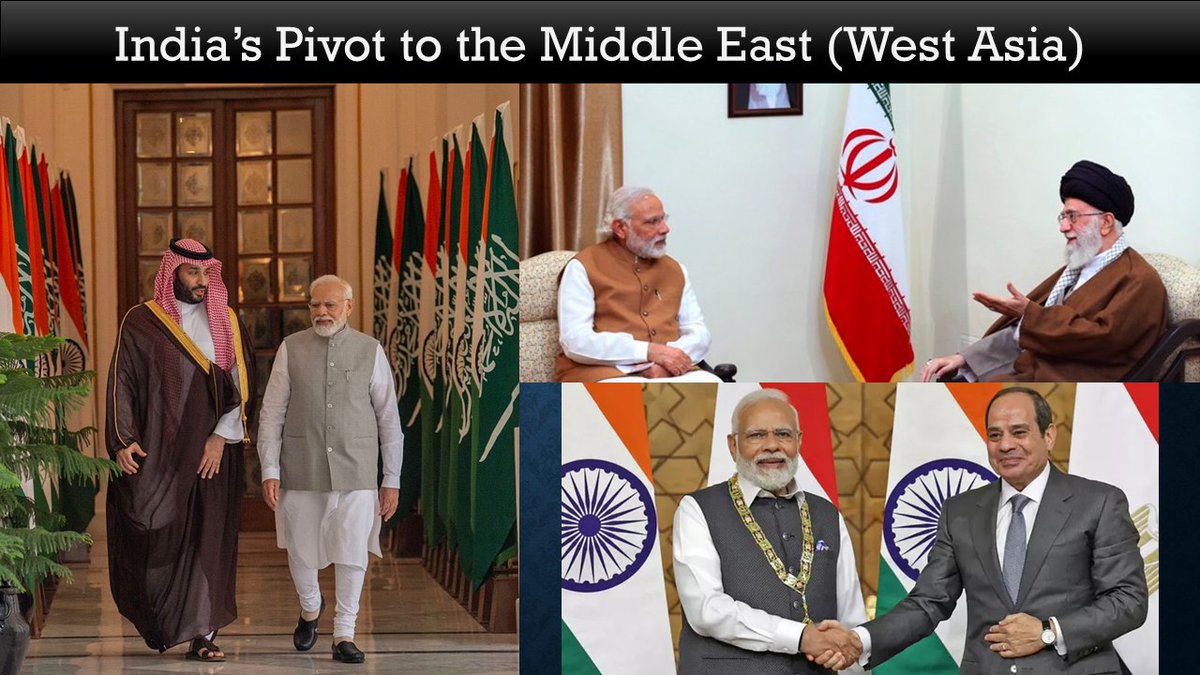
🤝 India needs to adopt similar strategies. For example, Iran has been smartly engaging with Saudi Arabia, Qatar, QAE etc. Thus, India’s strong relations with Iran and other Arab countries will diplomatically weaken or isolate Pakistan.
An alliance with Iran will also blunt accusations of Islamophobia against India.
7/9
Hopefully, India and Pakistan will be friends in the future – perhaps 20-30 years from now. However, until then, India needs to contain terrorism and other geopolitical challenges from Pakistan.
🇮🇷 One way to do that will be to foster better relations with Iran, which has its own problems with Pakistan.
India should invest heavily in Chabahar port in Iran to undermine the future of Gwadar port in Pakistan.
📍 Remember that Pakistan is cleverly taking advantage of its strategic location. It is wooed by both the US and China.
🤝 India needs to adopt similar strategies. For example, Iran has been smartly engaging with Saudi Arabia, Qatar, QAE etc. Thus, India’s strong relations with Iran and other Arab countries will diplomatically weaken or isolate Pakistan.
An alliance with Iran will also blunt accusations of Islamophobia against India.
7/9
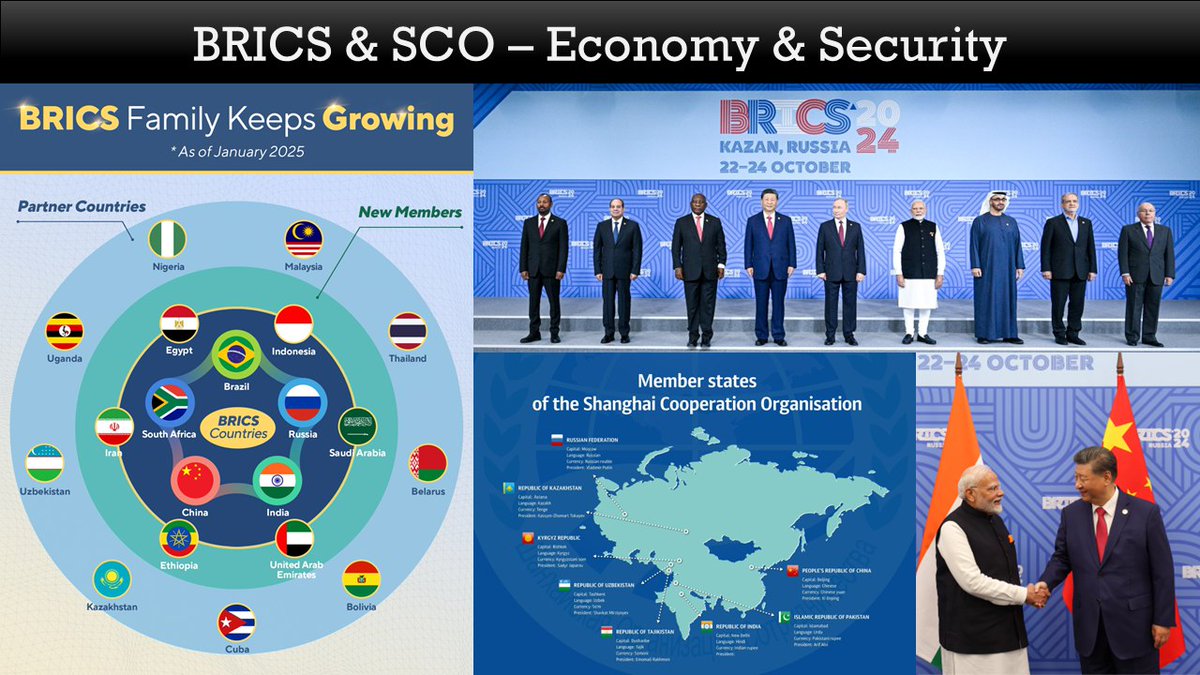
💪 Strengthen BRICS and SCO, of which Iran is a member.
📉 Even though the Global South is lethargic in its opposition to Western domination, the geopolitical landscape is changing steadily. The US Empire will fade away eventually due to its own internal contradictions.
🇮🇳✋In a multipolar world, India needs to maintain its strategic autonomy – a friend of all, enemy of none.
Thus, India needs to work closely with BRICS members in creating alternative solutions to Western tools such as the dollar, SWIFT, NY/London stock exchanges and so on.
🕊️ The Shanghai Cooperation Organization (SCO) can also be useful to eradicate terrorism and extremism in Asia. There are massive opportunities for growth and development, but they are predicated on peace.
8/9
📉 Even though the Global South is lethargic in its opposition to Western domination, the geopolitical landscape is changing steadily. The US Empire will fade away eventually due to its own internal contradictions.
🇮🇳✋In a multipolar world, India needs to maintain its strategic autonomy – a friend of all, enemy of none.
Thus, India needs to work closely with BRICS members in creating alternative solutions to Western tools such as the dollar, SWIFT, NY/London stock exchanges and so on.
🕊️ The Shanghai Cooperation Organization (SCO) can also be useful to eradicate terrorism and extremism in Asia. There are massive opportunities for growth and development, but they are predicated on peace.
8/9
🇮🇳🇺🇸 India does not need to antagonize the US, which will retain many of its strengths and advantages. The United States of America will be like the United Kingdom, which lost its empire in 1945, but is still a developed nation and is one of the important hubs of global finance.
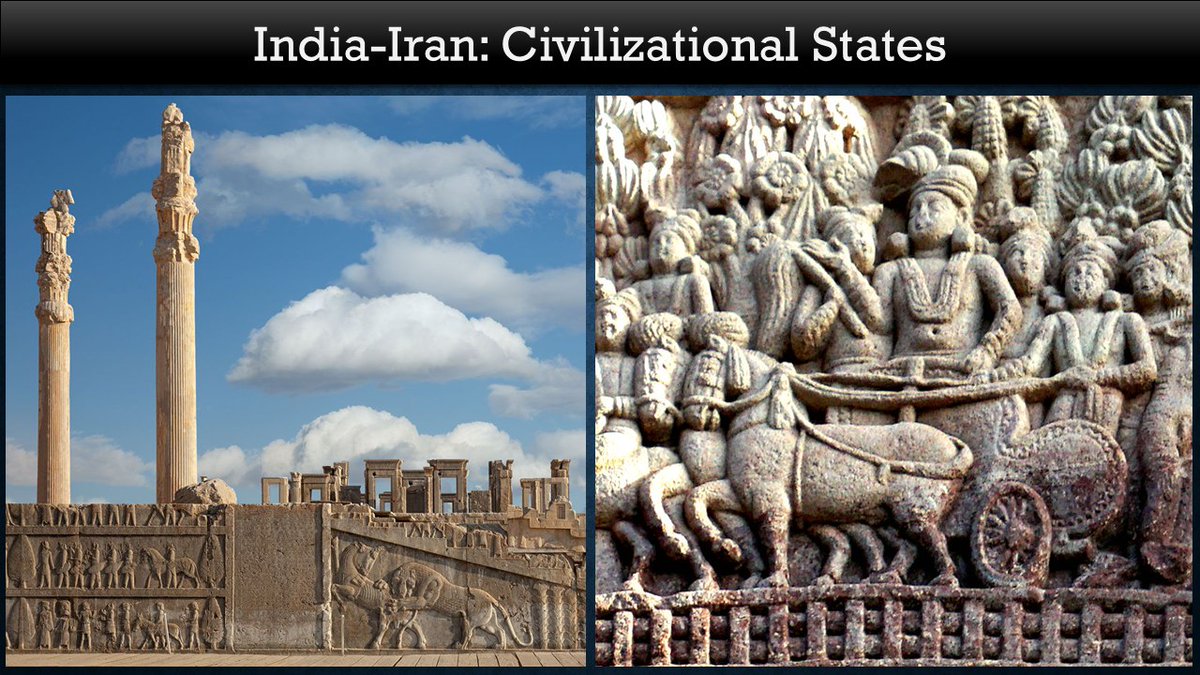
This will be an Asian Century in which civilizational states such as India, China, Russia and Iran will ascend and return to their historical pole statuses.
🌐 The only thing that can stop Asia is Asia – that is, if Asian countries become victims of the old but effective divide-and-rule playbook of globalists.
🤔 To quote Kishore Mahbubani in a different context, “Can Asians think?”
9/9
This will be an Asian Century in which civilizational states such as India, China, Russia and Iran will ascend and return to their historical pole statuses.
🌐 The only thing that can stop Asia is Asia – that is, if Asian countries become victims of the old but effective divide-and-rule playbook of globalists.
🤔 To quote Kishore Mahbubani in a different context, “Can Asians think?”
9/9
• • •
Missing some Tweet in this thread? You can try to
force a refresh