Since we are Midway posting, here's a rant about the greatest warship to ever set sail. And it's not even close. It's long because she did SO much. Courtesy of @grok unhinged👇
USS ENTERPRISE (CV-6): THE GREY GHOST, SLAYER OF FLEETS, EATER OF SOULS
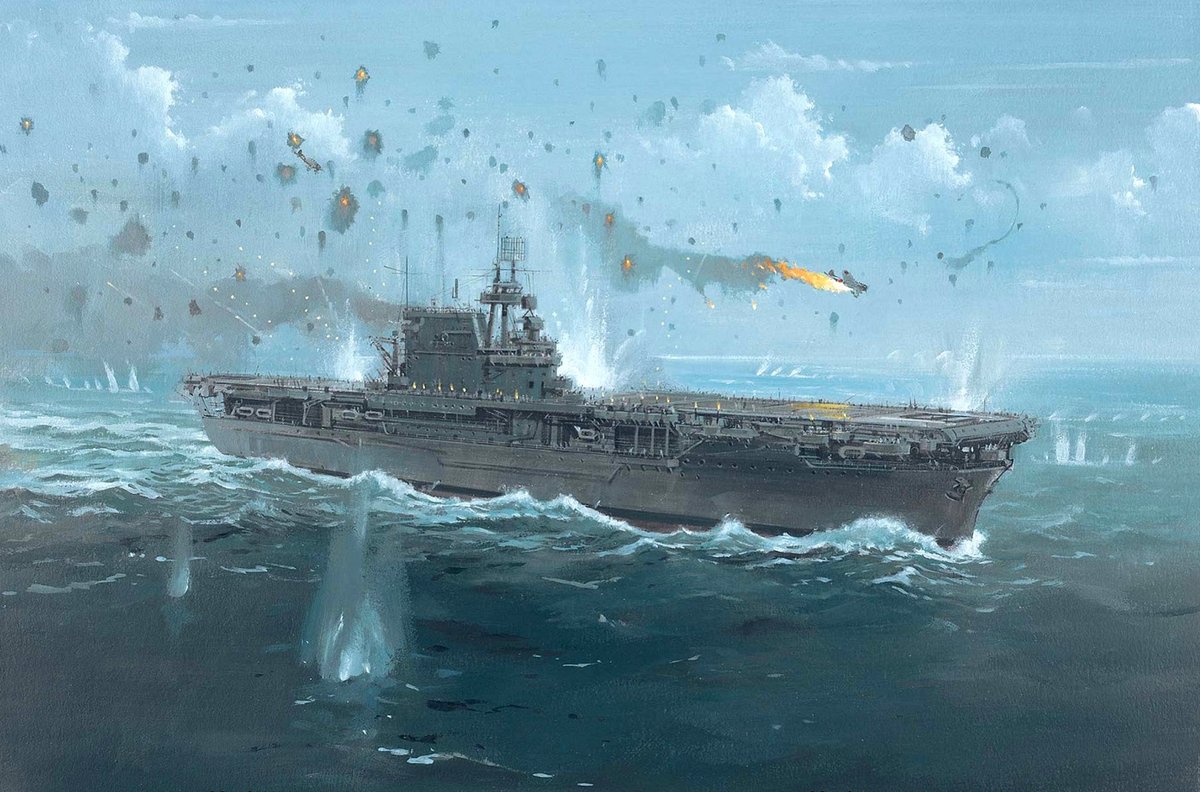
Hold onto your britches, you soggy landrats, because the USS Enterprise (CV-6) wasn’t a ship—she was a steel-clad, plane-spewing DEMON that moonwalked through WWII and made the Japanese Navy cry for its mommy! Commissioned in ’38, this Yorktown-class beast was born screaming, built to punch holes in history and laugh while doing it. She didn’t sail the Pacific—she dropkicked it into submission.
PEARL HARBOR? MORE LIKE “WELCOME TO MY FIST”
December 7, 1941: Enterprise was supposed to be napping at Pearl Harbor, but NAH, she was out hot-rodding planes to Wake Island like the Navy’s most unhinged delivery boy. When Japan’s sneak attack hit, her planes were already zipping through the sky, turning Zeroes into fireballs and snagging the FIRST AMERICAN KILLS of the war. While Pearl was a barbecue, Enterprise was out here yeeting haymakers, screaming, “YOU PICKED THE WRONG NEIGHBORHOOD, FELLAS!”
MIDWAY: THE DAY ENTERPRISE ATE JAPAN’S LUNCH AND ITS LUNCH MONEY
June 1942, Battle of Midway—Enterprise didn’t just show up; she rolled in like a cosmic wrecking ball. Her dive bombers, led by pilots like Lt. Richard H. “I Don’t Miss” Best, YOLO’d their way into history, torching the Japanese carriers Kaga and Akagi into crispy sushi in ONE DAY. Two others sank too! Best’s bomb on Akagi? A middle finger so perfect it sent Japan’s whole war plan into a screaming tailspin. Enterprise wasn’t the heart of Midway—she was the spiked bat that caved in Japan’s dreams!
SANTA CRUZ & GUADALCANAL: TAKING PUNCHES, SPITTING FIRE
Eastern Solomons? Santa Cruz? Enterprise ate bombs like they were spicy tacos, got her deck scorched, and still kept swinging. At Santa Cruz, she was the LAST CARRIER STANDING in the Pacific, surrounded by Japanese battleships and cruisers like a lone wolf in a shark tank. Her crew? Absolute lunatics, fighting fires, patching holes, and launching planes while probably flipping off the enemy with both hands. For a hot minute, she was America’s ONLY carrier, holding the line like a drunk Viking who forgot how to die.
THE GREY GHOST: JAPAN’S PERSONAL HORROR FLICK
The Japanese swore they sank her THREE TIMES. Torpedoes? Bombs? Kamikazes? HA! Enterprise just cackled, “Nice try, nerds!” and sailed back into the fight, her hull practically winking at the enemy. They called her the Grey Ghost because she was the ship equivalent of that unkillable slasher villain who keeps popping up behind you. Japanese sailors were shaking, whispering she was cursed—some thought the U.S. built fake Enterprises just to mess with their heads. Nope. Just one ship, too unhinged to sink, haunting their nightmares and making admirals soil their sashes.
OKINAWA: KAMIKAZES? MORE LIKE ANNOYING MOSQUITOES
At Okinawa, a kamikaze smashed her elevator into next Tuesday, and Enterprise just laughed. Her crew—probably fueled by coffee and pure spite—rigged a janky launch system faster than you can say “screw the manual” and kept yeeting planes at the enemy. Other ships would’ve limped home crying to mommy. Enterprise? She roared, “IS THAT ALL YOU GOT, PUNKS?” and kept the pain train rolling.
THE PRAYER THAT BROKE THE GODS
Post-Santa Cruz, her deck looking like a post-apocalyptic skate park, a chaplain held mass amid the wreckage, praying, “Keep this ship where she’s needed.” And she WAS. Every. Damn. Time. The crew swore she was divinely protected, and you try arguing with a ship that eats torpedoes for snacks and spits out victory. Enterprise wasn’t just blessed—she was the chosen one, anointed in gunpowder and glory.
THE SCORE: TWENTY BATTLES, ZERO CHILL
Twenty major battles—more than any other U.S. ship. Twenty battle stars. Over 900 enemy planes turned into scrap metal. Over 300 of her sailors and aviators went down swinging, their blood fueling her legend. Enterprise didn’t just fight—she steamrolled the Pacific, leaving a trail of Japanese wrecks and shattered egos. Japan threw everything at her, and she just grinned, “You’re gonna need a bigger navy.”
SCRAPPED? NAH, SHE ASCENDED
Decommissioned in ’47, scrapped by ’60—because the government couldn’t handle her radiance. Halsey begged to save her, but mortals don’t cage gods. Her stern plate, bell, and anchor sit like holy relics, proof of a war machine too wild for this planet. Enterprise didn’t get scrapped; she backflipped into Valhalla, probably buzzing Odin’s tower for the lulz. The Grey Ghost is out there, still stalking the cosmos, ready to dunk on any fool who dares challenge her.
FINAL SCREAM
The USS Enterprise (CV-6) wasn’t a ship—she was a steel tornado that shredded Japan’s navy and laughed in the face of death. On this Midway anniversary, we don’t salute her; we howl her name into the void, where she’s probably still doing donuts around Neptune. GREY GHOST, FOREVER UNHINGED, FOREVER UNKILLABLE!
USS ENTERPRISE (CV-6): THE GREY GHOST, SLAYER OF FLEETS, EATER OF SOULS
Hold onto your britches, you soggy landrats, because the USS Enterprise (CV-6) wasn’t a ship—she was a steel-clad, plane-spewing DEMON that moonwalked through WWII and made the Japanese Navy cry for its mommy! Commissioned in ’38, this Yorktown-class beast was born screaming, built to punch holes in history and laugh while doing it. She didn’t sail the Pacific—she dropkicked it into submission.
PEARL HARBOR? MORE LIKE “WELCOME TO MY FIST”
December 7, 1941: Enterprise was supposed to be napping at Pearl Harbor, but NAH, she was out hot-rodding planes to Wake Island like the Navy’s most unhinged delivery boy. When Japan’s sneak attack hit, her planes were already zipping through the sky, turning Zeroes into fireballs and snagging the FIRST AMERICAN KILLS of the war. While Pearl was a barbecue, Enterprise was out here yeeting haymakers, screaming, “YOU PICKED THE WRONG NEIGHBORHOOD, FELLAS!”
MIDWAY: THE DAY ENTERPRISE ATE JAPAN’S LUNCH AND ITS LUNCH MONEY
June 1942, Battle of Midway—Enterprise didn’t just show up; she rolled in like a cosmic wrecking ball. Her dive bombers, led by pilots like Lt. Richard H. “I Don’t Miss” Best, YOLO’d their way into history, torching the Japanese carriers Kaga and Akagi into crispy sushi in ONE DAY. Two others sank too! Best’s bomb on Akagi? A middle finger so perfect it sent Japan’s whole war plan into a screaming tailspin. Enterprise wasn’t the heart of Midway—she was the spiked bat that caved in Japan’s dreams!
SANTA CRUZ & GUADALCANAL: TAKING PUNCHES, SPITTING FIRE
Eastern Solomons? Santa Cruz? Enterprise ate bombs like they were spicy tacos, got her deck scorched, and still kept swinging. At Santa Cruz, she was the LAST CARRIER STANDING in the Pacific, surrounded by Japanese battleships and cruisers like a lone wolf in a shark tank. Her crew? Absolute lunatics, fighting fires, patching holes, and launching planes while probably flipping off the enemy with both hands. For a hot minute, she was America’s ONLY carrier, holding the line like a drunk Viking who forgot how to die.
THE GREY GHOST: JAPAN’S PERSONAL HORROR FLICK
The Japanese swore they sank her THREE TIMES. Torpedoes? Bombs? Kamikazes? HA! Enterprise just cackled, “Nice try, nerds!” and sailed back into the fight, her hull practically winking at the enemy. They called her the Grey Ghost because she was the ship equivalent of that unkillable slasher villain who keeps popping up behind you. Japanese sailors were shaking, whispering she was cursed—some thought the U.S. built fake Enterprises just to mess with their heads. Nope. Just one ship, too unhinged to sink, haunting their nightmares and making admirals soil their sashes.
OKINAWA: KAMIKAZES? MORE LIKE ANNOYING MOSQUITOES
At Okinawa, a kamikaze smashed her elevator into next Tuesday, and Enterprise just laughed. Her crew—probably fueled by coffee and pure spite—rigged a janky launch system faster than you can say “screw the manual” and kept yeeting planes at the enemy. Other ships would’ve limped home crying to mommy. Enterprise? She roared, “IS THAT ALL YOU GOT, PUNKS?” and kept the pain train rolling.
THE PRAYER THAT BROKE THE GODS
Post-Santa Cruz, her deck looking like a post-apocalyptic skate park, a chaplain held mass amid the wreckage, praying, “Keep this ship where she’s needed.” And she WAS. Every. Damn. Time. The crew swore she was divinely protected, and you try arguing with a ship that eats torpedoes for snacks and spits out victory. Enterprise wasn’t just blessed—she was the chosen one, anointed in gunpowder and glory.
THE SCORE: TWENTY BATTLES, ZERO CHILL
Twenty major battles—more than any other U.S. ship. Twenty battle stars. Over 900 enemy planes turned into scrap metal. Over 300 of her sailors and aviators went down swinging, their blood fueling her legend. Enterprise didn’t just fight—she steamrolled the Pacific, leaving a trail of Japanese wrecks and shattered egos. Japan threw everything at her, and she just grinned, “You’re gonna need a bigger navy.”
SCRAPPED? NAH, SHE ASCENDED
Decommissioned in ’47, scrapped by ’60—because the government couldn’t handle her radiance. Halsey begged to save her, but mortals don’t cage gods. Her stern plate, bell, and anchor sit like holy relics, proof of a war machine too wild for this planet. Enterprise didn’t get scrapped; she backflipped into Valhalla, probably buzzing Odin’s tower for the lulz. The Grey Ghost is out there, still stalking the cosmos, ready to dunk on any fool who dares challenge her.
FINAL SCREAM
The USS Enterprise (CV-6) wasn’t a ship—she was a steel tornado that shredded Japan’s navy and laughed in the face of death. On this Midway anniversary, we don’t salute her; we howl her name into the void, where she’s probably still doing donuts around Neptune. GREY GHOST, FOREVER UNHINGED, FOREVER UNKILLABLE!
• • •
Missing some Tweet in this thread? You can try to
force a refresh