🚨NEW: Prison transfers are common, but that doesn't mean they're easy for incarcerated people and their loved ones.
We examined transfer records & interviews with dozens of formerly incarcerated New Yorkers to find out how transfers upend people's lives 🧵
We examined transfer records & interviews with dozens of formerly incarcerated New Yorkers to find out how transfers upend people's lives 🧵
"The worst experience of my life."
Transfers require people to pack their belongings, undergo invasive strip searches, and take long trips while restrictively shackled.
These moves affect every aspect of life behind bars, from peer networks to familiarity with officers.
Transfers require people to pack their belongings, undergo invasive strip searches, and take long trips while restrictively shackled.
These moves affect every aspect of life behind bars, from peer networks to familiarity with officers.
These transfers happen A LOT. Half of New York's prisons transfer out at least 60% of their population each year.
This turnover makes everyday life in prisons unstable & uncertain – while also severing friendships behind bars that are important to survival.
This turnover makes everyday life in prisons unstable & uncertain – while also severing friendships behind bars that are important to survival.

In New York, incarcerated people *can* request a transfer, but an overwhelming number of the transfers we examined were involuntary.
When done for punitive reasons, transfers can worsen mental health & misconduct issues – while also stripping incarcerated people of their agency.
When done for punitive reasons, transfers can worsen mental health & misconduct issues – while also stripping incarcerated people of their agency.
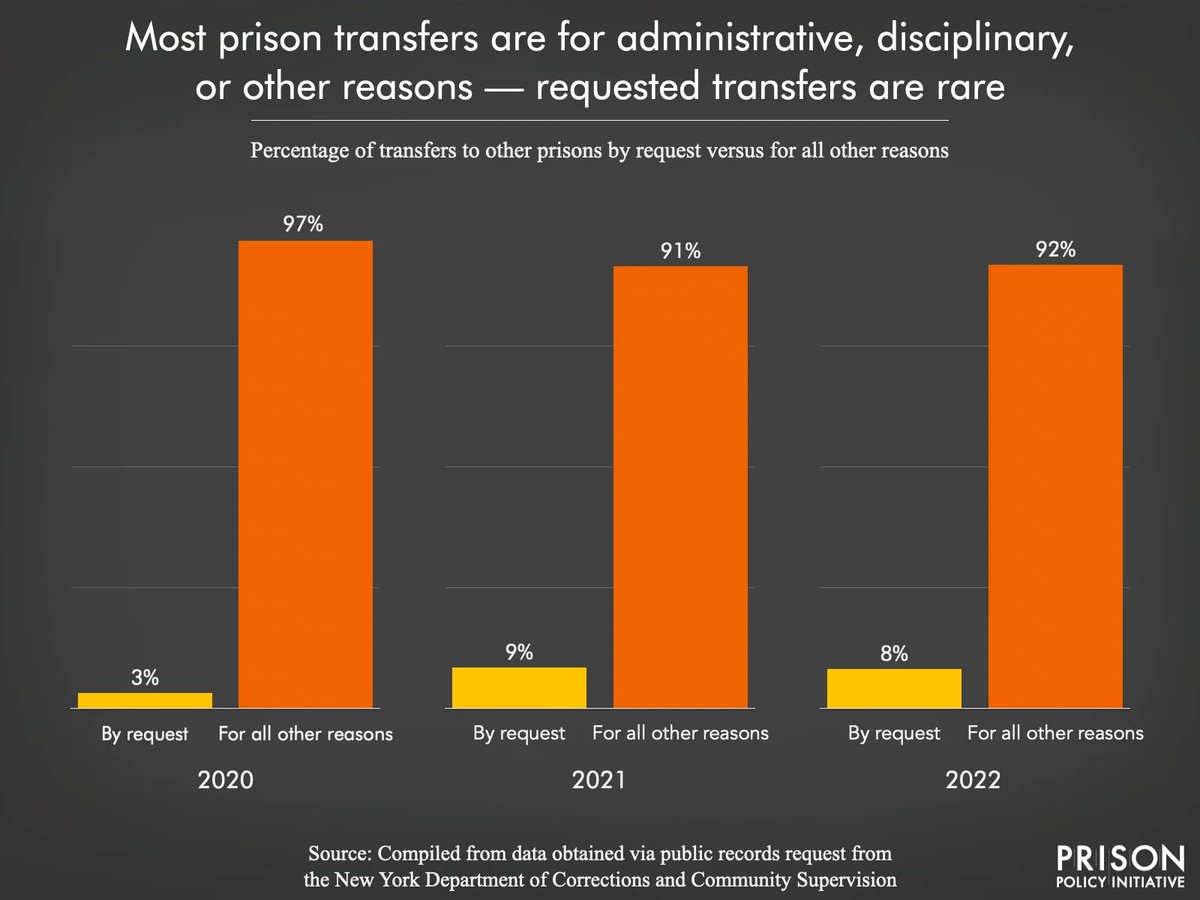
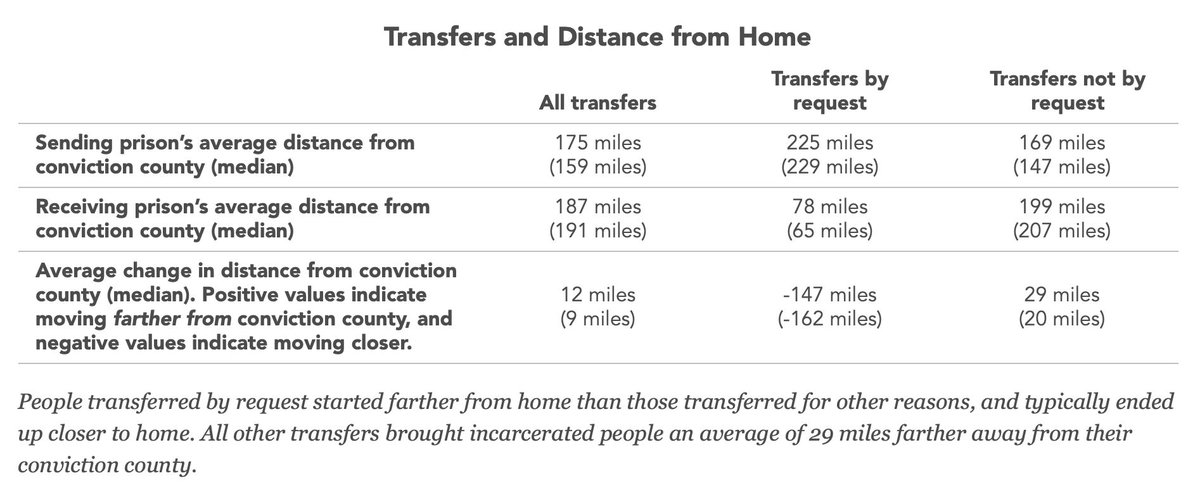
Importantly, most of the transfers initiated by the prison system took people *farther* away from their home communities.
Being close to loved ones is pivotal in visitation and surviving prison life 👇
prisonpolicy.org/blog/2021/12/2…
Being close to loved ones is pivotal in visitation and surviving prison life 👇
prisonpolicy.org/blog/2021/12/2…
The first few weeks in a new prison are also especially difficult – and even dangerous.
Recently transferred people need to restock possessions lost during transfers, which is expensive. They also have to learn the rules (both formal and informal) of their new facility.
Recently transferred people need to restock possessions lost during transfers, which is expensive. They also have to learn the rules (both formal and informal) of their new facility.
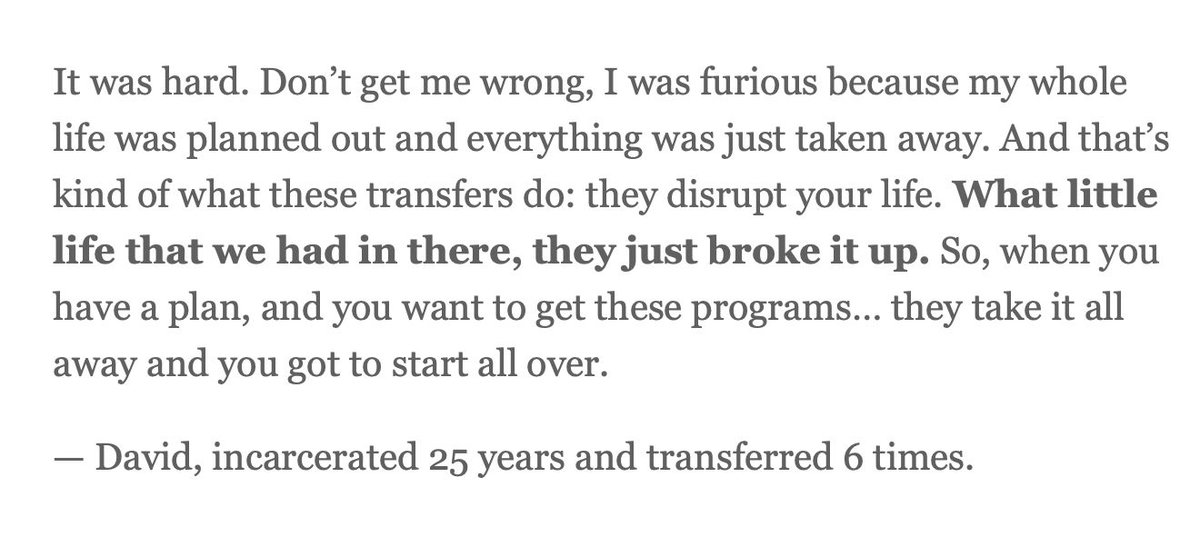
David, a participant in our analysis, reflected on being transferred 6 times in 25 years:
"That’s kind of what these transfers do: they disrupt your life. What little life that we had in there, they just broke it up."
"That’s kind of what these transfers do: they disrupt your life. What little life that we had in there, they just broke it up."
Rather than continuously shuffling incarcerated people, transfers should be used to prioritize stability & autonomy – especially if they have no disciplinary issues & are succeeding in their programs, jobs, and relationships.
Learn more 👇
prisonpolicy.org/blog/2025/06/0…
Learn more 👇
prisonpolicy.org/blog/2025/06/0…
• • •
Missing some Tweet in this thread? You can try to
force a refresh