New study: more evidence of very low human capital in Africa.
Basic numeracy mostly unchanged from 1950 to 1990 birth cohorts, despite much more schooling.
NB: basic numeracy is very, very basic = people know their own age, don't round it up or down (called "age heaping".)
Basic numeracy mostly unchanged from 1950 to 1990 birth cohorts, despite much more schooling.
NB: basic numeracy is very, very basic = people know their own age, don't round it up or down (called "age heaping".)
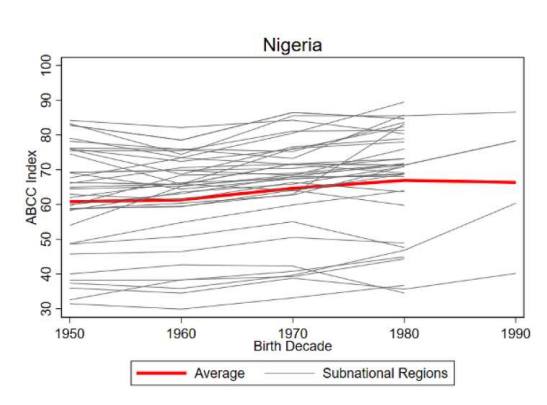
Some exceptions. Basic numeracy in Ghana has trended upwards

In some countries, e.g. Niger, basic numeracy has trended downwards. Yes, numeracy is declining.
(Remember, knowing your own age is so basic that going to school is not necessary to learn how to do it. So, unschooled people can learn it.)
(Remember, knowing your own age is so basic that going to school is not necessary to learn how to do it. So, unschooled people can learn it.)

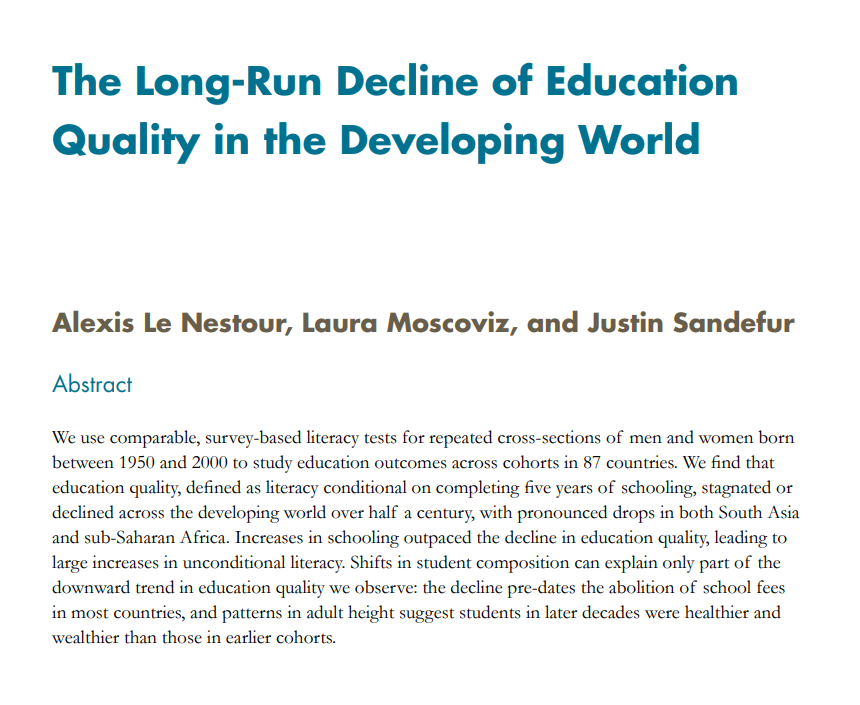
This supports other evidence on low human capital and ineffective schooling.
A 2022 study found that the expected literacy rate after five years of schooling in Africa was only about 50%.
Input (money) into education increased, but output, i.e. literacy, did not.
A 2022 study found that the expected literacy rate after five years of schooling in Africa was only about 50%.
Input (money) into education increased, but output, i.e. literacy, did not.
"We find that little progress in numeracy has been made on average. However, there are strong regional disparities."
Source: Age heaping based numeracy estimates in African regions, 1950–1999: New methodological advances and results
Source: Age heaping based numeracy estimates in African regions, 1950–1999: New methodological advances and results

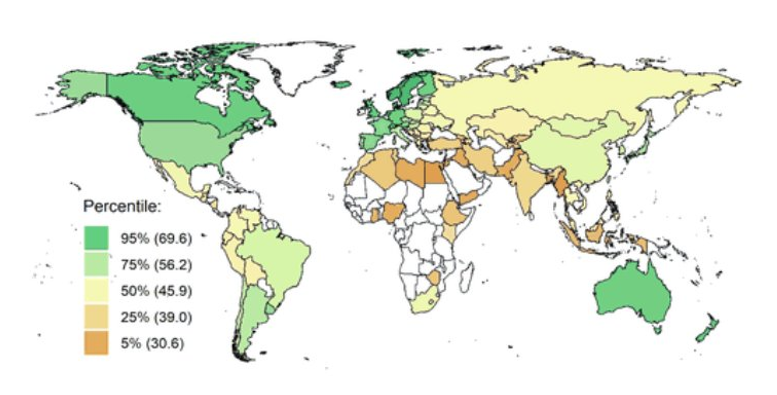
Many people have denied Lynn's national IQ estimates for Africa.
This supports the general conclusion.
And the specific conclusion that national IQ is a bit higher in southern and eastern Africa than in western Africa.
This supports the general conclusion.
And the specific conclusion that national IQ is a bit higher in southern and eastern Africa than in western Africa.

The official and unanimous line of the global managerial elite (once called Davos Man, now called Elite Human Capital) is that the solution to the problem is more money and more schooling in the Third World.
This is strong evidence that they are mistaken.
This is strong evidence that they are mistaken.

Further support.
In Ghana, a study used two surveys (2006 and 2017) to estimate basic literacy and numeracy.
Literacy and numeracy declined over the decade.
Despite increased schooling.
Likely explanation: less intelligent kids are going to school.
In Ghana, a study used two surveys (2006 and 2017) to estimate basic literacy and numeracy.
Literacy and numeracy declined over the decade.
Despite increased schooling.
Likely explanation: less intelligent kids are going to school.

• • •
Missing some Tweet in this thread? You can try to
force a refresh