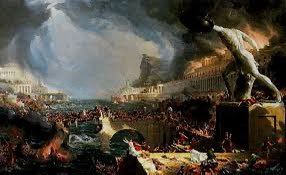
The Founders didn’t just rebel, they reasoned. They read Locke, Montesquieu, Rousseau, then fused their ideas with Scripture and virtue to craft a Republic built to last. This is the Enlightenment’s role in the American Mind.
Let’s dive in. 🧵🇺🇸 #AmRev
John Locke’s Two Treatises laid the groundwork. He said governments exist to protect natural rights; life, liberty, property. Jefferson echoed this in the Declaration, adding a distinctly American twist: the pursuit of happiness.
Montesquieu’s Spirit of the Laws was another cornerstone. He argued for checks and balances, dividing power to preserve liberty. The Founders made it reality: Congress, President, Courts.
A system built on reason and restraint.
Franklin was America’s Enlightenment man. He started as a printer, became a scientist, diplomat, and philosopher.
He believed liberty must be informed by virtue, and reason guided by humility.
He was our Voltaire, with moral depth.
Even Jefferson, often called a Deist, spoke of “Nature’s God” and divine justice. His Notes on Virginia shows a man torn between Enlightenment skepticism and biblical justice, especially on slavery.
The Enlightenment wasn’t just about ideas, it was about institutions. Public education, free press, civic debate, scientific discovery; these were the tools the Founders saw as essential to self-government.
Critics say Enlightenment reason failed.
But the Founders didn’t idolize reason, they disciplined it with moral truth. They blended faith and philosophy. That balance made America unique: bold in thought, humble before God.
The American Mind was not a carbon copy of Europe’s Enlightenment. It was something new. A republic forged from reason, virtue, and faith; designed not just for freedom, but for Excellence.
So yes, the Declaration lit the fire. But it was Enlightenment ideals, disciplined by faith and fortified by civic virtue, that shaped our system. That’s not failure. That’s America at its best. 🇺🇸 #AmRev
• • •
Missing some Tweet in this thread? You can try to
force a refresh

To understand the American Mind, you must understand what shaped it. Our Founders didn’t invent liberty, they studied it. They looked to ancient Greece and Rome, where republics rose and fell. From those ruins, they forged something stronger.
Let’s dive in. 🧵🇺🇸 #AmRev
The Founders devoured the classics. John Adams read Cicero. Jefferson quoted Tacitus. Washington acted like Cato. To them, virtue, sacrifice, and public service weren’t abstract ideals; they were essential to a republic’s survival.
In their eyes, the Roman Republic was a warning. They saw how luxury and selfish ambition brought down a mighty republic. To prevent America’s collapse, they knew citizens would need to put country before self. Liberty demanded virtue.
Today is Flag Day , a holiday honoring the birth of the Stars and Stripes. But where did our iconic flag come from? Who designed it? And how did it evolve over time?
Let’s take a patriotic journey through history. 🧵🇺🇸 #AmRev
The original resolution for the U.S. flag was passed on June 14, 1777 by the Second Continental Congress:
“Resolved, that the flag of the United States be 13 stripes, alternate red and white; that the union be 13 stars, white in a blue field, representing a new constellation.”
This resolution gave us the foundation: 13 stripes for the 13 colonies and a blue union with stars symbolizing the states, united but distinct.
But who made the first flag? That’s where Betsy Ross comes in, or does she?
Before Jefferson wrote of liberty, before Washington took command, America was shaped in the pews. The Bible wasn’t just read, it was lived. It formed minds, inspired resistance, and helped forge the greatest republic in history.
Let’s dive in. 🧵🇺🇸 #AmRev
From New England to the backcountry, colonial life was steeped in Scripture. The Geneva Bible was in every home. Sermons were political, fiery, and unflinching. To many colonists, resisting tyranny wasn’t rebellion, it was obedience to God.
The Old Testament especially resonated. Colonists saw themselves as a New Israel, delivered from bondage, forging a covenant in the wilderness. Pharaoh became Parliament. The Red Sea? The Atlantic. And Canaan? A land of liberty on this continent.
Before the muskets fired, an idea was born: People, not kings, could govern themselves.
Welcome to a new series: Inside the American Mind. Let’s uncover the roots that made America the most badass nation in history.
Let’s dive in. 🧵🧠🇺🇸 #AmRev
The Founders didn’t just write laws, they built a blueprint for greatness. They believed rights come from God, not government. From nature, not nobility. That radical belief gave rise to a nation for the people, by the people.
The American revolutionary mind wasn’t born overnight. It was shaped by centuries of thought, from the Bible to Cicero, from Locke to Montesquieu. Our founders fused faith, classical virtue, and Enlightenment reason into a bold new vision of self-government.
In 1846, the United States and Mexico went to war over disputed territory, and by the end of it, half of Mexico’s land would change hands. This is the story of the Mexican-American War, a forgotten yet defining chapter in America’s rise.
Let’s dive in.🧵🇺🇸 #AmRev
The roots of war go back to Texas. After winning independence from Mexico in 1836, Texas joined the U.S. in 1845. But Mexico had never recognized Texan independence, and considered annexation an act of war.
President James K. Polk, a firm believer in Manifest Destiny, sent troops to the Rio Grande, land Mexico still claimed. Skirmishes broke out. Polk declared that “American blood had been shed on American soil.” Congress declared war on May 13, 1846.
Before America had factories, it had fields, and before it had citizens, it had indentured servants. From the 1600s to the Revolution, tens of thousands of Europeans signed away years of their life for a shot at freedom in the New World.
Let’s dive in. 🧵🇺🇸 #AmRev
The system was simple: work 4–7 years for a colonist, and in return you’d get passage to America, food, shelter, and one day, your freedom. For many, it was their only ticket out of poverty. A dangerous gamble. But one many were willing to take.
Most came from England, Ireland, Scotland, and the German Palatinate. Some were poor farmers. Others were orphans. Many were convicted of petty crimes and sentenced to servitude. A few, like the famous Martha Ballard, came willingly in search of new beginnings.