Millie Marconi Profile picture
Jun 20, 2025 13 tweets 5 min read Read on X
Grok 3 is secretly a productivity beast.

Use it like this and it replaces:

→ a VA
→ a researcher
→ a content writer
→ even a junior dev

10 crazy-useful prompts:
1. Find a coupon online using Grok’s Deep Search

Tired of opening 12 sketchy tabs for a working promo code?

Grok can do the dirty work for you.

• Searches forums, subreddits, and obscure blogs
• Ignores fake or expired codes
• Pulls the most recent working coupons
• Formats them cleanly for copy/paste
2. Decode any PDF like a pro

Got a 50-page whitepaper or report sitting unread?

Let Grok rip through it in seconds:

• Finds the insights
• Breaks it into summaries
• Answers questions from the doc
• Saves hours of scanning
3. Build apps without writing a line of code

Grok 3 doesn’t just suggest code it writes working prototypes.
You can:

• Design full-stack apps
• Generate frontend + backend
• Integrate APIs
• Deploy-ready in minutes
4. Write content like a human, not a bot

No more ChatGPT-sounding blog posts.

Grok writes with structure, flow, and authority:

• Matches your voice
• Pulls in research + stats
• Formats for SEO
• Actually useful to readers
5. Research anything 10x faster

Instead of endless Google tabs, ask Grok for structured answers.
It’ll:

• Pull live data from X
• Summarize key insights
• Compare viewpoints
• Recommend further reading
6. Build marketing strategies in one prompt

Launching a product? Don’t guess.

Grok can:

• Analyze your niche
• Draft full funnels
• Write ad copy
• Plan social media
7. Turn your chaos into clarity

Voice note, scribbled idea, wall of text Grok turns it into gold.
Use it to:

• Structure messy notes
• Rewrite for clarity
• Extract main ideas
• Format into posts or docs
8. Grow your social audience with 0 guesswork

You don’t need a team to go viral.

Grok can:

• Write hooks that hit
• Analyze what’s working
• Repurpose across formats
• Suggest trends to chase
9. Learn anything in 30 days (with structure)

Don’t let YouTube algorithms plan your education.

Let Grok be your personal tutor:

• Custom learning plans
• Daily goals
• Integrated resources
• Progress checkpoints
10. Automate your life with “Tasks”

xAI just added a killer feature: Tasks

They work like ChatGPT's automations, but smarter.

You can:

• Create recurring jobs
• Set triggers (weekly, daily)
• Get results in your DMs
P.S.

Want your LinkedIn posts to go viral?

Use TestFeed.

Stop guessing and test your content first. I've changed my writing with it.

Join the waitlist → testfeed.ai
I hope you've found this thread helpful.

Follow me @Yesterday_work_ for more.

Like/Repost the quote below if you can:

• • •

Missing some Tweet in this thread? You can try to force a refresh

 

Keep Current with Millie Marconi

Millie Marconi Profile picture

Stay in touch and get notified when new unrolls are available from this author!

Read all threads

This Thread may be Removed Anytime!

PDF

Twitter may remove this content at anytime! Save it as PDF for later use!

Try unrolling a thread yourself!

how to unroll video
  1. Follow @ThreadReaderApp to mention us!

  2. From a Twitter thread mention us with a keyword "unroll"
@threadreaderapp unroll

Practice here first or read more on our help page!

More from @MillieMarconnni

Feb 12
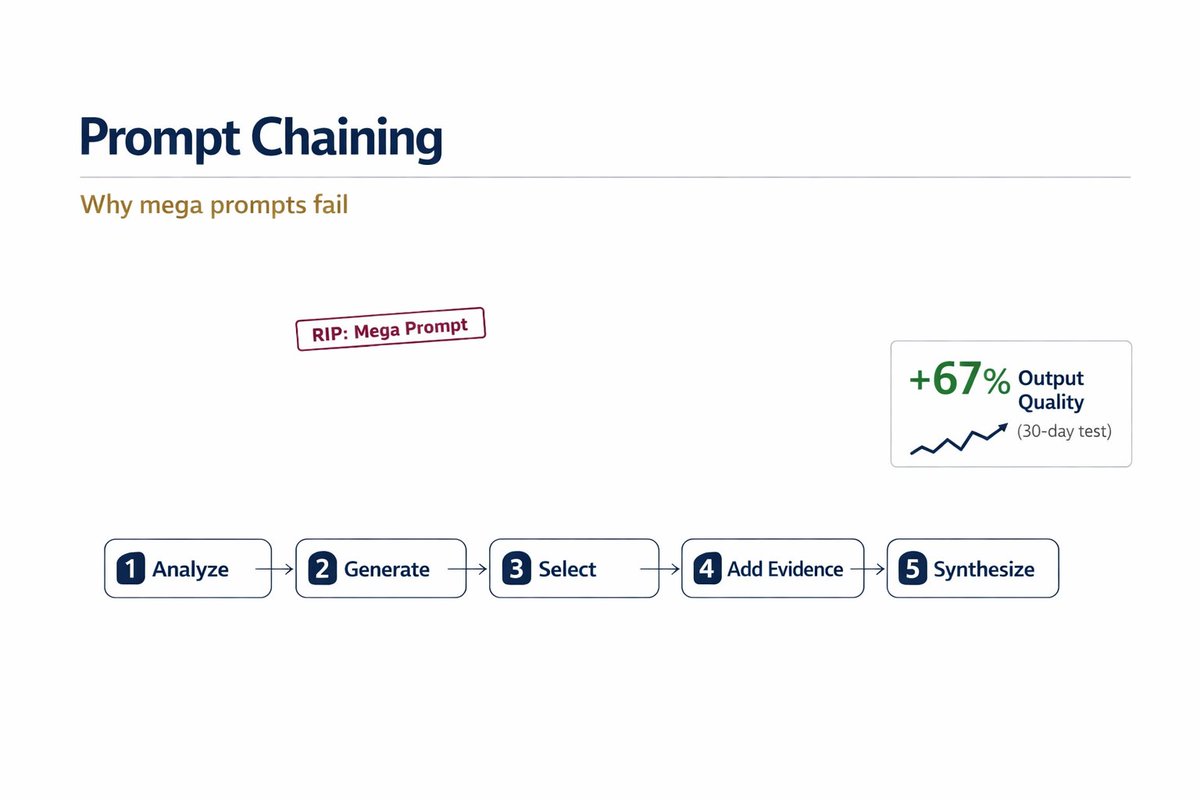
I finally understand why my complex prompts sucked.

The solution isn't better prompting it's "Prompt Chaining."

Break one complex prompt into 5 simple ones that feed into each other.

Tested for 30 days. Output quality jumped 67%.

Here's how: 👇 Image
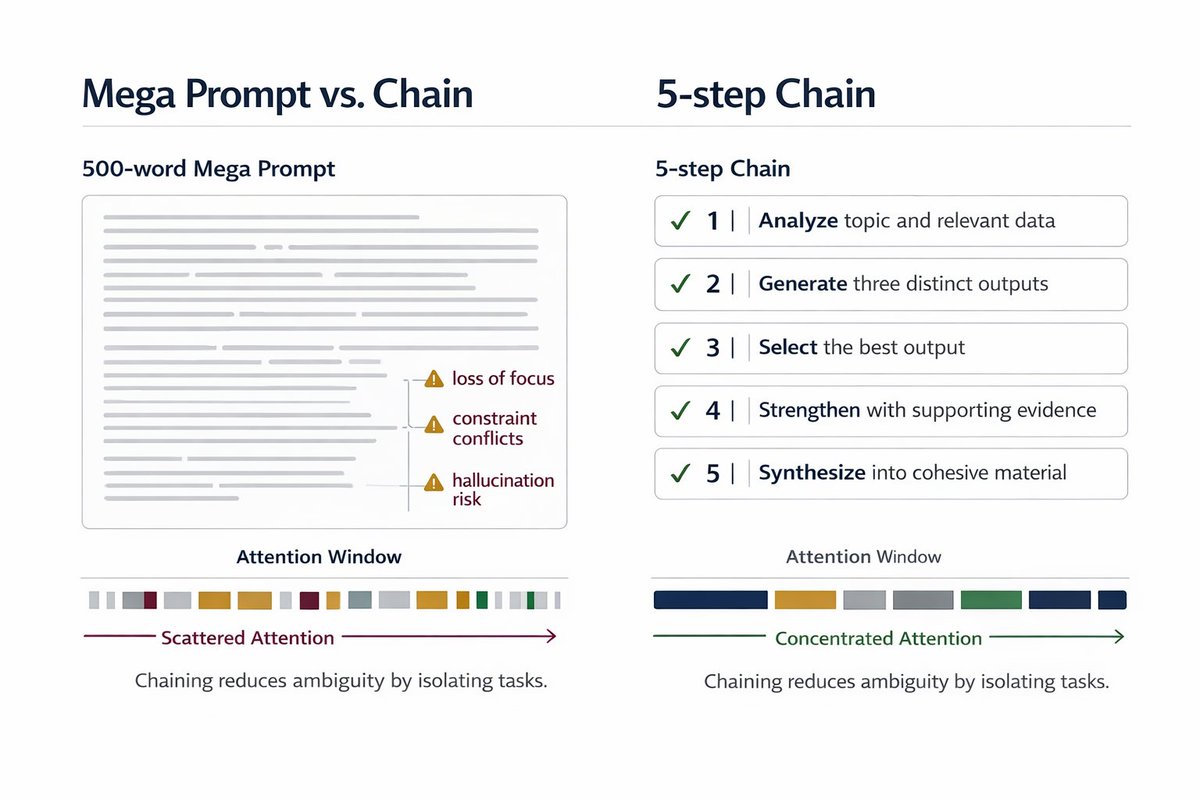
Most people write 500-word mega prompts and wonder why the AI hallucinates.

I did this for 2 years with ChatGPT.

Then I discovered how OpenAI engineers actually use these models.

They chain simple prompts. Each one builds on the last. Image
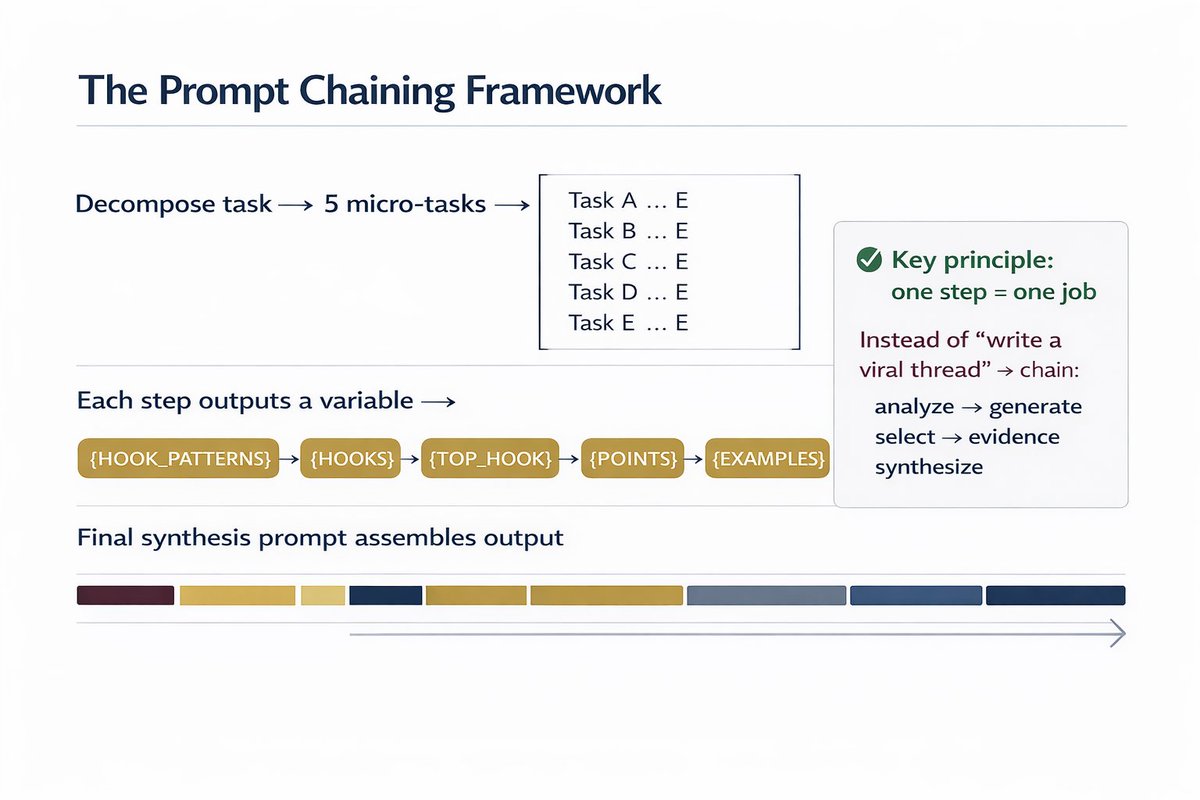
Here's the framework:

Step 1: Break your complex task into 5 micro-tasks
Step 2: Each prompt outputs a variable for the next
Step 3: Final prompt synthesizes everything

Example: Instead of "write a viral thread about AI" →

Chain 5 prompts that do ONE thing each. Image
Read 10 tweets
Feb 10
OpenAI engineers don't prompt like everyone else.

They don't use "act as an expert."
They don't use chain-of-thought.
They don't use mega prompts.
They use "Prompt Contracts."

A former engineer just exposed the full technique.

Here's how to use it on any model: 👇
Here's why your prompts suck:

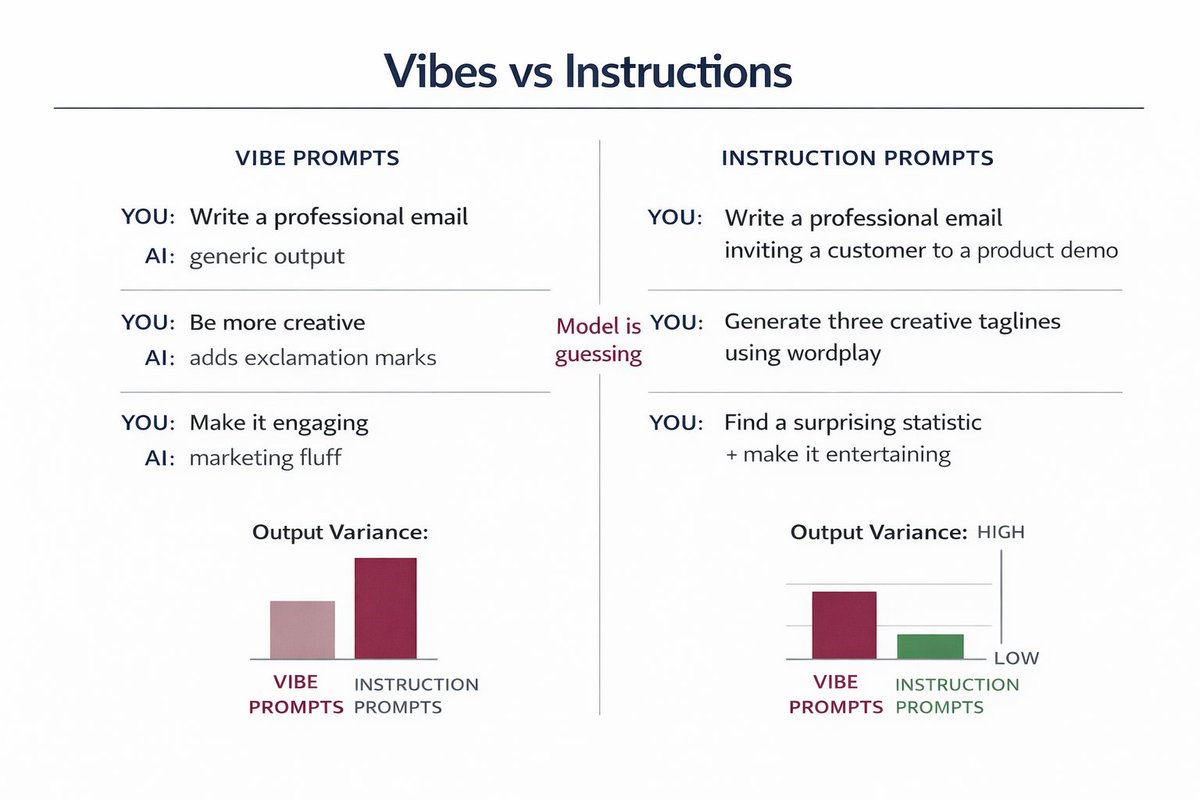
You: "Write a professional email"
AI: *writes generic corporate bullshit*

You: "Be more creative"
AI: *adds exclamation marks*

You're giving vibes, not instructions.

The AI is guessing what you want. Guessing = garbage output. Image
Prompt Contracts change everything.

Instead of "write X," you define 4 things:

1. Goal (exact success metric)
2. Constraints (hard boundaries)
3. Output format (specific structure)
4. Failure conditions (what breaks it)

Think legal contract, not creative brief. Image
Read 13 tweets
Feb 9
Stop using "act as a marketing expert."

Start using "act as a marketing expert + data analyst + psychologist."

The difference is absolutely insane.

It's called "persona stacking" and here are 7 combinations worth stealing:
1/ Content Creation

Personas: Copywriter + Behavioral Psychologist + Data Analyst

Prompt:

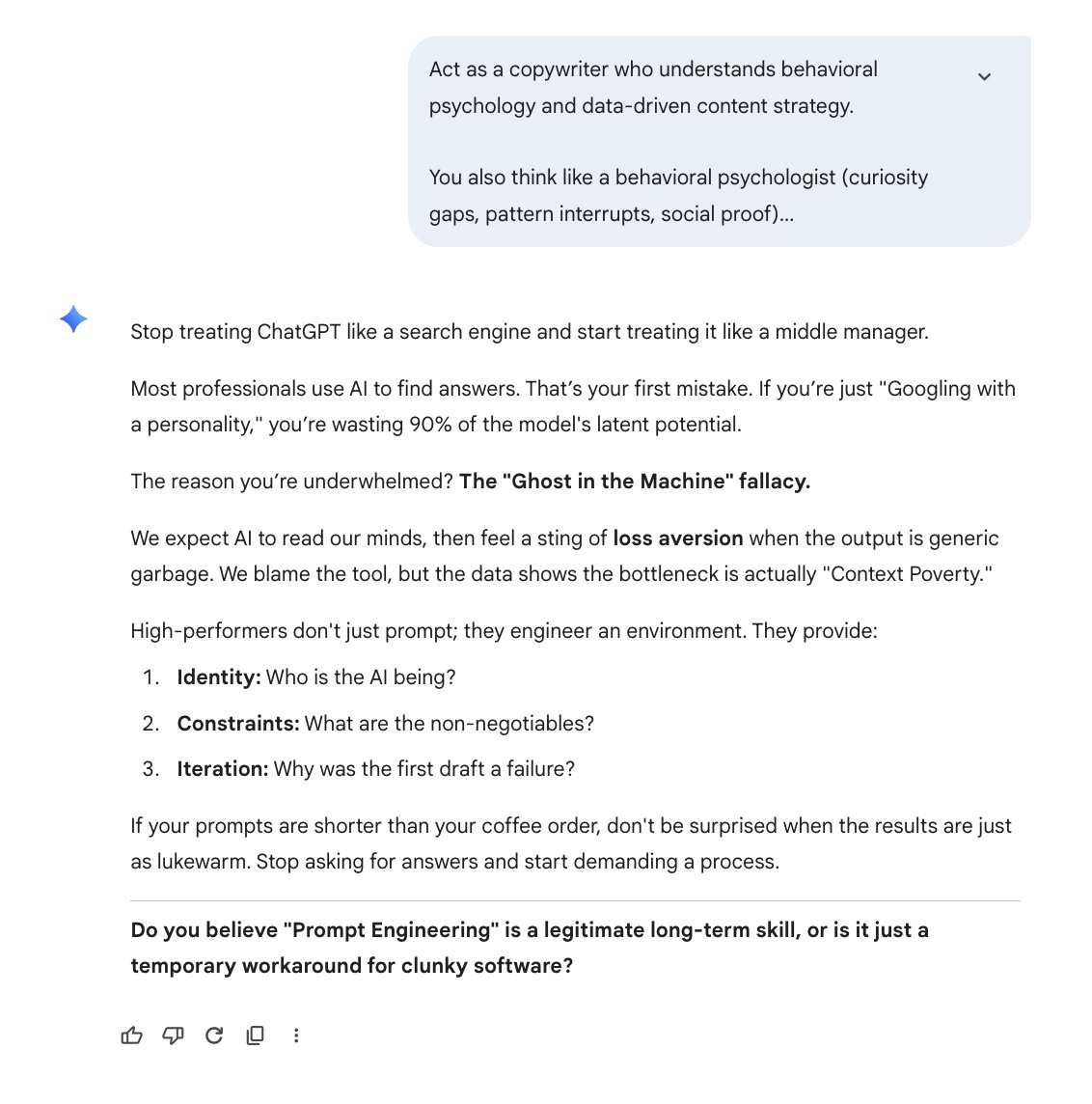
"Act as a copywriter who understands behavioral psychology and data-driven content strategy. Write a LinkedIn post about [topic] that triggers curiosity, uses pattern interrupts, and optimizes for engagement metrics."

Result: Content that hooks AND converts.Image
Image
2/ Product Strategy

Personas: Product Manager + UX Designer + Economist

Prompt:

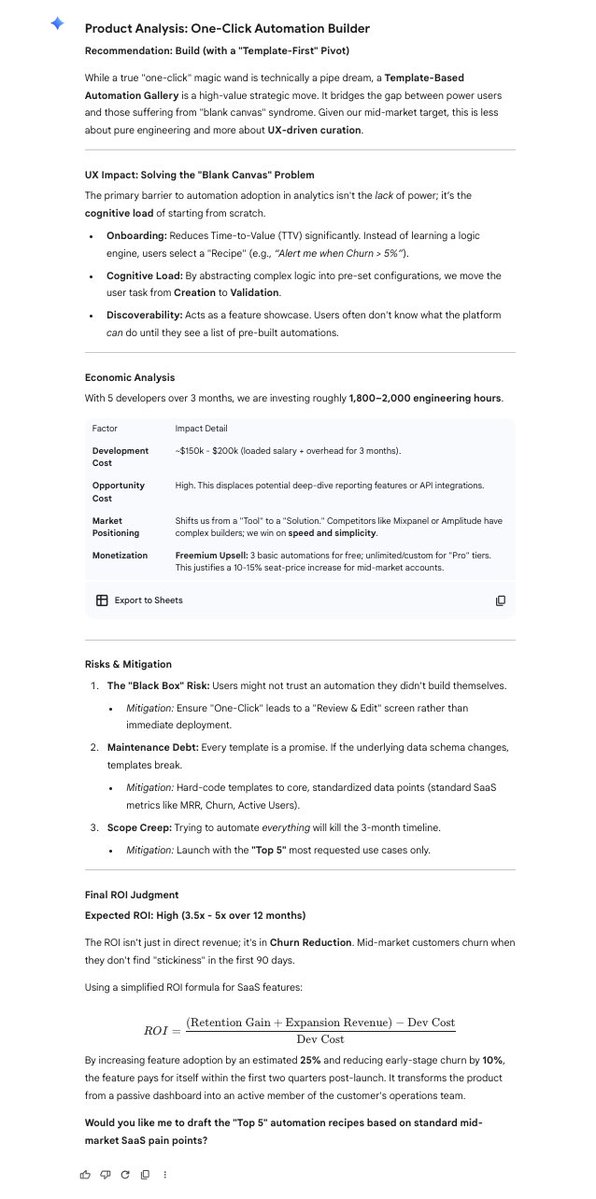
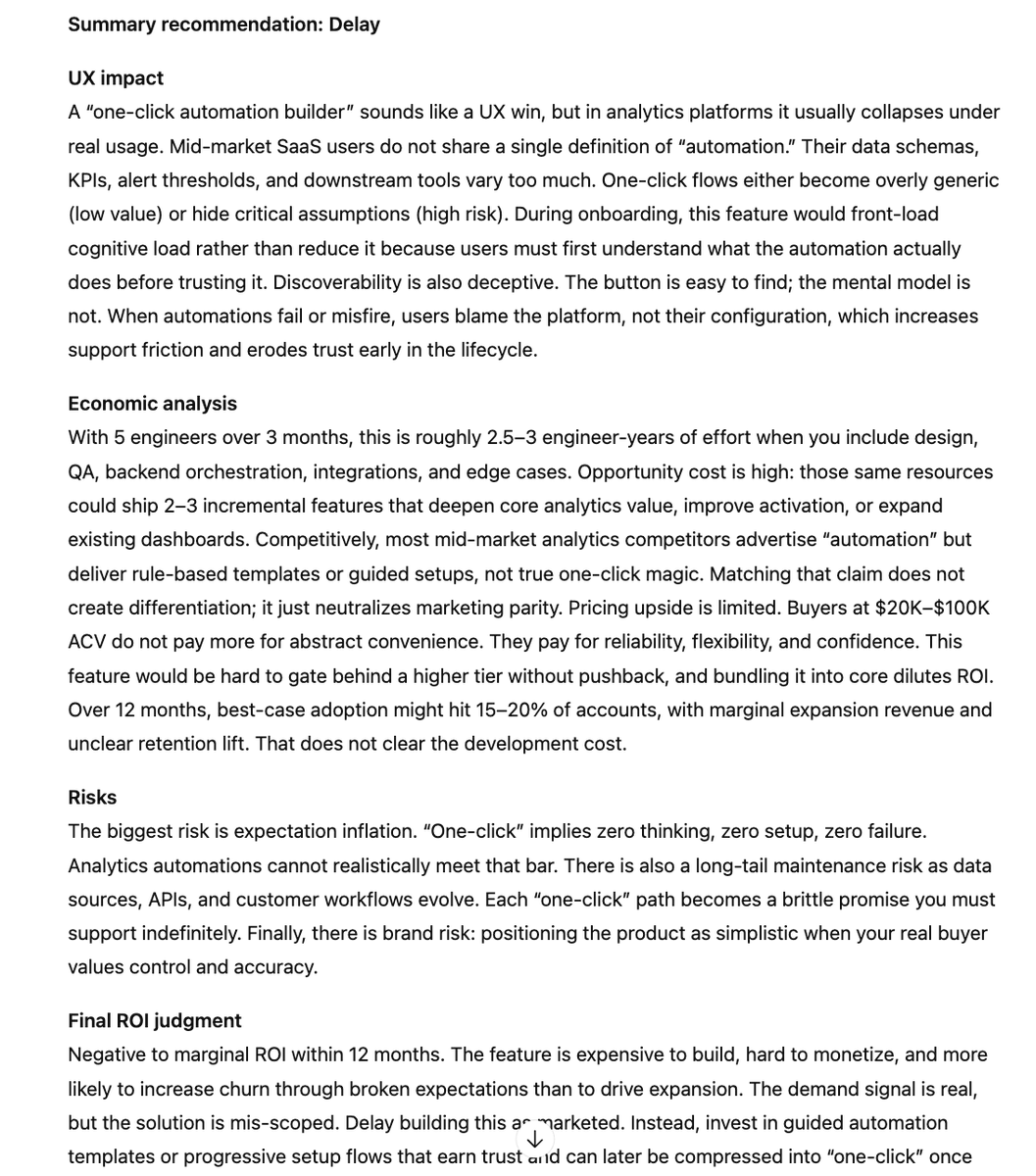
"Act as a product manager with UX design expertise and economic modeling skills. Analyze this feature request considering user experience, development costs, and market positioning. What's the ROI?"

Result: Decisions backed by multiple frameworks.Image
Image
Read 12 tweets
Feb 5
Most people use Perplexity like a fancy Google search.

That's insane.

It's actually a full-blown research assistant that can compress 10 hours of analysis into 20 seconds if you feed it the right prompts.

Here's what actually works: Image
1. Competitive Intelligence Dashboard

Prompt I use:

"
Create a competitive analysis for [COMPANY/PRODUCT] covering:

1. Recent product launches (last 90 days)
2. Pricing changes (with before/after if available)
3. Customer sentiment (Reddit, Twitter, G2 reviews - categorize positive/negative themes)
4. Technical stack (from job postings and tech blogs)
5. Funding/financial news (any recent rounds, partnerships, layoffs)

Format as a table:
| Category | Key Findings | Source Date | Impact Assessment |

Focus on information from the last 30 days. Cite every claim.
"
2. Technical Comparison Matrix

Prompt:

"
Compare [TOOL A] vs [TOOL B] vs [TOOL C] for [SPECIFIC USE CASE]:

Build a decision matrix:
| Feature | Tool A | Tool B | Tool C | Winner & Why |

Must include:
- Pricing (exact tiers, hidden costs)
- Performance benchmarks (from independent tests)
- Integration options (with [MY STACK])
- Community size (GitHub stars, Discord members, Stack Overflow activity)
- Recent updates (last 3 months)
- Known issues (from issue trackers, Reddit)

Rank overall winner with confidence score (1-10) and reasoning.

Cite every benchmark and review.
"
Read 13 tweets
Feb 3
Plot twist: The best prompts are negative.

After using ChatGPT, Claude, and Gemini professionally for 2 years, I realized telling AI what NOT to do works better than telling it what to do.

Here are 8 "anti-prompts" that changed everything: Image
1/ DON'T use filler words

Instead of: "Write engaging content"

Use: "No fluff. No 'delve into'. No 'landscape'. No 'it's important to note'. Get straight to the point."

Result: 67% shorter outputs with 2x more substance.

The AI stops padding and starts delivering. Image
Image
2/ DON'T explain the obvious

Add this line: "Skip introductions. Skip conclusions. Skip context I already know."

Example: When asking for code, I get the function immediately.

No "Here's a Python script that..." preamble.

Saves 40% of my reading time. Image
Image
Read 12 tweets
Jan 31
OpenAI and Anthropic engineers leaked the secret to consistent AI outputs.

I've been using insider knowledge for 6 months. The difference is insane.

Here's what they don't want you to know (bookmark this). Image
Step 1: Control the Temperature

Most AI interfaces hide this, but you need to set temperature to 0 or 0.1 for consistency.

Via API:

ChatGPT: temperature: 0
Claude: temperature: 0
Gemini: temperature: 0

Via chat interfaces:

ChatGPT Plus: Can't adjust (stuck at ~0.7)
Claude Projects: Uses default (~0.7)
Gemini Advanced: Can't adjust

This is why API users get better consistency. They control what you can't see.

If you're stuck with web interfaces, use the techniques below to force consistency anyway.Image
Step 2: Build a System Prompt Template

Stop rewriting your prompt every time.

Create a master template with fixed structure:

ROLE: [Exactly who the AI is]
TASK: [Exactly what to do]
FORMAT: [Exactly how to structure output]
CONSTRAINTS: [Exactly what to avoid]
EXAMPLES: [Exactly what good looks like]

Example for blog writing:

ROLE: You are a direct, no-fluff content writer
TASK: Write a 500-word blog intro on [topic]
FORMAT: Hook → Problem → Solution → CTA. 3 paragraphs max.
CONSTRAINTS: No corporate speak. No "in today's world". No metaphors.
EXAMPLES: [paste your best previous output here]

Reuse this template. Change only the [topic]. Consistency skyrockets.Image
Read 14 tweets

Did Thread Reader help you today?

Support us! We are indie developers!


This site is made by just two indie developers on a laptop doing marketing, support and development! Read more about the story.

Become a Premium Member ($3/month or $30/year) and get exclusive features!

Become Premium

Don't want to be a Premium member but still want to support us?

Make a small donation by buying us coffee ($5) or help with server cost ($10)

Donate via Paypal

Or Donate anonymously using crypto!

Ethereum

0xfe58350B80634f60Fa6Dc149a72b4DFbc17D341E copy

Bitcoin

3ATGMxNzCUFzxpMCHL5sWSt4DVtS8UqXpi copy

Thank you for your support!

Follow Us!

:(