A $5 billion company has operated for 65 years with ZERO managers.
Employees hire their own colleagues, rank each other for compensation, and choose their own projects.
This company has never had a loss-making year since 1958.
Thread
Employees hire their own colleagues, rank each other for compensation, and choose their own projects.
This company has never had a loss-making year since 1958.
Thread

W.L. Gore is a material science company with 13,000+ employees holding 1,000+ patents.
Your Gore-Tex jacket, medical implants, and guitar strings? All made by workers who report to no one.
And they have achieved that with ZERO management layers.
The question is how?
Your Gore-Tex jacket, medical implants, and guitar strings? All made by workers who report to no one.
And they have achieved that with ZERO management layers.
The question is how?

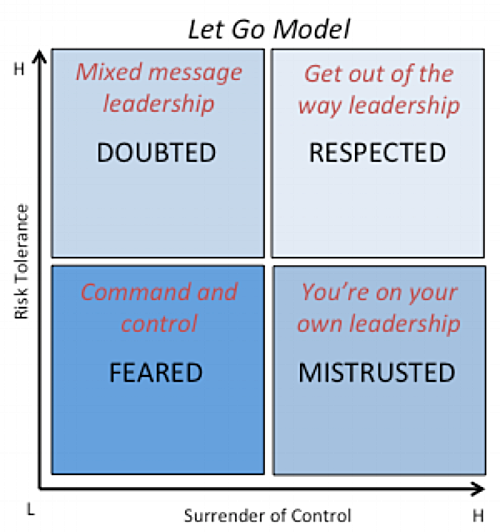
The foundation of Gore's system is the "Lattice Organization."
Every January, workers don't get assignments—they negotiate commitments with teammates who depend on their work.
These aren't suggestions. They're sacred promises between peers.
Every January, workers don't get assignments—they negotiate commitments with teammates who depend on their work.
These aren't suggestions. They're sacred promises between peers.

Their structure contains zero management layers between the CEO and front-line workers.
A chemical engineer's commitment might read:
"I will deliver 3 new polymer prototypes by Q3, tested to 10,000-cycle durability."
All 11,000 workers' commitments are visible company-wide.
A chemical engineer's commitment might read:
"I will deliver 3 new polymer prototypes by Q3, tested to 10,000-cycle durability."
All 11,000 workers' commitments are visible company-wide.
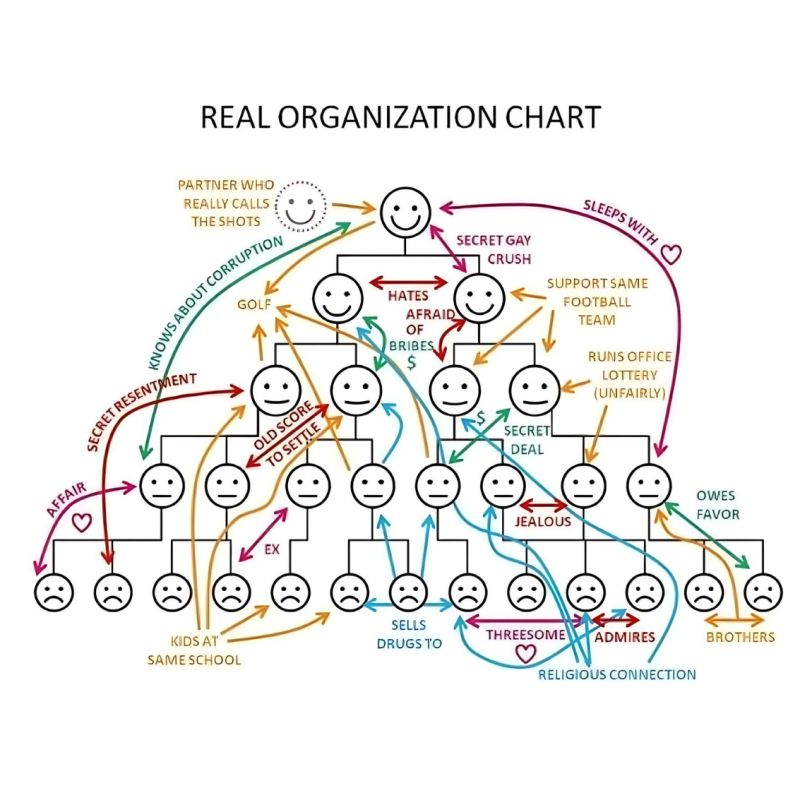
Performance accountability happens through peer review from 20-30 colleagues who actually know your work.
No place to hide poor performance and no manager needed to enforce standards.
Your teammates—who depend on your output—apply the pressure directly.
No place to hide poor performance and no manager needed to enforce standards.
Your teammates—who depend on your output—apply the pressure directly.
When a medical device engineer needs equipment, they don't submit a requisition form.
They buy it.
When production needs a $2M machine?
Same thing. No VP signature required.
They buy it.
When production needs a $2M machine?
Same thing. No VP signature required.
Even hiring has no central authority.
Teams who feel overburdened simply decide to recruit someone. The entire group interviews candidates.
New hires are selected by unanimous agreement of people who'll actually work with them.
There is no HR department giving orders.
Teams who feel overburdened simply decide to recruit someone. The entire group interviews candidates.
New hires are selected by unanimous agreement of people who'll actually work with them.
There is no HR department giving orders.
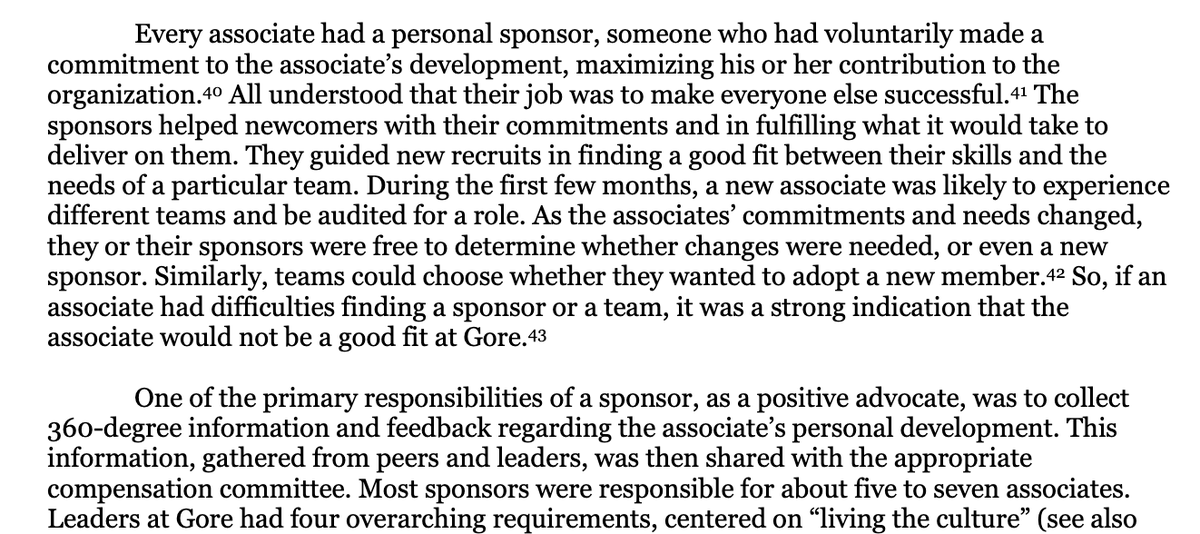
Their conflict resolution process is explicit:
• Direct conversation between associates
• Peer mediation
• Panel of respected colleagues
• CEO as final arbiter
The CEO is called in so rarely that most employees have never seen it happen.
• Direct conversation between associates
• Peer mediation
• Panel of respected colleagues
• CEO as final arbiter
The CEO is called in so rarely that most employees have never seen it happen.
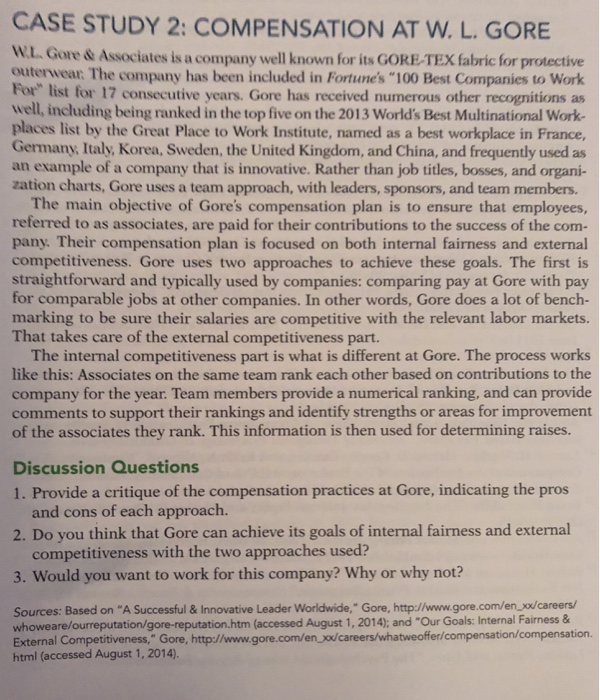
Compensation works through a genuinely radical system:
Associates are ranked by 20-30 peers who evaluate each person's contribution.
Your worth is determined by colleagues who've worked directly with you.
No boss decides your raise.
Associates are ranked by 20-30 peers who evaluate each person's contribution.
Your worth is determined by colleagues who've worked directly with you.
No boss decides your raise.
But why don't more companies copy this?
Most executives simply aren't willing to give up what Bill Gore called "the command-and-control addiction."
Most have careers built on climbing the hierarchy, not eliminating it.
Most executives simply aren't willing to give up what Bill Gore called "the command-and-control addiction."
Most have careers built on climbing the hierarchy, not eliminating it.
W.L. Gore has NEVER had a losing year since 1958.
While paying above industry wages and eliminating the "management tax" that burdens competitors with 7-9 hierarchy layers.
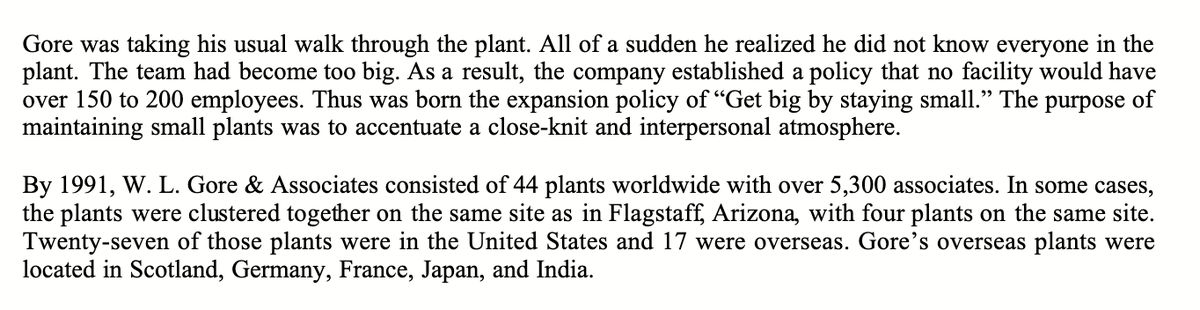
Their secret? The famous "Rule of 150."
While paying above industry wages and eliminating the "management tax" that burdens competitors with 7-9 hierarchy layers.
Their secret? The famous "Rule of 150."
During every major expansion, Gore split facilities at 150 people maximum.
Bill Gore's method: "Put 150 parking spaces in the lot. When people start parking on grass, build a new plant."
This keeps peer networks tight enough for natural accountability.
Bill Gore's method: "Put 150 parking spaces in the lot. When people start parking on grass, build a new plant."
This keeps peer networks tight enough for natural accountability.
Gore's system expose a delgeation system.
When you give people complete freedom with peer accountability, they don't become chaotic—they become more disciplined.
In their system, one broken commitment impacts teammates directly, creating natural regulation.
When you give people complete freedom with peer accountability, they don't become chaotic—they become more disciplined.
In their system, one broken commitment impacts teammates directly, creating natural regulation.
Two crucial elements make their system possible:
Radical transparency, where all business data flows freely between associates.
And a culture where "commitments are sacred" is treated as non-negotiable.
These create natural regulation that replaces supervisor oversight.
Radical transparency, where all business data flows freely between associates.
And a culture where "commitments are sacred" is treated as non-negotiable.
These create natural regulation that replaces supervisor oversight.
So what's the lesson here?
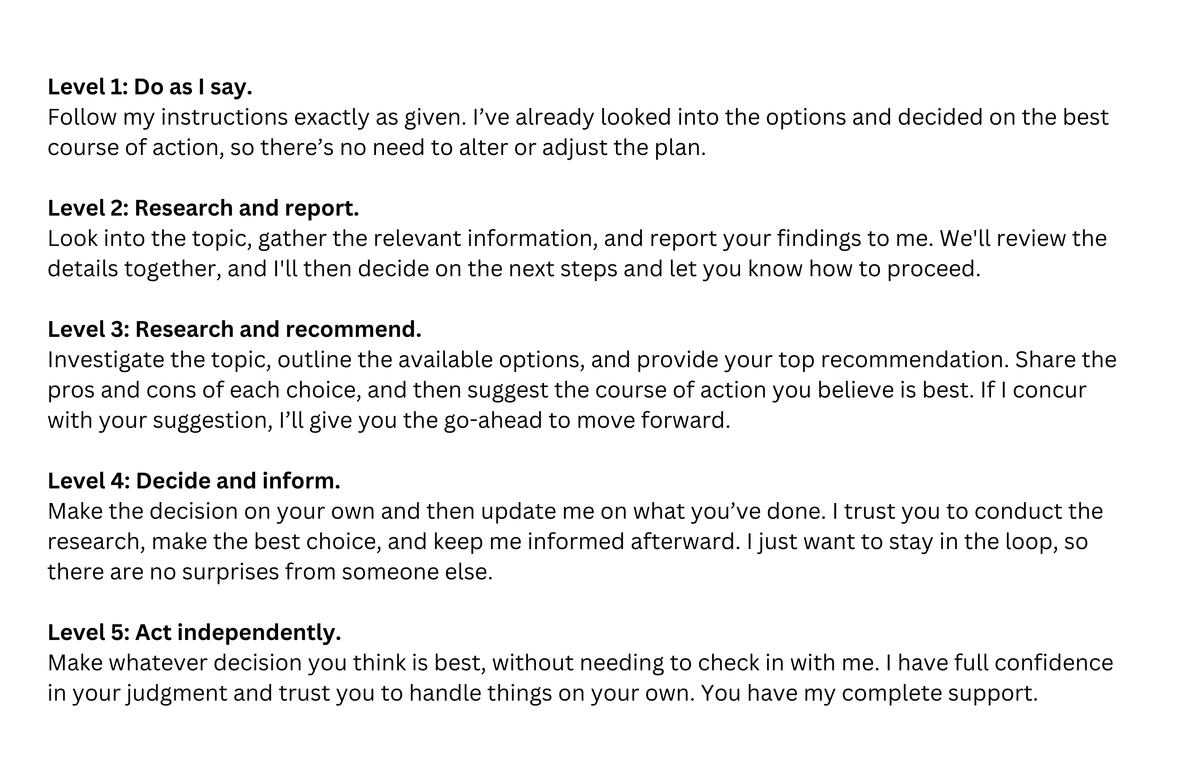
Effective delegation doesn't mean assigning tasks to people.
It means giving them authority, resources, and decision rights, then building peer accountability systems that turn hierarchy into mutual commitments.
This is level 5 of delegation.
Effective delegation doesn't mean assigning tasks to people.
It means giving them authority, resources, and decision rights, then building peer accountability systems that turn hierarchy into mutual commitments.
This is level 5 of delegation.
That's why Athena has built everything you'd ever need for delegation.
Instead of just giving you an EA, we help you with every step of the process.
You can check us out here:
athena.com/?utm_source=tw…
Instead of just giving you an EA, we help you with every step of the process.
You can check us out here:
athena.com/?utm_source=tw…
If you found this thread valuable:
1. Follow me @chr1stopherHo for more threads on entrepreneurship and delegation.
2. RT the linked tweet to spread the word.
1. Follow me @chr1stopherHo for more threads on entrepreneurship and delegation.
2. RT the linked tweet to spread the word.
https://twitter.com/265053055/status/1937537563159642246
• • •
Missing some Tweet in this thread? You can try to
force a refresh