
Ferrari rejects 99% of potential buyers.
Yet, they generated $6 billion in revenue last year alone.
How? This is not what you think!
Here is Enzo's genius behind Ferrari’s massive profits:🧵
Yet, they generated $6 billion in revenue last year alone.
How? This is not what you think!
Here is Enzo's genius behind Ferrari’s massive profits:🧵

Ferrari perfectly uses the "Veblen effect".
A principle whereby demand for a product increases as its price rises.
This defies the ordinary "law of supply and demand."
Ferrari has mastered Veblen so well that it can tap further into the 6 psychological biases behind it...
A principle whereby demand for a product increases as its price rises.
This defies the ordinary "law of supply and demand."
Ferrari has mastered Veblen so well that it can tap further into the 6 psychological biases behind it...

Ferrari's pricing strategy is bold.
Their cheapest car, the Portofino M, starts at $226,000, while the SF90 Stradale reaches $625,000.
These high prices don't deter buyers.
Instead, they attract them, playing on clients' prestige bias and desire for exclusivity.
Their cheapest car, the Portofino M, starts at $226,000, while the SF90 Stradale reaches $625,000.
These high prices don't deter buyers.
Instead, they attract them, playing on clients' prestige bias and desire for exclusivity.

The Veblen effect influences quality perception.
The high cost of Ferraris triggers this assumption.
Our brain uses price as a shortcut to judge quality.
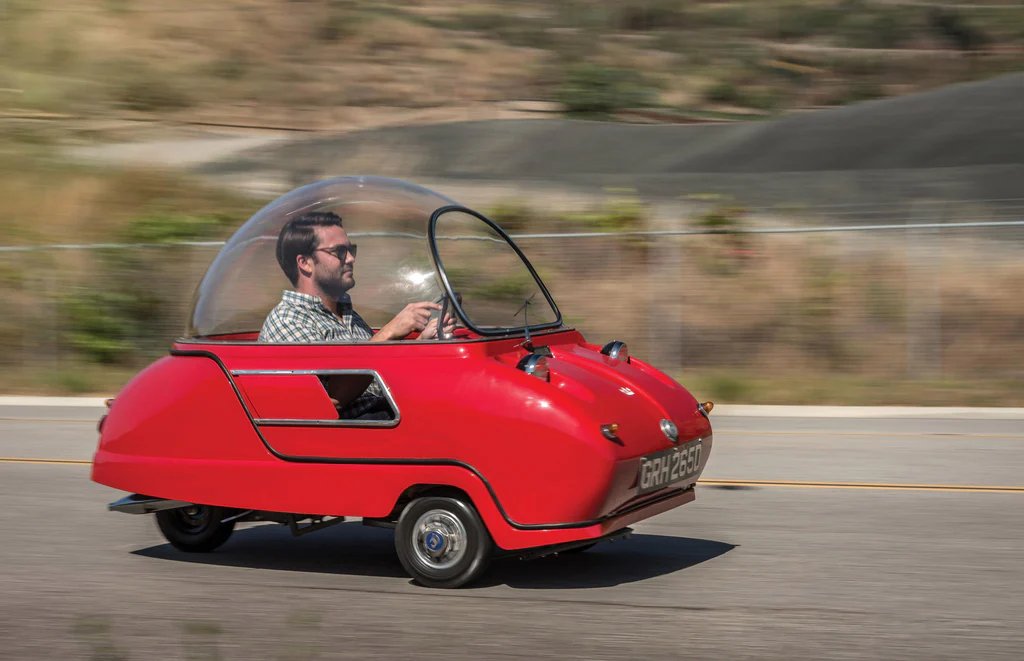
Ferraris are high-tech cars, but their price psychologically transforms them into dream cars.
Look at this one↓
The high cost of Ferraris triggers this assumption.
Our brain uses price as a shortcut to judge quality.
Ferraris are high-tech cars, but their price psychologically transforms them into dream cars.
Look at this one↓
Ferrari's production is tiny compared to giant automakers:
• Ferrari: 13,221 cars in 2022
• Toyota: 9.13 million in 2022
It relies on scarcity bias: when we value things more if they're rare or in limited supply.
It's about possessing something that few others can obtain.
• Ferrari: 13,221 cars in 2022
• Toyota: 9.13 million in 2022
It relies on scarcity bias: when we value things more if they're rare or in limited supply.
It's about possessing something that few others can obtain.
To get a Ferrari, clients can wait for years.
This doesn't discourage them.
It makes them want the car even more, and the waitlist is 3 years long.
It's the scarcity effect in action, combined with FOMO (Fear of Missing Out) - another powerful psychological driver of desire.
This doesn't discourage them.
It makes them want the car even more, and the waitlist is 3 years long.
It's the scarcity effect in action, combined with FOMO (Fear of Missing Out) - another powerful psychological driver of desire.
Owning a Ferrari is also a symbol of status, showcasing wealth and success.
The Veblen effect taps into in-group bias, also known as favoritism bias, which is the desire to belong to an exclusive club.
A luxury car is a statement of belonging to an elite group.
The Veblen effect taps into in-group bias, also known as favoritism bias, which is the desire to belong to an exclusive club.
A luxury car is a statement of belonging to an elite group.

Social differentiation is a key factor in Ferrari's appeal.
The Veblen effect makes their cars more desirable to high-net-worth individuals
who want to stay in an exclusive social circle.
It's not just a car; it's a membership.
The Veblen effect makes their cars more desirable to high-net-worth individuals
who want to stay in an exclusive social circle.
It's not just a car; it's a membership.

From exclusive events to the Ferrari Owners Club, the brand creates a community around ownership.
This experiential aspect adds value beyond the physical product.
Moreover, Ferrari keeps its queen's privilege, saying "NO" to buyers who could discredit the brand.
This experiential aspect adds value beyond the physical product.
Moreover, Ferrari keeps its queen's privilege, saying "NO" to buyers who could discredit the brand.

The brand leverages its racing heritage to enhance perceived value.
Success in Formula 1 translates to prestige on the streets.
This leverages the halo effect:
Success on the track makes us perceive their road cars as superior to all others.
Success in Formula 1 translates to prestige on the streets.
This leverages the halo effect:
Success on the track makes us perceive their road cars as superior to all others.

Ferrari's financial success proves their strategy works:
• Revenue: $6 billion
• Net profit: $1.3 billion (up 34% from 2022)
• Capitalization: $82 billion
These numbers demonstrate the power of leveraging psychological biases in marketing.
Bravo!
• Revenue: $6 billion
• Net profit: $1.3 billion (up 34% from 2022)
• Capitalization: $82 billion
These numbers demonstrate the power of leveraging psychological biases in marketing.
Bravo!

To summarize, Veblen is not just an economic principle.
It's a set of psychological biases that luxury brands leverage to generate massive profit:
• Prestige
• Scarcity
• Favoritism
• Halo effect
• Social proof
Luxury is where the desire itself is the real product
It's a set of psychological biases that luxury brands leverage to generate massive profit:
• Prestige
• Scarcity
• Favoritism
• Halo effect
• Social proof
Luxury is where the desire itself is the real product
Thanks for reading.
If you want more on brand messaging, business & marketing,
Follow me @bizleadrs and RT to share with your friends.
What do you think now about luxury cars?
If you want more on brand messaging, business & marketing,
Follow me @bizleadrs and RT to share with your friends.
What do you think now about luxury cars?
• • •
Missing some Tweet in this thread? You can try to
force a refresh






