THE MENSTRUAL CYCLE EXPLAINED.
Every month, your body goes through the same process over and over again starting from adolescence till menopause.
This process is totally out of your control, as nature bids it to be.
However, knowing about it is powerful and helps inform your decisions.
Are you curious yet? Let’s get into it
Every month, your body goes through the same process over and over again starting from adolescence till menopause.
This process is totally out of your control, as nature bids it to be.
However, knowing about it is powerful and helps inform your decisions.
Are you curious yet? Let’s get into it

As a woman, your body naturally primes you to get pregnant and that’s what the menstrual cycle is all about.
During the cycle, your ovaries and uterus go through changes simultaneously but we’re going to simplify that.
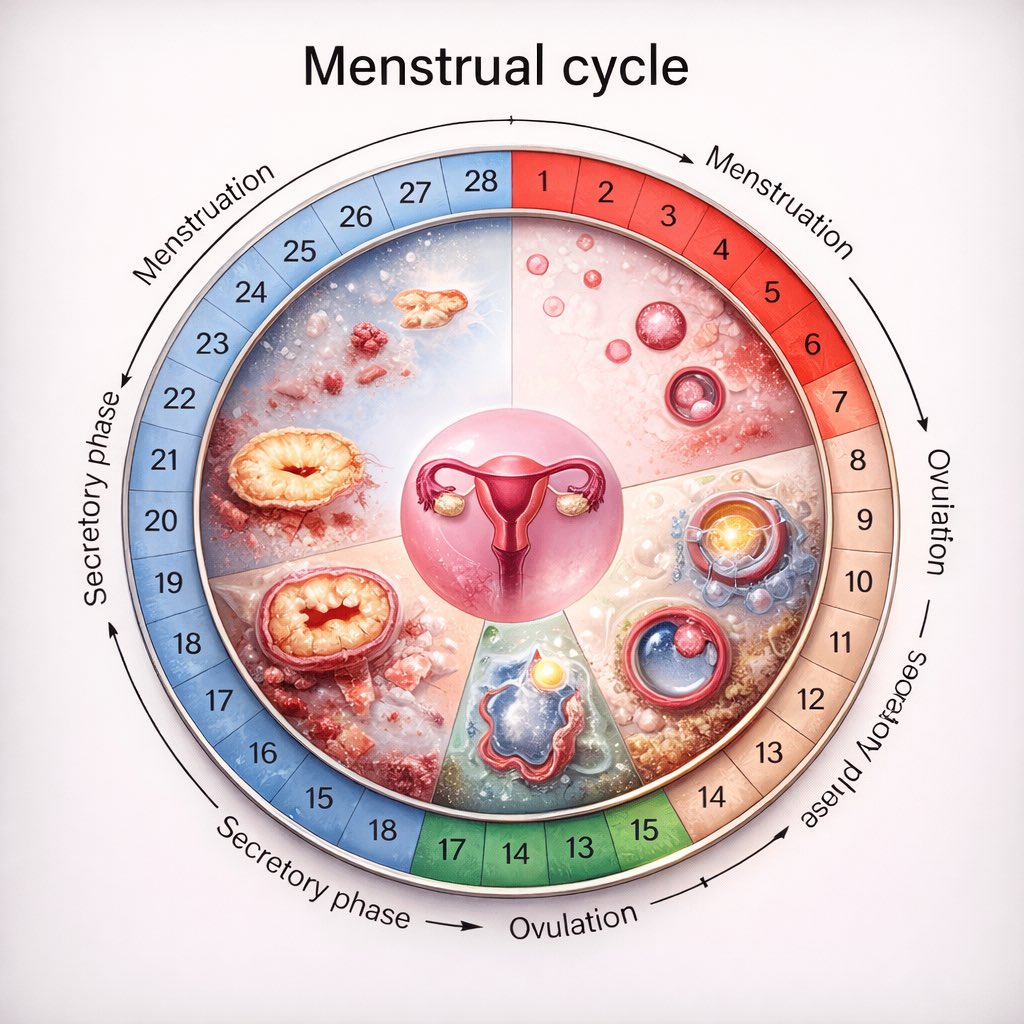
Your cycle is divided into four phases:
- Menstrual Phase
- Follicular phase
- Ovulation
- Luteal/secretory phase.
These phases translate into one another as the hormones in charge of them rises or falls.
During the cycle, your ovaries and uterus go through changes simultaneously but we’re going to simplify that.
Your cycle is divided into four phases:
- Menstrual Phase
- Follicular phase
- Ovulation
- Luteal/secretory phase.
These phases translate into one another as the hormones in charge of them rises or falls.

There’re 4 dominant hormones in the menstrual cycle:
- Follicle stimulating hormone (FSH)
- Leuteinizing hormone (LH)
- Estrogen
- Progesterone.
Release of these hormones start at the hypothalamus.
The hypothalamus is a part of the brain responsible for secreting hormones, and in this case, it secretes the gonadotropin-releasing hormones (GnRH)
These hormones in turn stimulate the anterior pituitary gland (also in the brain) to release the gonadotropins.
The gonadotropins are the FSH and LH.
- Follicle stimulating hormone (FSH)
- Leuteinizing hormone (LH)
- Estrogen
- Progesterone.
Release of these hormones start at the hypothalamus.
The hypothalamus is a part of the brain responsible for secreting hormones, and in this case, it secretes the gonadotropin-releasing hormones (GnRH)
These hormones in turn stimulate the anterior pituitary gland (also in the brain) to release the gonadotropins.
The gonadotropins are the FSH and LH.

The first day your period starts marks the first day of the cycle.
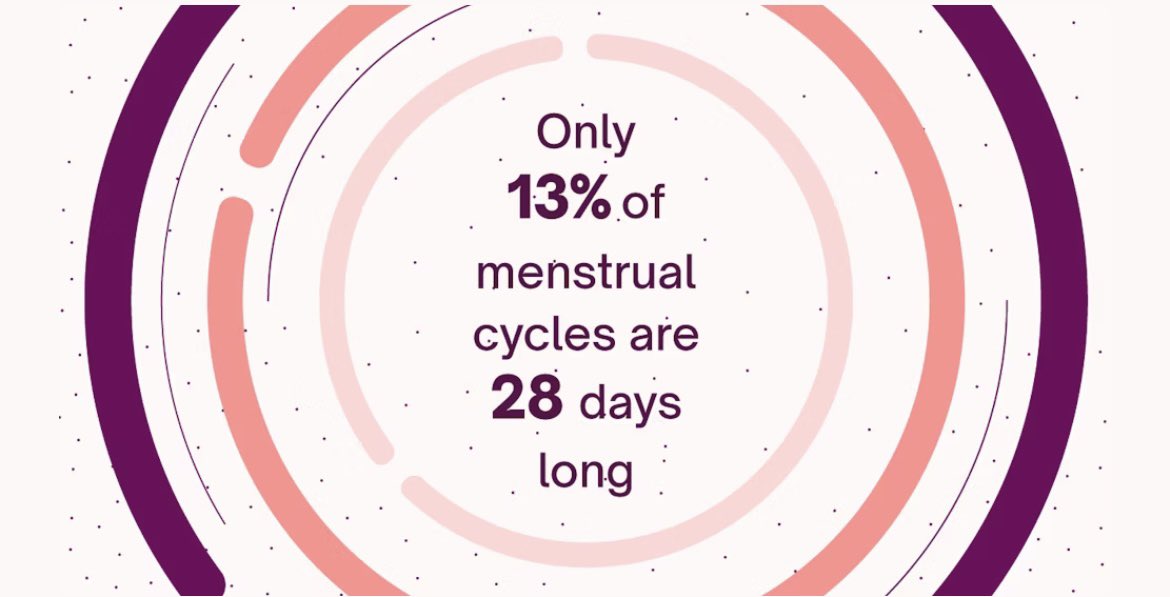
The cycle lasts from 21-35 days with the average being 28 days.
The menstrual phase (period) can last for 3-8 days, with an average of 5 days.
During this time, the follicles (in the ovaries) starts to grow triggered by FSH.
The cycle lasts from 21-35 days with the average being 28 days.
The menstrual phase (period) can last for 3-8 days, with an average of 5 days.
During this time, the follicles (in the ovaries) starts to grow triggered by FSH.
When the menstrual phase is over, you go into the follicular phase proper where a dominant follicle emerges and others die away.
This follicle secretes estrogen, which sends a positive feedback to the brain for more LH and FSH (gonadotropins).
A day before your ovulation (which normally occurs on the 14th day), there’s a surge in LH that forces the egg out of the ovary and into the fallopian tube.
This follicle secretes estrogen, which sends a positive feedback to the brain for more LH and FSH (gonadotropins).
A day before your ovulation (which normally occurs on the 14th day), there’s a surge in LH that forces the egg out of the ovary and into the fallopian tube.
The released egg travels down the fallopian tube to get fertilized by sperm, and implanted in the already nourished uterus.
However, if fertilization doesn’t happen the egg is reabsorbed or broken down in the uterus while the body prepares for yet another cycle.
However, if fertilization doesn’t happen the egg is reabsorbed or broken down in the uterus while the body prepares for yet another cycle.

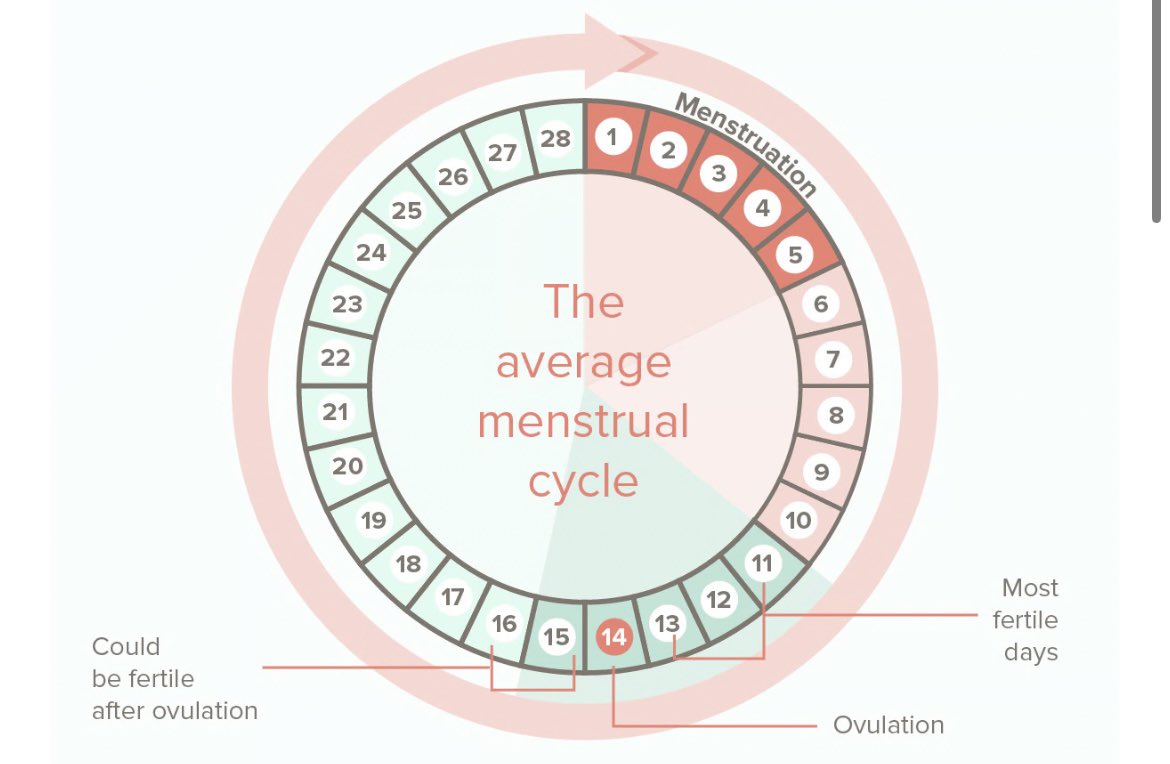
To simplify this using a 28 day average cycle:
- Menstruation occurs on day 1-5 of the cycle (Shedding of the uterine lining)
- The follicles grow and a dominant one emerges with the egg
- The follicle ruptures on the 14th day, signaling ovulation which lasts for 24 hours.
- This makes way for the luteal phase which primes the body for pregnancy.
- If fertilization doesn’t occur, the lining sheds and the cycle begins again.
- Menstruation occurs on day 1-5 of the cycle (Shedding of the uterine lining)
- The follicles grow and a dominant one emerges with the egg
- The follicle ruptures on the 14th day, signaling ovulation which lasts for 24 hours.
- This makes way for the luteal phase which primes the body for pregnancy.
- If fertilization doesn’t occur, the lining sheds and the cycle begins again.

Simplified role of the hormones:
- Follicle stimulating hormone: Stimulates growth of the follicles
- Leuteinizing hormone: Forces the egg out of the ovary
- Estrogen: Encourages ovulation and helps the body prepare for pregnancy
- Progesterone: Nourishes the uterus and maintains pregnancy.
- Follicle stimulating hormone: Stimulates growth of the follicles
- Leuteinizing hormone: Forces the egg out of the ovary
- Estrogen: Encourages ovulation and helps the body prepare for pregnancy
- Progesterone: Nourishes the uterus and maintains pregnancy.
HOW DO YOU KEEP TRACK OF YOUR CYCLE?
The menstrual cycle is different for most women and can be confusing, so one of the best ways to keep track is using a digital app or a calendar.
To get your cycle length, mark the beginning of your period every month, and when it ends.
The days in-between the beginning of one period and a day before the next one is your cycle length.
The menstrual cycle is different for most women and can be confusing, so one of the best ways to keep track is using a digital app or a calendar.
To get your cycle length, mark the beginning of your period every month, and when it ends.
The days in-between the beginning of one period and a day before the next one is your cycle length.

A normal cycle length is anywhere from 21-35 days.
Your follicular phase can vary, however the luteal phase is almost always the same; 14 days to your next period.
To know the exact date of ovulation, subtract 14 days from the length of your cycle, for example:
Cycle length 35 - 14 =21
Therefore, your ovulation is on the 21st day.
If you plan on getting pregnant, your ovulation window is best to try for a baby.
If you don’t, it’s best to avoid intercourse or use a contraceptive.
Your follicular phase can vary, however the luteal phase is almost always the same; 14 days to your next period.
To know the exact date of ovulation, subtract 14 days from the length of your cycle, for example:
Cycle length 35 - 14 =21
Therefore, your ovulation is on the 21st day.
If you plan on getting pregnant, your ovulation window is best to try for a baby.
If you don’t, it’s best to avoid intercourse or use a contraceptive.
What other questions do you have concerning your cycle?
Let’s hear them in the comments below
Follow @zizelle_ for more beneficial information.
Let’s hear them in the comments below
Follow @zizelle_ for more beneficial information.
• • •
Missing some Tweet in this thread? You can try to
force a refresh