Nucor - a $40 billion steel company operates with just 70 people at HQ.
Factory workers earn more than their managers, and there have been ZERO layoffs in 60+ years.
How Nucor does this feels unreal, but it isn't 🧵
Factory workers earn more than their managers, and there have been ZERO layoffs in 60+ years.
How Nucor does this feels unreal, but it isn't 🧵

Producing 25 million tons of steel is no joke.
Nucor produces more steel per employee than any US competitor while having the lowest labor cost per ton.
But how are they doing it despite paying the highest wages in the steel industry?
Let's dive in 👇
Nucor produces more steel per employee than any US competitor while having the lowest labor cost per ton.
But how are they doing it despite paying the highest wages in the steel industry?
Let's dive in 👇
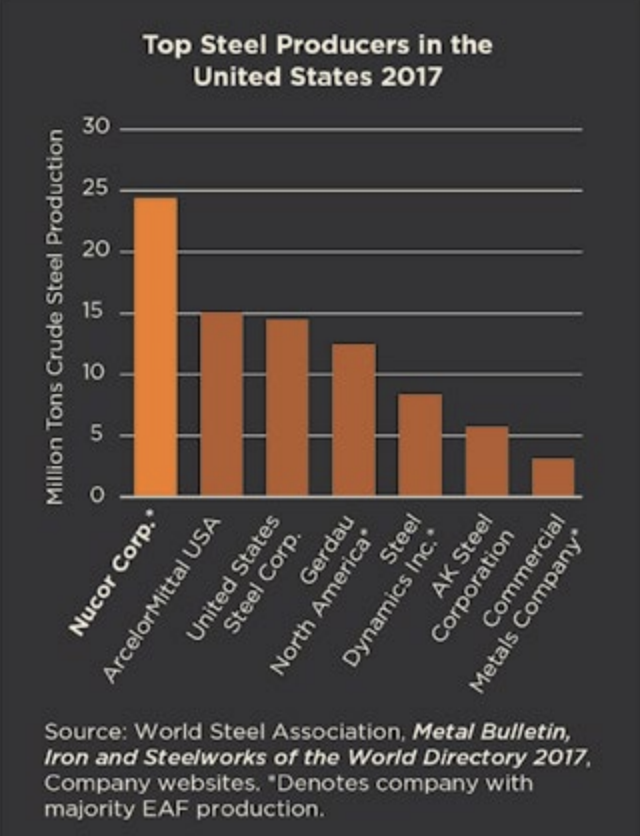
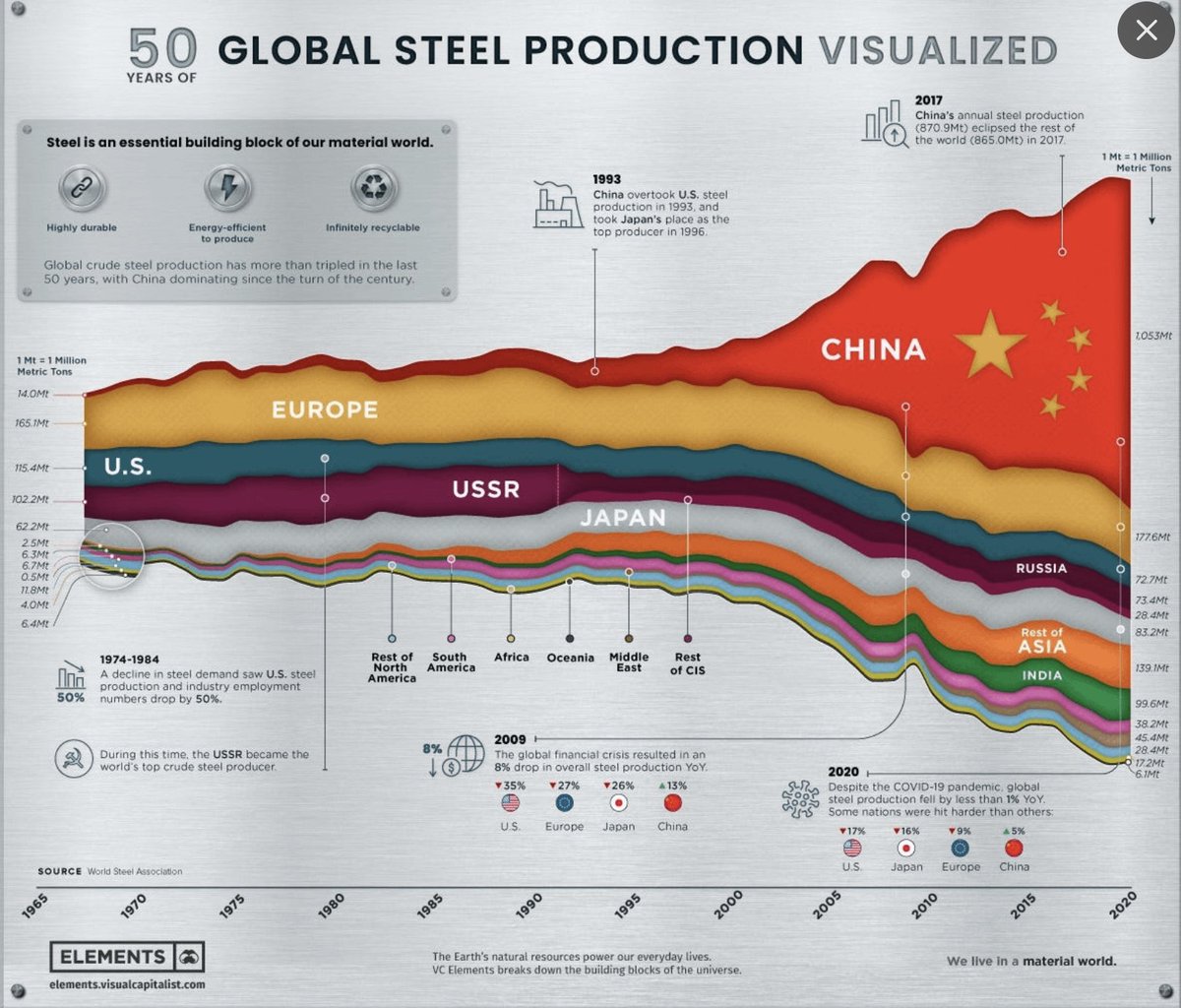
But first, take a look at this chart.
The US produces just 5% steel of the global steel production.
On the other hand, China produces 63%.
That's a crazy number...
The US produces just 5% steel of the global steel production.
On the other hand, China produces 63%.
That's a crazy number...
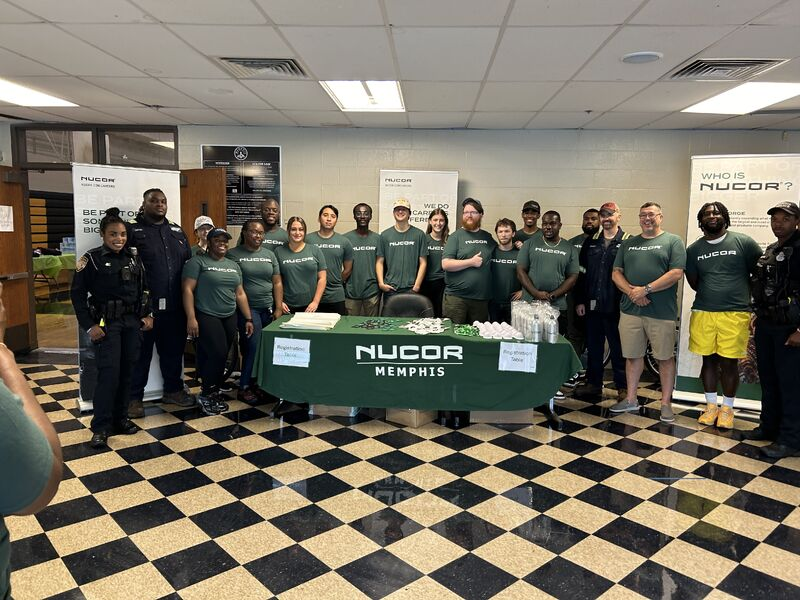
Most steel companies have dozens of management layers.
Nucor flipped this completely:
• Just 5 levels from the furnace operator to the CEO
• Only 70-90 people at corporate headquarters
• Each mill runs like an independent business
• Decisions made in hours, not weeks
Nucor flipped this completely:
• Just 5 levels from the furnace operator to the CEO
• Only 70-90 people at corporate headquarters
• Each mill runs like an independent business
• Decisions made in hours, not weeks
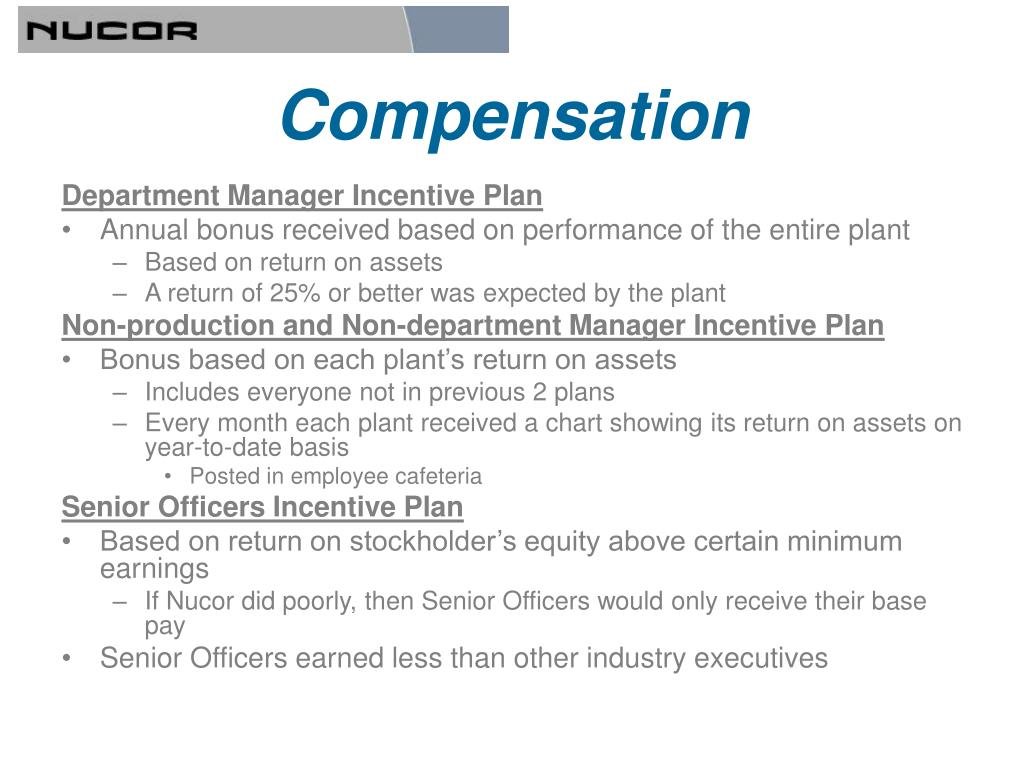
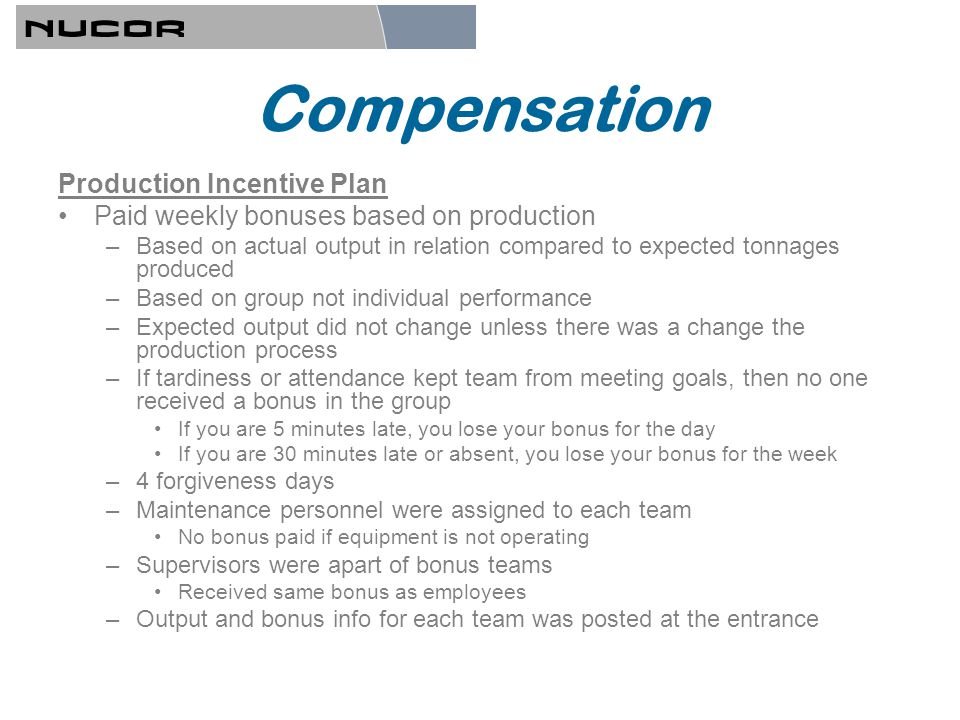
The genius is Nucor's completely inverted pay structure.
Factory workers start at ~50% of industry wages.
But they can earn UNLIMITED weekly bonus tied directly to their team's steel production.
Factory workers start at ~50% of industry wages.
But they can earn UNLIMITED weekly bonus tied directly to their team's steel production.
The weekly bonus system works like this:
If your team produces the baseline amount of steel, you get zero bonus that week.
But if you exceed that baseline, your bonus scales upward with no ceiling.
One steelworker went from $67,000 → $92,000 in four years.
If your team produces the baseline amount of steel, you get zero bonus that week.
But if you exceed that baseline, your bonus scales upward with no ceiling.
One steelworker went from $67,000 → $92,000 in four years.
The psychology behind this system is brilliant.
Since everyone's paycheck depends on team performance, workers police themselves.
Equipment breaks down? Everyone loses money.
Someone slows the line? Everyone's bonus shrinks.
Quality drops? Zero bonus for the crew.
Since everyone's paycheck depends on team performance, workers police themselves.
Equipment breaks down? Everyone loses money.
Someone slows the line? Everyone's bonus shrinks.
Quality drops? Zero bonus for the crew.
The ownership mentality this creates is legendary.
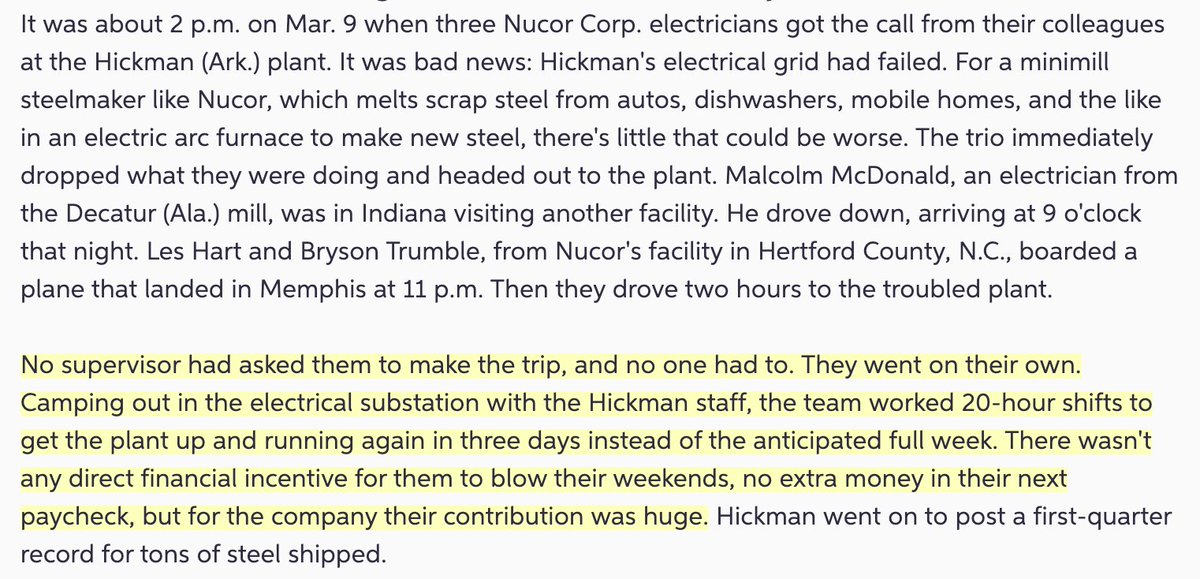
During a power outage, three electricians from OTHER Nucor facilities heard about the crisis.
Without being asked, they bought their own plane tickets, worked 20-hour days for 3 days, and fixed the problem.
During a power outage, three electricians from OTHER Nucor facilities heard about the crisis.
Without being asked, they bought their own plane tickets, worked 20-hour days for 3 days, and fixed the problem.
At traditional steel companies, a worker needs approval to adjust the furnace temperature.
At Nucor, that same worker can:
• Shut down $50M equipment for safety
• Redesign production processes
• Challenge management decisions openly
• Get rewarded for bold ideas that fail
At Nucor, that same worker can:
• Shut down $50M equipment for safety
• Redesign production processes
• Challenge management decisions openly
• Get rewarded for bold ideas that fail
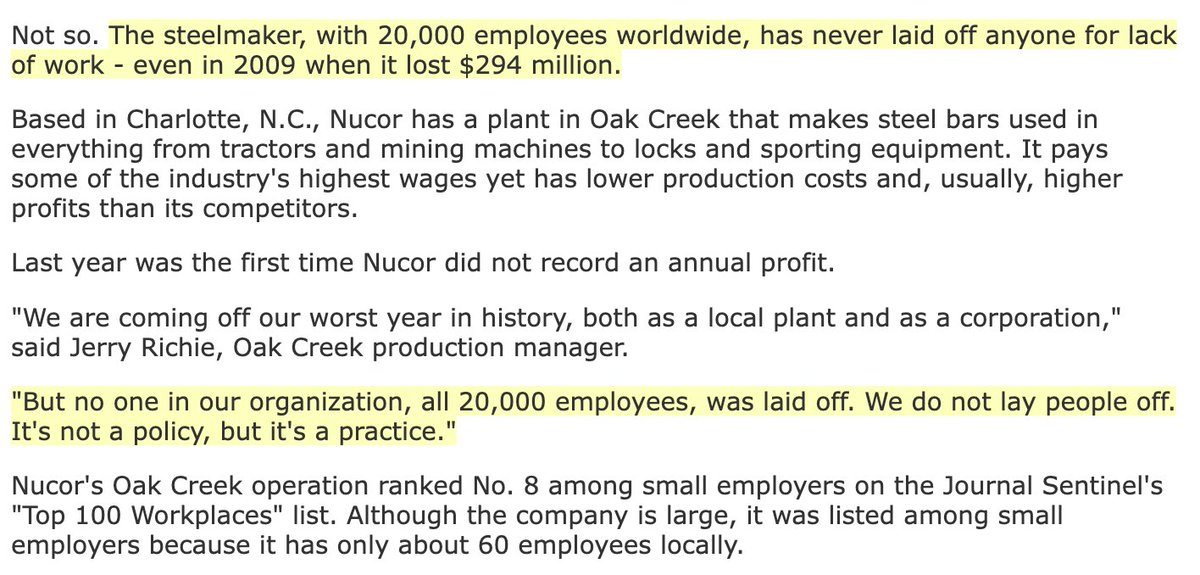
The no-layoff policy has been a reality for 60+ years.
Even in 2009, when Nucor posted its first-ever annual loss of $294 million, they didn't fire anyone.
Instead:
Workers took reduced hours. Executives took bigger pay cuts.
Everyone shared the pain together.
Even in 2009, when Nucor posted its first-ever annual loss of $294 million, they didn't fire anyone.
Instead:
Workers took reduced hours. Executives took bigger pay cuts.
Everyone shared the pain together.
This loyalty pays massive dividends during recovery.
When the 2009 recession ended, competitors who laid off thousands struggled to restart operations.
Nucor immediately ramped up with its motivated workforce.
Nucor paid $220 million in profit-sharing bonuses.
When the 2009 recession ended, competitors who laid off thousands struggled to restart operations.
Nucor immediately ramped up with its motivated workforce.
Nucor paid $220 million in profit-sharing bonuses.
Let's look at the maths...
Higher wages plus ownership mentality equals higher productivity.
Higher productivity means lower cost per unit of steel produced.
Lower unit costs combined with premium efficiency create huge profit margins.
Higher wages plus ownership mentality equals higher productivity.
Higher productivity means lower cost per unit of steel produced.
Lower unit costs combined with premium efficiency create huge profit margins.
Now see the financial results:
• Highest tonnage per employee in the US steel industry
• Lowest labor cost per ton produced
• 464% shareholder return (2000-2012)
• Stock hit $198 all-time high in 2024
• 50% return on equity during the boom
Numbers don't lie.
• Highest tonnage per employee in the US steel industry
• Lowest labor cost per ton produced
• 464% shareholder return (2000-2012)
• Stock hit $198 all-time high in 2024
• 50% return on equity during the boom
Numbers don't lie.

80% of Nucor's workforce operates on performance-based pay.
The alignment is perfect: when productivity rises, workers see immediate rewards in weekly paychecks.
When business struggles, everyone from the CEO down shares sacrifice.
It's a great partnership.
The alignment is perfect: when productivity rises, workers see immediate rewards in weekly paychecks.
When business struggles, everyone from the CEO down shares sacrifice.
It's a great partnership.
The lessons for leaders are clear: stop hoarding decision-making authority at the executive level.
Give your frontline people real power, and they'll move mountains for your business.
Nucor's 60-year track record proves this works.
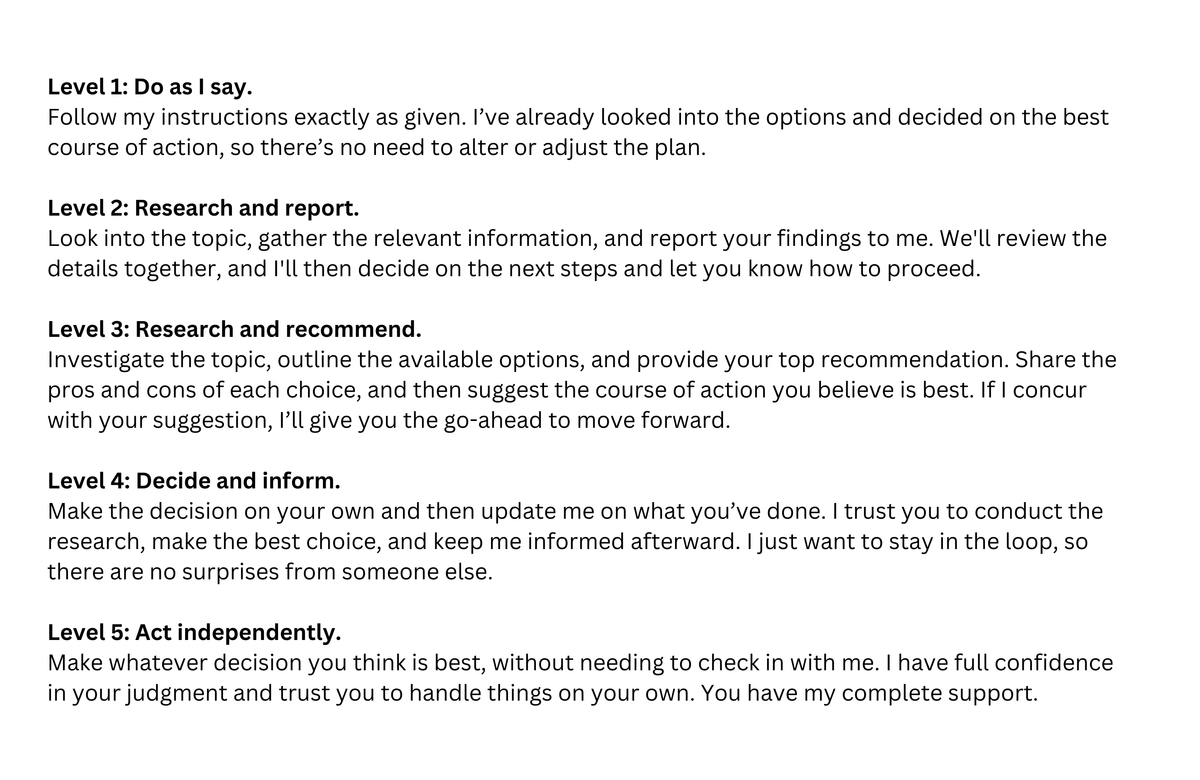
It's level 5 of delegation at its finest.
Give your frontline people real power, and they'll move mountains for your business.
Nucor's 60-year track record proves this works.
It's level 5 of delegation at its finest.
But most leaders refuse to give up power.
Result?
• Decisions slow down
• Innovation dies
• Talent leaves
• Markets eat them
Result?
• Decisions slow down
• Innovation dies
• Talent leaves
• Markets eat them
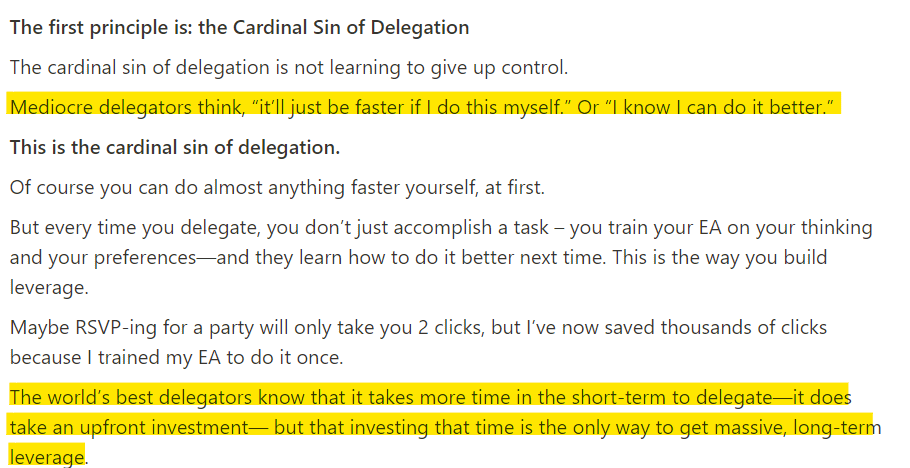
That's why Athena helps ambitious founders/CEOs gain back their time while scaling their company.
Delegation is the scaling law of entrepreneurship. If you don't understand it early, you'll find it incredibly hard to scale your business.
athena.com/?utm_source=tw…
Delegation is the scaling law of entrepreneurship. If you don't understand it early, you'll find it incredibly hard to scale your business.
athena.com/?utm_source=tw…
If you found this thread valuable:
1. Follow me @chr1stopherHo for more threads on entrepreneurship and delegation.
2. RT the linked tweet to spread the word.
1. Follow me @chr1stopherHo for more threads on entrepreneurship and delegation.
2. RT the linked tweet to spread the word.
https://twitter.com/265053055/status/1940430775436083291
• • •
Missing some Tweet in this thread? You can try to
force a refresh