A few days prior to the U.S. invasion of Afghanistan, Usāma Bin Lādin sent a letter to Mullā ʿUmar.
The letter offers fascinating insights into how the Base leaders viewed the Planes Operations as part of a calculated strategy to roll back the American empire.
🧵THREAD🧵 (8)
The letter offers fascinating insights into how the Base leaders viewed the Planes Operations as part of a calculated strategy to roll back the American empire.
🧵THREAD🧵 (8)

In the letter dated 3rd October 2001 C.E., Bin Lādin praised Mullā ʿUmar for his heroic position in defending Islām and his strong response against the American threats.
(1/8)
(1/8)

Bin Lādin: "Their threat 𝐭𝐨 𝐢𝐧𝐯𝐚𝐝𝐞 𝐀𝐟𝐠𝐡𝐚𝐧𝐢𝐬𝐭𝐚𝐧 should be countered by a 𝐭𝐡𝐫𝐞𝐚𝐭 𝐨𝐧 𝐲𝐨𝐮𝐫 𝐩𝐚𝐫𝐭 that America will not be able to dream of security until Muslims experience it as reality 𝐢𝐧 𝐏𝐚𝐥𝐞𝐬𝐭𝐢𝐧𝐞 𝐚𝐧𝐝 𝐀𝐟𝐠𝐡𝐚𝐧𝐢𝐬𝐭𝐚𝐧."
(2/8)
(2/8)
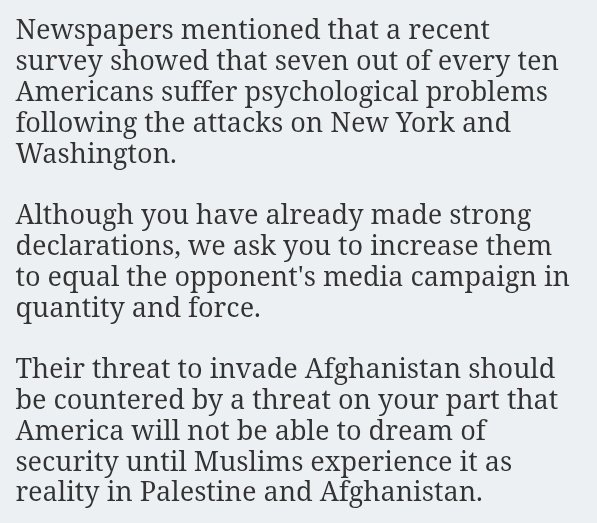
Bin Lādin asserted that Americans faced two contradictory problems.
If the US empire does not respond to the Manhattan raids, "𝐢𝐭𝐬 𝐩𝐫𝐞𝐬𝐭𝐢𝐠𝐞 𝐰𝐢𝐥𝐥 𝐜𝐨𝐥𝐥𝐚𝐩𝐬𝐞" and get downgraded into "𝐚 𝐭𝐡𝐢𝐫𝐝-𝐫𝐚𝐭𝐞 𝐩𝐨𝐰𝐞𝐫, 𝐬𝐢𝐦𝐢𝐥𝐚𝐫 𝐭𝐨 𝐑𝐮𝐬𝐬𝐢𝐚".
(3/8)
If the US empire does not respond to the Manhattan raids, "𝐢𝐭𝐬 𝐩𝐫𝐞𝐬𝐭𝐢𝐠𝐞 𝐰𝐢𝐥𝐥 𝐜𝐨𝐥𝐥𝐚𝐩𝐬𝐞" and get downgraded into "𝐚 𝐭𝐡𝐢𝐫𝐝-𝐫𝐚𝐭𝐞 𝐩𝐨𝐰𝐞𝐫, 𝐬𝐢𝐦𝐢𝐥𝐚𝐫 𝐭𝐨 𝐑𝐮𝐬𝐬𝐢𝐚".
(3/8)
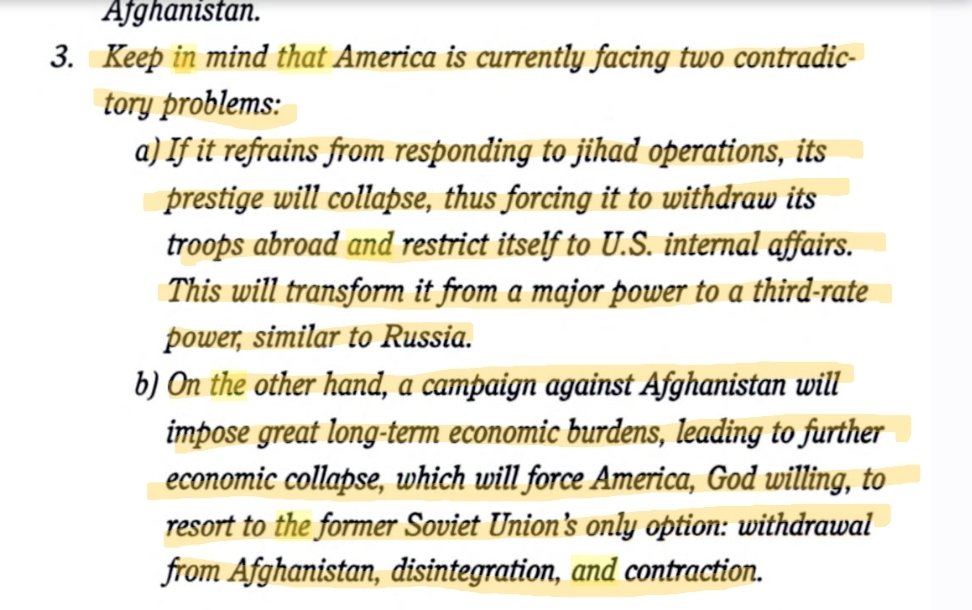
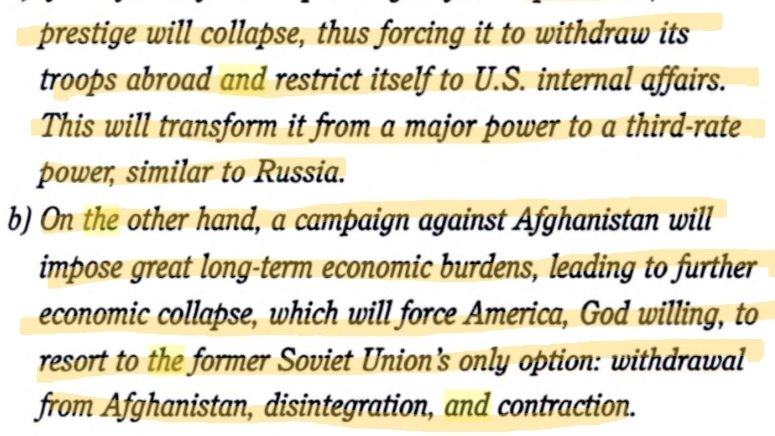
Bin Lādin: On the other hand, if Americans invaded Afghanistan, they will face "long-term economic burdens", resulting in further "economic collapse". This could force U.S.A to withdraw from Afghanistan and eventually disintegrate like the U.S.S.R.
(4/8)
(4/8)
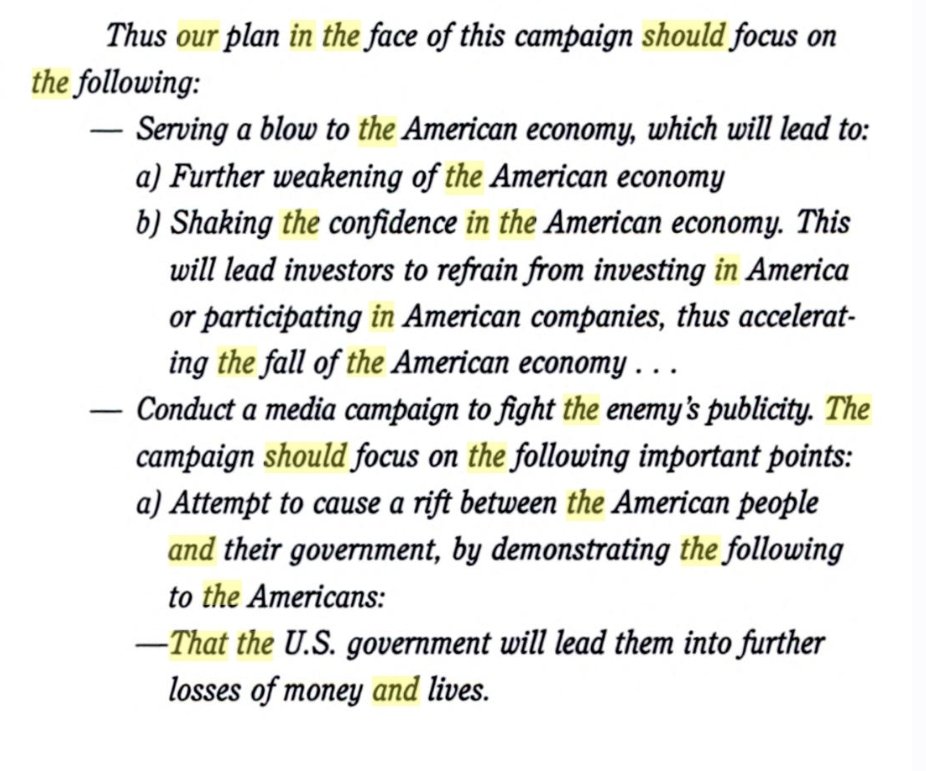
Bin Lādin then elucidates his strategy of conducting economic and media warfare against the American empire.
The media campaign would focus on instigating the American people against the Jewish plutocrats, Zionist lobbies, and issuing threats of massive retaliation.
(5/8)
The media campaign would focus on instigating the American people against the Jewish plutocrats, Zionist lobbies, and issuing threats of massive retaliation.
(5/8)

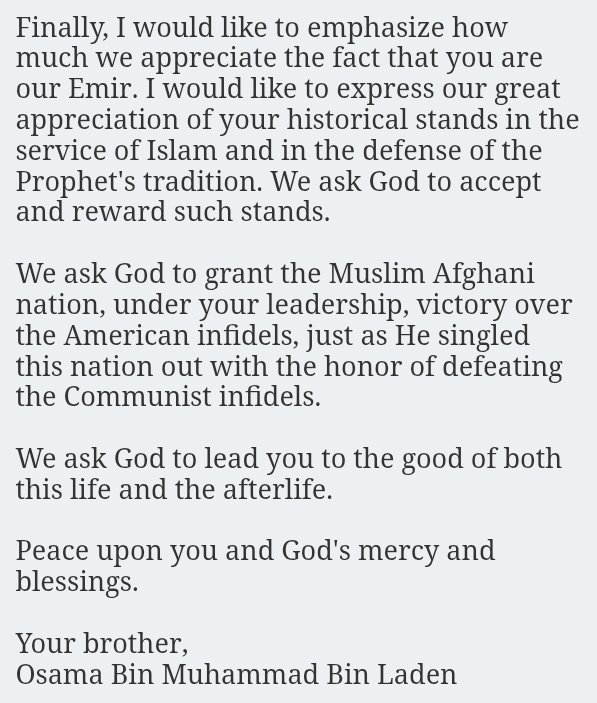
Bin Lādin: "We ask God to grant the Muslim Afghani nation, under your leadership, victory over the American infidels, just as He singled this nation out with the honor of defeating the Communist infidels."
(6/8)
(6/8)
This letter/mail was part of the information found in AQ computers acquired by Alan Cullison, ( @AlanCullison ) a journalist of the Wall Street Journal.
(7/8)
(7/8)
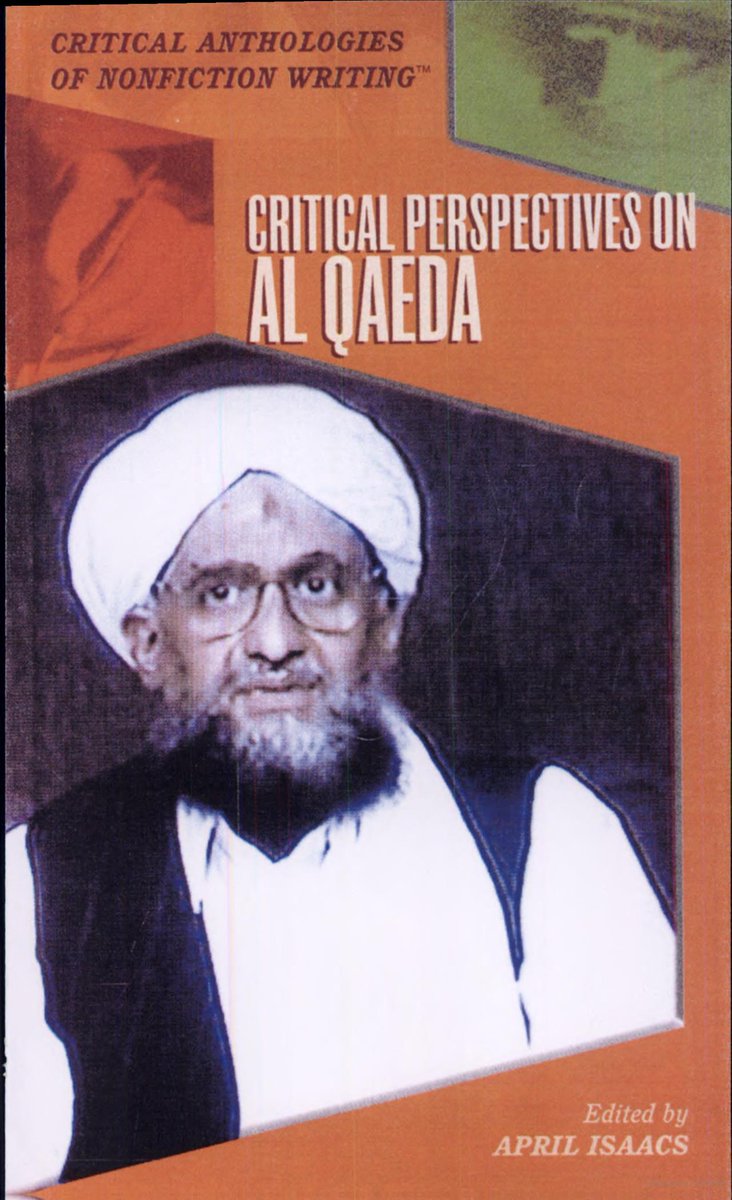
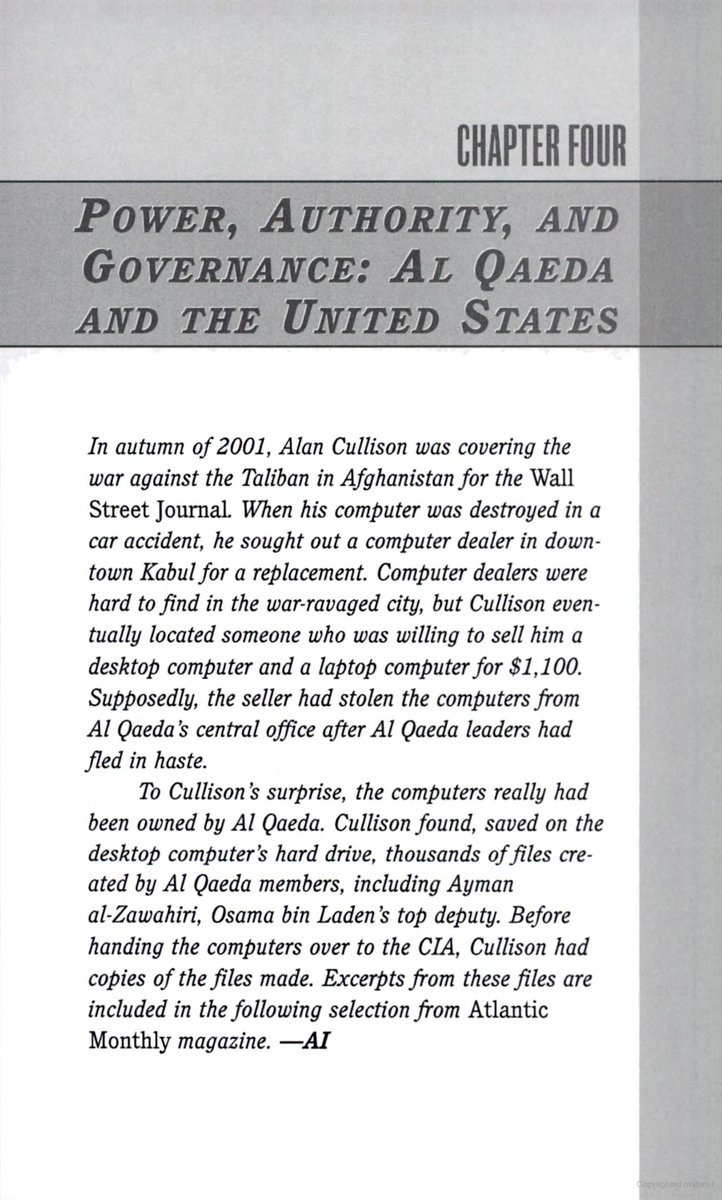
In September 2004, Cullison released many of the mails and letters found in AQ computers via the Atlantic monthly magazine.
(8/8 theatlantic.com/magazine/archi…
(8/8 theatlantic.com/magazine/archi…
• • •
Missing some Tweet in this thread? You can try to
force a refresh