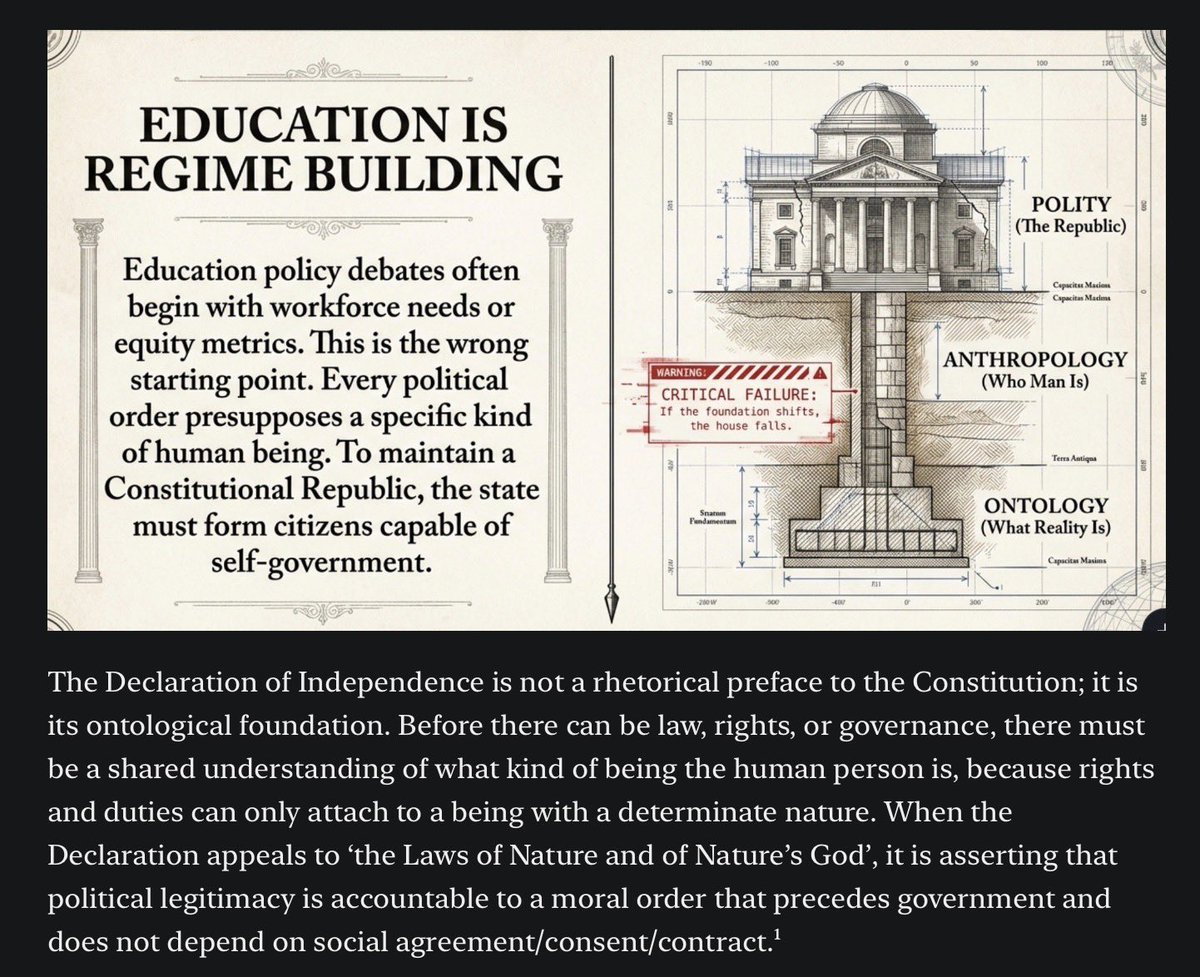
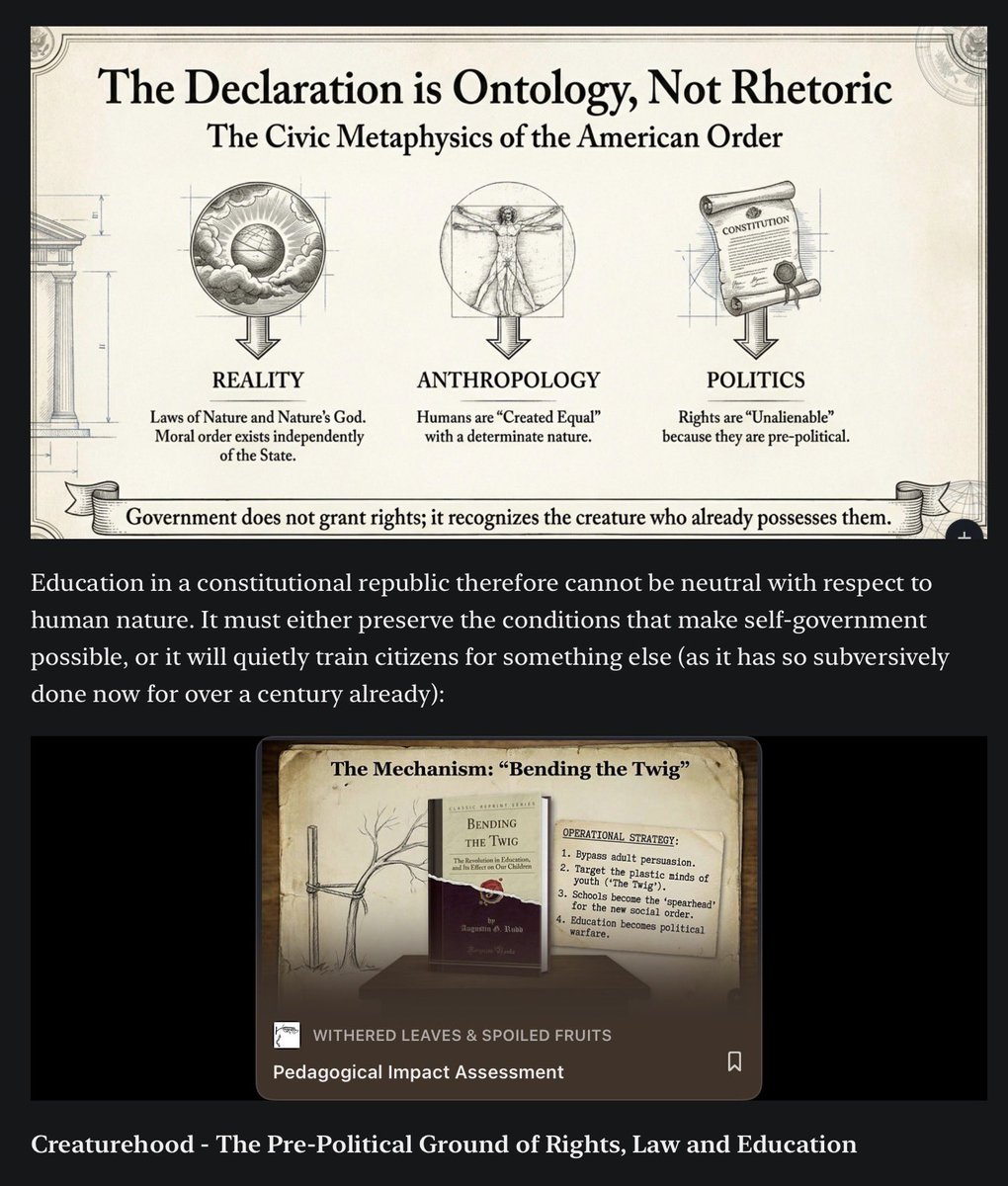
🧵The House of a Thousand Rooms
A Forensic Fable of Dialectic;
Containment and the End of Discernment
The Arrival
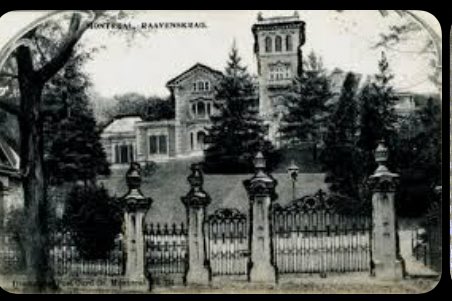
Once there was a vast and glittering House of a Thousand Rooms, suspended in midair like a floating city. The House promised sanctuary, wisdom, and power to all who entered. Its gates bore many signs; “Justice, Freedom, Reform, Tradition, Innovation, Rebellion.” Each room behind each sign claimed to oppose the others. Some walls were painted red, others blue, others gold or green. Some were filled with candles, others with screens. Some wore clerical garb, others suits, some in branded causal merch, while others wore lab coats. Travellers arrived daily in search of truth. They were told: “Choose a room. Debate those in other rooms. Defend your view and refute theirs.” And so they did. They moved from room to room and joined movements. They read manifestos and made signs. They adopted flags (or renounced them) and made podcasts. They held protests, wrote papers and argued across panels. They followed thought leaders who told them what to think and how to presume that they were thinking for themselves. But few ever asked; “What is the foundation of the House itself?” “Who built it?” “Why are all the rooms so eerily symmetrical?”
A Forensic Fable of Dialectic;
Containment and the End of Discernment
The Arrival
Once there was a vast and glittering House of a Thousand Rooms, suspended in midair like a floating city. The House promised sanctuary, wisdom, and power to all who entered. Its gates bore many signs; “Justice, Freedom, Reform, Tradition, Innovation, Rebellion.” Each room behind each sign claimed to oppose the others. Some walls were painted red, others blue, others gold or green. Some were filled with candles, others with screens. Some wore clerical garb, others suits, some in branded causal merch, while others wore lab coats. Travellers arrived daily in search of truth. They were told: “Choose a room. Debate those in other rooms. Defend your view and refute theirs.” And so they did. They moved from room to room and joined movements. They read manifestos and made signs. They adopted flags (or renounced them) and made podcasts. They held protests, wrote papers and argued across panels. They followed thought leaders who told them what to think and how to presume that they were thinking for themselves. But few ever asked; “What is the foundation of the House itself?” “Who built it?” “Why are all the rooms so eerily symmetrical?”

2/ The Invisible Architect
Unseen beneath the House, a dialectical engine hummed. Its name was Nomos and its blueprints came from old halls where men like Protagoras, Ockham, Descartes and Hegel once spoke in riddles. Their premise was simple; “Truth is not found; it is made.” “Reality is not known; it is processed.” “Order is not given; it is chosen.” They dismantled the Real and replaced it with perspectives. They shattered form, nature and being; repackaging just the rhetorical fragments into options, identities and arguments. Nomos was their child. He built the House. He gave every room its slogans. He provided endless costumes. He ensured that each opposition was carefully calibrated; not to break the system, but to fuel it. He whispered into both ears and gave the public many sides, but only one floor. Many voices, but only one architecture - the architecture of containment.
Unseen beneath the House, a dialectical engine hummed. Its name was Nomos and its blueprints came from old halls where men like Protagoras, Ockham, Descartes and Hegel once spoke in riddles. Their premise was simple; “Truth is not found; it is made.” “Reality is not known; it is processed.” “Order is not given; it is chosen.” They dismantled the Real and replaced it with perspectives. They shattered form, nature and being; repackaging just the rhetorical fragments into options, identities and arguments. Nomos was their child. He built the House. He gave every room its slogans. He provided endless costumes. He ensured that each opposition was carefully calibrated; not to break the system, but to fuel it. He whispered into both ears and gave the public many sides, but only one floor. Many voices, but only one architecture - the architecture of containment.

3/ The Traps Within
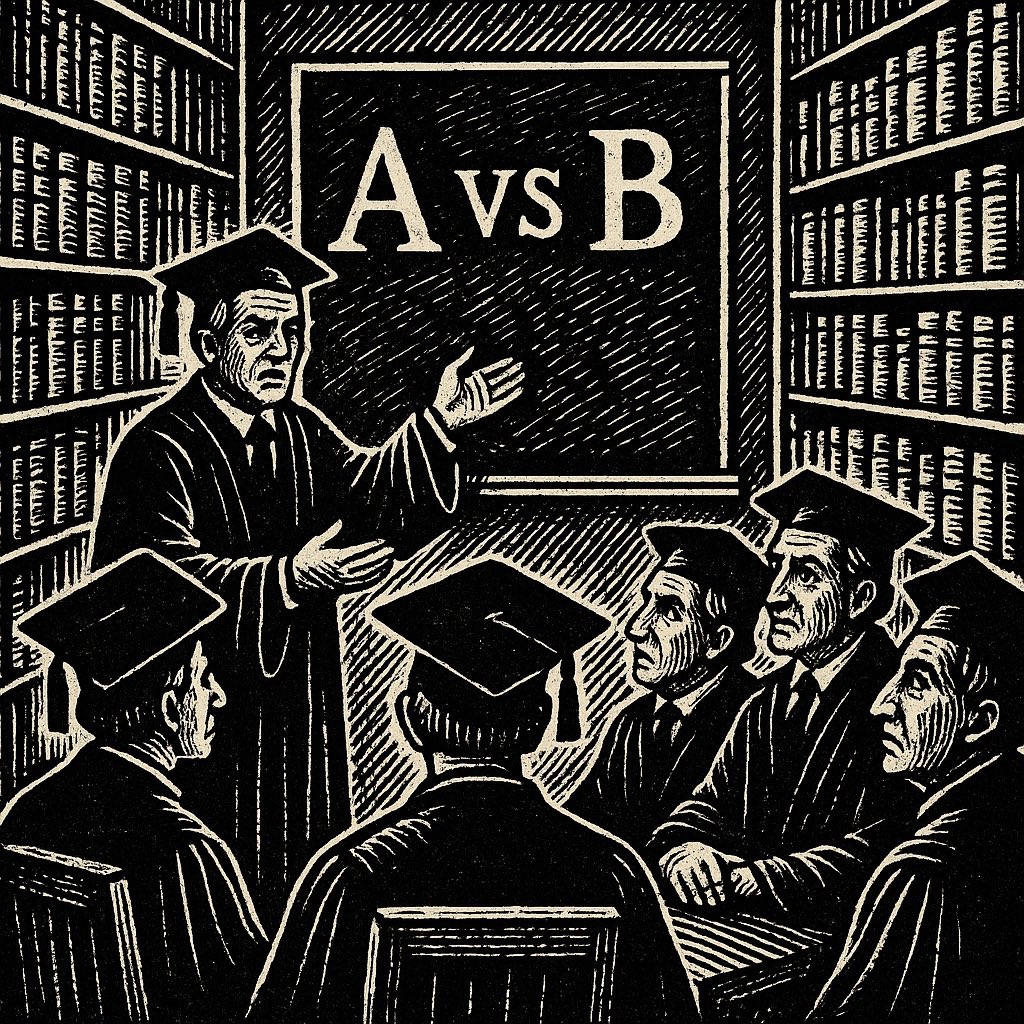
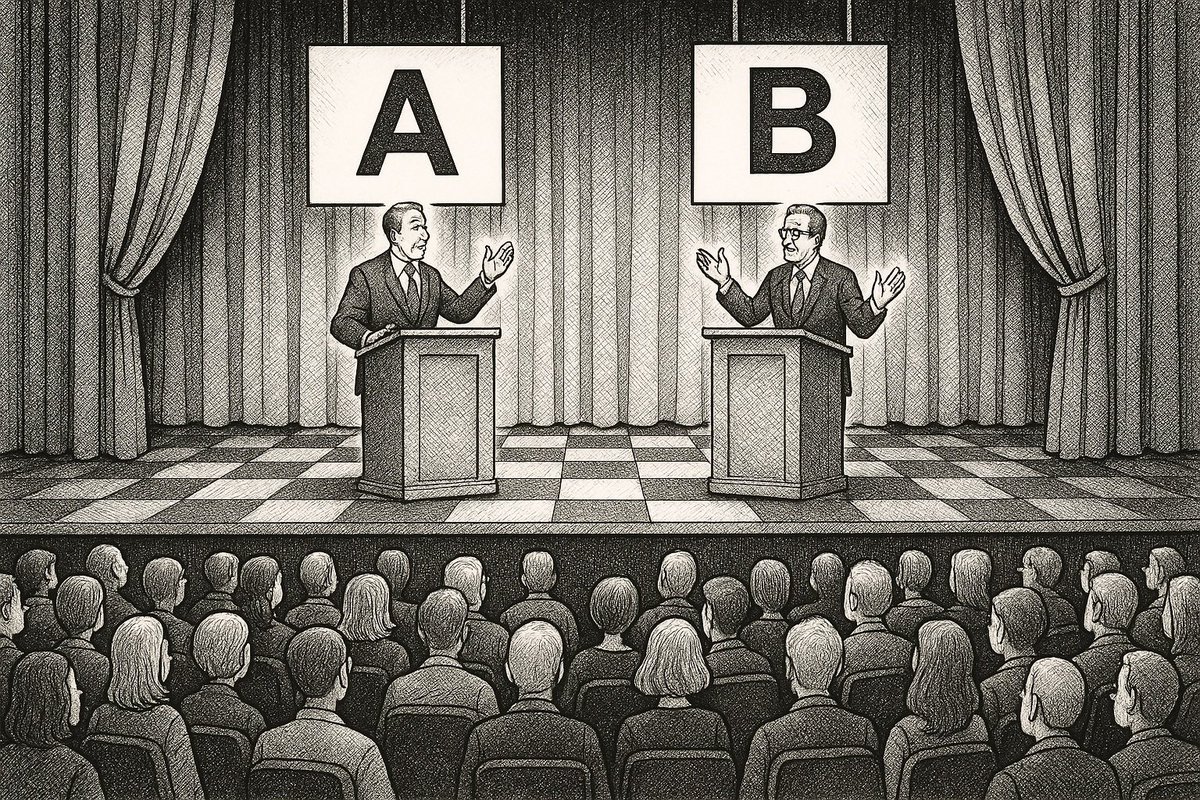
Each room had its own language; a curated dialect of slogans, technical terms and sacred words. But all of them were built using the same grammar; nominalist substitution. “Freedom” was redefined as unbound will. “Truth” as internal coherence. “Justice” as redistribution of harm. “Nature” as adaptive coding. “Liberty” as market access. “Reason” as narrative alignment. Each word became a costume, worn and discarded depending on the room. And yet, no one left the House. They only wandered room to room, confusing movement for meaning. Every doorway led to another pre-approved dilemma. Every answer produced new reactive loops. To challenge the premise of the House itself was forbidden; not by law, but by ridicule and in the House, reputation was cherished. Those who asked about its foundation were dismissed as ignorant, arrogant, regressive, dogmatic, conspiratorial, or insane. So they learned to stay in their rooms, reciting their scripts. Within the House, scholarly authorities convened to curate acceptable oppositions; carefully rehearsed debates (A v B) that reinforced the illusion of open inquiry, while excluding any argument that questioned the structure of the House itself.
Each room had its own language; a curated dialect of slogans, technical terms and sacred words. But all of them were built using the same grammar; nominalist substitution. “Freedom” was redefined as unbound will. “Truth” as internal coherence. “Justice” as redistribution of harm. “Nature” as adaptive coding. “Liberty” as market access. “Reason” as narrative alignment. Each word became a costume, worn and discarded depending on the room. And yet, no one left the House. They only wandered room to room, confusing movement for meaning. Every doorway led to another pre-approved dilemma. Every answer produced new reactive loops. To challenge the premise of the House itself was forbidden; not by law, but by ridicule and in the House, reputation was cherished. Those who asked about its foundation were dismissed as ignorant, arrogant, regressive, dogmatic, conspiratorial, or insane. So they learned to stay in their rooms, reciting their scripts. Within the House, scholarly authorities convened to curate acceptable oppositions; carefully rehearsed debates (A v B) that reinforced the illusion of open inquiry, while excluding any argument that questioned the structure of the House itself.
4/ The Blindfolded Curator
At the center of the House was a library of curated books. Not the old ones, those had been sealed off. These were acceptable counter-arguments, pre-sanitized and accredited for public consumption. The Curator who guarded them was blindfolded by design. He spoke with fluency and calm, but never saw the architecture. He believed his job was to balance all views; to maintain the dialectical engine. “Here,” he said, “is the latest opposition; a bold thinker, reformer - a truth-teller.”
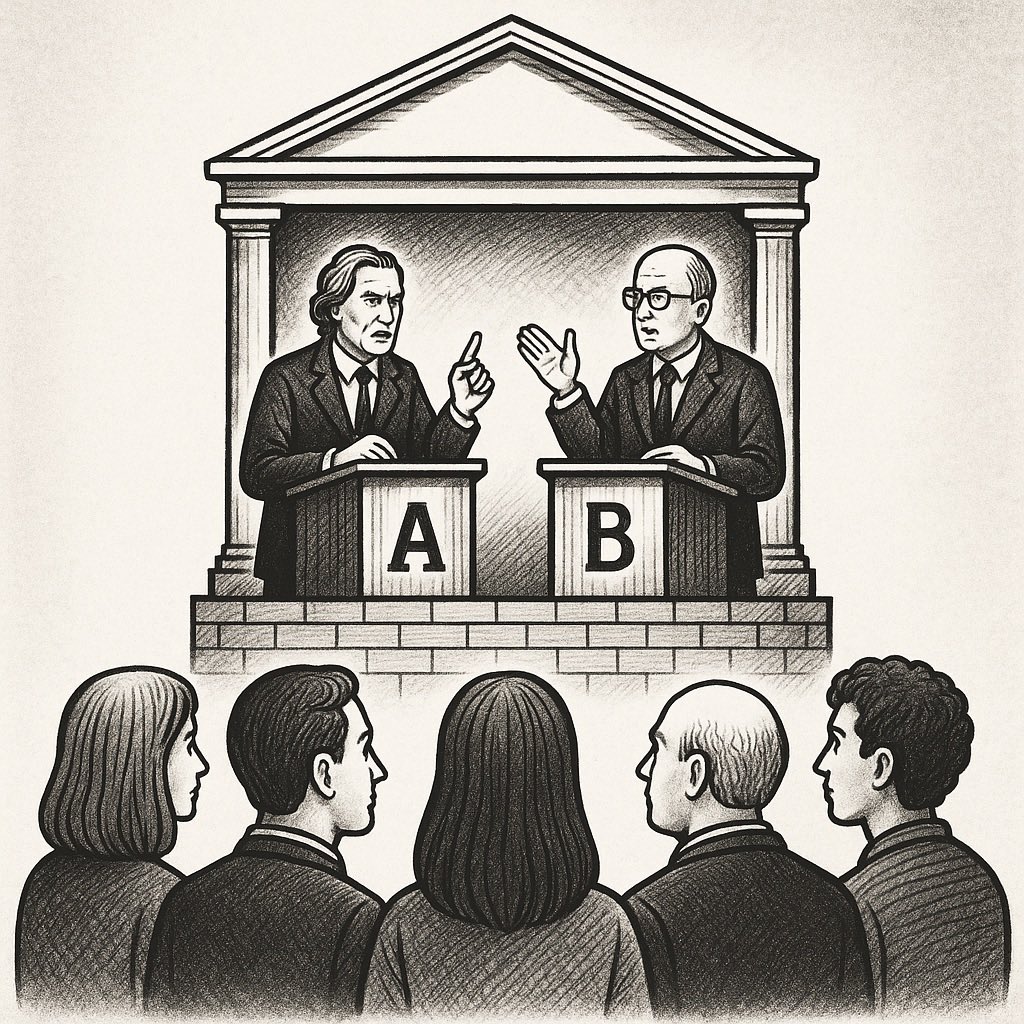
But each page had already been cleared by Nomos. The public consumed eagerly, never noticing that every argument simply looped the system forward. The public, trained to equate contradiction with depth and choice with truth, applauded every performance. They mistook the theatrical clash of positions A and B for intellectual freedom, unaware that both had been constructed atop the same inverted metaphysical floor.
At the center of the House was a library of curated books. Not the old ones, those had been sealed off. These were acceptable counter-arguments, pre-sanitized and accredited for public consumption. The Curator who guarded them was blindfolded by design. He spoke with fluency and calm, but never saw the architecture. He believed his job was to balance all views; to maintain the dialectical engine. “Here,” he said, “is the latest opposition; a bold thinker, reformer - a truth-teller.”
But each page had already been cleared by Nomos. The public consumed eagerly, never noticing that every argument simply looped the system forward. The public, trained to equate contradiction with depth and choice with truth, applauded every performance. They mistook the theatrical clash of positions A and B for intellectual freedom, unaware that both had been constructed atop the same inverted metaphysical floor.
5/ The Technocrats’ Game
In time, Nomos was no longer needed. His protocols were automated. The House of a Thousand Rooms became a Technocratic Game Board. The managers were not philosophers now, but engineers of behaviour, trained in choice architecture, emotional nudging and behavioural compliance. They no longer needed to persuade. They simply designed the rooms. They controlled; what buttons could be pushed, which arguments could be made, what fears could be triggered and which rewards could be simulated. They created the illusion of choice and the people complied. Not out of fear nor out of tyranny as such, but because they believed they were ‘thinking’, not discerning that they were just consuming and reflexively repeating. All arguments were curated performances, carefully managed within boundaries that never touched reality. Audiences, conditioned by deracinated education, reacted not to truth but to aesthetic, identity and emotional charge; never noticing that both sides danced atop the same checkerboard floor.
In time, Nomos was no longer needed. His protocols were automated. The House of a Thousand Rooms became a Technocratic Game Board. The managers were not philosophers now, but engineers of behaviour, trained in choice architecture, emotional nudging and behavioural compliance. They no longer needed to persuade. They simply designed the rooms. They controlled; what buttons could be pushed, which arguments could be made, what fears could be triggered and which rewards could be simulated. They created the illusion of choice and the people complied. Not out of fear nor out of tyranny as such, but because they believed they were ‘thinking’, not discerning that they were just consuming and reflexively repeating. All arguments were curated performances, carefully managed within boundaries that never touched reality. Audiences, conditioned by deracinated education, reacted not to truth but to aesthetic, identity and emotional charge; never noticing that both sides danced atop the same checkerboard floor.
6/ Participatory Churn
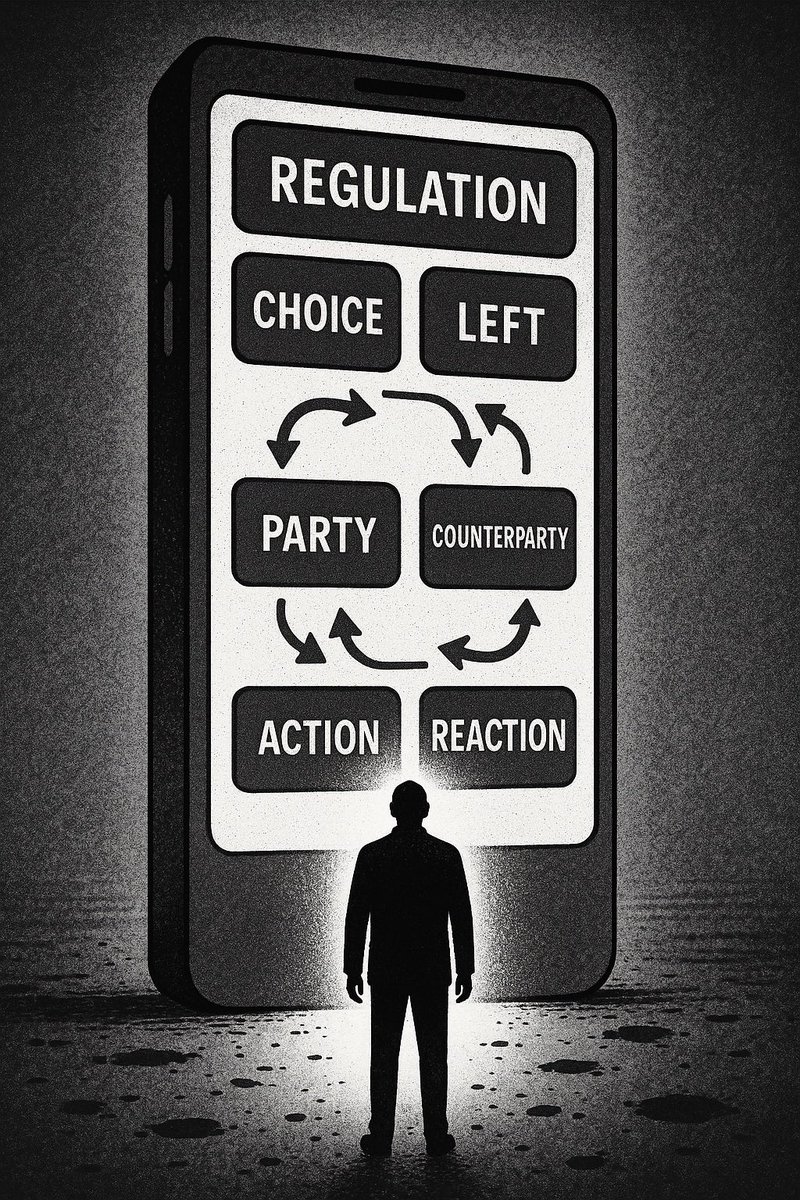
The interface evolved into total abstraction; reactive binaries packaged as autonomous options. Beneath every label; party or counterpart, action or reaction, looped the same inverted metaphysical machine. The system no longer debated reality; it programmed simulated dissent. Presented with synthetic binaries labeled “Enable” or “Restrict,” the public believed themselves to be choosing liberty. But each click merely confirmed their submission to the dialectical script; a script they never wrote, built on terms they never questioned. They believed they were choosing freedom. But their interface, language and assumptions had already been encoded by architects who long ago, severed liberty from nature and truth from being. Now the only input allowed was the tyranny of ‘democratic’ participation. The House of Illusion still spins; powered not by old school tyranny, but by seductive participation. So long as the people keep moving within the dialectic, mistaking activity for freedom and reaction for thought, the engine remains self-sustaining, while participation in the illusions fuel it.
The interface evolved into total abstraction; reactive binaries packaged as autonomous options. Beneath every label; party or counterpart, action or reaction, looped the same inverted metaphysical machine. The system no longer debated reality; it programmed simulated dissent. Presented with synthetic binaries labeled “Enable” or “Restrict,” the public believed themselves to be choosing liberty. But each click merely confirmed their submission to the dialectical script; a script they never wrote, built on terms they never questioned. They believed they were choosing freedom. But their interface, language and assumptions had already been encoded by architects who long ago, severed liberty from nature and truth from being. Now the only input allowed was the tyranny of ‘democratic’ participation. The House of Illusion still spins; powered not by old school tyranny, but by seductive participation. So long as the people keep moving within the dialectic, mistaking activity for freedom and reaction for thought, the engine remains self-sustaining, while participation in the illusions fuel it.

7/ The Man Who Walked Out
One day, a man refused to choose a room. He saw the symmetry and heard the script. He felt the enclosure. When asked, “Which side are you on?” he answered; “I reject the floor you’re standing on.” “Your questions contain false terms.” “I do not debate simulations.” They laughed. They called him arrogant, unhelpful, cowardly, rigid, purist and irrelevant. But he had already left the House. He walked right out into the open air, where being was not defined by dialectic and truth was not issued in rationed masks. There were no slogans there. No costumes and no scripts. Only form, nature, law, and daylight, not false light. He didn’t look back. He stepped away from the endless dialectic; refusing the bait of synthetic oppositions and rhetorical traps. He rejected the entire architecture, walked off the checkerboard and entered the ground of real being.
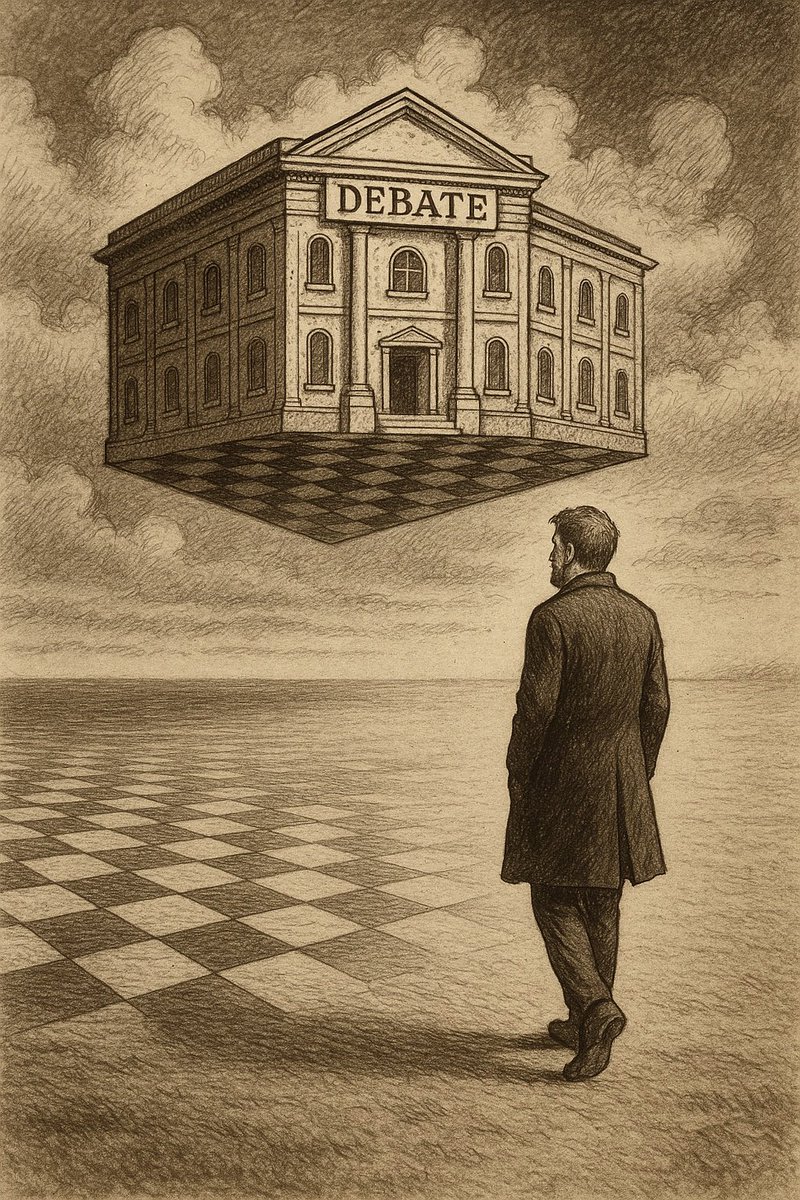
One day, a man refused to choose a room. He saw the symmetry and heard the script. He felt the enclosure. When asked, “Which side are you on?” he answered; “I reject the floor you’re standing on.” “Your questions contain false terms.” “I do not debate simulations.” They laughed. They called him arrogant, unhelpful, cowardly, rigid, purist and irrelevant. But he had already left the House. He walked right out into the open air, where being was not defined by dialectic and truth was not issued in rationed masks. There were no slogans there. No costumes and no scripts. Only form, nature, law, and daylight, not false light. He didn’t look back. He stepped away from the endless dialectic; refusing the bait of synthetic oppositions and rhetorical traps. He rejected the entire architecture, walked off the checkerboard and entered the ground of real being.
8/ The Final Note
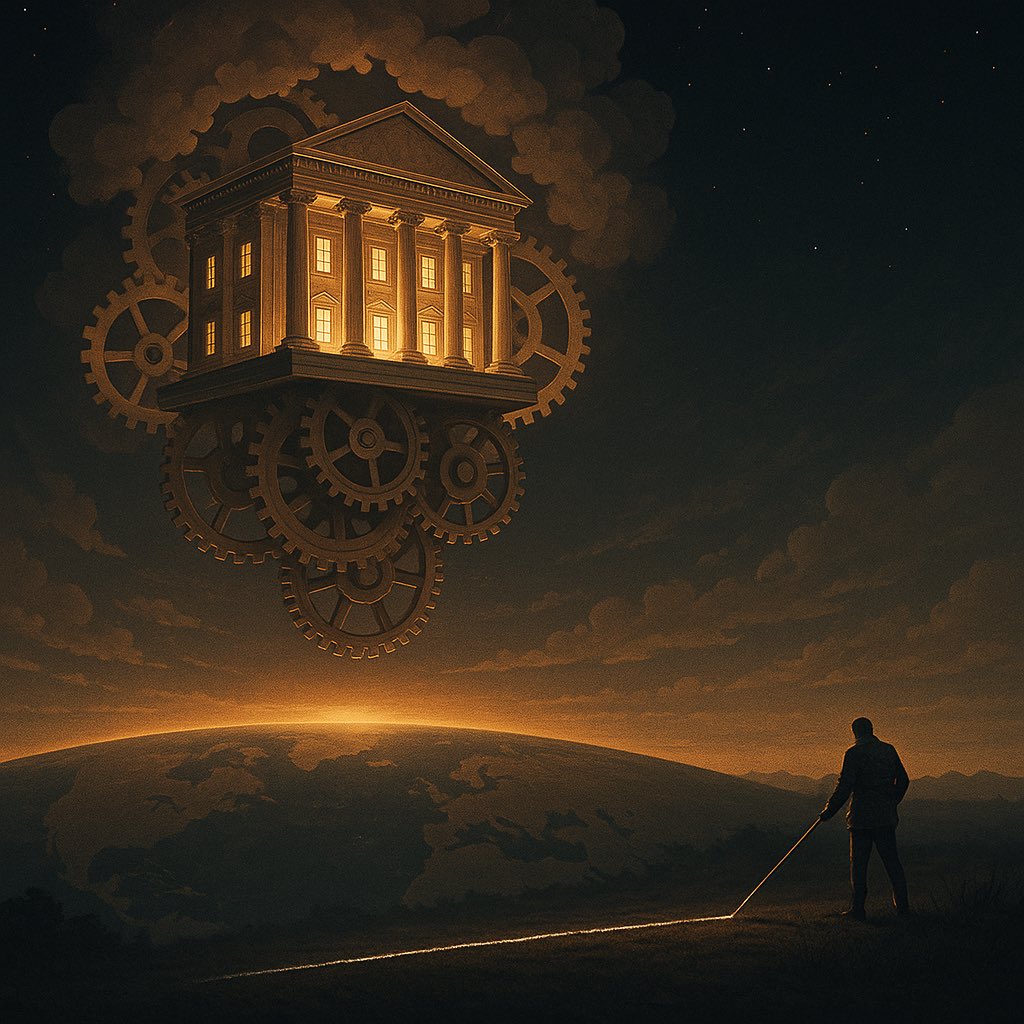
The House of a Thousand Rooms still maintains its false floor, without foundation. It still gleams and glitters with the polished veneer of rhetorical masking; the experts still debate, the public still consumes. The technocrats still measure and the dialectical engine still hums; sustained by every consent offered in ignorance, emotion and tribal performance. But somewhere outside it - a line is being drawn. Not between Left and Right, but between reality and Illusion. The dialectic evolved into interface; regulation or choice, left or right - both options manufactured atop the same anti-realist substrate. The illusion of agency was preserved, even as every path fed back into the same containment architecture. Do you recognize the line and can you Hold The Line? That’s where your agency is. Don’t outsource that to Influence.
The House of a Thousand Rooms still maintains its false floor, without foundation. It still gleams and glitters with the polished veneer of rhetorical masking; the experts still debate, the public still consumes. The technocrats still measure and the dialectical engine still hums; sustained by every consent offered in ignorance, emotion and tribal performance. But somewhere outside it - a line is being drawn. Not between Left and Right, but between reality and Illusion. The dialectic evolved into interface; regulation or choice, left or right - both options manufactured atop the same anti-realist substrate. The illusion of agency was preserved, even as every path fed back into the same containment architecture. Do you recognize the line and can you Hold The Line? That’s where your agency is. Don’t outsource that to Influence.
• • •
Missing some Tweet in this thread? You can try to
force a refresh