Few tales from the Crusades are as strange & inspiring as that of the Leper Knights.
Scarred in body but burning with faith, these warriors bore both their Cross & a disease feared by all, yet they rode into battle undaunted.
The Order of the Leper Knights – a 🧵✝️
Scarred in body but burning with faith, these warriors bore both their Cross & a disease feared by all, yet they rode into battle undaunted.
The Order of the Leper Knights – a 🧵✝️


To understand how the Leper Knights came to be, we must first understand the medieval Christian attitude toward leprosy.
It was a terrible disease, but it was also seen as a "sacred disease" with religious meanings attributed to it.
It was a terrible disease, but it was also seen as a "sacred disease" with religious meanings attributed to it.

Leprosy (Hansen’s disease) is caused by a bacterial infection that leads to skin lesions, nerve damage, and gradual disfigurement.
Over time, it results in loss of limb control and a slow physical decline. It was an ancient and endemic disease in medieval Europe. Out of fear of contagion, lepers were often treated as outcasts in society.
But Christianity brought a change in these attitudes: Jesus Christ healed a leper, extending His grace to the rejected. At that time, leprosy was incurable, and that healing was seen as a miracle.
Treating lepers with kindness came to be seen as a model of Christian love. Charity toward lepers was highly respected.
Some even believed that lepers were marked by God for salvation, and that showing them mercy would win God’s favor.
Thus, leprosy came to be viewed as a “sacred disease.” It was a sickness that humbled even the proud and the rich, bringing them closer to God.
It also became a reminder that Christ, by assuming human flesh, became the most despised and rejected among men.
Over time, it results in loss of limb control and a slow physical decline. It was an ancient and endemic disease in medieval Europe. Out of fear of contagion, lepers were often treated as outcasts in society.
But Christianity brought a change in these attitudes: Jesus Christ healed a leper, extending His grace to the rejected. At that time, leprosy was incurable, and that healing was seen as a miracle.
Treating lepers with kindness came to be seen as a model of Christian love. Charity toward lepers was highly respected.
Some even believed that lepers were marked by God for salvation, and that showing them mercy would win God’s favor.
Thus, leprosy came to be viewed as a “sacred disease.” It was a sickness that humbled even the proud and the rich, bringing them closer to God.
It also became a reminder that Christ, by assuming human flesh, became the most despised and rejected among men.


Saint Lazarus was the patron saint of lepers. In the Bible, he appears as a poor beggar “covered in sores,” believed to be a reference to leprosy.
The Order of Saint Lazarus adopted a green cross on a white background as its emblem.
The Order of Saint Lazarus adopted a green cross on a white background as its emblem.

The Order of Saint Lazarus received many donations from rulers and elites of the Crusader kingdoms. It began as a purely hospitaller order, caring for lepers, and followed the Rule of Saint Augustine. But it eventually evolved into a military order.
The Crusader states were constantly in need of manpower. Eventually, the Knights of Saint Lazarus also took part in battles.
The order welcomed knights who had contracted leprosy, giving them the chance to continue fighting in the Crusades.
The Crusader states were constantly in need of manpower. Eventually, the Knights of Saint Lazarus also took part in battles.
The order welcomed knights who had contracted leprosy, giving them the chance to continue fighting in the Crusades.

The Livre au Roi, the legal code of the Kingdom of Jerusalem (c. 1198–1205), declared that a knight with leprosy should join the Order of Saint Lazarus, “where it is established that those with such disease should be.”
In 1255, Pope Alexander IV praised the Order of Saint Lazarus as a “convent of nobles, active knights, and others, both healthy and leprous, whose purpose is to expel the enemies of the Christian name.”
The prestige of the order was rising.
In 1255, Pope Alexander IV praised the Order of Saint Lazarus as a “convent of nobles, active knights, and others, both healthy and leprous, whose purpose is to expel the enemies of the Christian name.”
The prestige of the order was rising.

Leprosy has a slow incubation period and can go undiagnosed for up to seven years before severe disability sets in. Many could still fight.
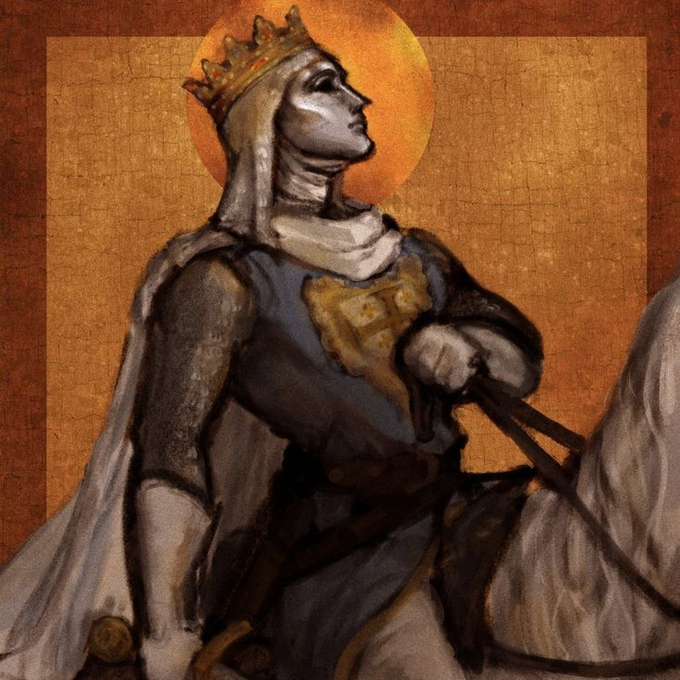
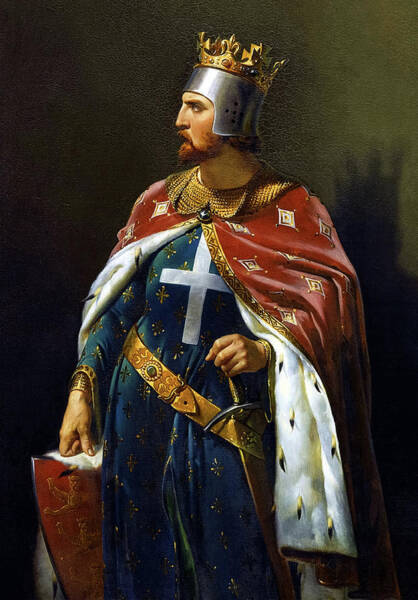
King Baldwin IV, for example, was a skilled horseman who learned to ride despite his disability. He was courageous and personally fought in battle.
Due to a labor shortage in the Crusader states, leper knights who could still perform basic combat roles were valuable on the battlefield. But there was also a religious aspect, due to the status of leprosy as a “sacred disease.”
Leper crusader knights were seen as sufferers chosen by God, going into battle to attain martyrdom. They were nicknamed the “Living Dead.” They developed a reputation for fighting to the death and never surrendering.
The Knights of Saint Lazarus fought in the Battle of La Forbie in 1244, where they fought to the death. After the crusader army was defeated, it was reported that “all the leper knights of the house of Saint Lazarus were killed.”
The Knights of Saint Lazarus also fought in the Battle of Mansurah in 1250. In 1253, Pope Innocent IV noted that “all the leper knights of the said house were miserably killed by the enemies of the faith.”
King Baldwin IV, for example, was a skilled horseman who learned to ride despite his disability. He was courageous and personally fought in battle.
Due to a labor shortage in the Crusader states, leper knights who could still perform basic combat roles were valuable on the battlefield. But there was also a religious aspect, due to the status of leprosy as a “sacred disease.”
Leper crusader knights were seen as sufferers chosen by God, going into battle to attain martyrdom. They were nicknamed the “Living Dead.” They developed a reputation for fighting to the death and never surrendering.
The Knights of Saint Lazarus fought in the Battle of La Forbie in 1244, where they fought to the death. After the crusader army was defeated, it was reported that “all the leper knights of the house of Saint Lazarus were killed.”
The Knights of Saint Lazarus also fought in the Battle of Mansurah in 1250. In 1253, Pope Innocent IV noted that “all the leper knights of the said house were miserably killed by the enemies of the faith.”


It seems the leper knights fought as an independent force on the battlefield and stayed away from the main army to avoid infecting the other troops. The chronicler Jean de Joinville mentioned a raid by leper knights near Ramleh in 1252.
The last battle of the leper knights was the Siege of Acre in 1291. The Order of Saint Lazarus managed to gather 25 knights for one final battle. They fought for the Crusader states to the end, and all of them perished that day.
The last battle of the leper knights was the Siege of Acre in 1291. The Order of Saint Lazarus managed to gather 25 knights for one final battle. They fought for the Crusader states to the end, and all of them perished that day.

But the stories and legends about the leper knights lived on. In 1323, a bishop recalled how “the knight brothers and others of the said hospital were many times horribly killed, and their houses in Jerusalem and in many other places in the Holy Land were devastated.”

After the fall of Acre and the end of the Crusader states in the Holy Land, the Order of Saint Lazarus was reduced to Europe.
The order abandoned all military activity. The days of the crusader leper warriors had come to an end.
But their legend lives on for eternity.
The order abandoned all military activity. The days of the crusader leper warriors had come to an end.
But their legend lives on for eternity.

• • •
Missing some Tweet in this thread? You can try to
force a refresh