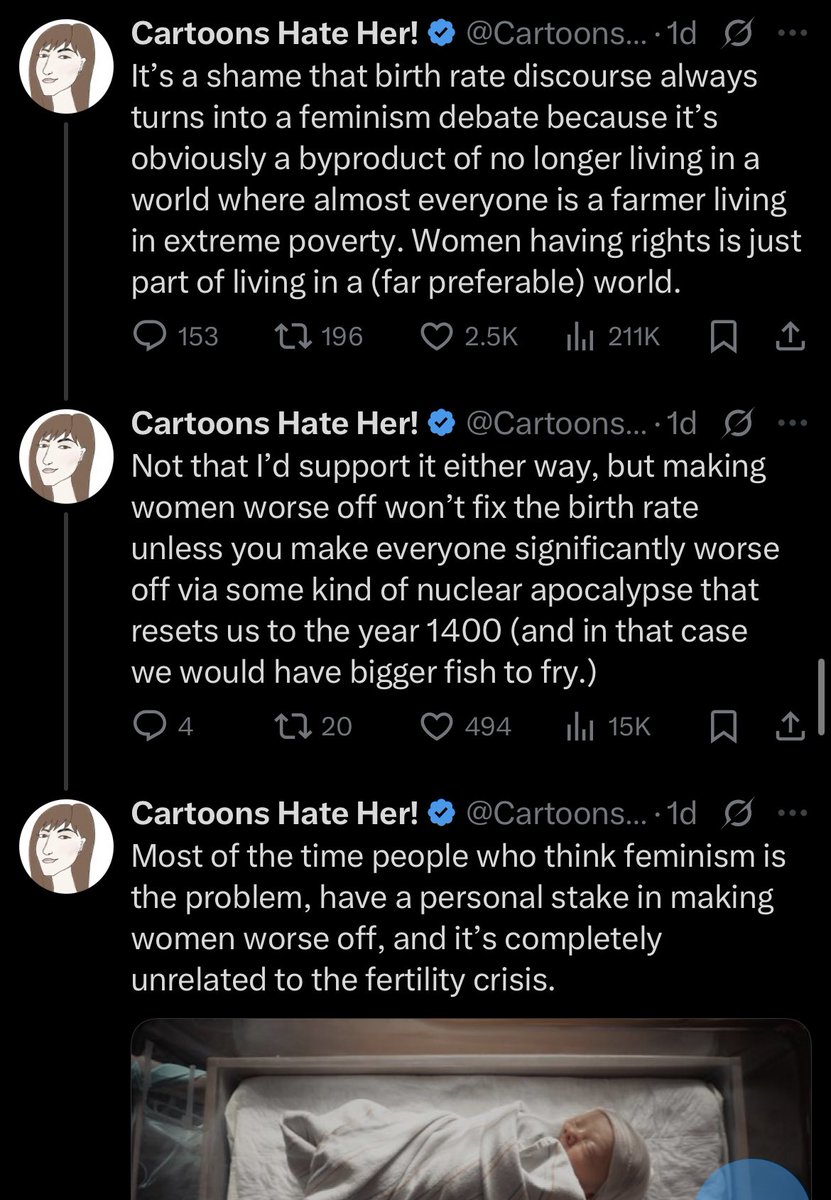
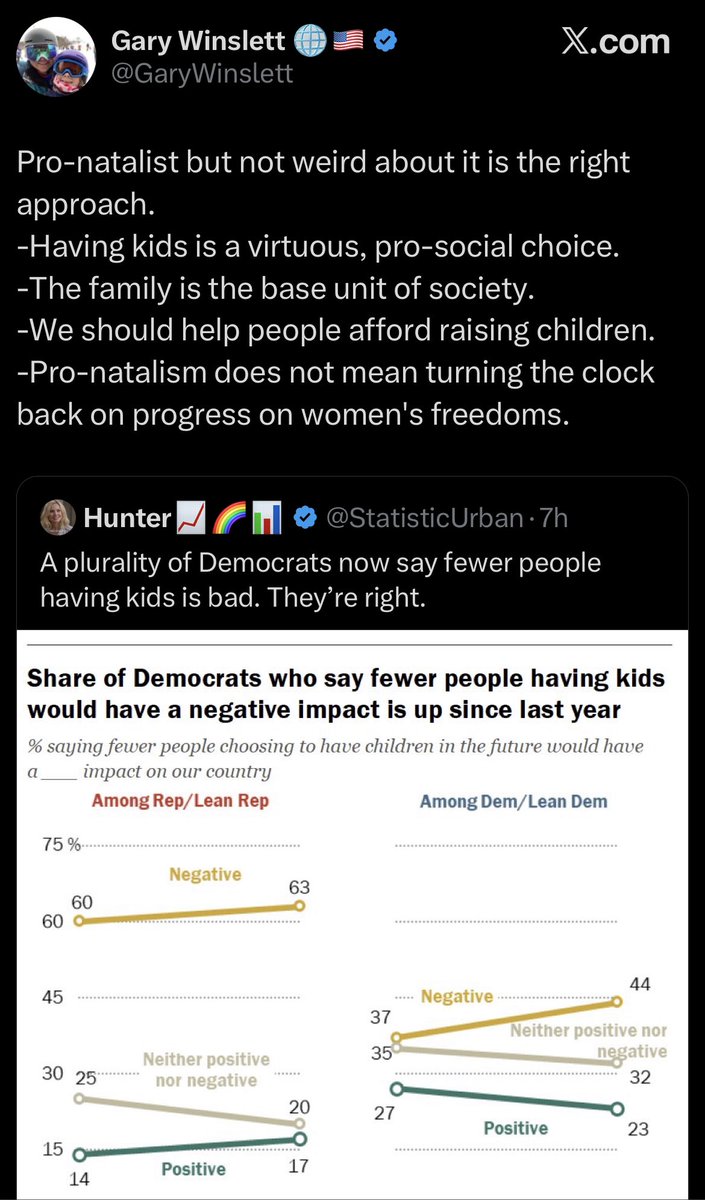
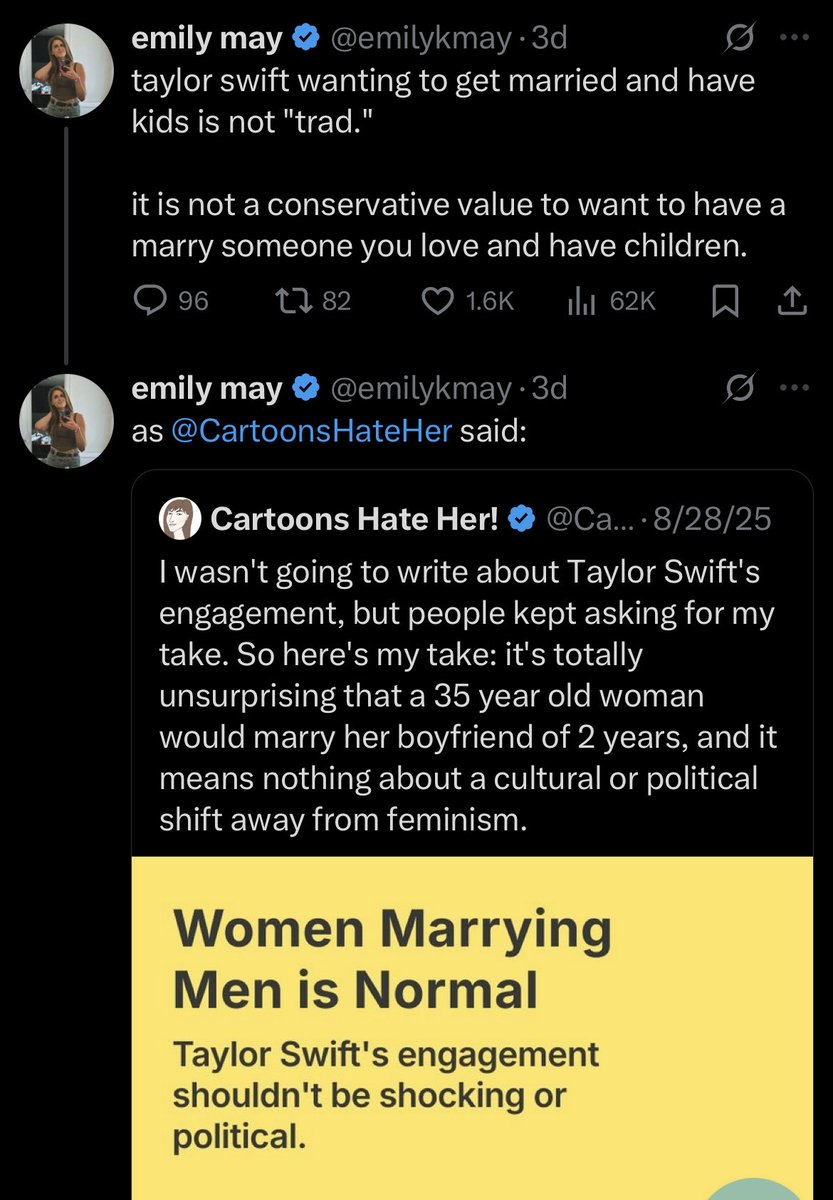
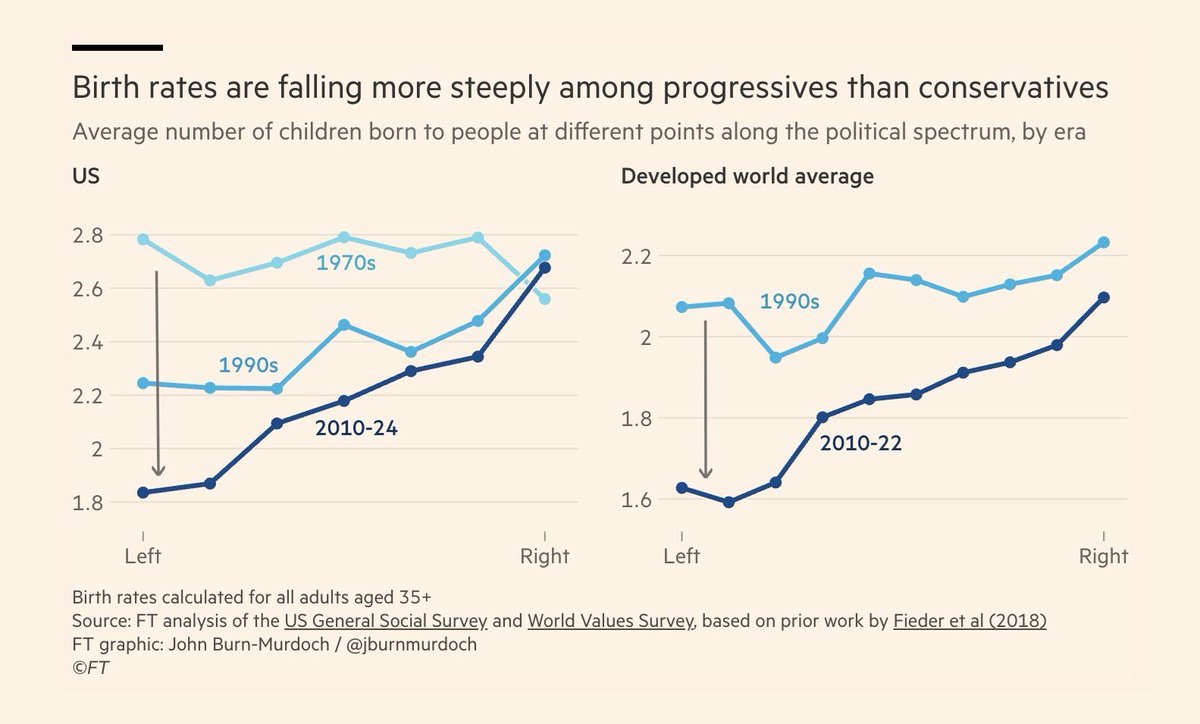
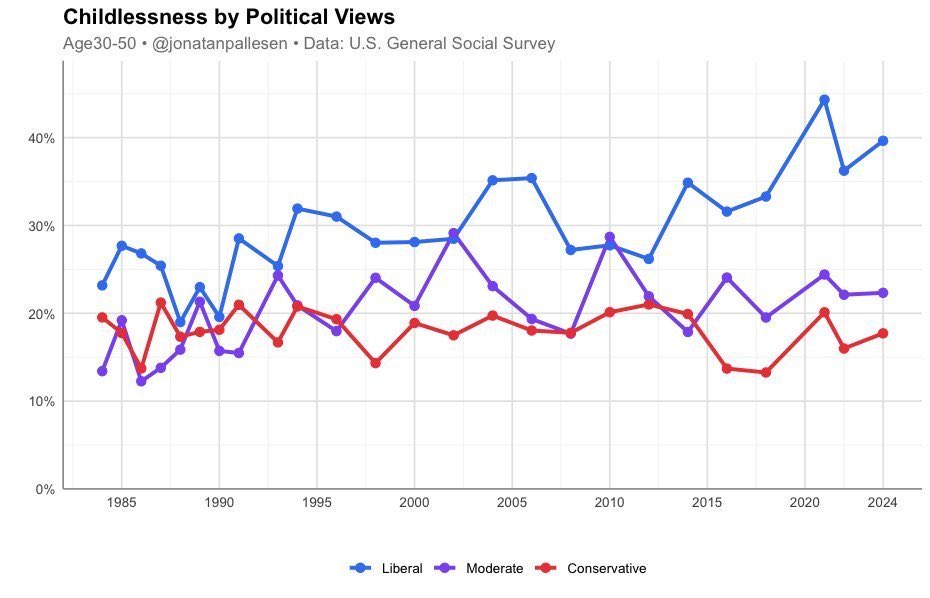
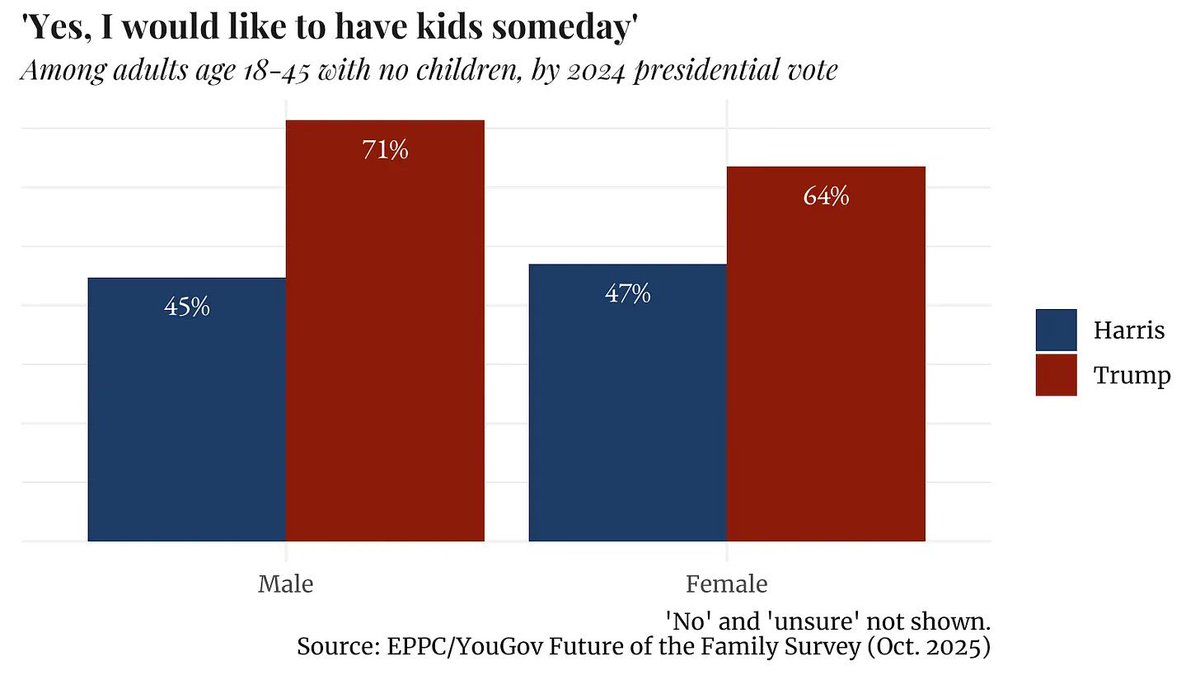
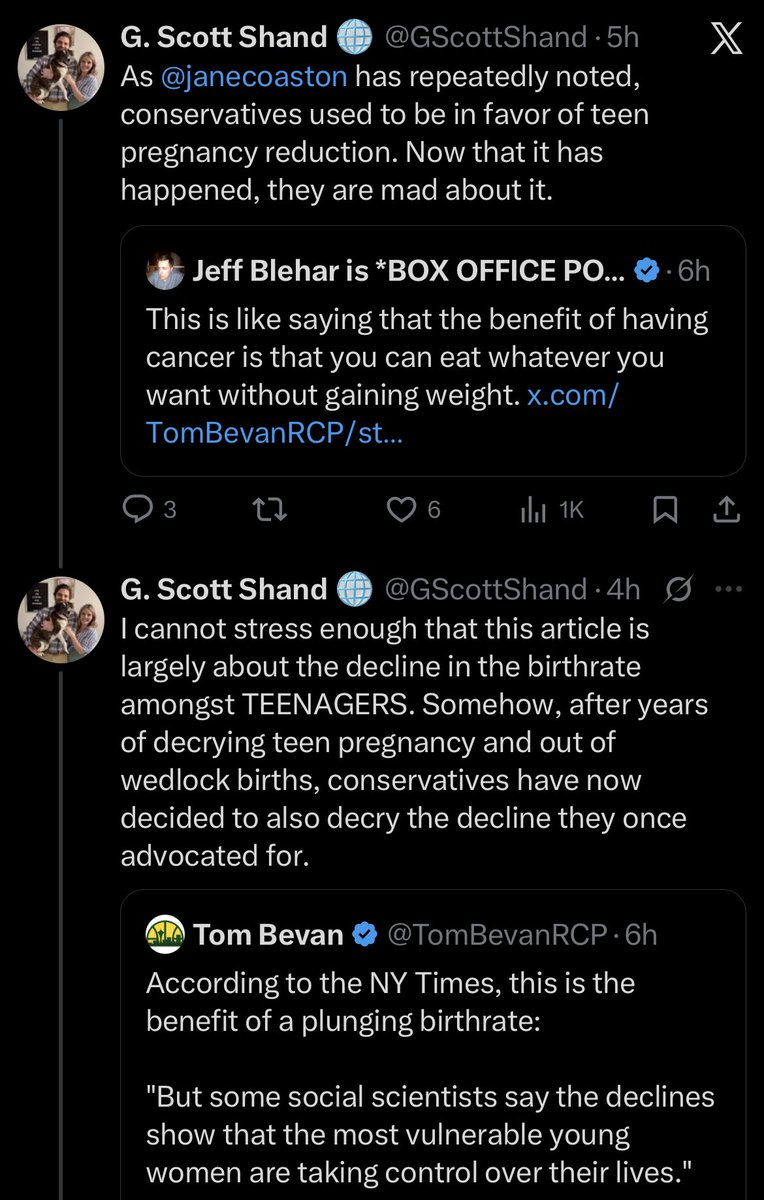
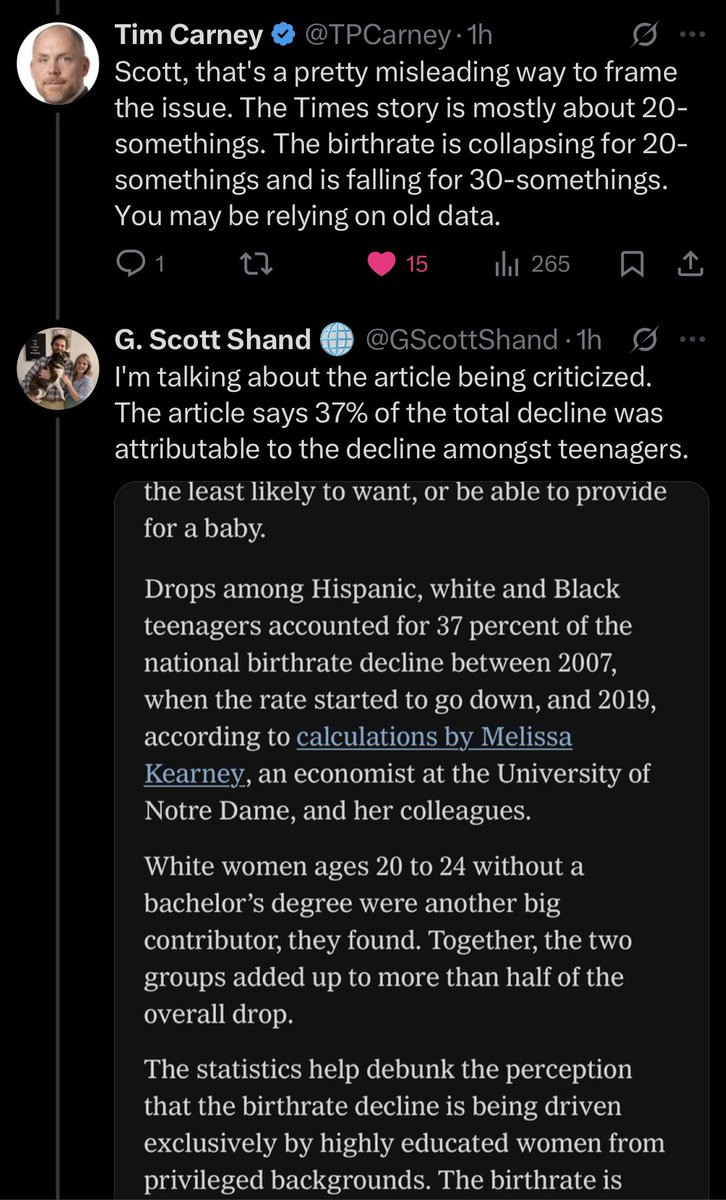
There are less coercive measures we can try. We can start with very large tax credits for married couples and then go from there
That first requires the basic acknowledgment that society should place high value on babies
Chris Arnade has said something similar lately. Our culture no longer sees children as a default capital-G Good that’s an expected part of someone’s life path

Adding this Yglesias take from a while back showing lib discomfort
He has to start with a mild disavowal of the whole topic before acceding that natalism has merit
An ex gf of mine is a BigLaw employment litigator which means handling HR lawsuits for big corps
She’s a libtard but she’d joke that the job was slowly turning her Republican because most of her cases were from farcically bad employees trying to bilk the company for a settlement
One woman took FMLA leave (family/medical) for a few months and the company realized she was terrible because her department picked up the slack no problem and found some mistakes she’d made
They let her go when she got back, so she sued on the grounds that they were retaliating against her for taking FMLA leave
Another guy was in a sales role and he’d been in the bottom quartile of performers for years despite having a favorable sales territory
They finally let him go, he lawyered up, and said he was having PTSD issues from the military
Got around to reading this cult classic from 1979. There’s parts I think can be ignored or dismissed but at its peaks it’s a remarkable book and changed the way I view narcissism and our society
🧵
Let’s start by talking about narcissism. I’ll give you my preconceptions, which I think are in line with the average person
From Greek myth, Narcissus fell in love with his own reflection in a pool. Narcissism is extreme self-love: egotism, selfishness, vanity
This can be classified as “grandiose narcissism.” We think of people like Donald Trump, Kanye West, and Paris Hilton
Lasch presents narcissism as something subtler and more widespread. Let me give you some quotes from Lasch
Fujimori’s Coup and the Breakdown of Democracy in Latin America by Charles Kenney
This is going to be a very long book thread about Alberto Fujimori’s 1992 autogolpe in Peru.
Autogolpe means self-coup in Spanish, an occurrence common enough in Latin America that they have a neologism for it. It’s when a regime that’s already in power ends democracy to consolidate its own power
Fujimori, while president, dissolved the legislature with the military’s backing and became a de facto dictator
Most of this thread is going to be about the history preceding the coup. It’s a typical Latam shitshow
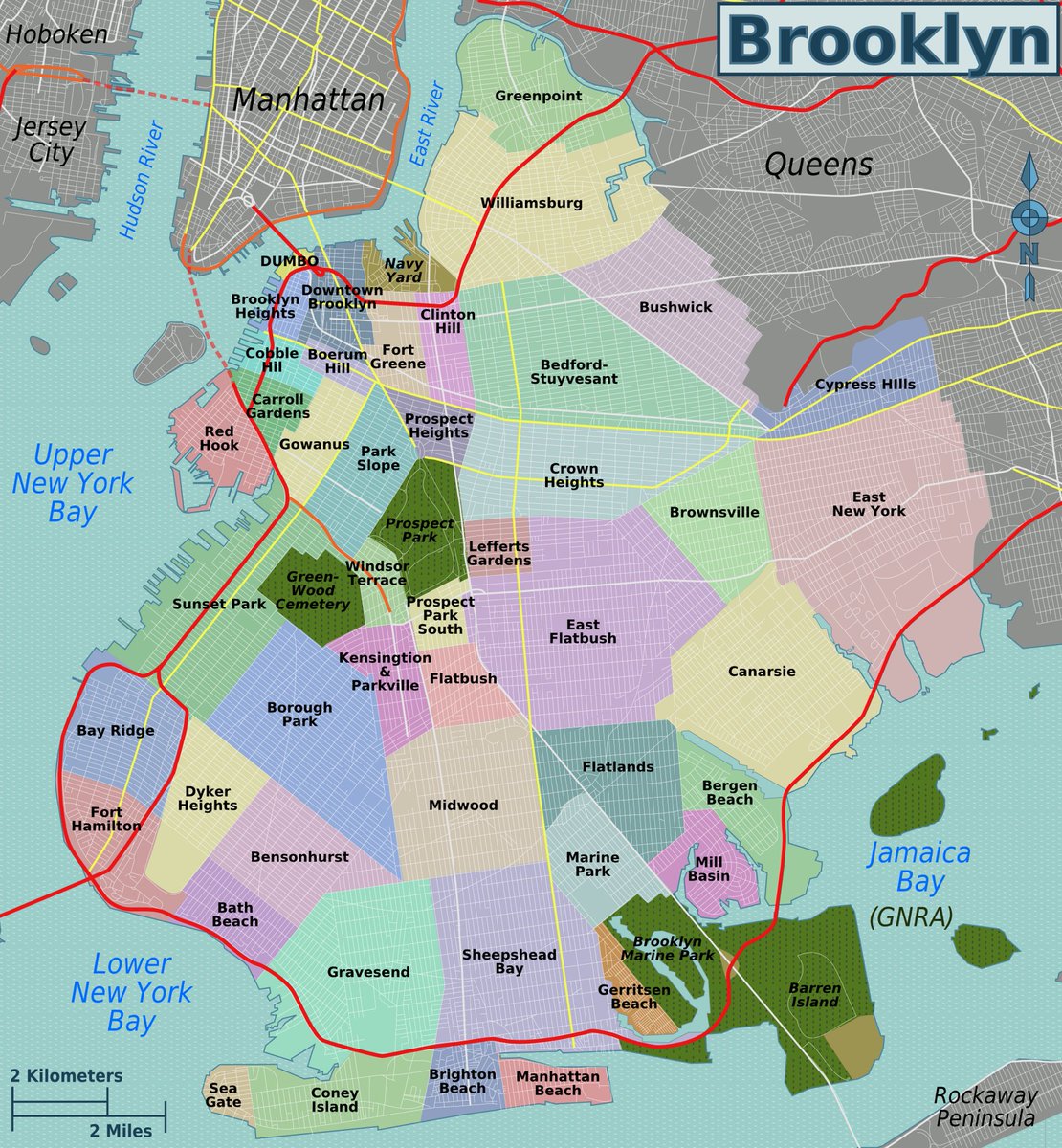
Canarsie: The Jews and Italians of Brooklyn Against Liberalism by Jonathan Rieder
This is a 1985 ethnography about racial conflict in eastern Brooklyn in the 70s. It’s a true story of white flight. Rieder embedded in the community for two years to learn their stories
🧵
An amuse bouche:
“Canarsians spoke about crime with more unanimity than they achieved on any other subject, and they spoke often and forcefully. Most had a favorite story of horror. A trucker remembered defecating in his pants a few years earlier when five black youths cornered him in an elevator and placed a knifeblade against his throat. ‘They got two hundred dollars and a gold watch. They told me, Listen you white motherfucker, you ain't calling the law.’”
“‘The police came and we caught one of them. The judge gave them a fucking two-year probation.’ The experience left an indelible imprint. He still relived the humiliation of soiling himself.”
Some background:
Canarsie is a neighborhood on the edge of Brooklyn in the east, abutting Jamaica Bay
A few items from Unsettled by Steven Koonin, a sober review of the state of climate science
Koonin has impressive pedigree: a Caltech physics professor, private sector work for British Petroleum, Department of Energy under Obama
He’s been a major player for decades
Koonin does not dismiss climate change. He starts the book by explaining that carbon dioxide impedes natural radiation from the earth, thus trapping a certain amount of extra heat
The question is, how much of a difference does it make and what should we do about it
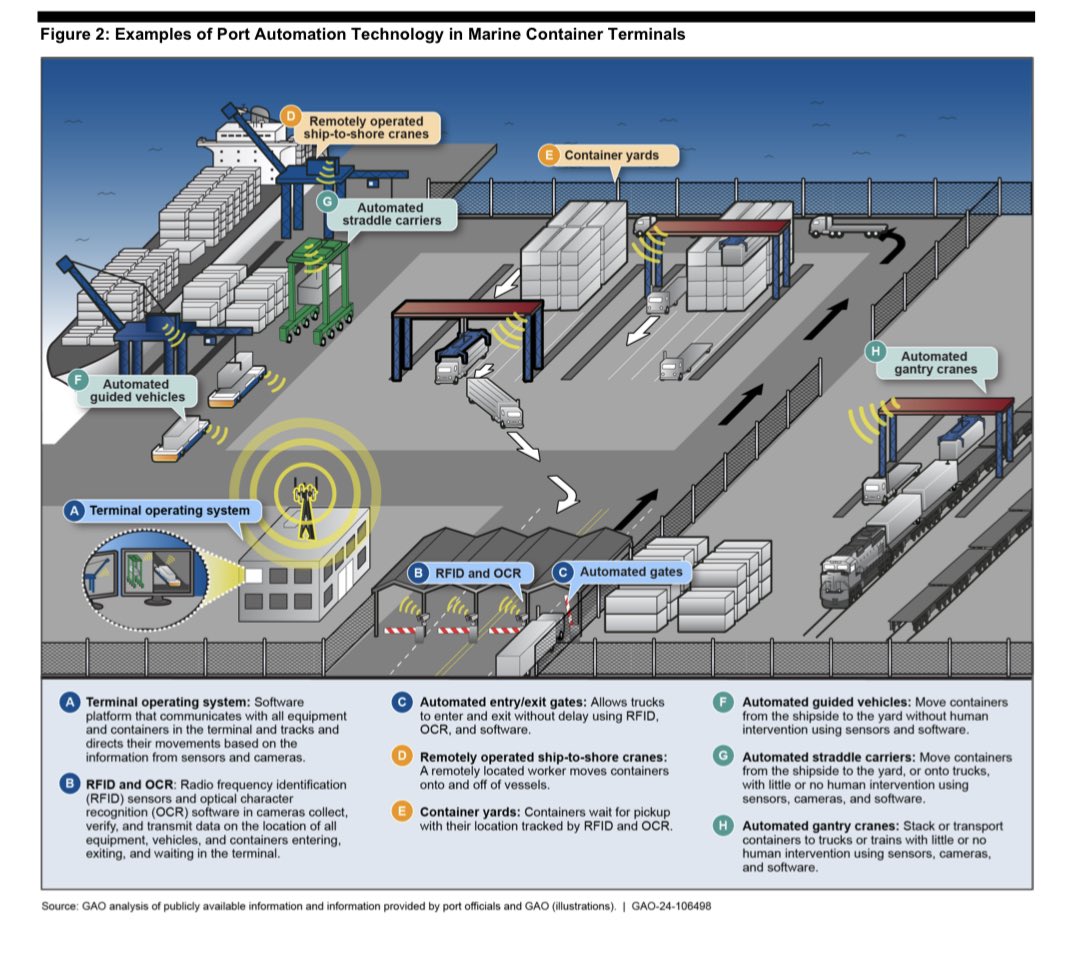
It’s not as much of a slam dunk as you might think. I thought the unions were being luddites and holding up progress but the ROI isn’t straightforward
1/
America does have slow ports, but it can’t all be blamed on automation
This survey from a 2017 McKinsey conference revealed that operators didn’t realize anywhere near the gains they expected; in fact, automated terminals had slightly worse productivity (though there were still cost savings)