Yesterday, my son came running from the school, absolutely bursting with excitement.
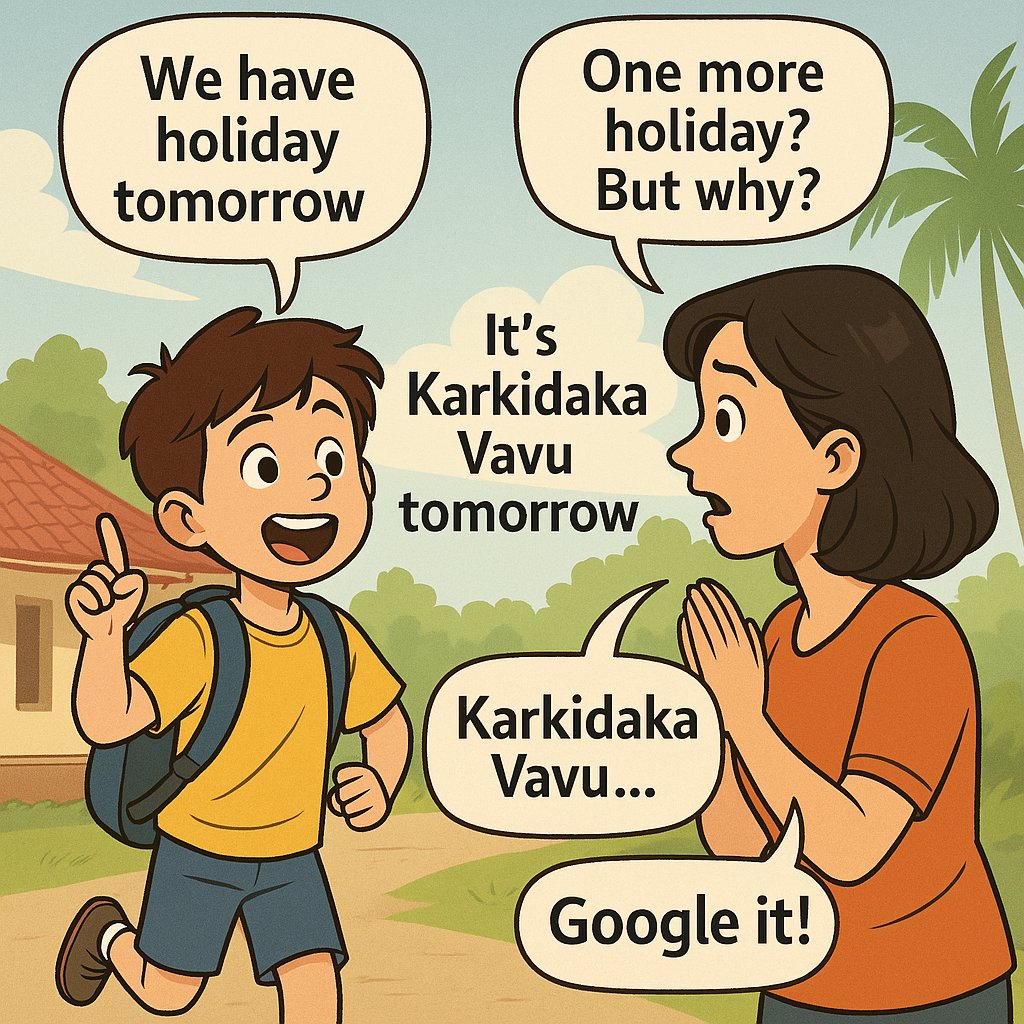
“We have holiday tomorrow,” he said.
“One more holiday? But why?” I asked, somewhat irritated.
“It’s Karkidaka Vavu tomorrow,” he replied.
“What? Say again?” I blinked.
“Karkidaka Vavu…” he shouted, then grinned, “Google it!”
🧵1.
“We have holiday tomorrow,” he said.
“One more holiday? But why?” I asked, somewhat irritated.
“It’s Karkidaka Vavu tomorrow,” he replied.
“What? Say again?” I blinked.
“Karkidaka Vavu…” he shouted, then grinned, “Google it!”
🧵1.
🌘It is a significant day observed in Kerala, to honor departed ancestors. It falls on the Amavasya (new moon) day in the Malayalam month of Karkidakam.
🌘It’s comparable to Pitru Paksha observed in other parts of India, where families pay homage to their forefathers.
🌘Devotees gather at riverbanks, beaches, and temple ghats—to perform Bali Tharpanam, a ritual involving offerings of rice balls (pindam), sesame seeds, tulsi leaves, and water.
🌘Participants often fast or eat only simple vegetarian meals, and the rituals are conducted barefoot, emphasizing humility and purity.
2.
🌘It’s comparable to Pitru Paksha observed in other parts of India, where families pay homage to their forefathers.
🌘Devotees gather at riverbanks, beaches, and temple ghats—to perform Bali Tharpanam, a ritual involving offerings of rice balls (pindam), sesame seeds, tulsi leaves, and water.
🌘Participants often fast or eat only simple vegetarian meals, and the rituals are conducted barefoot, emphasizing humility and purity.
2.
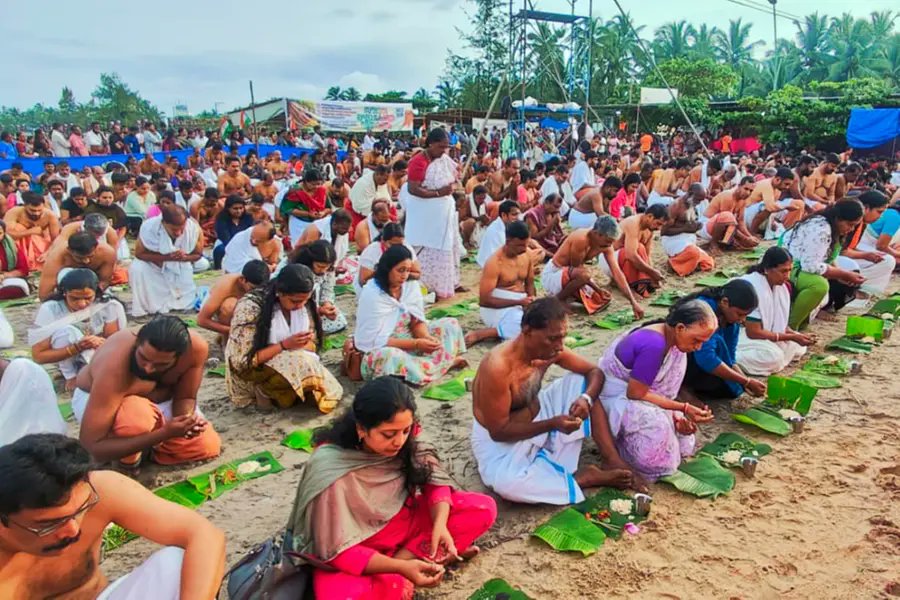
Many say, “ what's the point of making offerings n doing elaborate rituals for the dead. Just treat them well while they are alive. Why do something mainly out of fear once they are gone?” while I agree that we have to treat the older generations well while they are alive, do these rituals-deep rooted in our culture are of no significance?
3.
3.
Cosmic Alignment and Energy Beliefs:
🌙The new moon of Karkidakam marks the beginning of Dakshinayanam, when the Sun moves southward.
🌙It’s believed that during this time, ancestral souls are more accessible, and rituals performed now are especially potent.
🌙The alignment of Earth, Moon, and Sun is said to influence subtle energies in the human body, making it a spiritually charged moment.
5.
🌙The new moon of Karkidakam marks the beginning of Dakshinayanam, when the Sun moves southward.
🌙It’s believed that during this time, ancestral souls are more accessible, and rituals performed now are especially potent.
🌙The alignment of Earth, Moon, and Sun is said to influence subtle energies in the human body, making it a spiritually charged moment.
5.

🦅 3. The Crow as a Messenger
🐦⬛In Kerala tradition, crows are seen as carriers of ancestral spirits.
🐦⬛During Bali rituals, food is offered to crows. If a crow eats the offering, it’s believed the ancestors have accepted it.
🐦⬛This belief reinforces the emotional connection between the living and the departed.
6.
🐦⬛In Kerala tradition, crows are seen as carriers of ancestral spirits.
🐦⬛During Bali rituals, food is offered to crows. If a crow eats the offering, it’s believed the ancestors have accepted it.
🐦⬛This belief reinforces the emotional connection between the living and the departed.
6.

The in Thiruvananthapuram is a major site for Karkidaka Vavu Bali.
Parasurama, the sixth avatar of Vishnu, is believed to have created Kerala and taught the rituals of Bali Tharpanam.
7.
Parasurama, the sixth avatar of Vishnu, is believed to have created Kerala and taught the rituals of Bali Tharpanam.
7.

Once a person is dead, in Indian culture, we always want to wipe out the Runanubandha because we know yesterday has a power of its own. If you do not liberate yourself from it, yesterday will rule your tomorrow. Yesterday ruling your tomorrow means tomorrow never comes.
Someone said this very forcefully Leave the dead to the dead.' Leaving the dead to the dead does not mean ignoring those who died. It just means whatever happened yesterday, whatever happened in the previous moment, you must always be conscious it is dead. After a person dies, maybe they have attained mukti or they have gone somewhere else, we don't know, but either because we were born to them or we were in touch with them in some way or the other, their memory imprints are on us. These imprints are not just in our mind but also in our body and energies as well. So, one important aspect of death rituals is that we must become free of this, it is very important.
for more details read the book: Death, an inside story by #Sadhguru
8.
Someone said this very forcefully Leave the dead to the dead.' Leaving the dead to the dead does not mean ignoring those who died. It just means whatever happened yesterday, whatever happened in the previous moment, you must always be conscious it is dead. After a person dies, maybe they have attained mukti or they have gone somewhere else, we don't know, but either because we were born to them or we were in touch with them in some way or the other, their memory imprints are on us. These imprints are not just in our mind but also in our body and energies as well. So, one important aspect of death rituals is that we must become free of this, it is very important.
for more details read the book: Death, an inside story by #Sadhguru
8.
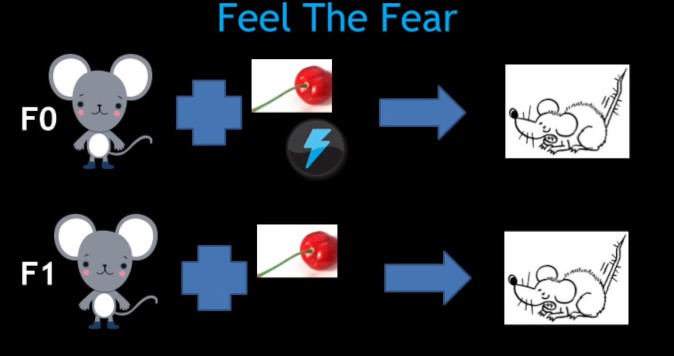
🐀American University made this small experiment where a bunch of rats were given nice cherry blossom smelling cheese. They lapped it up one day.
🐀Next day when they came to eat, when they bit into the cheese, they got an electric shock. And again and again, a few days they did this, that whenever they bit into this cherry blossom smelling cheese, they got a shock. Seven generations of rats would not go anywhere near cherry blossom smell. They learned their lesson, And these generations did not live together.
🐀They were separated. So wherever they were, for seven generations, their learning remained. It’s only in the eighth generation, it started dissipating.
So, if it is true with rats, it must be true with us as well.
The most rigorous and convincing set of studies published to date demonstrating acquired transgenerational epigenetic effects in a laboratory model". scientificamerican.com/article/fearfu…
9.
🐀Next day when they came to eat, when they bit into the cheese, they got an electric shock. And again and again, a few days they did this, that whenever they bit into this cherry blossom smelling cheese, they got a shock. Seven generations of rats would not go anywhere near cherry blossom smell. They learned their lesson, And these generations did not live together.
🐀They were separated. So wherever they were, for seven generations, their learning remained. It’s only in the eighth generation, it started dissipating.
So, if it is true with rats, it must be true with us as well.
The most rigorous and convincing set of studies published to date demonstrating acquired transgenerational epigenetic effects in a laboratory model". scientificamerican.com/article/fearfu…
9.
I feel these rituals aren't just myth—they’re cultural memory, passed down through generations to preserve the sacred bond between the living and the departed. What do u think?
10/10
10/10
• • •
Missing some Tweet in this thread? You can try to
force a refresh