1/15 How do you win a battle when you are massively outnumbered, trapped, and being attacked from both the front and the rear?
You build a prison around your enemy, then build a fortress around yourself.
This is the story of Julius Caesar's masterpiece of military engineering: The Siege of Alesia (52 BC). 🧵
You build a prison around your enemy, then build a fortress around yourself.
This is the story of Julius Caesar's masterpiece of military engineering: The Siege of Alesia (52 BC). 🧵
2/15 The Context:
The Gallic Wars have raged for nearly a decade. For the first time, the fractured tribes of Gaul have united under one charismatic leader, Vercingetorix. He has raised a huge army to expel the Romans from their lands for good.
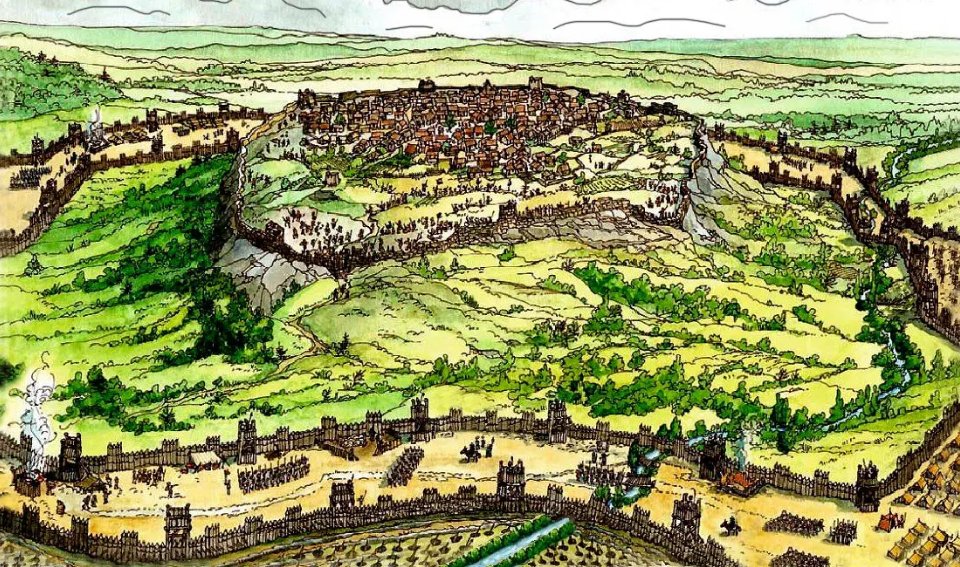
Caesar, deep in hostile territory and outnumbered, has managed to trap Vercingetorix and his main army of 80,000 warriors inside the hilltop fortress (oppidum) of Alesia.
The Gallic Wars have raged for nearly a decade. For the first time, the fractured tribes of Gaul have united under one charismatic leader, Vercingetorix. He has raised a huge army to expel the Romans from their lands for good.
Caesar, deep in hostile territory and outnumbered, has managed to trap Vercingetorix and his main army of 80,000 warriors inside the hilltop fortress (oppidum) of Alesia.
3/15 The Problem:
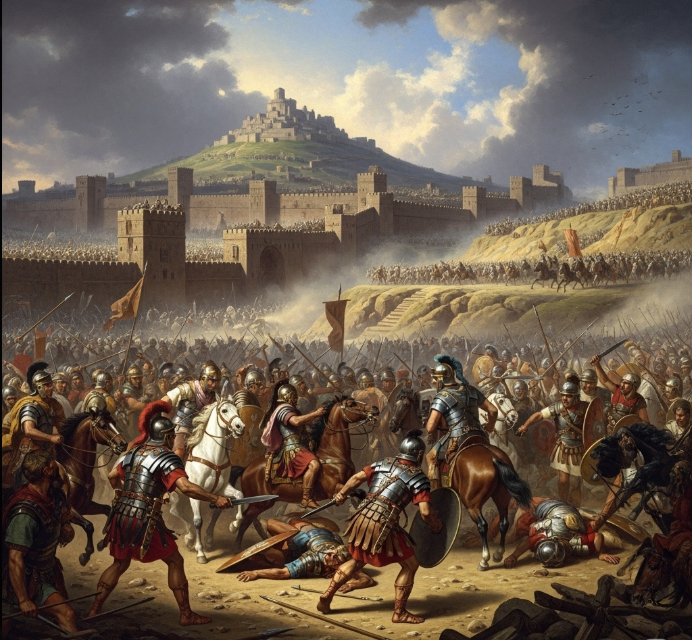
Alesia is perched on a high plateau, naturally defensible and too strong to be taken by a direct assault. With his own army of only ~50,000 legionaries, Caesar knows a frontal attack would be a suicidal bloodbath.
His solution? If you can't go over the walls, make sure no one can get out. He decides to starve them out.
Alesia is perched on a high plateau, naturally defensible and too strong to be taken by a direct assault. With his own army of only ~50,000 legionaries, Caesar knows a frontal attack would be a suicidal bloodbath.
His solution? If you can't go over the walls, make sure no one can get out. He decides to starve them out.
4/15 The First Wall: The Circumvallation
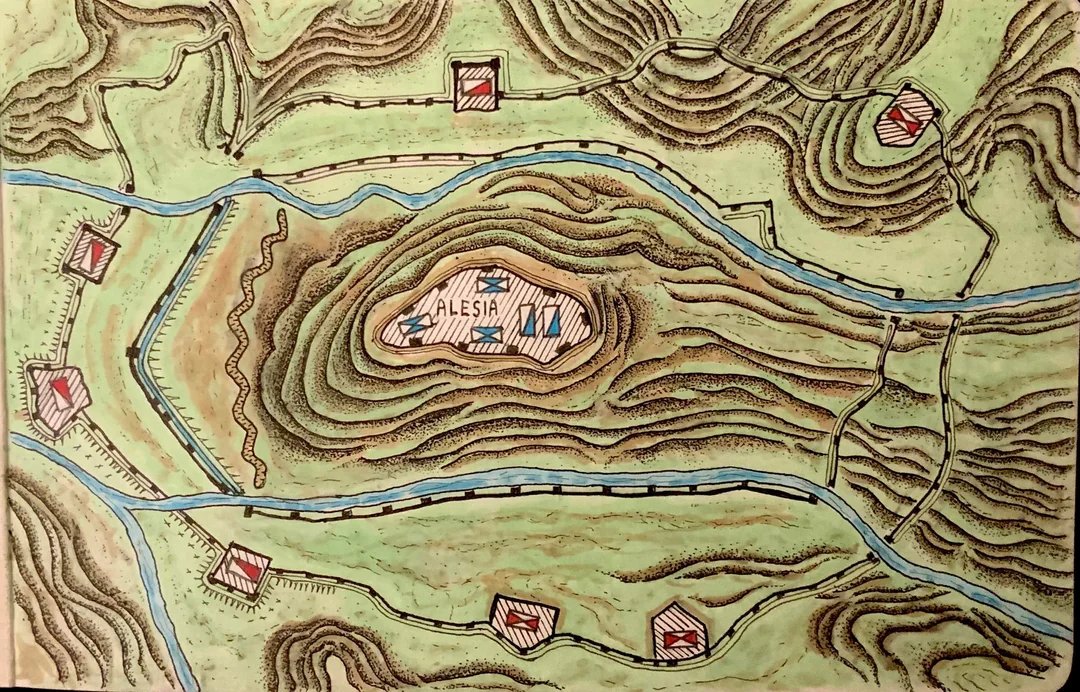
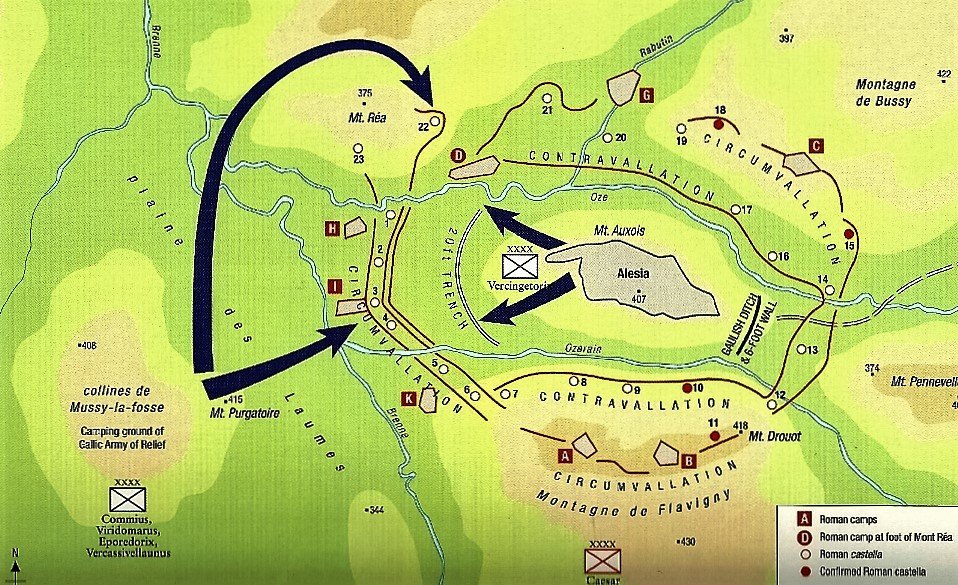
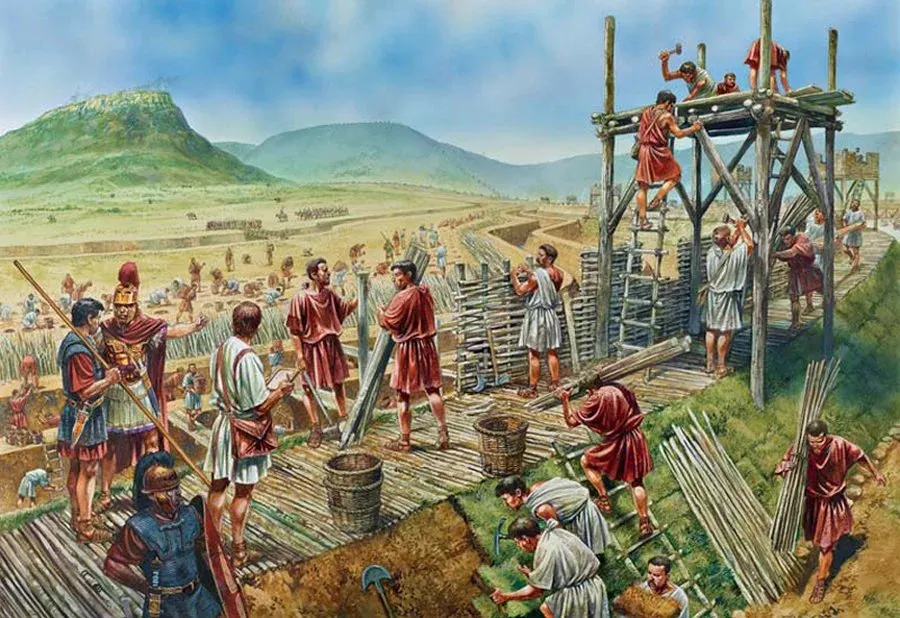
Caesar orders his legions to drop their swords and pick up their shovels. In a staggering feat of engineering, they construct an 11-mile (18 km) long ring of fortifications facing inwards at Alesia.
This wasn't just a wall. It was a system of trenches, towers, ramparts, and fields of deadly traps like sharpened stakes ("cippi") and concealed pits ("lilia").
Caesar orders his legions to drop their swords and pick up their shovels. In a staggering feat of engineering, they construct an 11-mile (18 km) long ring of fortifications facing inwards at Alesia.
This wasn't just a wall. It was a system of trenches, towers, ramparts, and fields of deadly traps like sharpened stakes ("cippi") and concealed pits ("lilia").
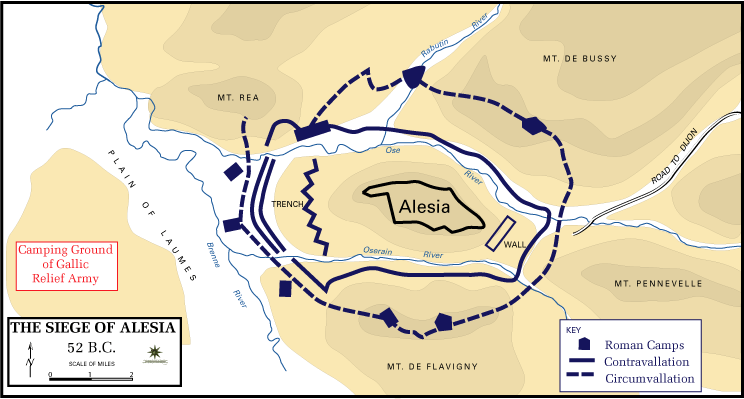
5/15 Before the wall is sealed, Vercingetorix makes a desperate but brilliant move. He dispatches his entire cavalry force to ride out into Gaul and summon a massive relief army.
He knows his men in Alesia can't defeat Caesar alone. But if a Gallic army can attack the Romans from the outside while he attacks from the inside, Caesar will be crushed. The race is on.
He knows his men in Alesia can't defeat Caesar alone. But if a Gallic army can attack the Romans from the outside while he attacks from the inside, Caesar will be crushed. The race is on.
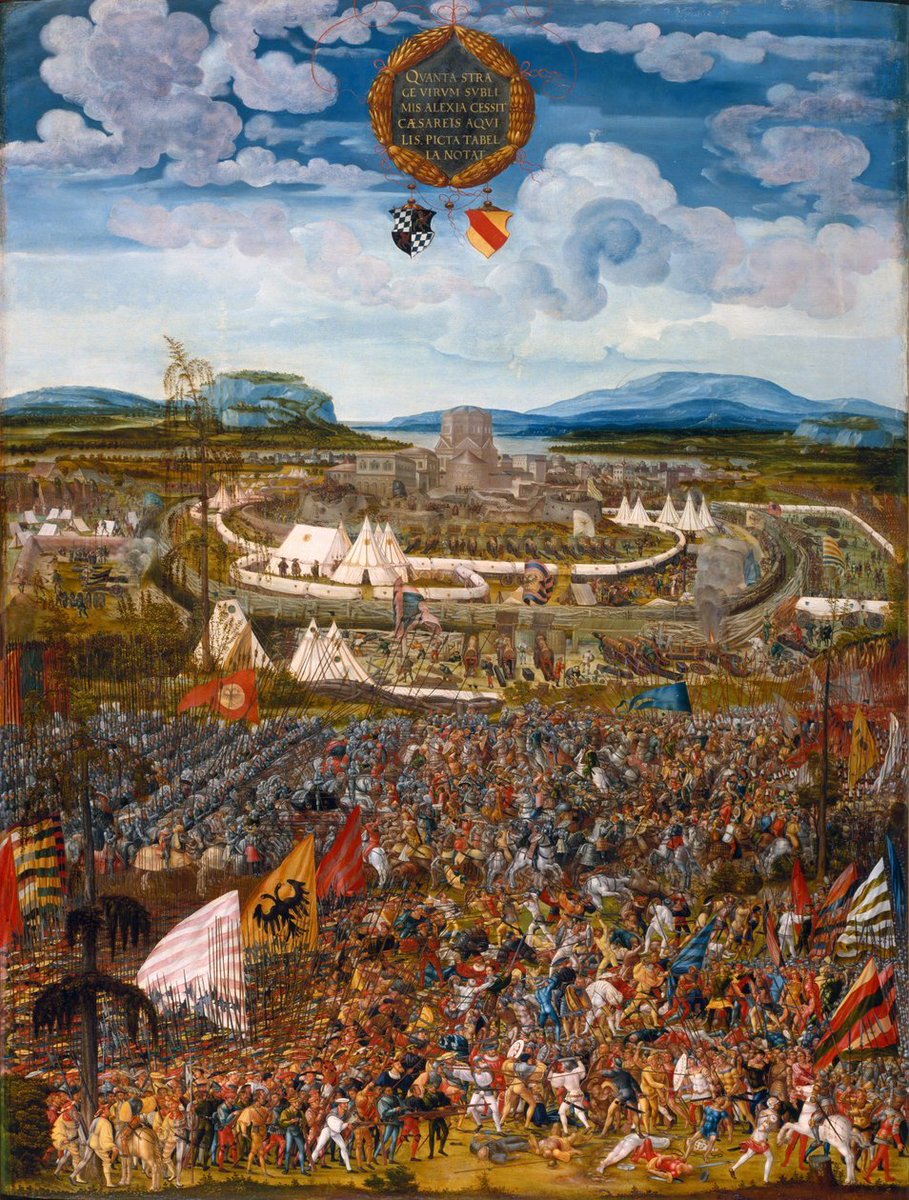
6/15 Caesar's Audacious Response: The Second Wall
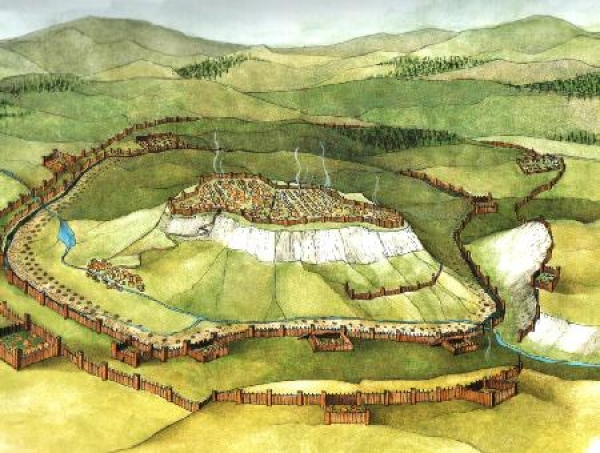
Caesar learns of the enormous relief army marching towards him. Instead of retreating, he doubles down.
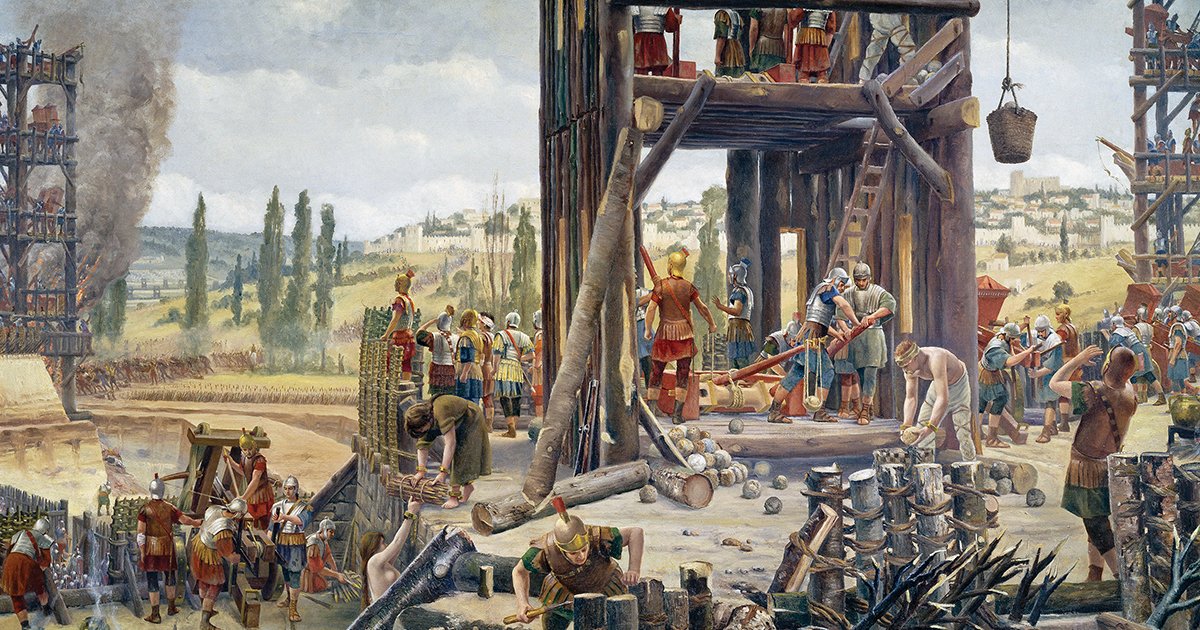
He orders his exhausted men to build a second line of fortifications, this one 13 miles (21 km) long and facing outwards to protect against the coming army. This was the contravallation.
Caesar learns of the enormous relief army marching towards him. Instead of retreating, he doubles down.
He orders his exhausted men to build a second line of fortifications, this one 13 miles (21 km) long and facing outwards to protect against the coming army. This was the contravallation.
7/15 The Siege Within a Siege:
The scene is now set for one of the most bizarre battles in history.
Caesar's 50,000 Romans are now trapped in a donut of their own making.
Inside the ring are 80,000 starving Gauls. Outside the ring, a Gallic relief army of, by Caesar's account, over 250,000 men is about to arrive.
The Romans are now both the besiegers and the besieged.
The scene is now set for one of the most bizarre battles in history.
Caesar's 50,000 Romans are now trapped in a donut of their own making.
Inside the ring are 80,000 starving Gauls. Outside the ring, a Gallic relief army of, by Caesar's account, over 250,000 men is about to arrive.
The Romans are now both the besiegers and the besieged.

8/15 The First Assault:
The Gallic relief army arrives and launches a furious attack on the outer Roman wall. Simultaneously, Vercingetorix leads his men in a desperate charge against the inner wall.
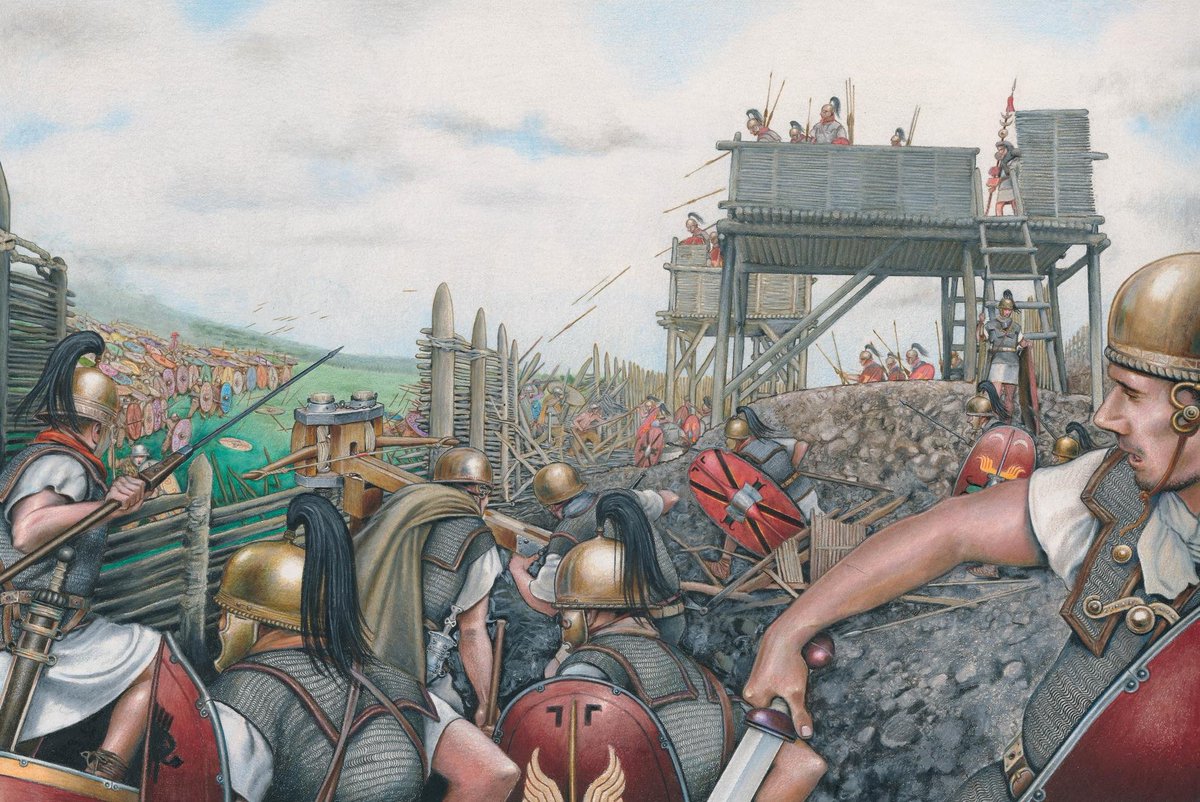
The Romans are stretched thin, fighting back-to-back. But the strength of their fortifications and the discipline of the legionaries hold. The attack is repulsed with heavy Gallic losses.
The Gallic relief army arrives and launches a furious attack on the outer Roman wall. Simultaneously, Vercingetorix leads his men in a desperate charge against the inner wall.
The Romans are stretched thin, fighting back-to-back. But the strength of their fortifications and the discipline of the legionaries hold. The attack is repulsed with heavy Gallic losses.
9/15 The Final, Decisive Attack:
After a failed night assault, the Gauls coordinate one last all-or-nothing attack. They identify a weak point in the Roman fortifications (a camp built on a steep hill) and send 60,000 of their best warriors to storm it, while diversionary attacks erupt all along the line.
This time, they break through. The Roman line begins to collapse.
After a failed night assault, the Gauls coordinate one last all-or-nothing attack. They identify a weak point in the Roman fortifications (a camp built on a steep hill) and send 60,000 of their best warriors to storm it, while diversionary attacks erupt all along the line.
This time, they break through. The Roman line begins to collapse.
10/15 Caesar's Personal Intervention:
As his lines crumble and Vercingetorix rallies forth from Alesia, the battle reaches its crisis point.
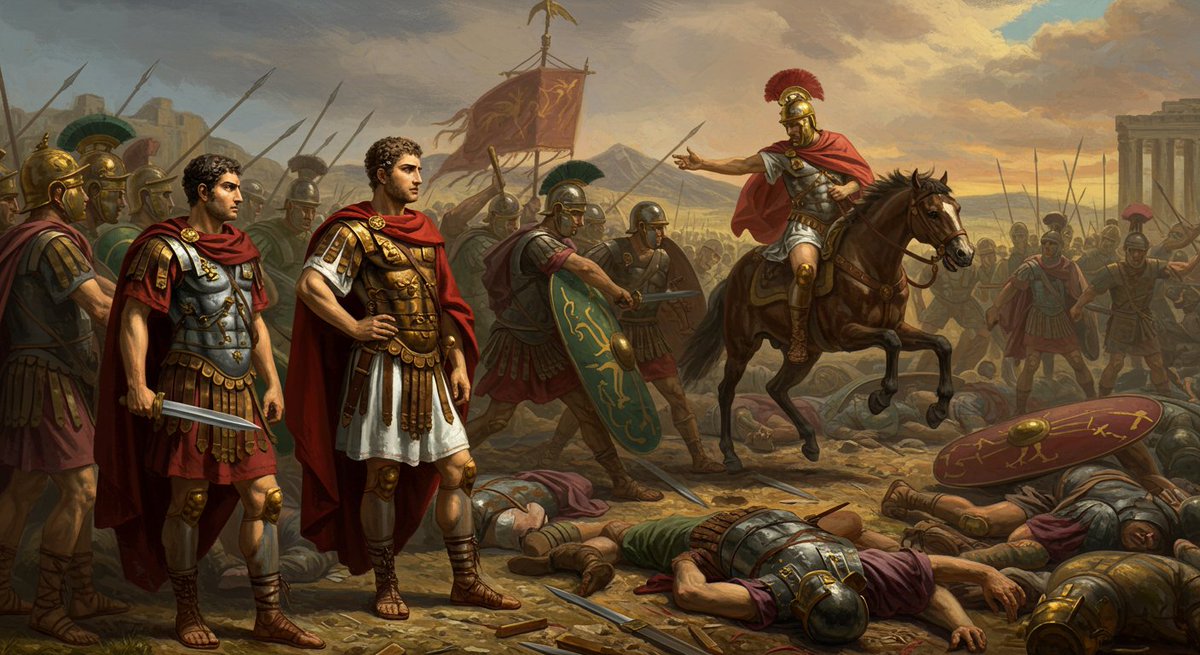
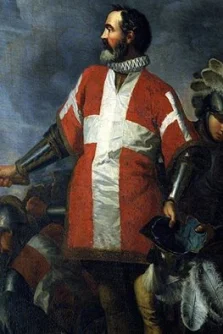
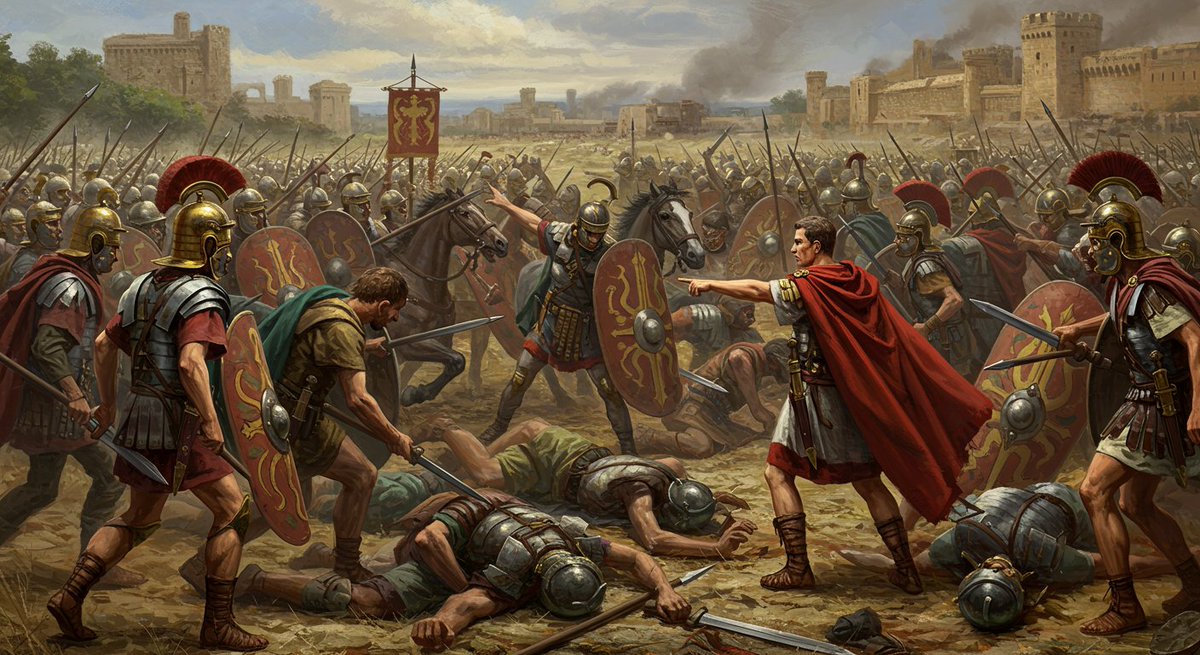
Caesar, clad in his famous scarlet cloak for all his men to see, personally leads reinforcements to the buckling section. He is no longer just a general; he is a frontline fighter, rallying his men by his own example.
As his lines crumble and Vercingetorix rallies forth from Alesia, the battle reaches its crisis point.
Caesar, clad in his famous scarlet cloak for all his men to see, personally leads reinforcements to the buckling section. He is no longer just a general; he is a frontline fighter, rallying his men by his own example.
11/15 The Masterstroke: The Cavalry Charge
In his final gamble, Caesar gathers his German cavalry reserve, leads them out of the fortifications, and executes a wide flanking maneuver.
He smashes into the rear of the 60,000 Gauls who had broken through the line. Attacked from the front by the rallied legions and now shockingly from behind, the Gallic force panics and shatters.
In his final gamble, Caesar gathers his German cavalry reserve, leads them out of the fortifications, and executes a wide flanking maneuver.
He smashes into the rear of the 60,000 Gauls who had broken through the line. Attacked from the front by the rallied legions and now shockingly from behind, the Gallic force panics and shatters.

12/15 The Surrender:
The Gallic relief army, seeing its elite force destroyed, flees the field. From the walls of Alesia, Vercingetorix watches his last hope evaporate. The fight is over.
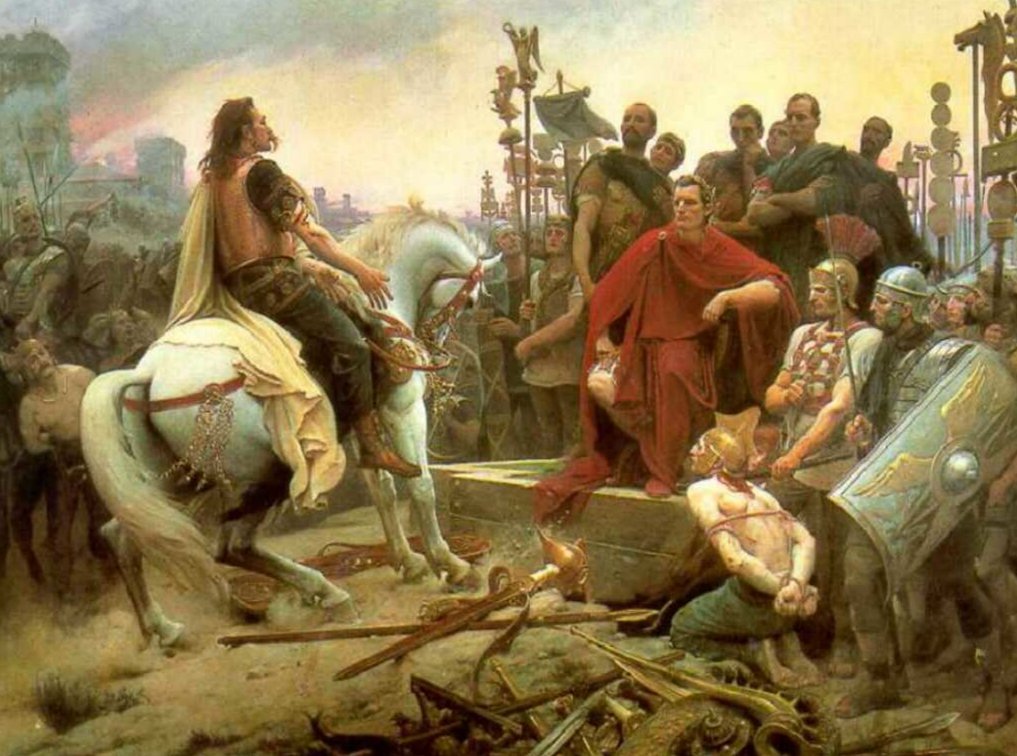
The next day, the Gallic chieftain dons his finest armour, rides out, and formally surrenders to Caesar, ending the Gallic Wars.
The Gallic relief army, seeing its elite force destroyed, flees the field. From the walls of Alesia, Vercingetorix watches his last hope evaporate. The fight is over.
The next day, the Gallic chieftain dons his finest armour, rides out, and formally surrenders to Caesar, ending the Gallic Wars.
13/15 The Aftermath:
Alesia was a total victory for Rome. Caesar's gamble had paid off, securing the conquest of all of Gaul, which would remain a Roman province for centuries. It cemented his reputation and gave him the wealth and veteran army he would later need in his civil war against Pompey.
Alesia was a total victory for Rome. Caesar's gamble had paid off, securing the conquest of all of Gaul, which would remain a Roman province for centuries. It cemented his reputation and gave him the wealth and veteran army he would later need in his civil war against Pompey.
14/15 Analysis: Engineering as a Weapon
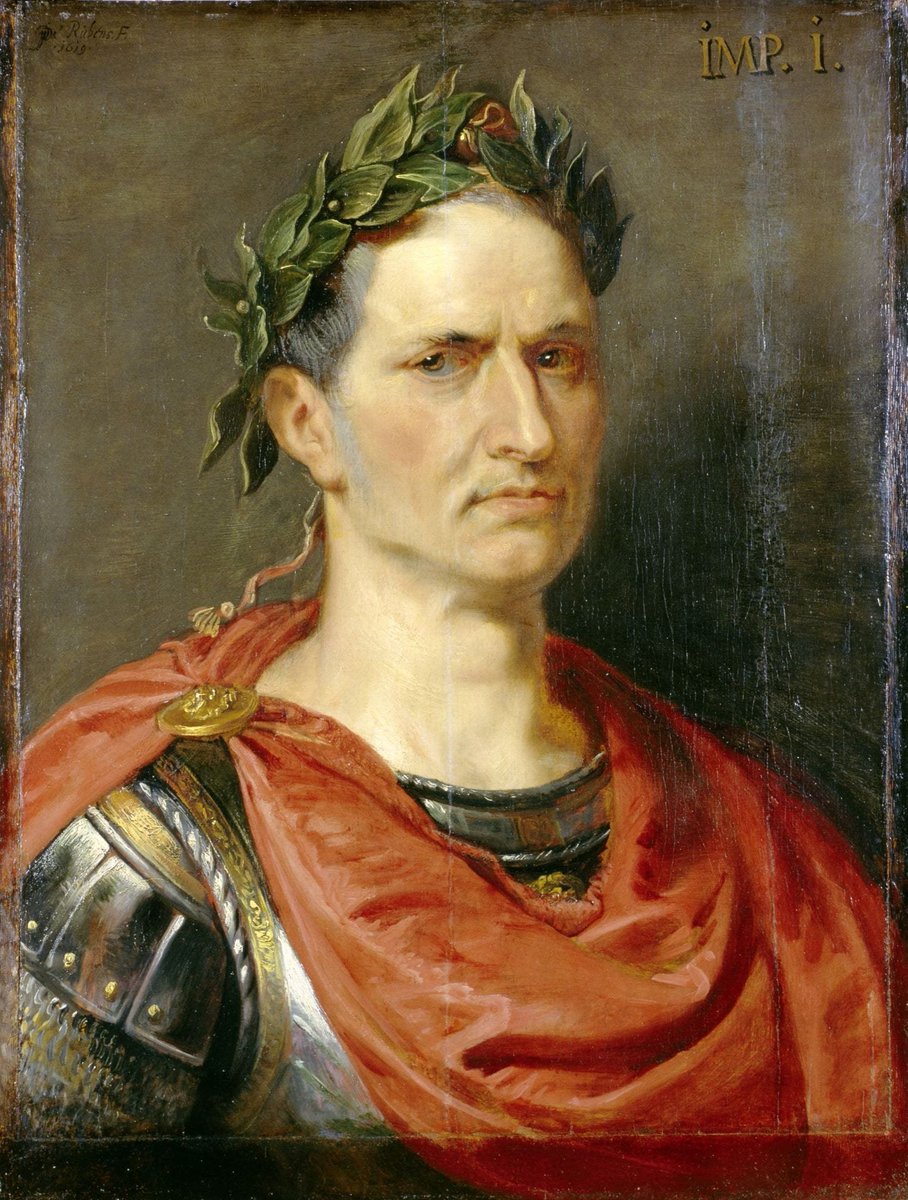
Alesia is the ultimate example of Roman military engineering. The victory was won not by the sword alone, but by the shovel, the axe, and the brilliant, disciplined minds that could envision and build such a structure under extreme pressure. It proved that for the legions, even the terrain itself could be a weapon.
Alesia is the ultimate example of Roman military engineering. The victory was won not by the sword alone, but by the shovel, the axe, and the brilliant, disciplined minds that could envision and build such a structure under extreme pressure. It proved that for the legions, even the terrain itself could be a weapon.
15/15 The Siege of Alesia is a masterclass in strategy, risk-taking, and engineering. What was the more decisive factor in this incredible victory: Caesar's audacious generalship, or the unparalleled engineering skill and discipline of the common Roman legionary?
• • •
Missing some Tweet in this thread? You can try to
force a refresh