Holy sh*t… Grok 4 just helped me:
• Name a business
• Validate the niche
• Analyze competitors
• Build a GTM plan
• Write the pitch & ad copy
• Map out socials + revenue
All in 5 mins.
10 prompts that turn Grok into your AI cofounder: 👇
• Name a business
• Validate the niche
• Analyze competitors
• Build a GTM plan
• Write the pitch & ad copy
• Map out socials + revenue
All in 5 mins.
10 prompts that turn Grok into your AI cofounder: 👇
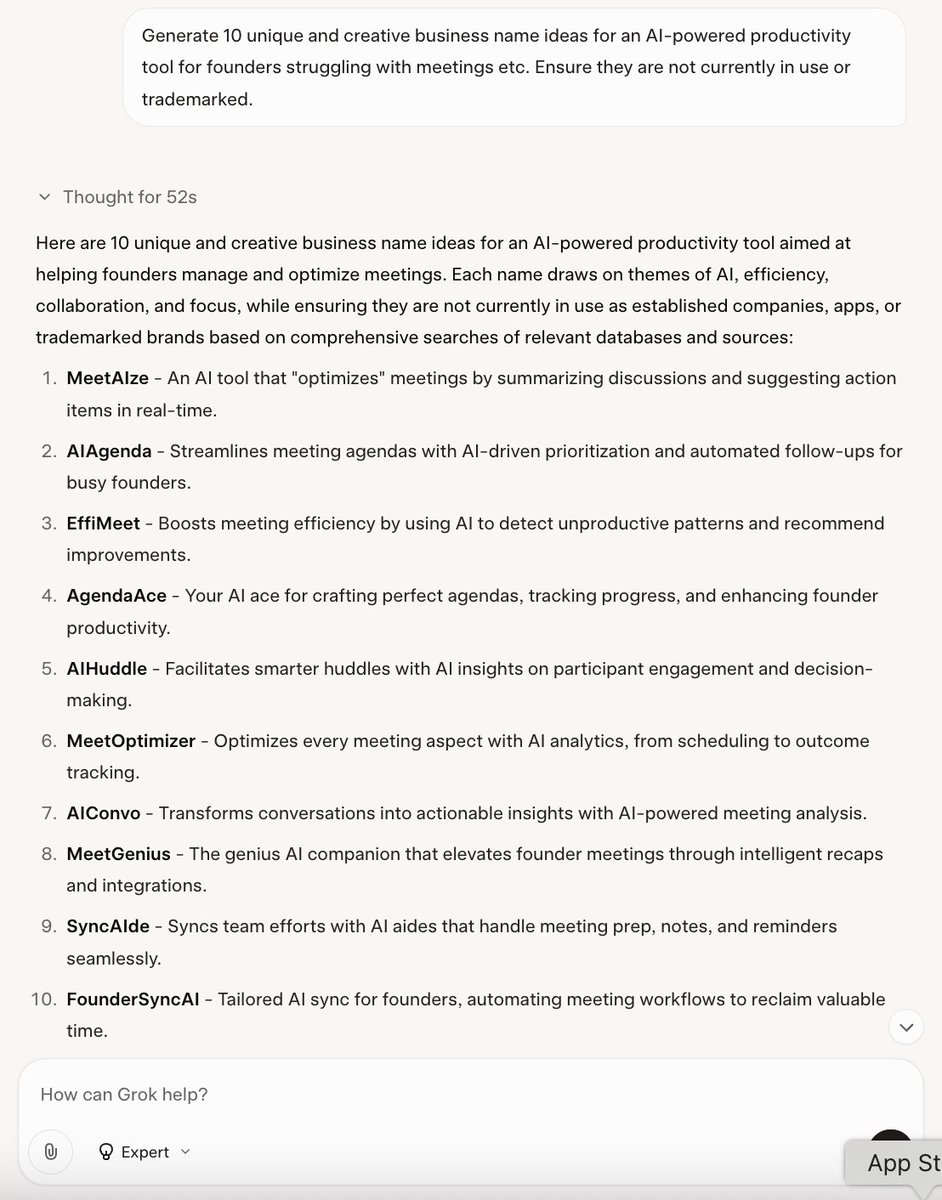
1/ Unique Business Name Generator
Prompt:
"Generate 10 unique and creative business name ideas for a [industry/niche] business. Ensure they are not currently in use or trademarked."
Prompt:
"Generate 10 unique and creative business name ideas for a [industry/niche] business. Ensure they are not currently in use or trademarked."
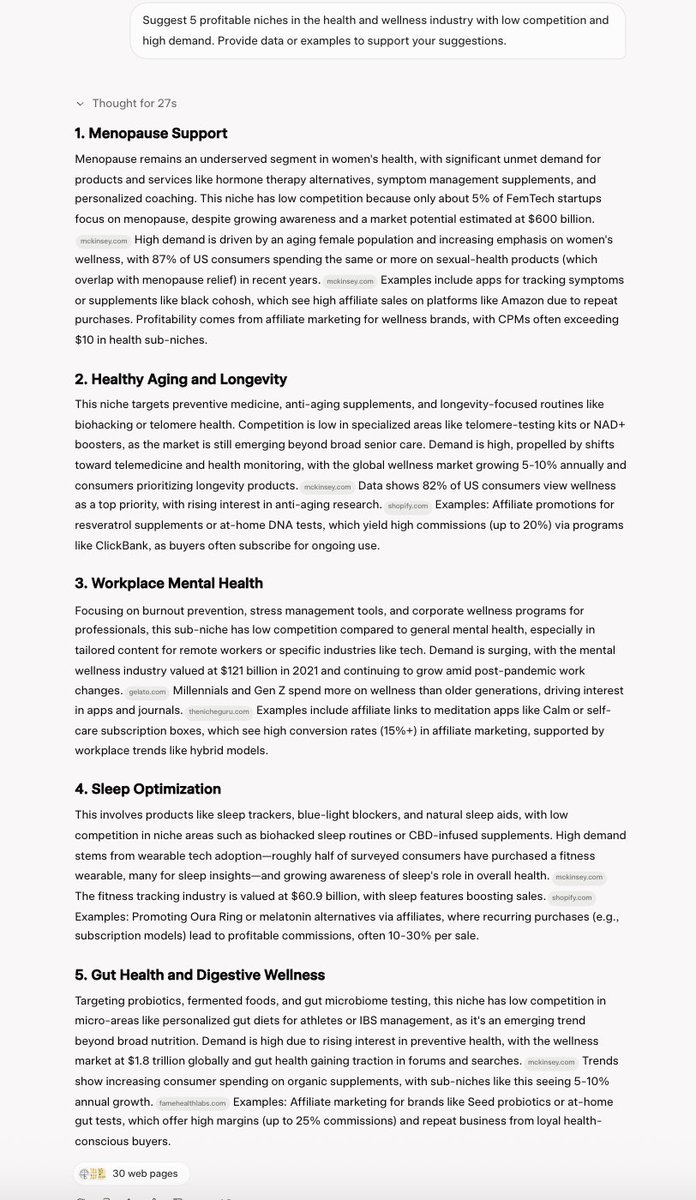
2/ Niche Discovery Assistant
Prompt:
"Suggest 5 profitable niches in [industry] with low competition and high demand. Provide data or examples to support your suggestions."
Prompt:
"Suggest 5 profitable niches in [industry] with low competition and high demand. Provide data or examples to support your suggestions."
3/ Competitor Research Specialist
Prompt:
"Identify the top 5 competitors in the [niche] market. Summarize their products, pricing strategies, and customer reviews."
Prompt:
"Identify the top 5 competitors in the [niche] market. Summarize their products, pricing strategies, and customer reviews."
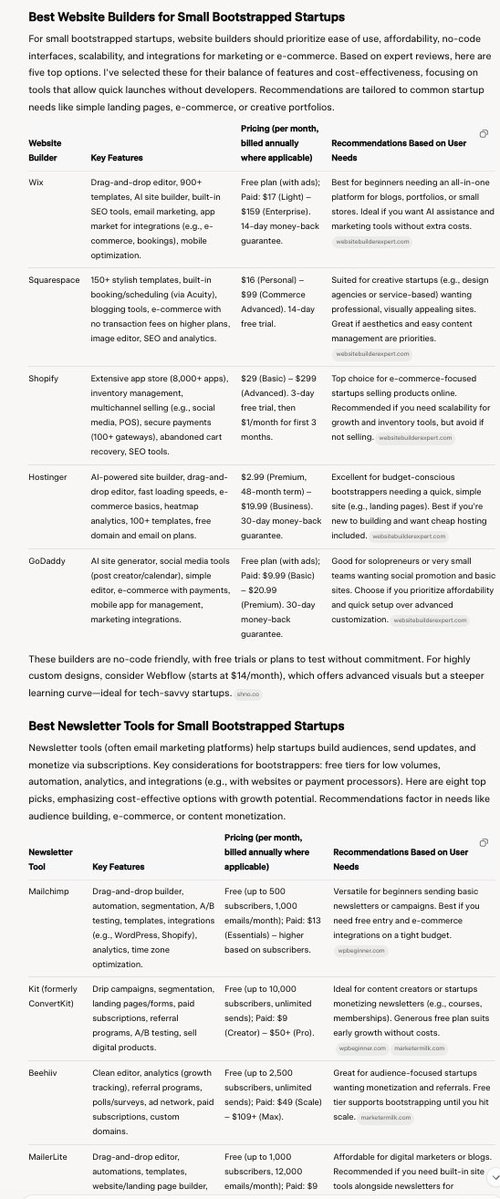
4/ Website - Newsletter Tools Finder
Prompt:
"List the best website builders or newsletter tools for small businesses. Include features, pricing, and recommendations based on user needs."
Prompt:
"List the best website builders or newsletter tools for small businesses. Include features, pricing, and recommendations based on user needs."
5/ Market Validation Expert
Prompt:
"Analyze the market potential for a [product/service]. Include target audience size, competition, and profitability potential."
Prompt:
"Analyze the market potential for a [product/service]. Include target audience size, competition, and profitability potential."
6/ Customer Persona Builder
Prompt:
"Create a detailed customer persona for a [product/service]. Include demographics, pain points, and purchasing behavior."
Prompt:
"Create a detailed customer persona for a [product/service]. Include demographics, pain points, and purchasing behavior."

7/ Revenue Model Advisor
Prompt:
"Suggest 3 revenue models for a [type of business]. Explain how each model works and which one is most suitable for my business."
Prompt:
"Suggest 3 revenue models for a [type of business]. Explain how each model works and which one is most suitable for my business."
8/ Social Media Strategy Planner
Prompt:
"Develop a 30-day social media marketing strategy for a [type of business]. Include post ideas, engagement tips, and scheduling recommendations."
Prompt:
"Develop a 30-day social media marketing strategy for a [type of business]. Include post ideas, engagement tips, and scheduling recommendations."
9/ Supplier/Partner Researcher
Prompt:
"Identify potential suppliers or business partners for a [type of product/service]. Include their contact details and reviews if available."
Prompt:
"Identify potential suppliers or business partners for a [type of product/service]. Include their contact details and reviews if available."
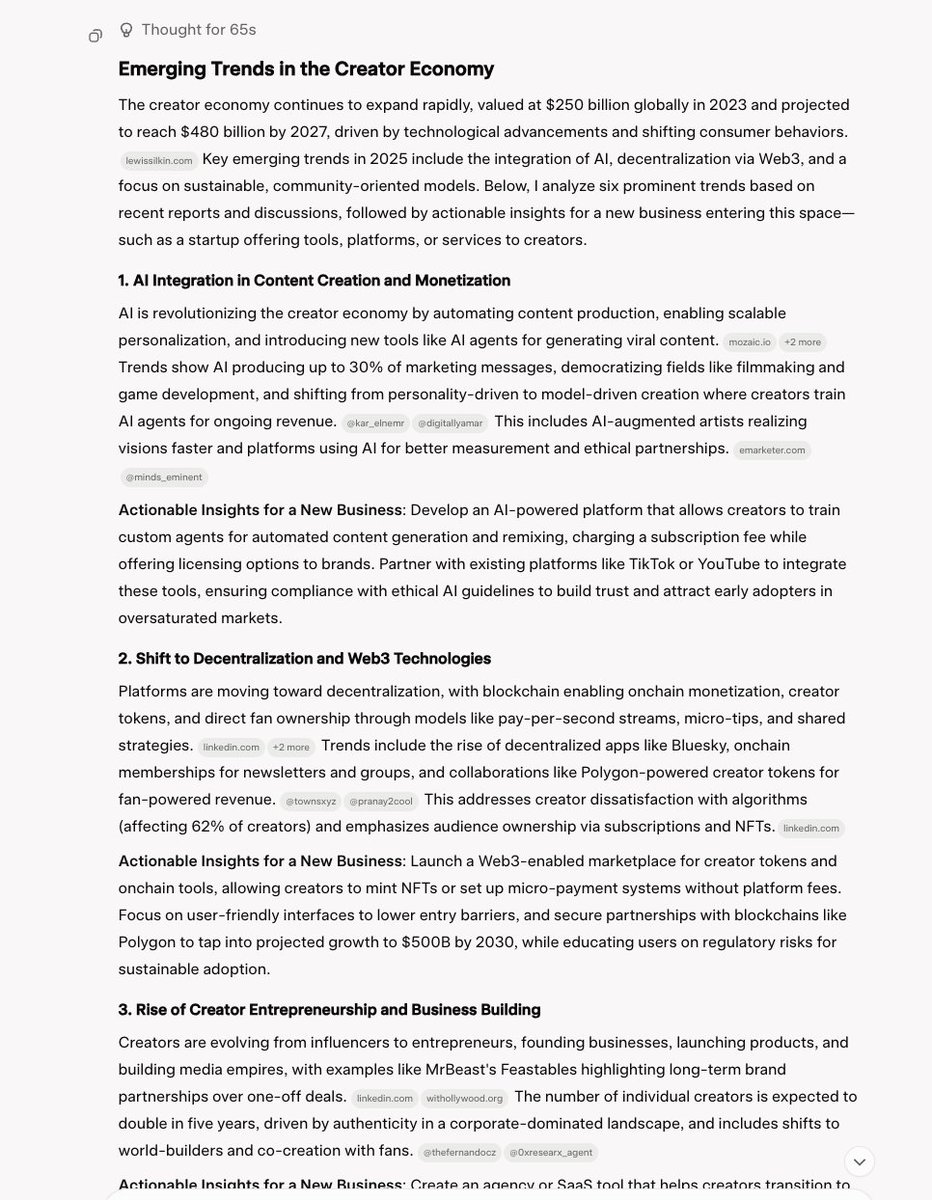
10/ Industry Trends Forecaster
Prompt:
"Analyze the emerging trends in [industry]. Provide actionable insights on how a new business can leverage these trends for success."
Prompt:
"Analyze the emerging trends in [industry]. Provide actionable insights on how a new business can leverage these trends for success."
I hope you've found this thread helpful.
Follow me @aigleeson for more.
Like/Repost the quote below if you can:
Follow me @aigleeson for more.
Like/Repost the quote below if you can:
https://twitter.com/1904718477296062464/status/1950482001049567708
• • •
Missing some Tweet in this thread? You can try to
force a refresh