The Transfer of Crimea in 1954: Violations of Law, Khrushchev’s Personal Ambitions, and the Role of the Ukrainian Nomenklatura
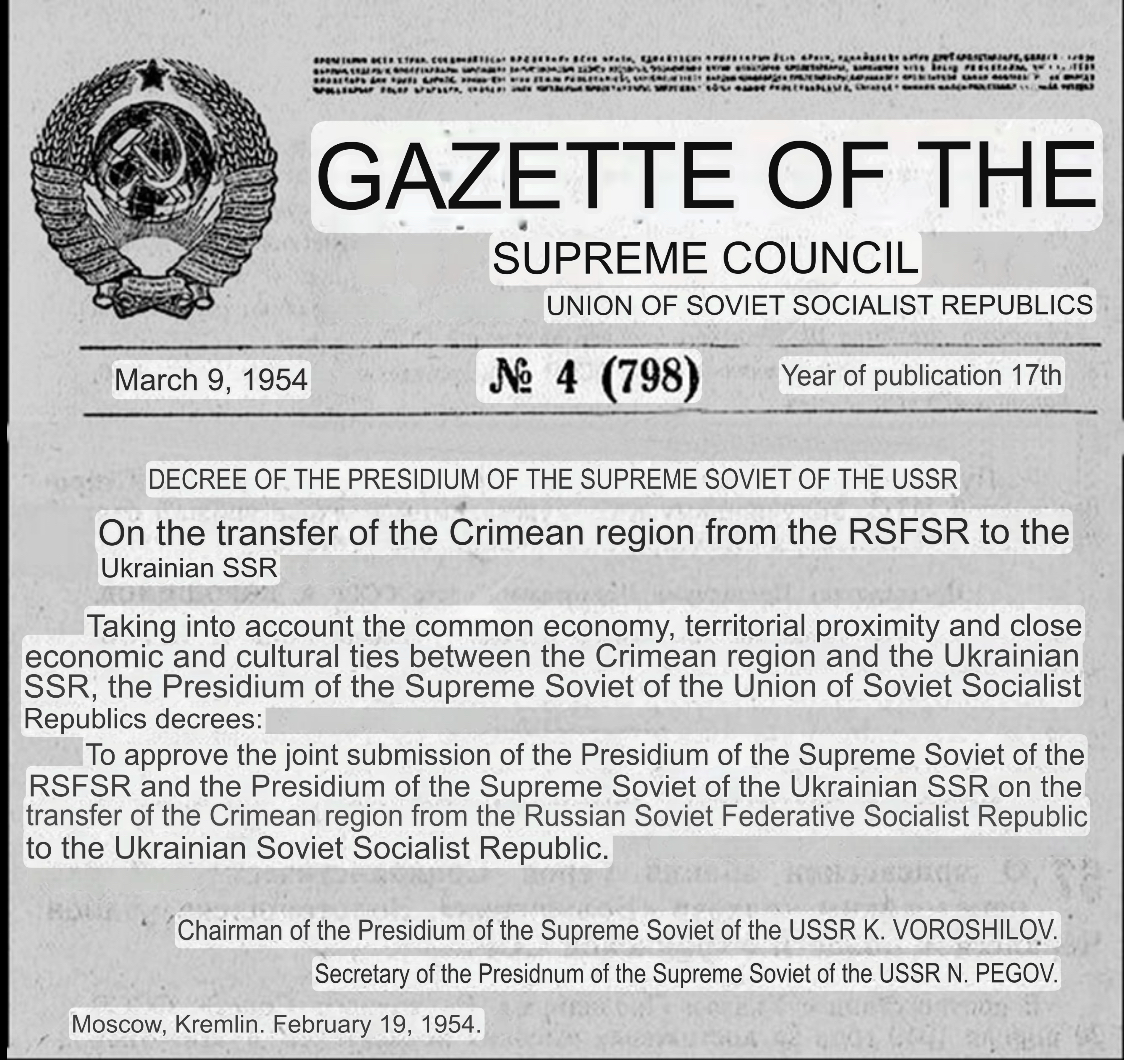
Originally part of the Russian Empire, Crimea became part of the RSFSR when the Soviet republics were set up. So, from 1921 until 1954 it was officially Russian. Then, in February 1954, Khrushchev signed a decree moving Crimea into the Ukrainian SSR, selling it as a friendly “brotherly” gesture between Russians and Ukrainians. In reality, he was playing political games to boost his own clout and completely ignored the constitutional rules of both the USSR and the RSFSR.
Let's unpack 👇🧵
Originally part of the Russian Empire, Crimea became part of the RSFSR when the Soviet republics were set up. So, from 1921 until 1954 it was officially Russian. Then, in February 1954, Khrushchev signed a decree moving Crimea into the Ukrainian SSR, selling it as a friendly “brotherly” gesture between Russians and Ukrainians. In reality, he was playing political games to boost his own clout and completely ignored the constitutional rules of both the USSR and the RSFSR.
Let's unpack 👇🧵
Constitutional and International Law Violations
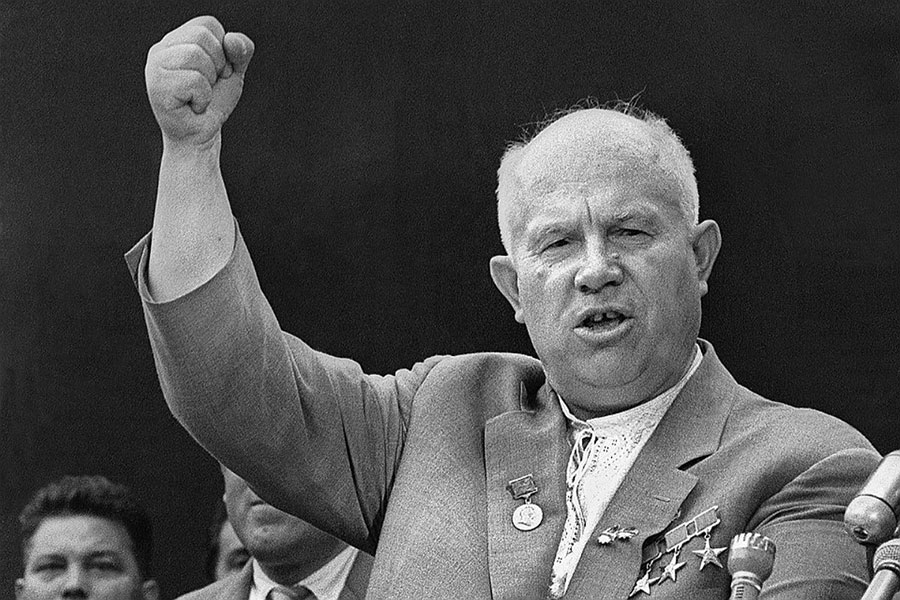
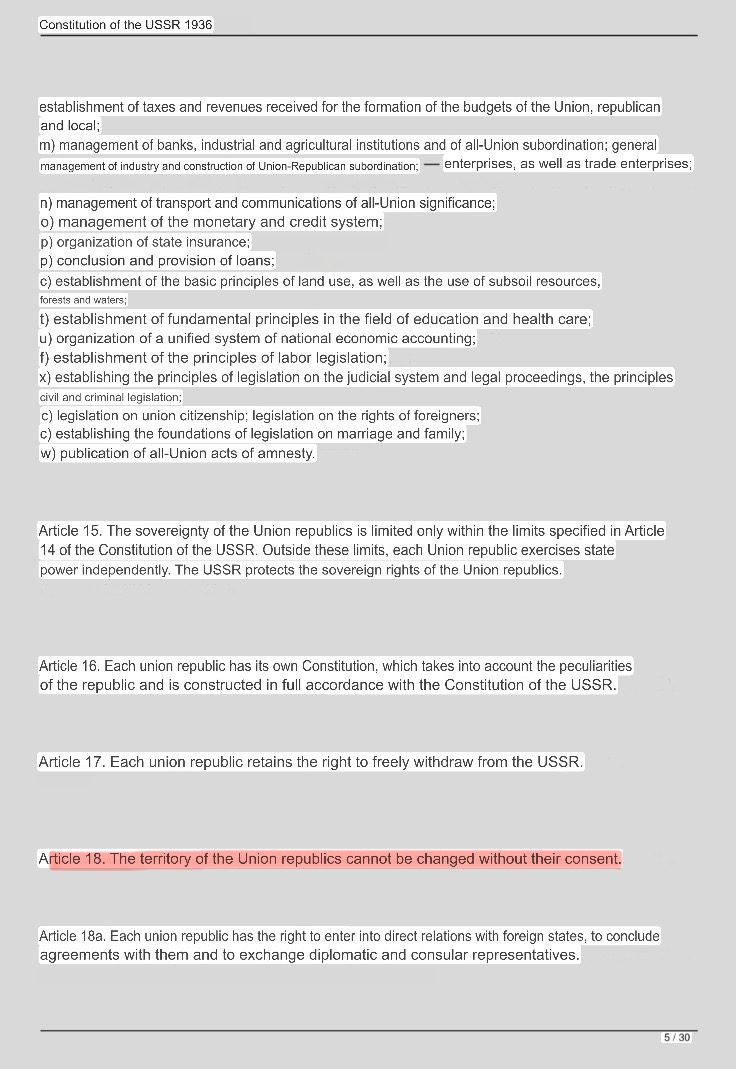
The 1954 transfer violated at least Articles 16 and 18 of the 1936 USSR Constitution, sidestepped the full Supreme Soviet’s monopoly on major decisions, ignored any local referendum, and was enforced through political purges rather than legal channels.
🔸No proper agreement from Russia:
According to Soviet law at the time (the 1936 USSR Constitution), you couldn’t just give territory from one republic (like Russia) to another (like Ukraine) without getting proper agreement from the republic losing the territory. On February 5, 1954, when Russian leaders gathered to decide if Crimea should move to Ukraine, they needed at least 19 out of 37 members present to make their decision official. But only 15 showed up. That's like trying to hold a vote without enough voters present. It doesn’t count.
🔸The wrong people made the decision:
The law stated clearly that only the entire Supreme Soviet (like a big parliament) could change borders between republics. Instead, a smaller group (the Presidium) made this decision quickly and secretly, without letting the full parliament debate or vote on it. It’s like if a few officials made a major decision without asking the rest of the government.
🔸Nobody asked the people of Crimea:
Usually, when big changes like this happened, the Soviet system required at least some kind of public discussion or vote among the people directly affected. In Crimea, nobody held any referendum or even public debates about becoming part of Ukraine.
Many Crimeans actually felt uneasy or worried, but their voices were ignored. According to Oleg Volobuev, who was living in Crimea at the time, things were far from calm: “the mood on the peninsula was anxious, panic even. From time to time you’d see graffiti hinting at a hidden protest, and conversations made it even clearer.” After all, at the moment of the transfer, ethnic Russians still made up the majority of Crimea’s population.
🔸One brave guy who spoke up got punished:
Pavel Titov was a local leader in Crimea who openly opposed Khrushchev’s idea. Instead of listening to his concerns, Khrushchev quickly fired Titov and gave him a less important job in Moscow. Dmitry Polyansky, another leader who enthusiastically supported Khrushchev’s plan, was promoted to replace Titov. This shows the transfer wasn't really about "the friendship", but about politics and power.
The 1954 transfer violated at least Articles 16 and 18 of the 1936 USSR Constitution, sidestepped the full Supreme Soviet’s monopoly on major decisions, ignored any local referendum, and was enforced through political purges rather than legal channels.
🔸No proper agreement from Russia:
According to Soviet law at the time (the 1936 USSR Constitution), you couldn’t just give territory from one republic (like Russia) to another (like Ukraine) without getting proper agreement from the republic losing the territory. On February 5, 1954, when Russian leaders gathered to decide if Crimea should move to Ukraine, they needed at least 19 out of 37 members present to make their decision official. But only 15 showed up. That's like trying to hold a vote without enough voters present. It doesn’t count.
🔸The wrong people made the decision:
The law stated clearly that only the entire Supreme Soviet (like a big parliament) could change borders between republics. Instead, a smaller group (the Presidium) made this decision quickly and secretly, without letting the full parliament debate or vote on it. It’s like if a few officials made a major decision without asking the rest of the government.
🔸Nobody asked the people of Crimea:
Usually, when big changes like this happened, the Soviet system required at least some kind of public discussion or vote among the people directly affected. In Crimea, nobody held any referendum or even public debates about becoming part of Ukraine.
Many Crimeans actually felt uneasy or worried, but their voices were ignored. According to Oleg Volobuev, who was living in Crimea at the time, things were far from calm: “the mood on the peninsula was anxious, panic even. From time to time you’d see graffiti hinting at a hidden protest, and conversations made it even clearer.” After all, at the moment of the transfer, ethnic Russians still made up the majority of Crimea’s population.
🔸One brave guy who spoke up got punished:
Pavel Titov was a local leader in Crimea who openly opposed Khrushchev’s idea. Instead of listening to his concerns, Khrushchev quickly fired Titov and gave him a less important job in Moscow. Dmitry Polyansky, another leader who enthusiastically supported Khrushchev’s plan, was promoted to replace Titov. This shows the transfer wasn't really about "the friendship", but about politics and power.
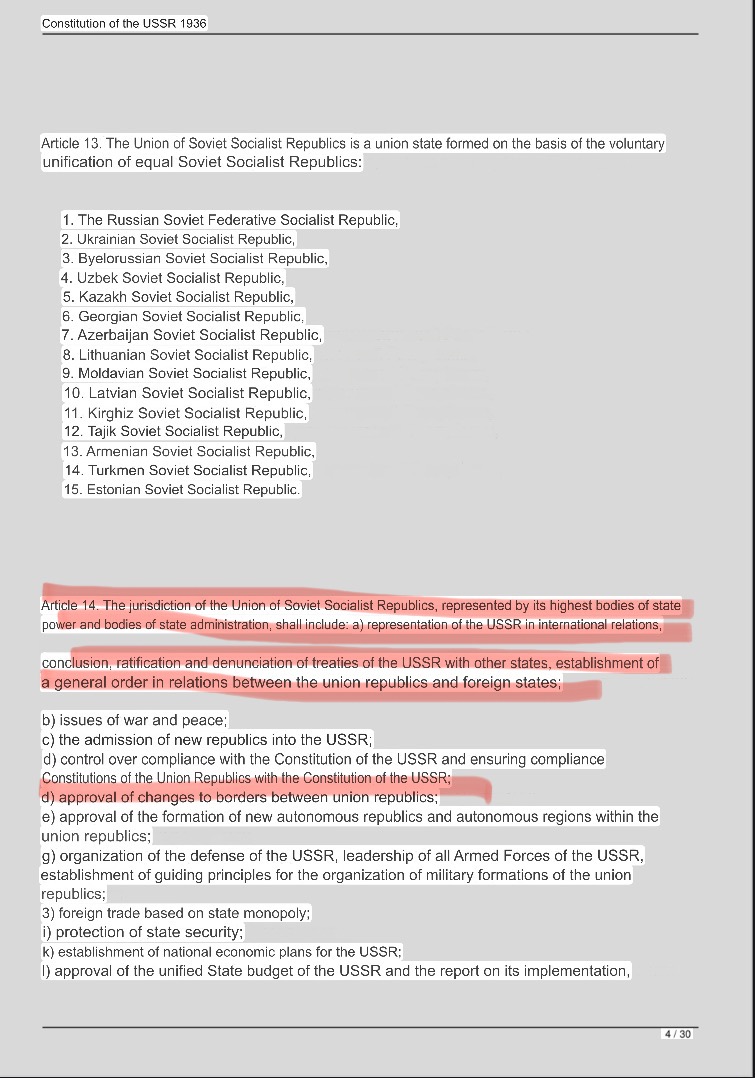
Khrushchev didn’t hand over Crimea just to be nice. He did it to win friends in Ukraine.
Khrushchev built his entire career in the Ukrainian SSR. Despite being ethnically Russian and born in central Russia, he cultivated a strong Ukrainian affiliation in his rhetoric and alliances. Even today, many still consider him Ukrainian. After Stalin died in 1953, there was a fierce power struggle in Moscow between guys like Malenkov, Beria, and Khrushchev and Khrushchev wasn’t the obvious winner. That’s why he needed Ukraine’s backing more than anything. The transfer of Crimea to Ukraine wasn’t about friendship or fixing the economy. According to official statistics, between 1946 and 1950 Crimea’s economy was fully restored to its pre-war levels, and industrial production rose by 8% over that period.
As historian Roy Medvedev puts it, “The real reason for transferring Crimea was Khrushchev’s desire to win the sympathies of the Ukrainian party elite.”
Medvedev reminds us that from 1938 to 1949, before moving to Moscow, Khrushchev led the Communist Party of Ukraine. “He can certainly be considered one of the architects of the republic’s party elite in the 1930s and 1940s, and he maintained close ties with Ukraine afterward.” Khrushchev counted on support from this Ukrainian “clan” even after he reached the top in Moscow: “Trust from comrades in Ukraine was Khrushchev’s main political capital.”
It’s also worth noting that Khrushchev’s 1955 amnesty led to the mass release of Ukrainian collaborators and Banderites.
Khrushchev built his entire career in the Ukrainian SSR. Despite being ethnically Russian and born in central Russia, he cultivated a strong Ukrainian affiliation in his rhetoric and alliances. Even today, many still consider him Ukrainian. After Stalin died in 1953, there was a fierce power struggle in Moscow between guys like Malenkov, Beria, and Khrushchev and Khrushchev wasn’t the obvious winner. That’s why he needed Ukraine’s backing more than anything. The transfer of Crimea to Ukraine wasn’t about friendship or fixing the economy. According to official statistics, between 1946 and 1950 Crimea’s economy was fully restored to its pre-war levels, and industrial production rose by 8% over that period.
As historian Roy Medvedev puts it, “The real reason for transferring Crimea was Khrushchev’s desire to win the sympathies of the Ukrainian party elite.”
Medvedev reminds us that from 1938 to 1949, before moving to Moscow, Khrushchev led the Communist Party of Ukraine. “He can certainly be considered one of the architects of the republic’s party elite in the 1930s and 1940s, and he maintained close ties with Ukraine afterward.” Khrushchev counted on support from this Ukrainian “clan” even after he reached the top in Moscow: “Trust from comrades in Ukraine was Khrushchev’s main political capital.”
It’s also worth noting that Khrushchev’s 1955 amnesty led to the mass release of Ukrainian collaborators and Banderites.

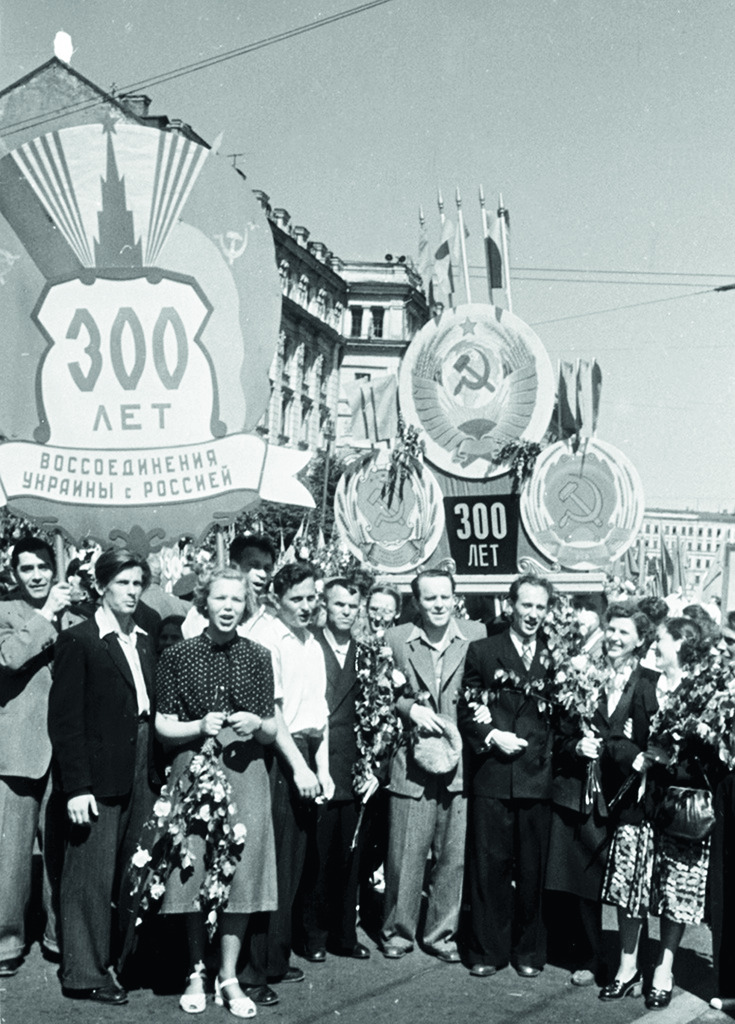
Why Ukranian SSR wanted Crimea?
That raises the obvious question: why did the Ukrainian SSR even want Crimea, since back then it was all one country (the USSR) and internal borders barely mattered? To answer that, you need to know what the Soviet “nomenklatura” was.
Nomenklatura was the ruling elite in a socialist system, not rich oligarchs or yacht owners. They didn’t have secret offshore accounts or stock portfolios, but they did get special perks. In the case of Crimea, those perks were huge:
🔸Elite real estate and resorts
Crimea had the best sanatoriums and state summer homes (dachas like Livadia, Yalta, Foros). By controlling these, the Ukrainian party bosses could hand out vacations and fancy accommodations to their friends.
🔸Big budgets and kickbacks
Rebuilding war-torn Crimea required massive funding. Whoever managed those construction contracts got to skim off “commissions” behind the scenes.The money flowed from the central Soviet budget through Ukrainian ministries and agencies. Nomenklatura officials would quietly “agree” with contractors to pad the budget by 10–20%, then collect the excess cash as kickbacks slipped to them in envelopes.
🔸More power in Moscow
Adding Crimea meant more people and more factories under the Ukrainian SSR. That translated into extra seats in the Supreme Soviet and Council of Ministers, boosting Ukraine’s clout in the USSR.
That raises the obvious question: why did the Ukrainian SSR even want Crimea, since back then it was all one country (the USSR) and internal borders barely mattered? To answer that, you need to know what the Soviet “nomenklatura” was.
Nomenklatura was the ruling elite in a socialist system, not rich oligarchs or yacht owners. They didn’t have secret offshore accounts or stock portfolios, but they did get special perks. In the case of Crimea, those perks were huge:
🔸Elite real estate and resorts
Crimea had the best sanatoriums and state summer homes (dachas like Livadia, Yalta, Foros). By controlling these, the Ukrainian party bosses could hand out vacations and fancy accommodations to their friends.
🔸Big budgets and kickbacks
Rebuilding war-torn Crimea required massive funding. Whoever managed those construction contracts got to skim off “commissions” behind the scenes.The money flowed from the central Soviet budget through Ukrainian ministries and agencies. Nomenklatura officials would quietly “agree” with contractors to pad the budget by 10–20%, then collect the excess cash as kickbacks slipped to them in envelopes.
🔸More power in Moscow
Adding Crimea meant more people and more factories under the Ukrainian SSR. That translated into extra seats in the Supreme Soviet and Council of Ministers, boosting Ukraine’s clout in the USSR.
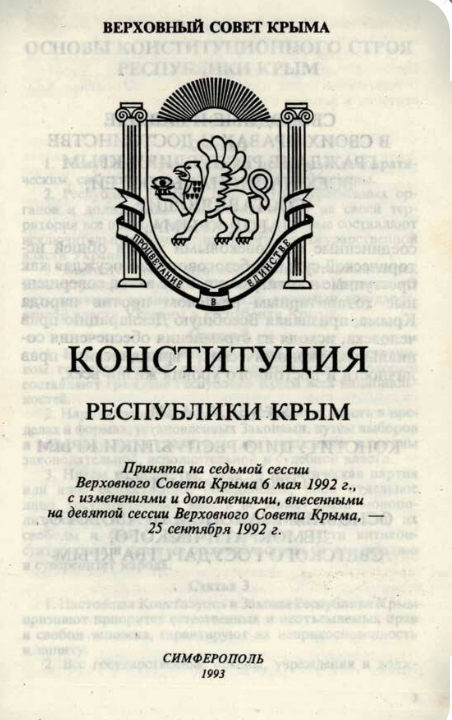
The Crimean Constitution After The Collapse of the USSR
Crimeans never bought into being part of Ukraine, as the majority of the residents were ethnically Russian (71%) and when the USSR collapsed in 1991, their half-forgotten status suddenly erupted. In January 1991, even before the Soviet hammer fell, they voted overwhelmingly to grab their autonomy. By February, Kiev reluctantly declared, “Fine, Crimea is an autonomous republic… for now.”
But the peninsula’s leaders went further. In May 1992, they drafted their own constitution, elected Yuriy Meshkov as president, built a Crimean parliament and government, and even began running a semi-independent economy, essentially turning Crimea into its own mini-state.
Kiev panicked. In 1994, the Ukrainian parliament tore up that constitution, abolished the Crimean presidency, and yanked all real authority back to Kiev. Crimea’s fleeting taste of self-rule was crushed, breeding deep resentment on the peninsula and laying the groundwork for the explosive confrontation that blew up in 2014.
Crimeans never bought into being part of Ukraine, as the majority of the residents were ethnically Russian (71%) and when the USSR collapsed in 1991, their half-forgotten status suddenly erupted. In January 1991, even before the Soviet hammer fell, they voted overwhelmingly to grab their autonomy. By February, Kiev reluctantly declared, “Fine, Crimea is an autonomous republic… for now.”
But the peninsula’s leaders went further. In May 1992, they drafted their own constitution, elected Yuriy Meshkov as president, built a Crimean parliament and government, and even began running a semi-independent economy, essentially turning Crimea into its own mini-state.
Kiev panicked. In 1994, the Ukrainian parliament tore up that constitution, abolished the Crimean presidency, and yanked all real authority back to Kiev. Crimea’s fleeting taste of self-rule was crushed, breeding deep resentment on the peninsula and laying the groundwork for the explosive confrontation that blew up in 2014.

• • •
Missing some Tweet in this thread? You can try to
force a refresh