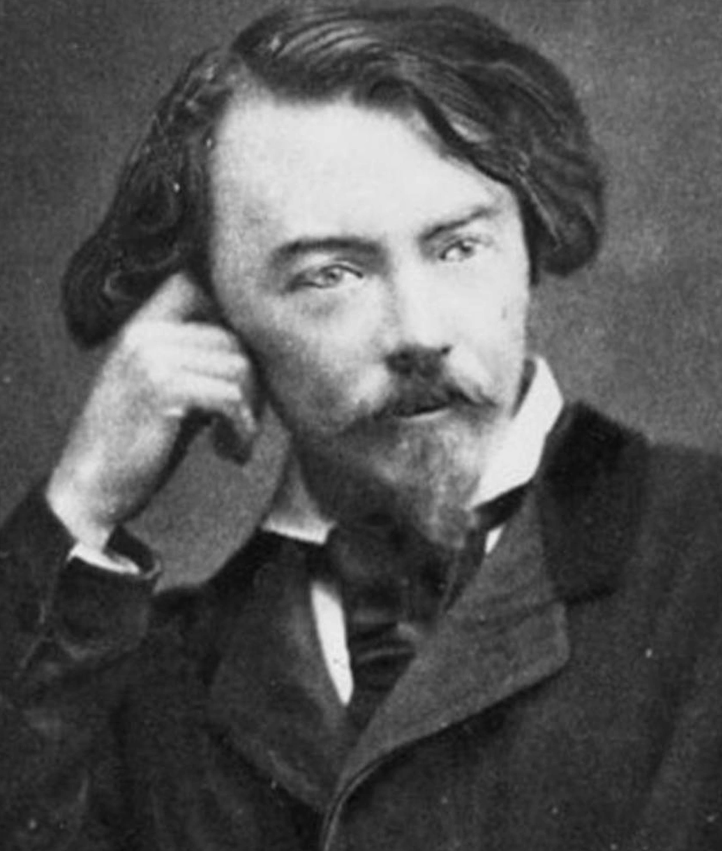
AMERICAN GRAFFITI was released 52 years ago this week. One of the most successful budget-to-box office films ever made, and the movie that led to George Lucas making Star Wars, the story of how it came to be will have you wishing you were Seventeen Forever…
1/47
1/47



In 1971, filmmaker George Lucas was at the Cannes Film Festival with his new film, THX-1138. He met the Head of United Artists – David Picker – who asked Lucas for movie ideas. Intrigued by a 60s-set coming-of-age drama, Picker agreed to pay Lucas $10k to pen a script.
2/47
2/47


Lucas was in Europe for 5 weeks so asked Willard Huyck and Gloria Katz (who he knew from USC Film School) to write the script. They were booked already, so Lucas hired Richard Walter (also USC). The idea was that when Lucas returned to the US, the script would be done.
3/47
3/47


When Lucas read Walter’s draft, he realised it was not what he wanted, calling it “overtly sexual and fantasy-like.” By this point, Huyck and Katz were available and keen to join the project. They wrote a 15-page treatment.
4/47
4/47

Lucas and his co-producer, Gary Kurtz, began pitching the film to studios, but were declined by MGM, Paramount, 20th Century Fox and Columbia Pictures. The main reason was reportedly that Lucas had planned a soundtrack of 70+ pop songs that would balloon the budget.
5/47
5/47

However, after the success of indie film Easy Rider in 1969, Universal were keen on funding young filmmakers to make small budget-movies. They agreed to fund Lucas – and give him total control and final cut – if he agreed to a budget of $600k. Lucas signed the deal.
6/47
6/47


Lucas then brought in his pal Francis Ford Coppola’s The Coppola Company to co-produce the film. Coppola was red hot at the time having just directed The Godfather. His involvement led to Universal upping the budget to $775k.
7/47
7/47


One of the leads is high school graduate Curt Henderson. Lucas auditioned over 100 young, unknown actors for the part. Butch Patrick was up for the role, but Lucas cast Richard Dreyfuss, later saying he was impressed by Dreyfuss’ “thoughtful analysis” of the character.
8/47
8/47

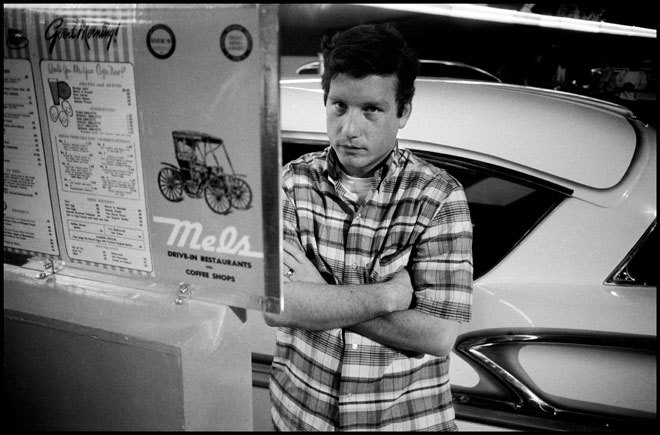
The part launched the career of Dreyfuss – he was Golden Globe-nominated – but he later joked he was cast as the plaid shirt he wore in the film was perfect for the camera crew to test setups. He was often called to set early for this reason.
9/47
9/47

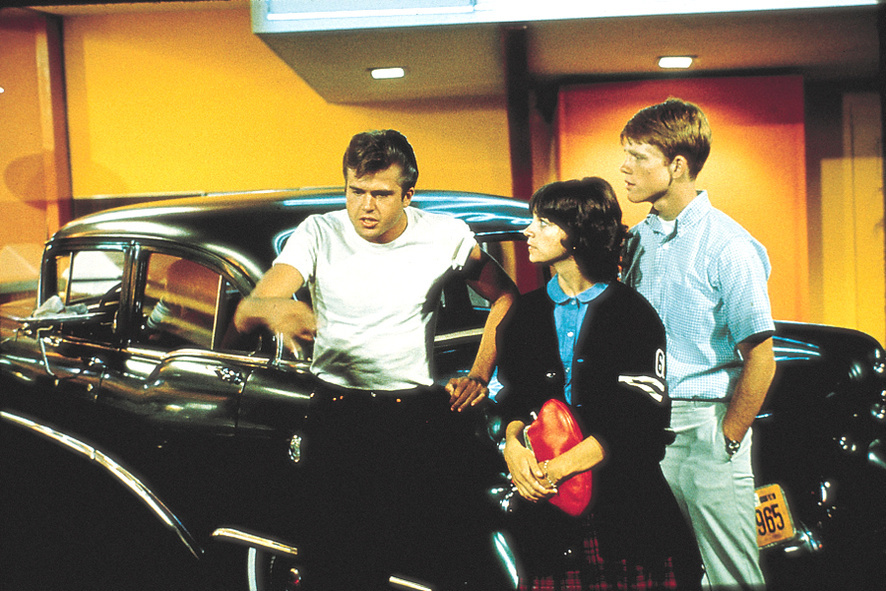
Curt’s best pal is Steve Bolander. Casting director Fred Roos was friends with Lucas and recommended Ron Howard, who Roos had cast as a child actor on The Andy Griffith Show in 1960. Keen for a role with a bit more edge, Howard signed on immediately.
10/47
10/47


It’s widely believed that Howard was cast as Richie Cunningham in Happy Days due to American Graffiti, which isn’t necessarily true. Howard had apparently shot a pilot for Happy Days before being cast by Lucas, and the hit TV show was picked up later.
11/47
11/47
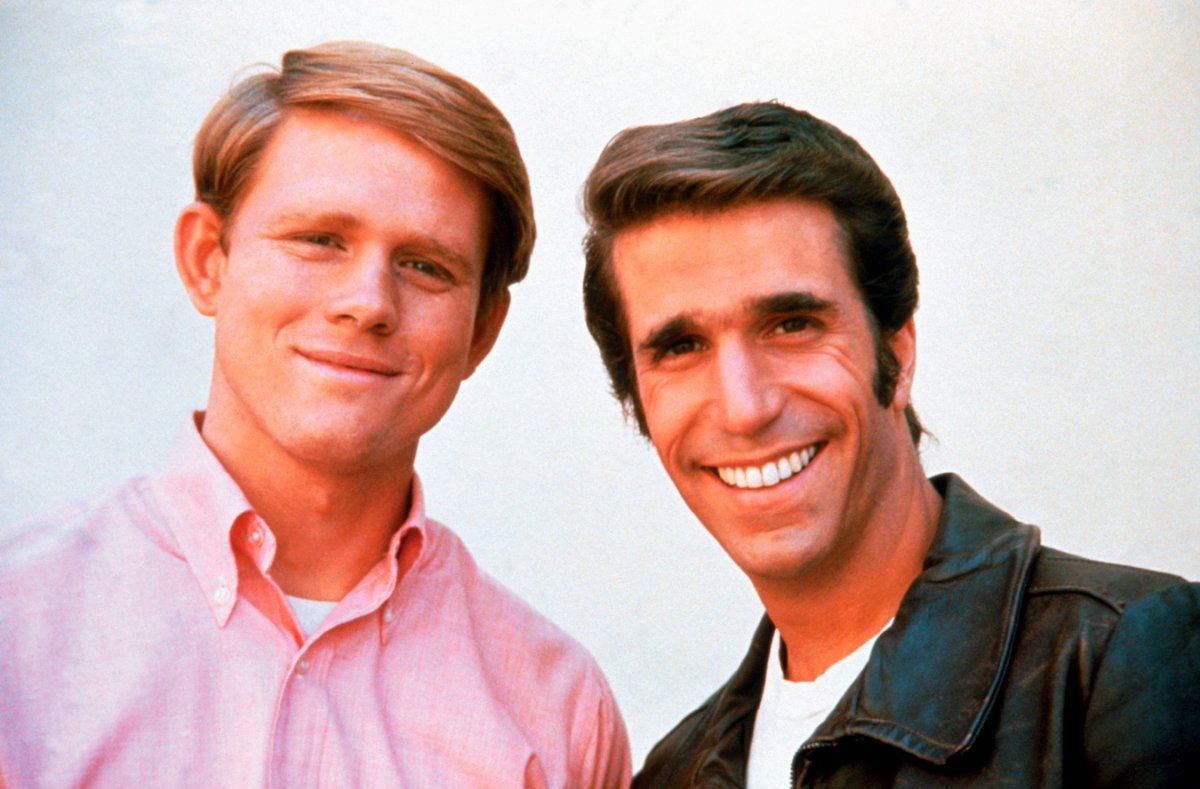

Charles Martin Smith was cast as Terry ‘Toad’ Fields. While every main character in the film is a teenager, Smith and Howard were the only teens in the cast, both at 18-years-old.
12/47
12/47

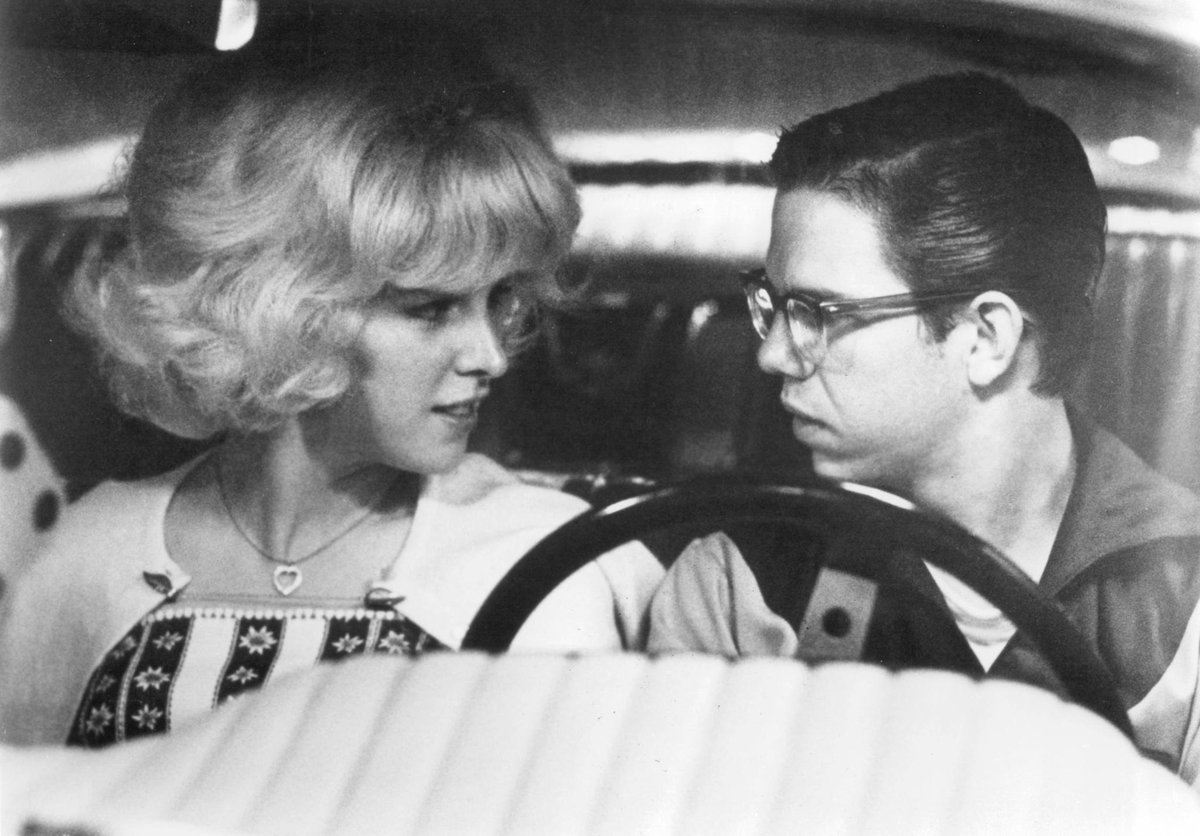
Mackenzie Phillips was 12-years-old when she was cast as Carol. The daughter of John Phillips of The Mamas & The Papas, Phillips was sent to the production with no accommodation arranged. Gary Kurtz became her legal guardian for a few months so he could take her in.
13/47
13/47


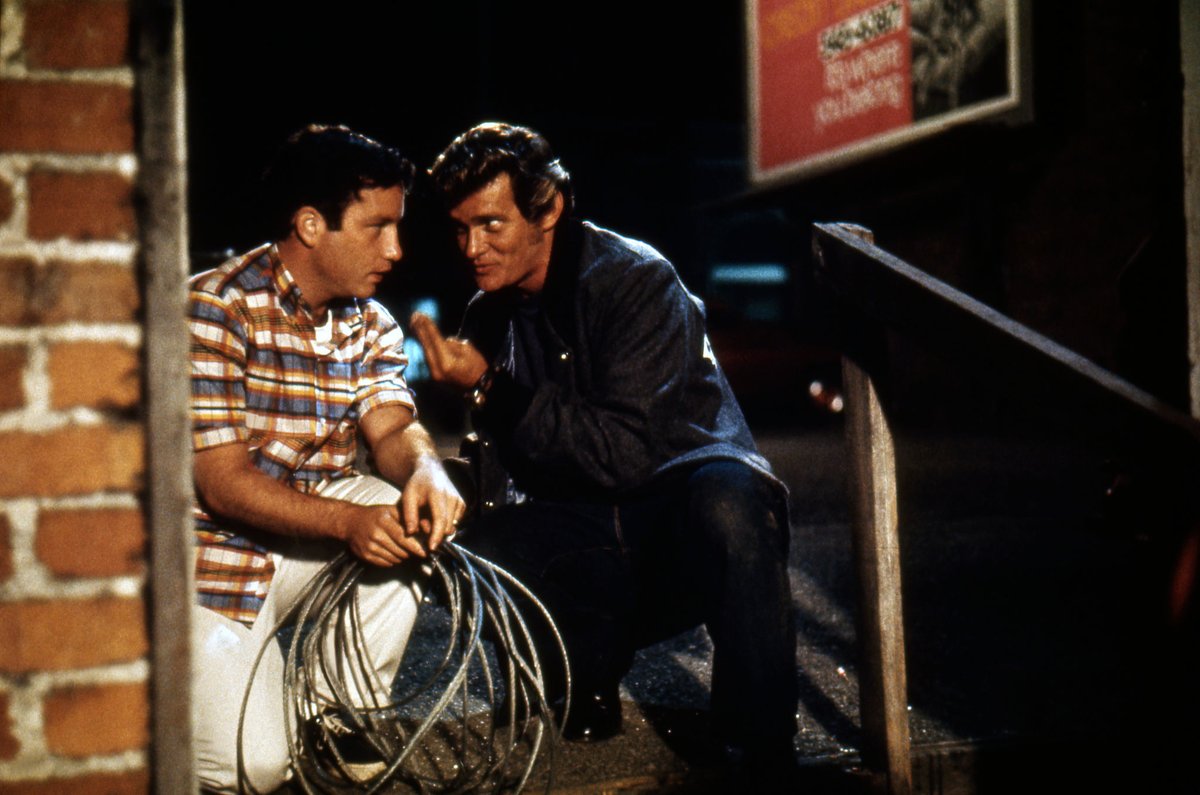
Harrison Ford – who wasn’t yet a major star – played drag racer Bob Falfa. Ford was initially offered a salary of $485. This was less than he earned from his day job as a carpenter, so turned the part down. When the salary was increased to $500 p/w, he was in.
14/47
14/47
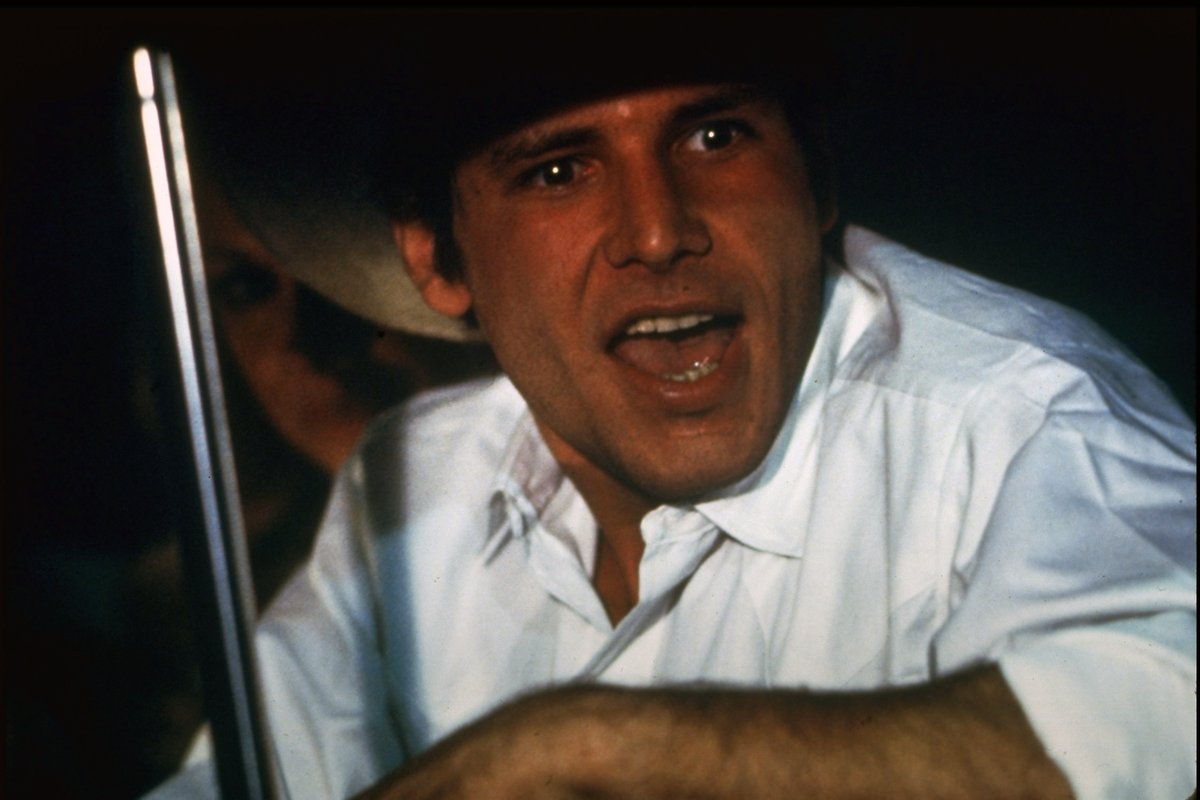
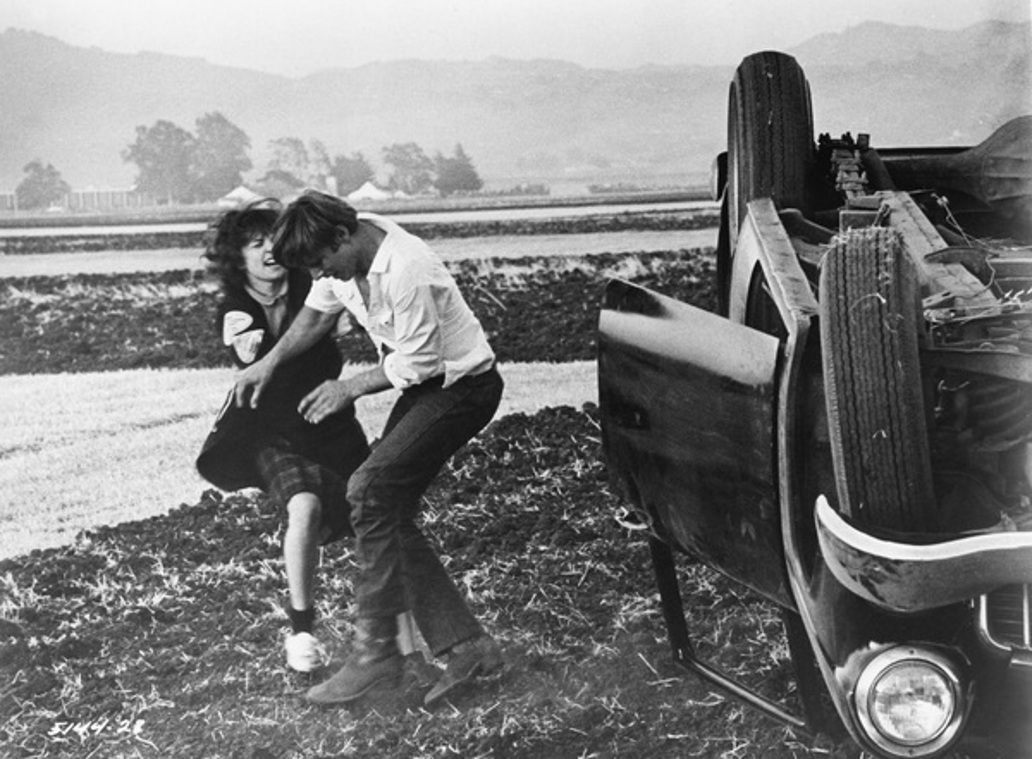
To tie in with the early-60s setting, Ford was asked to get a crew cut for the role. Worried it might rule him out of other acting parts he refused, but did say he would wear a cowboy hat.
15/47
15/47


Paul Le Mat (John Milner) and Bo Hopkins (Joe) were two other main cast members. Reportedly, they and Ford would often drink heavily between takes. On one occasion, they had a competition to climb to the top of a local Holiday Inn.
16/47
16/47


Universal weren’t happy with the title American Graffiti – partly because ‘graffiti’ wasn’t a widely known term in 1962, when the movie is set. They compiled a list of alternatives, but Lucas refused to budge.
17/47
17/47

The idea for American Graffiti came to Lucas when Coppola challenged him to write a film with mainstream appeal. Leaning into his own teenage life as a car nut, Lucas felt “compelled to document the experience and what my generationused as a way of meeting girls."
18/47
18/47


There are some references to real-life 1950s/60s teen culture. At one point, Carol wears at-shirt with the slogan "Surf Boards by Dewey Weber". Weber was a famous surfer-turned-businessman who sold thousands of surfboards.
19/47
19/47


Lucas’ original script was strictly structured around the 4 main plotlines (Curt, Terry, Steve, and John), and the script returned to them all in order. When the studio demanded a shorter run-time though, Lucas was forced to abandon this idea.
20/47
20/47


Some of the main characters are based on Lucas at different points in his life. Curt represents Lucas at USC Film School; John is based on Lucas’ street racing/junior college year; and Terry represents his time as a high school nerd, and his unsuccessful dating life at the time.
21/47
21/47


With the budget being so tiny, Lucas found himself in a position of being unable to pay all crew members. Instead, he offered screen credits, which many accepted. At the time, only department heads tended to receive screen credits, which is no longer the case.
22/47
22/47


The Directors of Photography were Jan D’Alquen and Ron Eveslage. Both were very inexperienced and struggled to light the night-set scenes effectively. As such, the hugely experienced Haskell Wexler was brought in, credited as ‘Visual Consultant’.
23/47
23/47

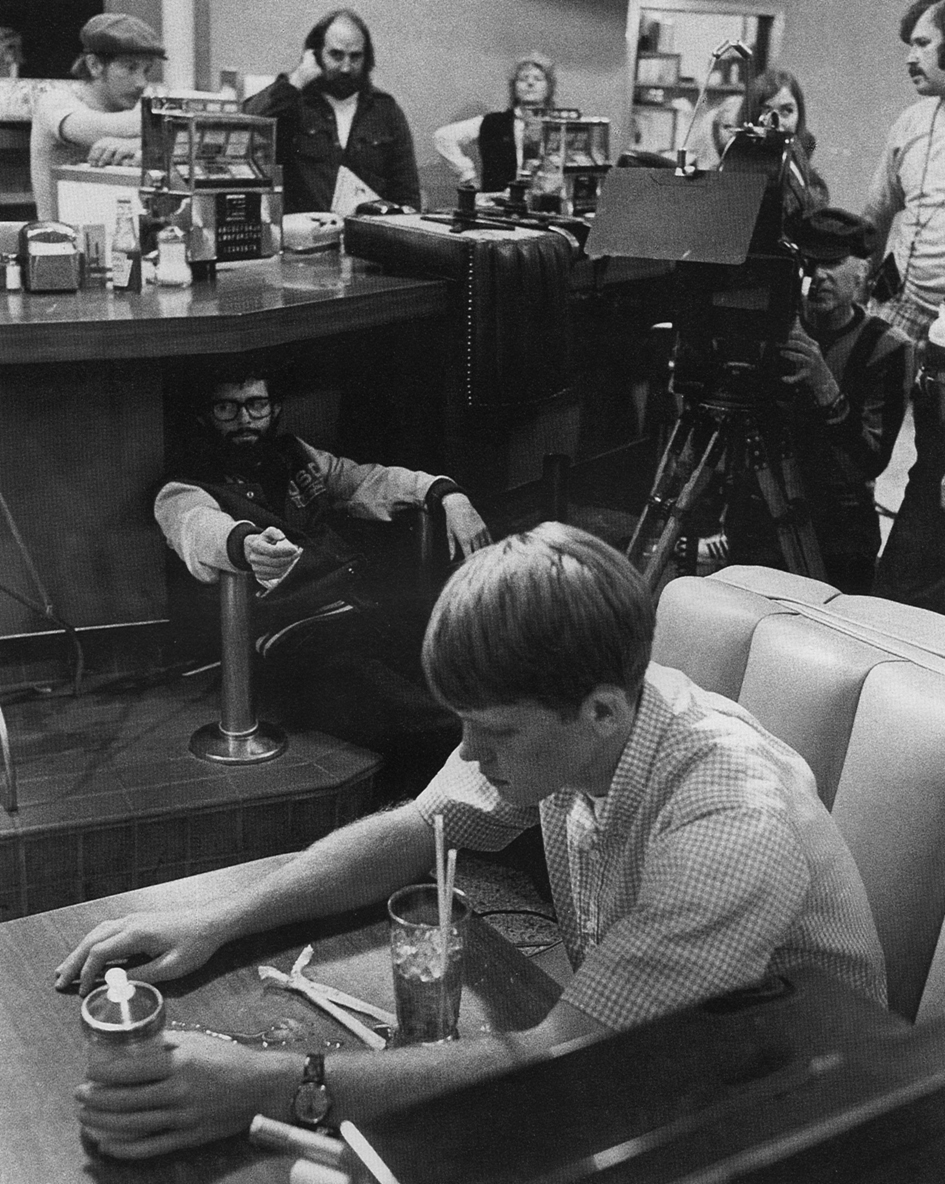
Lucas planned to shoot the film with CinemaScope, a lens used in Hollywood at the time the film is set, but it was too expensive. Instead, Lucas had the idea of giving it a documentary-style feel and shot using less expensive Techniscope cameras.
24/47
24/47


Walter Murch oversaw the sound on the film and his team came up with the idea of adding a ‘slap-back’ effect to radio broadcasts. This is a very close echo to reflect the idea that many cars are in the same location all tuned to the same station.
25/47
25/47


Lucas had originally shortlisted over 70 50s and 60s pop songs for the soundtrack, but the budget wouldn’t stretch far enough. He whittled the list down to just over 40, and agreed to remove all Elvis Presley tracks (as they were the most expensive).
26/47
26/47


Budget limitations also forced a change to the opening. Lucas wanted to show the Blonde Angel driving through an empty drive-in cinema. A transparency effect would indicate she doesn’t actually exist, but it proved too costly.
27/47
27/47

There were other problems. The day before filming, a crew member was arrested for growing marijuana. The first time mounting the cameras to the cars took so long that Lucas was instantly 1 night behind. And on day 2, a fire in a restaurant caused filming to be stopped.
28/47
28/47

The film was shot in 28 days, almost exclusively at night. It started in San Rafael, California but, after a local bar owner complained about the production causing him to lose business, they were re-located to Petaluma, 20 miles away.
29/47
29/47

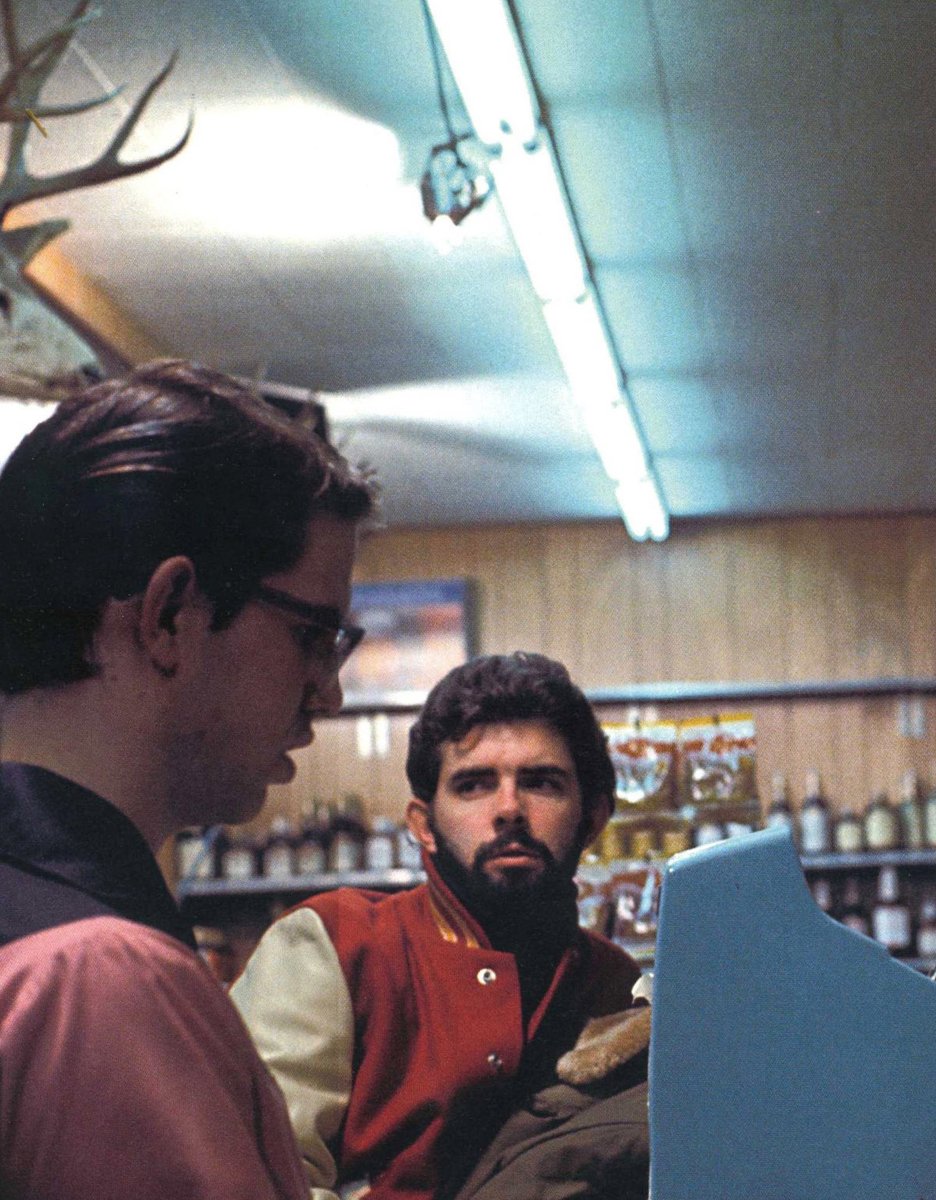
Filming would take place from 9pm until 4:30am each night. Though it was summer, the temperatures were very cold. Apparently, in many of the scenes set in cars, crew members were curled up out of view in the back seat to get warm.
30/47
30/47


When Terry arrives on the Vespa in the opening, he crashes into a building. This wasn’t planned – Charles Martin Smith lost control of the bike. Lucas kept the cameras rolling and Smith stayed in character, meaning it could be used in the movie.
31/47
31/47


To film the cruising sequences, about 300 pre-1962 cars were needed. Ads were placed in local newspapers and over 1000 car owners responded to have their car featured in the film and be paid $25. Apparently, the owner of the Thunderbird never left the car’s side.
32/47
32/47


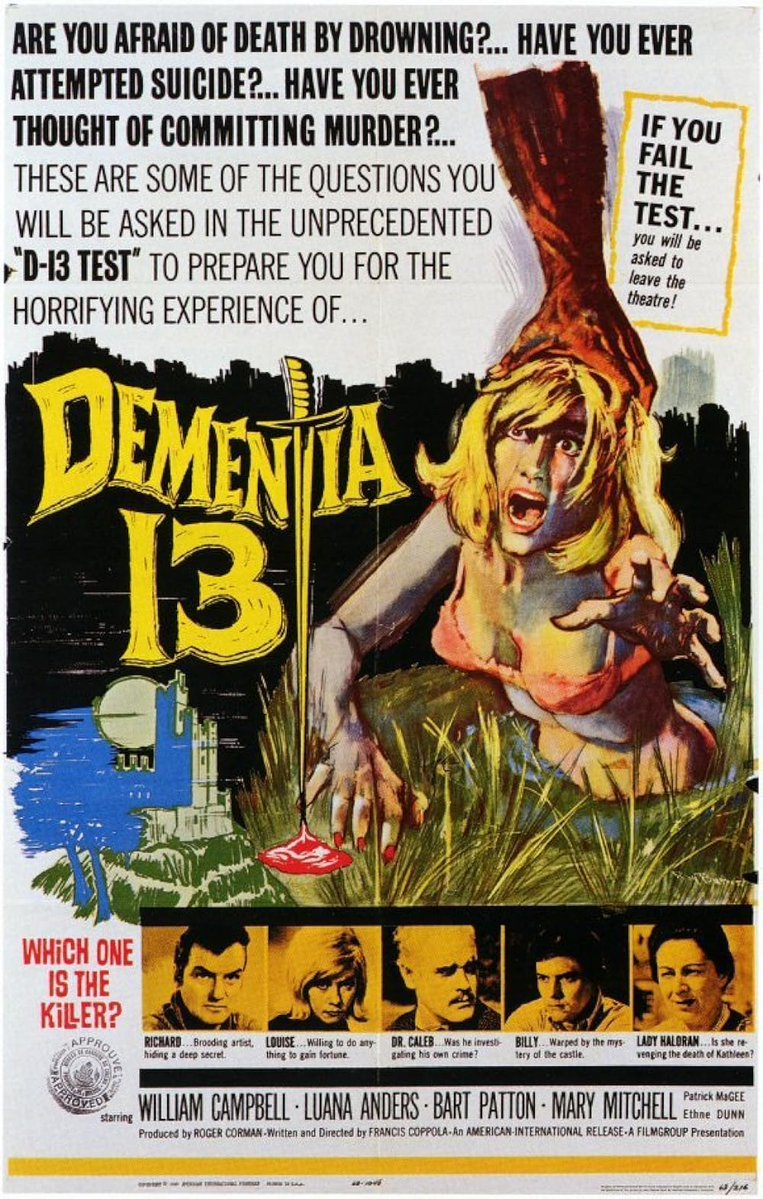
There is a nod to Francis Ford Coppola in the movie. When Curt sabotages the police car, it pulls in front of a cinema and we see it is playing Dementia 13. This was Coppola’s directorial debut, released in 1963.
33/47
33/47

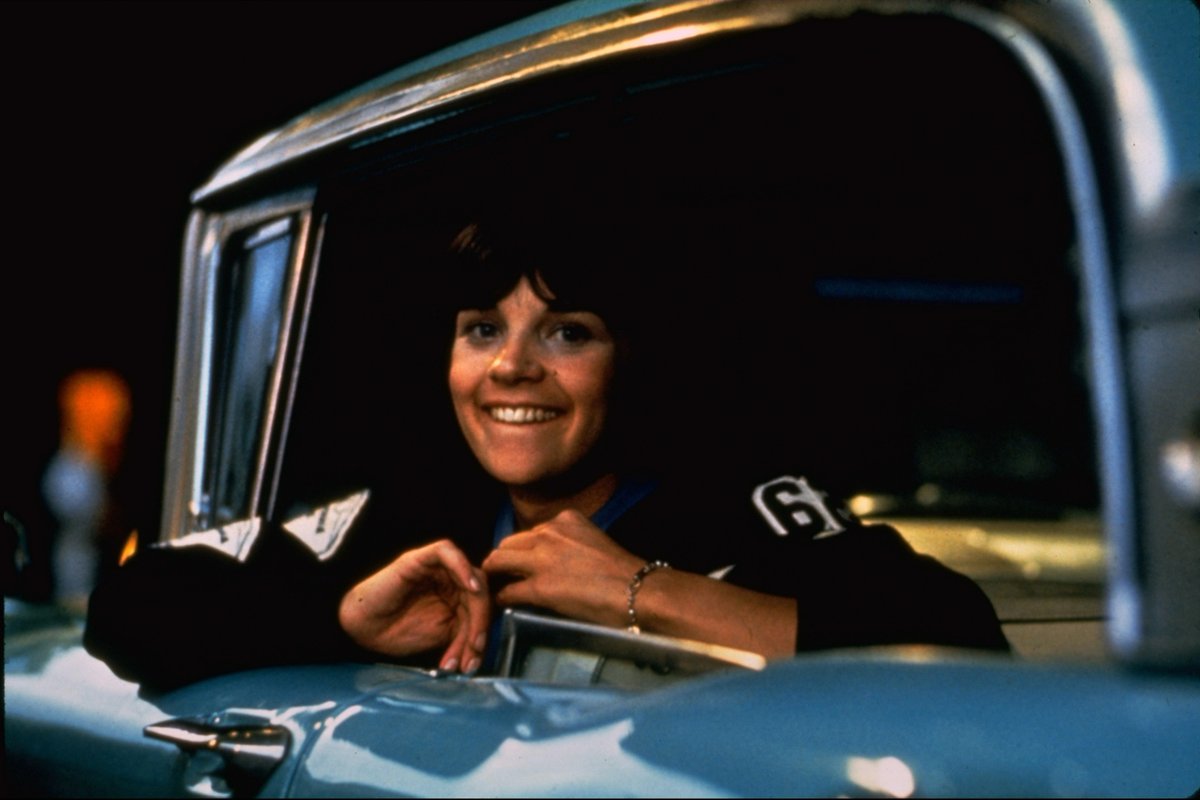
As a joke, the cast threw Dreyfuss into the pool at the Holiday Inn they were staying at. He hit his face on the side of the pool and had a black eye. Without a big makeup department, actress Cindy Williams’ (Laurie) makeup was used to hide the bruise.
34/47
34/47

To save on time and budget, Lucas would shoot 6-10 pages of the script each night – very quick work. He also had a two-camera setup so he could film actors in different cars at the same time. A big time saving.
35/47
35/47

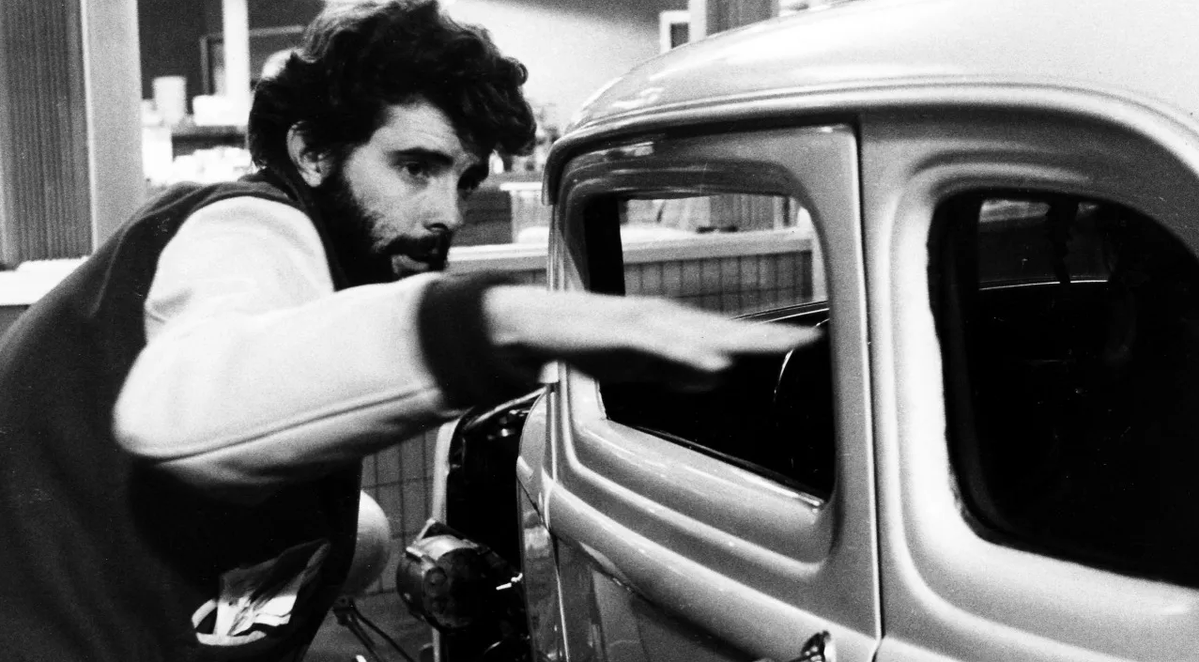
The scene at the liquor store when Terry asks Debbie for money took just one take. Actress Cindy Clarke wanted a second take as she thought she’d messed it up, but Lucas refused and said they were using the first take.
36/47
36/47

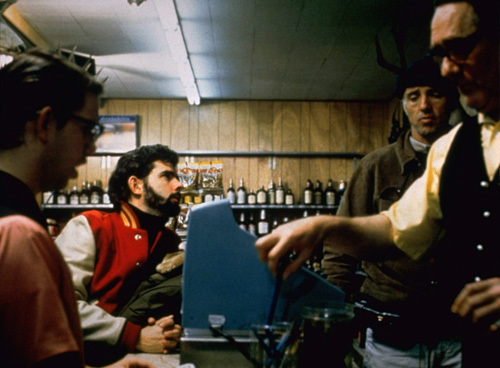
The moment where a car full of girls throw a water balloon at Carol was scripted differently. It was supposed to hit the window and enrage Carol. Instead, it hit Mackenzie Phillips square in the face and she burst out laughing. Lucas left it in the movie.
37/47
37/47

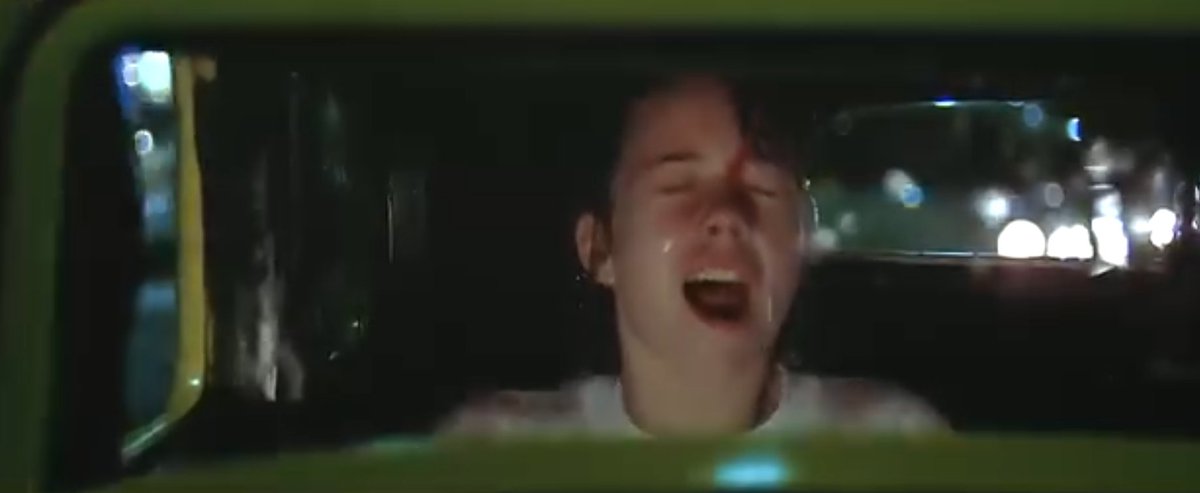
Wolfman Jack was a real pirate radio DJ in Mexico in the mid-1960s. Lucas listened to his show when he was at high school, so brought him in to play himself in the film. And when Wolfman makes a prank call to Pinky's Pizza, the voice on the line is Lucas’.
38/47
38/47


Lucas reportedly gave Wolfman Jack a fraction of a percentage point as payment for being in the film. This meant the Wolfman had a very comfortable income for the rest of his life.
39/47
39/47

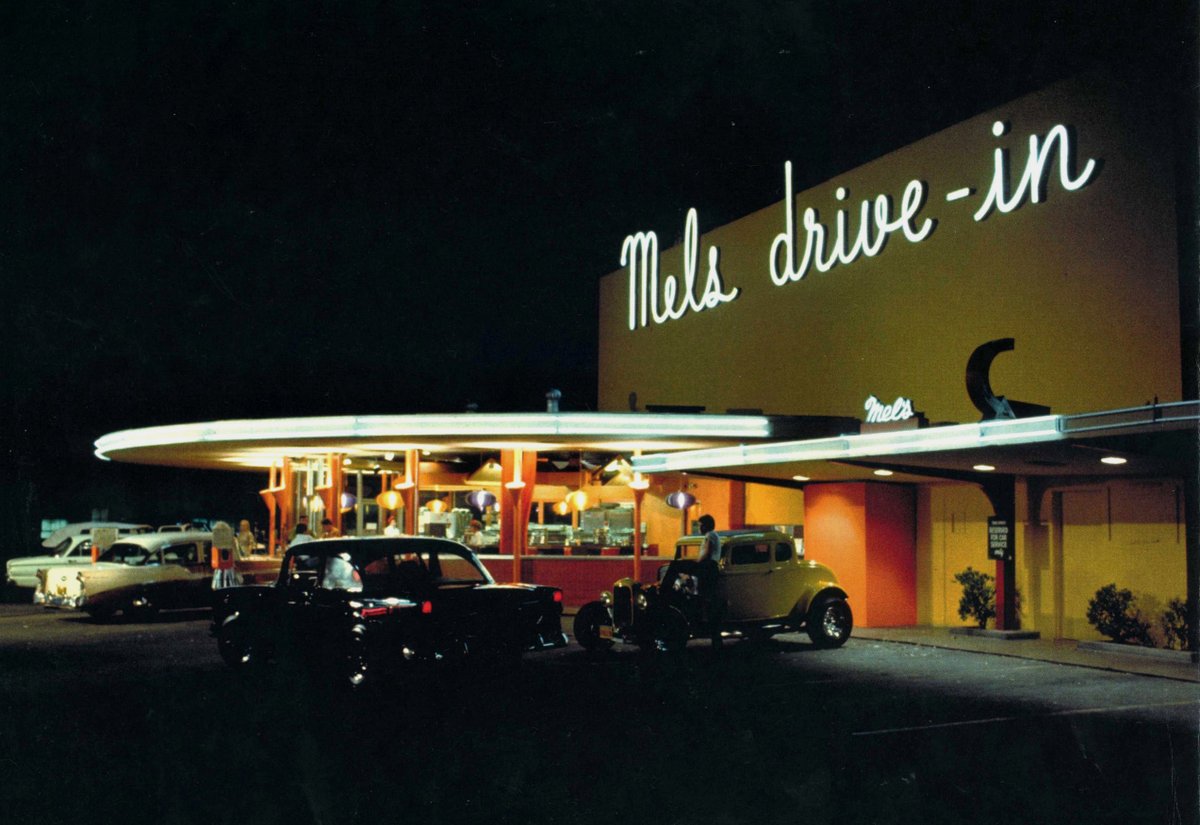
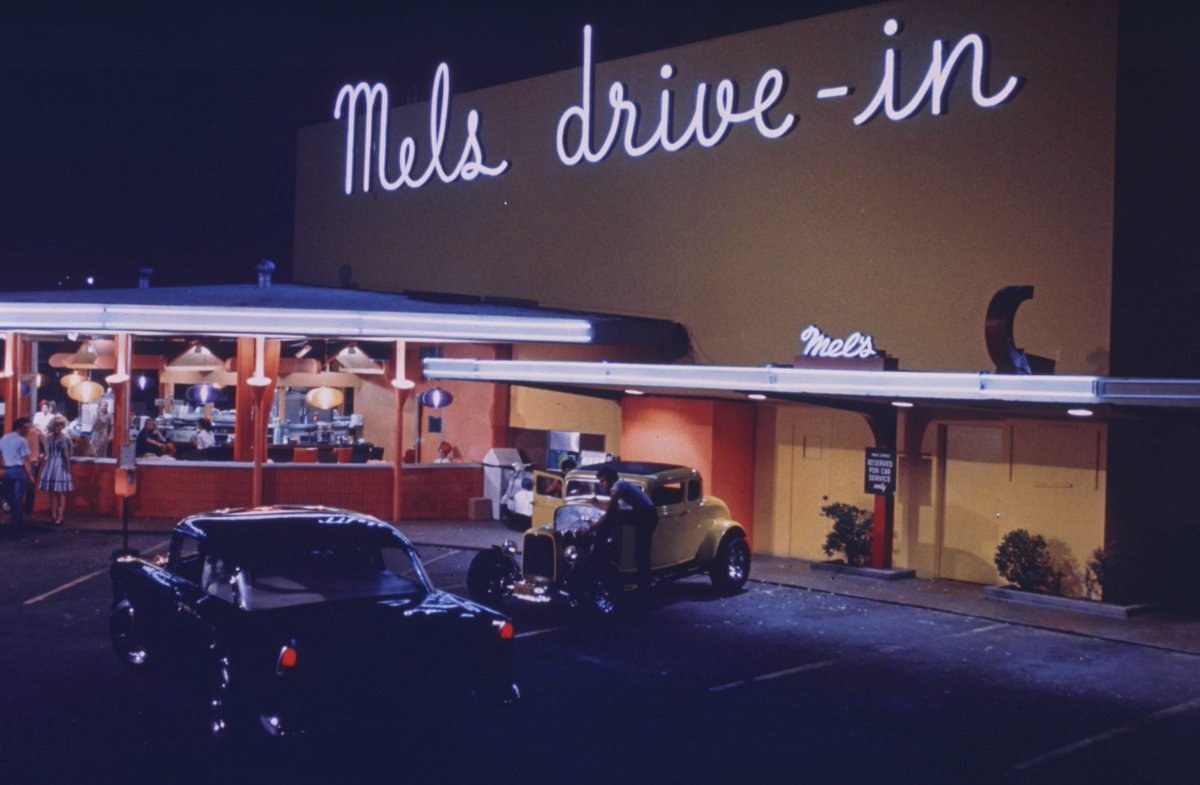
Mel's Drive-In that we see in the film was a real place but demolished after the movie was completed. However, cashing in on the film, a chain of other Mel’s restaurants were opened by the same family in the 1980s, with themes based on the movie.
40/47
40/47
The scene after the race when John admits to Terry he was losing when Bob’s car rolled over was scheduled to be shot later, but Lucas pulled it forward. Paul Le Mat and Charles Martin Smith hadn’t yet learned their lines, so improvised the scene.
41/47
41/47
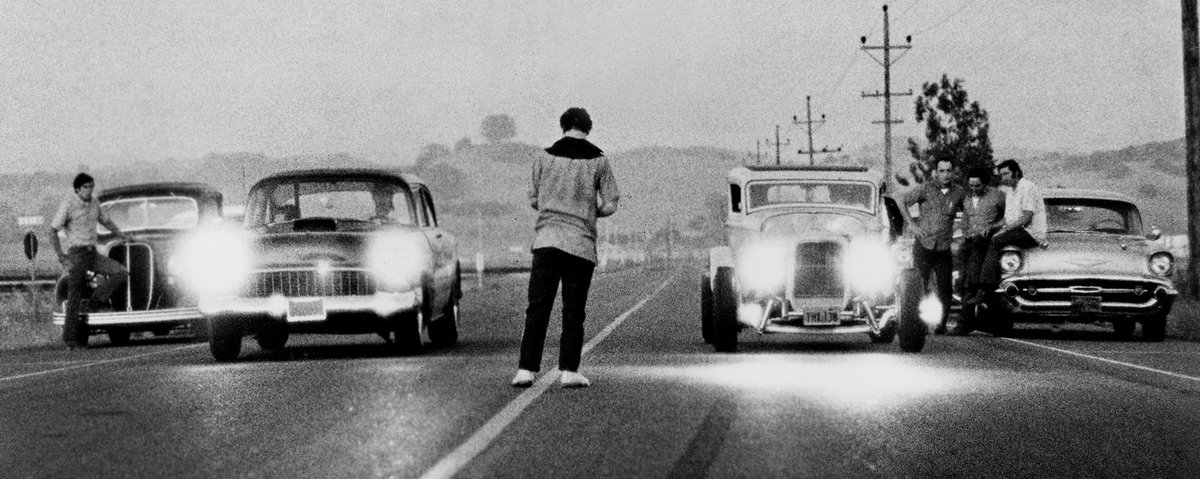

The film ends with an epilogue explaining the fates of our characters. Co-writers Huyck and Katz weren’t happy that Lucas featured no cards about the women. Lucas explained that would make the ending too long but critic Pauline Kael still accused him of “chauvinism.”
42/47
42/47

Lucas wanted his wife, Marcia, to edit the movie but Universal insisted on hiring Verna Fields. Fields only had time to do one rough cut, at which point Marcia took over.
43/47
43/47
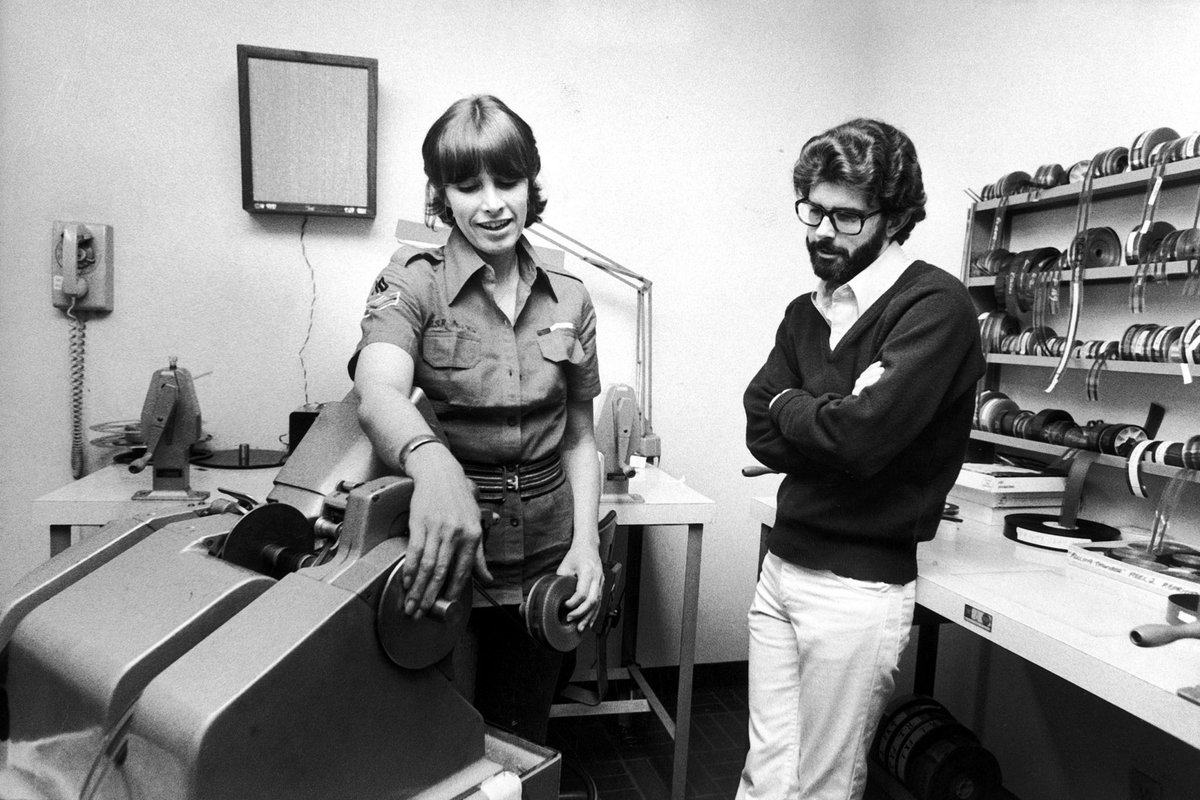

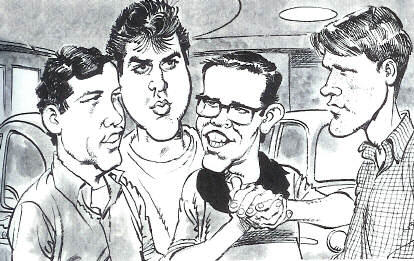
Lucas was a lover of Mad Magazine and hired its artist, Mort Drucker, to design the poster for American Graffiti. Drucker also illustrated ‘American Confetti’ a Mad Magazine parody of the film in 1974.
44/47
44/47

After the first studio screening, Universal Head Ned Tanen was not impressed, calling it “unreleasable.” A furious Coppola offered to buy the rights to the film there and then and release it himself. After negotiations though, Universal kept the film.
45/47
45/47


It turned out Ned Tanen was wrong – American Graffiti wildly exceeded expectations. With a production budget of $775k, the film grossed a sensational $140m at the box office. It is still among the most profitable films ever made.
46/47
46/47
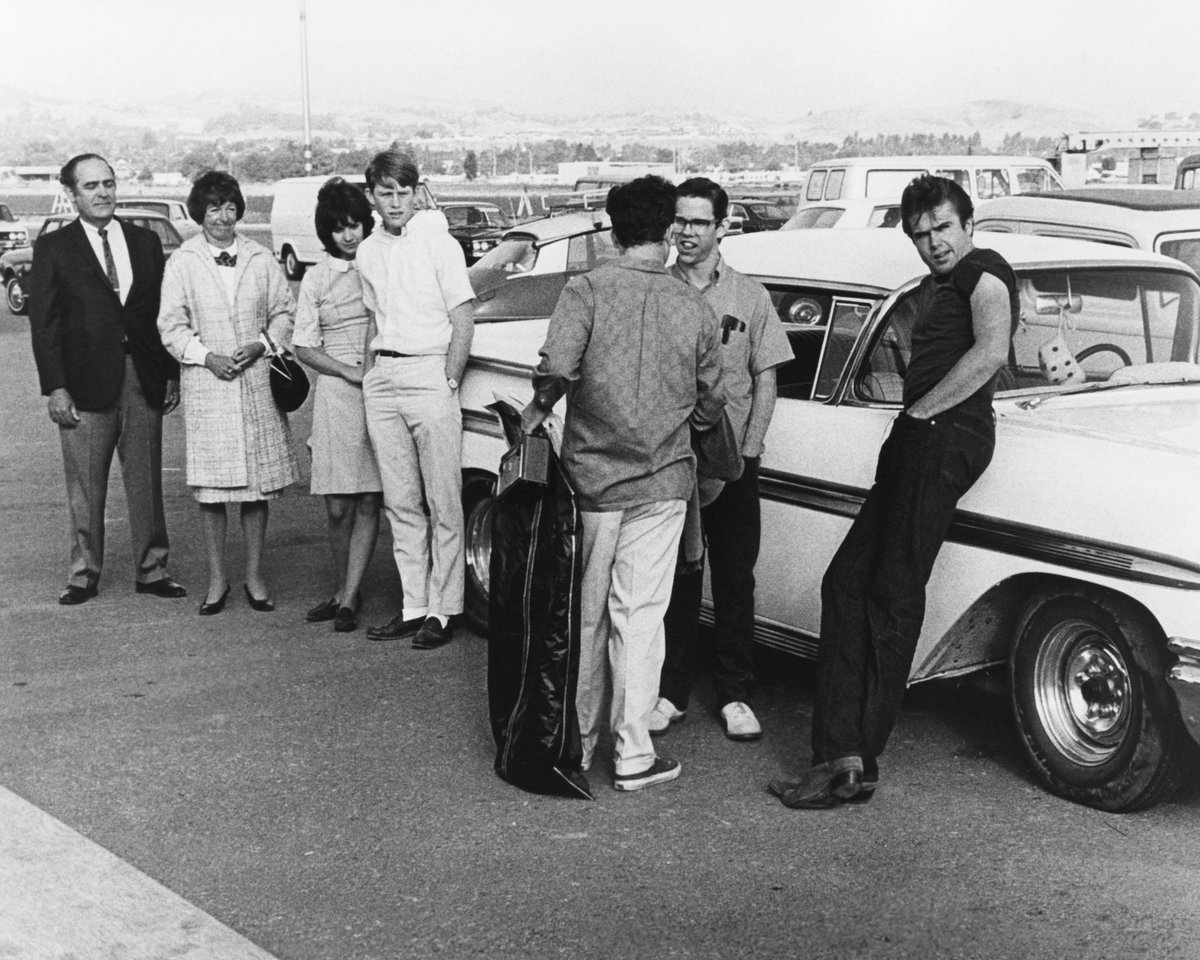
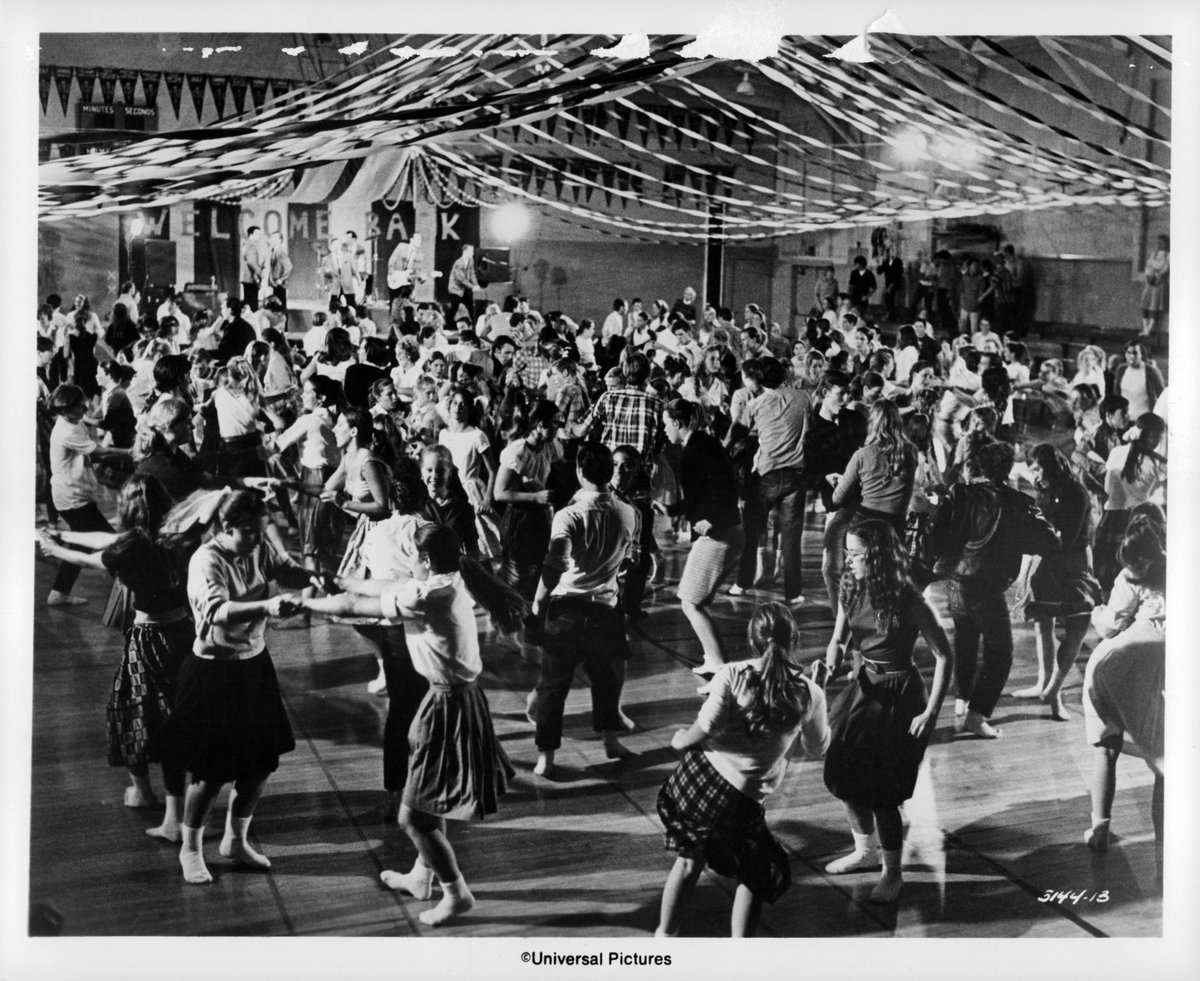

Finally… on the back of the movie, 20th Century Fox (who declined American Graffiti) told Lucas if had any more good ideas, they’d give him 2-picture deal. He said he did; he’d been kicking round an idea for a film he described as “a western in space”...
47/47
47/47


If you liked our making of story of AMERICAN GRAFFITI, please share the opening post.
https://x.com/ATRightMovies/status/1951945470063829132
Our latest podcast is on GROSSE POINTE BLANK. Full of big laughs and opinions so please give it a listen.
alltherightmovies.com/podcast/grosse…
alltherightmovies.com/podcast/grosse…
• • •
Missing some Tweet in this thread? You can try to
force a refresh